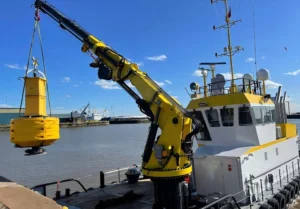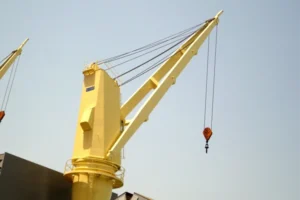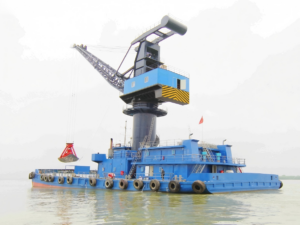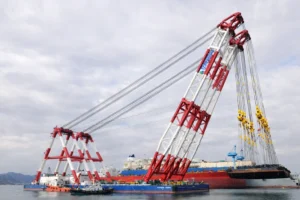

Heavy lifting on water comes with problems that land-based equipment simply can’t solve. Fixed cranes need permanent infrastructure. Mobile cranes can’t reach offshore worksites. And standard barges don’t have the lift capacity for serious marine construction, salvage, or port development work. A floating crane solves all three — bringing certified heavy-lift capability directly to the worksite, wherever that happens to be. HT CRANE floating cranes are built to CCS standards and available with ABS, BV, and DNV certification. Custom lifting capacity, working radius, and power configurations are available to match your specific project requirements. If you’re looking for a floating crane for sale that’s certified, proven, and configurable, you’re in the right place. What Is a Floating Crane A floating crane is a heavy-lift crane mounted on a pontoon or barge, designed to operate directly on water. It requires no permanent shore infrastructure, making it the go-to solution for marine construction, salvage, offshore installation, and waterway projects where conventional cranes simply can’t reach. Most units support both hook and grab attachments, adapting to different cargo types and task requirements on…

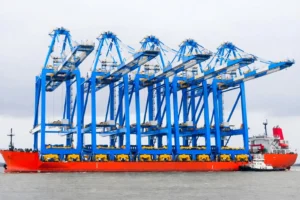
Container terminals run on throughput. Every hour a vessel spends at berth waiting for cargo moves is an hour of revenue lost — for the shipping line, the terminal operator, and the port authority. The pressure to move boxes faster, handle larger vessels, and keep equipment running around the clock is constant and only increasing. A ship-to-shore crane is the front line of that operation. It’s the machine that determines how quickly a vessel is turned around, how many moves per hour the terminal can deliver, and whether the port can handle the next generation of Ultra-Large Container Vessels coming into service. What Is an STS Crane? An STS crane — short for ship-to-shore crane — is a large rail-mounted gantry crane positioned at the quayside of a container terminal. It lifts containers directly between the vessel’s deck and the dock, using a spreader bar that locks onto standard ISO container corner castings. The boom extends out over the vessel to reach across multiple container rows, then retracts when vessels need to pass. Lift height, outreach, and under-beam clearance are…

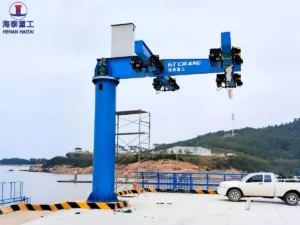
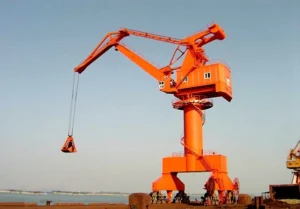
What Is a Portal Crane? If you work at a port, shipyard, or bulk terminal, you’ve almost certainly seen a portal crane in action. It’s the large slewing crane mounted on a fixed or rail-mounted base that covers both the water and land side of a dock without ever needing to move its foundation. The boom luffs up and down to reach different distances, while the upper structure rotates a full 360° — making it one of the most versatile heavy-lift solutions available. Depending on the job, it can be fitted with a hook for general cargo or a grab for bulk materials like coal, ore, and grain. HT CRANE’s slewing portal crane and portal boom crane series meet CCS, ABS, BV, and DNV standards — so whether you’re outfitting a shipyard or running a busy bulk terminal, there’s a configuration built for your operation. Key Features of Portal Crane Every port is different. Every cargo mix is different. portal cranes are built with the features that matter most — reliable slewing performance, flexible attachment options, and certified structural integrity…
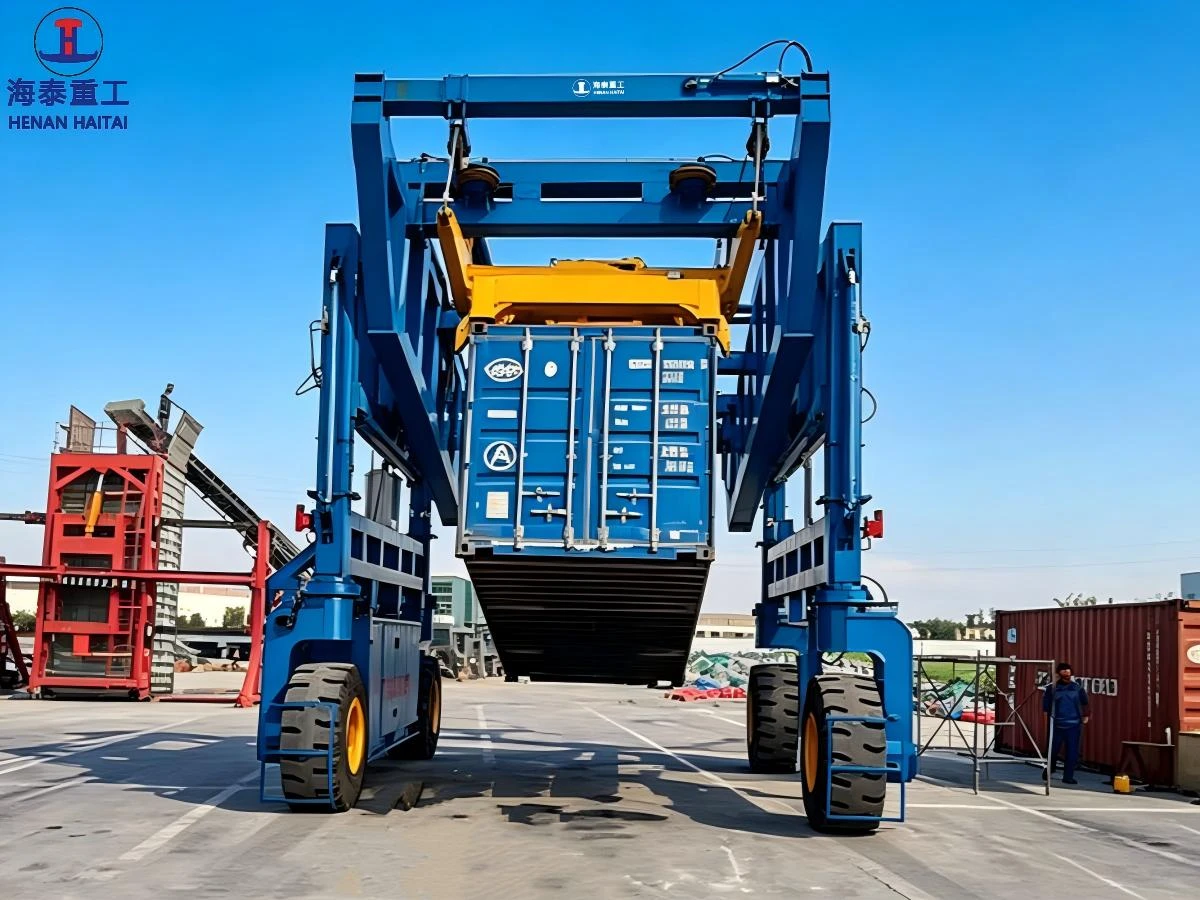
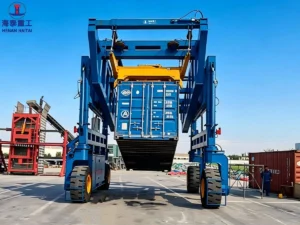
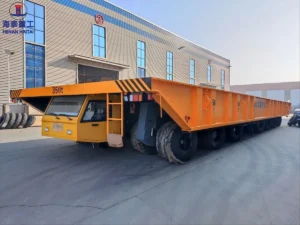
If you handle heavy containers, steel structures, or oversized industrial cargo — and your site lacks fixed power infrastructure — a hydraulic straddle carrier is likely the most practical solution available. It lifts, travels, and places loads without needing overhead structures, rails, or high-voltage power supply. One machine. Full mobility. Minimal civil works. What Is a Hydraulic Straddle Carrier? The Core Concept A hydraulic straddle carrier is a self-propelled heavy lift vehicle. It straddles a load — lifting from below using a hydraulic spreader or lifting beam — and moves freely across the yard on rubber tyres. The entire lift-and-travel cycle is powered by an onboard diesel-hydraulic system. Unlike electric or cable-reel powered cranes, the hydraulic straddle carrier carries its own power source. This makes it fully independent of yard infrastructure. You can deploy it anywhere your surface can support the wheel loads — no fixed installation required. How the Hydraulic System Works The engine drives hydraulic pumps that supply pressurized fluid to the lift cylinders, drive motors, and steering actuators. All motion — lifting, lowering, travelling, and steering —…
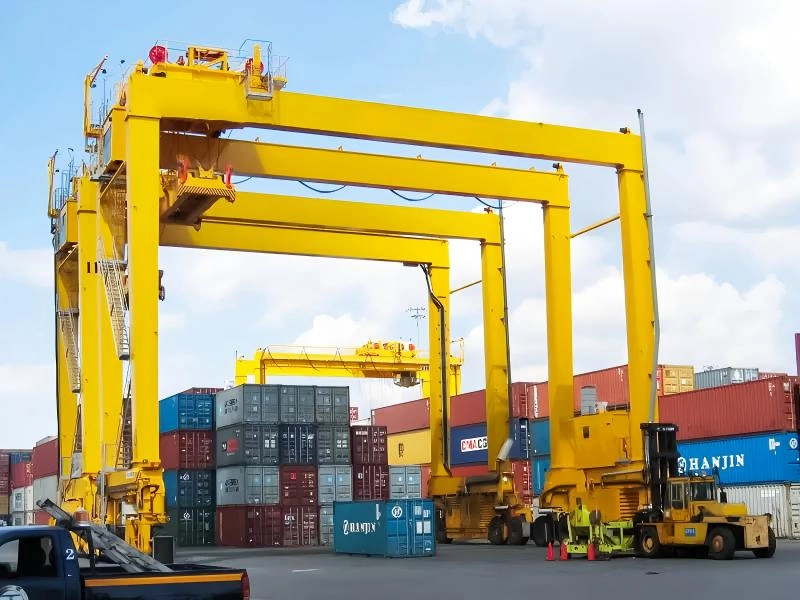
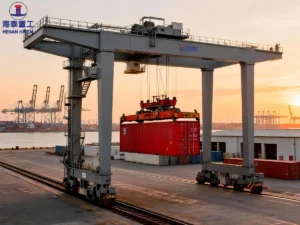
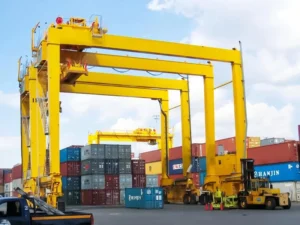
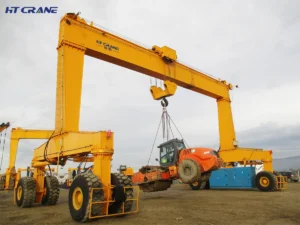
Choosing the right RTG crane supplier impacts your entire port or yard operation. A wrong choice means delays, downtime, and costly repairs. We help you avoid that. As a certified RTG crane manufacturer and exporter, we supply high-performance rubber tyred gantry cranes built for container terminals, intermodal yards, and logistics hubs worldwide. Product Description An RTG crane (Rubber Tyred Gantry Crane) is a mobile overhead crane designed to stack and move ISO containers in port container yards and inland depots. Unlike rail-mounted cranes(RMG Container Gantry Crane), RTG cranes run on rubber tyres — giving them full mobility across the yard without fixed infrastructure. 👉View Professional Buying Guide: RTG Crane vs RMG Crane: Which One Actually Fits Your Project? RTG cranes are the backbone of modern container terminal operations. They bridge the gap between ship-to-shore cranes and horizontal transport, enabling efficient container stacking, retrieval, and yard organization. Why Buy From Us? HT Cranes is a professional manufacturer of RTG cranes with over 15 years of lifting experience. Our cranes are exported to ports and logistics yards across Southeast Asia, the Middle…
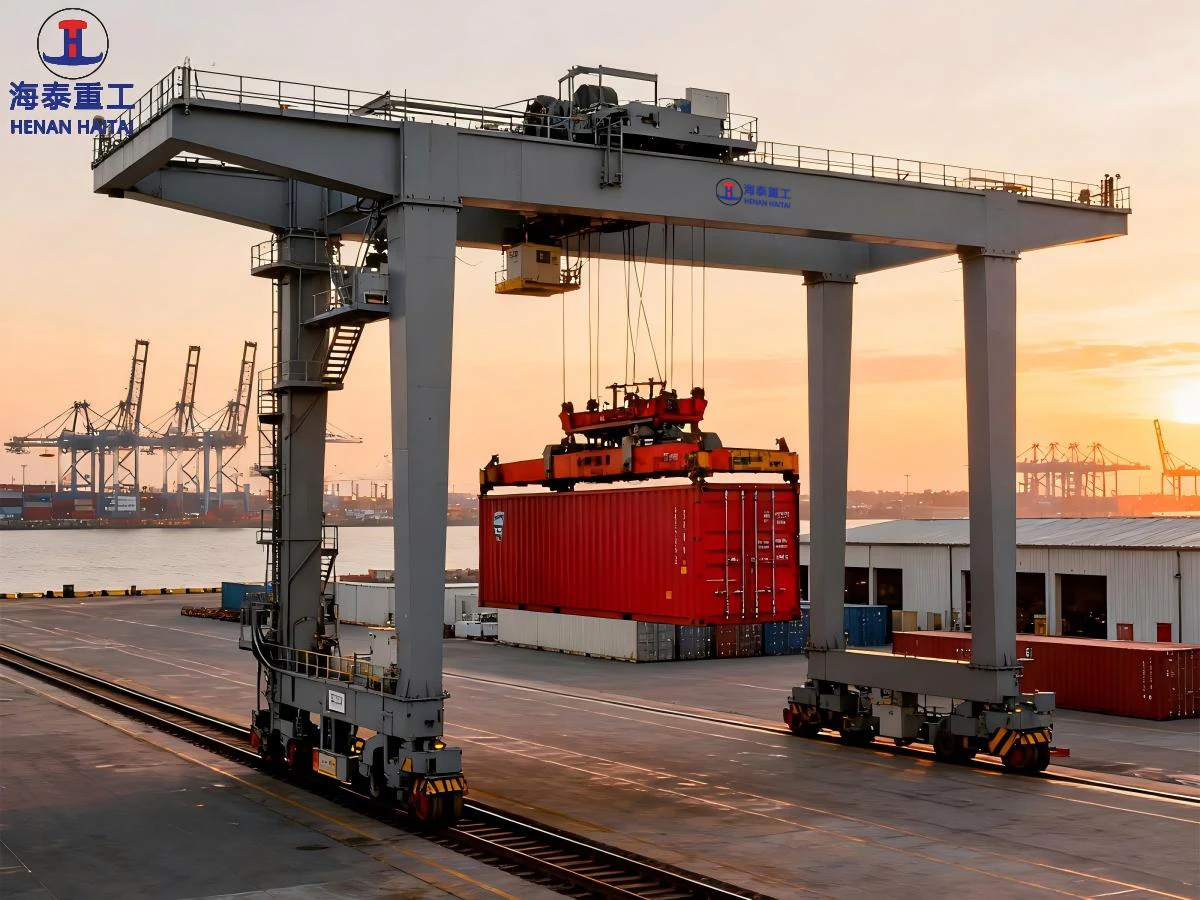
If your terminal is pushing against its capacity ceiling — or you are building a new yard and need to maximize every square metre — an RMG container gantry crane is almost certainly part of the answer. Rail Mounted Gantry cranes deliver the highest container stacking density of any yard equipment type. They are the infrastructure choice of the world’s highest-throughput terminals, and they are increasingly within reach for mid-sized operations that are planning for long-term growth. The challenge most procurement teams face is not finding RMG container gantry crane— it is knowing what to specify, what to verify, and which suppliers are genuinely capable of delivering a certified, automation-ready system at the scale their operation requires. This page gives you a clear, practical overview of RMG cranes: how they work, what defines the right specification, what questions to ask any supplier, and why our equipment is trusted by terminal operators across four continents. What Is an RMG Container Gantry Crane? The Core Design RMG Container Gantry Crane is a large gantry structure that travels on fixed rails installed on…
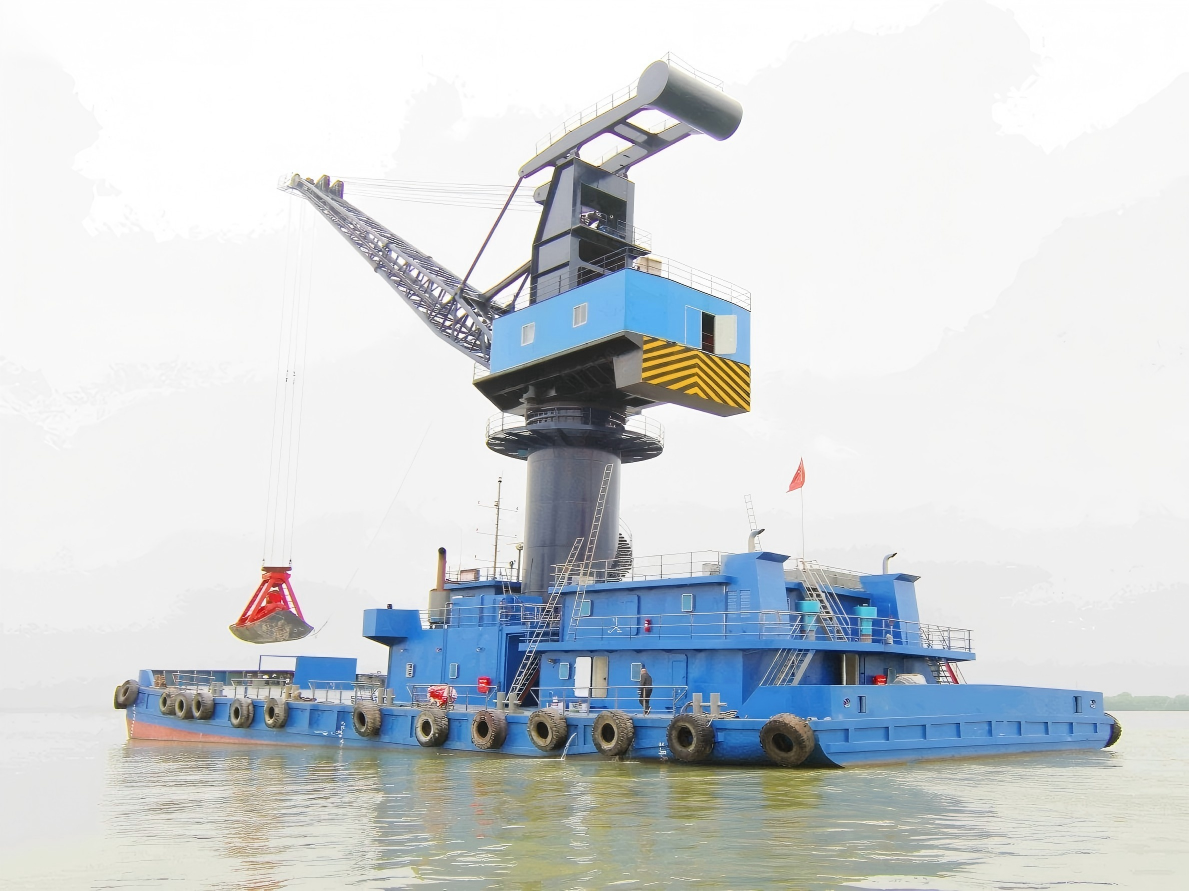
If you manage a marina, boatyard, or naval facility, you know the frustrations: vessels waiting endlessly for maintenance, docks that aren’t designed for heavy loads, and cranes that aren’t suited for waterborne operations. A Floating Dock Crane solves all these problems in one versatile machine. It lifts, moves, and positions vessels safely — without permanent dock modifications, without hull damage, and without slowing down your workflow. This page covers everything you need to evaluate a Floating Dock Crane: how it operates, where it performs best, what sets ours apart, and the complete technical specifications. When you’re ready to specify a unit, our engineering team responds to enquiries within 24 hours, helping you get the right crane for your facility. Product Introduction A Floating Dock Crane is a heavy-duty lifting system mounted on a barge, pontoon, or dedicated floating platform. It provides mobile, high-capacity lifting capability directly over water — without requiring fixed quayside infrastructure or shore-based crane access. Unlike a shore-mounted crane, a floating dock crane moves with its hull. It can be towed or self-propelled to any accessible waterway…

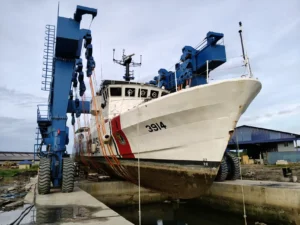
If you manage a marina, boatyard, or naval facility, you already know the pain: vessels stuck in the water waiting for maintenance, slipways that damage hulls, and cranes that simply weren’t built for boats. A marine travel lift solves all three problems in a single machine. It lifts, moves, and launches vessels safely — without fixed rails, without hull damage, and without slowing down your yard. This page covers everything you need to evaluate a marine travel lift: what it does, where it works, what makes ours different, and the full technical specs. If you are ready to specify a unit, our engineering team responds to enquiries within 24 hours. Product Description A marine travel lift — also called a boat travel lift, mobile boat hoist, or self-propelled boat hoist — is a rubber-tyred gantry crane designed specifically for vessel handling. The portal frame straddles the boat in the water. Polyester slings are positioned under the hull. The vessel is then lifted clear and driven anywhere on land. No rail tracks. No fixed infrastructure. Just one machine that handles haul-out,…
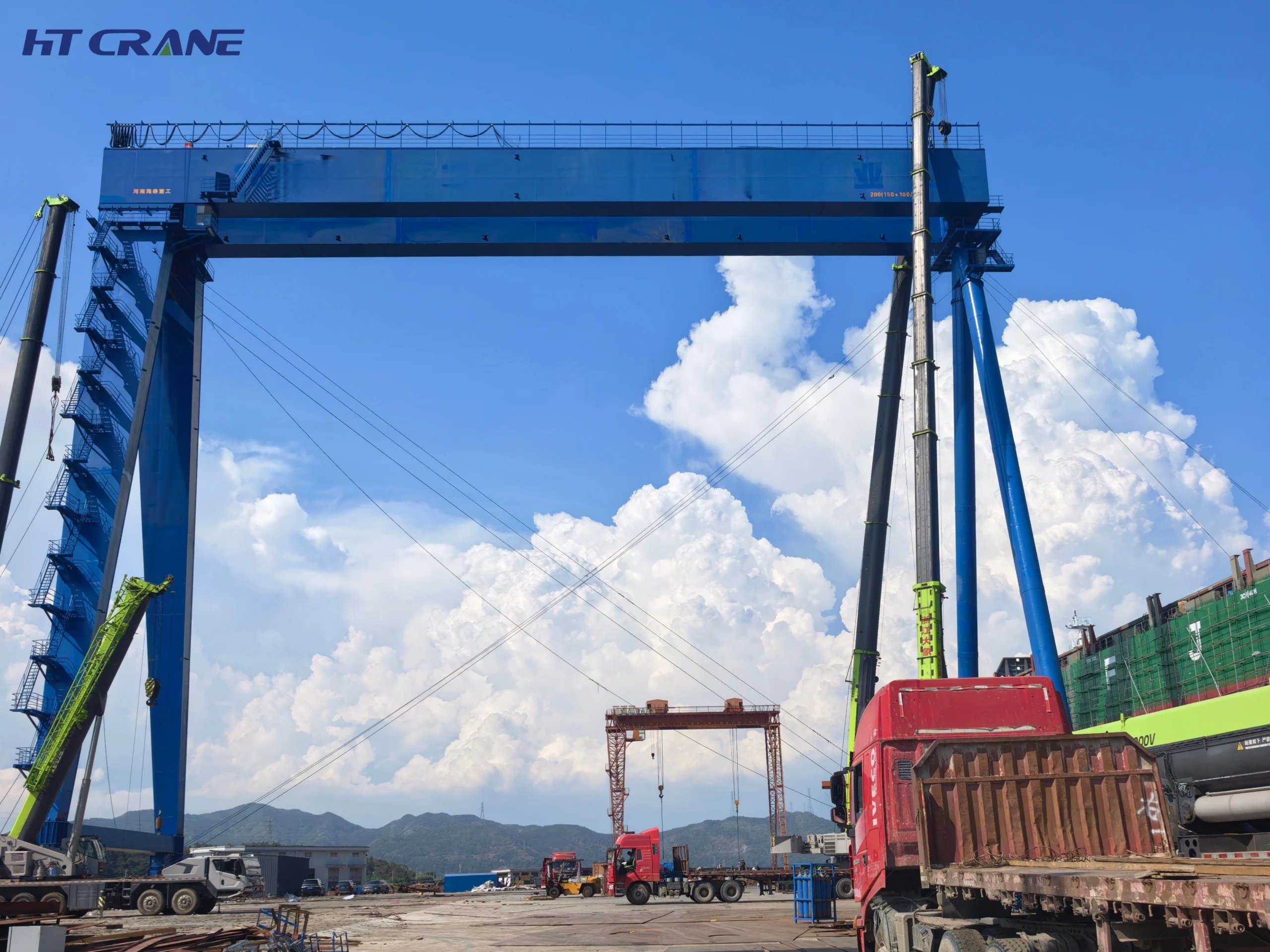
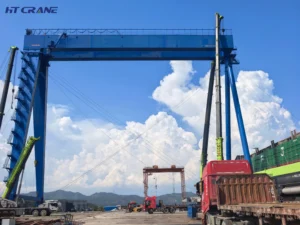
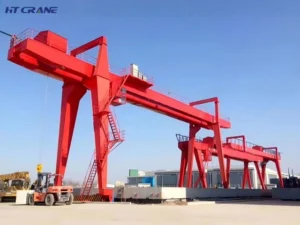
A shipyard without the right gantry crane is not a shipyard — it is a steel fabrication yard with ambition. The gantry crane defines what a yard can build, how large a vessel it can handle, and how fast production moves from block assembly to launch. An undersized or poorly specified crane becomes the bottleneck that limits every other investment in the facility. Shipyard gantry cranes are among the most technically demanding lifting machines in any industrial sector. They span widths of 80–170 metres, lift loads of 100–3000 tonnes, and operate in a marine environment that subjects every structural and electrical component to continuous salt-air corrosion. Getting the specification right from the outset determines whether the crane serves the yard reliably for 30 years or becomes a source of unplanned downtime that disrupts the production schedule. Product Description What Is a Shipyard Gantry Crane? A shipyard gantry crane — also called a goliath crane, portal gantry crane, or shipbuilding gantry crane — is a large double-leg gantry structure that spans the full width of a shipbuilding berth, drydock, or block…

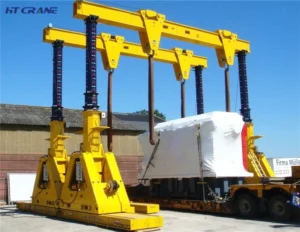
Looking for a heavy lifting system that handles loads other cranes simply cannot? Our hydraulic gantry crane delivers lifting capacity from 10 to 1,000 tons, millimeter-level synchronization precision, and a modular structure that assembles quickly on any job site — indoors or out. Trusted across power generation, shipbuilding, metallurgy, and civil engineering, this is the heavy lifting equipment built for projects where performance cannot be compromised. What Is a Hydraulic Gantry Crane? A hydraulic gantry crane is a heavy-duty lifting system powered entirely by a hydraulic drive system. It consists of six core components: a gantry frame, lifting mechanism, traveling mechanism, hydraulic power unit, electrical control system, and safety protection devices. The system raises, positions, and moves extremely heavy loads with stepless speed control and ±1mm synchronization accuracy across multiple lifting points. It operates on standard AC 380V / 50Hz power supply or a self-contained diesel power unit — making it deployable anywhere, with or without grid power. Core Technical Specifications Parameter Specification Lifting Capacity 10 – 1,000 tons Span 8 – 35 m Lifting Height 4.5 – 12 m…

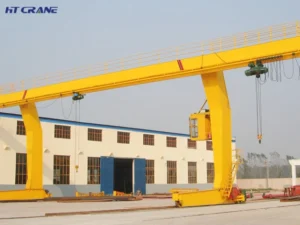
If you operate a container terminal, port facility, or industrial yard, you know the challenges: containers stuck on the ground, yard operations slowed by inefficient equipment, and cranes that weren’t designed for modern logistics. A Single Girder Rubber Tyred Gantry Crane solves all these problems in one machine. It lifts, moves, and stacks containers safely — without fixed rails, without bottlenecks, and without compromising operational efficiency. This page covers everything you need to evaluate a Single Girder RTG Crane: how it works, where it excels, what makes ours different, and the full technical specifications. Ready to specify a unit? Our engineering team responds to enquiries within 24 hours, ensuring you get the right solution for your port or yard. Product Introduction The Single Girder Rubber Tired Gantry Crane is a self-propelled, mobile gantry lifting system mounted on rubber tyres. It operates without fixed rails, tracks, or permanent ground infrastructure — making it one of the most flexible solutions available for container handling, industrial yard lifting, and logistics operations where site conditions or operational flexibility make rail-mounted systems impractical. The crane’s…
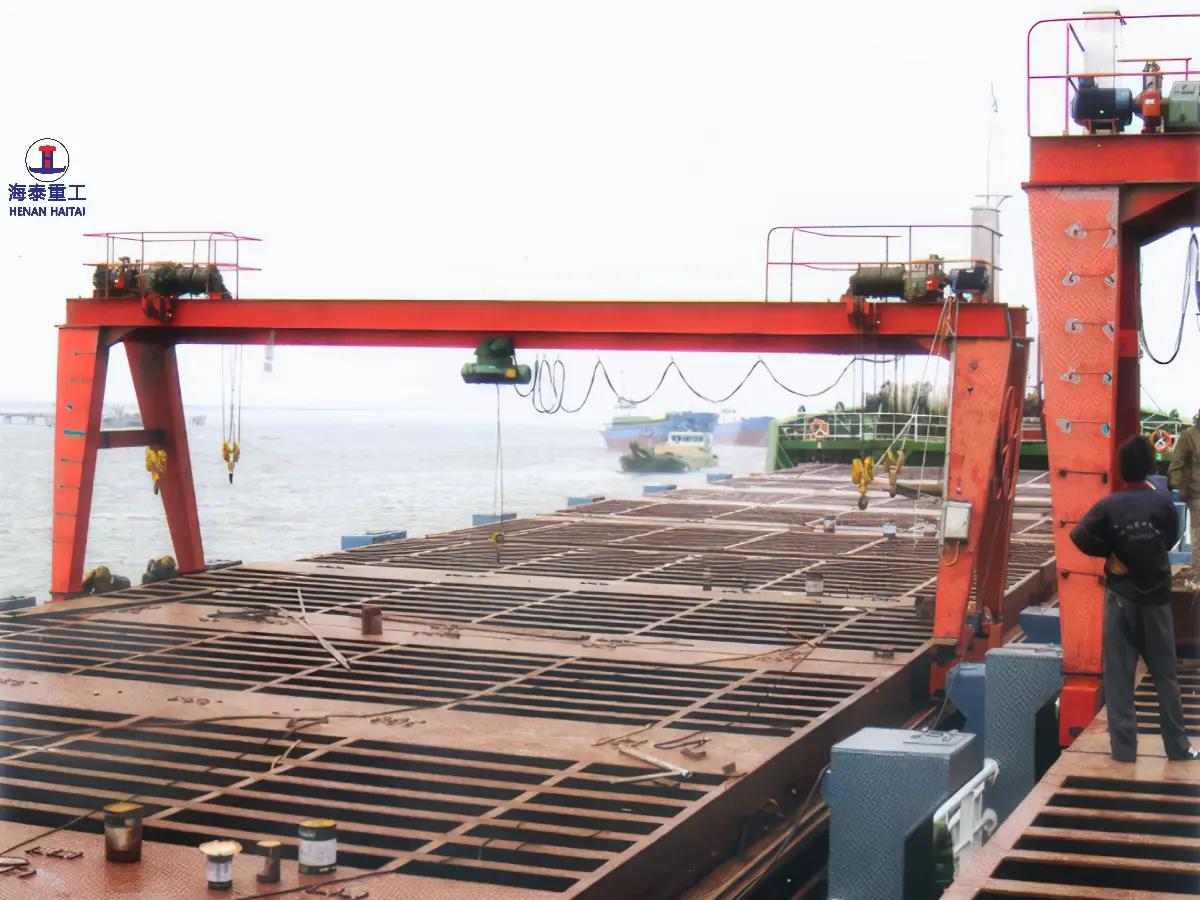
The hatch cover gantry crane is a rail-travelling box-leg gantry structure along bulk carriers’ and general cargo vessels’ hatch coaming, used to lift, shift and stack lift-away hatch covers. It is built as single or twin-girder frame with one or two independent electric hoists, runs on flanged wheels along coaming-top rails, driven by variable-frequency motors for smooth positioning in sea-state working conditions. Capacities range 5 to 40 tons, with single-hook or twin-hook (e.g. 2×12.5T), and CCS, BV, ABS or RINA classification is available on request. What Is a Hatch Cover Gantry Crane? A hatch cover gantry crane is dedicated marine deck-handling equipment, designed for opening, closing, hoisting, and maintenance of ship hatches, this compact structure is suitable for decks with limited space and frequent operation. Unlike a shore-based gantry, it is a marine deck crane: it must run on the ship’s own coaming rails, tolerate roll and pitch, resist salt-spray corrosion, and be light enough not to overload the deck structure while still handling covers that can weigh 5–40 tons apiece. The frame is either a single-girder gantry with one enveloping trolley/hoist, or a twin-girder gantry carrying two independently-driven electric hoists…