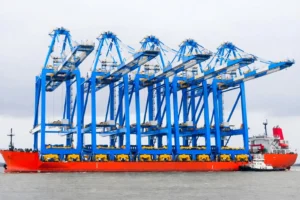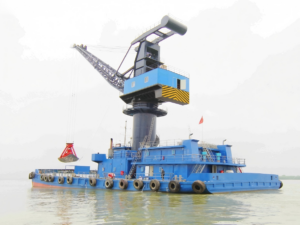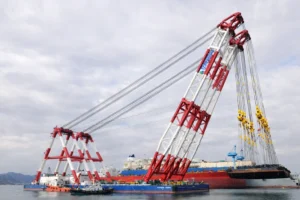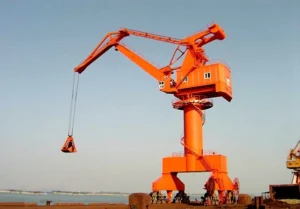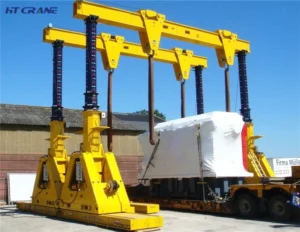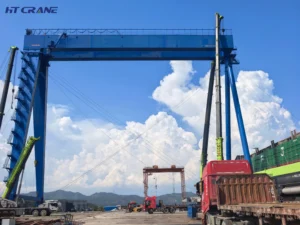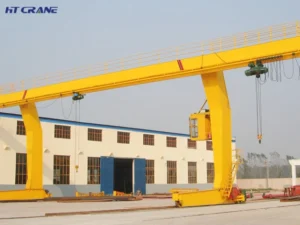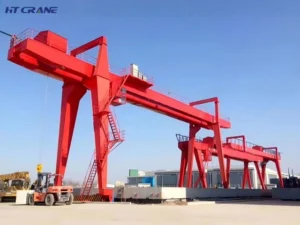


Selecting the wrong ship deck crane creates problems that follow you for the vessel’s entire operational life. Inadequate lift capacity, poor outreach, or a crane not certified by your classification society — any of these can delay port clearance, increase operating cost, or create liability exposure in the event of an incident.
This page gives procurement managers, ship owners, and shipyard purchasing teams a clear, practical overview of what to look for when sourcing a ship deck crane. We cover equipment types, key technical parameters, certification requirements, and what distinguishes a reliable supplier from a risky one.
HT crane manufacture and export ship deck cranes across a full capacity range — and we back every unit with classification society certification, factory load testing, and long-term spare parts support.
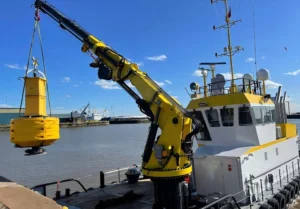
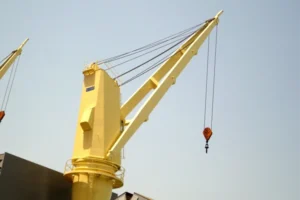
A ship deck crane is a rotating lifting device permanently mounted on a vessel’s deck. It handles cargo loading and unloading at ports where shore-based equipment is unavailable or insufficient. It also supports deck operations, equipment transfers, and maintenance lifts during voyage.
Vessel self-sufficiency is the core value a deck crane provides. Ships calling at remote ports, anchorage transfers, or offshore locations cannot rely on shore crane availability. A properly specified deck crane eliminates that dependency and expands the vessel’s operational range.
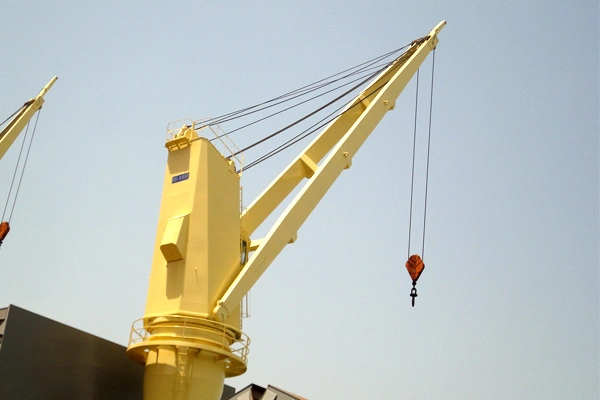
Ship deck cranes are installed across a wide range of vessel types. Each application has distinct requirements that drive the specification:
Most buyers face this choice early. Both configurations are proven and widely deployed. The right choice depends on the vessel’s existing systems and operational profile.
| Factor | Hydraulic Deck Crane | Electric Deck Crane |
|---|---|---|
| Power Source | Vessel’s hydraulic power unit | Vessel’s electrical system |
| Control Precision | High (proportional valve control) | Very high (VFD drive control) |
| Maintenance | Requires hydraulic expertise | Requires electrical expertise |
| Cold Weather Performance | Good (fluid spec dependent) | Excellent |
| Integration Complexity | Moderate | Higher (power supply sizing) |
| Typical Application | General cargo, OSV, fishing | Large cargo vessels, offshore heavy lift |
| Capacity Class | Typical SWL Range | Common Vessel Type |
|---|---|---|
| Light Duty | 5T – 15T | Fishing vessels, small general cargo, research |
| Medium Duty | 16T – 40T | General cargo vessels, bulk carriers, OSV |
| Heavy Duty | 41T – 100T | Heavy lift vessels, large OSV, naval |
| Custom / Project | 100T+ | Offshore heavy lift, crane vessels |
SWL (Safe Working Load) is rated at full outreach. Crane capacity at reduced radius is higher — always confirm the load chart for your specific lift geometry.
| Parameter | Specification Range |
|---|---|
| Safe Working Load (SWL) | 5T – 100T (standard); higher on request |
| Boom Outreach | 8m – 30m (model dependent) |
| Hoisting Speed | 10 – 45 m/min (full load) |
| Slewing Range | 360° continuous |
| Slewing Speed | 0 – 2 rpm |
| Power System | Hydraulic or electro-hydraulic |
| Control System | Cabin-mounted or remote pendant |
| Pedestal Type | Fixed deck pedestal or deck-flush foundation |
| Classification | ABS / BV / DNV GL / LR / CCS (buyer’s choice) |
| Design Standard | ISO 4301, FEM 1.001, crane class A5/A6 |
| Operating Temperature | -25°C to +55°C |
| Corrosion Protection | Hot-dip galvanizing + marine epoxy coating system |
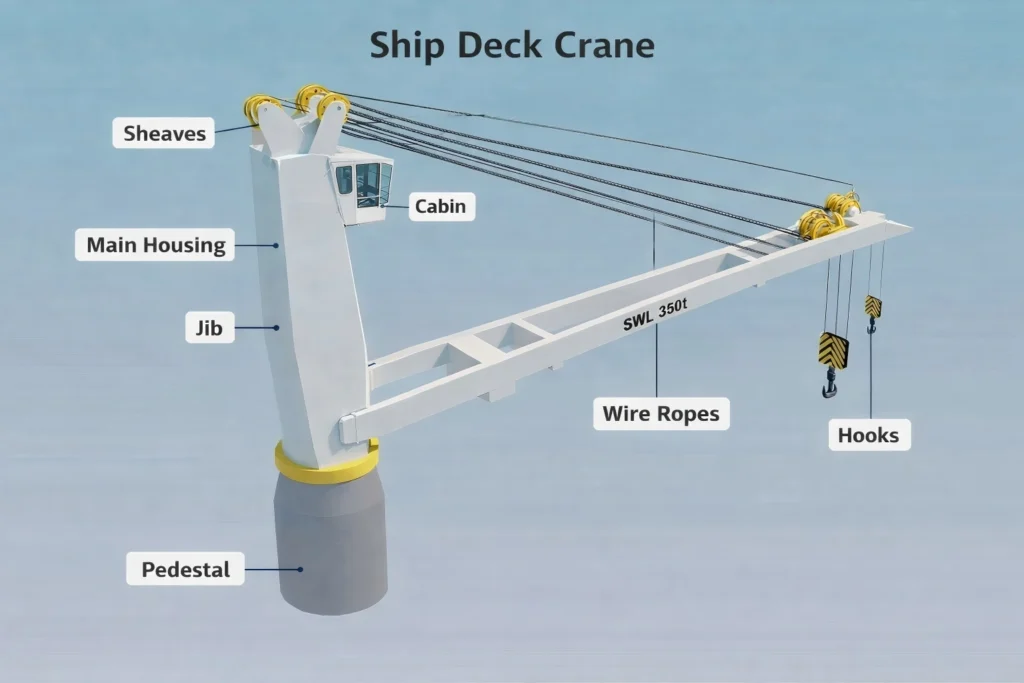
Standard delivery includes a single hook block. Optional attachments available:
A ship deck crane installed on a commercial vessel must be certified by a recognized classification society. This is not optional — it is a condition of the vessel’s class certificate and P&I insurance coverage. Operating an uncertified or improperly certified crane creates legal liability and may void the vessel’s insurance in the event of an incident.
The certification process covers structural design review, material traceability, manufacturing quality audits, and witnessed load testing. The classification society issues a crane certificate that is renewed on a defined inspection cycle — typically every five years with annual surveys.
We design and manufacture to the requirements of all major classification societies:
Buyers specify their required class at the time of order. The classification society surveyor attends factory load testing and issues the certificate directly to the buyer. We do not issue classification certificates — the independent surveyor does. This distinction matters for buyers evaluating supplier credibility.
For general cargo vessels calling at minor ports across Southeast Asia, West Africa, and South America, the deck crane is the primary cargo handling system. The specification centers on reach, hook height, and cycle speed — because cargo dwell time at anchor or berth directly affects voyage economics.
A typical twin-crane arrangement — two 25T cranes at midship — allows tandem lifts up to 50T and provides redundancy if one crane requires maintenance. This is the most common configuration for 5,000–15,000 DWT general cargo vessels.
Offshore crane operations introduce dynamic load factors that shore or port cranes do not face. Vessel motion in sea states, load swing during transfers, and the risk of personnel being struck by moving loads all require specific design provisions.
Offshore deck cranes for OSV applications are designed to DNV ST-0378 (formerly DNV 2.22) standard. Active heave compensation (AHC) systems — which counteract vessel heave during lifts — are available for crane models above 25T SWL where offshore transfer operations are a primary function.
Bulk carriers operating on short-sea routes or calling at ports without shore-based grab unloaders use deck cranes with hydraulic grab attachments for self-unloading. Crane selection for this application prioritizes grab capacity, slewing speed, and duty cycle rating — bulk unloading is a high-cycle operation that demands a crane designed for Class A6 or higher duty classification.
Buying a ship deck crane is a long-term commitment. The crane will be in service for 10-20 years. Supplier reliability matters more here than in almost any other equipment category. Before placing an order, verify:
A supplier who hesitates on any of these five points is a risk regardless of their price.
A ship deck crane is a critical piece of vessel infrastructure. It determines operational independence, affects cargo handling productivity, and carries regulatory and insurance obligations that follow the vessel for its entire service life.
The specification process is not complicated — but it requires clarity on your load case, your vessel’s power system, your classification society, and your operating environment. Get those four elements right, and the crane selection becomes straightforward.
Our technical team works directly with ship owners, shipyards, and procurement managers to develop specifications suited to each vessel and operation. Contact us for a project-specific technical proposal and load chart review.













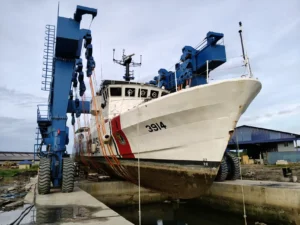
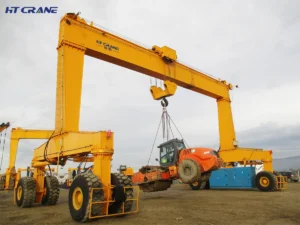
If you manage a marina, boatyard, or naval facility, you already know the pain: vessels stuck in the water waiting for maintenance, slipways that damage hulls, and cranes that simply weren’t built for boats. A marine travel lift solves all three problems in a single machine. It lifts, moves, and launches vessels safely — without fixed rails, without hull damage, and without slowing down your yard. This page covers everything you need to evaluate a marine travel lift: what it does, where it works, what makes ours different, and the full technical specs. If you are ready to specify a unit, our engineering team responds to enquiries within 24 hours. Product Description A marine travel lift — also called a boat travel lift, mobile boat hoist, or self-propelled boat hoist — is a rubber-tyred gantry crane designed specifically for vessel handling. The portal frame straddles the boat in the water. Polyester slings are positioned under the hull. The vessel is then lifted clear and driven anywhere on land. No rail tracks. No fixed infrastructure. Just one machine that handles haul-out,…
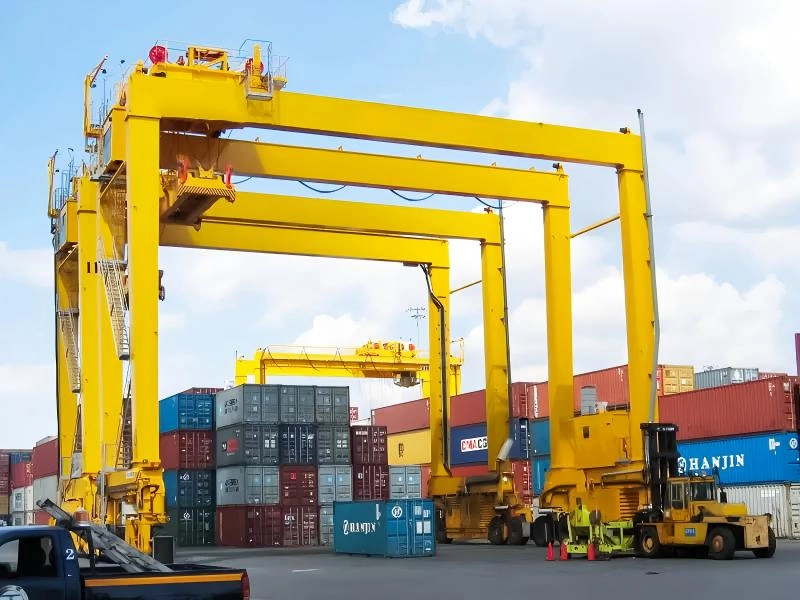
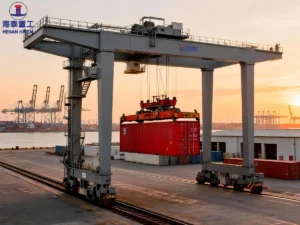
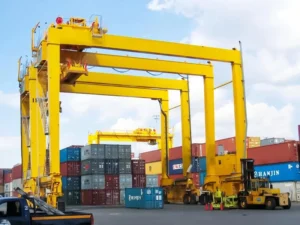
Choosing the right RTG crane supplier impacts your entire port or yard operation. A wrong choice means delays, downtime, and costly repairs. We help you avoid that. As a certified RTG crane manufacturer and exporter, we supply high-performance rubber tyred gantry cranes built for container terminals, intermodal yards, and logistics hubs worldwide. Product Description An RTG crane (Rubber Tyred Gantry Crane) is a mobile overhead crane designed to stack and move ISO containers in port container yards and inland depots. Unlike rail-mounted cranes(RMG Container Gantry Crane), RTG cranes run on rubber tyres — giving them full mobility across the yard without fixed infrastructure. 👉View Professional Buying Guide: RTG Crane vs RMG Crane: Which One Actually Fits Your Project? RTG cranes are the backbone of modern container terminal operations. They bridge the gap between ship-to-shore cranes and horizontal transport, enabling efficient container stacking, retrieval, and yard organization. Why Buy From Us? HT Cranes is a professional manufacturer of RTG cranes with over 15 years of lifting experience. Our cranes are exported to ports and logistics yards across Southeast Asia, the Middle…
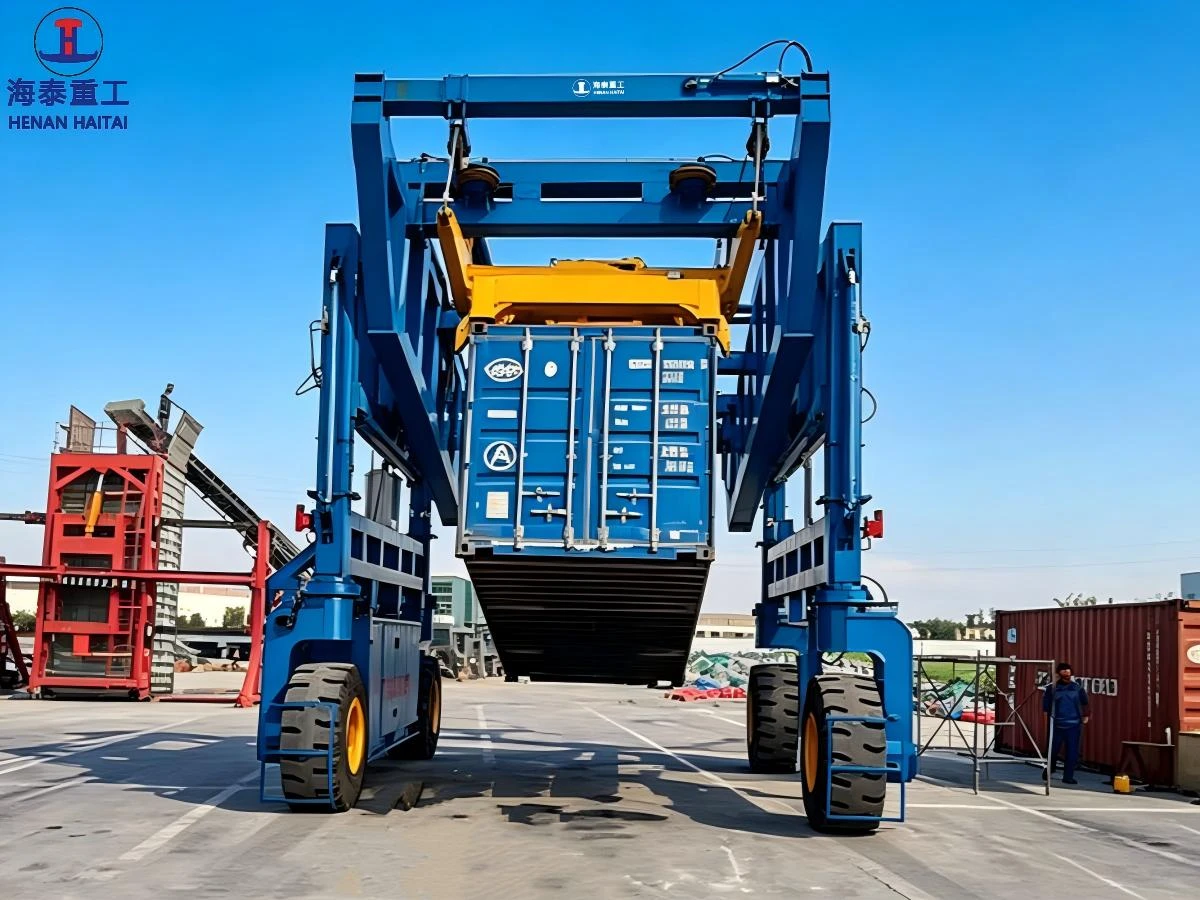
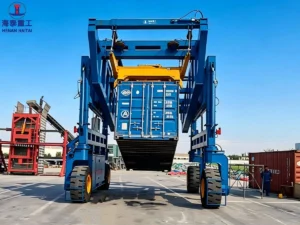
If you handle heavy containers, steel structures, or oversized industrial cargo — and your site lacks fixed power infrastructure — a hydraulic straddle carrier is likely the most practical solution available. It lifts, travels, and places loads without needing overhead structures, rails, or high-voltage power supply. One machine. Full mobility. Minimal civil works. What Is a Hydraulic Straddle Carrier? The Core Concept A hydraulic straddle carrier is a self-propelled heavy lift vehicle. It straddles a load — lifting from below using a hydraulic spreader or lifting beam — and moves freely across the yard on rubber tyres. The entire lift-and-travel cycle is powered by an onboard diesel-hydraulic system. Unlike electric or cable-reel powered cranes, the hydraulic straddle carrier carries its own power source. This makes it fully independent of yard infrastructure. You can deploy it anywhere your surface can support the wheel loads — no fixed installation required. How the Hydraulic System Works The engine drives hydraulic pumps that supply pressurized fluid to the lift cylinders, drive motors, and steering actuators. All motion — lifting, lowering, travelling, and steering —…