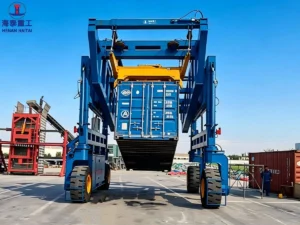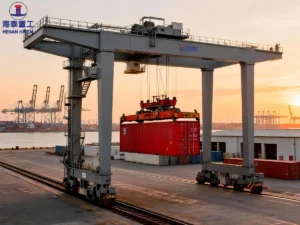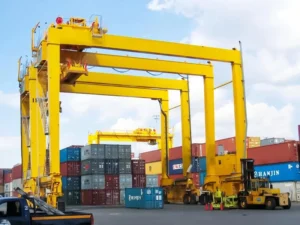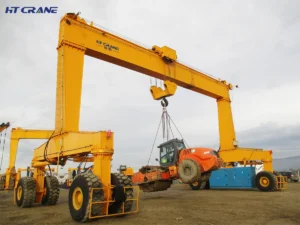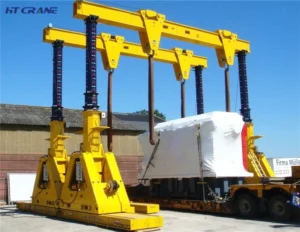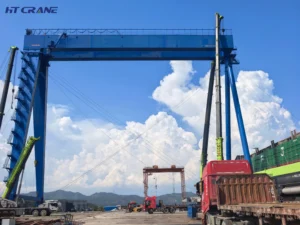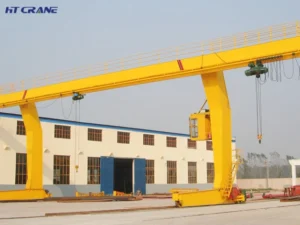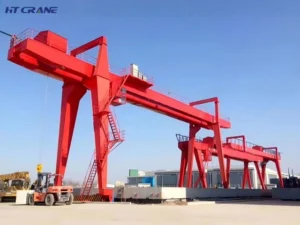
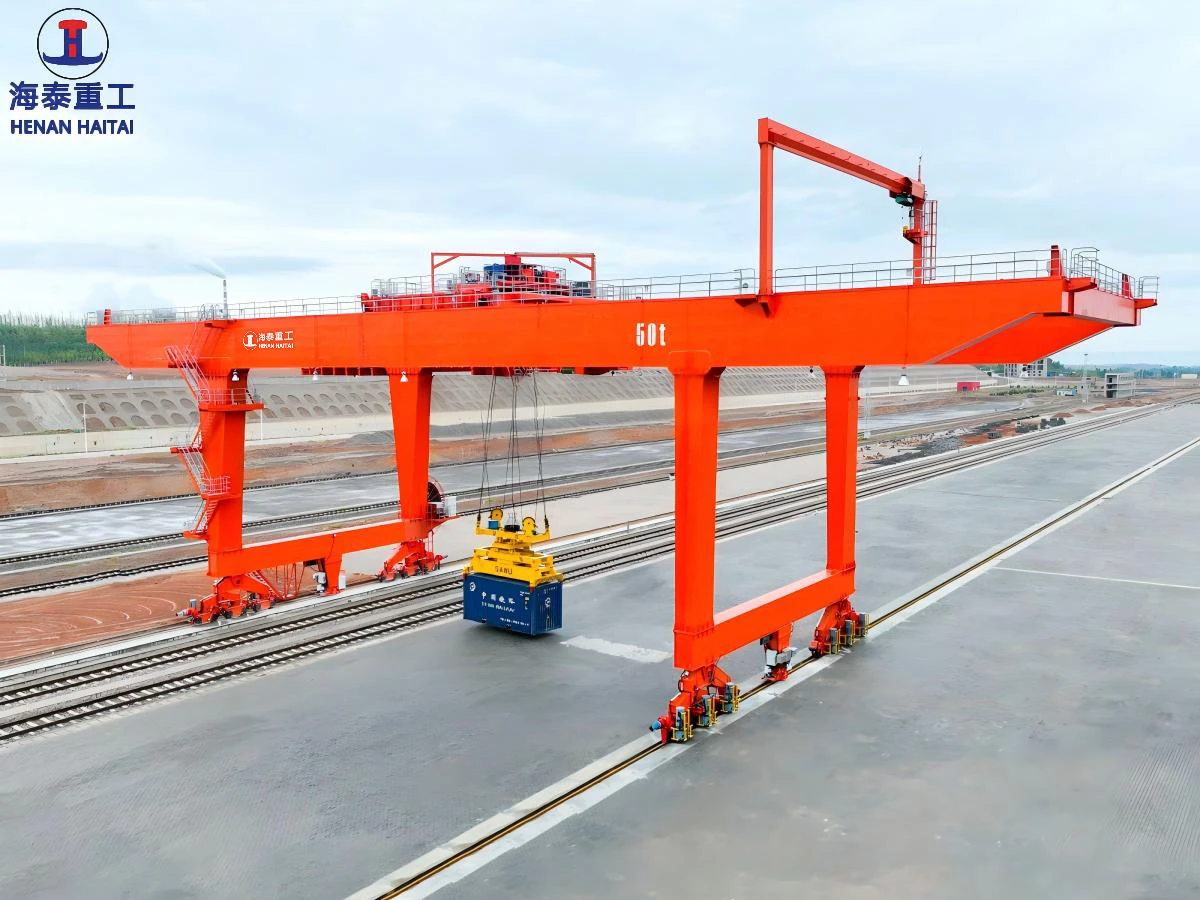
If your terminal is pushing against its capacity ceiling — or you are building a new yard and need to maximize every square metre — an RMG container gantry crane is almost certainly part of the answer. Rail Mounted Gantry cranes deliver the highest container stacking density of any yard equipment type. They are the infrastructure choice of the world’s highest-throughput terminals, and they are increasingly within reach for mid-sized operations that are planning for long-term growth.
The challenge most procurement teams face is not finding RMG container gantry crane— it is knowing what to specify, what to verify, and which suppliers are genuinely capable of delivering a certified, automation-ready system at the scale their operation requires.
This page gives you a clear, practical overview of RMG cranes: how they work, what defines the right specification, what questions to ask any supplier, and why our equipment is trusted by terminal operators across four continents.
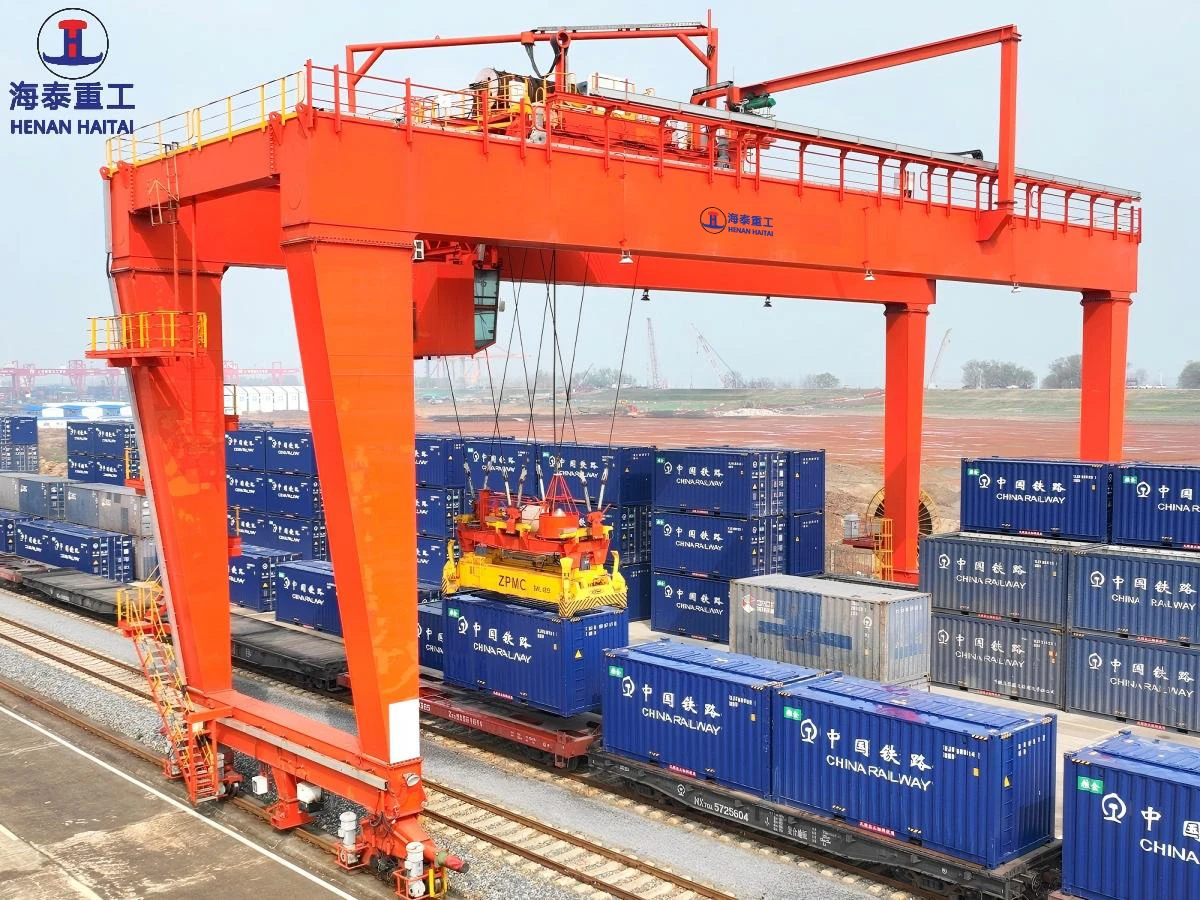
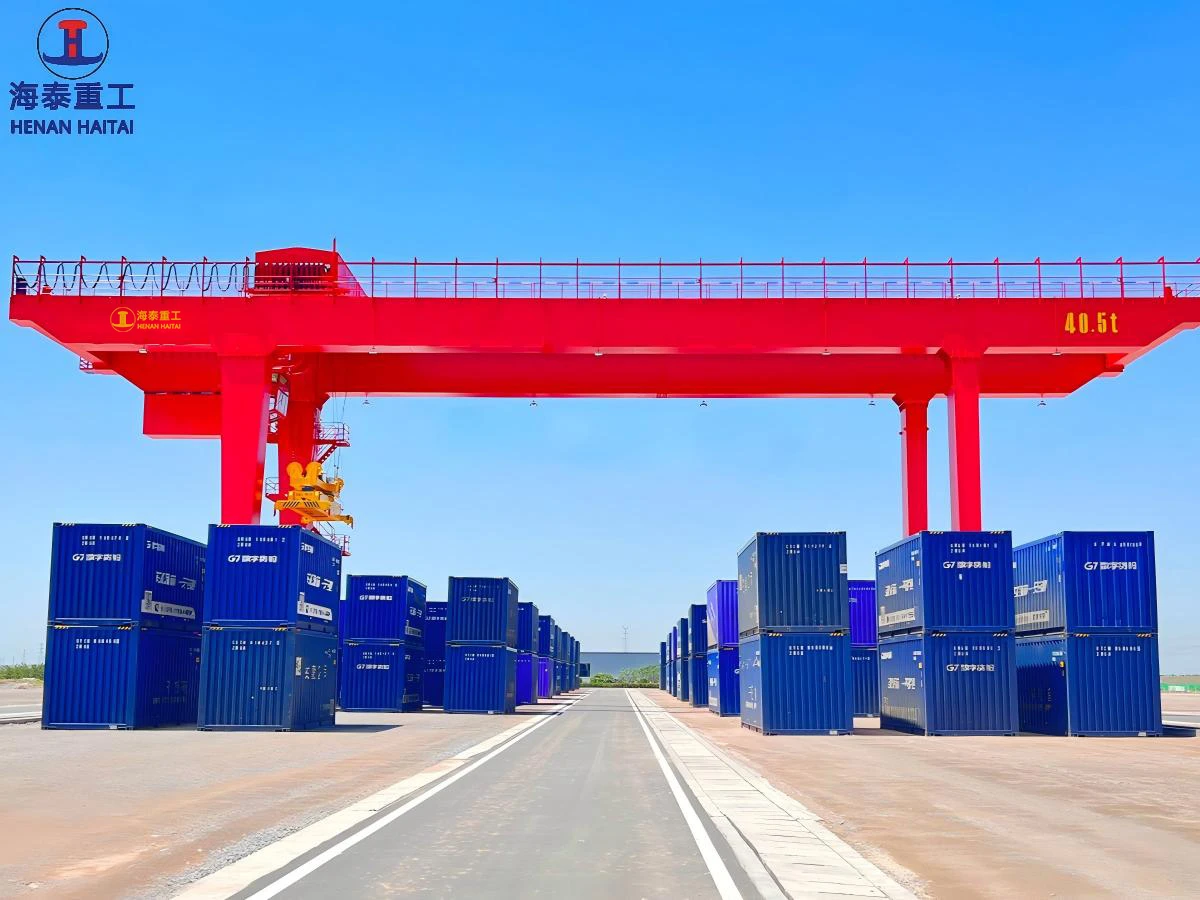
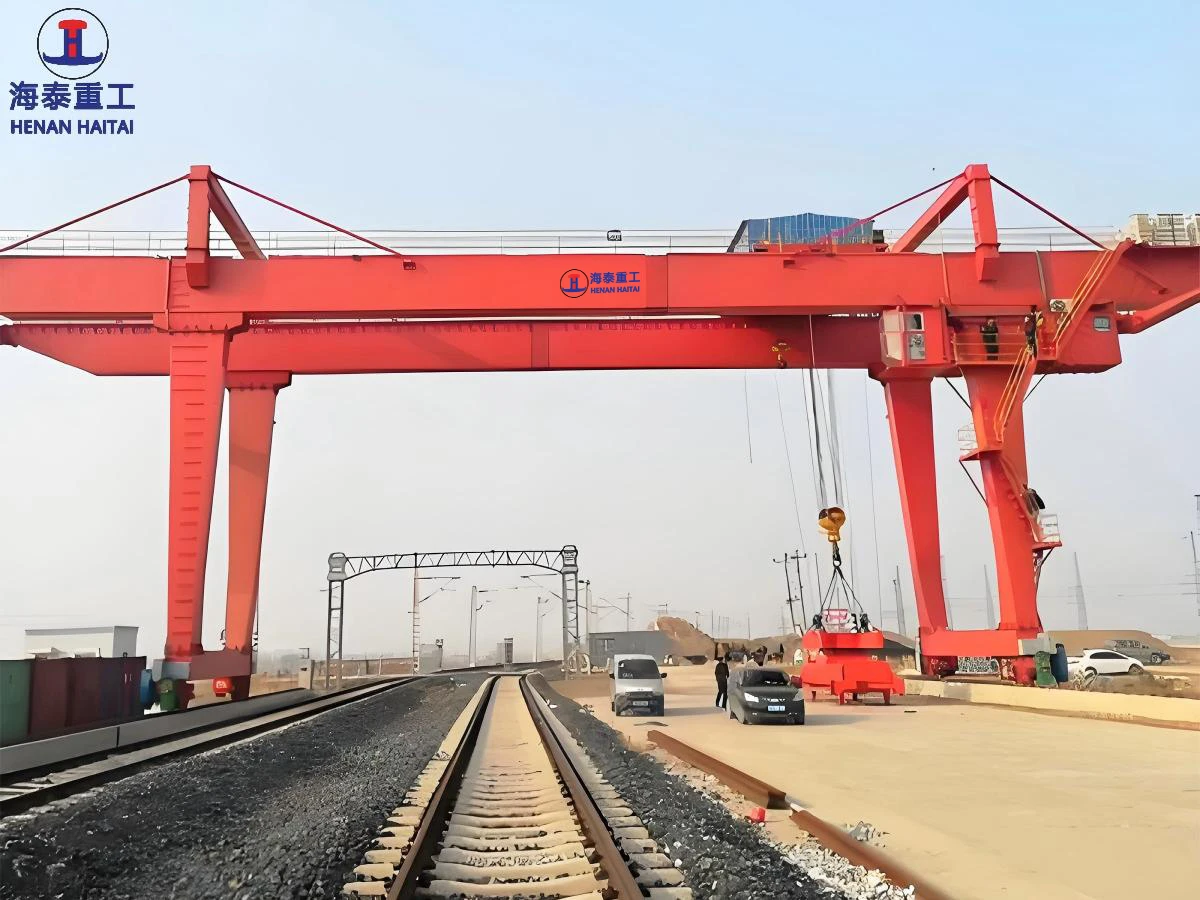
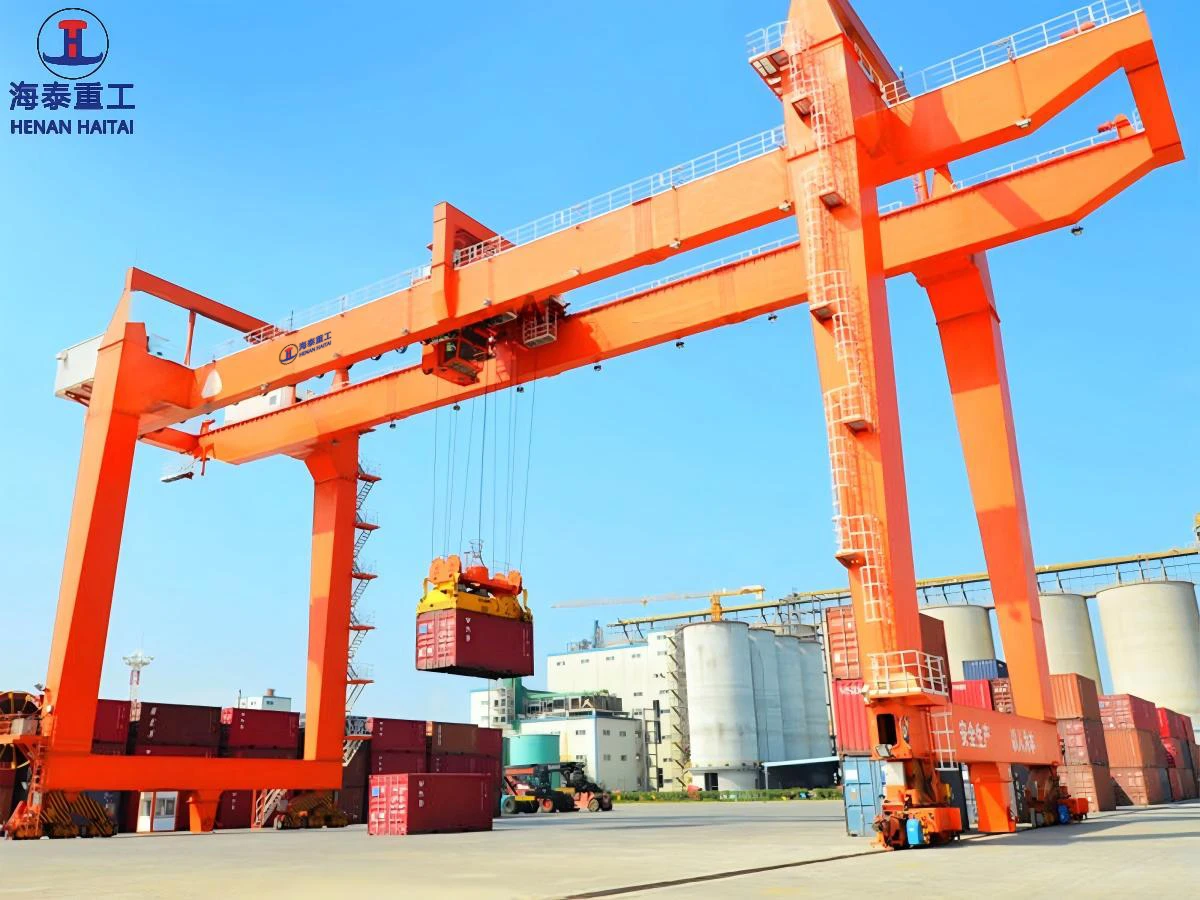
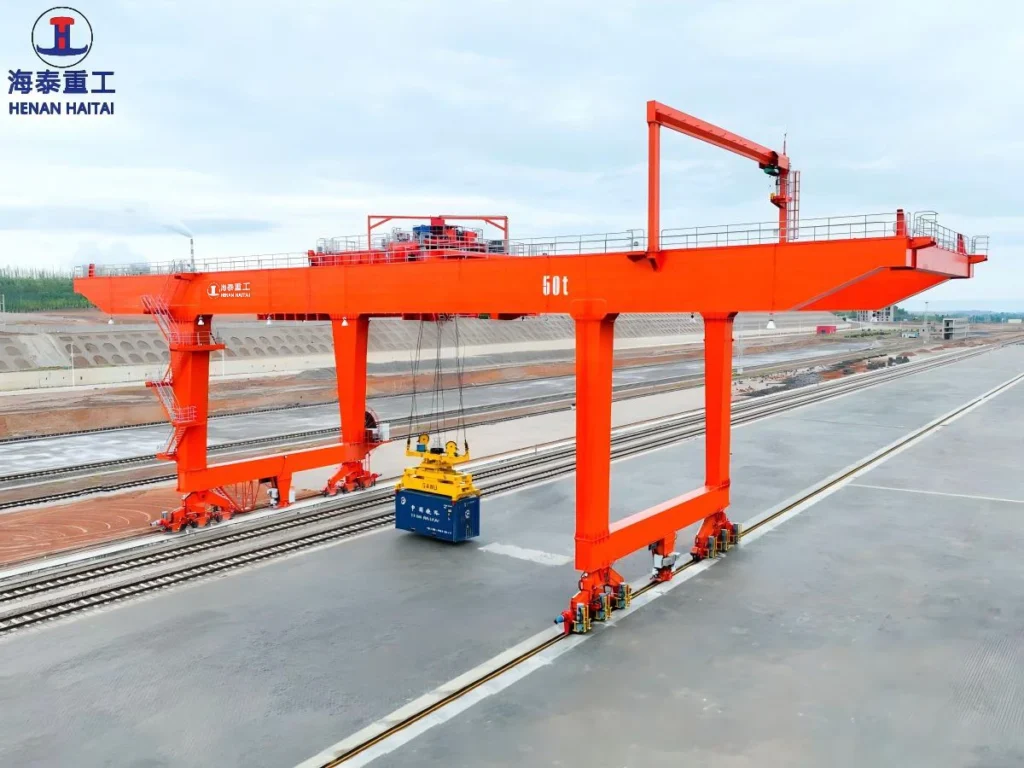
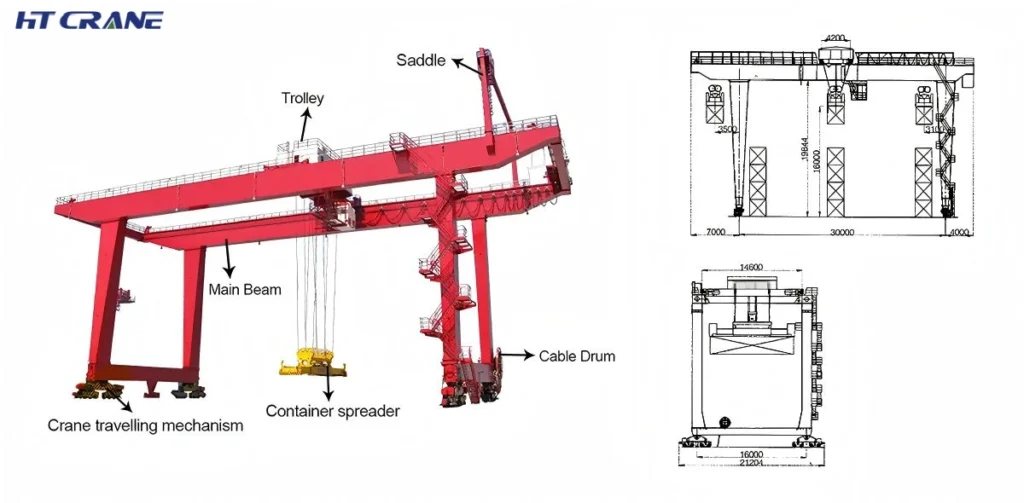
RMG Container Gantry Crane is a large gantry structure that travels on fixed rails installed on the ground. It spans multiple container rows and stacks containers within a defined block. The crane moves along its rail axis to cover the full length of the storage block. A trolley travels across the gantry span to position the spreader over the target container.
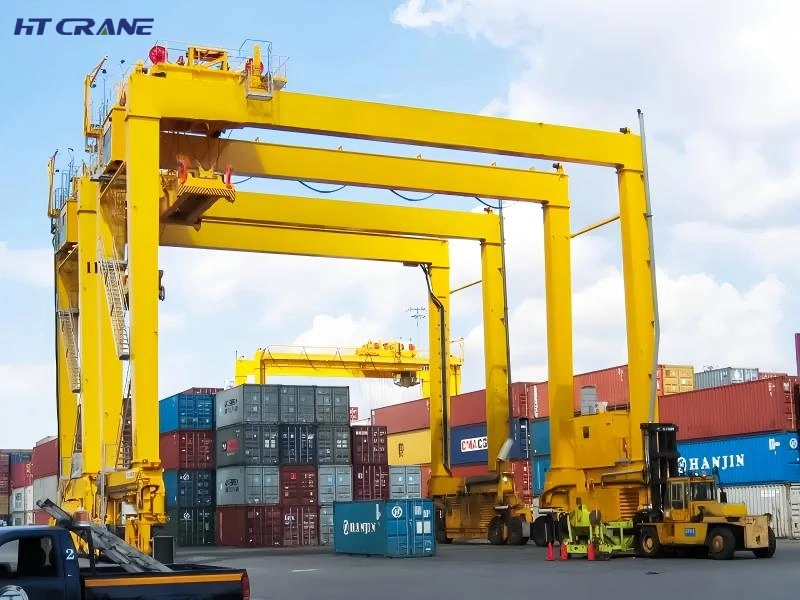
Unlike RMG container gantry crane — which run on rubber tyres and move between blocks — an RMG operates in a fixed corridor. This constraint is also its advantage: the rail system provides precision positioning, enables full automation, and supports higher stacking without the stability limitations of a rubber-tyred machine.
👉View Professional Buying Guide: RTG Crane vs RMG Crane: Which One Actually Fits Your Project?
| Factor | RMG Crane | RTG Crane |
|---|---|---|
| Travel System | Fixed rails | Rubber tyres |
| Stacking Height | Up to 1 over 7 | Up to 1 over 6 |
| Ground Density | Highest | High |
| Mobility Between Blocks | Fixed — crane stays in block | Mobile — can relocate |
| Automation Potential | Highest (rail enables precise positioning) | High (DGPS-based) |
| Civil Infrastructure | Rail foundation required | Pavement only |
| Ideal Operation Size | 500,000+ TEU/year | 100,000–600,000 TEU/year |
RMG container gantry crane are powered by fixed electrical supply — typically via conductor rail or festoon cable system. There is no onboard diesel generator. This makes RMG container gantry crane significantly cleaner and cheaper to operate per move than diesel-electric alternatives. For terminals with sustainability commitments or operating in emission-controlled zones, this is an increasingly decisive factor.
Energy regeneration systems — which feed braking energy back into the grid — are standard on modern RMG designs and further reduce net energy consumption per lift cycle.
| Parameter | Specification Range |
|---|---|
| Lifting Capacity | 40T – 80T (under spreader) |
| Span | 20m – 60m (configurable to yard layout) |
| Stacking Height | 1 over 4 to 1 over 7 |
| Cantilever | 0 – 10m each side (truck lane / rail clearance) |
| Hoisting Speed | 30 – 60 m/min (full load) |
| Trolley Speed | 70 – 180 m/min |
| Gantry Travel Speed | 120 – 240 m/min |
| Power Supply | Conductor rail or festoon cable |
| Control System | PLC + AC VFD (Siemens / ABB) |
| Spreader | Telescopic 20ft / 40ft / 45ft |
| Automation Level | Manual / Semi-Auto / Fully Automated (ASC) |
| Rail Gauge | Custom to project (500mm–1,435mm typical) |
| Design Standard | FEM 1.001, ISO 4301, EN 13001 |
| Certification | CE (EU Machinery Directive 2006/42/EC), ISO 9001 |
| Class | Lifting Capacity | Typical Application |
|---|---|---|
| Standard | 40T – 50T | General container terminals, intermodal yards |
| Heavy Duty | 51T – 65T | High-cube containers, overweight cargo terminals |
| ASC Variant | 40T – 55T | Fully automated terminals, new-build high-density yards |
RMG container gantry crane are available in three automation levels. The right level depends on your throughput, labor market, and capital budget:
Manual operation — operator in cabin controls all movements. Standard for smaller yards and operations where labor cost is not the primary driver.
Semi-automated (ARMG) — gantry travel and stacking sequences are automated; operator supervises via remote workstation and intervenes for exception handling. Widely deployed at mid-size terminals upgrading from manual operations.
Fully automated (ASC) — all crane functions are automated including truck interchange. No operator required per crane. This is the standard configuration for new greenfield terminals above 1 million TEU annual capacity.
The primary application for RMG container gantry crane is large container terminal storage yards. At terminals handling 500,000 TEU per year and above, the rail-mounted gantry’s density advantage over rubber-tyred alternatives becomes the decisive operational factor.
A typical RMG block covers 40–50 ground slots, stacks 1 over 6 high, and serves two truck lanes and one rail or internal transport lane within a single crane corridor. This layout achieves ground slot utilization of 75–85% — consistently higher than any RTG-based layout can sustain.
The world’s highest-throughput terminals — Rotterdam ECT Delta, Hamburg HHLA CTA, Busan Newport — operate fully automated stacking crane systems built on the RMG principle. The fixed rail provides the positional precision that automated systems require. No rubber-tyred crane can achieve equivalent automation reliability at scale.
For terminals planning automation — whether today or within the next five years — specifying an automation-ready RMG from the outset is significantly more cost-effective than retrofitting a manual crane later. Our cranes are designed with automation upgrade paths built into the structural and control architecture from the first unit.
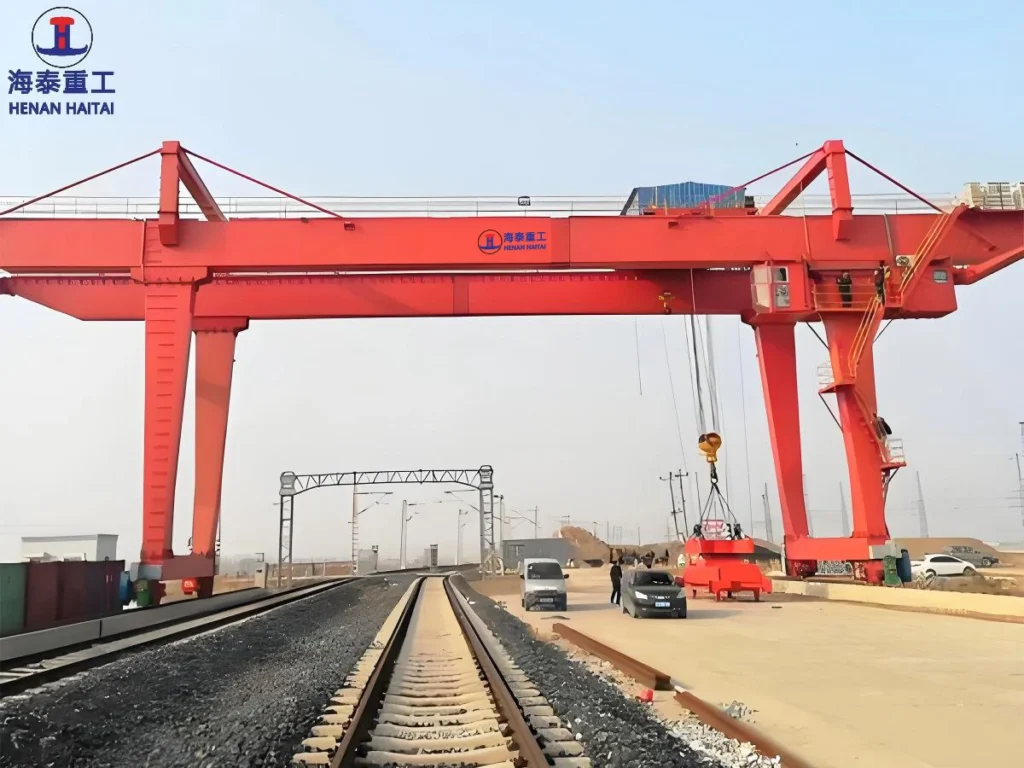
RMG container gantry crane are widely deployed at inland container depots and intermodal rail terminals. In this context, the crane spans a rail track — loading and unloading containers directly from rail wagons on one side and truck lanes on the other. The rail-mounted gantry is the natural structural choice for a facility that is already built around rail infrastructure.
As port land becomes increasingly constrained, operators are expanding storage density rather than footprint. Converting an RTG yard to RMG operation — with higher stacking and fixed infrastructure — is a proven strategy for increasing terminal TEU capacity without acquiring additional land. This is a project type our engineering team handles regularly.
HT crane RMG container gantry crane structures are designed to FEM 1.001 and EN 13001 standards for a 25-year design life under rated operating conditions. Box girder construction with full-penetration welds and non-destructive testing at critical joints is standard — not an option. The rail bogie system uses hardened steel wheels and sealed bearing units designed for the rail loads and cycle frequencies typical of high-throughput terminal operation.
All hoisting, trolley, and gantry travel drives use AC variable frequency drive (VFD) technology. Regenerative braking on the hoist and gantry travel axes feeds recovered energy back into the terminal’s power grid. In high-throughput operation, regenerated energy can offset 20–30% of gross energy consumption — a meaningful reduction in operating cost over the crane’s service life.
The control system architecture uses redundant PLC controllers with fail-safe logic for all safety-critical functions. Standard safety features include anti-collision radar on gantry travel, spreader anti-sway control, overload protection with automatic cutoff, wind speed monitoring with automatic storm securing, and comprehensive operator display and alarm systems.
Port environments are among the most corrosive industrial settings: salt air, moisture, and high equipment utilization combine to accelerate coating degradation. Our standard marine-grade coating system specifies Sa 2.5 blast preparation and a three-coat epoxy system with minimum 280-micron dry film thickness — exceeding the minimum required by most port operators and delivering measurably longer coating life between major repaints.
An RMG container gantry crane project requires a rail foundation designed to carry the crane’s wheel loads through the full operational cycle. This is a geotechnical and structural engineering task that must be completed before crane procurement is finalized — the crane’s wheel load specification drives the foundation design, not the other way around.
We provide full wheel load documentation and rail specification for foundation design as part of our standard pre-contract technical package. We also work with specialist civil engineers and can provide introductions to firms experienced in port crane foundation design.
RMG container gantry crane require a fixed electrical supply rated to the crane’s peak demand — typically 400–800 kW per crane depending on capacity and speed specification. The conductor rail or festoon cable system must be installed as part of the civil works package. We supply the crane-side electrical components and provide the supply interface specification for your electrical contractor.
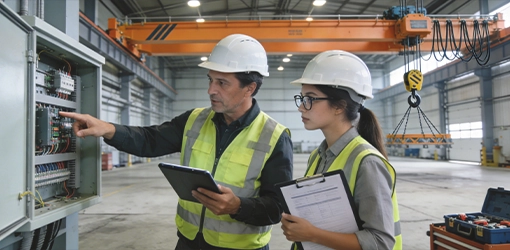
Before placing an RMG container gantry crane order, verify four things with any supplier:
1. CE Declaration of Conformity — issued by the manufacturer, not a trading company. Confirm the manufacturing entity matches the entity on the CE document.
2. Structural design certification — FEM 1.001 and EN 13001 compliance should be verified by an independent structural engineer, not self-declared. Ask for the design appraisal certificate.
3. Reference terminals — request the names and locations of operating terminals using the supplier’s RMG cranes. Verify throughput and automation level. A supplier with no verifiable operating references at scale is a significant risk.
4. Automation upgrade path — if automation is in your five-year plan, confirm the crane’s control architecture supports it. Ask specifically what is required to upgrade from manual to semi-automated operation and what that upgrade costs.
An RMG container gantry crane is the highest-density, highest-automation-potential yard equipment available for container terminals. For operations planning growth beyond 500,000 TEU, or for any greenfield terminal where land efficiency is the primary design constraint, it is the rational long-term infrastructure choice.
The specification process requires more upfront engineering than a rubber-tyred crane purchase — rail foundation design, electrical supply planning, and automation architecture decisions all need to be made early. But this investment in planning pays back in a crane system that operates reliably for 25 years with lower per-move energy cost and a clear path to automation.
Our team provides full pre-contract technical support: wheel load documentation, electrical supply specifications, foundation design introduction, and TOS integration planning. Contact us to begin the technical review for your project.












If you operate a container terminal, port facility, or industrial yard, you know the challenges: containers stuck on the ground, yard operations slowed by inefficient equipment, and cranes that weren’t designed for modern logistics. A Single Girder Rubber Tyred Gantry Crane solves all these problems in one machine. It lifts, moves, and stacks containers safely — without fixed rails, without bottlenecks, and without compromising operational efficiency. This page covers everything you need to evaluate a Single Girder RTG Crane: how it works, where it excels, what makes ours different, and the full technical specifications. Ready to specify a unit? Our engineering team responds to enquiries within 24 hours, ensuring you get the right solution for your port or yard. Product Introduction The Single Girder Rubber Tired Gantry Crane is a self-propelled, mobile gantry lifting system mounted on rubber tyres. It operates without fixed rails, tracks, or permanent ground infrastructure — making it one of the most flexible solutions available for container handling, industrial yard lifting, and logistics operations where site conditions or operational flexibility make rail-mounted systems impractical. The crane’s…
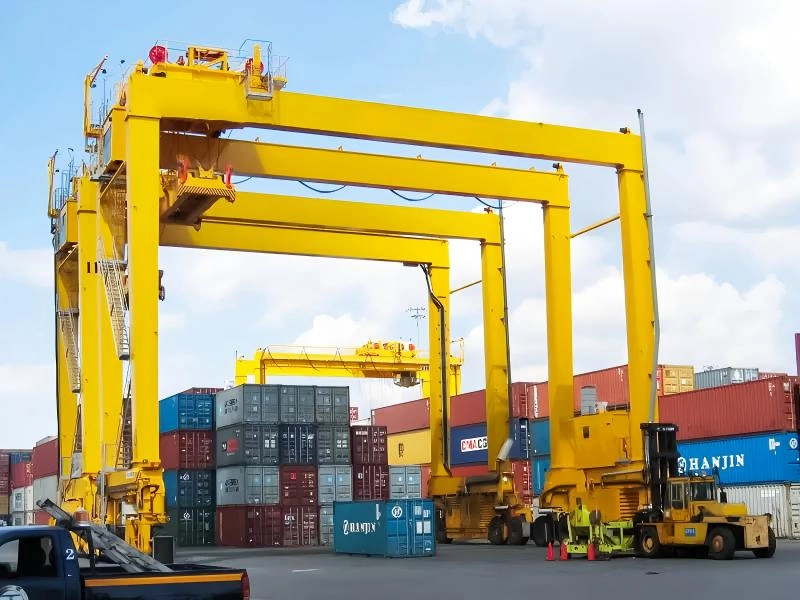
Choosing the right RTG crane supplier impacts your entire port or yard operation. A wrong choice means delays, downtime, and costly repairs. We help you avoid that. As a certified RTG crane manufacturer and exporter, we supply high-performance rubber tyred gantry cranes built for container terminals, intermodal yards, and logistics hubs worldwide. Product Description An RTG crane (Rubber Tyred Gantry Crane) is a mobile overhead crane designed to stack and move ISO containers in port container yards and inland depots. Unlike rail-mounted cranes(RMG Container Gantry Crane), RTG cranes run on rubber tyres — giving them full mobility across the yard without fixed infrastructure. 👉View Professional Buying Guide: RTG Crane vs RMG Crane: Which One Actually Fits Your Project? RTG cranes are the backbone of modern container terminal operations. They bridge the gap between ship-to-shore cranes and horizontal transport, enabling efficient container stacking, retrieval, and yard organization. Why Buy From Us? HT Cranes is a professional manufacturer of RTG cranes with over 15 years of lifting experience. Our cranes are exported to ports and logistics yards across Southeast Asia, the Middle…
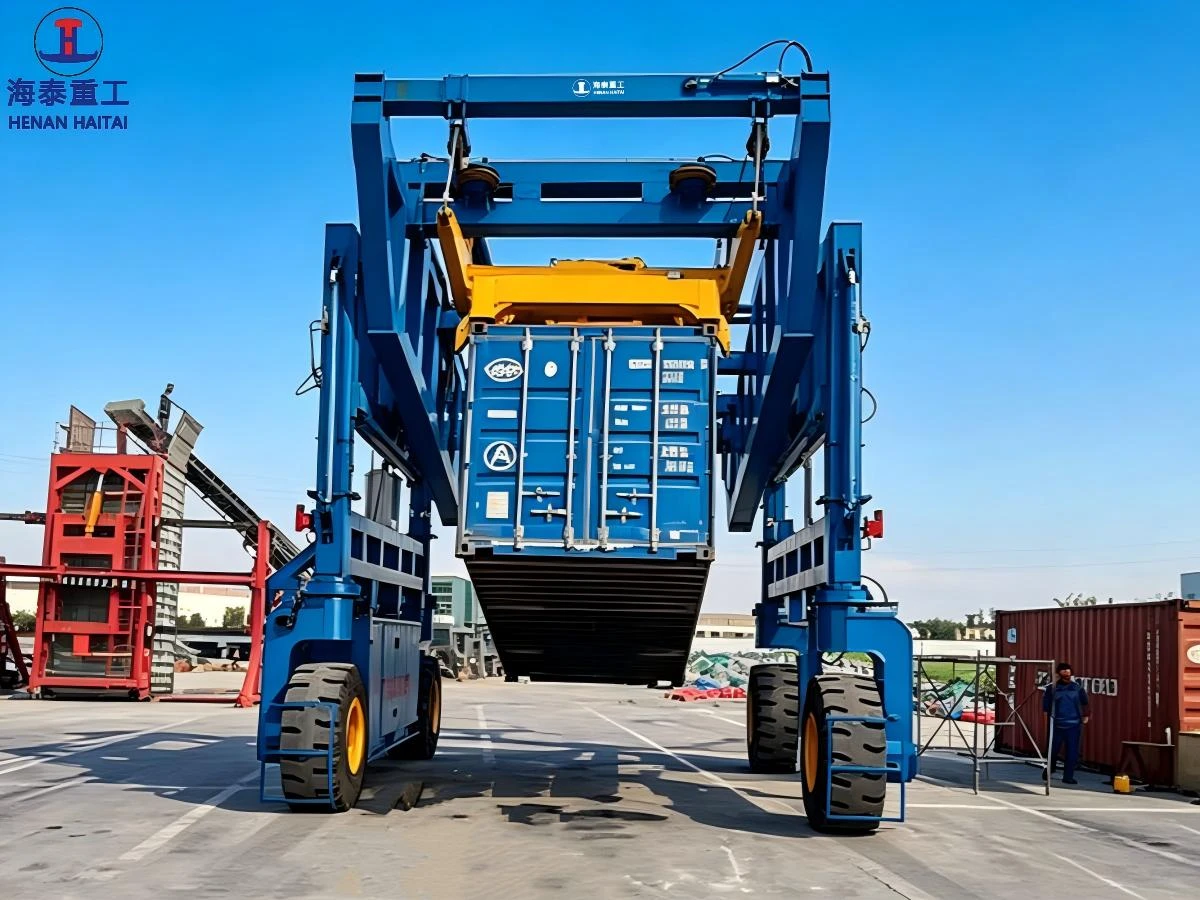
If you handle heavy containers, steel structures, or oversized industrial cargo — and your site lacks fixed power infrastructure — a hydraulic straddle carrier is likely the most practical solution available. It lifts, travels, and places loads without needing overhead structures, rails, or high-voltage power supply. One machine. Full mobility. Minimal civil works. What Is a Hydraulic Straddle Carrier? The Core Concept A hydraulic straddle carrier is a self-propelled heavy lift vehicle. It straddles a load — lifting from below using a hydraulic spreader or lifting beam — and moves freely across the yard on rubber tyres. The entire lift-and-travel cycle is powered by an onboard diesel-hydraulic system. Unlike electric or cable-reel powered cranes, the hydraulic straddle carrier carries its own power source. This makes it fully independent of yard infrastructure. You can deploy it anywhere your surface can support the wheel loads — no fixed installation required. How the Hydraulic System Works The engine drives hydraulic pumps that supply pressurized fluid to the lift cylinders, drive motors, and steering actuators. All motion — lifting, lowering, travelling, and steering —…