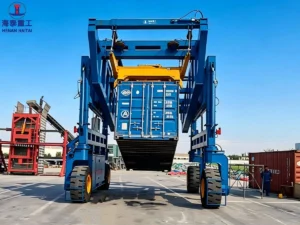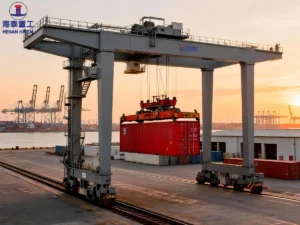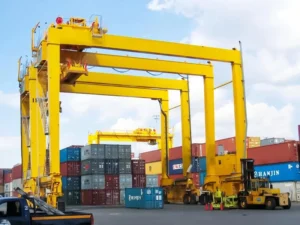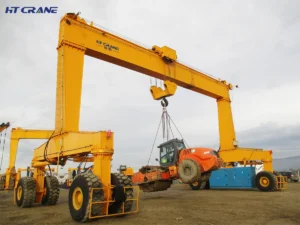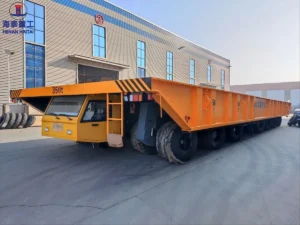
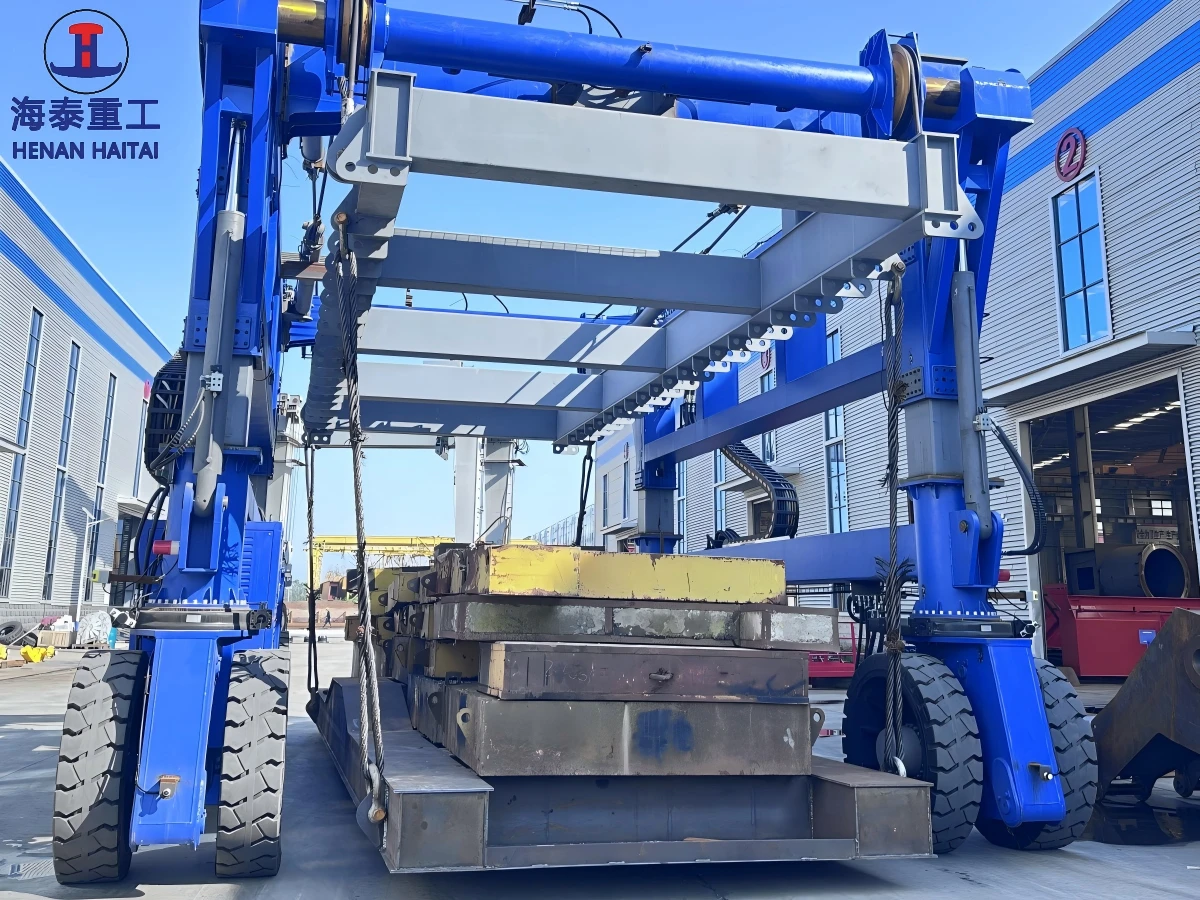
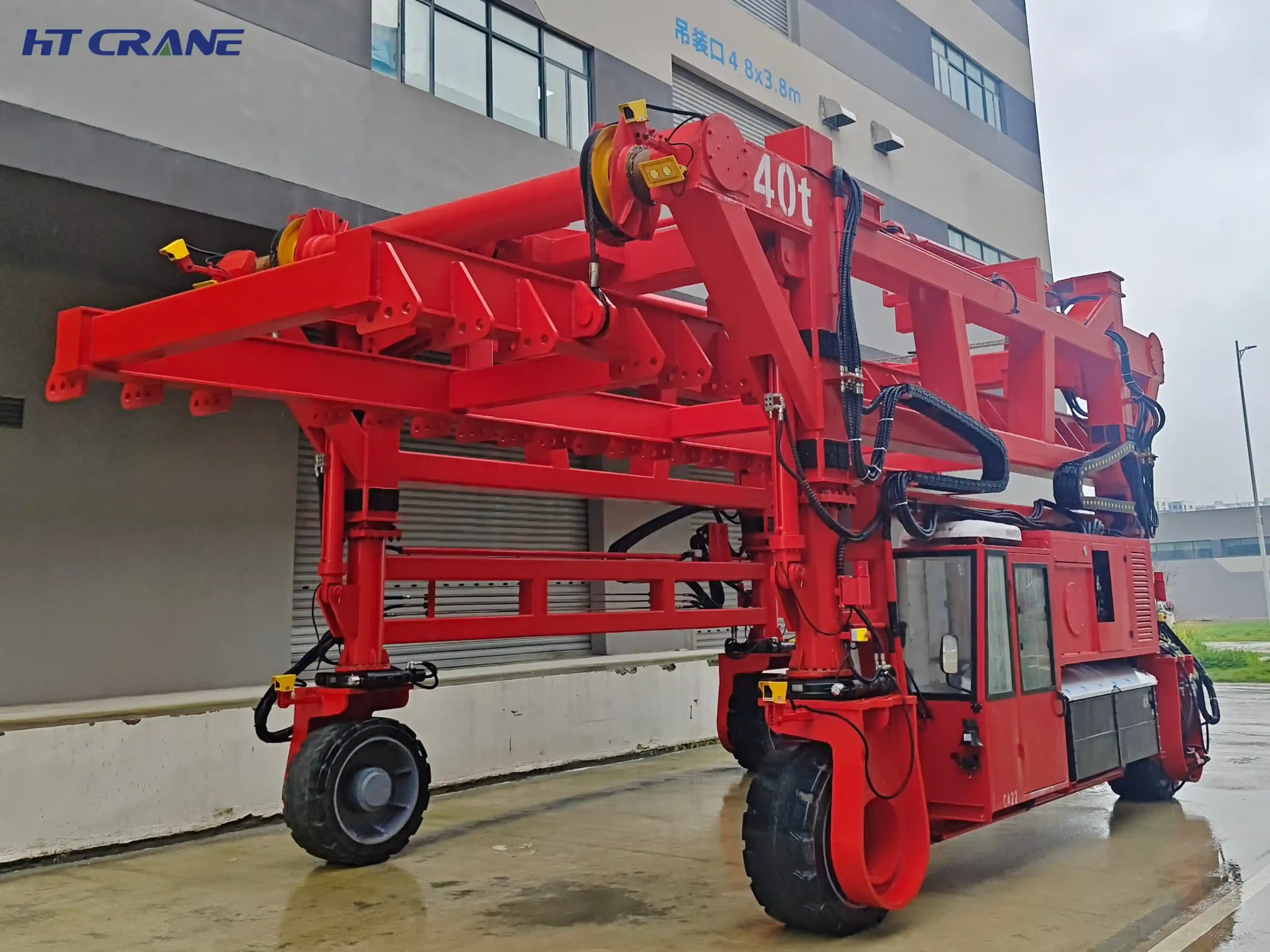
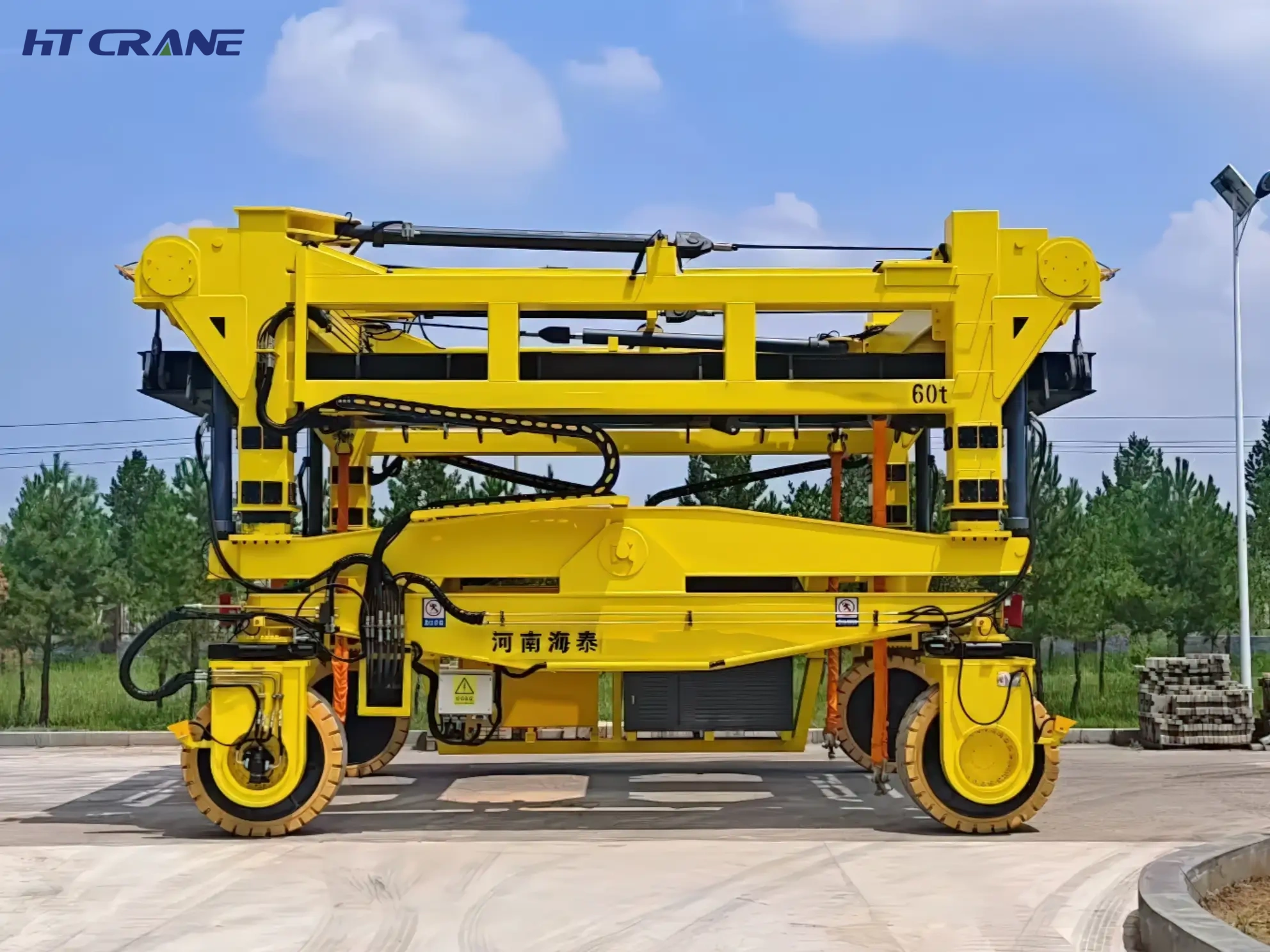
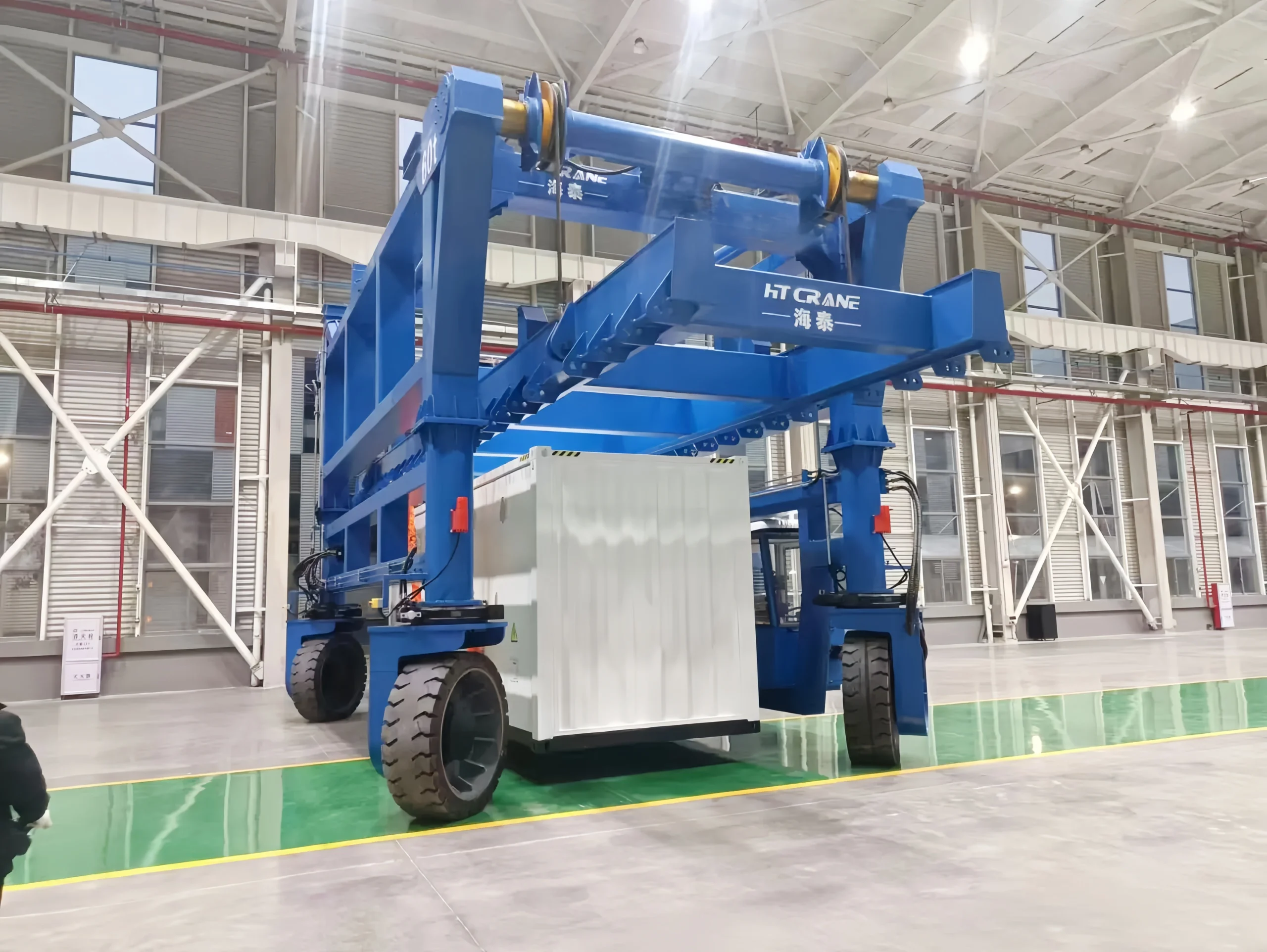
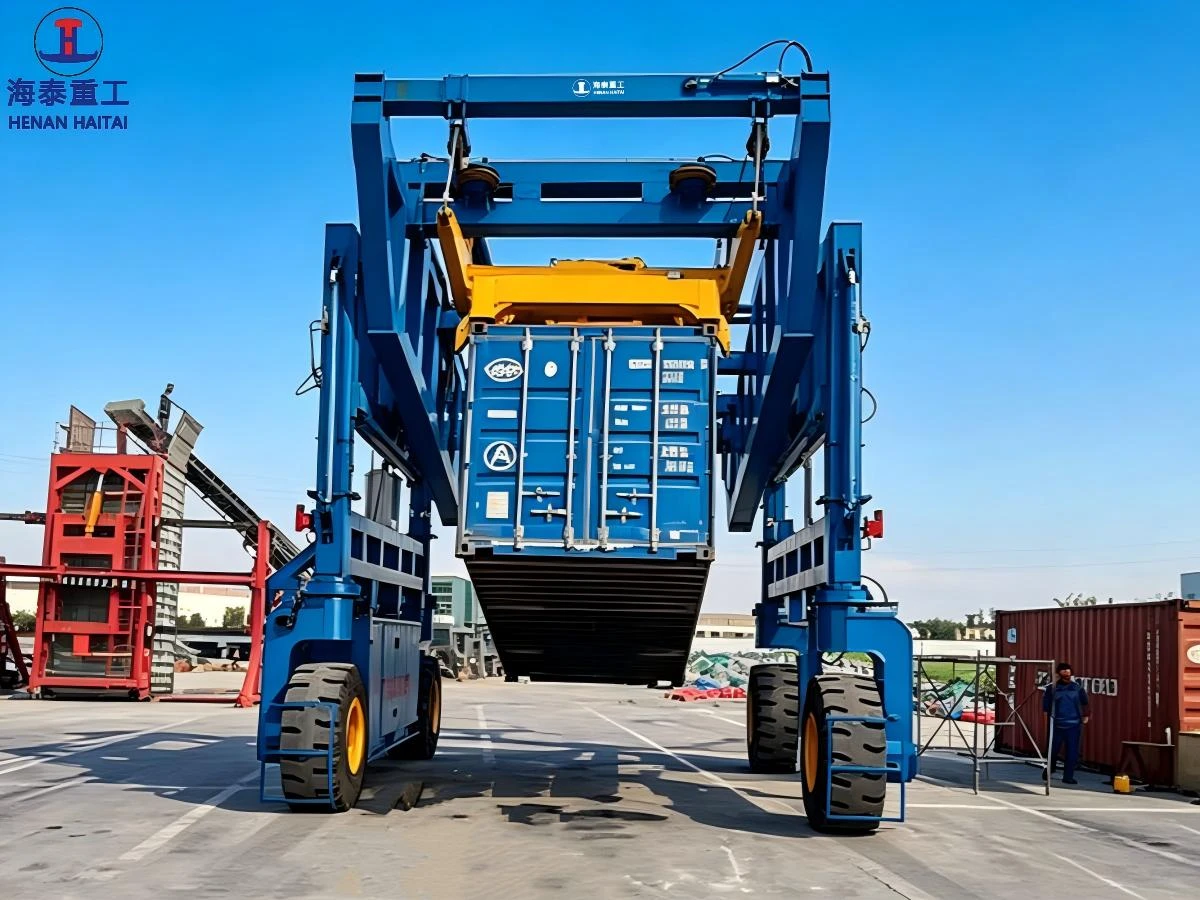
If you handle heavy containers, steel structures, or oversized industrial cargo — and your site lacks fixed power infrastructure — a hydraulic straddle carrier is likely the most practical solution available. It lifts, travels, and places loads without needing overhead structures, rails, or high-voltage power supply. One machine. Full mobility. Minimal civil works.
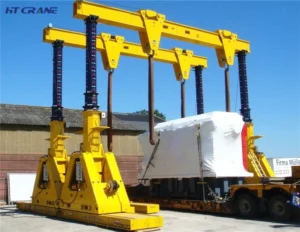
A hydraulic straddle carrier is a self-propelled heavy lift vehicle. It straddles a load — lifting from below using a hydraulic spreader or lifting beam — and moves freely across the yard on rubber tyres. The entire lift-and-travel cycle is powered by an onboard diesel-hydraulic system.
Unlike electric or cable-reel powered cranes, the hydraulic straddle carrier carries its own power source. This makes it fully independent of yard infrastructure. You can deploy it anywhere your surface can support the wheel loads — no fixed installation required.

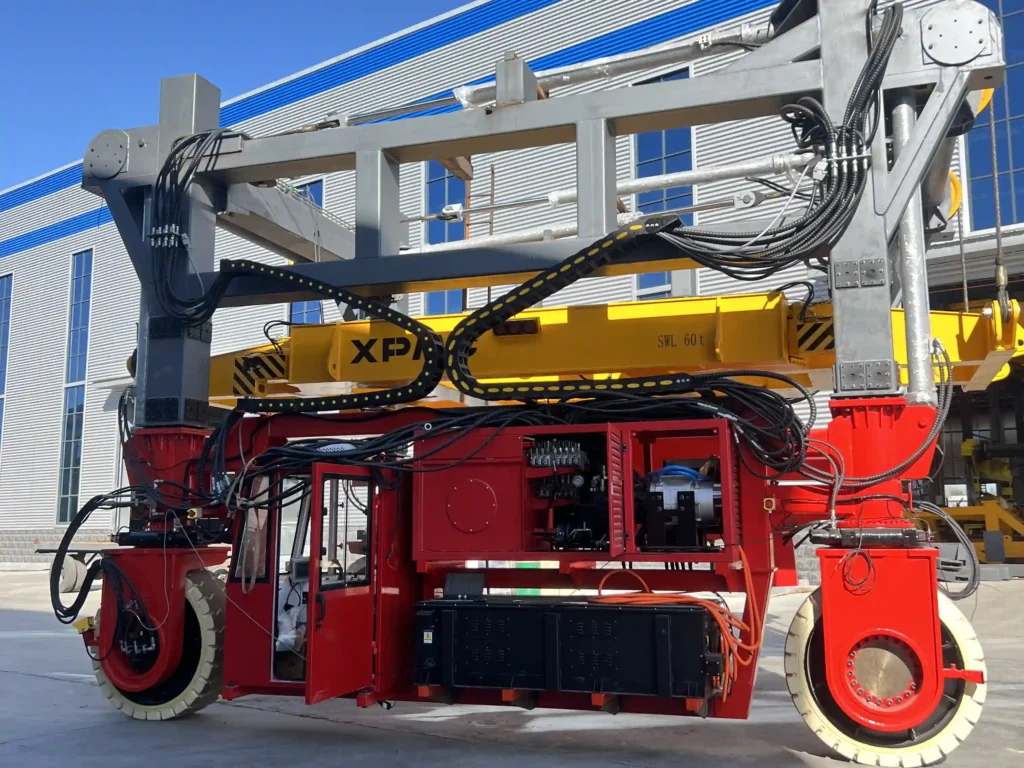
The engine drives hydraulic pumps that supply pressurized fluid to the lift cylinders, drive motors, and steering actuators. All motion — lifting, lowering, travelling, and steering — is controlled through proportional hydraulic valves.
This architecture gives the operator smooth, stepless control at any speed. It is particularly valuable when positioning loads onto trailers, rail flatcars, or storage saddles where millimetre-level precision matters. Operators familiar with hydraulic excavators or heavy transport equipment adapt quickly to this control system.
The primary difference is the power and drive system. Electric straddle carriers use AC drive motors powered by either an onboard generator or an external cable reel. Hydraulic models use hydraulic motors driven by an onboard pump set.
For facilities with no fixed electrical infrastructure, the diesel-hydraulic model eliminates a significant dependency. For high-throughput terminals with power supply already in place, electric models may offer lower running costs per cycle. The right choice depends on your site — not on which technology is newer.
| Parameter | Specification Range |
|---|---|
| Lifting Capacity | 30T / 45T / 50T / 80T / 100T (custom available) |
| Lifting Height | 4,500 mm – 7,500 mm (model dependent) |
| Span (Inside Leg) | 3,500 mm – 6,000 mm (configurable) |
| Drive System | Diesel-Hydraulic (Cummins / Perkins / Deutz engine) |
| Travel Speed (Laden) | 0 – 8 km/h |
| Travel Speed (Unladen) | 0 – 15 km/h |
| Steering Modes | 4-wheel, crab steer, pivot steer |
| Tyre Type | Solid rubber industrial or pneumatic |
| Cabin Standard | ROPS/FOPS certified, climate-controlled, 270° visibility |
| Control System | Joystick + proportional hydraulic valve control |
| Operating Temperature | -25°C to +50°C (cold weather spec available) |
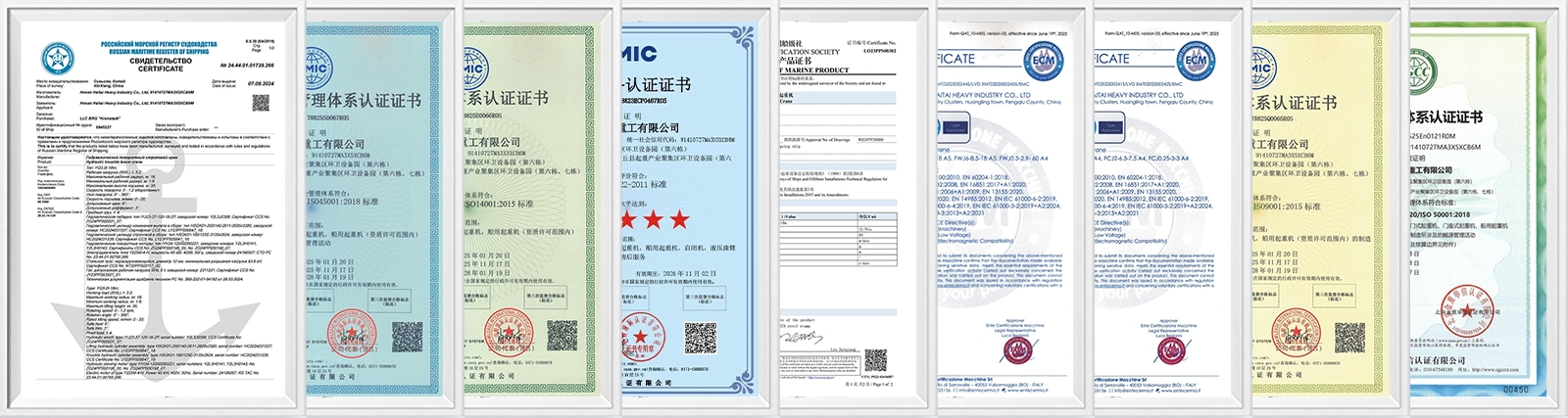
| Certifications | CE (EU Machinery Directive 2006/42/EC), ISO 9001 |
The standard delivery includes one lifting attachment. Common configurations:
Multiple attachments can be supplied with a single machine and changed in the field.

| Capacity Class | Typical Application |
|---|---|
| 30T – 45T | Inland container depots, light industrial yards |
| 50T | Port-adjacent logistics, intermodal facilities |
| 60T – 80T | Heavy industrial yards, steel plant logistics |
| 100T+ | Heavy lift projects, module yards, offshore logistics |
Custom capacities outside these ranges are available through our engineering team.
In port-adjacent facilities and smaller container depots, hydraulic straddle carriers handle ISO container loading and unloading without requiring the civil infrastructure of an RTG crane system. They are a practical first-equipment choice for growing depots that need immediate operational capacity.
A single 50T unit can handle the full cycle — receiving a container from a truck, moving it to the storage area, and retrieving it for outbound loading — without a secondary horizontal transport vehicle. This simplifies operations and reduces labor requirements compared to crane-plus-tractor configurations.
Steel service centers, fabrication yards, and module assembly facilities frequently use hydraulic straddle carriers to move loads that standard port equipment cannot handle. Lifting beams and custom saddle frames allow the machine to handle coils, structural sections, pressure vessels, and prefabricated modules that would otherwise require a crane plus rigging team.
The diesel-hydraulic system is well suited to these environments, where power supply is often limited and the load mix changes frequently.
For module yards, offshore supply bases, and project cargo terminals, the flexibility and high-capacity lifting of a hydraulic straddle carrier is often the defining operational advantage. Custom models with extended leg clearance, enhanced stability systems, and explosion-proof specifications are available for specialized applications.
This is the feature that drives most purchase decisions. No rails. No overhead structures. No power supply installation. The machine arrives, is commissioned, and is operational within days. For buyers in markets with limited infrastructure or rapidly growing operations, this is a decisive advantage.
Standard models are designed for -20°C operating conditions. Cold weather packages — including hydraulic fluid rated to -40°C, engine block heaters, and insulated cabin systems — are available for operations in Northern and Eastern Europe, Central Asia, and similar climates.
Four independent steering modes — straight travel, 4-wheel coordinated steer, crab steer, and pivot steer — allow the machine to manoeuvre in yards where space is constrained. This is particularly relevant for facilities retrofitting a straddle carrier into an existing layout not originally designed for one.
Design life is 15–20 years under normal conditions, per FEM 1.001 crane classification standards. Hydraulic systems are maintainable by any qualified hydraulic technician — unlike proprietary electronic drive systems that require specialist support. This matters significantly for buyers in markets where OEM service coverage is limited.
Regardless of which supplier you approach, verify these three things before signing a contract:
A supplier who cannot provide all three is a risk — regardless of price.






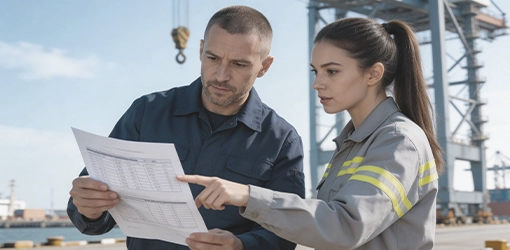
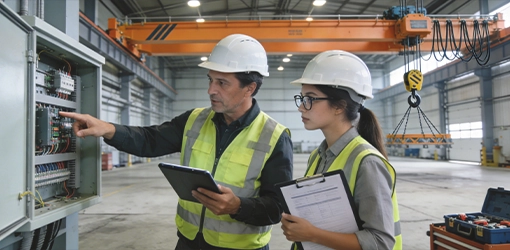
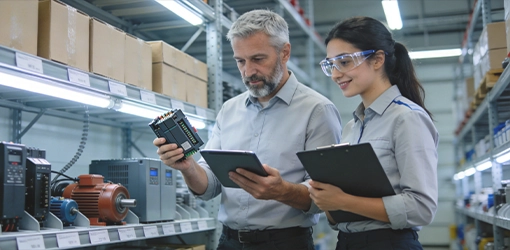


If you handle heavy containers, steel structures, or oversized industrial cargo — and your site lacks fixed power infrastructure — a hydraulic straddle carrier is likely the most practical solution available. It lifts, travels, and places loads without needing overhead structures, rails, or high-voltage power supply. One machine. Full mobility. Minimal civil works. What Is a Hydraulic Straddle Carrier? The Core Concept A hydraulic straddle carrier is a self-propelled heavy lift vehicle. It straddles a load — lifting from below using a hydraulic spreader or lifting beam — and moves freely across the yard on rubber tyres. The entire lift-and-travel cycle is powered by an onboard diesel-hydraulic system. Unlike electric or cable-reel powered cranes, the hydraulic straddle carrier carries its own power source. This makes it fully independent of yard infrastructure. You can deploy it anywhere your surface can support the wheel loads — no fixed installation required. How the Hydraulic System Works The engine drives hydraulic pumps that supply pressurized fluid to the lift cylinders, drive motors, and steering actuators. All motion — lifting, lowering, travelling, and steering —…
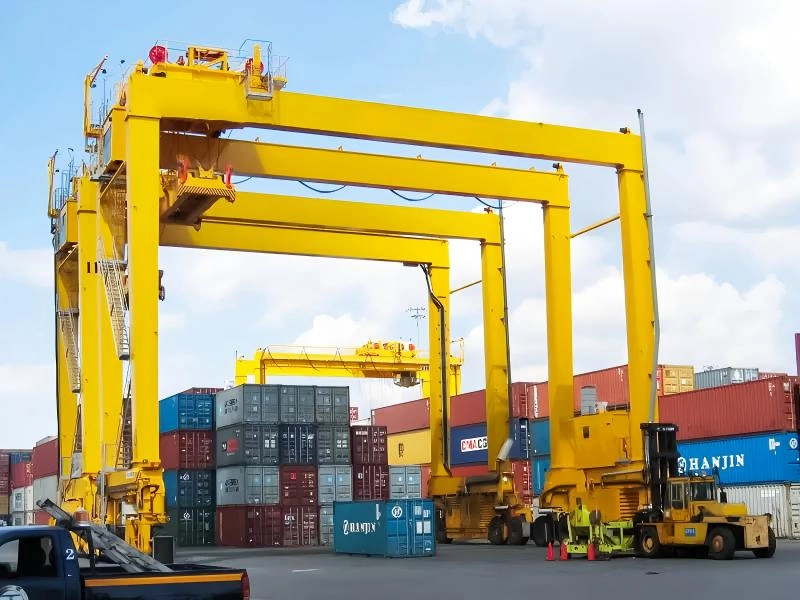
Choosing the right RTG crane supplier impacts your entire port or yard operation. A wrong choice means delays, downtime, and costly repairs. We help you avoid that. As a certified RTG crane manufacturer and exporter, we supply high-performance rubber tyred gantry cranes built for container terminals, intermodal yards, and logistics hubs worldwide. Product Description An RTG crane (Rubber Tyred Gantry Crane) is a mobile overhead crane designed to stack and move ISO containers in port container yards and inland depots. Unlike rail-mounted cranes(RMG Container Gantry Crane), RTG cranes run on rubber tyres — giving them full mobility across the yard without fixed infrastructure. 👉View Professional Buying Guide: RTG Crane vs RMG Crane: Which One Actually Fits Your Project? RTG cranes are the backbone of modern container terminal operations. They bridge the gap between ship-to-shore cranes and horizontal transport, enabling efficient container stacking, retrieval, and yard organization. Why Buy From Us? HT Cranes is a professional manufacturer of RTG cranes with over 15 years of lifting experience. Our cranes are exported to ports and logistics yards across Southeast Asia, the Middle…
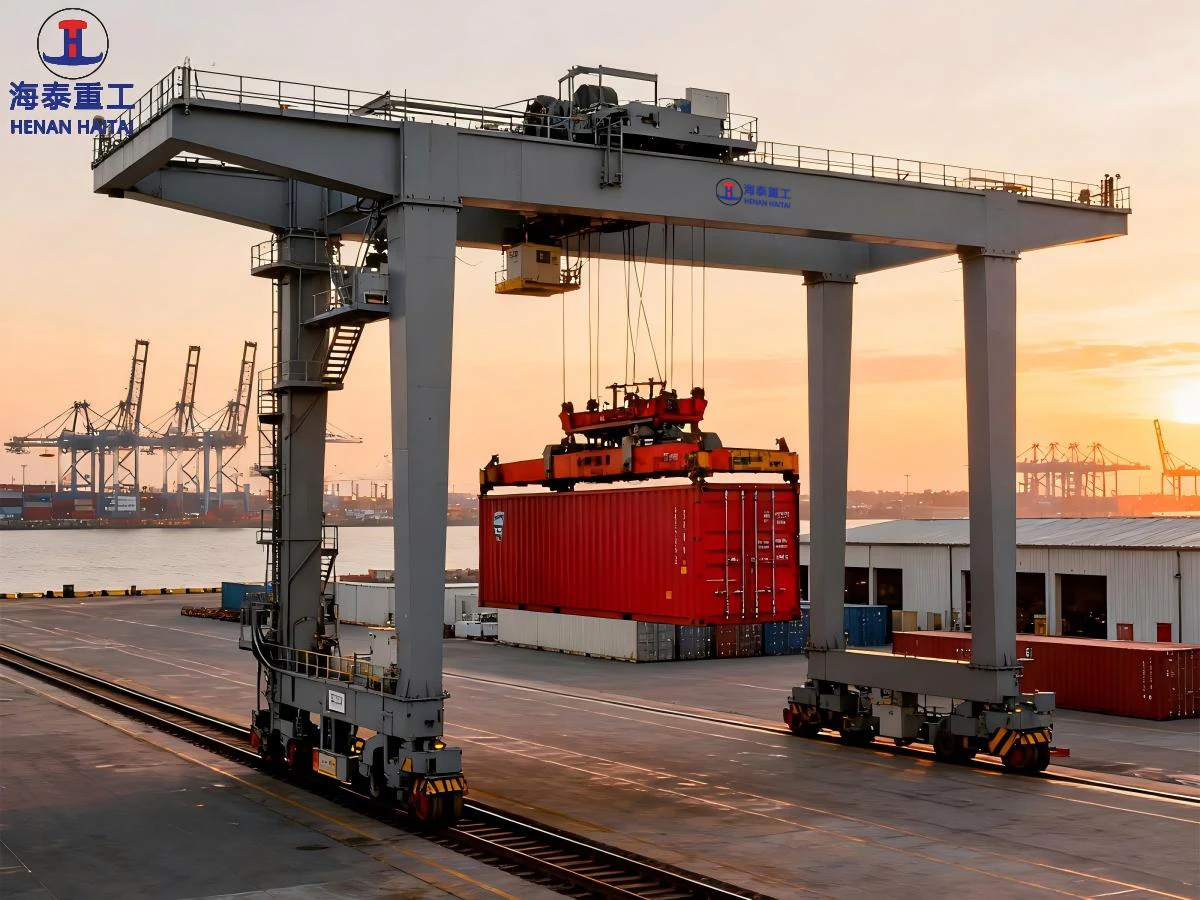
If your terminal is pushing against its capacity ceiling — or you are building a new yard and need to maximize every square metre — an RMG container gantry crane is almost certainly part of the answer. Rail Mounted Gantry cranes deliver the highest container stacking density of any yard equipment type. They are the infrastructure choice of the world’s highest-throughput terminals, and they are increasingly within reach for mid-sized operations that are planning for long-term growth. The challenge most procurement teams face is not finding RMG container gantry crane— it is knowing what to specify, what to verify, and which suppliers are genuinely capable of delivering a certified, automation-ready system at the scale their operation requires. This page gives you a clear, practical overview of RMG cranes: how they work, what defines the right specification, what questions to ask any supplier, and why our equipment is trusted by terminal operators across four continents. What Is an RMG Container Gantry Crane? The Core Design RMG Container Gantry Crane is a large gantry structure that travels on fixed rails installed on…