Material Handling Equipment

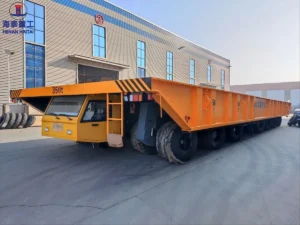
Hydraulic Platform Transporter — for Oversize and Overweight Cargo Handling

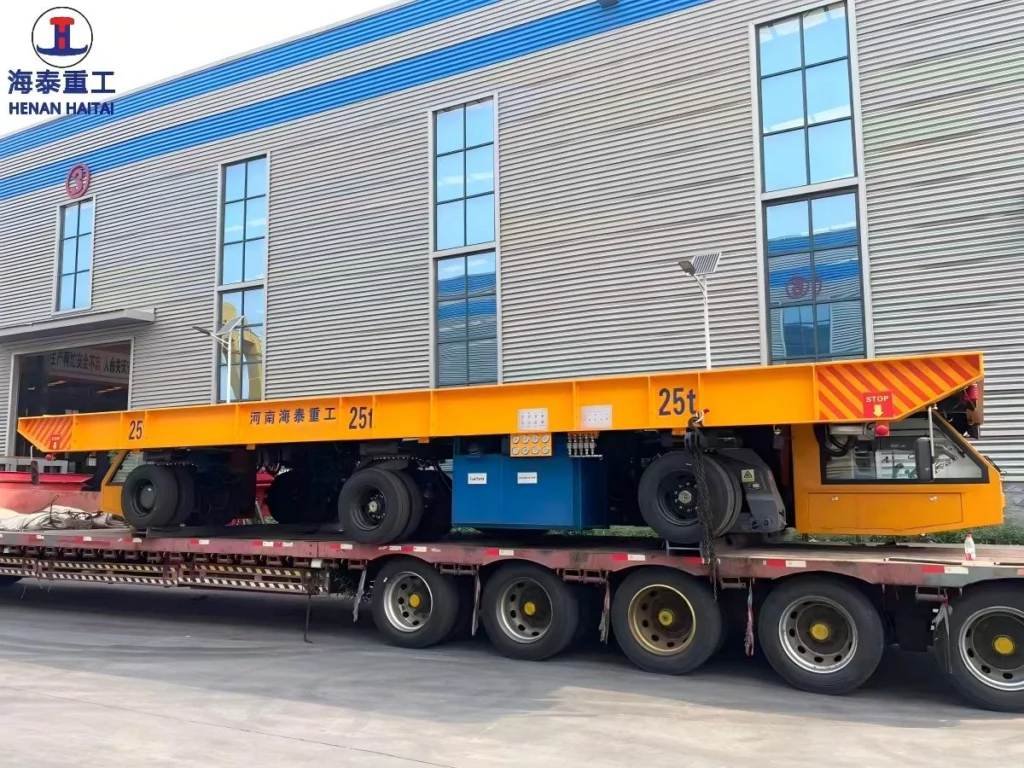
A modular, self-propelled (or hydraulically towed) multi-axle heavy-haul system engineered to move loads ranging from 50 to 1,000 tons across industrial sites, ports, shipyards, and construction projects.
  • Lifting capacity: 50 ~ 1000 tons
  • Axle line load capacity: 25 ~ 45 tons per axle line
  • Platform width: Approx. 2.4 – 3.0 m
  • Travel speed (loaded): Approx. 3–8 km/h
Quality Assurance
safe and stable
powerful performance
perfect after-sales service

Moving a 200-ton reactor vessel across a refinery yard, or a 500-ton bridge segment onto its piers, is not a job for a standard truck or trailer. It calls for an equipment that can spread enormous concentrated weight across dozens of wheels, steer with millimeter precision in tight spaces, and keep the cargo level even when the ground underneath it isn’t.

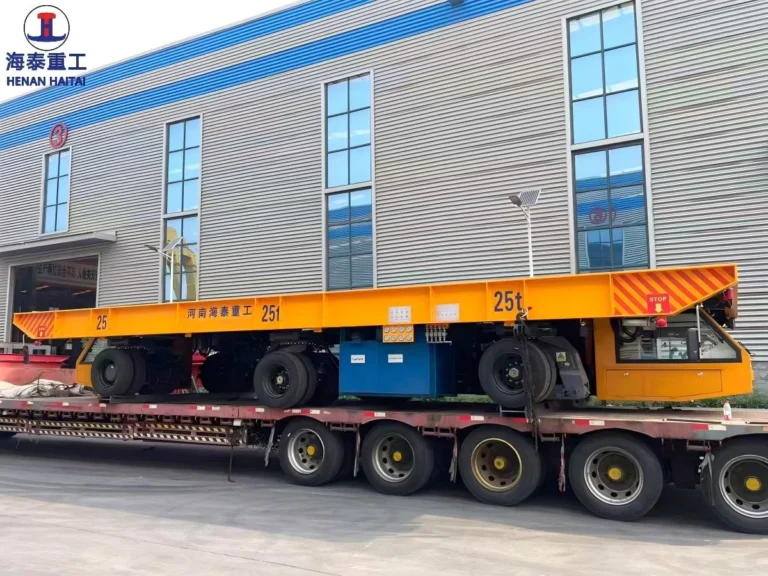
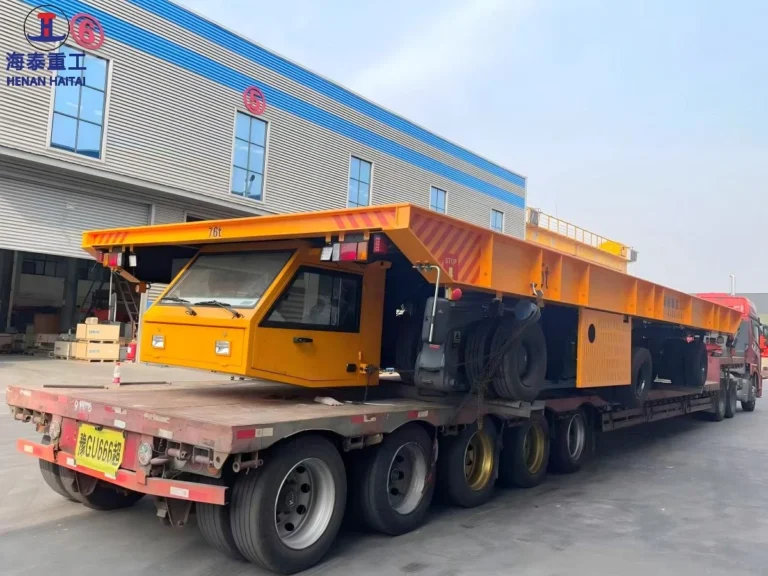
Available across a 50 to 1,000 ton capacity range, the Haitai hydraulic platform transporter is a heavy-duty multi-axle trailer solution for oversize and overweight cargo handling. Whether transporting a prefabricated building module across a jobsite, loading a transformer onto a barge, or shifting a ship segment within a dry dock, the Haitai transporter is designed to allow cargo—typically requiring cranes, gantries, or custom rigging—to simply roll into position.

What Is Haitai Hydraulic Platform Transporter?

Haitai hydraulic platform transporter is commonly known in the industry as Hydraulic Platform Transporter (HPT). It covers capacities from 50 to 1,000 tons and features a modular multi-axle design, depending on its setup. Every axle line is equipped with its own hydraulic suspension, independent steering, and load-sensing mechanism, and multiple axle lines can be linked to create a unified, continuous deck.

Engineered as a modular, hydraulically towed multi-axle heavy-haul system, the Haitai Hydraulic Platform Transporter is built to transport loads between 50 and 1,000 tons across industrial facilities, ports, shipyards, and construction sites. Its foundation lies in independently steerable axle lines with hydraulic suspension, which evenly spreads concentrated loads over the ground—enabling it to carry cargo beyond the safe handling limits of standard trailers or cranes.

Thanks to its modular structure, axle lines can be connected side-by-side or end-to-end, adjusting both capacity and footprint precisely to suit the load—be it a wind turbine nacelle, a pressure vessel, a precast bridge girder, or an entire ship block. This adaptability defines the transporter: a project requiring 80 tons today may demand 400 tons next year, yet the same axle-line components can usually be reconfigured or expanded instead of necessitating a completely new unit.
Get Quote

HT crane hydraulic platform transporter models’ each unit is factory-assembled, fully load-tested, and CE certifiedready for shipment. They centers on three core objectives critical to heavy-haul operators:

  • 1. Even weight distribution—to prevent overloading either the cargo or the ground at any single point
  • 2. Precise, low-speed maneuverability—to navigate crowded yards, narrow gates, and tight indoor spaces
  • 3. Load stability on uneven surfaces—to keep the deck level and cargo secure even as individual axles traverse bumps, ramps, or inclines

Haitai Hydraulic Platform Transporter Structure and Components

A Haitai hydraulic platform transporter is built from a set of standardized modules that combine to form the complete transport system:

Main Frame (Deck Structure)

A high-strength, precision-welded steel frame, typically box-section or I-beam construction, that forms the load-bearing platform. This frame is engineered to resist bending and torsional stress under concentrated heavy loads while keeping overall deck weight as low as possible.

Axle Lines (Bogie Assemblies)

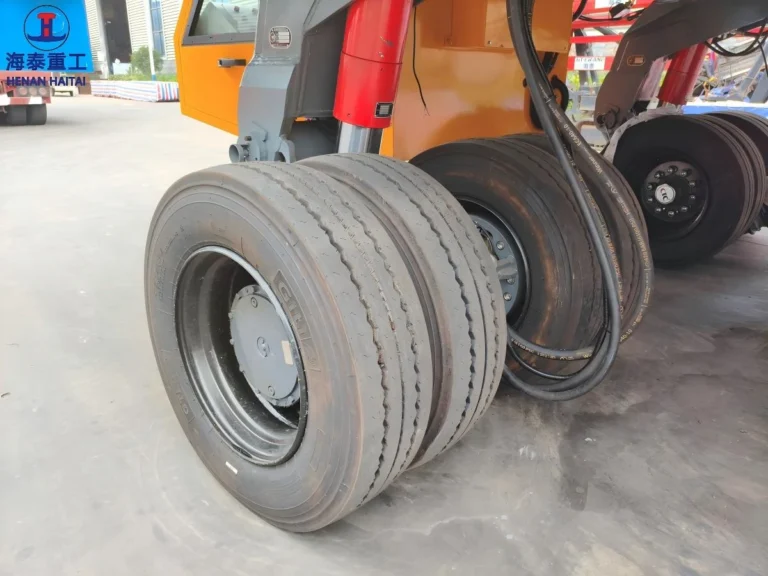
The modular “building blocks” of the system. Each axle line contains its own wheels, tires, hydraulic suspension cylinders, and steering mechanism, and can operate independently or in synchronized groups.

Hydraulic Suspension System

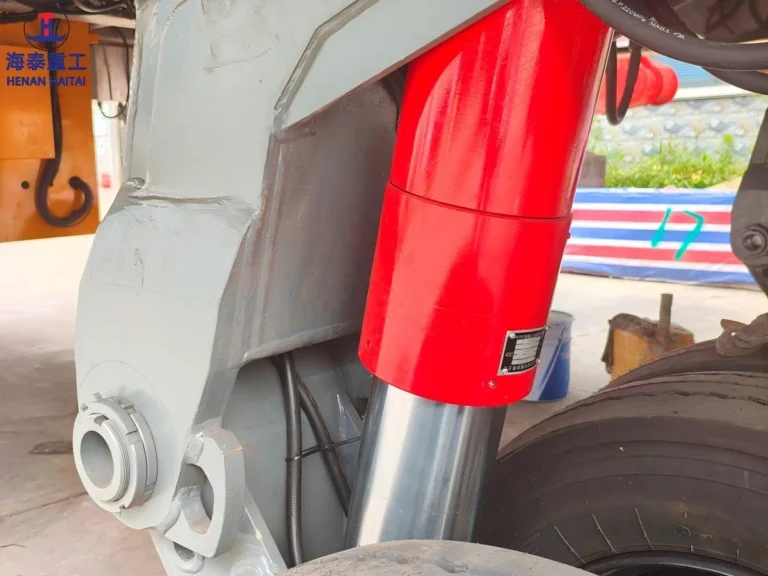
A network of hydraulic cylinders connected to each axle that automatically equalizes pressure across all wheels. This keeps the load level and evenly supported even when individual axles pass over uneven or sloped ground.

Steering System

Rack-and-pinion or hydraulic cylinder-actuated steering at each axle line, allowing straight-line travel, crab-walking (pure lateral movement), diagonal movement, and pivot-turning within a small footprint.

Power Pack Unit (PPU)

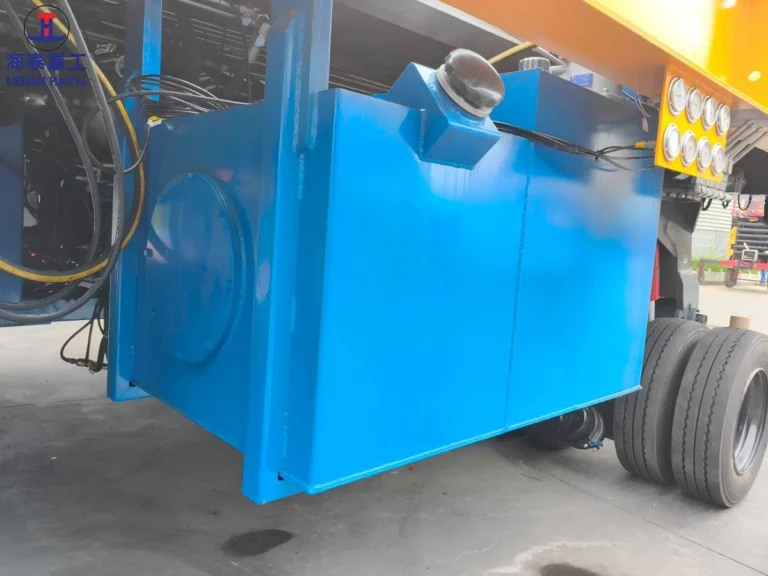
The onboard or towed diesel (or electric) engine and hydraulic pump system that supplies power for propulsion, steering, and suspension leveling.

Coupling Interfaces

Standardized lateral and longitudinal coupling points that let individual modules bolt together to form wider or longer platforms, scaling capacity to match the cargo.

Control and Operating System

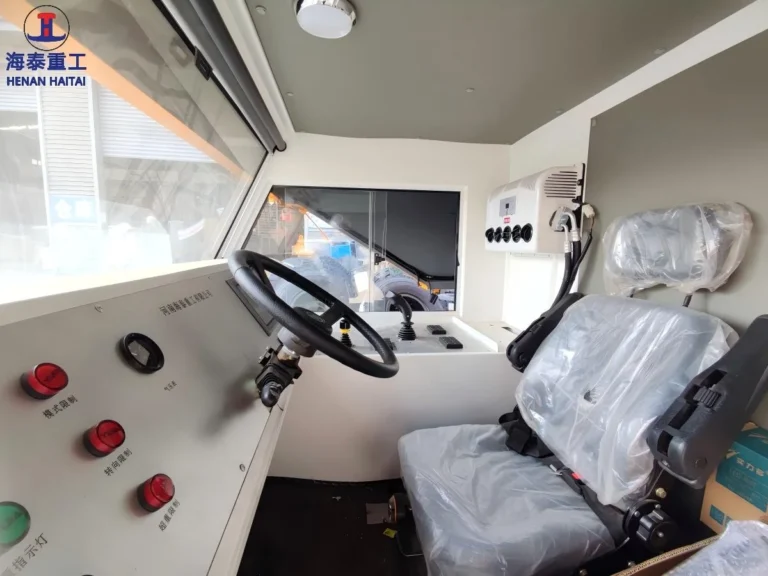
A centralized, often wireless remote control panel that lets a single operator coordinate steering, leveling, and speed across every axle line simultaneously, ensuring synchronized movement across the whole platform.

Braking System

Independent hydraulic or pneumatic braking on each axle line for controlled deceleration and safe holding on grades.

Safety and Signal Systems

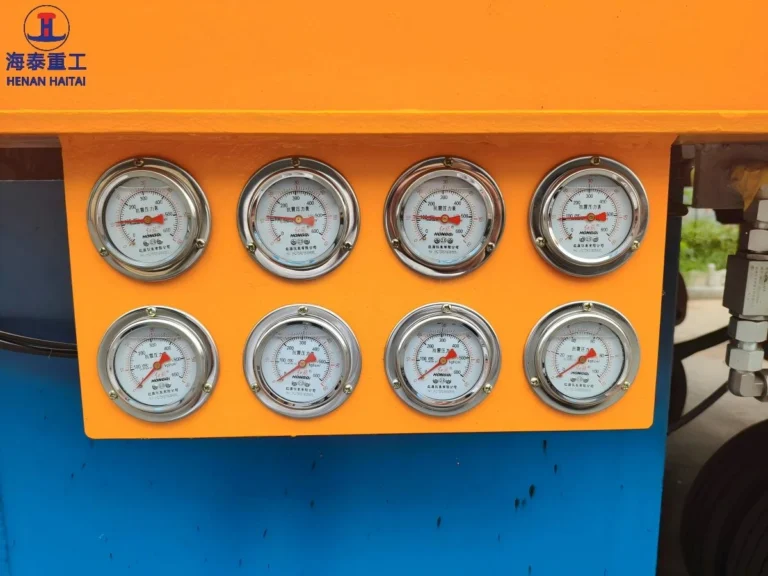
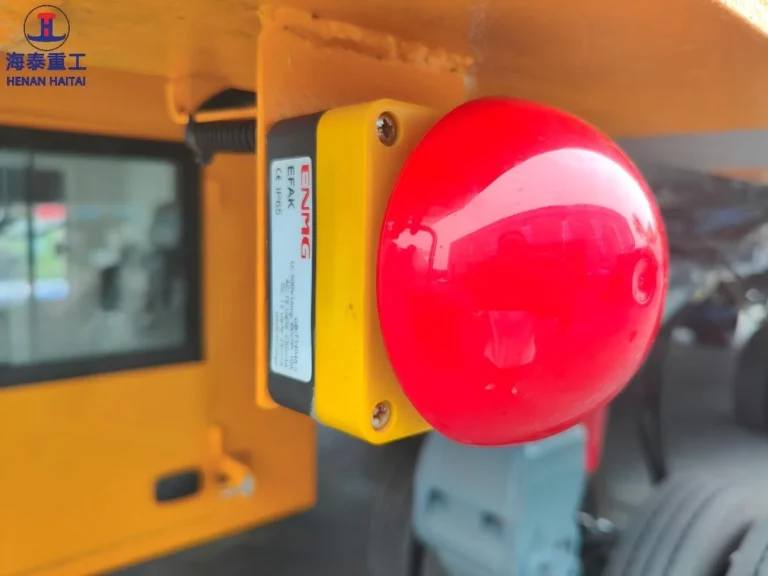
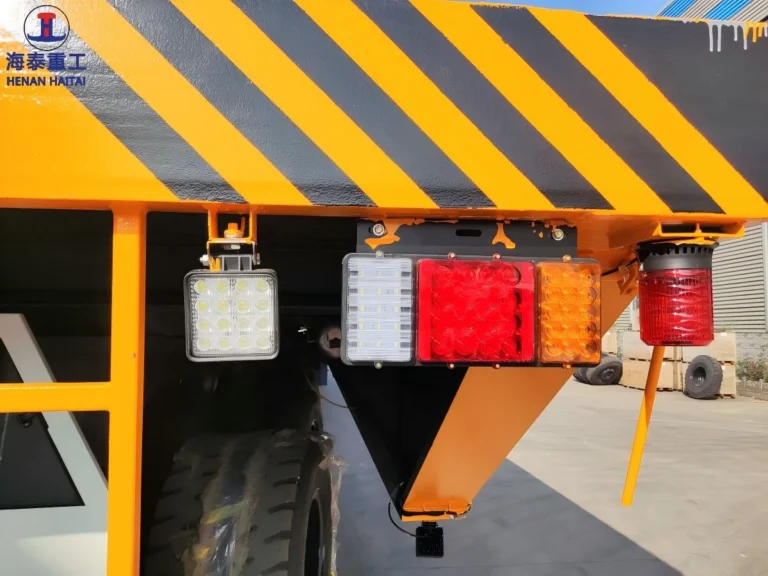
Integrated lighting, warning signals, and pressure-monitoring sensors that alert operators to any imbalance in axle loading during transport.
Working Principle of Haitai Hydraulic Platform Transporter

The Haitai hydraulic platform transporter works by converting a single massive, concentrated load into many small, evenly distributed loads spread across dozens of wheels — which is what makes it possible to move cargo that would otherwise crush a normal trailer axle or exceed a crane’s capacity.
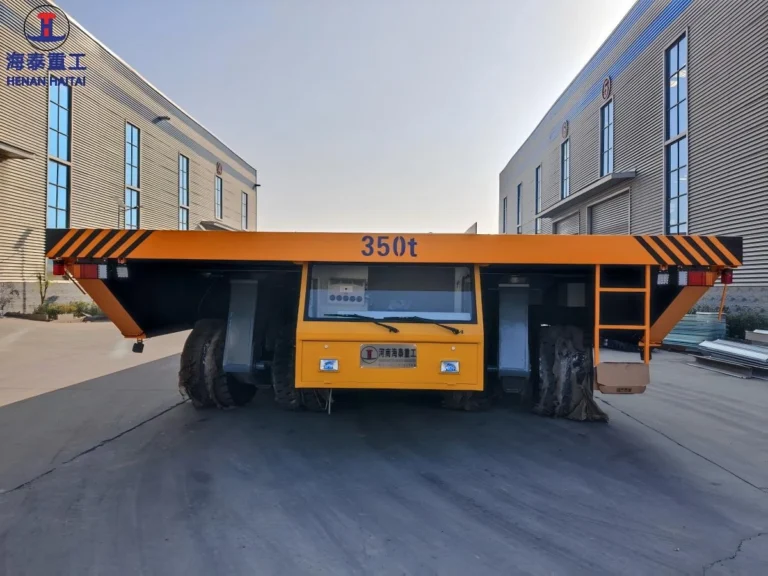
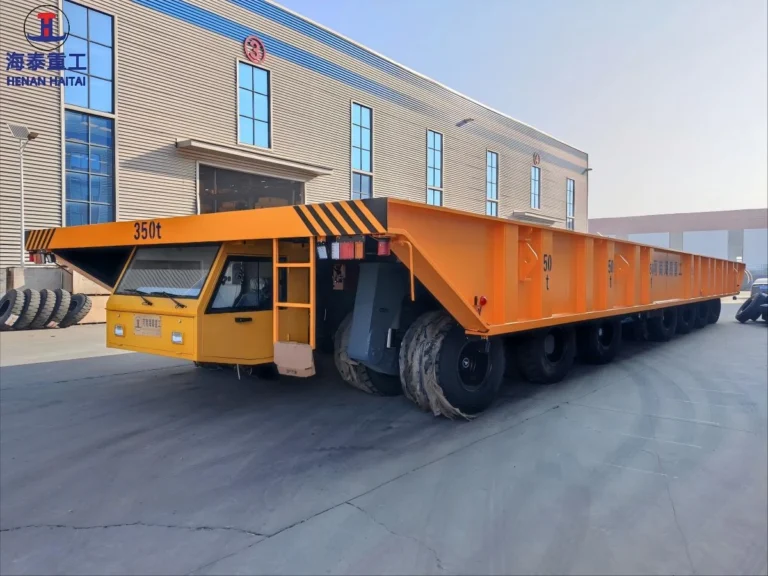
  • 1. Load distribution through modular axle lines.
    • Rather than relying on two or three heavy-duty axles, the transporter spreads the total weight across many axle lines connected in parallel and in series. Each line only bears a fraction of the total load — commonly in the 25–45 ton range per line — which keeps ground pressure and structural stress within safe limits.
  • 2. Hydraulic suspension equalizes pressure automatically.
    • Every axle is fitted with hydraulic cylinders connected through a shared hydraulic circuit. As the transporter moves over uneven ground, this system continuously adjusts cylinder pressure at each wheel so the load stays level and no single axle is overloaded — similar in principle to how a fluid finds its own level, but actively controlled.
  • 3. Independent, synchronized steering enables precision movement.
    • Each axle line can steer independently, and the control system synchronizes them so the entire platform can move in a straight line, crab sideways, travel diagonally, or pivot in place — all without changing the orientation of the cargo. This is what allows the transporter to navigate through gates, around obstacles, and into tight assembly bays that a rigid-frame vehicle simply couldn’t enter.
  • 4. Centralized hydraulic and electronic control.
    • A single operator, typically using a wireless remote control unit, commands the entire platform. The control system continuously monitors axle pressure, steering angle, and deck level, adjusting in real time to keep the cargo stable throughout the move — from pickup, to transit, to precise final positioning.
  • 5. Modular scaling for different tonnages.
    • Because axle lines couple together both side-by-side and end-to-end, the same basic components can be reconfigured into a smaller platform for a 50-ton load or a much larger one for a 1,000-ton load, without redesigning the system from scratch.

Hydraulic Platform Transporter Features

  • Wide Load Range (50-1,000 Tons): A single modular platform family covers everything from mid-size industrial equipment to massive infrastructure components, reducing the need for multiple specialized machines.
  • Even Weight Distribution: Independent hydraulic suspension across all axle lines keeps ground pressure balanced, protecting both the cargo and the surface being traveled on.
  • Superior Maneuverability: Multi-directional steering (straight, crab, diagonal, pivot) lets the transporter operate in confined shipyards, plant floors, and construction sites where conventional trailers can’t turn.
  • Modular, Scalable Design: Axle lines can be added, removed, or reconfigured to match project-specific tonnage and dimensions, extending the useful life and versatility of the equipment.
  • Terrain-Adaptive Stability: Hydraulic self-leveling compensates for uneven ground, ramps, and gradients, keeping sensitive or fragile cargo stable throughout the move.
  • Centralized, Synchronized Control: A single operator can coordinate every axle line from one control point, improving precision and reducing the crew size needed for complex moves.
  • High-Strength Structural Frame: Reinforced steel construction is engineered to handle concentrated heavy loads without deformation, supporting long-term reliability under repeated heavy-duty use.
  • Adjustable Deck Height: Hydraulic lift capability allows the platform to raise or lower cargo for load transfer between different height levels (e.g., onto a barge, foundation, or storage stand).

Application Scenarios of Hydraulic Platform Transporter

The Haitai hydraulic platform transporter is used wherever cargo is too heavy, too large, or too sensitive for conventional transport equipment:

  • Shipbuilding and Marine Engineering — Moving prefabricated ship hull blocks and modules between assembly stages and into dry docks.
  • Bridge and Infrastructure Construction — Transporting and positioning precast bridge girders, deck segments, and box girders for erection.
  • Oil, Gas, and Petrochemical Industry — Relocating pressure vessels, reactors, distillation columns, and other heavy process equipment within refineries and plants.
  • Power Generation — Handling large transformers, generator stators, turbine components, and wind turbine nacelles or tower sections.
  • Steel and Metallurgy Plants — Moving heavy machinery, rolling mill components, and industrial equipment within production facilities.
  • Port and Terminal Operations — Loading and unloading oversized project cargo between vessels, quaysides, and storage yards.
  • Modular and Prefabricated Construction — Transporting large building modules, offshore platform components, and prefabricated structures across construction sites.
  • Nuclear and Heavy Industrial Projects — Handling extremely heavy, high-value components that require precise, low-vibration transport.

Technical Parameters of Hydraulic Platform Transporter

Specifications vary by configuration (number of axle lines, deck width, and drive type), but the table below outlines the typical parameter range across the Haitai 50-1000 ton series.

ParameterTypical Range
Rated load capacity50 – 1,000 tons (scalable via modular axle coupling)
Axle line load capacityApprox. 25 – 45 tons per axle line
Number of axle lines2 to 20+ lines, depending on configuration
Platform/module widthApprox. 2.4 – 3.0 m (standard container-compatible width)
Steering angle per axleUp to ±55°–60°
Steering modesStraight-line, crab (lateral), diagonal, pivot/carousel, independent axle steering
Deck height adjustmentHydraulically adjustable, typically ±150–300 mm
Suspension systemIndependent hydraulic cylinder suspension per axle
Travel speed (loaded)Approx. 3–8 km/h (site/off-road use)
Travel speed (unloaded, road)Up to approx. 30–48 km/h depending on configuration
Power unitDiesel power pack unit (PPU); electric/hybrid options available
Main frame materialHigh-strength structural steel (Q550D/S690-class or equivalent)
Coupling methodLateral (side-by-side) and longitudinal (end-to-end) hydraulic coupling
Control systemCentralized electro-hydraulic remote control with synchronized multi-axle operation

Exact figures depend on the specific model and number of axle lines selected — contact Haitai’s technical team for a configuration matched to your project’s load, dimensions, and site conditions.

Why Choose HaiTai Crane?

Supported by its 20 years of manufacturing experience and exports to 80+ countries, HaiTai Crane delivers CE and ISO 9001:2015 certified lifting solutions to ports, shipyards, and marinas worldwide. From standard configurations to fully engineered custom builds, our technical team tailors every crane to your site conditions and operational requirements.

Specifications and configurations may vary by project requirements. For a transporter configuration matched to your specific load weight, dimensions, and site conditions, consult with Haitai’s engineering team directly.

Leon
10+ Years Exp.
5,000+ Customers
50+ Countries

Simon

Crane Solutions Specialist  ·  HT Crane

Specialized in Gantry Crane, Port Crane, Container Crane , Marine Boat Crane & Overhead Crane export solutions. 10+ years helping global clients with pre-sales consultation, capacity selection and site-specific configurations.

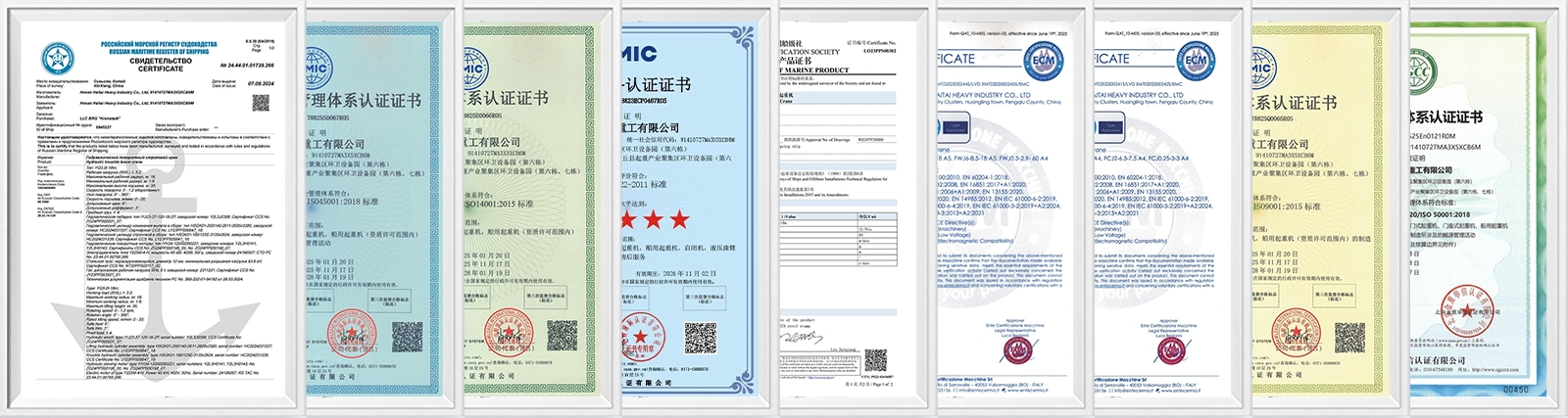
Honor & Certificates

Service

Pre-Sales Technical Consultation
Our engineering team reviews your yard layout, throughput requirements, and infrastructure before recommending a configuration. We provide technical proposals, layout drawings, and load calculations — at no cost — before you commit to a purchase.
Factory Acceptance Testing (FAT)
All cranes undergo full load testing at our factory before shipment. Buyers are welcome to witness FAT in person or via live video. Test reports and certificates are issued upon completion.
Installation & Commissioning
Our on-site service team handles full crane erection, electrical commissioning, and system integration at your facility. Commissioning includes operator training and handover documentation.
Spare Parts Supply
We maintain a global spare parts inventory for all crane models we supply. Critical components — spreaders, hoist motors, VFD drives, PLC modules — are available for dispatch within 48–72 hours. Long-term supply agreements are available for fleet operators.
Preventive Maintenance Programs
We offer annual maintenance contracts covering inspections, lubrication, wear part replacement, and safety audits. Remote diagnostics via our crane monitoring platform allows early identification of faults before they cause unplanned downtime.
Warranty
Standard warranty: 24 months from commissioning date covering structural, mechanical, and electrical components under normal operating conditions. Extended warranty and service contracts available.

Why Choose Us

Powerful Strength
Our products are factory direct sales with guaranteed quality. They sell well all over the country and have received good feedback from customers multiple times!
Experienced
Our products are factory direct sales with guaranteed quality. They sell well all over the country and have received good feedback from customers multiple times!
Quality Assurance
Our products are factory direct sales with guaranteed quality. They sell well all over the country and have received good feedback from customers multiple times!
Worry Free Service
Our products are factory direct sales with guaranteed quality. They sell well all over the country and have received good feedback from customers multiple times!

Frequently Asked Questions

For any unanswered questions, reach out to oursupport team via email. We'll respond as soon aspossible to assist you.
Q1: What load range does a Hydraulic Platform Transporter cover?
Haitai's HPT line runs from 50 tons on a 2-axle line unit up to 1000 tons or more on larger multi-axle configurations, with standard 32-ton and compact 16-ton suspension options available across most models.
Q2: How is a Hydraulic Platform Transporter different from an SPMT?
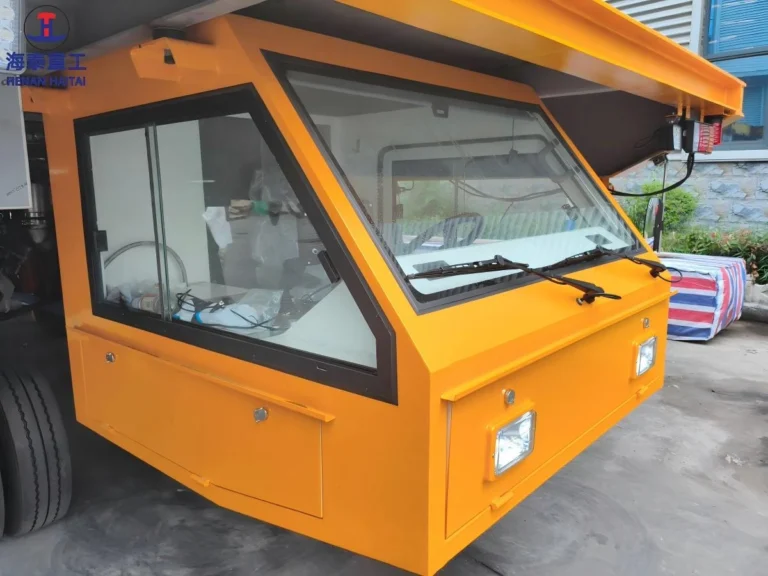
An HPT carries its own diesel engine, hydraulic pumps and operator cabin on the same chassis as the platform. A self-propelled modular trailer, or SPMT, uses a separate power pack unit connected to the platform modules, which suits very large coupled configurations but adds a second piece of equipment to manage on site.
Q3: Can it operate outdoors on unpaved or sloped ground?
It handles compacted yard surfaces, gentle grades up to roughly 6 percent, and moderately uneven pavement well thanks to independent axle suspension. It is not built for off-road terrain or steep slopes, so a site survey before ordering is worth the time.
Q4: Does the platform stay level when the load is off-center?
Yes. Automatic leveling and independently adjustable suspension groups keep the platform horizontal even when cargo is not centered, and equal, parallel or single-point lifting modes let the operator match the lift pattern to the load.
Q5: How long does it take to get a custom Hydraulic Platform Transporter built and shipped?
Lead time depends on axle configuration, suspension rating and any custom cabin or coupling features. Contact our engineering team with your load weight, dimensions and site conditions for a project-specific timeline and export plan.

Message

Feel Free to Contact Us

Contact Form
Please specify your requirement by referring to the following aspects:
  • Which crane product do you need?
  • What is the maximum lifting capacity (in tons) required for your project?
  • Could you specify the lifting height (in meters) needed?
  • Can you provide details on the working environment, such as ground conditions, space limitations, and any obstacles?
  • What is the expected frequency of use and the duration of the project?

related products

HaiTai hydraulic straddle carriers lifting container in port terminal
Hydraulic Straddle Carrier for Sale – Container Handling

If you handle heavy containers, steel structures, or oversized industrial cargo — and your site lacks fixed power infrastructure — a hydraulic straddle carrier is likely the most practical solution available. It lifts, travels, and places loads without needing overhead structures, rails, or high-voltage power supply. One machine. Full mobility. Minimal civil works. What Is a Hydraulic Straddle Carrier? The Core Concept A hydraulic straddle carrier is a self-propelled heavy lift vehicle. It straddles a load — lifting from below using a hydraulic spreader or lifting beam — and moves freely across the yard on rubber tyres. The entire lift-and-travel cycle is powered by an onboard diesel-hydraulic system. Unlike electric or cable-reel powered cranes, the hydraulic straddle carrier carries its own power source. This makes it fully independent of yard infrastructure. You can deploy it anywhere your surface can support the wheel loads — no fixed installation required. How the Hydraulic System Works The engine drives hydraulic pumps that supply pressurized fluid to the lift cylinders, drive motors, and steering actuators. All motion — lifting, lowering, travelling, and steering —…

Read More
Folding Hydraulic Gantry Crane
Hydraulic Gantry Crane

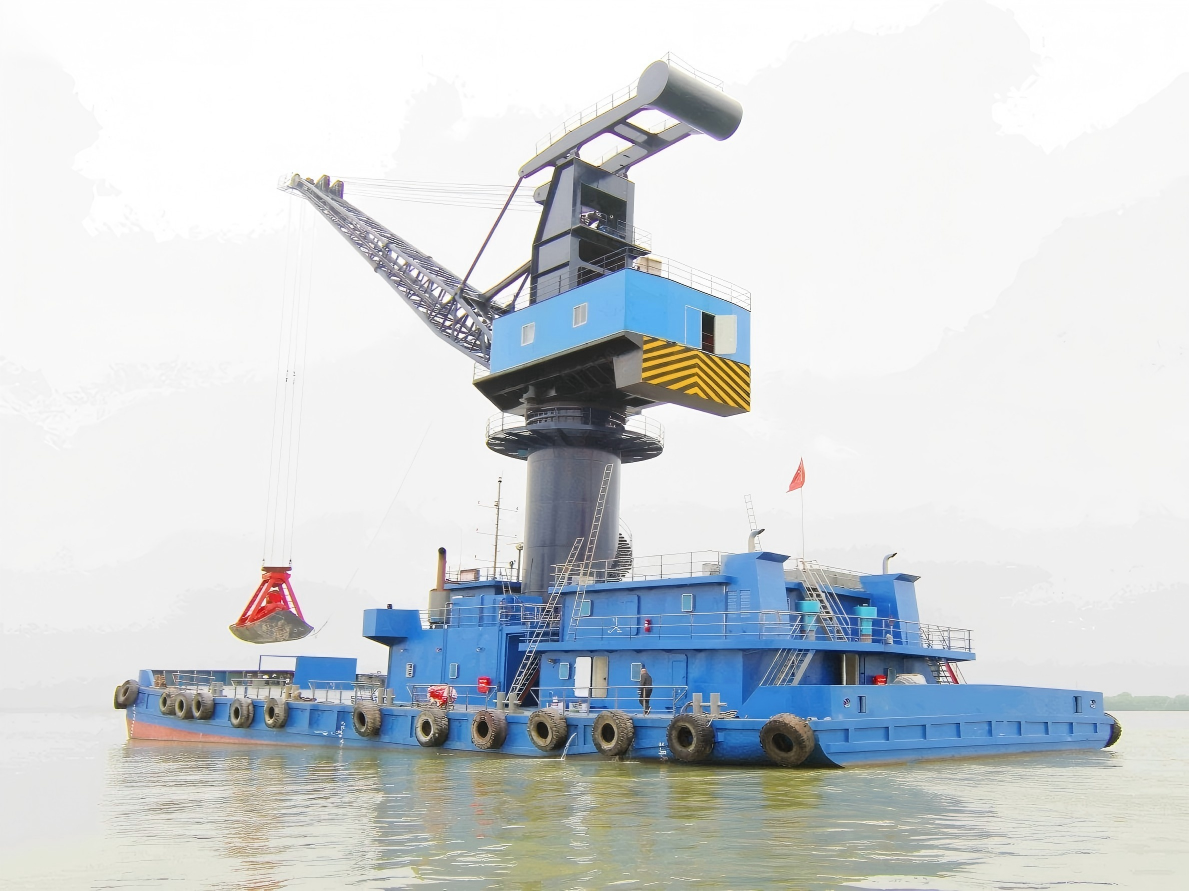
Looking for a heavy lifting system that handles loads other cranes simply cannot? Our hydraulic gantry crane delivers lifting capacity from 10 to 1,000 tons, millimeter-level synchronization precision, and a modular structure that assembles quickly on any job site — indoors or out. Trusted across power generation, shipbuilding, metallurgy, and civil engineering, this is the heavy lifting equipment built for projects where performance cannot be compromised. What Is a Hydraulic Gantry Crane? A hydraulic gantry crane is a heavy-duty lifting system powered entirely by a hydraulic drive system. It consists of six core components: a gantry frame, lifting mechanism, traveling mechanism, hydraulic power unit, electrical control system, and safety protection devices. The system raises, positions, and moves extremely heavy loads with stepless speed control and ±1mm synchronization accuracy across multiple lifting points. It operates on standard AC 380V / 50Hz power supply or a self-contained diesel power unit — making it deployable anywhere, with or without grid power. Core Technical Specifications Parameter Specification Lifting Capacity 10 – 1,000 tons Span 8 – 35 m Lifting Height 4.5 – 12 m…
Read More
Floating Dock Crane
Floating Dock Crane

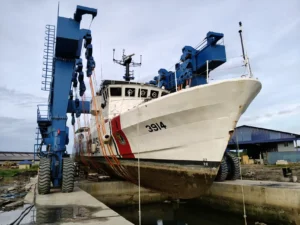
If you manage a marina, boatyard, or naval facility, you know the frustrations: vessels waiting endlessly for maintenance, docks that aren’t designed for heavy loads, and cranes that aren’t suited for waterborne operations. A Floating Dock Crane solves all these problems in one versatile machine. It lifts, moves, and positions vessels safely — without permanent dock modifications, without hull damage, and without slowing down your workflow. This page covers everything you need to evaluate a Floating Dock Crane: how it operates, where it performs best, what sets ours apart, and the complete technical specifications. When you’re ready to specify a unit, our engineering team responds to enquiries within 24 hours, helping you get the right crane for your facility. Product Introduction A Floating Dock Crane is a heavy-duty lifting system mounted on a barge, pontoon, or dedicated floating platform. It provides mobile, high-capacity lifting capability directly over water — without requiring fixed quayside infrastructure or shore-based crane access. Unlike a shore-mounted crane, a floating dock crane moves with its hull. It can be towed or self-propelled to any accessible waterway…

Read More
Top