Équipements de manutention

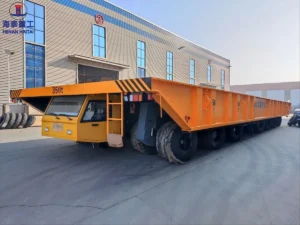
Plateforme de transport hydraulique — pour la manutention de charges hors gabarit et en surcharge

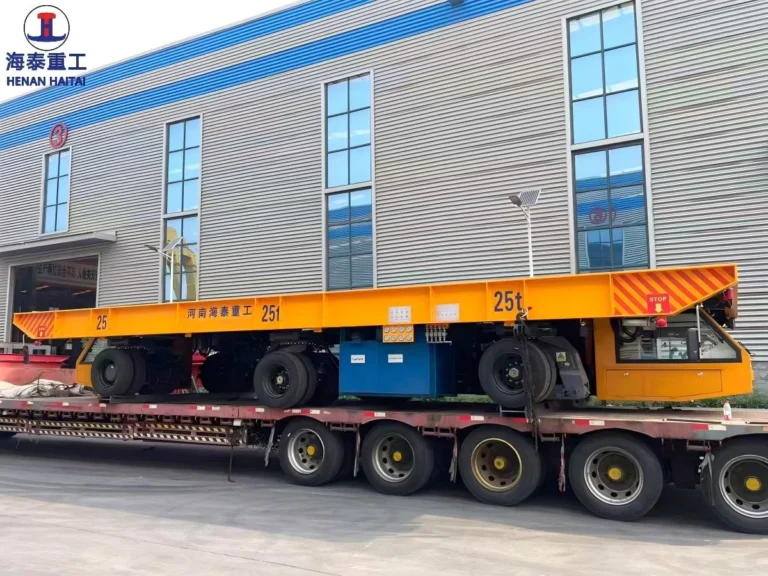
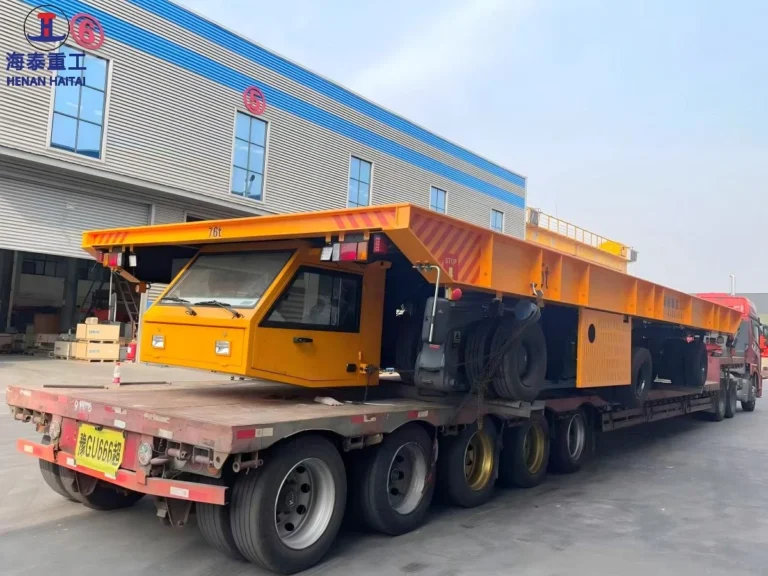
A modular, self-propelled (or hydraulically towed) multi-axle heavy-haul system engineered to move loads ranging from 50 to 1,000 tons across industrial sites, ports, shipyards, and construction projects.
  • Lifting capacity: 50 ~ 1000 tons
  • Axle line load capacity: 25 ~ 45 tons per axle line
  • Platform width: Approx. 2.4 – 3.0 m
  • Travel speed (loaded): Approx. 3–8 km/h
Assurance qualité
sûr et stable
performances puissantes
service après-vente parfait

Moving a 200-ton reactor vessel across a refinery yard, or a 500-ton bridge segment onto its piers, is not a job for a standard truck or trailer. It calls for an equipment that can spread enormous concentrated weight across dozens of wheels, steer with millimeter precision in tight spaces, and keep the cargo level even when the ground underneath it isn’t.

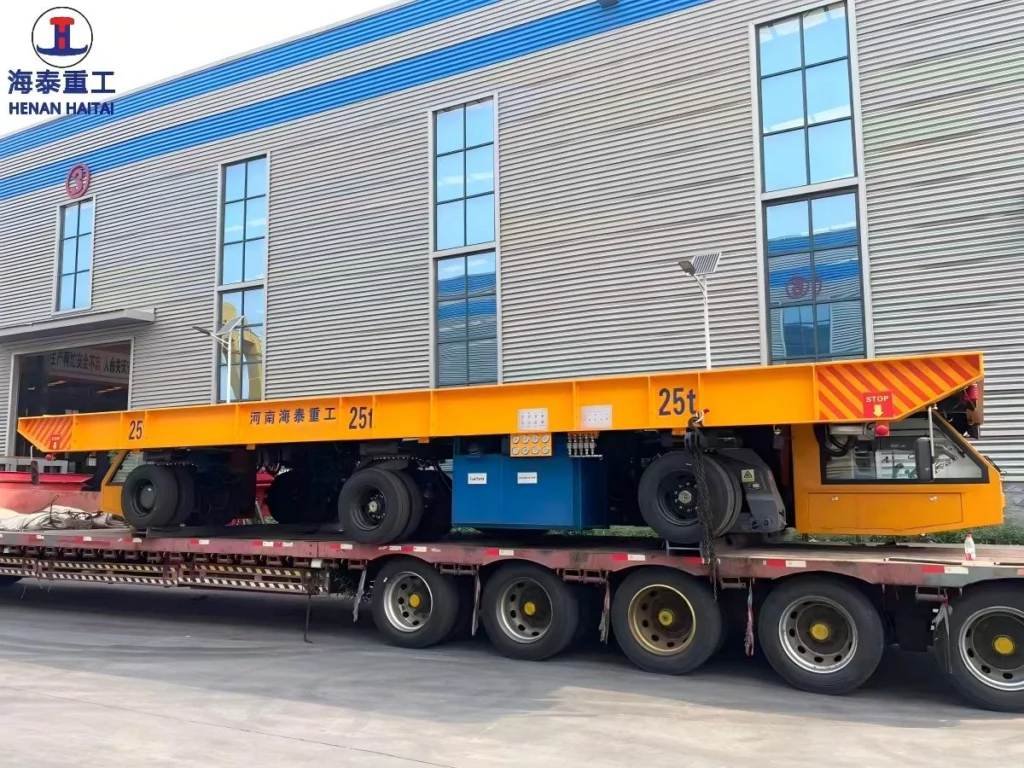
Available across a 50 to 1,000 ton capacity range, the Haitai hydraulic platform transporter is a heavy-duty multi-axle trailer solution for oversize and overweight cargo handling. Whether transporting a prefabricated building module across a jobsite, loading a transformer onto a barge, or shifting a ship segment within a dry dock, the Haitai transporter is designed to allow cargo—typically requiring cranes, gantries, or custom rigging—to simply roll into position.

What Is Haitai Hydraulic Platform Transporter?

Haitai hydraulic platform transporter is commonly known in the industry as Hydraulic Platform Transporter (HPT). It covers capacities from 50 to 1,000 tons and features a modular multi-axle design, depending on its setup. Every axle line is equipped with its own hydraulic suspension, independent steering, and load-sensing mechanism, and multiple axle lines can be linked to create a unified, continuous deck.

Engineered as a modular, hydraulically towed multi-axle heavy-haul system, the Haitai Hydraulic Platform Transporter is built to transport loads between 50 and 1,000 tons across industrial facilities, ports, shipyards, and construction sites. Its foundation lies in independently steerable axle lines with hydraulic suspension, which evenly spreads concentrated loads over the ground—enabling it to carry cargo beyond the safe handling limits of standard trailers or cranes.

Thanks to its modular structure, axle lines can be connected side-by-side or end-to-end, adjusting both capacity and footprint precisely to suit the load—be it a wind turbine nacelle, a pressure vessel, a precast bridge girder, or an entire ship block. This adaptability defines the transporter: a project requiring 80 tons today may demand 400 tons next year, yet the same axle-line components can usually be reconfigured or expanded instead of necessitating a completely new unit.
Demander un devis

HT crane hydraulic platform transporter models’ each unit is factory-assembled, fully load-tested, and CE certifiedready for shipment. They centers on three core objectives critical to heavy-haul operators:

  • 1. Even weight distribution—to prevent overloading either the cargo or the ground at any single point
  • 2. Precise, low-speed maneuverability—to navigate crowded yards, narrow gates, and tight indoor spaces
  • 3. Load stability on uneven surfaces—to keep the deck level and cargo secure even as individual axles traverse bumps, ramps, or inclines

Haitai Hydraulic Platform Transporter Structure and Components

A Haitai hydraulic platform transporter is built from a set of standardized modules that combine to form the complete transport system:

Main Frame (Deck Structure)

A high-strength, precision-welded steel frame, typically box-section or I-beam construction, that forms the load-bearing platform. This frame is engineered to resist bending and torsional stress under concentrated heavy loads while keeping overall deck weight as low as possible.

Axle Lines (Bogie Assemblies)

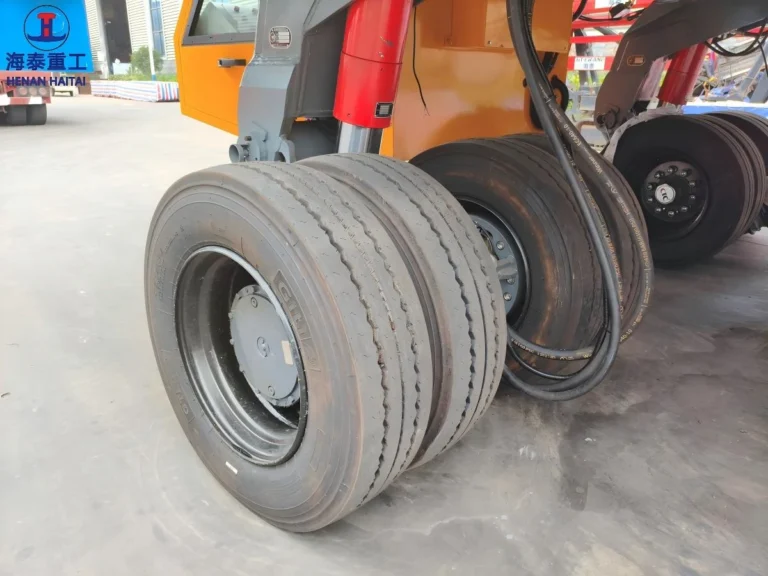
The modular “building blocks” of the system. Each axle line contains its own wheels, tires, hydraulic suspension cylinders, and steering mechanism, and can operate independently or in synchronized groups.

Hydraulic Suspension System

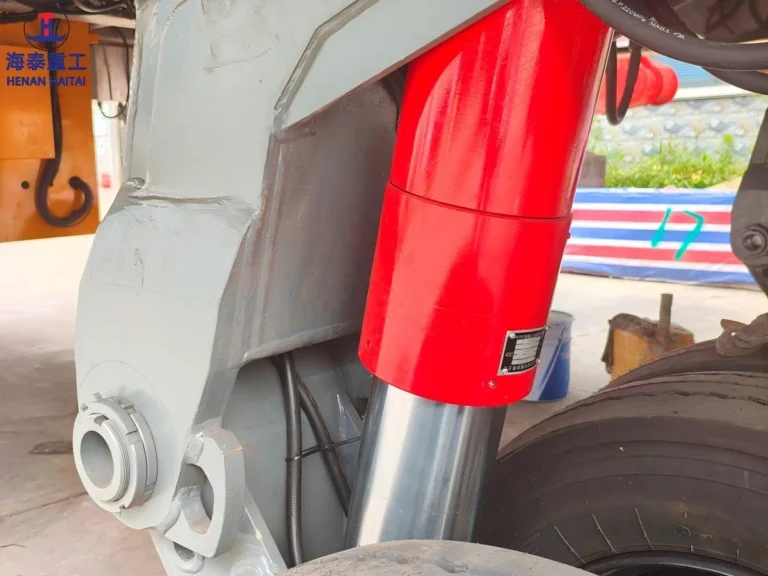
A network of hydraulic cylinders connected to each axle that automatically equalizes pressure across all wheels. This keeps the load level and evenly supported even when individual axles pass over uneven or sloped ground.

Steering System

Rack-and-pinion or hydraulic cylinder-actuated steering at each axle line, allowing straight-line travel, crab-walking (pure lateral movement), diagonal movement, and pivot-turning within a small footprint.

Power Pack Unit (PPU)

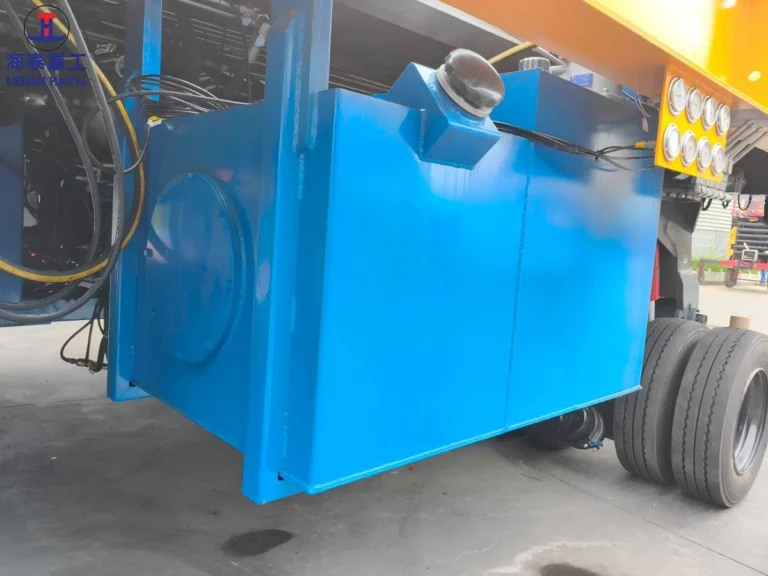
The onboard or towed diesel (or electric) engine and hydraulic pump system that supplies power for propulsion, steering, and suspension leveling.

Coupling Interfaces

Standardized lateral and longitudinal coupling points that let individual modules bolt together to form wider or longer platforms, scaling capacity to match the cargo.

Control and Operating System

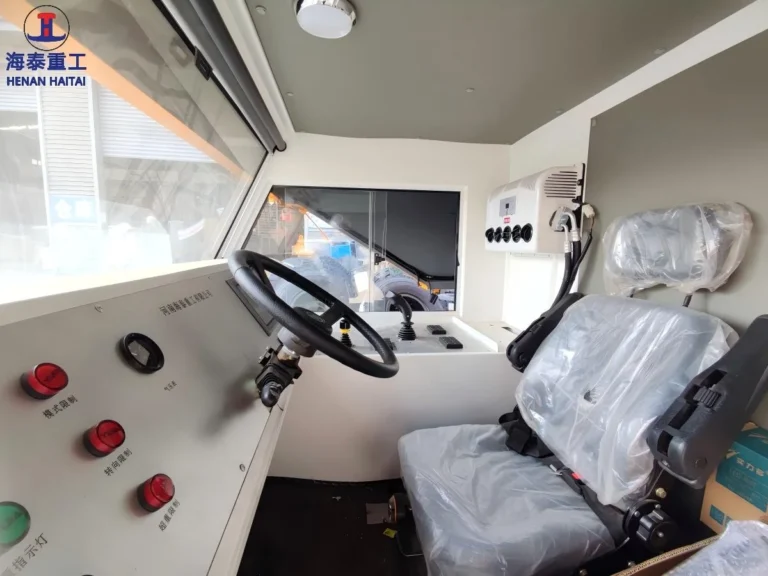
A centralized, often wireless remote control panel that lets a single operator coordinate steering, leveling, and speed across every axle line simultaneously, ensuring synchronized movement across the whole platform.

Braking System

Independent hydraulic or pneumatic braking on each axle line for controlled deceleration and safe holding on grades.

Safety and Signal Systems

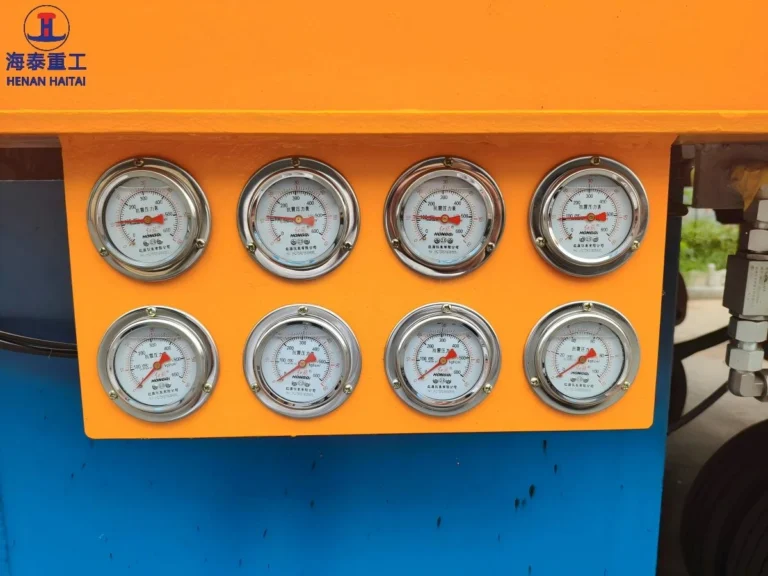
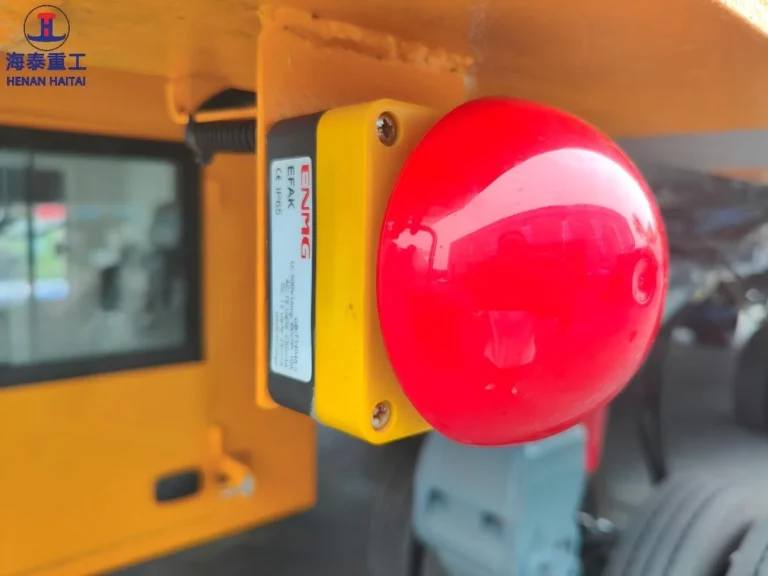
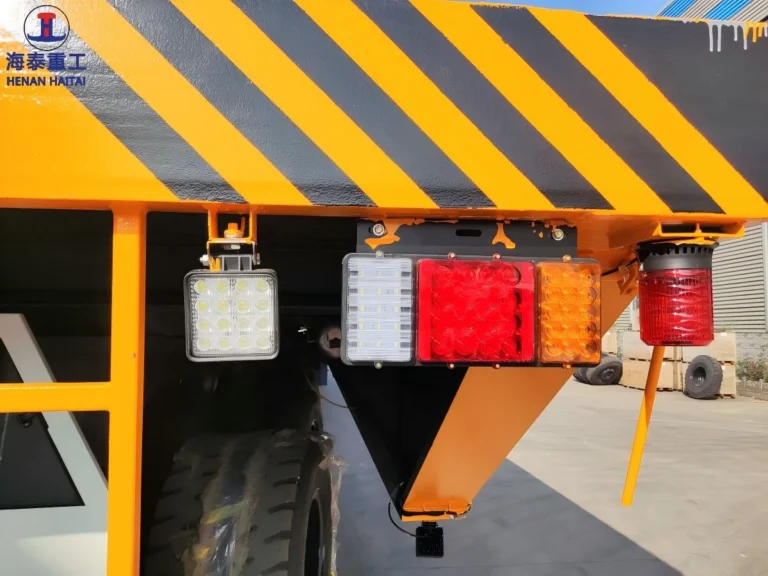
Integrated lighting, warning signals, and pressure-monitoring sensors that alert operators to any imbalance in axle loading during transport.
Working Principle of Haitai Hydraulic Platform Transporter

The Haitai hydraulic platform transporter works by converting a single massive, concentrated load into many small, evenly distributed loads spread across dozens of wheels — which is what makes it possible to move cargo that would otherwise crush a normal trailer axle or exceed a crane’s capacity.
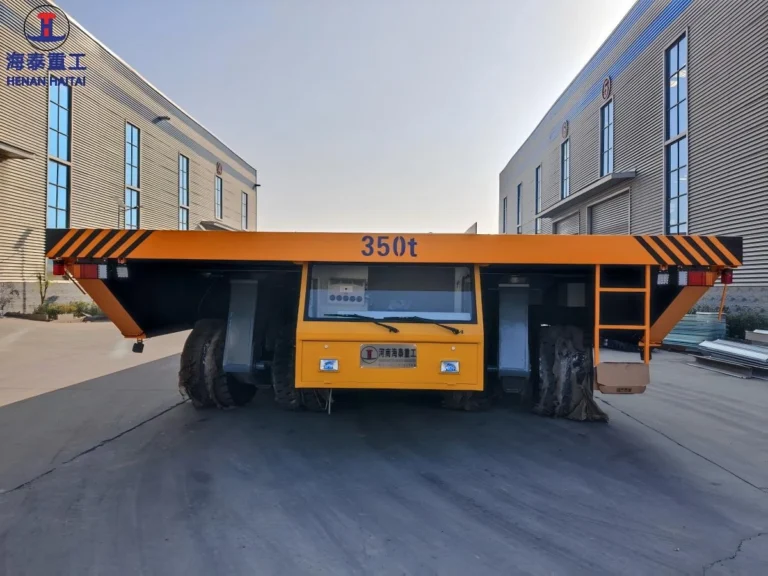
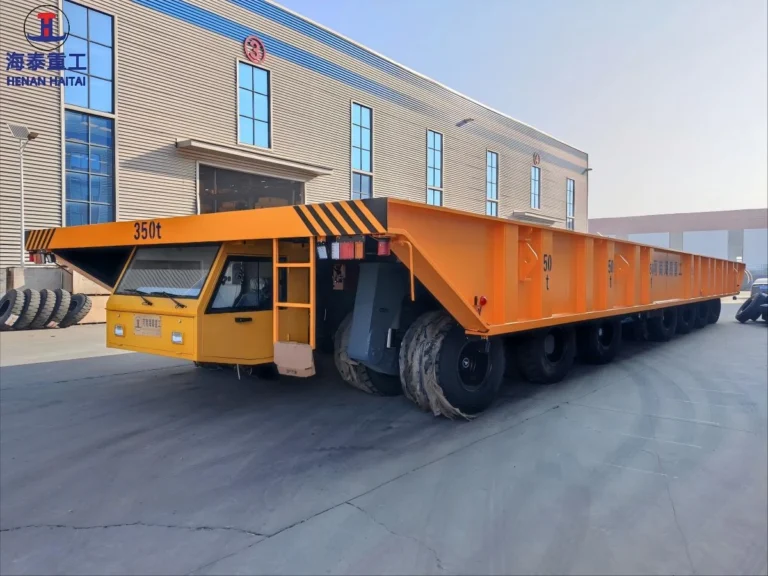
  • 1. Load distribution through modular axle lines.
    • Rather than relying on two or three heavy-duty axles, the transporter spreads the total weight across many axle lines connected in parallel and in series. Each line only bears a fraction of the total load — commonly in the 25–45 ton range per line — which keeps ground pressure and structural stress within safe limits.
  • 2. Hydraulic suspension equalizes pressure automatically.
    • Every axle is fitted with hydraulic cylinders connected through a shared hydraulic circuit. As the transporter moves over uneven ground, this system continuously adjusts cylinder pressure at each wheel so the load stays level and no single axle is overloaded — similar in principle to how a fluid finds its own level, but actively controlled.
  • 3. Independent, synchronized steering enables precision movement.
    • Each axle line can steer independently, and the control system synchronizes them so the entire platform can move in a straight line, crab sideways, travel diagonally, or pivot in place — all without changing the orientation of the cargo. This is what allows the transporter to navigate through gates, around obstacles, and into tight assembly bays that a rigid-frame vehicle simply couldn’t enter.
  • 4. Centralized hydraulic and electronic control.
    • A single operator, typically using a wireless remote control unit, commands the entire platform. The control system continuously monitors axle pressure, steering angle, and deck level, adjusting in real time to keep the cargo stable throughout the move — from pickup, to transit, to precise final positioning.
  • 5. Modular scaling for different tonnages.
    • Because axle lines couple together both side-by-side and end-to-end, the same basic components can be reconfigured into a smaller platform for a 50-ton load or a much larger one for a 1,000-ton load, without redesigning the system from scratch.

Hydraulic Platform Transporter Features

  • Wide Load Range (50-1,000 Tons): A single modular platform family covers everything from mid-size industrial equipment to massive infrastructure components, reducing the need for multiple specialized machines.
  • Even Weight Distribution: Independent hydraulic suspension across all axle lines keeps ground pressure balanced, protecting both the cargo and the surface being traveled on.
  • Superior Maneuverability: Multi-directional steering (straight, crab, diagonal, pivot) lets the transporter operate in confined shipyards, plant floors, and construction sites where conventional trailers can’t turn.
  • Modular, Scalable Design: Axle lines can be added, removed, or reconfigured to match project-specific tonnage and dimensions, extending the useful life and versatility of the equipment.
  • Terrain-Adaptive Stability: Hydraulic self-leveling compensates for uneven ground, ramps, and gradients, keeping sensitive or fragile cargo stable throughout the move.
  • Centralized, Synchronized Control: A single operator can coordinate every axle line from one control point, improving precision and reducing the crew size needed for complex moves.
  • High-Strength Structural Frame: Reinforced steel construction is engineered to handle concentrated heavy loads without deformation, supporting long-term reliability under repeated heavy-duty use.
  • Adjustable Deck Height: Hydraulic lift capability allows the platform to raise or lower cargo for load transfer between different height levels (e.g., onto a barge, foundation, or storage stand).

Application Scenarios of Hydraulic Platform Transporter

The Haitai hydraulic platform transporter is used wherever cargo is too heavy, too large, or too sensitive for conventional transport equipment:

  • Shipbuilding and Marine Engineering — Moving prefabricated ship hull blocks and modules between assembly stages and into dry docks.
  • Bridge and Infrastructure Construction — Transporting and positioning precast bridge girders, deck segments, and box girders for erection.
  • Oil, Gas, and Petrochemical Industry — Relocating pressure vessels, reactors, distillation columns, and other heavy process equipment within refineries and plants.
  • Power Generation — Handling large transformers, generator stators, turbine components, and wind turbine nacelles or tower sections.
  • Steel and Metallurgy Plants — Moving heavy machinery, rolling mill components, and industrial equipment within production facilities.
  • Port and Terminal Operations — Loading and unloading oversized project cargo between vessels, quaysides, and storage yards.
  • Modular and Prefabricated Construction — Transporting large building modules, offshore platform components, and prefabricated structures across construction sites.
  • Nuclear and Heavy Industrial Projects — Handling extremely heavy, high-value components that require precise, low-vibration transport.

Technical Parameters of Hydraulic Platform Transporter

Specifications vary by configuration (number of axle lines, deck width, and drive type), but the table below outlines the typical parameter range across the Haitai 50-1000 ton series.

ParamètrePlage typique
Rated load capacity50 – 1,000 tons (scalable via modular axle coupling)
Axle line load capacityApprox. 25 – 45 tons per axle line
Number of axle lines2 to 20+ lines, depending on configuration
Platform/module widthApprox. 2.4 – 3.0 m (standard container-compatible width)
Steering angle per axleUp to ±55°–60°
Steering modesStraight-line, crab (lateral), diagonal, pivot/carousel, independent axle steering
Deck height adjustmentHydraulically adjustable, typically ±150–300 mm
Suspension systemIndependent hydraulic cylinder suspension per axle
Travel speed (loaded)Approx. 3–8 km/h (site/off-road use)
Travel speed (unloaded, road)Up to approx. 30–48 km/h depending on configuration
Power unitDiesel power pack unit (PPU); electric/hybrid options available
Main frame materialHigh-strength structural steel (Q550D/S690-class or equivalent)
Coupling methodLateral (side-by-side) and longitudinal (end-to-end) hydraulic coupling
Control systemCentralized electro-hydraulic remote control with synchronized multi-axle operation

Exact figures depend on the specific model and number of axle lines selected — contact Haitai’s technical team for a configuration matched to your project’s load, dimensions, and site conditions.

Why Choose HaiTai Crane?

Supported by its 20 years of manufacturing experience and exports to 80+ countries, HaiTai Crane delivers CE and ISO 9001:2015 certified lifting solutions to ports, shipyards, and marinas worldwide. From standard configurations to fully engineered custom builds, our technical team tailors every crane to your site conditions and operational requirements.

Specifications and configurations may vary by project requirements. For a transporter configuration matched to your specific load weight, dimensions, and site conditions, consult with Haitai’s engineering team directly.

Leon
10+ Années d'expérience.
5,000+ Clients
50+ Pays

Simon

Spécialiste des solutions de grues · HT Crane

Spécialisés dans les solutions d'exportation de portiques, grues portuaires, grues à conteneurs, grues maritimes et ponts roulants. Plus de 10 ans d'expérience dans l'accompagnement de clients internationaux : conseils avant-vente, choix de la capacité et configurations sur mesure.

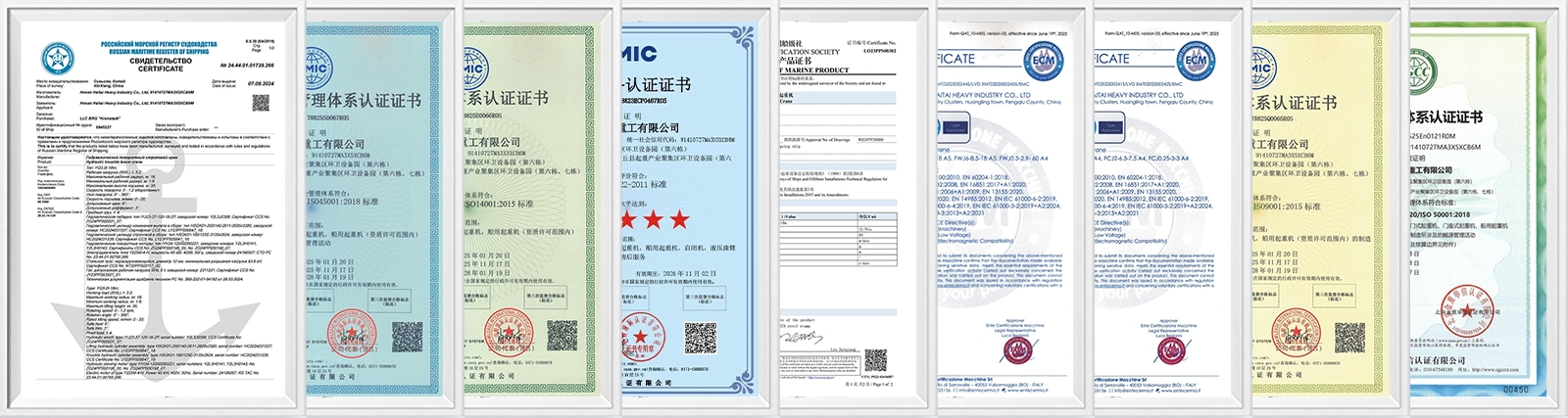
Distinctions et certificats

Service

Consultation technique avant-vente
Notre équipe d'ingénieurs analyse l'agencement de votre cour, vos besoins en débit et votre infrastructure avant de vous recommander une configuration. Nous vous fournissons gratuitement des propositions techniques, des plans d'aménagement et des calculs de charge avant tout engagement de votre part.
Tests d'acceptation en usine (FAT)
Toutes nos grues sont soumises à des essais de réception en pleine charge dans notre usine avant expédition. Les acheteurs peuvent assister à ces essais sur place ou par visioconférence. Un rapport d'essai et un certificat sont délivrés à l'issue des essais.
Installation et mise en service
Notre équipe d'intervention sur site prend en charge l'installation complète de la grue, la mise en service électrique et l'intégration du système dans vos locaux. La mise en service comprend la formation des opérateurs et la documentation de transfert.
Fourniture de pièces détachées
Nous disposons d'un stock mondial de pièces détachées pour tous les modèles de grues que nous fournissons. Les composants essentiels (élingues, moteurs de levage, variateurs de fréquence, modules PLC) sont disponibles pour une expédition sous 48 à 72 heures. Des contrats d'approvisionnement à long terme sont proposés aux exploitants de flottes.
Programmes de maintenance préventive
Nous proposons des contrats de maintenance annuels incluant les inspections, la lubrification, le remplacement des pièces d'usure et les audits de sécurité. Le diagnostic à distance via notre plateforme de surveillance des grues permet une détection précoce des pannes avant qu'elles n'entraînent des arrêts imprévus.
Garantie
Garantie standard : 24 mois à compter de la date de mise en service, couvrant les composants structurels, mécaniques et électriques dans des conditions normales d’utilisation. Extension de garantie et contrats de service disponibles.

Pourquoi nous choisir ?

Force puissante
Nos produits sont vendus directement par l'usine, avec une qualité garantie. Ils se vendent très bien partout au pays et ont reçu à maintes reprises d'excellents commentaires de la part de nos clients !
Expérimenté
Nos produits sont vendus directement par l'usine, avec une qualité garantie. Ils se vendent très bien partout au pays et ont reçu à maintes reprises d'excellents commentaires de la part de nos clients !
Assurance qualité
Nos produits sont vendus directement par l'usine, avec une qualité garantie. Ils se vendent très bien partout au pays et ont reçu à maintes reprises d'excellents commentaires de la part de nos clients !
Service sans souci
Nos produits sont vendus directement par l'usine, avec une qualité garantie. Ils se vendent très bien partout au pays et ont reçu à maintes reprises d'excellents commentaires de la part de nos clients !

Foire aux questions

Pour toute question restée sans réponse, veuillez contacter notre équipe d'assistance par courriel. Nous vous répondrons dans les plus brefs délais.
Q1: What load range does a Hydraulic Platform Transporter cover?
Haitai's HPT line runs from 50 tons on a 2-axle line unit up to 1000 tons or more on larger multi-axle configurations, with standard 32-ton and compact 16-ton suspension options available across most models.
Q2: How is a Hydraulic Platform Transporter different from an SPMT?
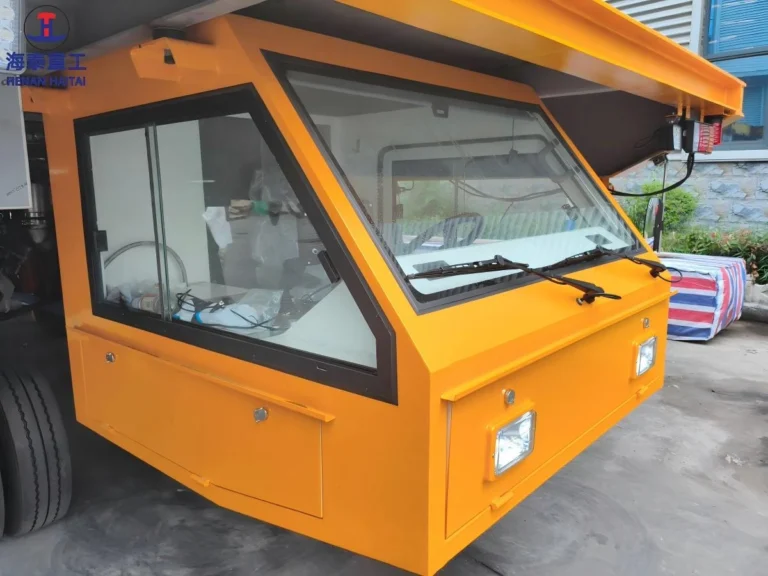
An HPT carries its own diesel engine, hydraulic pumps and operator cabin on the same chassis as the platform. A self-propelled modular trailer, or SPMT, uses a separate power pack unit connected to the platform modules, which suits very large coupled configurations but adds a second piece of equipment to manage on site.
Q3: Can it operate outdoors on unpaved or sloped ground?
It handles compacted yard surfaces, gentle grades up to roughly 6 percent, and moderately uneven pavement well thanks to independent axle suspension. It is not built for off-road terrain or steep slopes, so a site survey before ordering is worth the time.
Q4: Does the platform stay level when the load is off-center?
Yes. Automatic leveling and independently adjustable suspension groups keep the platform horizontal even when cargo is not centered, and equal, parallel or single-point lifting modes let the operator match the lift pattern to the load.
Q5: How long does it take to get a custom Hydraulic Platform Transporter built and shipped?
Lead time depends on axle configuration, suspension rating and any custom cabin or coupling features. Contact our engineering team with your load weight, dimensions and site conditions for a project-specific timeline and export plan.

Message

N'hésitez pas à nous contacter

Formulaire de contact
Veuillez préciser votre besoin en vous référant aux aspects suivants :
  • De quel produit de grue avez-vous besoin ?
  • Quelle est la capacité de levage maximale (en tonnes) requise pour votre projet ?
  • Pourriez-vous préciser la hauteur de levage (en mètres) nécessaire ?
  • Pouvez-vous fournir des détails sur l'environnement de travail, tels que la nature du sol, les limitations d'espace et les éventuels obstacles ?
  • Quelle est la fréquence d'utilisation prévue et la durée du projet ?

produits connexes

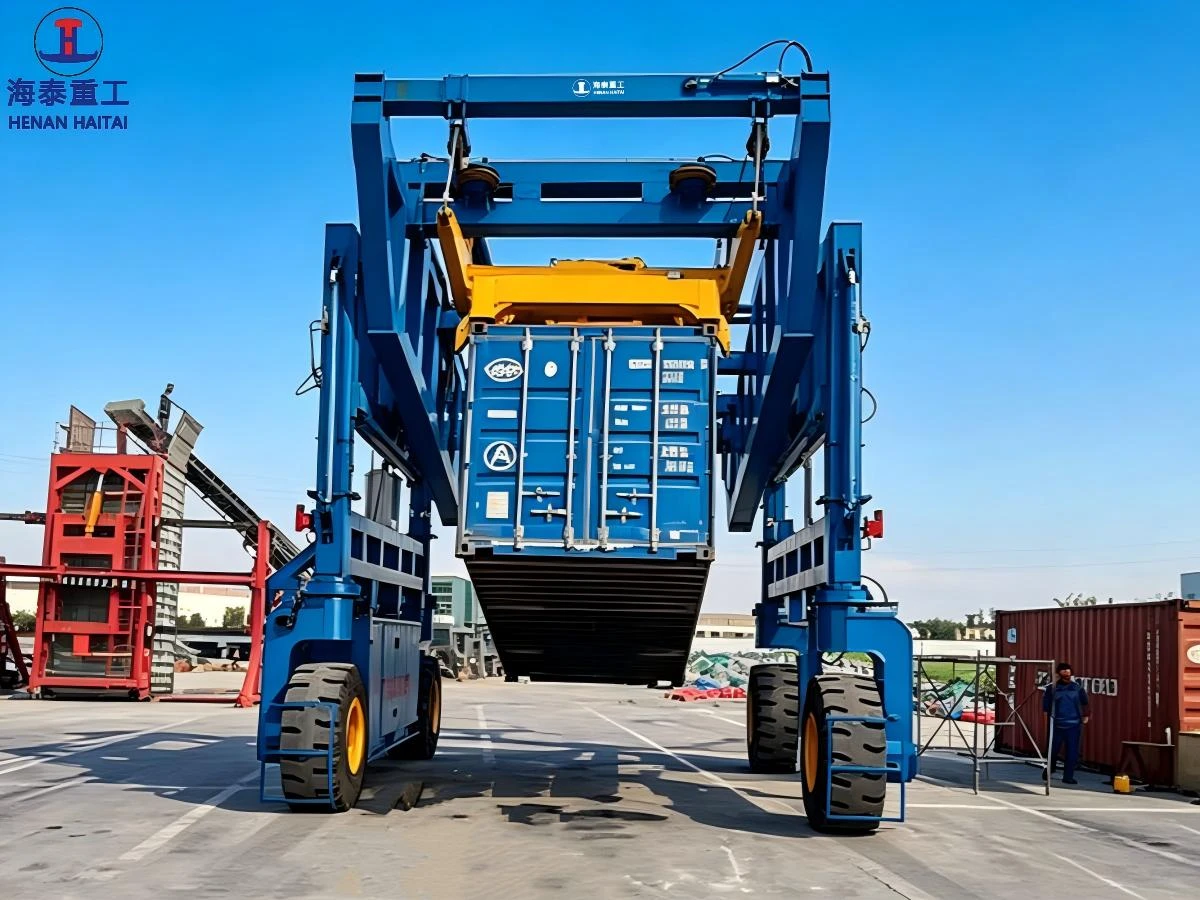
HaiTai hydraulic straddle carriers lifting container in port terminal
Chariot cavalier hydraulique à vendre – Manutention de conteneurs

Si vous manipulez des conteneurs lourds, des structures métalliques ou des marchandises industrielles hors gabarit, et que votre site ne dispose pas d'infrastructure électrique fixe, un cavalier hydraulique est probablement la solution la plus pratique. Il lève, déplace et dépose les charges sans nécessiter de structures aériennes, de rails ou d'alimentation électrique haute tension. Une seule machine. Une mobilité totale. Des travaux de génie civil minimes. Qu'est-ce qu'un cavalier hydraulique ? Principe de base : Un cavalier hydraulique est un véhicule de levage lourd automoteur. Il enjambe la charge, la soulevant par le dessous à l'aide d'un écarteur hydraulique ou d'une poutre de levage, et se déplace librement sur pneus. L'ensemble du cycle de levage et de déplacement est alimenté par un système diesel-hydraulique embarqué. Contrairement aux grues électriques ou à câble, le cavalier hydraulique possède sa propre source d'énergie. Il est donc totalement indépendant de l'infrastructure du site. Vous pouvez le déployer partout où la surface supporte la charge des roues ; aucune installation fixe n'est requise. Fonctionnement du système hydraulique : Le moteur entraîne des pompes hydrauliques qui alimentent en fluide sous pression les vérins de levage, les moteurs d'entraînement et les actionneurs de direction. Tous les mouvements — soulever, abaisser, déplacer et diriger —…

En savoir plus
Folding Hydraulic Gantry Crane
Grue à portique hydraulique

Vous recherchez un système de levage lourd capable de gérer des charges que les autres grues ne peuvent tout simplement pas soulever ? Notre portique hydraulique offre une capacité de levage de 10 à 1 000 tonnes, une précision de synchronisation au millimètre près et une structure modulaire qui s’assemble rapidement sur tous les chantiers, en intérieur comme en extérieur. Utilisé avec succès dans les secteurs de la production d’énergie, de la construction navale, de la métallurgie et du génie civil, cet équipement de levage lourd est conçu pour les projets où la performance est primordiale. Qu’est-ce qu’un portique hydraulique ? Un portique hydraulique est un système de levage lourd entièrement actionné par un système hydraulique. Il se compose de six éléments principaux : un châssis de portique, un mécanisme de levage, un mécanisme de translation, une centrale hydraulique, un système de commande électrique et des dispositifs de sécurité. Le système lève, positionne et déplace des charges extrêmement lourdes avec une variation de vitesse continue et une précision de synchronisation de ±1 mm sur plusieurs points de levage. Il fonctionne sur une alimentation standard de 380 V CA / 50 Hz ou sur un groupe électrogène diesel autonome, ce qui le rend déployable partout, avec ou sans alimentation électrique. Spécifications techniques principales Paramètre Spécification Capacité de levage 10 – 1 000 tonnes Portée 8 – 35 m Hauteur de levage 4,5 – 12 m…
En savoir plus
Floating Dock Crane
Grue de quai flottante

Si vous gérez un port de plaisance, un chantier naval ou une installation navale, vous connaissez les frustrations liées aux opérations de maintenance : des navires en attente interminable, des quais non conçus pour les charges lourdes et des grues inadaptées aux opérations sur l'eau. Une grue de quai flottante résout tous ces problèmes grâce à une machine polyvalente. Elle lève, déplace et positionne les navires en toute sécurité, sans modification permanente du quai, sans endommager la coque et sans ralentir votre activité. Cette page présente tout ce dont vous avez besoin pour évaluer une grue de quai flottante : son fonctionnement, ses performances optimales, ses atouts et ses spécifications techniques complètes. Lorsque vous serez prêt à choisir votre grue, notre équipe d'ingénieurs répondra à vos demandes sous 24 heures et vous aidera à trouver la solution idéale pour votre installation. Présentation du produit : Une grue de quai flottante est un système de levage robuste monté sur une barge, un ponton ou une plateforme flottante dédiée. Elle offre une capacité de levage mobile et élevée directement sur l'eau, sans nécessiter d'infrastructures fixes à quai ni d'accès par grue terrestre. Contrairement à une grue terrestre, une grue de quai flottante se déplace avec sa coque. Il peut être remorqué ou propulsé par ses propres moyens jusqu'à n'importe quelle voie navigable accessible…

En savoir plus
Haut