Equipamentos para movimentação de materiais

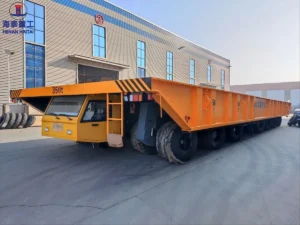
Plataforma elevatória hidráulica — para movimentação de cargas superdimensionadas e com excesso de peso

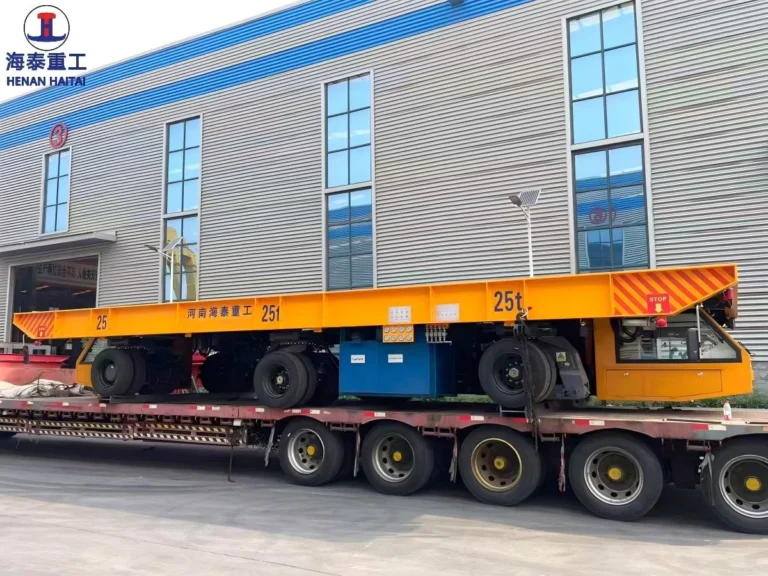
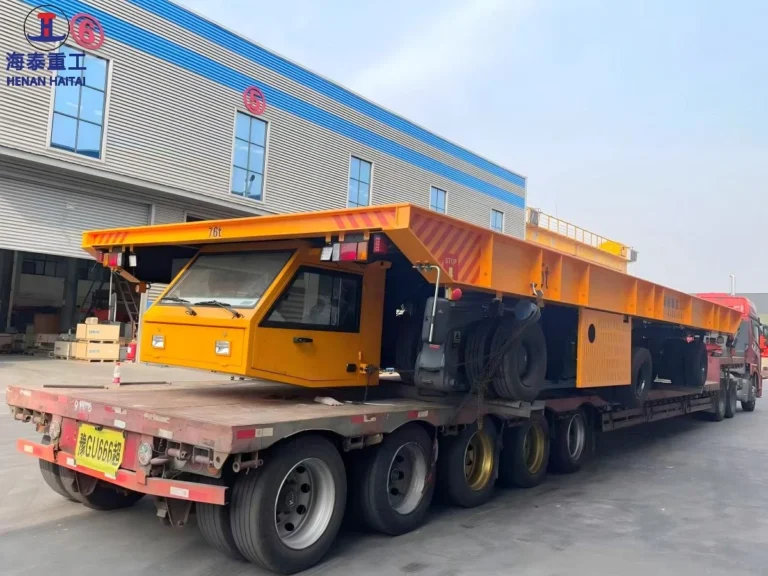
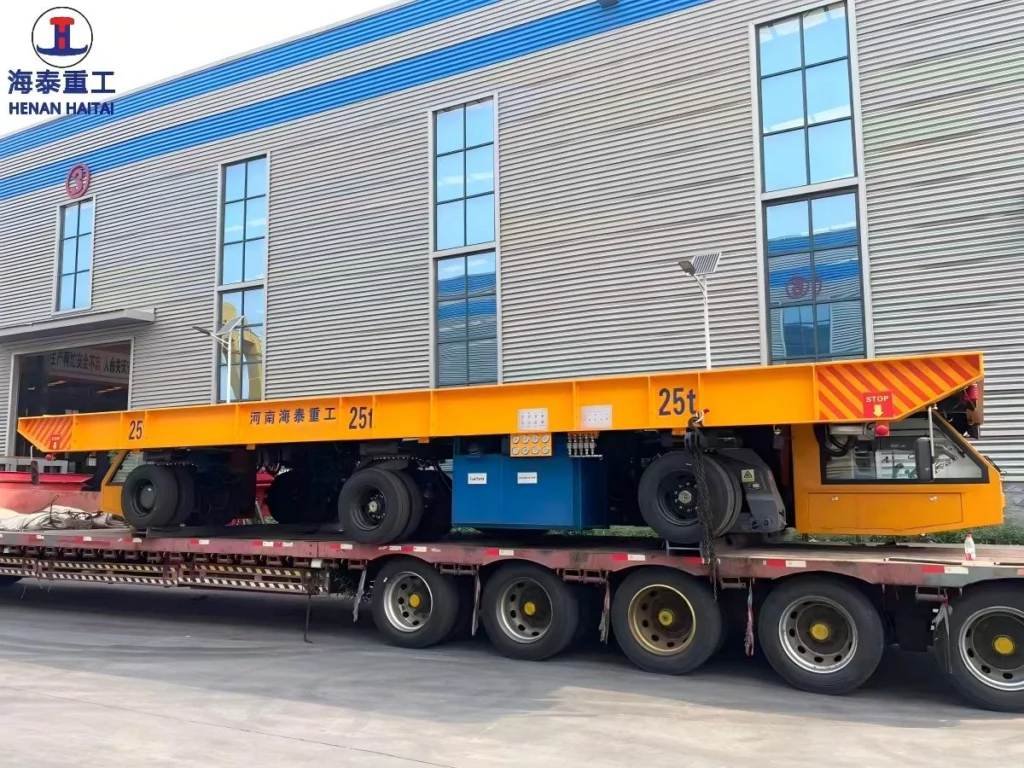
A modular, self-propelled (or hydraulically towed) multi-axle heavy-haul system engineered to move loads ranging from 50 to 1,000 tons across industrial sites, ports, shipyards, and construction projects.
  • Lifting capacity: 50 ~ 1000 tons
  • Axle line load capacity: 25 ~ 45 tons per axle line
  • Platform width: Approx. 2.4 – 3.0 m
  • Travel speed (loaded): Approx. 3–8 km/h
Garantia de Qualidade
seguro e estável
desempenho poderoso
serviço pós-venda perfeito

Moving a 200-ton reactor vessel across a refinery yard, or a 500-ton bridge segment onto its piers, is not a job for a standard truck or trailer. It calls for an equipment that can spread enormous concentrated weight across dozens of wheels, steer with millimeter precision in tight spaces, and keep the cargo level even when the ground underneath it isn’t.

Available across a 50 to 1,000 ton capacity range, the Haitai hydraulic platform transporter is a heavy-duty multi-axle trailer solution for oversize and overweight cargo handling. Whether transporting a prefabricated building module across a jobsite, loading a transformer onto a barge, or shifting a ship segment within a dry dock, the Haitai transporter is designed to allow cargo—typically requiring cranes, gantries, or custom rigging—to simply roll into position.

What Is Haitai Hydraulic Platform Transporter?

Haitai hydraulic platform transporter is commonly known in the industry as Hydraulic Platform Transporter (HPT). It covers capacities from 50 to 1,000 tons and features a modular multi-axle design, depending on its setup. Every axle line is equipped with its own hydraulic suspension, independent steering, and load-sensing mechanism, and multiple axle lines can be linked to create a unified, continuous deck.

Engineered as a modular, hydraulically towed multi-axle heavy-haul system, the Haitai Hydraulic Platform Transporter is built to transport loads between 50 and 1,000 tons across industrial facilities, ports, shipyards, and construction sites. Its foundation lies in independently steerable axle lines with hydraulic suspension, which evenly spreads concentrated loads over the ground—enabling it to carry cargo beyond the safe handling limits of standard trailers or cranes.

Thanks to its modular structure, axle lines can be connected side-by-side or end-to-end, adjusting both capacity and footprint precisely to suit the load—be it a wind turbine nacelle, a pressure vessel, a precast bridge girder, or an entire ship block. This adaptability defines the transporter: a project requiring 80 tons today may demand 400 tons next year, yet the same axle-line components can usually be reconfigured or expanded instead of necessitating a completely new unit.
Solicite um orçamento

HT crane hydraulic platform transporter models’ each unit is factory-assembled, fully load-tested, and CE certifiedready for shipment. They centers on three core objectives critical to heavy-haul operators:

  • 1. Even weight distribution—to prevent overloading either the cargo or the ground at any single point
  • 2. Precise, low-speed maneuverability—to navigate crowded yards, narrow gates, and tight indoor spaces
  • 3. Load stability on uneven surfaces—to keep the deck level and cargo secure even as individual axles traverse bumps, ramps, or inclines

Haitai Hydraulic Platform Transporter Structure and Components

A Haitai hydraulic platform transporter is built from a set of standardized modules that combine to form the complete transport system:

Main Frame (Deck Structure)

A high-strength, precision-welded steel frame, typically box-section or I-beam construction, that forms the load-bearing platform. This frame is engineered to resist bending and torsional stress under concentrated heavy loads while keeping overall deck weight as low as possible.

Axle Lines (Bogie Assemblies)

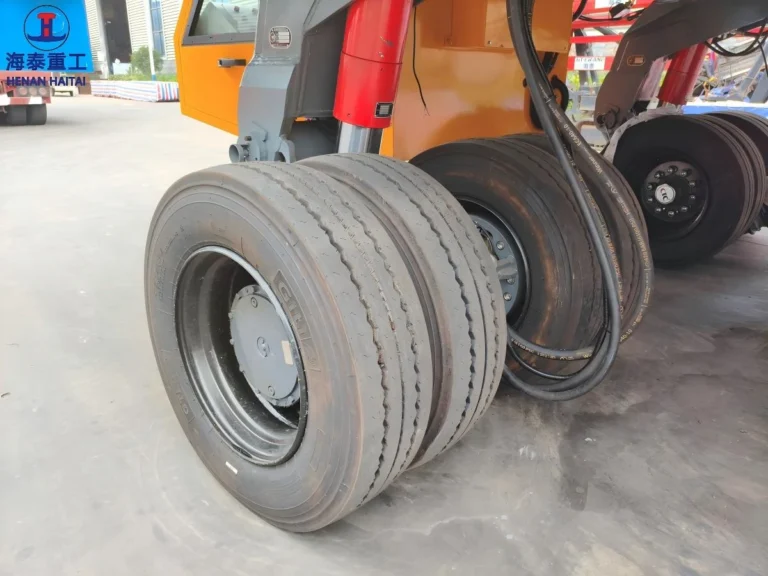
The modular “building blocks” of the system. Each axle line contains its own wheels, tires, hydraulic suspension cylinders, and steering mechanism, and can operate independently or in synchronized groups.

Hydraulic Suspension System

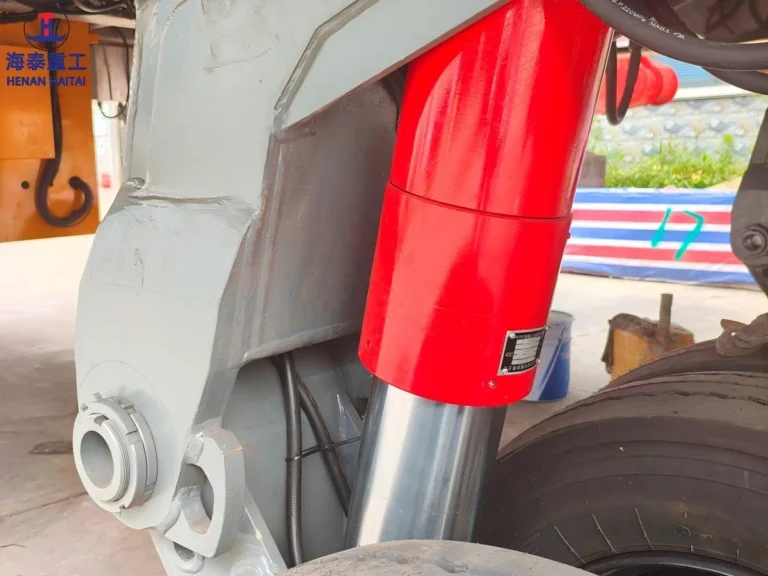
A network of hydraulic cylinders connected to each axle that automatically equalizes pressure across all wheels. This keeps the load level and evenly supported even when individual axles pass over uneven or sloped ground.

Steering System

Rack-and-pinion or hydraulic cylinder-actuated steering at each axle line, allowing straight-line travel, crab-walking (pure lateral movement), diagonal movement, and pivot-turning within a small footprint.

Power Pack Unit (PPU)

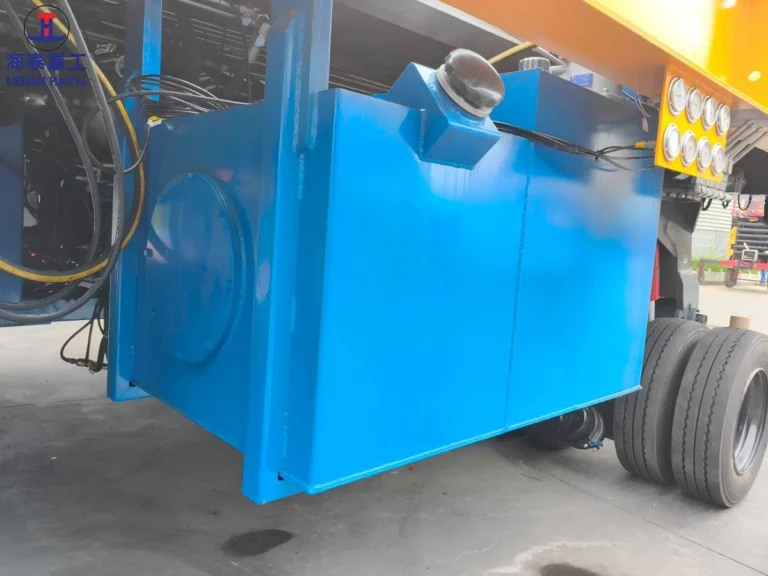
The onboard or towed diesel (or electric) engine and hydraulic pump system that supplies power for propulsion, steering, and suspension leveling.

Coupling Interfaces

Standardized lateral and longitudinal coupling points that let individual modules bolt together to form wider or longer platforms, scaling capacity to match the cargo.

Control and Operating System

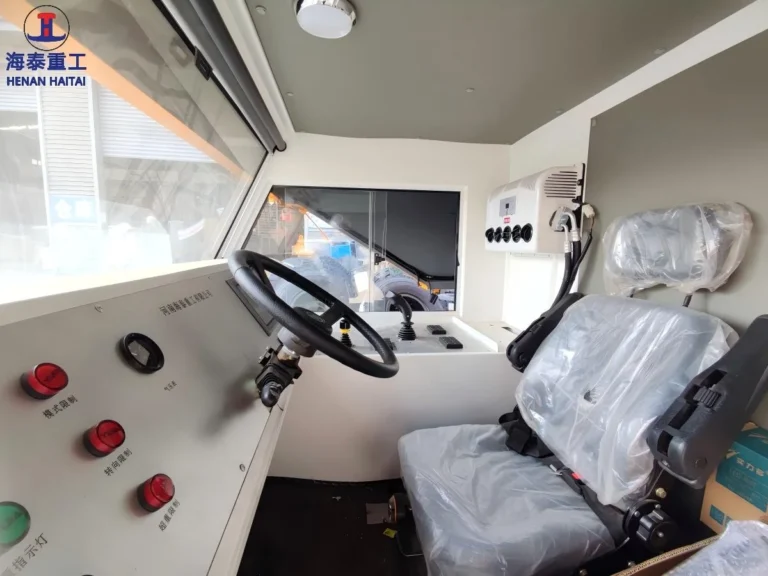
A centralized, often wireless remote control panel that lets a single operator coordinate steering, leveling, and speed across every axle line simultaneously, ensuring synchronized movement across the whole platform.

Braking System

Independent hydraulic or pneumatic braking on each axle line for controlled deceleration and safe holding on grades.

Safety and Signal Systems

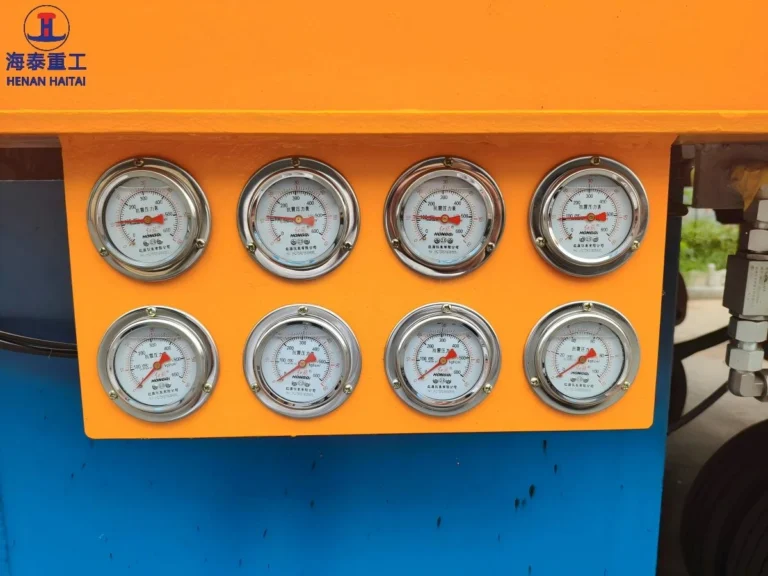
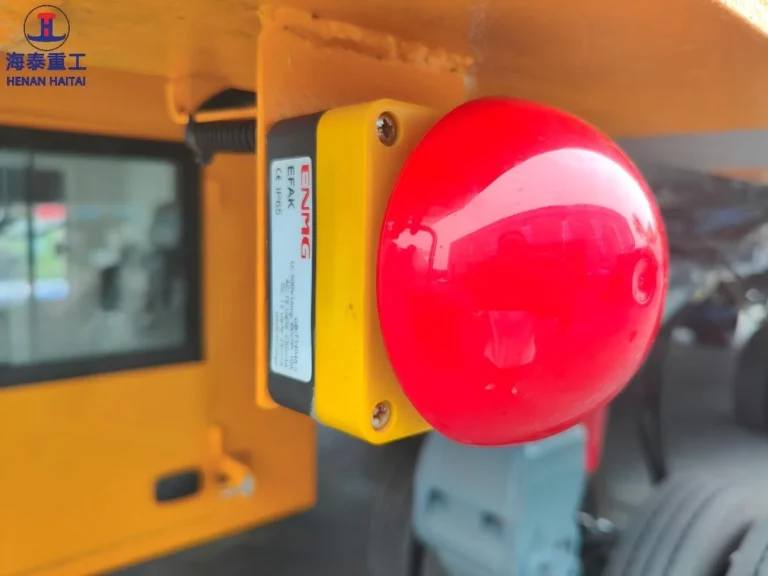
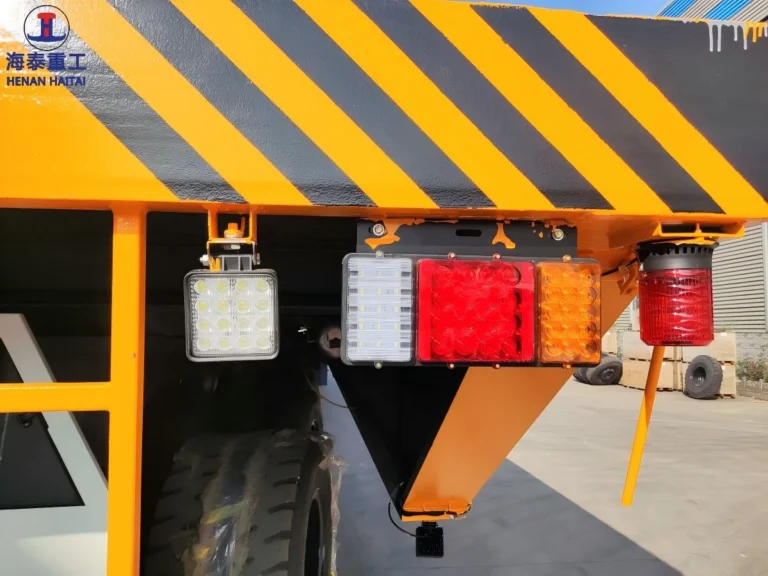
Integrated lighting, warning signals, and pressure-monitoring sensors that alert operators to any imbalance in axle loading during transport.
Working Principle of Haitai Hydraulic Platform Transporter

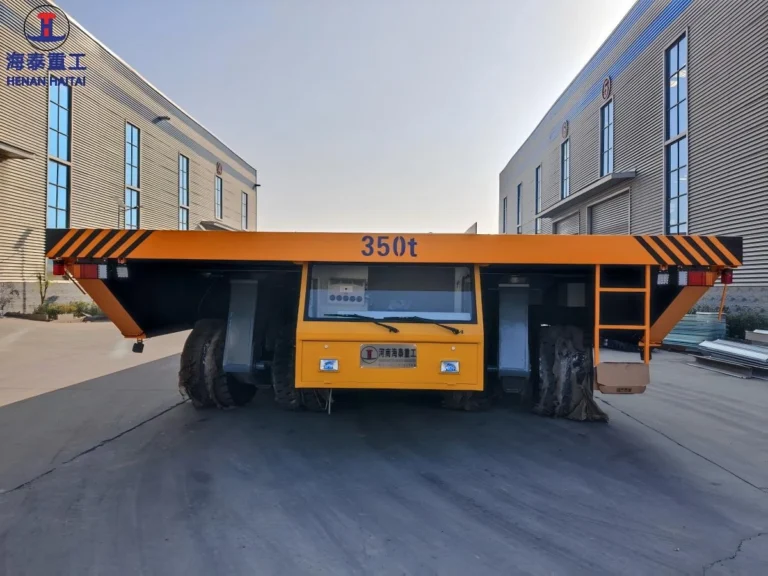
The Haitai hydraulic platform transporter works by converting a single massive, concentrated load into many small, evenly distributed loads spread across dozens of wheels — which is what makes it possible to move cargo that would otherwise crush a normal trailer axle or exceed a crane’s capacity.
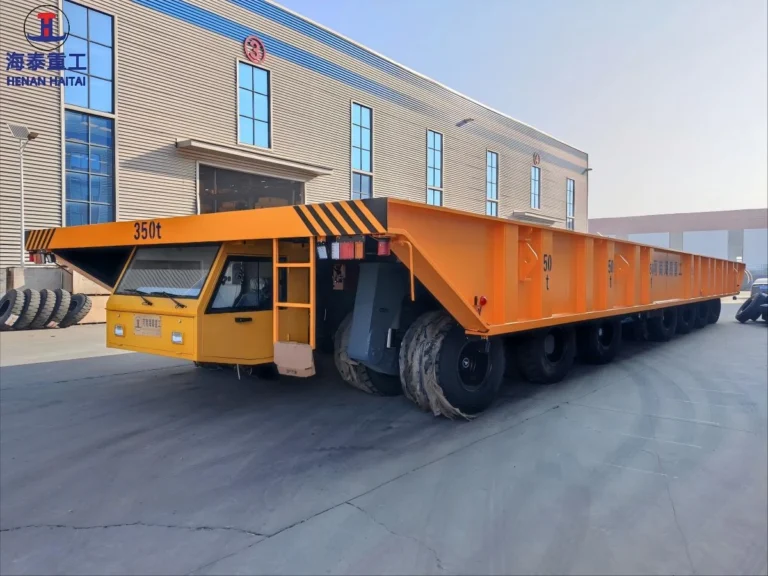
  • 1. Load distribution through modular axle lines.
    • Rather than relying on two or three heavy-duty axles, the transporter spreads the total weight across many axle lines connected in parallel and in series. Each line only bears a fraction of the total load — commonly in the 25–45 ton range per line — which keeps ground pressure and structural stress within safe limits.
  • 2. Hydraulic suspension equalizes pressure automatically.
    • Every axle is fitted with hydraulic cylinders connected through a shared hydraulic circuit. As the transporter moves over uneven ground, this system continuously adjusts cylinder pressure at each wheel so the load stays level and no single axle is overloaded — similar in principle to how a fluid finds its own level, but actively controlled.
  • 3. Independent, synchronized steering enables precision movement.
    • Each axle line can steer independently, and the control system synchronizes them so the entire platform can move in a straight line, crab sideways, travel diagonally, or pivot in place — all without changing the orientation of the cargo. This is what allows the transporter to navigate through gates, around obstacles, and into tight assembly bays that a rigid-frame vehicle simply couldn’t enter.
  • 4. Centralized hydraulic and electronic control.
    • A single operator, typically using a wireless remote control unit, commands the entire platform. The control system continuously monitors axle pressure, steering angle, and deck level, adjusting in real time to keep the cargo stable throughout the move — from pickup, to transit, to precise final positioning.
  • 5. Modular scaling for different tonnages.
    • Because axle lines couple together both side-by-side and end-to-end, the same basic components can be reconfigured into a smaller platform for a 50-ton load or a much larger one for a 1,000-ton load, without redesigning the system from scratch.

Hydraulic Platform Transporter Features

  • Wide Load Range (50-1,000 Tons): A single modular platform family covers everything from mid-size industrial equipment to massive infrastructure components, reducing the need for multiple specialized machines.
  • Even Weight Distribution: Independent hydraulic suspension across all axle lines keeps ground pressure balanced, protecting both the cargo and the surface being traveled on.
  • Superior Maneuverability: Multi-directional steering (straight, crab, diagonal, pivot) lets the transporter operate in confined shipyards, plant floors, and construction sites where conventional trailers can’t turn.
  • Modular, Scalable Design: Axle lines can be added, removed, or reconfigured to match project-specific tonnage and dimensions, extending the useful life and versatility of the equipment.
  • Terrain-Adaptive Stability: Hydraulic self-leveling compensates for uneven ground, ramps, and gradients, keeping sensitive or fragile cargo stable throughout the move.
  • Centralized, Synchronized Control: A single operator can coordinate every axle line from one control point, improving precision and reducing the crew size needed for complex moves.
  • High-Strength Structural Frame: Reinforced steel construction is engineered to handle concentrated heavy loads without deformation, supporting long-term reliability under repeated heavy-duty use.
  • Adjustable Deck Height: Hydraulic lift capability allows the platform to raise or lower cargo for load transfer between different height levels (e.g., onto a barge, foundation, or storage stand).

Application Scenarios of Hydraulic Platform Transporter

The Haitai hydraulic platform transporter is used wherever cargo is too heavy, too large, or too sensitive for conventional transport equipment:

  • Shipbuilding and Marine Engineering — Moving prefabricated ship hull blocks and modules between assembly stages and into dry docks.
  • Bridge and Infrastructure Construction — Transporting and positioning precast bridge girders, deck segments, and box girders for erection.
  • Oil, Gas, and Petrochemical Industry — Relocating pressure vessels, reactors, distillation columns, and other heavy process equipment within refineries and plants.
  • Power Generation — Handling large transformers, generator stators, turbine components, and wind turbine nacelles or tower sections.
  • Steel and Metallurgy Plants — Moving heavy machinery, rolling mill components, and industrial equipment within production facilities.
  • Port and Terminal Operations — Loading and unloading oversized project cargo between vessels, quaysides, and storage yards.
  • Modular and Prefabricated Construction — Transporting large building modules, offshore platform components, and prefabricated structures across construction sites.
  • Nuclear and Heavy Industrial Projects — Handling extremely heavy, high-value components that require precise, low-vibration transport.

Technical Parameters of Hydraulic Platform Transporter

Specifications vary by configuration (number of axle lines, deck width, and drive type), but the table below outlines the typical parameter range across the Haitai 50-1000 ton series.

ParâmetroFaixa típica
Rated load capacity50 – 1,000 tons (scalable via modular axle coupling)
Axle line load capacityApprox. 25 – 45 tons per axle line
Number of axle lines2 to 20+ lines, depending on configuration
Platform/module widthApprox. 2.4 – 3.0 m (standard container-compatible width)
Steering angle per axleUp to ±55°–60°
Steering modesStraight-line, crab (lateral), diagonal, pivot/carousel, independent axle steering
Deck height adjustmentHydraulically adjustable, typically ±150–300 mm
Suspension systemIndependent hydraulic cylinder suspension per axle
Travel speed (loaded)Approx. 3–8 km/h (site/off-road use)
Travel speed (unloaded, road)Up to approx. 30–48 km/h depending on configuration
Power unitDiesel power pack unit (PPU); electric/hybrid options available
Main frame materialHigh-strength structural steel (Q550D/S690-class or equivalent)
Coupling methodLateral (side-by-side) and longitudinal (end-to-end) hydraulic coupling
Control systemCentralized electro-hydraulic remote control with synchronized multi-axle operation

Exact figures depend on the specific model and number of axle lines selected — contact Haitai’s technical team for a configuration matched to your project’s load, dimensions, and site conditions.

Why Choose HaiTai Crane?

Supported by its 20 years of manufacturing experience and exports to 80+ countries, HaiTai Crane delivers CE and ISO 9001:2015 certified lifting solutions to ports, shipyards, and marinas worldwide. From standard configurations to fully engineered custom builds, our technical team tailors every crane to your site conditions and operational requirements.

Specifications and configurations may vary by project requirements. For a transporter configuration matched to your specific load weight, dimensions, and site conditions, consult with Haitai’s engineering team directly.

Leon
10+ Anos de experiência.
5,000+ Clientes
50+ Países

Simão

Especialista em Soluções para Guindastes · Guindaste HT

Especializada em soluções para exportação de pontes rolantes, incluindo guindastes pórticos, guindastes portuários, guindastes para contêineres, guindastes para embarcações e pontes rolantes suspensas. Há mais de 10 anos, auxiliamos clientes globais com consultoria pré-venda, seleção de capacidade e configurações específicas para cada local.

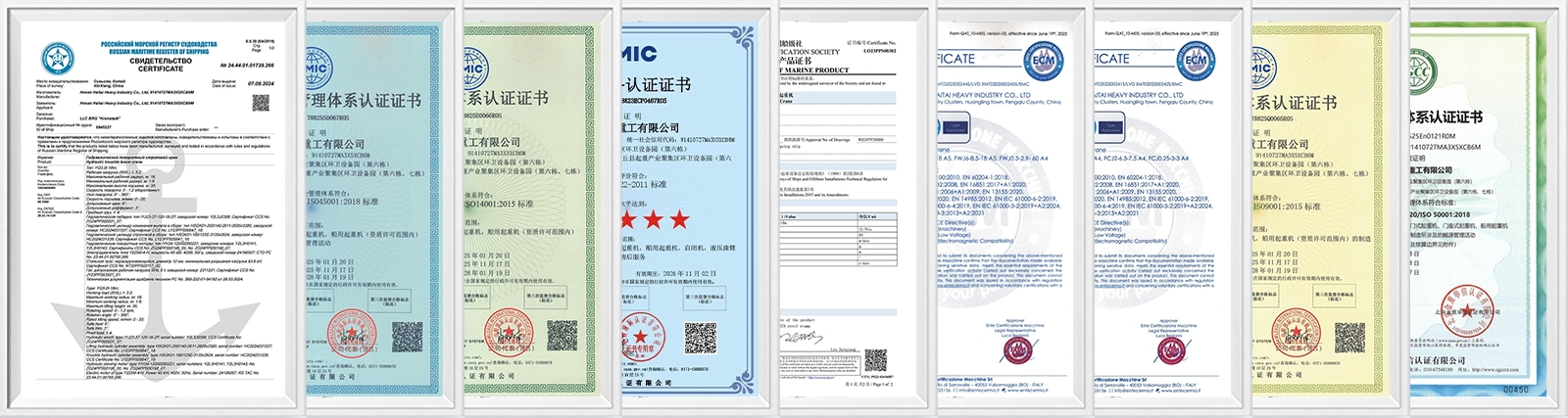
Honras e Certificados

Serviço

Consultoria técnica pré-venda
Nossa equipe de engenharia analisa o layout do seu pátio, as necessidades de produção e a infraestrutura antes de recomendar uma configuração. Fornecemos propostas técnicas, desenhos de layout e cálculos de carga — sem custo algum — antes que você se comprometa com a compra.
Testes de Aceitação em Fábrica (TAF)
Todos os guindastes passam por testes de carga total em nossa fábrica antes do envio. Os compradores podem acompanhar o teste pessoalmente ou por videoconferência. Relatórios e certificados de teste são emitidos após a conclusão.
Instalação e Comissionamento
Nossa equipe de serviço no local cuida de toda a montagem do guindaste, comissionamento elétrico e integração do sistema em suas instalações. O comissionamento inclui treinamento de operadores e documentação de entrega.
Fornecimento de peças de reposição
Mantemos um estoque global de peças de reposição para todos os modelos de guindastes que fornecemos. Componentes críticos — spreaders, motores de içamento, inversores de frequência, módulos PLC — estão disponíveis para envio em 48 a 72 horas. Contratos de fornecimento de longo prazo estão disponíveis para operadores de frotas.
Programas de manutenção preventiva
Oferecemos contratos de manutenção anual que abrangem inspeções, lubrificação, substituição de peças de desgaste e auditorias de segurança. O diagnóstico remoto através da nossa plataforma de monitoramento de guindastes permite a identificação precoce de falhas antes que causem paradas não planejadas.
Garantia
Garantia padrão: 24 meses a partir da data de comissionamento, cobrindo componentes estruturais, mecânicos e elétricos em condições normais de operação. Garantia estendida e contratos de serviço disponíveis.

Por que nos escolher?

Força poderosa
Nossos produtos são vendidos diretamente da fábrica, com qualidade garantida. Eles têm ótima aceitação em todo o país e recebem feedbacks positivos de nossos clientes há muito tempo!
Experiente
Nossos produtos são vendidos diretamente da fábrica, com qualidade garantida. Eles têm ótima aceitação em todo o país e recebem feedbacks positivos de nossos clientes há muito tempo!
Garantia de Qualidade
Nossos produtos são vendidos diretamente da fábrica, com qualidade garantida. Eles têm ótima aceitação em todo o país e recebem feedbacks positivos de nossos clientes há muito tempo!
Serviço sem preocupações
Nossos produtos são vendidos diretamente da fábrica, com qualidade garantida. Eles têm ótima aceitação em todo o país e recebem feedbacks positivos de nossos clientes há muito tempo!

Perguntas frequentes

Caso ainda tenha alguma dúvida, entre em contato com nossa equipe de suporte por e-mail. Responderemos o mais breve possível para ajudá-lo(a).
Q1: What load range does a Hydraulic Platform Transporter cover?
Haitai's HPT line runs from 50 tons on a 2-axle line unit up to 1000 tons or more on larger multi-axle configurations, with standard 32-ton and compact 16-ton suspension options available across most models.
Q2: How is a Hydraulic Platform Transporter different from an SPMT?
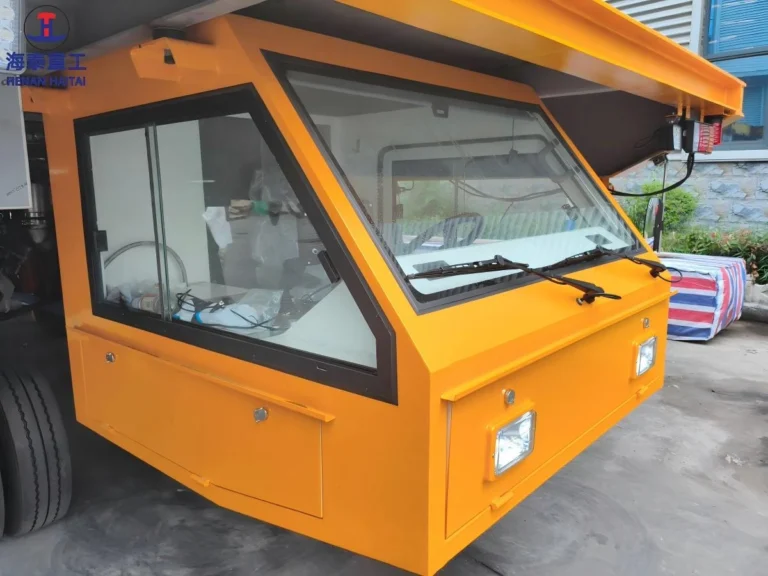
An HPT carries its own diesel engine, hydraulic pumps and operator cabin on the same chassis as the platform. A self-propelled modular trailer, or SPMT, uses a separate power pack unit connected to the platform modules, which suits very large coupled configurations but adds a second piece of equipment to manage on site.
Q3: Can it operate outdoors on unpaved or sloped ground?
It handles compacted yard surfaces, gentle grades up to roughly 6 percent, and moderately uneven pavement well thanks to independent axle suspension. It is not built for off-road terrain or steep slopes, so a site survey before ordering is worth the time.
Q4: Does the platform stay level when the load is off-center?
Yes. Automatic leveling and independently adjustable suspension groups keep the platform horizontal even when cargo is not centered, and equal, parallel or single-point lifting modes let the operator match the lift pattern to the load.
Q5: How long does it take to get a custom Hydraulic Platform Transporter built and shipped?
Lead time depends on axle configuration, suspension rating and any custom cabin or coupling features. Contact our engineering team with your load weight, dimensions and site conditions for a project-specific timeline and export plan.

Mensagem

Sinta-se à vontade para entrar em contato conosco.

Formulário de contato
Por favor, especifique sua necessidade considerando os seguintes aspectos:
  • De qual produto de guindaste você precisa?
  • Qual é a capacidade máxima de elevação (em toneladas) necessária para o seu projeto?
  • Poderia especificar a altura de elevação (em metros) necessária?
  • Poderia fornecer detalhes sobre o ambiente de trabalho, como as condições do solo, as limitações de espaço e quaisquer obstáculos?
  • Qual a frequência de uso esperada e a duração do projeto?

produtos relacionados

HaiTai hydraulic straddle carriers lifting container in port terminal
Pórtico hidráulico para movimentação de contêineres à venda – Manuseio de contêineres

Se você trabalha com contêineres pesados, estruturas de aço ou cargas industriais de grandes dimensões — e seu local não possui infraestrutura de energia fixa — um pórtico hidráulico é provavelmente a solução mais prática disponível. Ele levanta, se desloca e posiciona cargas sem a necessidade de estruturas suspensas, trilhos ou fornecimento de energia de alta tensão. Uma única máquina. Mobilidade total. Obras civis mínimas. O que é um Pórtico Hidráulico? O Conceito Básico Um pórtico hidráulico é um veículo autopropelido para içamento de cargas pesadas. Ele se posiciona sobre a carga — levantando-a por baixo usando um spreader hidráulico ou uma viga de elevação — e se move livremente pelo pátio sobre pneus. Todo o ciclo de elevação e deslocamento é alimentado por um sistema diesel-hidráulico integrado. Ao contrário dos guindastes elétricos ou movidos a cabo, o pórtico hidráulico possui sua própria fonte de energia. Isso o torna totalmente independente da infraestrutura do pátio. Você pode implantá-lo em qualquer lugar onde a superfície suporte as cargas das rodas — sem necessidade de instalação fixa. Como Funciona o Sistema Hidráulico O motor aciona bombas hidráulicas que fornecem fluido pressurizado aos cilindros de elevação, motores de acionamento e atuadores de direção. Todos os movimentos — levantar, abaixar, deslocar e direcionar —…

Leia mais
Folding Hydraulic Gantry Crane
Guindaste pórtico hidráulico

Procura um sistema de elevação de cargas pesadas que suporte cargas que outros guindastes simplesmente não conseguem? O nosso guindaste pórtico hidráulico oferece capacidade de elevação de 10 a 1.000 toneladas, precisão de sincronização ao nível do milímetro e uma estrutura modular que se monta rapidamente em qualquer obra — interna ou externa. Utilizado em diversos setores, como geração de energia, construção naval, metalurgia e engenharia civil, este é o equipamento de elevação de cargas pesadas ideal para projetos onde o desempenho é fundamental. O que é um guindaste pórtico hidráulico? Um guindaste pórtico hidráulico é um sistema de elevação de alta capacidade alimentado inteiramente por um sistema hidráulico. Consiste em seis componentes principais: uma estrutura de pórtico, mecanismo de elevação, mecanismo de translação, unidade hidráulica, sistema de controle elétrico e dispositivos de segurança. O sistema eleva, posiciona e movimenta cargas extremamente pesadas com controle de velocidade contínuo e precisão de sincronização de ±1 mm em múltiplos pontos de elevação. Opera com alimentação CA padrão de 380 V / 50 Hz ou com uma unidade a diesel independente — o que permite a sua utilização em qualquer lugar, com ou sem ligação à rede elétrica. Especificações Técnicas Principais Parâmetro Especificação Capacidade de Elevação 10 – 1.000 toneladas Vão 8 – 35 m Altura de Elevação 4,5 – 12 m…
Leia mais
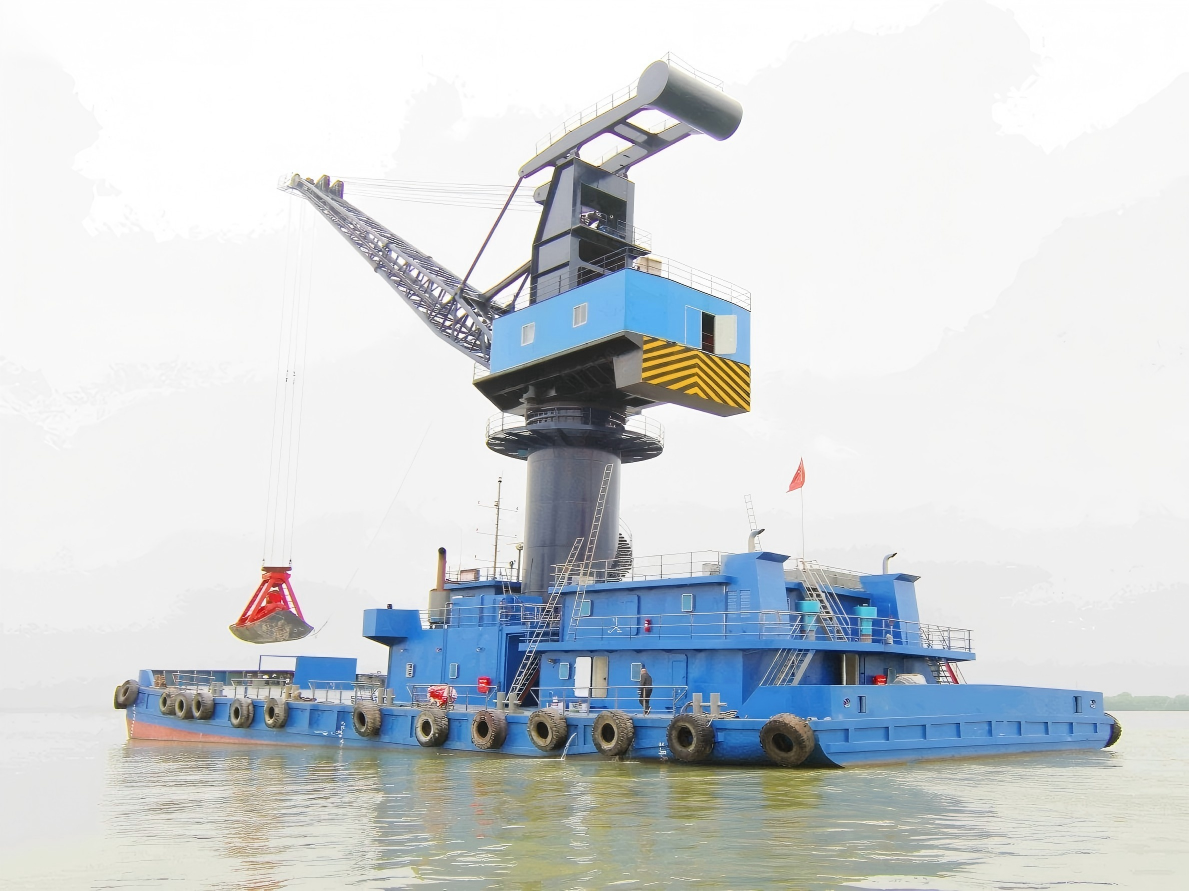
Floating Dock Crane
Guindaste de doca flutuante

Se você administra uma marina, estaleiro ou instalação naval, conhece as frustrações: embarcações aguardando indefinidamente por manutenção, docas que não foram projetadas para cargas pesadas e guindastes inadequados para operações na água. Um Guindaste Flutuante para Doca resolve todos esses problemas em uma única máquina versátil. Ele levanta, movimenta e posiciona embarcações com segurança — sem modificações permanentes na doca, sem danos ao casco e sem interromper seu fluxo de trabalho. Esta página aborda tudo o que você precisa para avaliar um Guindaste Flutuante para Doca: como ele opera, onde apresenta melhor desempenho, o que diferencia o nosso e as especificações técnicas completas. Quando estiver pronto para especificar uma unidade, nossa equipe de engenharia responde às solicitações em até 24 horas, ajudando você a obter o guindaste certo para sua instalação. Introdução ao Produto Um Guindaste Flutuante para Doca é um sistema de elevação robusto montado em uma balsa, pontão ou plataforma flutuante dedicada. Ele oferece capacidade de elevação móvel e de alta capacidade diretamente sobre a água — sem a necessidade de infraestrutura fixa em cais ou acesso de guindaste em terra. Diferentemente de um guindaste fixo em terra, um guindaste flutuante se move com o casco. Ele pode ser rebocado ou propulsionado de forma autônoma até qualquer via navegável acessível…

Leia mais
Principal