


If you manage a marina, boatyard, or naval facility, you know the frustrations: vessels waiting endlessly for maintenance, docks that aren’t designed for heavy loads, and cranes that aren’t suited for waterborne operations. A Guindaste de doca flutuante solves all these problems in one versatile machine. It lifts, moves, and positions vessels safely — without permanent dock modifications, without hull damage, and without slowing down your workflow.
This page covers everything you need to evaluate a Floating Dock Crane: how it operates, where it performs best, what sets ours apart, and the complete technical specifications. When you’re ready to specify a unit, our engineering team responds to enquiries within 24 hours, helping you get the right crane for your facility.
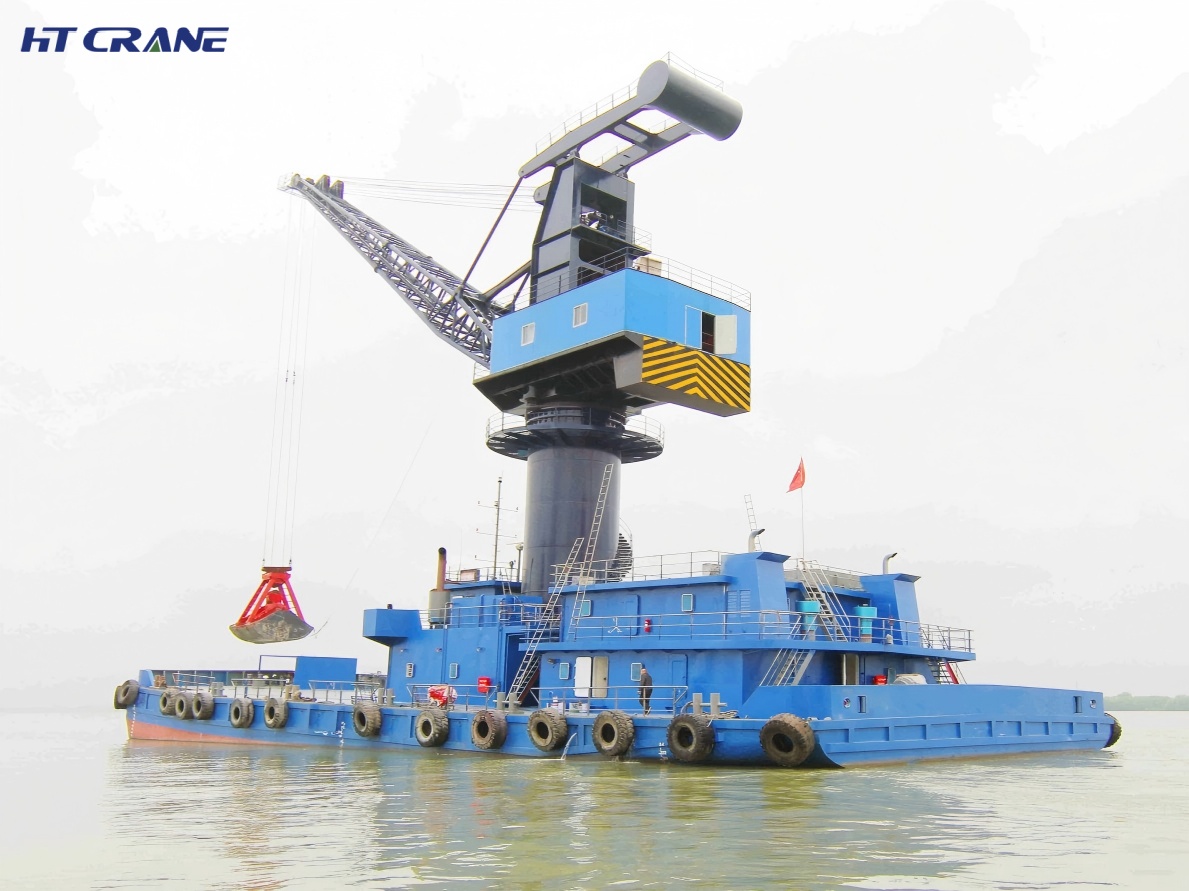
A Floating Dock Crane is a heavy-duty lifting system mounted on a barge, pontoon, or dedicated floating platform. It provides mobile, high-capacity lifting capability directly over water — without requiring fixed quayside infrastructure or shore-based crane access.
Unlike a shore-mounted crane, a floating dock crane moves with its hull. It can be towed or self-propelled to any accessible waterway location, positioned alongside a vessel or structure, and deployed for lifting operations that fixed land cranes cannot reach. This independence from shore infrastructure makes it the practical choice for shipyard docking operations, port construction, offshore installation, ship salvage, and coastal infrastructure projects.
The crane is available in slewing boom and fixed sheerleg configurations, across a wide capacity range from light-duty barge-mounted units to heavy offshore lift systems. Drive systems cover hydraulic, diesel-electric, and electro-hydraulic options. All units are engineered to the applicable marine classification society standards — ABS, DNV, BV, CCS, or Lloyd’s Register — depending on the vessel’s flag state and operational area.
All specifications are customized to project requirements. Final parameters are confirmed during engineering review.
| Parâmetro | Gama padrão | Notas |
|---|---|---|
| Capacidade de elevação | 10 t – 80 t+ | Sheerleg configurations for ultra-heavy lifts |
| Boom Type | Slewing / Fixed Sheerleg / Knuckle Boom | Específico da aplicação |
| Faixa de giro | 360° (slewing models) | Fixed on sheerleg configurations |
| Boom Length | 15 m – 80 m+ | Customized to lift radius requirement |
| Altura de elevação | 10 m – 50 m+ | From waterline to hook at maximum height |
| Velocidade de içamento | 0 – 5 m/min (loaded) | VFD controlled; varies by capacity |
| Velocidade de rotação | 0 – 1 rpm | Load and configuration dependent |
| Sistema de acionamento | Hydraulic / Diesel-Electric / Electro-Hydraulic | — |
| Hull Type | Barge / Pontoon / Semi-Submersible | Específico do projeto |
| Dynamic Positioning | Optional DP1 / DP2 / DP3 | For offshore applications |
| Método de controle | Operator Cab / Remote Control | Standard cab; remote available |
| Temperatura de trabalho | -20°C a +45°C | Pacote para clima frio disponível |
| Classificação | ABS / DNV / BV / CCS / Lloyd’s Register | Flag state and operating area dependent |
The crane and hull assembly can be towed or self-propelled to any accessible waterway location. Lifting operations can be conducted at any point along a coastline, river, or harbor — independent of quayside crane availability or shore access constraints.
Available from 10-tonne barge-mounted service cranes to multi-thousand-tonne sheerleg heavy lift vessels. A single platform can be configured for the specific lift profile of the project — eliminating the need to mobilize oversized equipment for standard lifts.
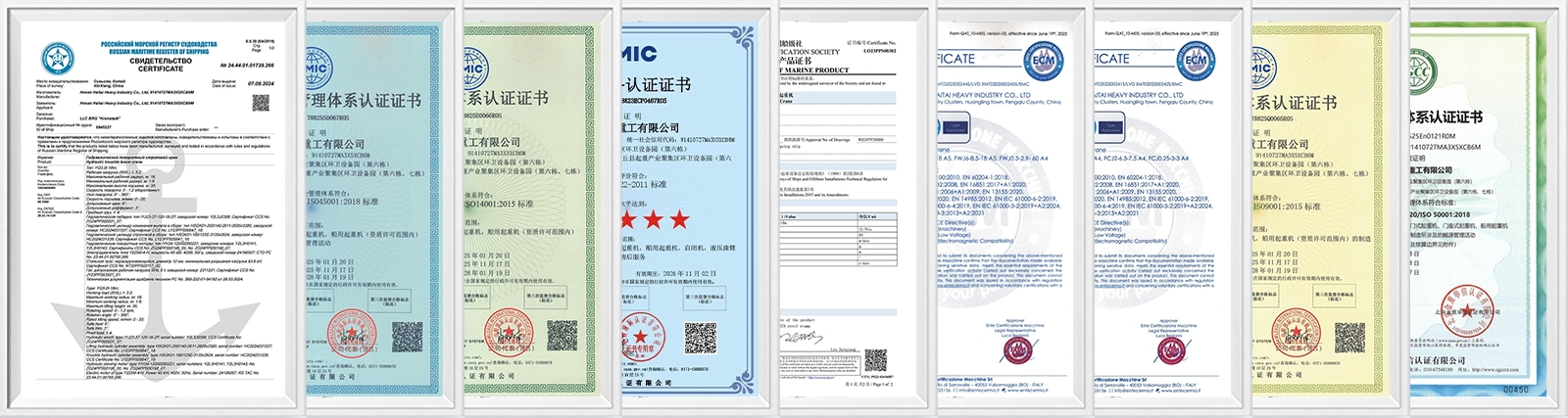
All cranes are designed, manufactured, tested, and documented to the crane rules of the applicable classification society: ABS, DNV, BV, CCS, or Lloyd’s Register. This includes structural design review, load testing, and ongoing inspection documentation for the operating vessel’s certification.
Multi-layer marine-grade coating system applied to all structural steel:
DP1, DP2, and DP3 classified dynamic positioning systems are available for floating crane vessels operating in offshore environments where anchor mooring is impractical or where station-keeping precision is required during lifts. DP classification is project-specific and confirmed during engineering.
Floating dock cranes are the primary lifting tool in shipyards that operate floating dry docks. The crane lifts vessels — or major hull sections — during docking, undocking, block assembly, and launch operations. Barge-mounted slewing cranes serve medium-capacity shipyard work; larger sheerleg systems serve heavy ship sections and complete vessels.
Port expansion projects require lifting prefabricated caissons, sheet pile sections, mooring dolphins, and quay wall elements into position over water. A floating dock crane positioned alongside the construction front provides precise placement capability that shore-based equipment cannot reach.
Monopile foundations and transition pieces for offshore wind turbines require lift capacities in the hundreds of tonnes, placed precisely at offshore locations. Large floating crane vessels — including purpose-built semi-submersible heavy lift ships — are the primary installation tool for this application.
Raising a sunken, grounded, or damaged vessel requires floating crane capacity, underwater access, and the ability to position alongside the casualty regardless of shore access. Floating crane systems — sometimes operating in tandem for the heaviest salvage lifts — are the standard tool for marine salvage operations globally.
Prefabricated bridge segments, pier structures, and waterway crossing elements are lifted and placed by floating crane from the water surface. This approach minimizes traffic disruption on shore and provides access to locations where temporary land-based crane pads cannot be established.
Platform jackets, module installations, and heavy equipment lifts during offshore field development require floating crane capacity positioned at the installation site. Crane vessels with DP capability maintain position during lifts without mooring infrastructure in open water.
Canal construction, lock gate replacement, dam infrastructure, and river bridge construction all involve lifting operations over water where shore access is limited. Smaller floating cranes — on pontoon hulls sized for the waterway — provide access to these confined environments.

| Fator | Guindaste de doca flutuante | Shore-Based Crane |
|---|---|---|
| Location flexibility | Fully mobile — any accessible waterway | Fixed to land — quayside access required |
| Water coverage | Lifts directly over water surface | Limited by boom reach from shore |
| Infrastructure requirement | Self-sufficient — hull is the platform | Requires crane pad, rail, or runway |
| Maximum capacity | Up to 1000 t (specialist vessels) | Typically limited by structural foundation |
| Offshore capability | Yes — with DP or anchor mooring | Não |
| Operational cost structure | Day-rate project deployment | Capital asset with fixed operating cost |
| Best for | Offshore construction, salvage, port works | Routine quayside cargo handling |
Com mais de 20 anos de experiência em fabricação e exportações para mais de 80 países, a HaiTai Crane fornece soluções de elevação com certificação CE e ISO 9001:2015 para portos, estaleiros e marinas em todo o mundo. De configurações padrão a projetos totalmente personalizados, nossa equipe técnica adapta cada guindaste às condições do seu local e às suas necessidades operacionais.










Os terminais de contêineres operam com base na capacidade de movimentação. Cada hora que um navio passa atracado aguardando movimentação de carga representa uma hora de receita perdida — para a companhia de navegação, o operador do terminal e a autoridade portuária. A pressão para movimentar contêineres mais rapidamente, lidar com navios maiores e manter os equipamentos funcionando 24 horas por dia é constante e só aumenta. Um guindaste STS (ship-to-shore) é a linha de frente dessa operação. É a máquina que determina a rapidez com que um navio é preparado, quantas movimentações por hora o terminal pode realizar e se o porto está preparado para lidar com a próxima geração de navios porta-contêineres ultragrandes que entrarão em serviço. O que é um guindaste STS? Um guindaste STS — abreviação de guindaste ship-to-shore — é um grande guindaste pórtico sobre trilhos posicionado no cais de um terminal de contêineres. Ele levanta contêineres diretamente entre o convés do navio e o cais, utilizando uma barra espaçadora que se encaixa em cantoneiras padrão de contêineres ISO. A lança se estende sobre o navio para alcançar várias fileiras de contêineres e se retrai quando os navios precisam passar. A altura de elevação, o alcance e a folga sob a viga são…

O içamento de cargas pesadas na água apresenta problemas que os equipamentos terrestres simplesmente não conseguem resolver. Guindastes fixos necessitam de infraestrutura permanente. Guindastes móveis não alcançam locais de trabalho offshore. E as barcaças convencionais não possuem a capacidade de içamento necessária para obras de construção marítima, salvamento ou desenvolvimento portuário de grande porte. Um guindaste flutuante resolve todos esses três problemas, levando capacidade de içamento de cargas pesadas certificada diretamente para o local de trabalho, onde quer que ele esteja. Os guindastes flutuantes da HT CRANE são construídos de acordo com os padrões CCS e estão disponíveis com certificação ABS, BV e DNV. Capacidade de içamento, raio de ação e configurações de energia personalizadas estão disponíveis para atender às necessidades específicas do seu projeto. Se você procura um guindaste flutuante à venda que seja certificado, comprovado e configurável, você está no lugar certo. O que é um guindaste flutuante? Um guindaste flutuante é um guindaste de grande porte montado em um pontão ou barcaça, projetado para operar diretamente na água. Ele não requer infraestrutura costeira permanente, tornando-se a solução ideal para construção marítima, salvamento, instalação offshore e projetos hidroviários onde guindastes convencionais simplesmente não conseguem chegar. A maioria das unidades suporta acessórios de gancho e garra, adaptando-se a diferentes tipos de carga e requisitos de tarefa em…

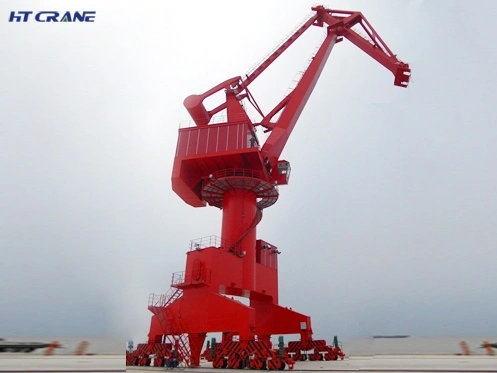
O que é um guindaste pórtico? Se você trabalha em um porto, estaleiro ou terminal de granéis, certamente já viu um guindaste pórtico em ação. Trata-se de um grande guindaste giratório montado sobre uma base fixa ou sobre trilhos, que cobre tanto o lado da água quanto o lado da terra de uma doca sem precisar mover sua fundação. A lança se eleva e desce para alcançar diferentes distâncias, enquanto a estrutura superior gira 360°, tornando-o uma das soluções de içamento de cargas pesadas mais versáteis disponíveis. Dependendo da tarefa, ele pode ser equipado com um gancho para carga geral ou uma garra para materiais a granel como carvão, minério e grãos. As séries de guindastes pórticos giratórios e guindastes pórticos com lança da HT CRANE atendem aos padrões CCS, ABS, BV e DNV — portanto, seja para equipar um estaleiro ou operar um movimentado terminal de granéis, existe uma configuração ideal para sua operação. Principais características do guindaste pórtico: Cada porto é diferente. Cada tipo de carga é diferente. Os guindastes de pórtico são construídos com as características que mais importam: desempenho de giro confiável, opções flexíveis de acessórios e integridade estrutural certificada…


























