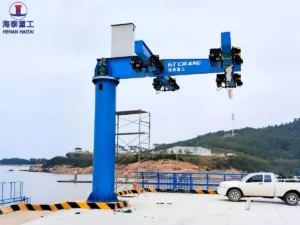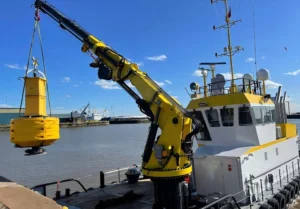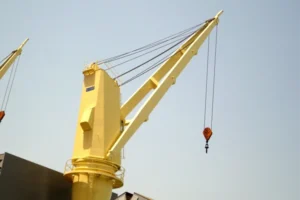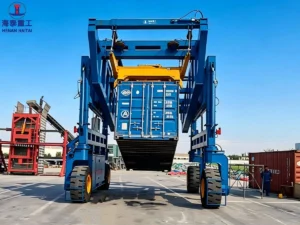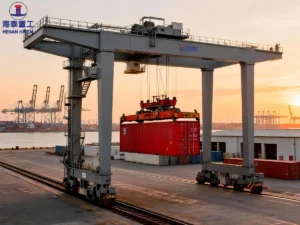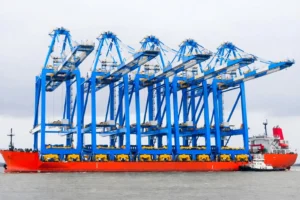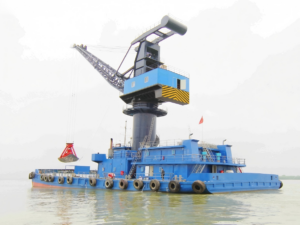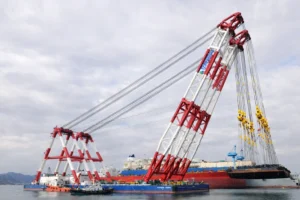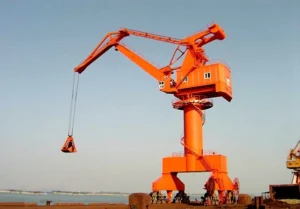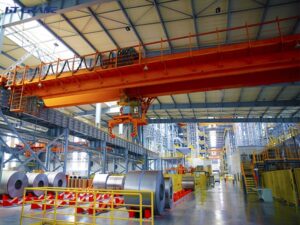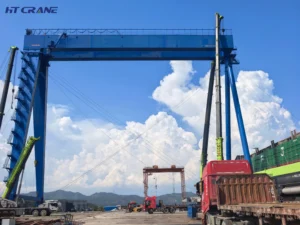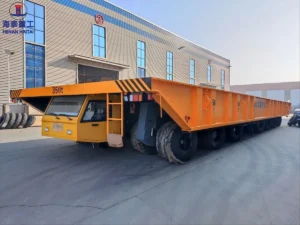
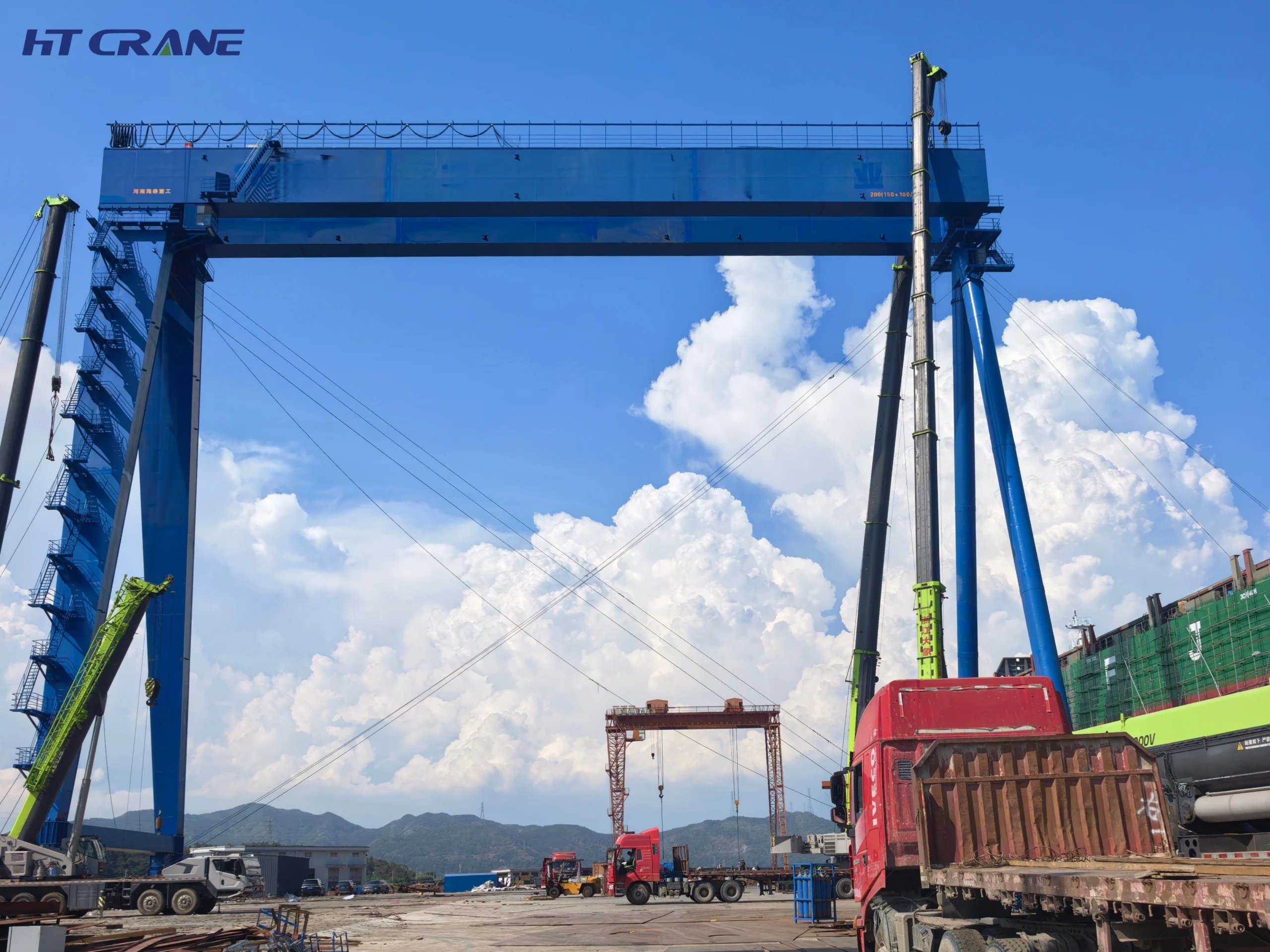
A shipyard without the right gantry crane is not a shipyard — it is a steel fabrication yard with ambition. The gantry crane defines what a yard can build, how large a vessel it can handle, and how fast production moves from block assembly to launch. An undersized or poorly specified crane becomes the bottleneck that limits every other investment in the facility. Shipyard gantry cranes are among the most technically demanding lifting machines in any industrial sector. They span widths of 80–170 metres, lift loads of 100–3000 tonnes, and operate in a marine environment that subjects every structural and electrical component to continuous salt-air corrosion. Getting the specification right from the outset determines whether the crane serves the yard reliably for 30 years or becomes a source of unplanned downtime that disrupts the production schedule. Product Description What Is a Shipyard Gantry Crane? A shipyard gantry crane — also called a goliath crane, portal gantry crane, or shipbuilding gantry crane — is a large double-leg gantry structure that spans the full width of a shipbuilding berth, drydock, or block…

Looking for a heavy lifting system that handles loads other cranes simply cannot? Our hydraulic gantry crane delivers lifting capacity from 10 to 1,000 tons, millimeter-level synchronization precision, and a modular structure that assembles quickly on any job site — indoors or out. Trusted across power generation, shipbuilding, metallurgy, and civil engineering, this is the heavy lifting equipment built for projects where performance cannot be compromised. What Is a Hydraulic Gantry Crane? A hydraulic gantry crane is a heavy-duty lifting system powered entirely by a hydraulic drive system. It consists of six core components: a gantry frame, lifting mechanism, traveling mechanism, hydraulic power unit, electrical control system, and safety protection devices. The system raises, positions, and moves extremely heavy loads with stepless speed control and ±1mm synchronization accuracy across multiple lifting points. It operates on standard AC 380V / 50Hz power supply or a self-contained diesel power unit — making it deployable anywhere, with or without grid power. Core Technical Specifications Parameter Specification Lifting Capacity 10 – 1,000 tons Span 8 – 35 m Lifting Height 4.5 – 12 m…

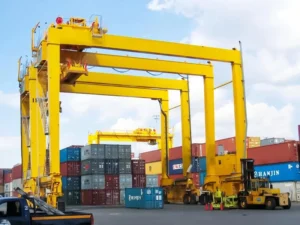
If you operate a container terminal, port facility, or industrial yard, you know the challenges: containers stuck on the ground, yard operations slowed by inefficient equipment, and cranes that weren’t designed for modern logistics. A Single Girder Rubber Tyred Gantry Crane solves all these problems in one machine. It lifts, moves, and stacks containers safely — without fixed rails, without bottlenecks, and without compromising operational efficiency. This page covers everything you need to evaluate a Single Girder RTG Crane: how it works, where it excels, what makes ours different, and the full technical specifications. Ready to specify a unit? Our engineering team responds to enquiries within 24 hours, ensuring you get the right solution for your port or yard. Product Introduction The Single Girder Rubber Tired Gantry Crane is a self-propelled, mobile gantry lifting system mounted on rubber tyres. It operates without fixed rails, tracks, or permanent ground infrastructure — making it one of the most flexible solutions available for container handling, industrial yard lifting, and logistics operations where site conditions or operational flexibility make rail-mounted systems impractical. The crane’s…

Choosing the wrong gantry crane costs more than money. It costs downtime, structural risk, and rework. If you’re sourcing a heavy duty trolley gantry crane for a port, steel mill, rail yard, or large factory, the MG series is one of the most proven options on the market today. This page covers everything procurement teams need: how each MG type differs, what specs apply to your load and environment, and how to match the right configuration to your site conditions. No guesswork. Just practical guidance. What Is the MG Heavy Duty Trolley Gantry Crane? The MG gantry crane is a double-beam, trolley-type outdoor crane built for heavy industrial lifting. Its structure uses a box-type welded double beam with π-shaped legs. This design increases torsional rigidity significantly. The crane handles loads from 5 tons up to 500 tons. It runs on ground rails and supports spans from 18 to 40 meters. Core Engineering Advantages Unlike single-beam gantry cranes, the MG series uses two parallel main beams. This distributes the load more evenly. The trolley travels between the beams, allowing precise positioning…

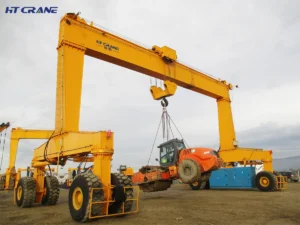
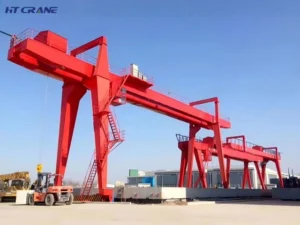
When the load is heavy, the span is wide, or the hook height requirement exceeds what a single girder crane can deliver — a double girder gantry crane is the answer. It is the structural choice for heavy industry, and for good reason: two main girders share the load, allow a higher-positioned hoist, and provide the structural rigidity needed for large spans and demanding duty cycles. Buyers often reach the double girder decision after outgrowing a lighter crane or after realizing that a single girder model cannot meet their hook height or span requirements. The challenge then becomes specification: double girder cranes involve more variables, more civil infrastructure, and larger capital commitment than their lighter counterparts. This page walks you through what defines a double girder gantry crane, what to specify, where it fits, and how to evaluate a supplier for a purchase of this significance. What Is a Double Girder Gantry Crane? A double girder gantry crane uses two parallel horizontal girders — the main beams — supported at each end by leg structures that run on ground-level rails.…

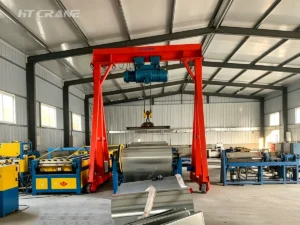
Picking the wrong crane structure does not just waste budget. It creates daily friction — wrong span, insufficient lift height, or a beam type that cannot handle your load cycle. If you are sourcing a single girder gantry crane for a warehouse, construction yard, port facility, or manufacturing plant, the right configuration depends on more than tonnage alone. This page breaks down all four single girder gantry crane types available from haitai Crane. You will find full specifications, clear application guidance, a direct type comparison, and a pre-order checklist. No unnecessary complexity. Just the information procurement teams need to make a confident decision. What Is a Single Girder Gantry Crane? A single girder gantry crane uses one main beam supported by two legs that travel along ground rails. An electric hoist runs along the underside of the beam. This design is simpler and lighter than double-girder configurations. It costs less to build, install, and maintain. Where Single Girder Works Best Single girder gantry cranes are the standard choice for operations in the 2–32 ton range. They suit sites where lifting…
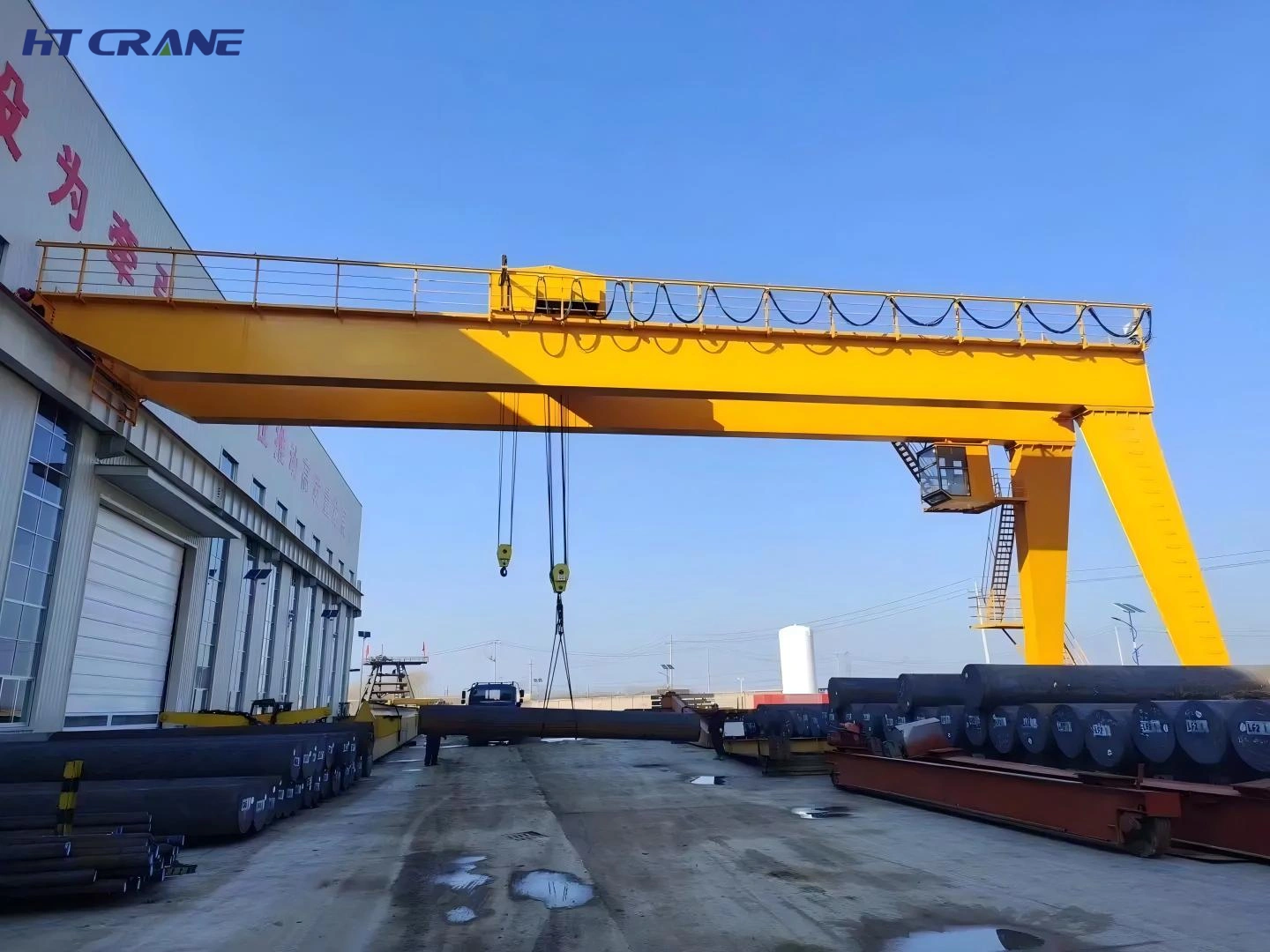
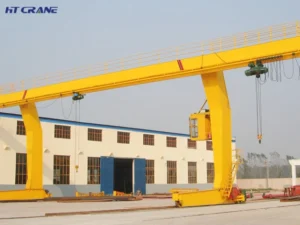
Not every facility has the floor space for a full gantry crane. Not every building has the roof structure to support an overhead travelling crane. A semi gantry crane solves both problems at once — and for a significant number of industrial buyers, it is the most practical and cost-effective crane configuration available. The semi gantry crane uses one leg on the ground and one side supported by an existing building column or runway rail on the wall. This hybrid design reduces the crane’s footprint, eliminates one set of floor rail foundations, and integrates with the building structure in a way that a full gantry crane cannot. The result is maximum coverage in minimum space — at a lower civil works cost than either alternative. What Is a Semi Gantry Crane? The Defining Structure A semi gantry crane — also called a half gantry crane — has an asymmetric support structure. One end of the main girder rests on a standard leg that runs on a ground-level rail. The other end is supported by a trolley or bracket that runs…