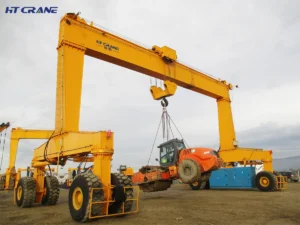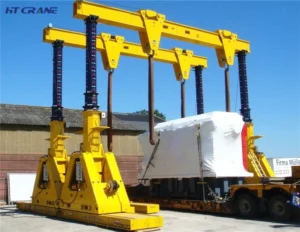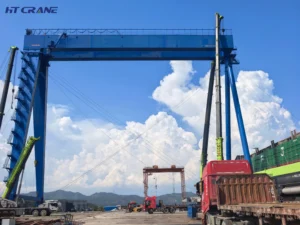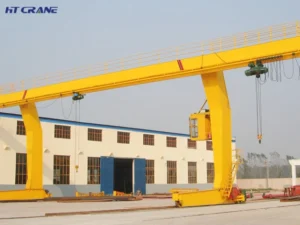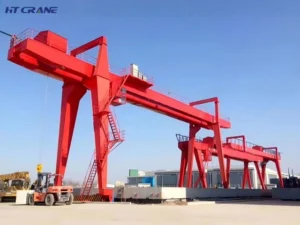


Not every facility has the floor space for a full gantry crane. Not every building has the roof structure to support an overhead travelling crane. A semi gantry crane solves both problems at once — and for a significant number of industrial buyers, it is the most practical and cost-effective crane configuration available.
The semi gantry crane uses one leg on the ground and one side supported by an existing building column or runway rail on the wall. This hybrid design reduces the crane’s footprint, eliminates one set of floor rail foundations, and integrates with the building structure in a way that a full gantry crane cannot. The result is maximum coverage in minimum space — at a lower civil works cost than either alternative.
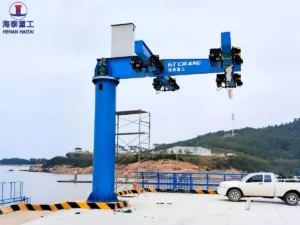
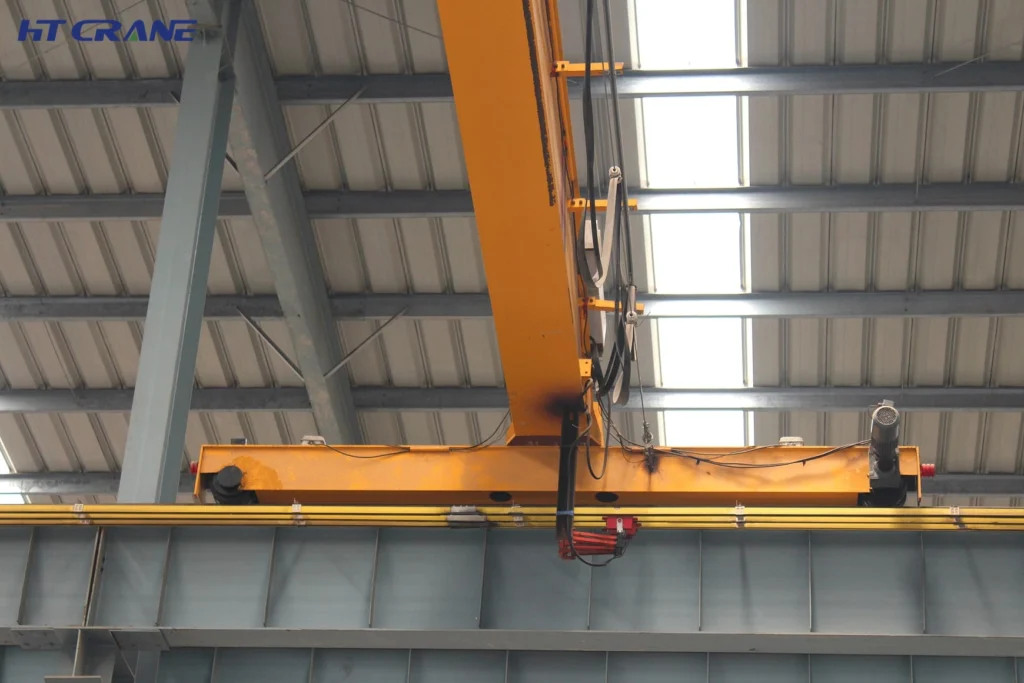
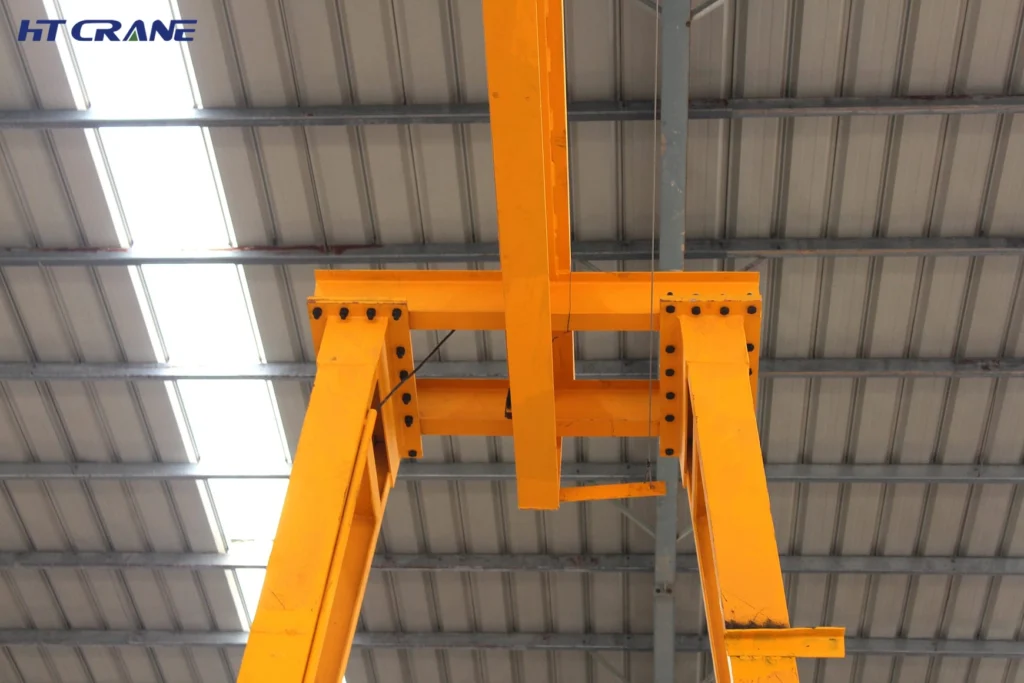
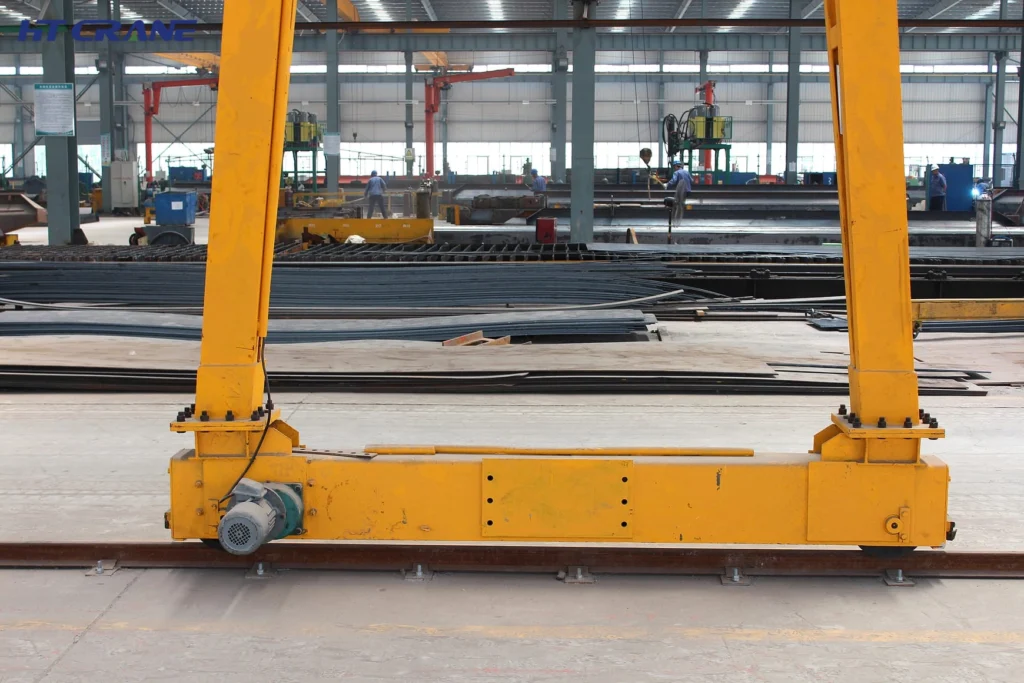
A semi gantry crane — also called a half gantry crane — has an asymmetric support structure. One end of the main girder rests on a standard leg that runs on a ground-level rail. The other end is supported by a trolley or bracket that runs on a runway rail attached to an existing building column, wall structure, or dedicated runway beam.
This means the crane covers the full span between the building column and the ground rail, without needing a second set of legs and without the full rail system that a standard gantry crane requires on both sides. The single leg travels on one ground rail. The other rail is elevated — mounted to the building structure at the required height.
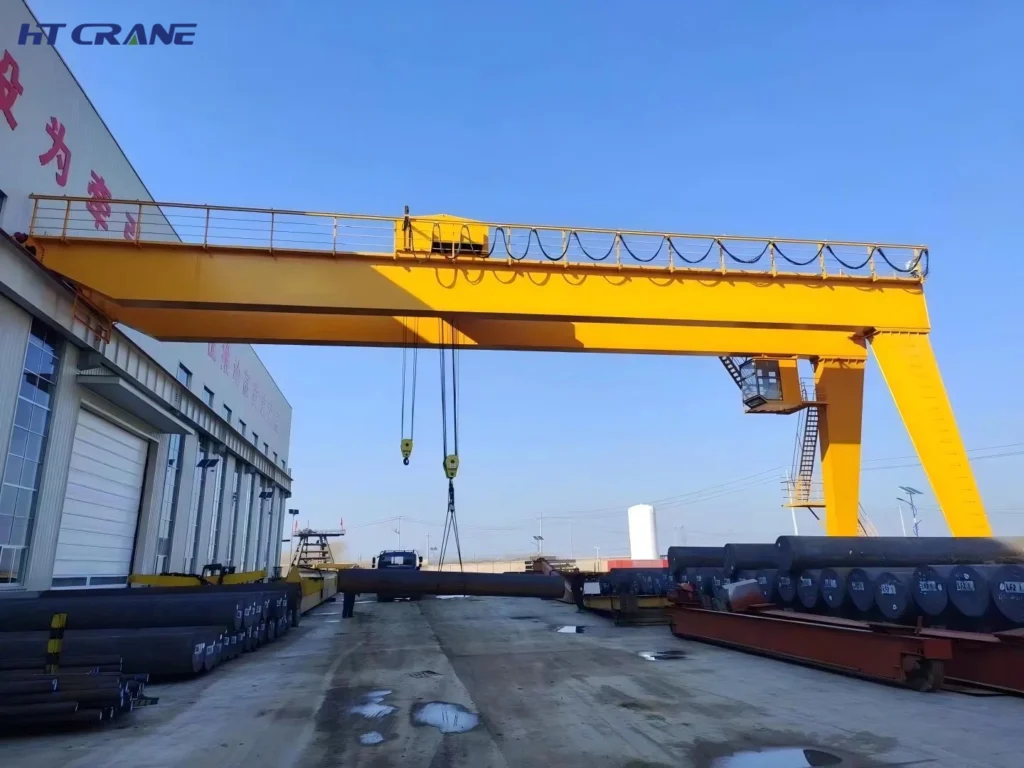
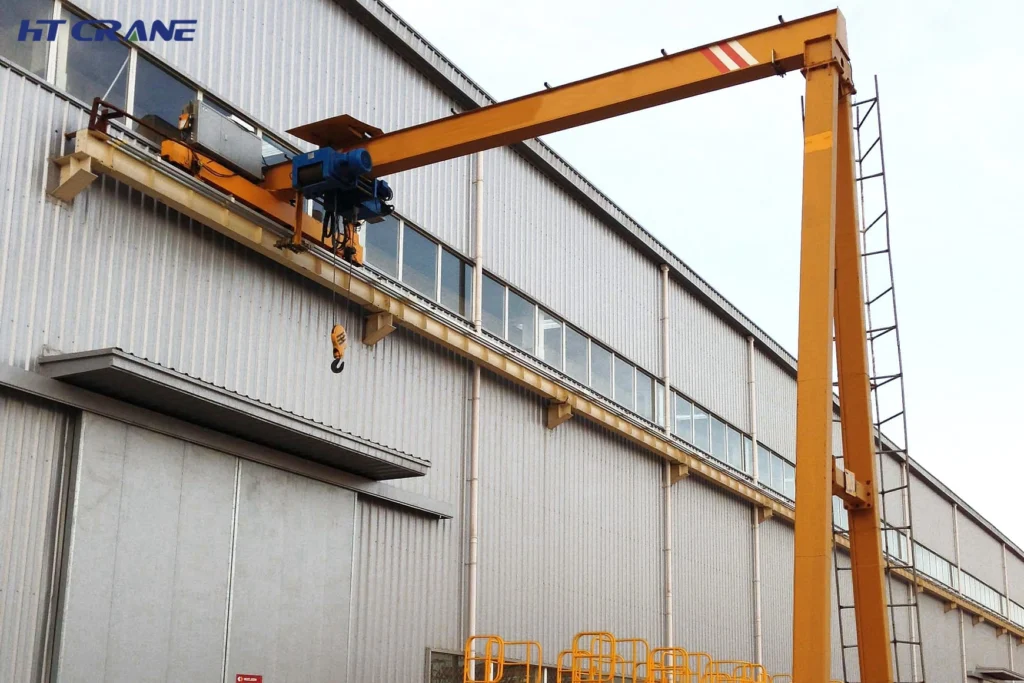
The semi gantry crane design emerged from a practical operational need: facilities where one side of the working area is bounded by a building wall or column line, and full floor coverage is required without the footprint of two independent rail systems.
Typical examples: a machine shop where equipment lines one wall and the crane must serve the full floor area; a loading bay where one wall is the building structure and the other side is open to a yard; a prefabrication area where columns on one side are structural and cannot be moved, but floor space on the other side is unobstructed.
Semi gantry cranes are available in both single and double girder configurations, following the same logic as standard gantry cranes:
| Factor | Single Girder Semi Gantry | Double Girder Semi Gantry |
|---|---|---|
| SWL Range | 1T – 20T | 10T – 50T |
| Hook Height | Lower (hoist below girder) | Higher (trolley on top) |
| Span | Up to 30m | Up to 40m |
| Structural Weight | Lighter | Heavier |
| Building Load | Lower | Higher |
| Best Fit | Workshops, light fabrication, maintenance | Heavy manufacturing, steel processing |
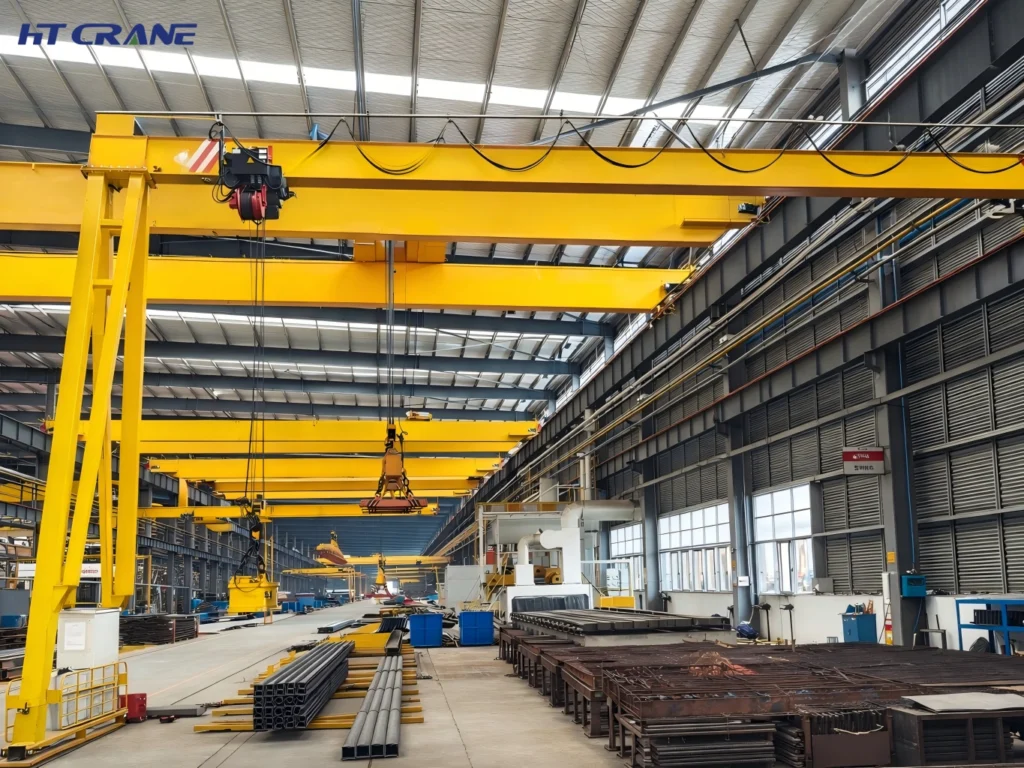
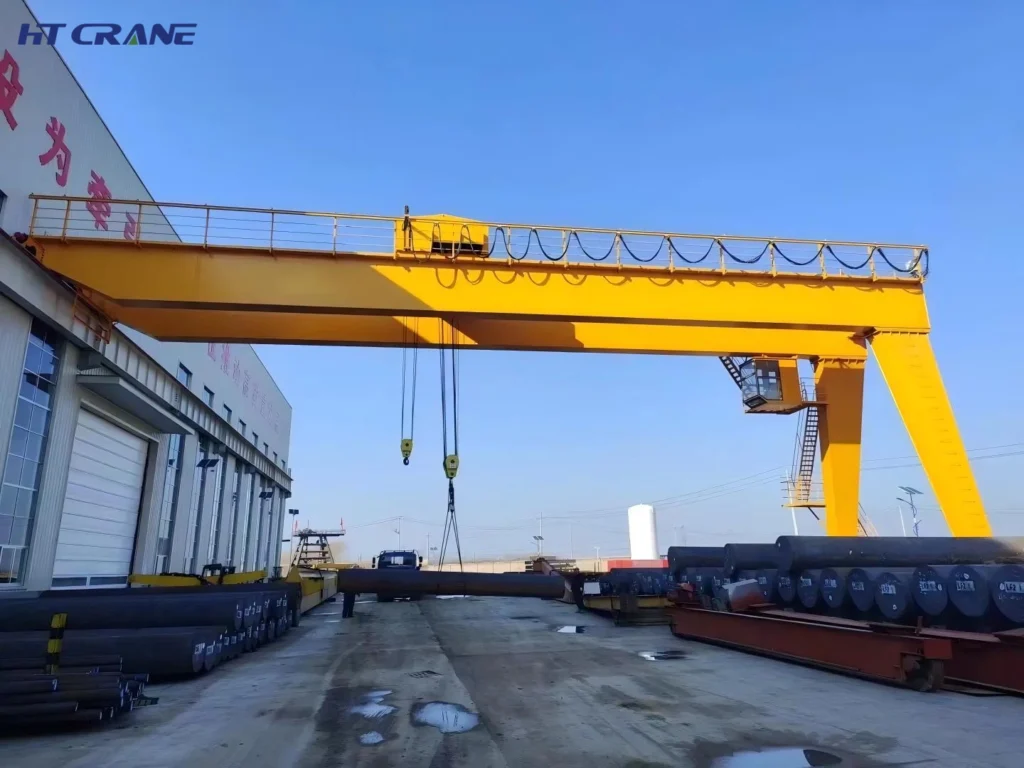
For the majority of semi gantry crane applications — workshop lifting from 3T to 16T — the single girder configuration is the appropriate and cost-effective choice. Double girder semi gantry cranes are used when hook height or heavy load requirements push beyond single girder limits.
| Parameter | Specification Range |
|---|---|
| Safe Working Load (SWL) | 1T – 50T |
| Span | 5m – 40m |
| Lifting Height | 3m – 15m (site dependent) |
| Hoisting Speed | 2 – 12 m/min (VFD control available) |
| Trolley Travel Speed | 10 – 40 m/min |
| Gantry Travel Speed | 10 – 40 m/min |
| Leg Configuration | Single leg — fixed height or adjustable |
| Ground Rail | Standard crane rail (crane-supplied) |
| Wall/Column Rail | Runway beam — supplied or specified by buyer |
| Drive System | AC motor with VFD (all motions) |
| Duty Class | ISO M3 – M6 (FEM 1Am – 5m) |
| Control | Pendant, radio remote |
| Design Standard | EN 13001, FEM 1.001 |
| Certification | CE (EU Machinery Directive 2006/42/EC), ISO 9001 |
Three structural variants cover the full application range:
Standard single leg, fixed height — the most common configuration for permanent indoor installations. The leg height is set during design to match the building column rail height. Simple, cost-effective, and low-maintenance.
Adjustable leg height — the single leg is height-adjustable within a defined range. Useful when the crane is used in multiple areas with different column heights, or when the leg height may need to change as the facility evolves.
Cantilever extension — the girder extends beyond the ground rail end, providing lifting coverage outside the direct span between the leg and the building rail. Used when the working area extends beyond the column line into an open yard. The cantilever section must be designed and balanced carefully — it is not simply extending the girder without structural calculation.
This is the most common semi gantry crane application. The facility already has structural columns along one wall — either from the building’s original design or from a previous installation. Installing an overhead crane would require significant structural reinforcement. A full gantry crane would need rails on both sides and would occupy floor space that is currently used for equipment or workflow.
The semi gantry crane solution: a ground rail runs along the open side of the workshop floor. The existing building column carries a runway beam at the required height. The crane covers the full workshop width from column to ground rail, using the building’s own structure on one side and a minimal floor rail on the other. Civil works are reduced to one rail foundation instead of two. The building structure carries one side of the crane load — exactly what it was designed to do.
Facilities with covered loading bays — where one side is the building wall and the other side is open to a yard or loading apron — benefit directly from the semi gantry configuration. The covered side uses the building structure for the elevated rail. The open side uses a single ground rail with a standard leg.
This arrangement allows the crane to serve both the indoor storage area and the outdoor loading apron with one crane. No full gantry crane could achieve this without encroaching on the loading apron with a second set of legs. No jib crane covers enough area. The semi gantry is the natural solution.
Fabrication shops handling material up to 20T — structural steel, plate, piping, and assemblies — frequently operate in buildings where overhead cranes are impractical due to roof structure limitations and where a full gantry crane would create floor congestion. The semi gantry crane provides the lifting capacity needed without either constraint.
For this application, a 10T–16T single girder semi gantry with a span of 12–20 metres is typical. The semi gantry crane handles raw material receiving, in-process assembly moves, and finished product loading — the full production cycle — without forklift interference on the workshop floor.
Equipment maintenance bays — for large vehicles, power generation equipment, and industrial plant — often have one fixed wall structure and require lifting access across the full bay width. The semi gantry crane fits this geometry precisely: the wall carries one rail, the floor carries the other, and the full bay is covered with one crane and one operator.
For maintenance applications, the duty cycle is typically low — M3 or M4 — which means the crane is designed for moderate lift frequency rather than continuous production use. This affects the structural specification and the hoist duty rating. Always confirm the duty class with your supplier rather than defaulting to the heaviest available option.
Before ordering a semi gantry crane, the building column or wall structure that will carry the elevated runway rail must be assessed by a structural engineer. The crane imposes dynamic loads on the building structure — not just the static weight of the crane and its load, but the accelerating and braking forces from gantry travel and hoist motion.
Many buyers assume that because the column is there, it can carry a crane. This assumption is frequently wrong. The original building design may not have included crane loads. The column section, connection details, and foundation may be adequate — or they may not be. This is not a risk worth taking. A structural assessment before procurement protects you from discovering the problem after the crane is installed.
HT crane provide a crane reaction load document — specifying the forces the crane imposes on the building structure — as part of our standard pre-contract technical package. Provide this to your structural engineer alongside the building drawings for the assessment.
The crane’s span is the distance between the centreline of the ground rail and the centreline of the elevated runway rail. This is not the same as the width of the working area — the leg and the building bracket each consume some of the span. Measure the actual working width you need to cover, then confirm the crane span required to achieve it.
Hook height is limited by the height of the elevated runway rail and the headroom available between the rail and the building structure above it. In buildings with limited clearance, this is frequently the binding constraint. Measure carefully and provide actual dimensions — not estimates — to your supplier.
Duty class determines how the crane structure and hoist are designed for fatigue life. Specifying a higher duty class than your operation requires adds unnecessary cost. Specifying too low creates a crane that reaches the end of its structural fatigue life before its expected service life — a failure mode that is not always visible until damage is already significant.
Estimate your average daily lifts, the typical load as a percentage of maximum SWL, and your intended crane service life in years. Provide these figures to your supplier and ask them to confirm the correct duty class per ISO 4301 or FEM 1.001. This is a basic application engineering step — any credible crane manufacturer will do it as a matter of standard process.
A semi gantry crane is a custom-engineered product. Every installation has a unique combination of span, height, building structure type, and operational requirement. A trading company cannot engineer this — they pass the specification to a manufacturer and mark up the result. You lose direct access to the engineers, you lose cost transparency, and you gain a layer of delay when technical questions arise during manufacturing or installation.
Buying direct means your specification goes to the engineers who will build the crane. Questions are answered by the people who designed it. Changes are implemented without intermediary delays. Documentation — CE certificate, load test report, structural drawings — comes directly from the manufacturing entity.
A semi gantry crane is the right solution when a full gantry crane creates too large a footprint, an overhead crane requires building upgrades that are not justified, and a jib crane does not cover enough area. It uses your building structure as one support, reduces civil works to a single ground rail, and delivers full working area coverage in a configuration that fits the geometry of the facility you actually have.
The specification process requires a structural assessment of your building and careful measurement of span and hook height. Both steps are straightforward with the right information — and we provide the crane reaction load data you need to make them simple.
Contact our engineering team with your span, load, hook height, and building structure details. We will provide a complete technical proposal and the structural load documentation your building engineer needs for the assessment.














If you manage a marina, boatyard, or naval facility, you already know the pain: vessels stuck in the water waiting for maintenance, slipways that damage hulls, and cranes that simply weren’t built for boats. A marine travel lift solves all three problems in a single machine. It lifts, moves, and launches vessels safely — without fixed rails, without hull damage, and without slowing down your yard. This page covers everything you need to evaluate a marine travel lift: what it does, where it works, what makes ours different, and the full technical specs. If you are ready to specify a unit, our engineering team responds to enquiries within 24 hours. Product Description A marine travel lift — also called a boat travel lift, mobile boat hoist, or self-propelled boat hoist — is a rubber-tyred gantry crane designed specifically for vessel handling. The portal frame straddles the boat in the water. Polyester slings are positioned under the hull. The vessel is then lifted clear and driven anywhere on land. No rail tracks. No fixed infrastructure. Just one machine that handles haul-out,…
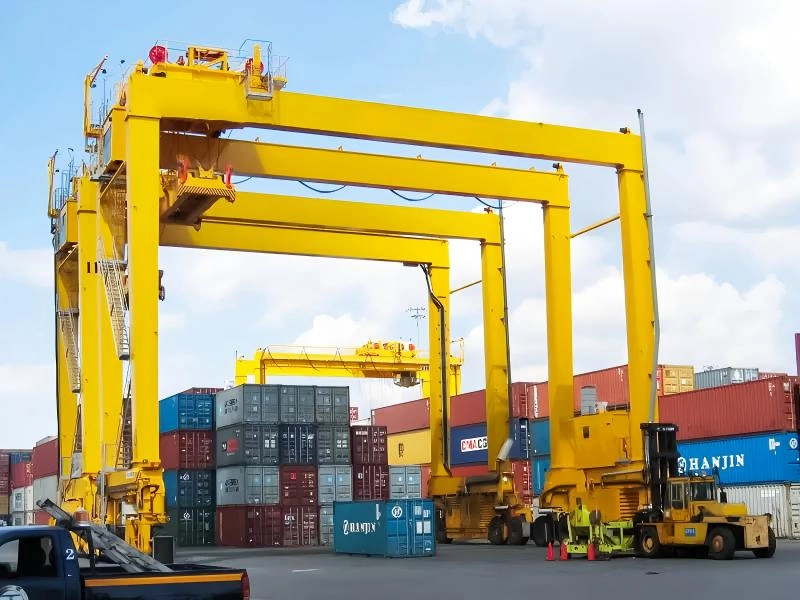
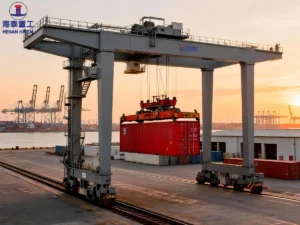
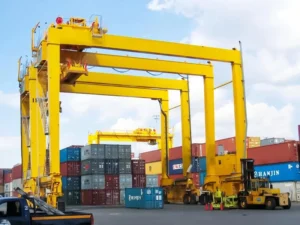
Choosing the right RTG crane supplier impacts your entire port or yard operation. A wrong choice means delays, downtime, and costly repairs. We help you avoid that. As a certified RTG crane manufacturer and exporter, we supply high-performance rubber tyred gantry cranes built for container terminals, intermodal yards, and logistics hubs worldwide. Product Description An RTG crane (Rubber Tyred Gantry Crane) is a mobile overhead crane designed to stack and move ISO containers in port container yards and inland depots. Unlike rail-mounted cranes(RMG Container Gantry Crane), RTG cranes run on rubber tyres — giving them full mobility across the yard without fixed infrastructure. 👉View Professional Buying Guide: RTG Crane vs RMG Crane: Which One Actually Fits Your Project? RTG cranes are the backbone of modern container terminal operations. They bridge the gap between ship-to-shore cranes and horizontal transport, enabling efficient container stacking, retrieval, and yard organization. Why Buy From Us? HT Cranes is a professional manufacturer of RTG cranes with over 15 years of lifting experience. Our cranes are exported to ports and logistics yards across Southeast Asia, the Middle…
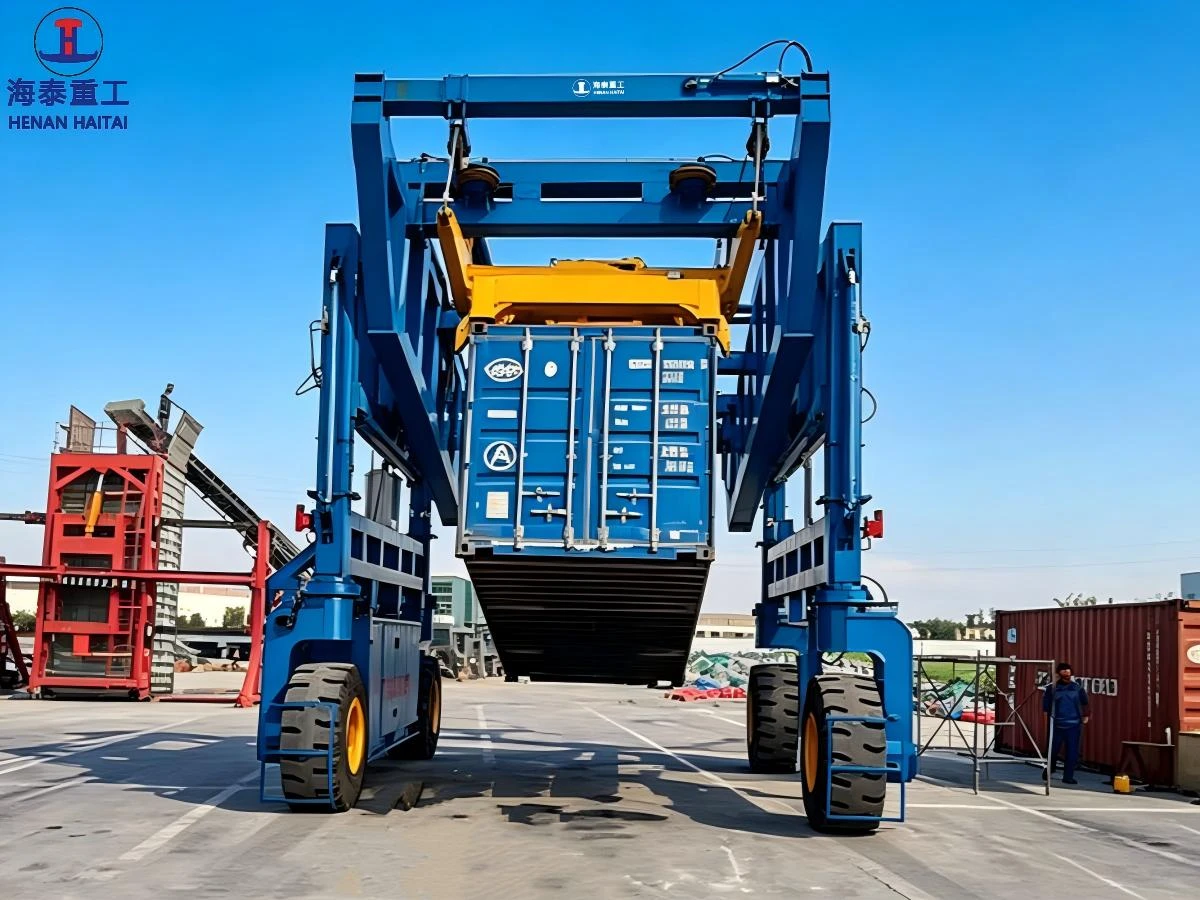
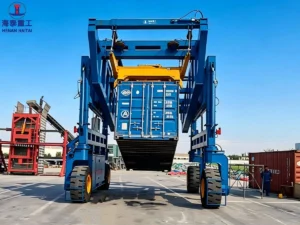
If you handle heavy containers, steel structures, or oversized industrial cargo — and your site lacks fixed power infrastructure — a hydraulic straddle carrier is likely the most practical solution available. It lifts, travels, and places loads without needing overhead structures, rails, or high-voltage power supply. One machine. Full mobility. Minimal civil works. What Is a Hydraulic Straddle Carrier? The Core Concept A hydraulic straddle carrier is a self-propelled heavy lift vehicle. It straddles a load — lifting from below using a hydraulic spreader or lifting beam — and moves freely across the yard on rubber tyres. The entire lift-and-travel cycle is powered by an onboard diesel-hydraulic system. Unlike electric or cable-reel powered cranes, the hydraulic straddle carrier carries its own power source. This makes it fully independent of yard infrastructure. You can deploy it anywhere your surface can support the wheel loads — no fixed installation required. How the Hydraulic System Works The engine drives hydraulic pumps that supply pressurized fluid to the lift cylinders, drive motors, and steering actuators. All motion — lifting, lowering, travelling, and steering —…