

Container terminals run on throughput. Every hour a vessel spends at berth waiting for cargo moves is an hour of revenue lost — for the shipping line, the terminal operator, and the port authority. The pressure to move boxes faster, handle larger vessels, and keep equipment running around the clock is constant and only increasing.
A ship-to-shore crane is the front line of that operation. It’s the machine that determines how quickly a vessel is turned around, how many moves per hour the terminal can deliver, and whether the port can handle the next generation of Ultra-Large Container Vessels coming into service.
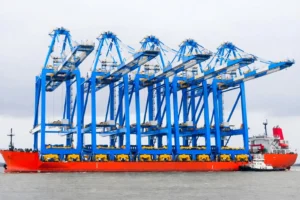
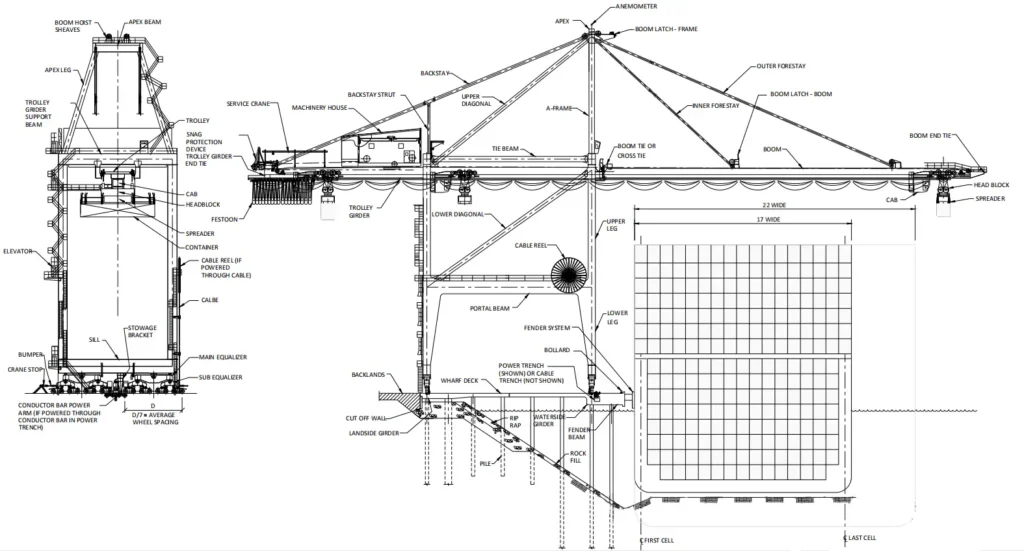
An STS crane — short for ship-to-shore crane — is a large rail-mounted gantry crane positioned at the quayside of a container terminal. It lifts containers directly between the vessel’s deck and the dock, using a spreader bar that locks onto standard ISO container corner castings. The boom extends out over the vessel to reach across multiple container rows, then retracts when vessels need to pass. Lift height, outreach, and under-beam clearance are specified to match the vessel classes the terminal handles — from Panamax to the latest Ultra-Large Container Vessels exceeding 24 rows wide.
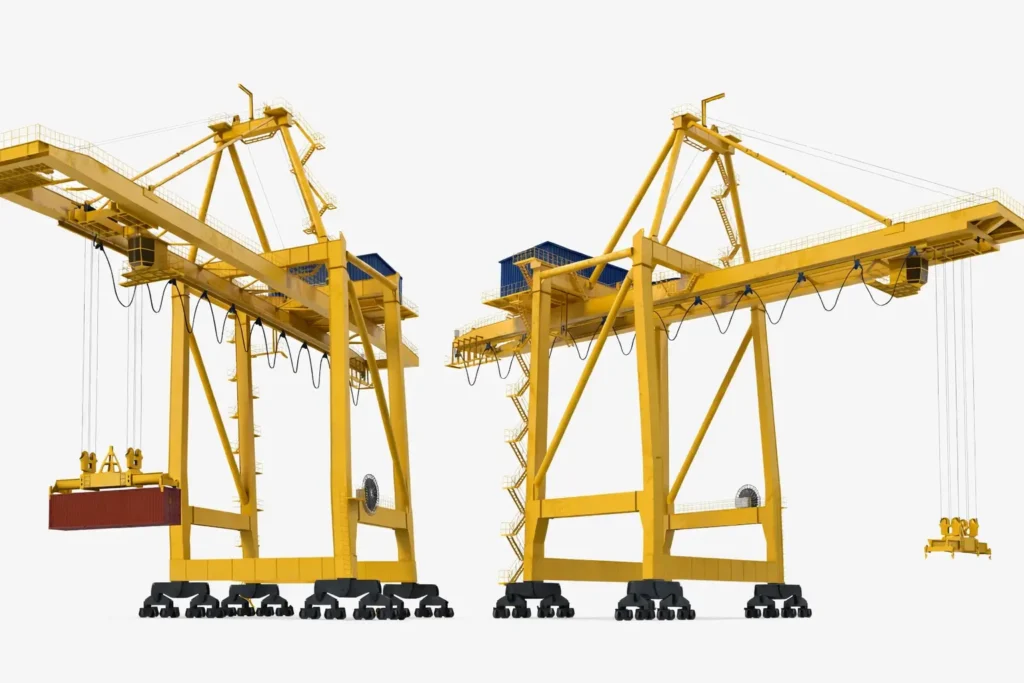
Built for high-cycle container handling at modern terminals, here are the five core features that define reliable STS crane performance.
Modern container ships keep getting wider. HT CRANE STS cranes are built with enough horizontal reach to cover vessels up to 24 container rows wide — including the latest Ultra-Large Container Vessels. The boom folds back automatically when vessels need to pass, keeping berth operations smooth and uninterrupted.
The automatic telescopic spreader locks onto standard ISO container corner castings across 20ft and 40ft configurations. The active anti-sway system suppresses load swing during high-speed hoisting and travel — keeping cycle times fast and reducing operator correction workload.
All mechanisms — hoisting, trolley travel, and gantry travel — run on AC variable frequency drives. Smooth acceleration and deceleration reduce mechanical wear, improve positioning accuracy, and lower energy consumption across high daily cycle volumes.
Hoisting speed is optimized for container terminal cycle rates — fast enough to maintain competitive moves-per-hour figures across full shift operations on Panamax and Ultra-Large vessels.
Standard units operate from -20°C to +45°C. Extended cold weather configurations rated for -40°C are available for Russian and Northern European deployments. High-temperature variants with enhanced cooling systems suit Middle Eastern terminal environments.
The figures below reflect the standard performance range for our STS crane series. Container terminal projects vary significantly in vessel class, berth layout, and handling requirements — most configurations involve custom specification. Use these as a reference baseline and contact our team with your project details.
| Parameter | Standard Range |
|---|---|
| Lifting Capacity (Under Spreader) | custom available |
| Outreach (Sea Side) | 50m — 70m |
| Backreach (Land Side) | 15m — 25m |
| Lifting Height (Above Rail) | 30m — 50m |
| Hoisting Speed (Full Load) | 60 — 120 m/min |
| Trolley Travel Speed | 150 — 240 m/min |
| Gantry Travel Speed | 30 — 45 m/min |
| Rail Gauge | 15.24m / 30.48m (custom available) |
| Power Supply | AC 10kV / 50Hz (custom available) |
| Work Duty Class | A7 / A8 |
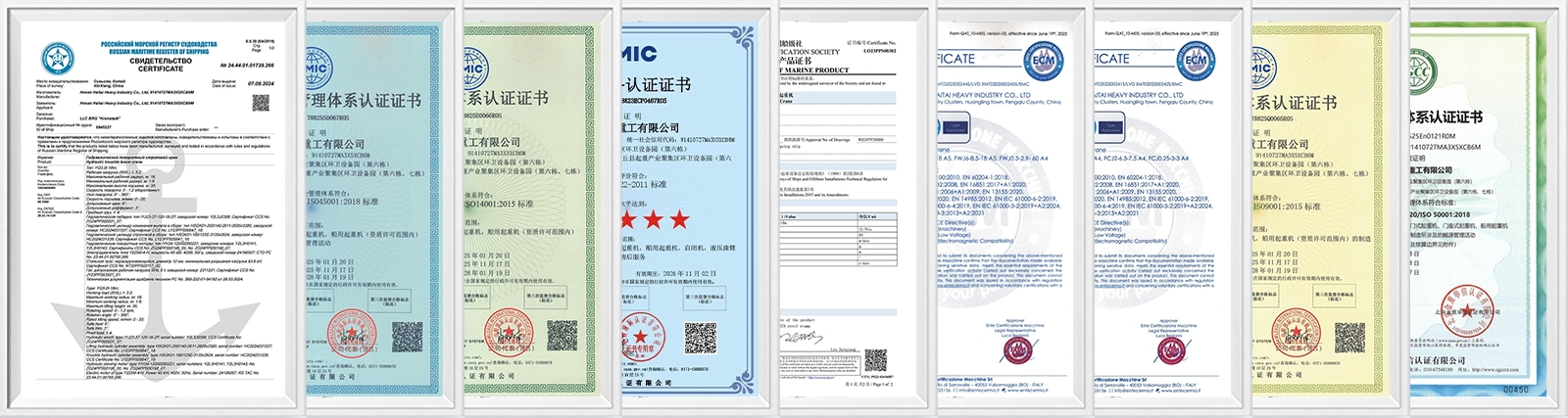
| Certification | CCS · ABS · BV · DNV · RMRS |
| Operating Temperature | -40°C — +45°C |
Terminal expansion projects, new berth construction, and vessel class upgrades often require specifications beyond the standard range. Outreach, lifting height, rail gauge, and environmental ratings can all be configured to match your specific terminal layout and vessel mix. Our engineering team works directly with port developers and terminal operators to build the right specification from the ground up.
From major international container hubs to emerging port developments, STS cranes are the backbone of quayside container operations. Here are the five core application areas.
High-volume terminals handling thousands of container moves per day need equipment that keeps pace. STS cranes with high-speed hoisting and anti-sway systems maintain the moves-per-hour figures that major shipping lines expect when calling at premier port facilities.
Greenfield port projects in the Middle East, Southeast Asia, and beyond require STS cranes specified from the ground up for the terminal layout and target vessel classes. Custom outreach, rail gauge, and environmental ratings are available to match any new berth configuration.
Existing terminals upgrading to handle Ultra-Large Container Vessels need cranes with greater outreach and lift height than previous generations. STS cranes replace aging equipment or extend berth capacity without requiring full terminal reconstruction.
Ports in Russia, Northern Europe, and the Baltic region operate through harsh winter conditions. STS cranes with cold weather packages rated to -40°C maintain full operational performance through freezing temperatures, ice formation, and extreme wind chill.
Middle Eastern and North African container terminals face the opposite challenge — extreme heat, sand, and dust. Enhanced cooling systems, sealed electrical enclosures, and dust-resistant component specification keep STS cranes running reliably in arid desert port environments.






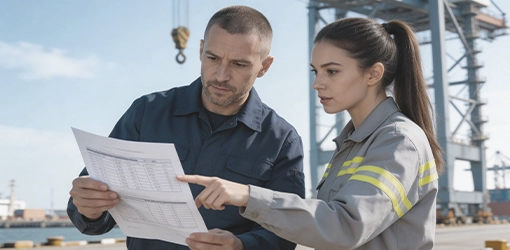
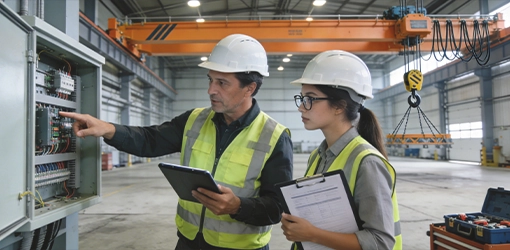




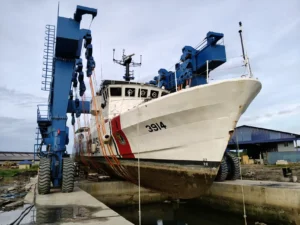
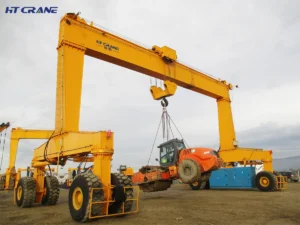
If you manage a marina, boatyard, or naval facility, you already know the pain: vessels stuck in the water waiting for maintenance, slipways that damage hulls, and cranes that simply weren’t built for boats. A marine travel lift solves all three problems in a single machine. It lifts, moves, and launches vessels safely — without fixed rails, without hull damage, and without slowing down your yard. This page covers everything you need to evaluate a marine travel lift: what it does, where it works, what makes ours different, and the full technical specs. If you are ready to specify a unit, our engineering team responds to enquiries within 24 hours. Product Description A marine travel lift — also called a boat travel lift, mobile boat hoist, or self-propelled boat hoist — is a rubber-tyred gantry crane designed specifically for vessel handling. The portal frame straddles the boat in the water. Polyester slings are positioned under the hull. The vessel is then lifted clear and driven anywhere on land. No rail tracks. No fixed infrastructure. Just one machine that handles haul-out,…
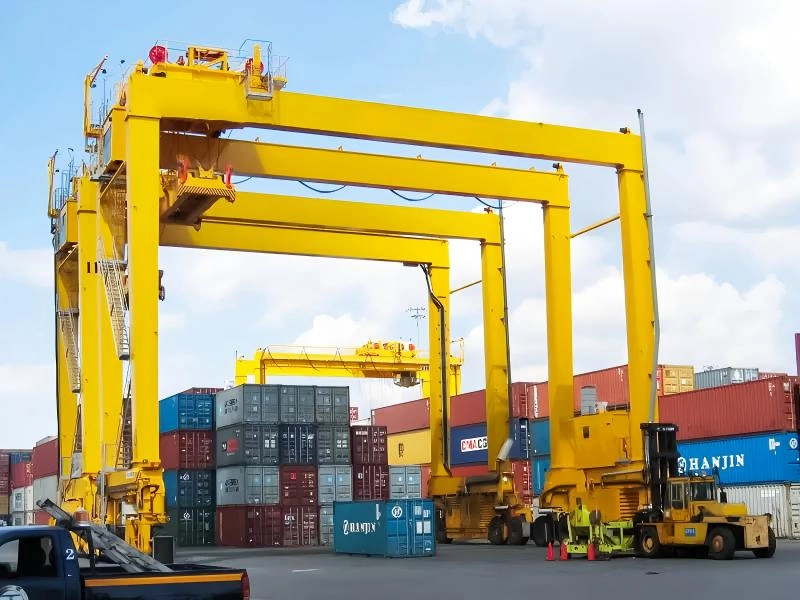
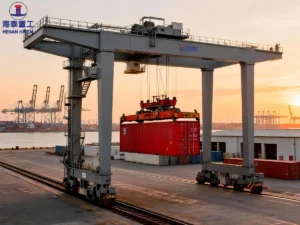
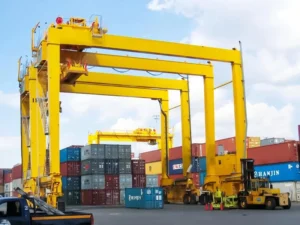
Choosing the right RTG crane supplier impacts your entire port or yard operation. A wrong choice means delays, downtime, and costly repairs. We help you avoid that. As a certified RTG crane manufacturer and exporter, we supply high-performance rubber tyred gantry cranes built for container terminals, intermodal yards, and logistics hubs worldwide. Product Description An RTG crane (Rubber Tyred Gantry Crane) is a mobile overhead crane designed to stack and move ISO containers in port container yards and inland depots. Unlike rail-mounted cranes(RMG Container Gantry Crane), RTG cranes run on rubber tyres — giving them full mobility across the yard without fixed infrastructure. 👉View Professional Buying Guide: RTG Crane vs RMG Crane: Which One Actually Fits Your Project? RTG cranes are the backbone of modern container terminal operations. They bridge the gap between ship-to-shore cranes and horizontal transport, enabling efficient container stacking, retrieval, and yard organization. Why Buy From Us? HT Cranes is a professional manufacturer of RTG cranes with over 15 years of lifting experience. Our cranes are exported to ports and logistics yards across Southeast Asia, the Middle…
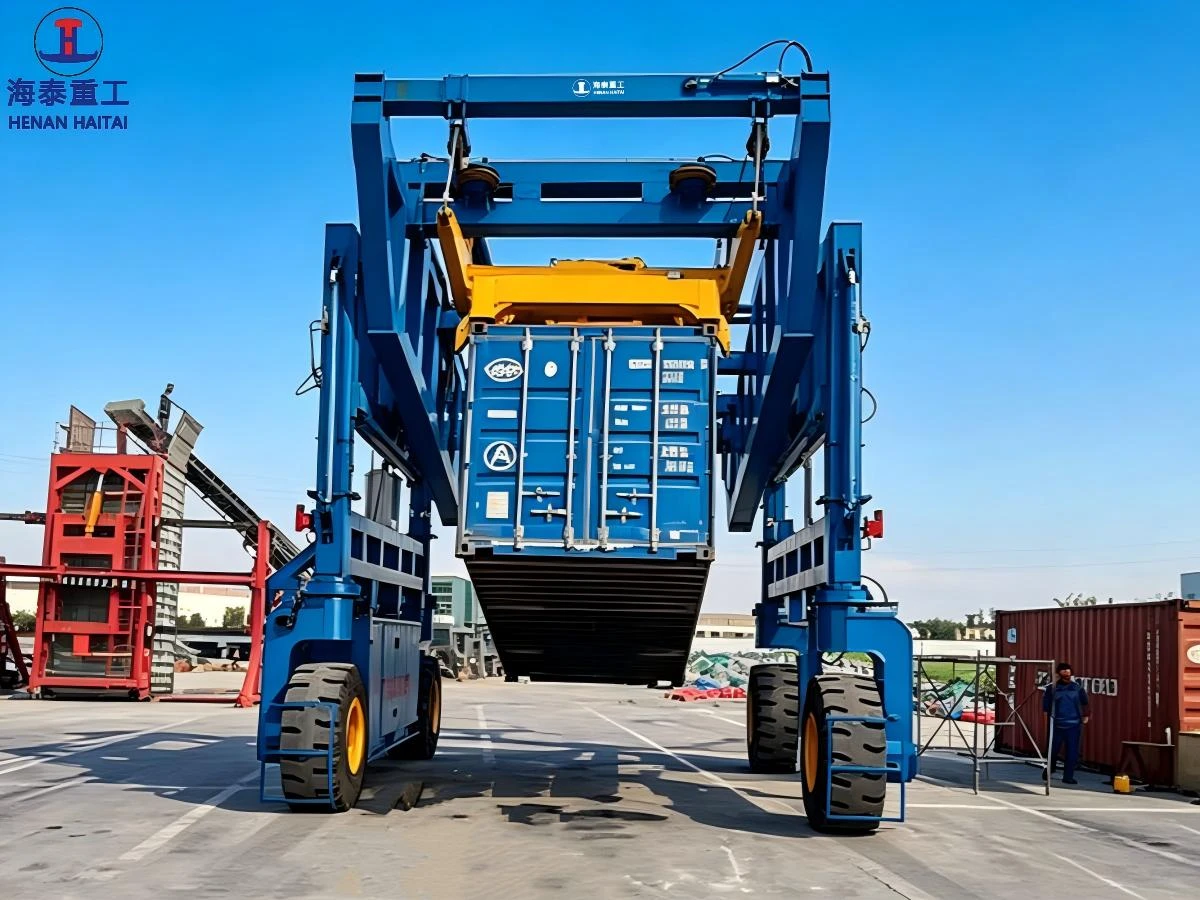
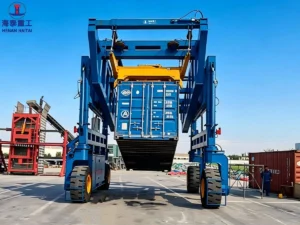
If you handle heavy containers, steel structures, or oversized industrial cargo — and your site lacks fixed power infrastructure — a hydraulic straddle carrier is likely the most practical solution available. It lifts, travels, and places loads without needing overhead structures, rails, or high-voltage power supply. One machine. Full mobility. Minimal civil works. What Is a Hydraulic Straddle Carrier? The Core Concept A hydraulic straddle carrier is a self-propelled heavy lift vehicle. It straddles a load — lifting from below using a hydraulic spreader or lifting beam — and moves freely across the yard on rubber tyres. The entire lift-and-travel cycle is powered by an onboard diesel-hydraulic system. Unlike electric or cable-reel powered cranes, the hydraulic straddle carrier carries its own power source. This makes it fully independent of yard infrastructure. You can deploy it anywhere your surface can support the wheel loads — no fixed installation required. How the Hydraulic System Works The engine drives hydraulic pumps that supply pressurized fluid to the lift cylinders, drive motors, and steering actuators. All motion — lifting, lowering, travelling, and steering —…