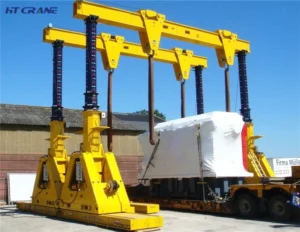
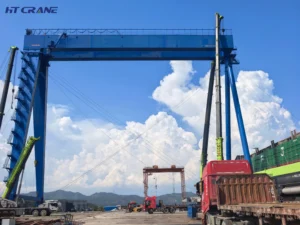
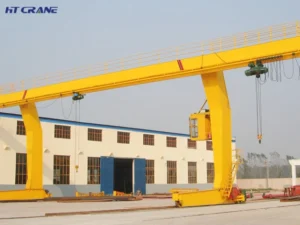
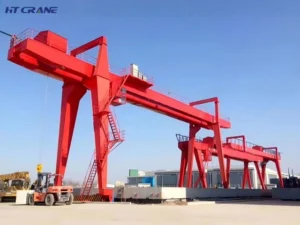
Choosing between a straddle carrier and an RTG crane is one of the most consequential equipment decisions a container terminal can make. Get it right and your yard runs efficiently for the next 15–20 years. Get it wrong and you are locked into infrastructure that does not match your operation.
The core issue most procurement teams face is this: both systems can handle containers, both support automation, and both have credible suppliers. The real differences show up in total cost of ownership, yard layout flexibility, and how well each system scales as throughput grows. This article breaks down those differences clearly — so you can make a decision based on your actual operating conditions, not just product brochures.
What Each System Actually Does
How a Straddle Carrier Works
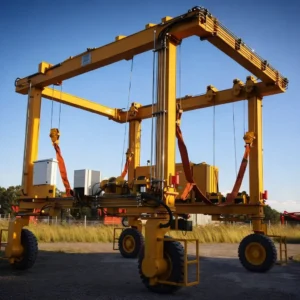
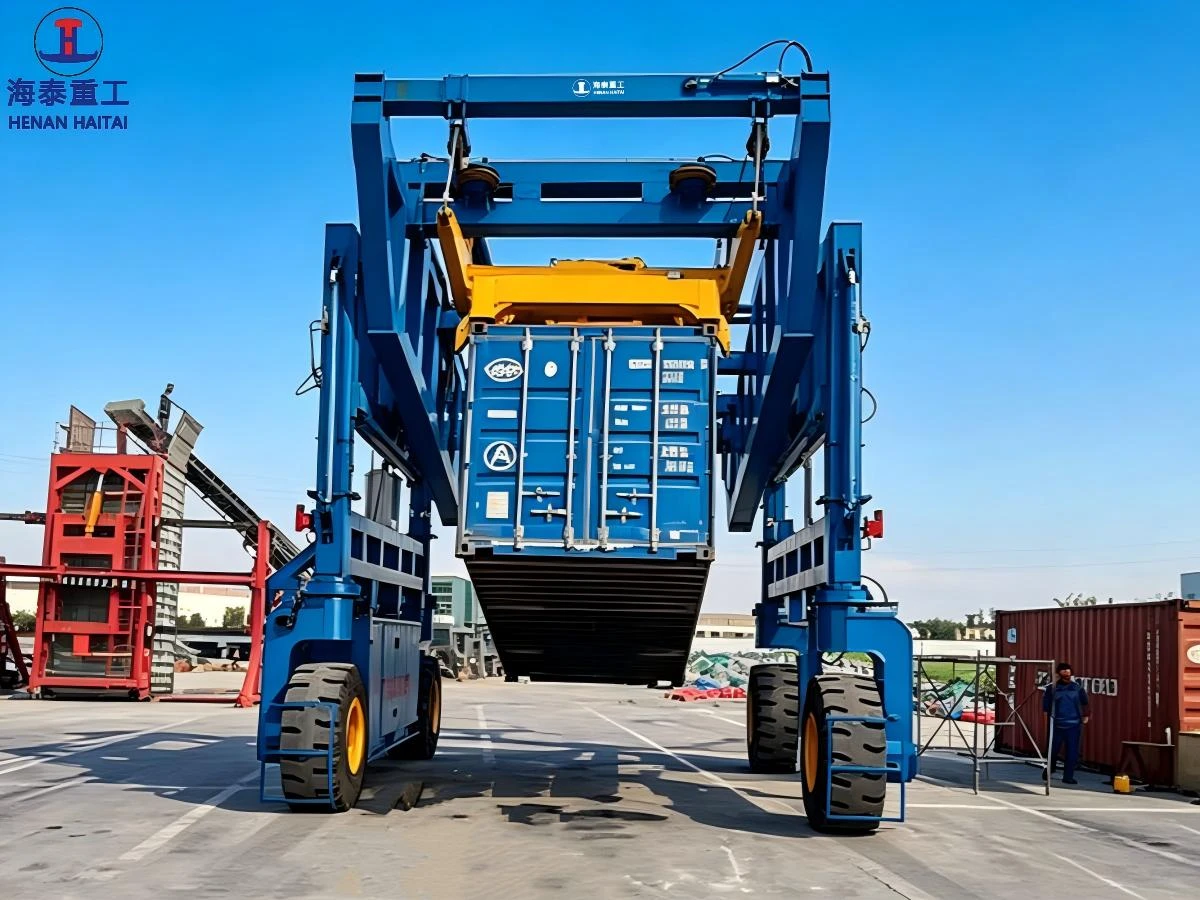
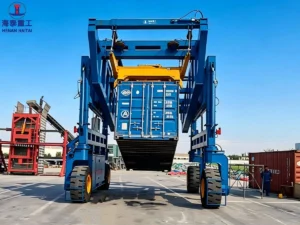
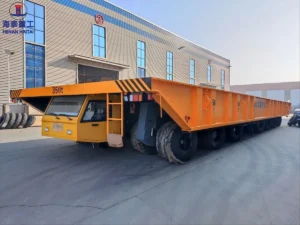
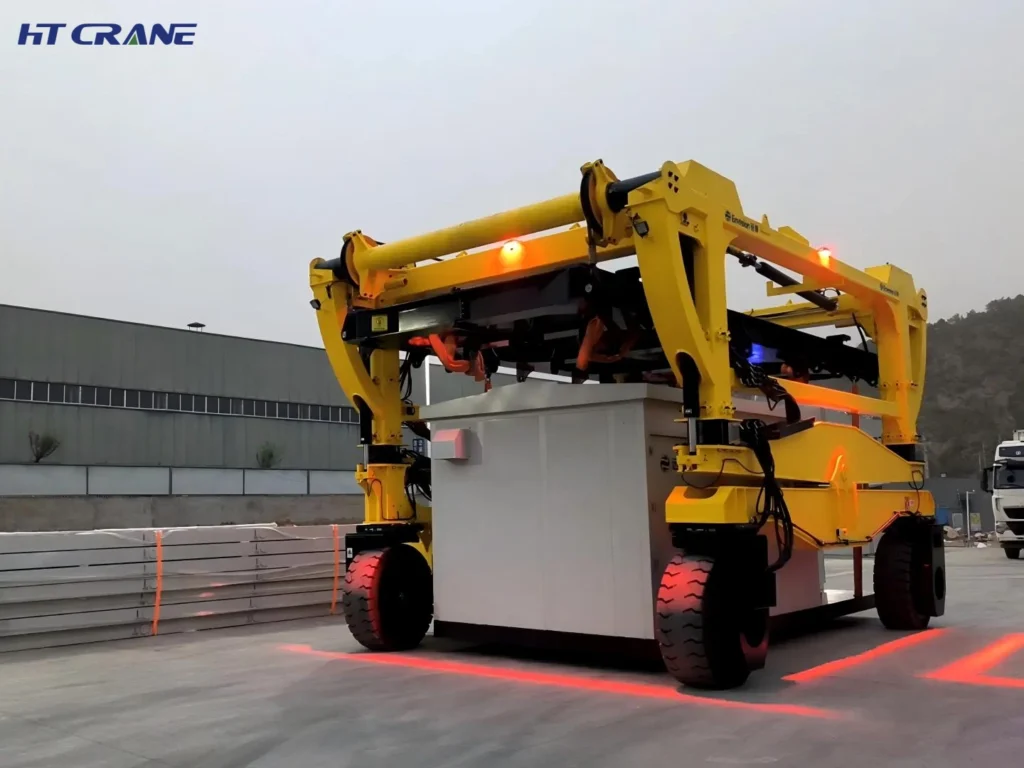
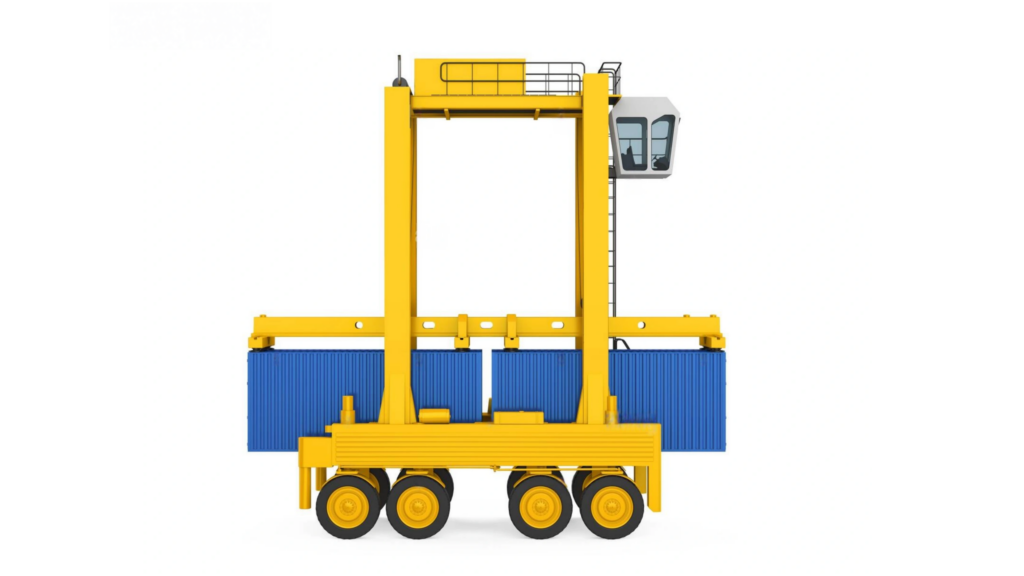
A straddle carrier is a self-propelled rubber-tired machine that straddles containers and lifts them directly from below. It combines lifting and transport in a single unit — no separate tractor or trailer required for short moves. Most modern units stack 1-over-2 or 1-over-3, with some high-cube variants reaching 1-over-4.
The machine operates freely across the yard without fixed infrastructure. It navigates between rows, travels to the quay, and positions containers with onboard sensors and GPS guidance. This integrated lift-and-carry design is what makes straddle carriers fast and flexible — but also more mechanically complex per unit.
How an RTG Crane Works
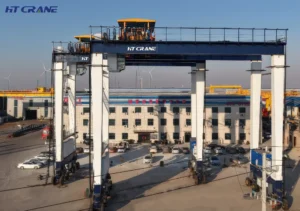
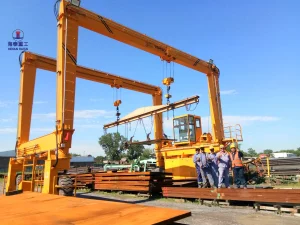
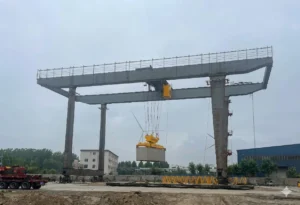
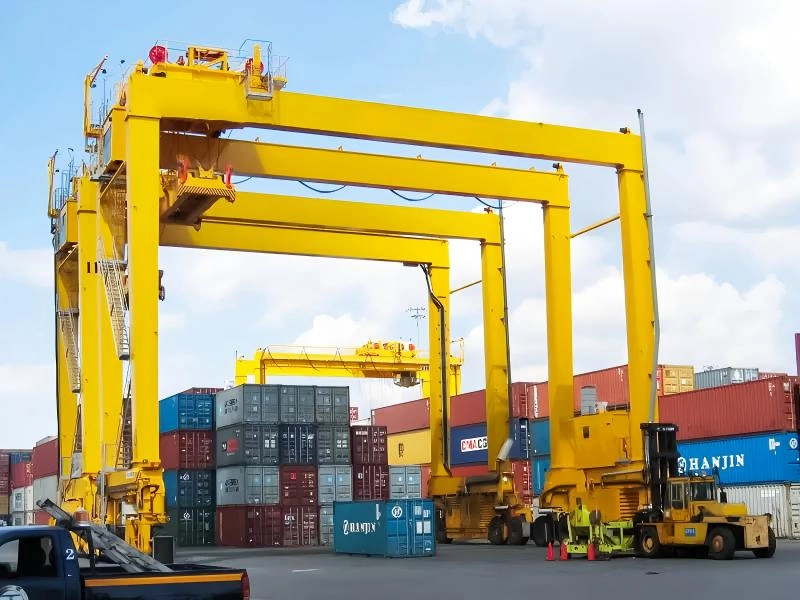
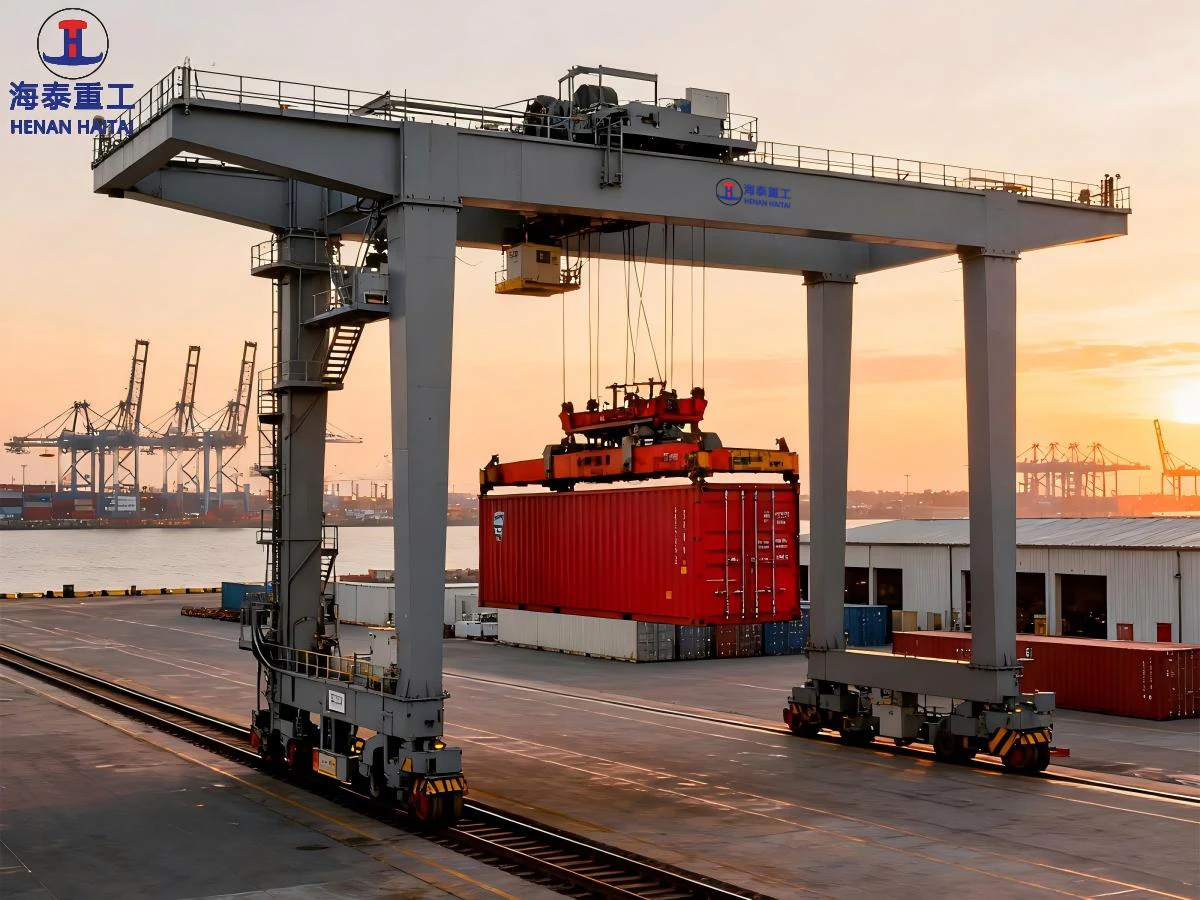
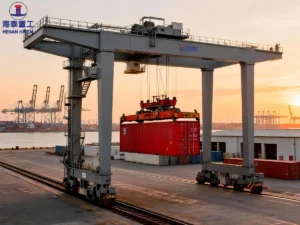
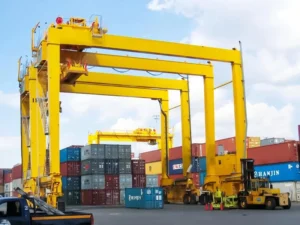
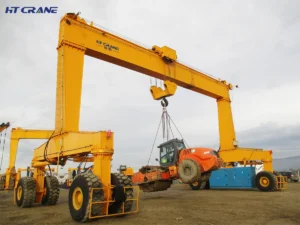
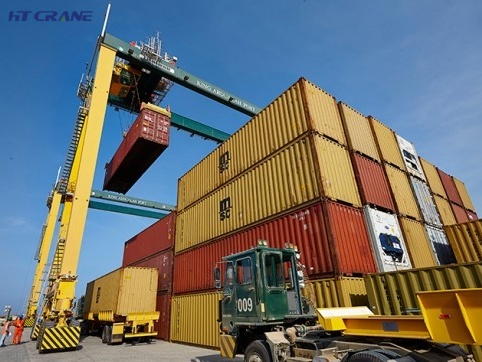
A Rubber Tyred Gantry crane runs on rubber tires along fixed row corridors. It lifts containers vertically within its span and stacks them — typically 1-over-5 or 1-over-6 — then hands off horizontal transport to yard tractors operating beneath the crane. The RTG and the tractor-trailer fleet work as a system.
Rubber Tyred Gantry crane excel at high-density stacking within defined corridors. They are the dominant technology in large container terminals worldwide precisely because their stacking height and throughput capacity per corridor is very high. The trade-off is infrastructure commitment — once rows and power systems are established, reconfiguring the yard layout is costly.
Automation Capability Comparison
Straddle Carrier Automation
Automated straddle carriers — often called AutoStrads — use a combination of laser scanning, GPS, and onboard cameras to navigate, position, and stack containers without a driver in the cab. Patrick Terminal in Brisbane, Australia, was one of the first facilities to deploy AutoStrads at commercial scale, demonstrating that fully driverless straddle carrier operation is operationally proven.
The automation architecture is largely self-contained within each machine. Adding automation capacity means adding machines — there is no central infrastructure bottleneck to upgrade. This makes scaling automation more predictable from a project planning perspective.
RTG Crane Automation
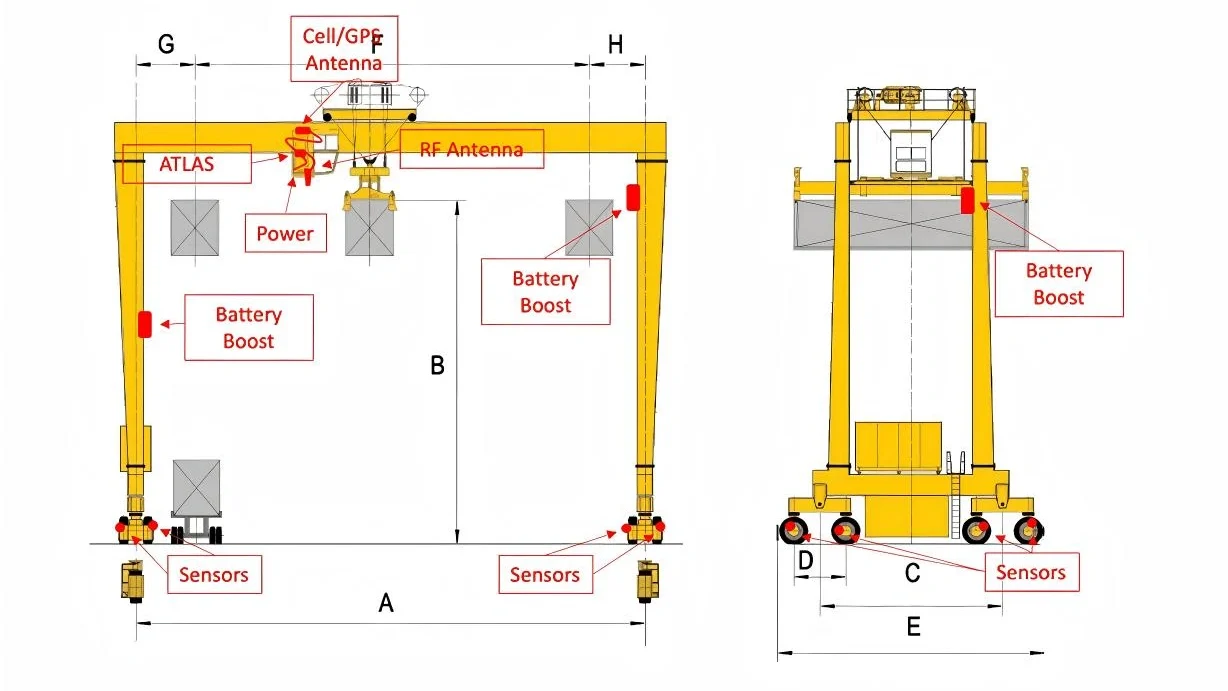
Automated RTGs — ARTGs — are guided by rail-mounted reference systems or ground-level magnetic tape along each row. The crane positions itself longitudinally by following these guides, while laser range finders handle precise container placement. Horizontal transport between the ARTG and the quayside is handled by automated guided vehicles (AGVs) or automated straddle carriers operating in the interchange zone.
Rubber Tyred Gantry crane automation requires more fixed infrastructure investment per row compared to straddle carrier automation. However, once infrastructure is in place, ARTGs achieve very high throughput density per square meter — an advantage in ports where land is expensive and container volumes are predictable and high.
Automation Readiness: Side-by-Side
| Factor | Automated Straddle Carrier | Automated RTG (ARTG) |
|---|---|---|
| Infrastructure required | Minimal — GPS + lane markings | High — row guides, power rails |
| Scaling method | Add machines | Add cranes + infrastructure |
| Integration complexity | Medium | High |
| Proven at scale | Yes (Patrick Terminal, Brisbane) | Yes (multiple major ports) |
| Flexibility after deployment | High | Low |
| Best fit | Mid-size, flexible yards | Large, high-density terminals |
Total Cost of Ownership Breakdown
Capital Expenditure
An Rubber Tyred Gantry crane system’s capital cost is not just the crane — it includes civil works for row infrastructure, power supply systems, and the yard tractor fleet that operates in tandem. A straddle carrier yard requires less upfront civil investment but needs more machines to achieve equivalent throughput, since each unit handles one container move at a time.
For mid-scale terminals handling 300,000–800,000 TEU annually, straddle carrier systems often show a lower initial capital requirement. For terminals above 1 million TEU, Rubber Tyred Gantry crane systems typically become more cost-competitive on a per-TEU basis because the high stacking density reduces land requirements significantly.
Operating Expenditure
Straddle carriers consume more fuel or electricity per move than RTGs because they combine lifting and transport in one energy-intensive cycle. Rubber Tyred Gantry crane consume energy primarily during the lift cycle — horizontal transport energy is borne by the tractor fleet, which is typically diesel-powered but increasingly electrified.
Maintenance costs differ in structure rather than total magnitude. Straddle carriers have more mechanical complexity per unit — tires, drive systems, and lifting mechanisms all require regular attention across a larger fleet. Rubber Tyred Gantry crane maintenance is concentrated on fewer, larger machines with longer service intervals for major components.
TCO Comparison Overview
| Cost Category | Straddle Carrier System | RTG System |
|---|---|---|
| Upfront civil works | Low–Medium | High |
| Equipment unit cost | Medium per unit | High per crane |
| Fleet size needed | Larger | Smaller |
| Energy per move | Higher | Lower |
| Maintenance structure | Fleet-wide, frequent | Concentrated, periodic |
| Land use efficiency | Moderate (1-over-3 max) | High (1-over-6 possible) |
| Lifecycle (years) | 15–20 | 20–25 |
| Reconfiguration cost | Low | High |
Where Each System Wins on TCO
Straddle carrier systems deliver better TCO when yard layout flexibility is a priority, when throughput is moderate, or when the terminal operates across multiple disconnected areas. The ability to redeploy machines across zones without infrastructure changes keeps operational costs predictable.
Rubber Tyred Gantry crane systems deliver better TCO at high throughput volumes where stacking density directly reduces land lease or land acquisition costs. In port environments where land is scarce and expensive — major Asian and European hub terminals, for example — the RTG’s superior stacking density often justifies its higher fixed cost base.
Which System Fits Which Operation
Choose a Straddle Carrier System When
Your terminal handles a mixed cargo profile — containers plus project cargo plus flat racks — that requires flexible handling. Your yard layout is still evolving or will need to accommodate future changes. Your annual throughput is in the 200,000–800,000 TEU range. You operate across multiple yard zones or facilities. You need equipment that can be redeployed without civil works.
Choose an RTG System When
Your terminal handles predominantly standard containers at high and predictable volume. Your land footprint is constrained and stacking density is critical. Your throughput exceeds 800,000 TEU annually and is growing. You have the capital and planning certainty to commit to fixed row infrastructure. Long-term operational cost per move is the primary financial priority.
Summary
Neither system is universally superior. The straddle Carrier wins on flexibility, mixed-cargo capability, and lower infrastructure commitment. The rubber tyred gantry crane wins on stacking density, throughput capacity, and long-term cost per move at high volume.
The decision comes down to three questions: What is your throughput now and in five years? How stable is your yard layout? And what is the balance between land cost and equipment cost in your specific location?
Answer those three questions clearly, and the right system becomes obvious. If you are still uncertain after working through them, the next step is a detailed site assessment — not another product comparison.

FAQ
Q1: Can a straddle carrier yard be converted to RTG later if throughput grows?
Yes, but conversion is a significant project. It requires redesigning row layouts to match RTG corridor widths, installing power and guidance infrastructure for each row, and procuring a yard tractor fleet to replace the transport function currently handled by straddle carriers. The conversion cost is real and should be factored into the original equipment decision. If your throughput growth projections point toward RTG territory within 10 years, it may be more economical to build for RTG from the start — even if initial volumes do not fully justify the system.
Q2: Which system is easier to automate for a terminal with no prior automation experience?
Straddle carrier automation is generally considered more accessible for terminals new to automation. The technology is largely self-contained within each machine, implementation can be phased — automating a portion of the fleet while keeping manual units — and the infrastructure commitment is lower. RTG automation requires more upfront planning, more fixed infrastructure per row, and integration with a separate automated horizontal transport system. For a first automation project, most consultants recommend starting with automated straddle carriers if the terminal’s scale and layout suit the system.
Q3: How does the choice affect quayside operations?
Straddle carriers can travel directly to the quayside to receive containers from ship-to-shore cranes, eliminating the need for a dedicated interchange zone. Rubber Tyred Gantry crane systems require a handoff point — containers move from quay cranes to yard tractors, which then transfer to the RTG zone. This interchange adds a step to each move cycle. At very high quay crane productivity rates, the RTG system’s interchange can become a throughput constraint if not designed carefully.
Q4: What is the typical tire replacement cost and frequency for each system?
Straddle carriers use large solid rubber tires — typically 8 to 12 per machine — with replacement intervals of 12 to 18 months under continuous operation. RTGs also run on rubber tires but use fewer per machine and travel shorter distances per shift, resulting in longer tire life. Across a straddle carrier fleet, tire cost is a meaningful operating expense line item and should be included in any TCO model. Ask suppliers for tire consumption data from reference sites operating in similar conditions to your own.
Q5: How do I compare supplier options for these two systems?
For both system types, evaluate four things beyond the equipment specification: the supplier’s reference site list in your region, availability of local service and spare parts, the warranty terms for structural components versus wear items, and the supplier’s track record with automation retrofits if you plan to automate in future phases. A supplier who can show operating reference sites at comparable scale to your project, with verifiable performance data, is significantly lower risk than one offering only factory demonstrations or distant case studies.