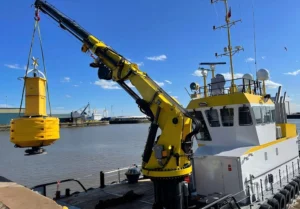
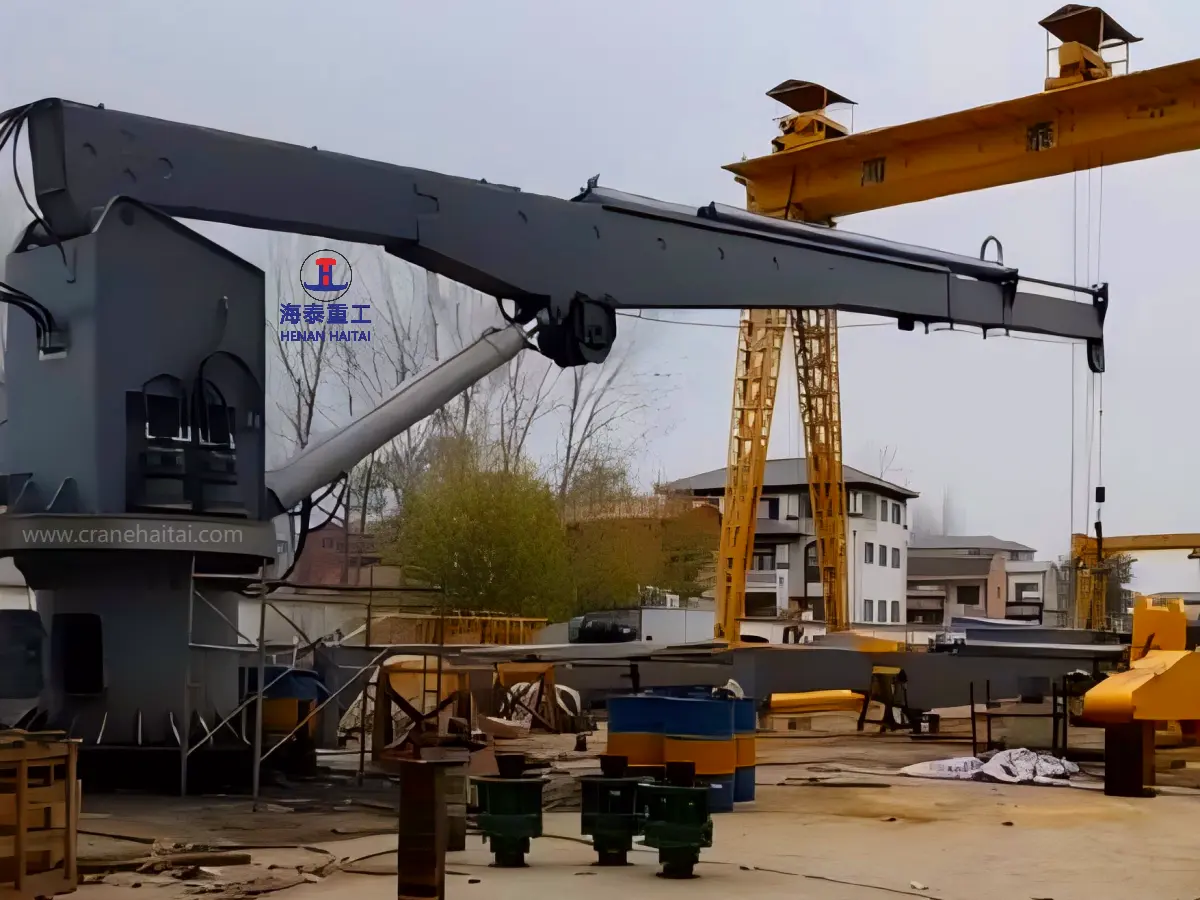
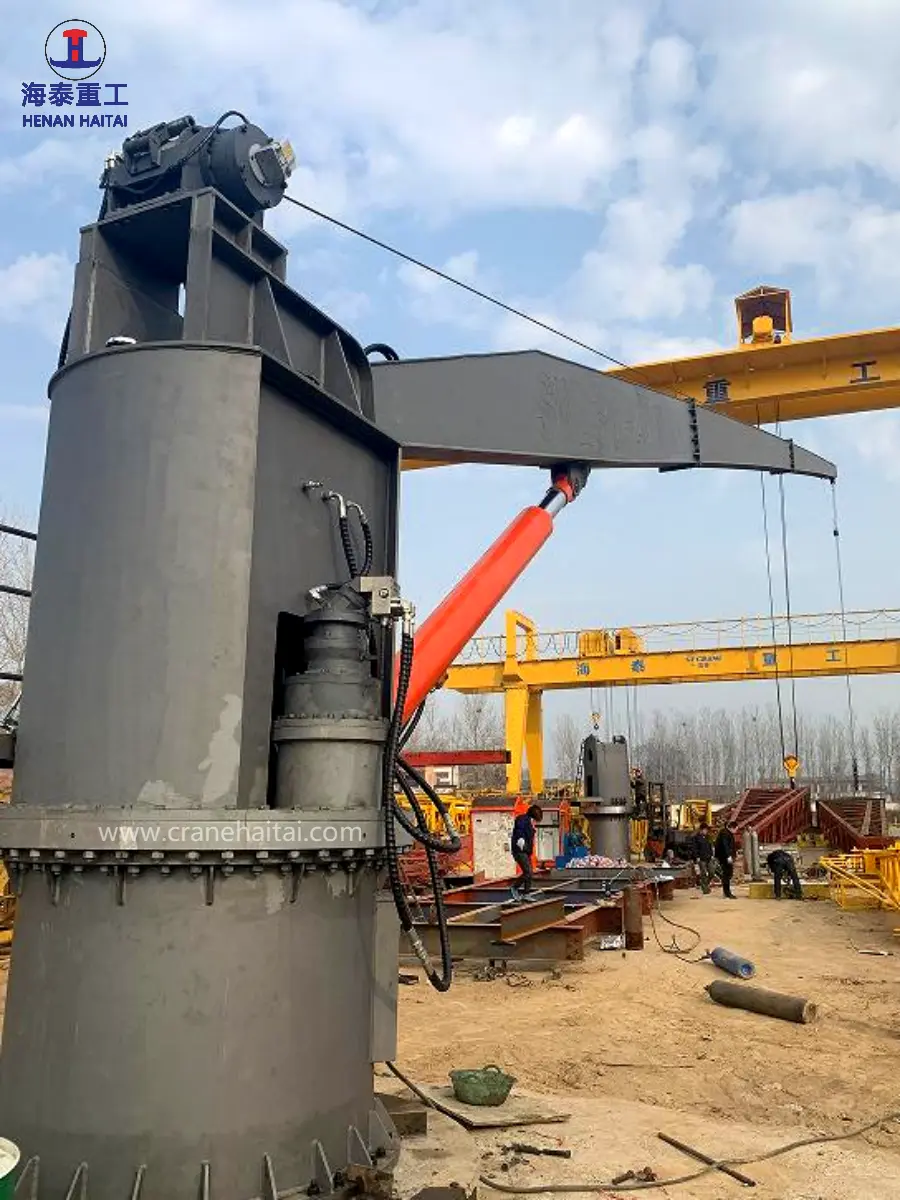
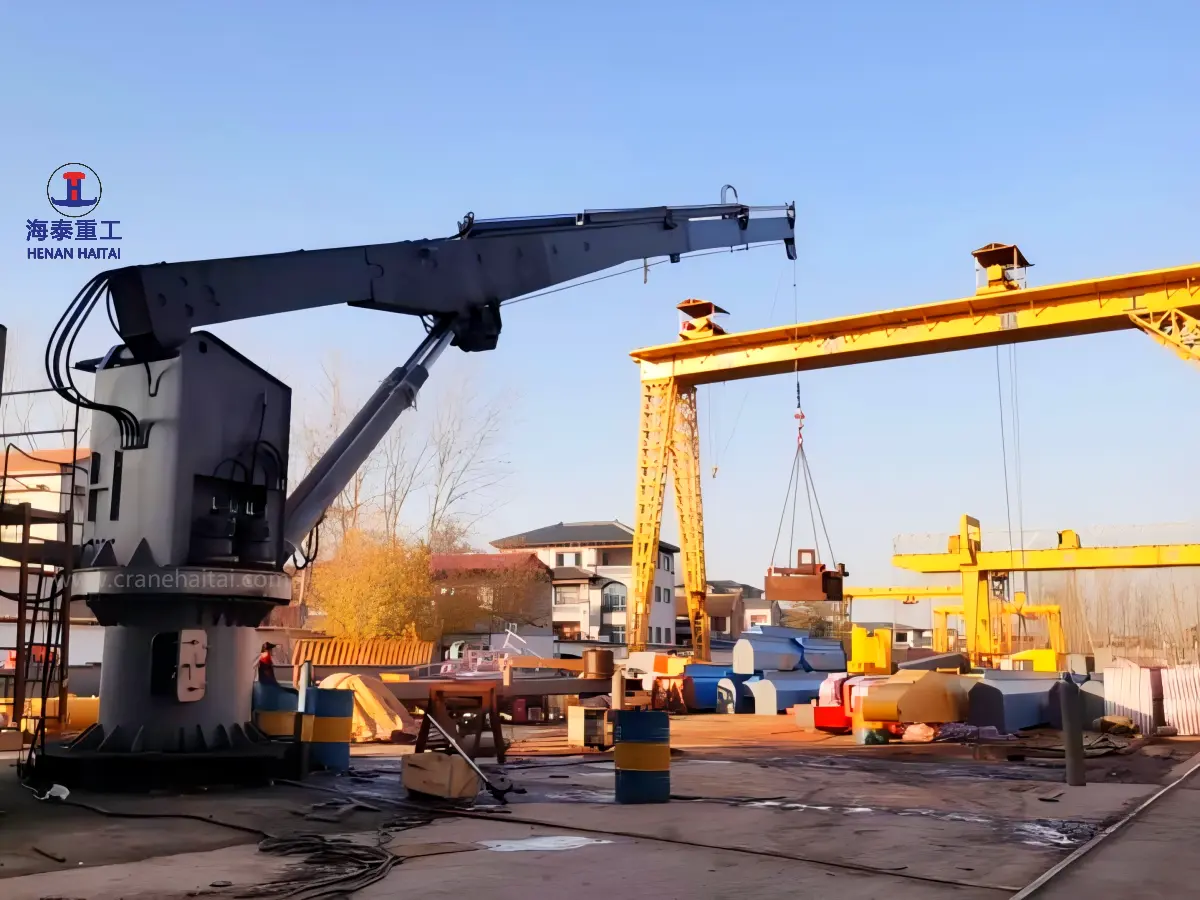
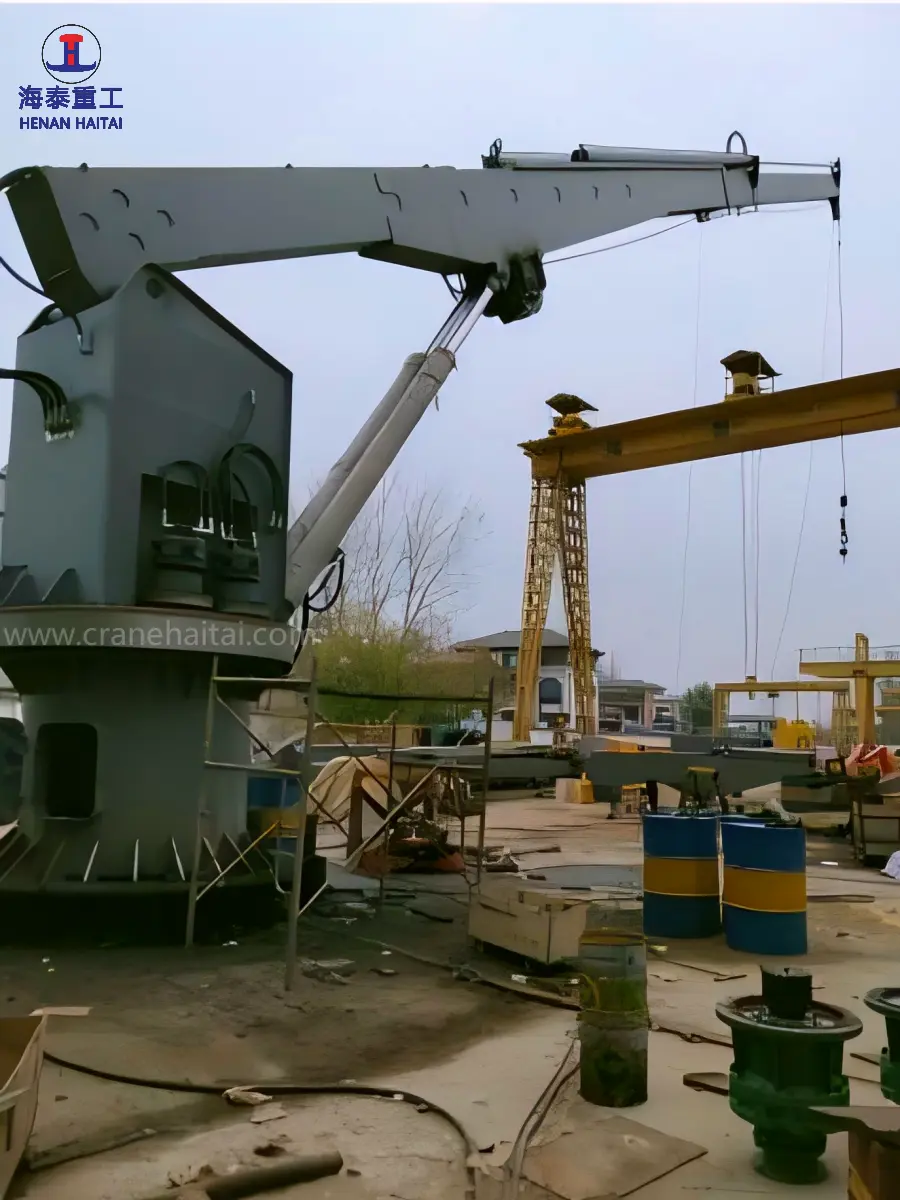
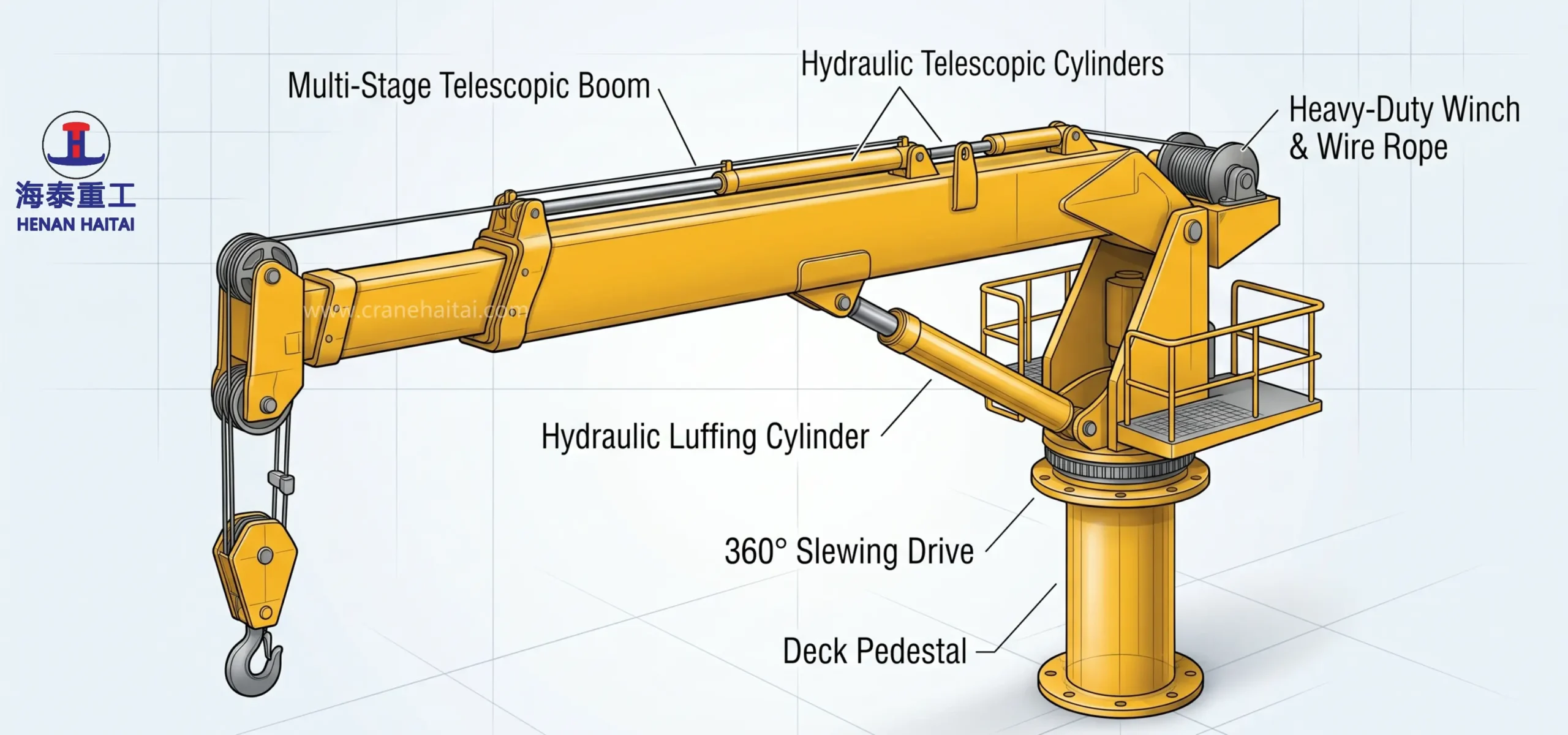
Haitai hydraulic telescopic boom marine crane is a full-hydraulic deck crane for port work boats, offshore platforms, tankers and cargo vessels. A 360° slewing column, a single luffing cylinder, a multi-section box boom and a hydraulic winch sit on one cylindrical base. The hook can reach far across the water, yet the stowed crane takes little deck space. Standard models cover 1 t to 10 t, and 15 t to 30 t cranes are custom-engineered to your vessel.
| Capacity (SWL) | Working Radius | Hoisting Height | Slewing |
|---|---|---|---|
| 1 – 10 t standard; 15 – 30 t custom | 5 – 30 m | 5 – 30 m | 360° continuous |
A stiff boom marine crane changes its reach by luffing alone. A telescopic boom marine crane adds a second way to set the radius: hydraulic cylinders push nested inner sections out of the main boom. The same crane can therefore lift close to the hull, then reach across a wide gap to the quay or to a neighbouring vessel.
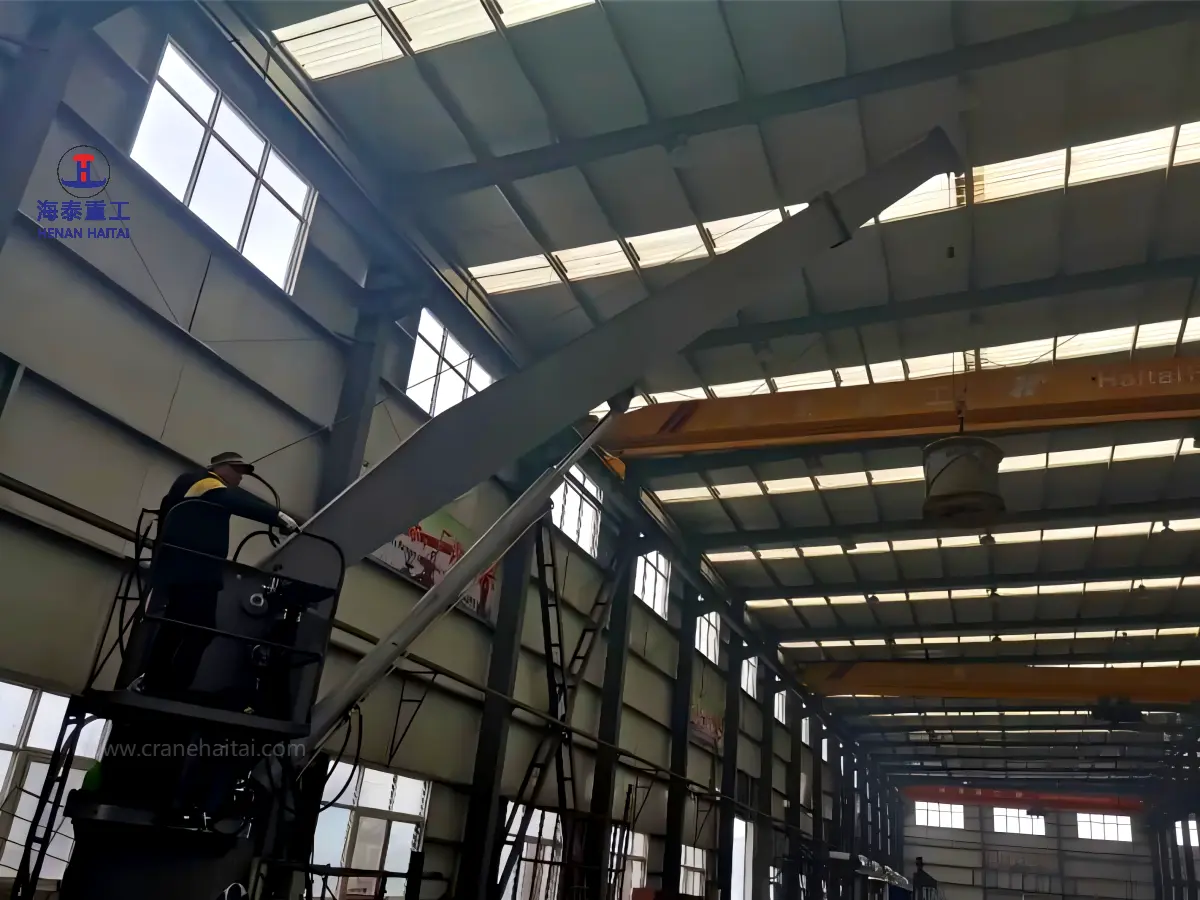
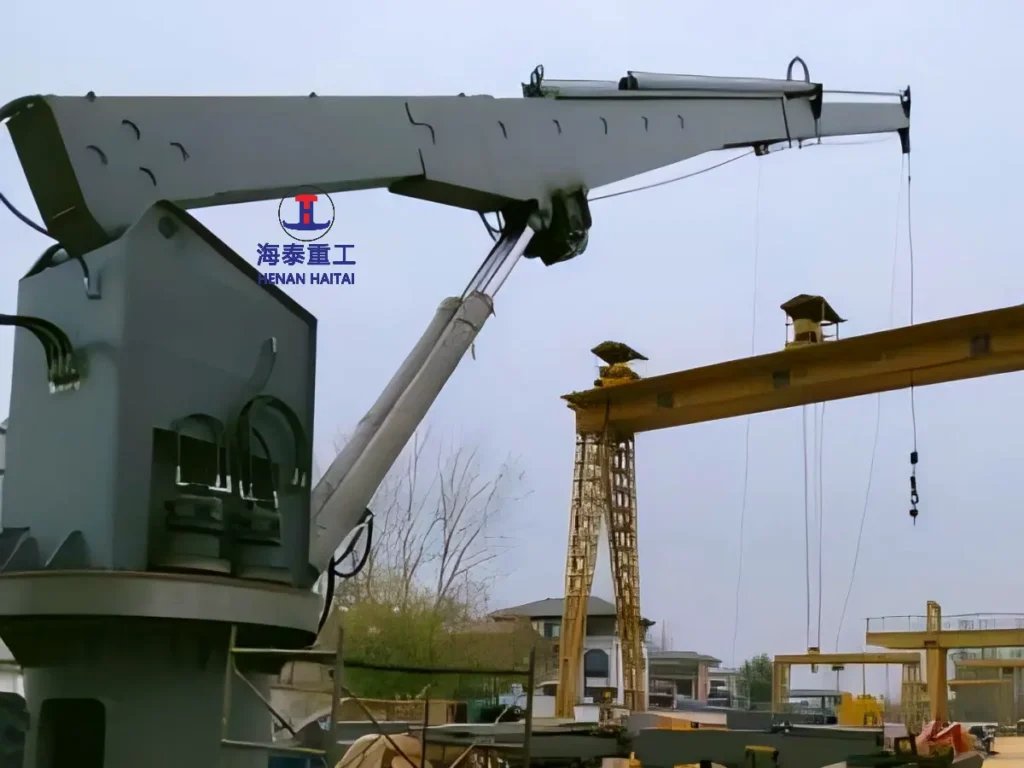
When work is finished, the inner sections retract fully into the main boom. The luffing cylinder then lowers the boom onto a rest on deck, so the crane rides out the voyage with a short, rigid profile. That removes the shock load caused by ship motion and frees working space on the deck. Owners with limited deck length or with long-reach duties tend to choose this type.
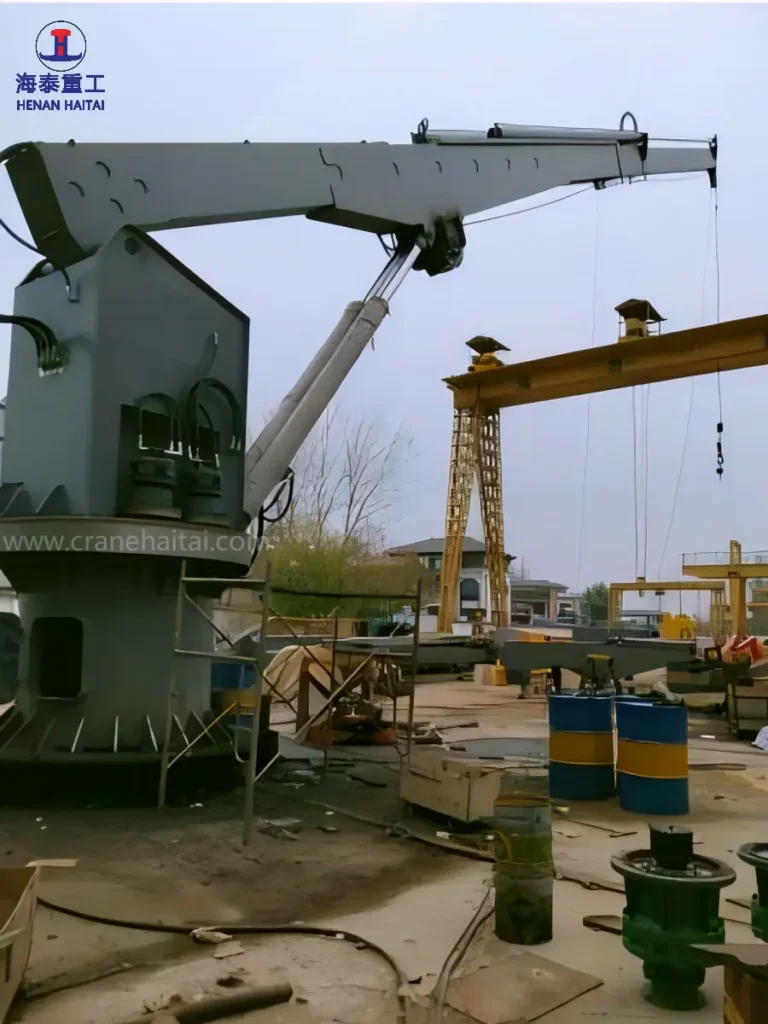
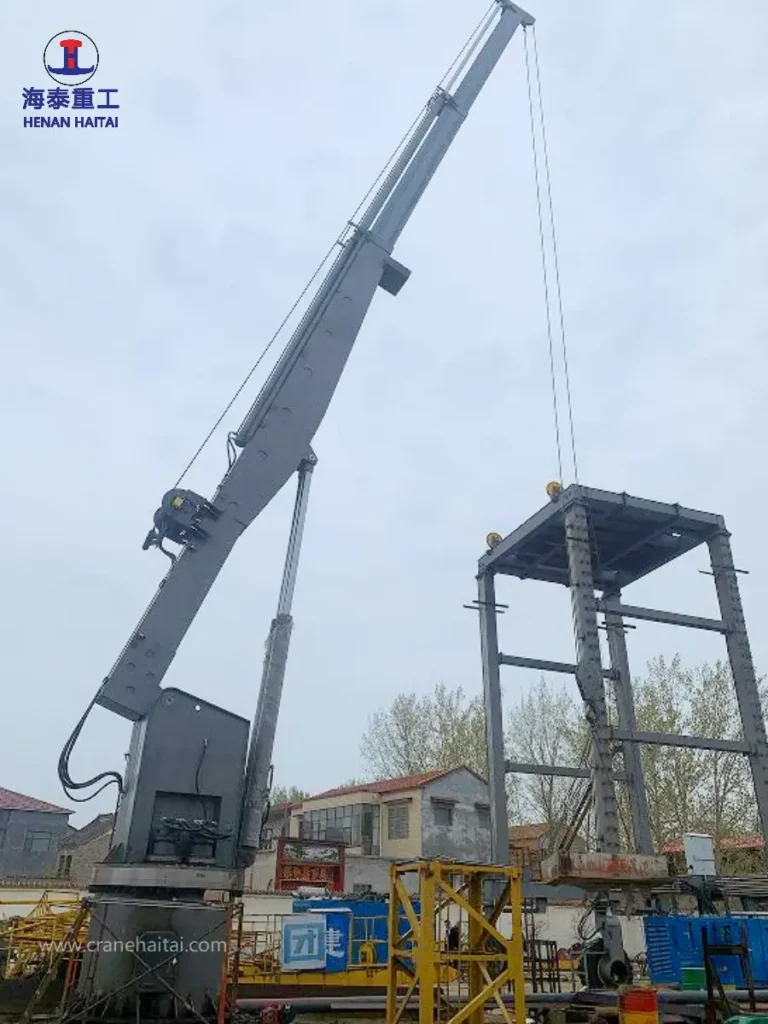
The crane stands on a welded cylindrical base, either a plain high column or a flanged type with radial ribs. It passes the working load, from 10 kN up to 300 kN, evenly into the hull structure. The slewing bearing is held by a full ring of high-strength bolts and turns continuously through 360°.
Slewing speed is matched to crane size: 1 r/min at 1–2 t, 0.9 r/min at 3 t, 0.75 r/min at 5–10 t, 0.6 r/min at 15–20 t, 0.5 r/min at 25 t and 0.4 r/min at 30 t. Long-reach loads are therefore positioned smoothly.
The main boom and every inner section are closed, welded box sections with high bending and torsional stiffness. On standard 1–10 t cranes the minimum radius is 1.4–5.3 m and the maximum radius is 5–20 m (5–18 m on 1–3 t models, 12–20 m on 5–10 t models). Custom 15–30 t cranes reach up to 30 m, with a minimum radius of 3.3–7.9 m.
To protect the hydraulic lines on a long-stroke boom, a flexible cable chain can run along the side of the main boom. Alternatively, the extension cylinder can be mounted outside on top of the boom, which makes inspection and sea-going maintenance easier.
For all-weather and high-frequency work, a closed cab can be fitted beside the column, with panoramic glass, wiper, ergonomic seat, two control levers and a roof-mounted air-conditioning unit. For crowded decks, a cab-free column design places the electrical control box at the base. A vertical ladder, handrails and a purpose-built boom rest keep both sailing and inspection work safe.
| SWL (t) | Rated load (kN) | Max. radius (m) | Min. radius (m) | Hoisting height (m) | Slewing (r/min) | Luffing time (s) | Motor power (kW) |
|---|---|---|---|---|---|---|---|
| 1 | 10 | 6 – 12 | 1.6 – 3.3 | 5 – 30 | 1 | 60 | 7.5 |
| 1.5 | 15 | 8 – 14 | 2.2 – 3.7 | 5 – 30 | 1 | 60 | 11 |
| 2 | 20 | 5 – 15 | 1.4 – 4.0 | 5 – 30 | 1 | 60 | 15 |
| 3 | 30 | 8 – 18 | 2.2 – 4.8 | 5 – 30 | 0.9 | 70 | 22 |
| 5 | 50 | 12 – 20 | 3.3 – 5.3 | 5 – 30 | 0.75 | 80 | 37 |
| 8 | 80 | 12 – 20 | 3.3 – 5.3 | 5 – 30 | 0.75 | 100 | 55 |
| 10 | 100 | 12 – 20 | 3.3 – 5.3 | 5 – 30 | 0.75 | 110 | 75 |
| 15 (custom) | 150 | 12 – 20 | 3.3 – 5.3 | 5 – 20 | 0.6 | 110 | 90 |
| 20 (custom) | 200 | 15 – 25 | 4.0 – 5.6 | 5 – 20 | 0.6 | 120 | 2 × 75 |
| 25 (custom) | 250 | 15 – 30 | 4.0 – 7.9 | 5 – 20 | 0.5 | 130 | 2 × 90 |
| 30 (custom) | 300 | 15 – 30 | 4.0 – 7.9 | 5 – 20 | 0.4 | 140 | 2 × 90 |
Please Note: Standard configurations up to 10 tons are built to our proven designs for faster production and delivery. Cranes of 15 tons and above (shaded rows) are custom-engineered to your vessel parameters, classification society requirements and deck stability needs. All ship telescopic boom crane models have a hoisting speed of 15 m/min and 360° continuous slewing. Hoisting height is 5–30 m, set to the project. Rated load in kN is the SWL in tonnes multiplied by 10. Data are for reference only.
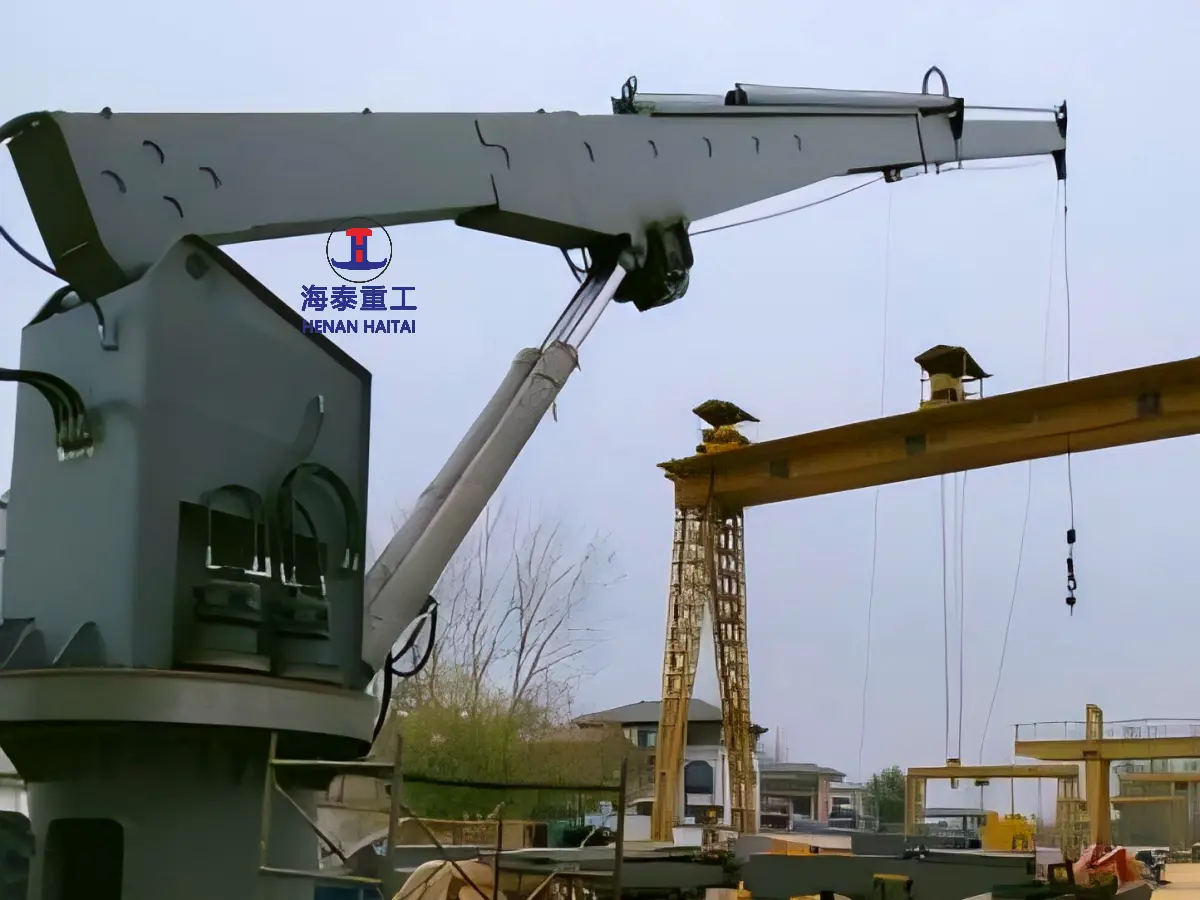
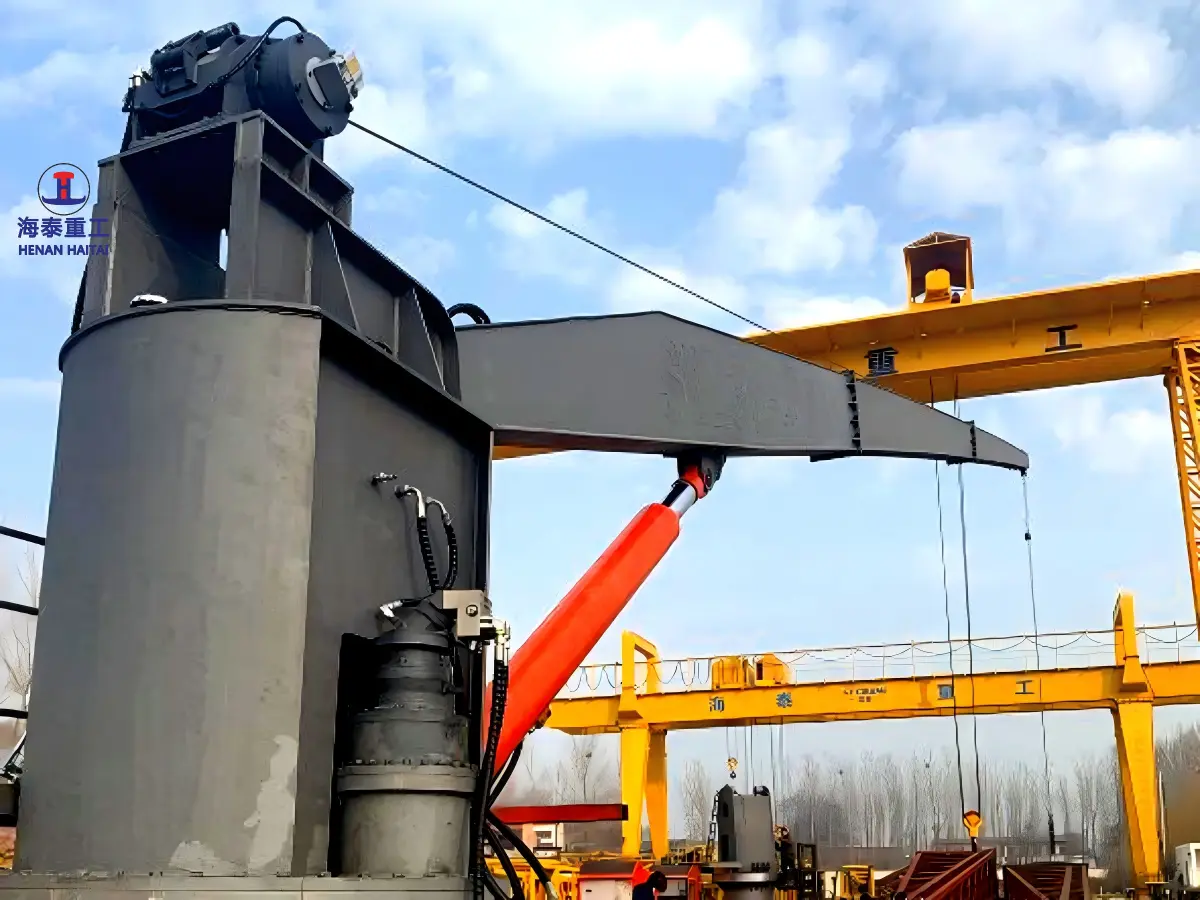
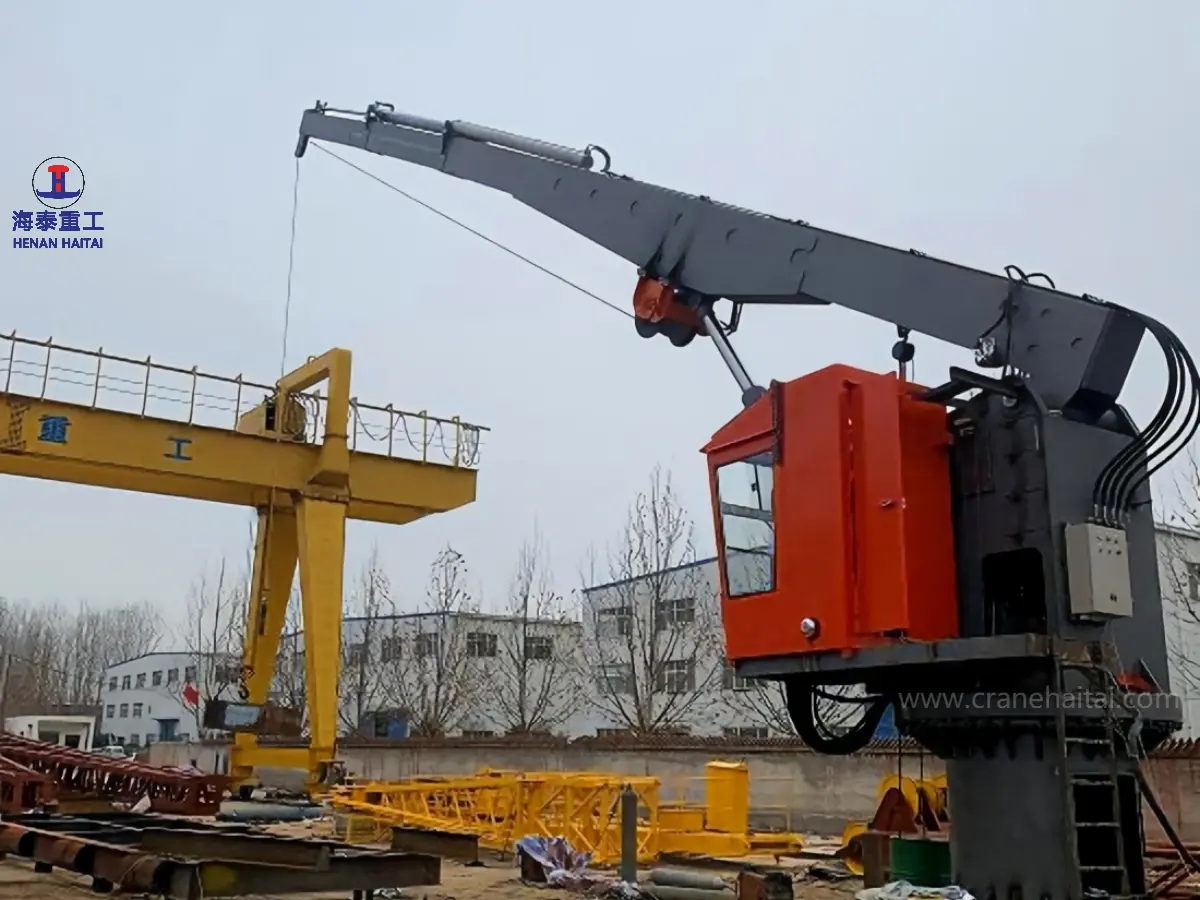
The same marine crane principle is built in several layouts. These three cover most vessel types.
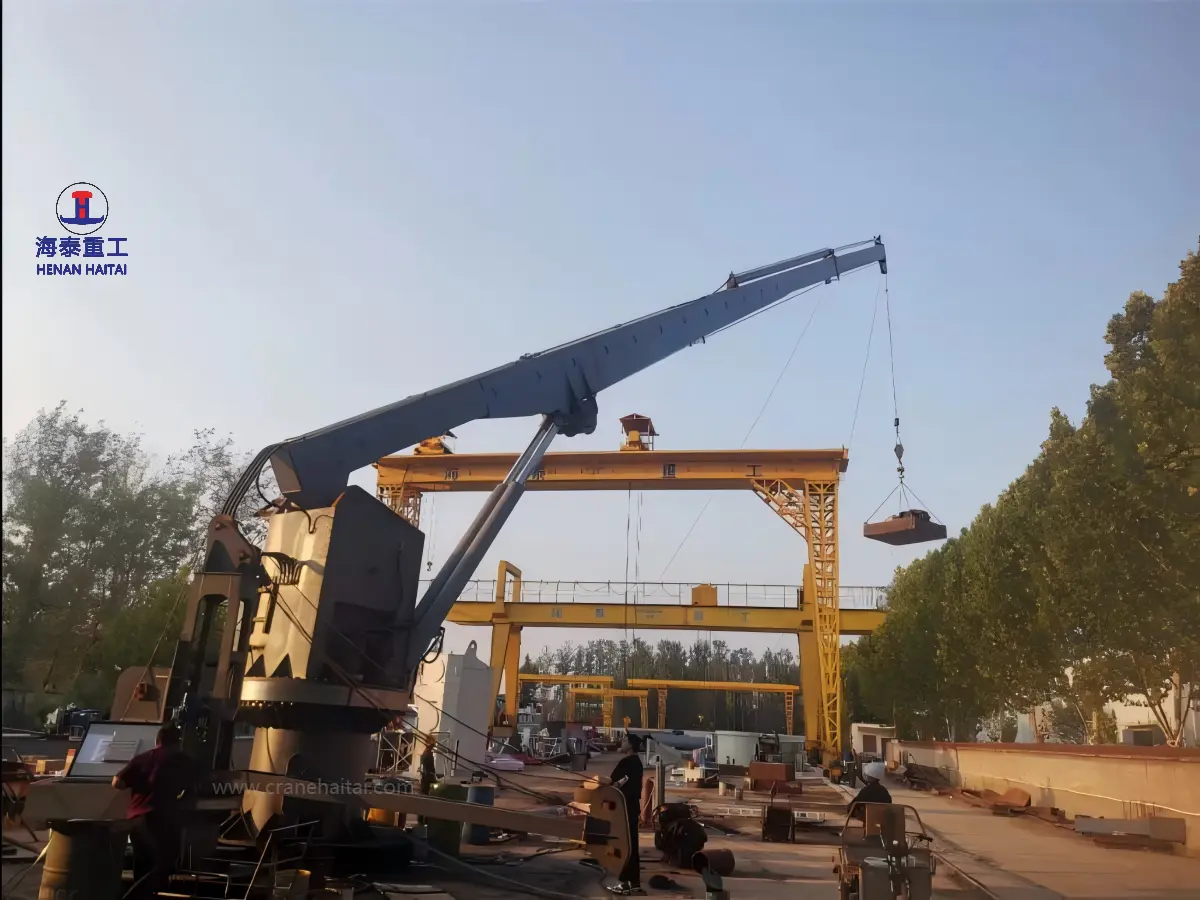
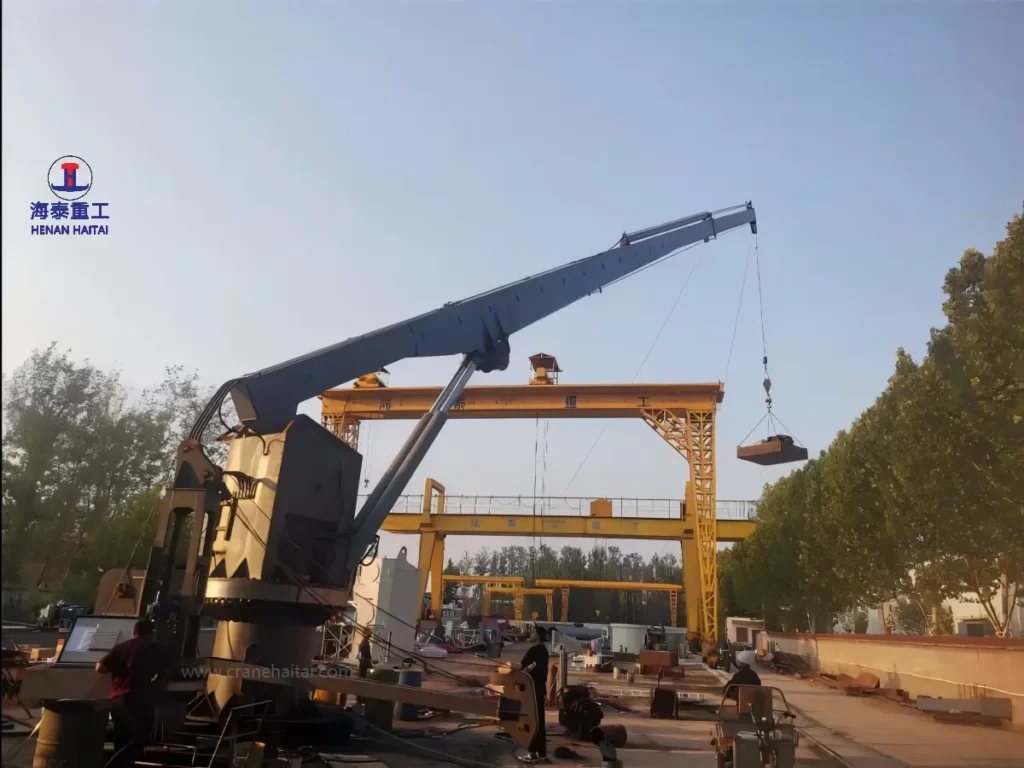
Suited to 8–10 t standard cranes and to custom 15–30 t cranes for heavy ship-to-quay loads. The boom has a yellow main section and two black inner sections, with a cable chain along its side. The winch drum sits above the boom root, and the rope runs along the top of the boom to the head. A multi-fall block hangs from the boom head, and the boom reaches over the ship’s side to lift a test load on the quay. A side-mounted cab gives a clear view of both the vessel side and the quay.
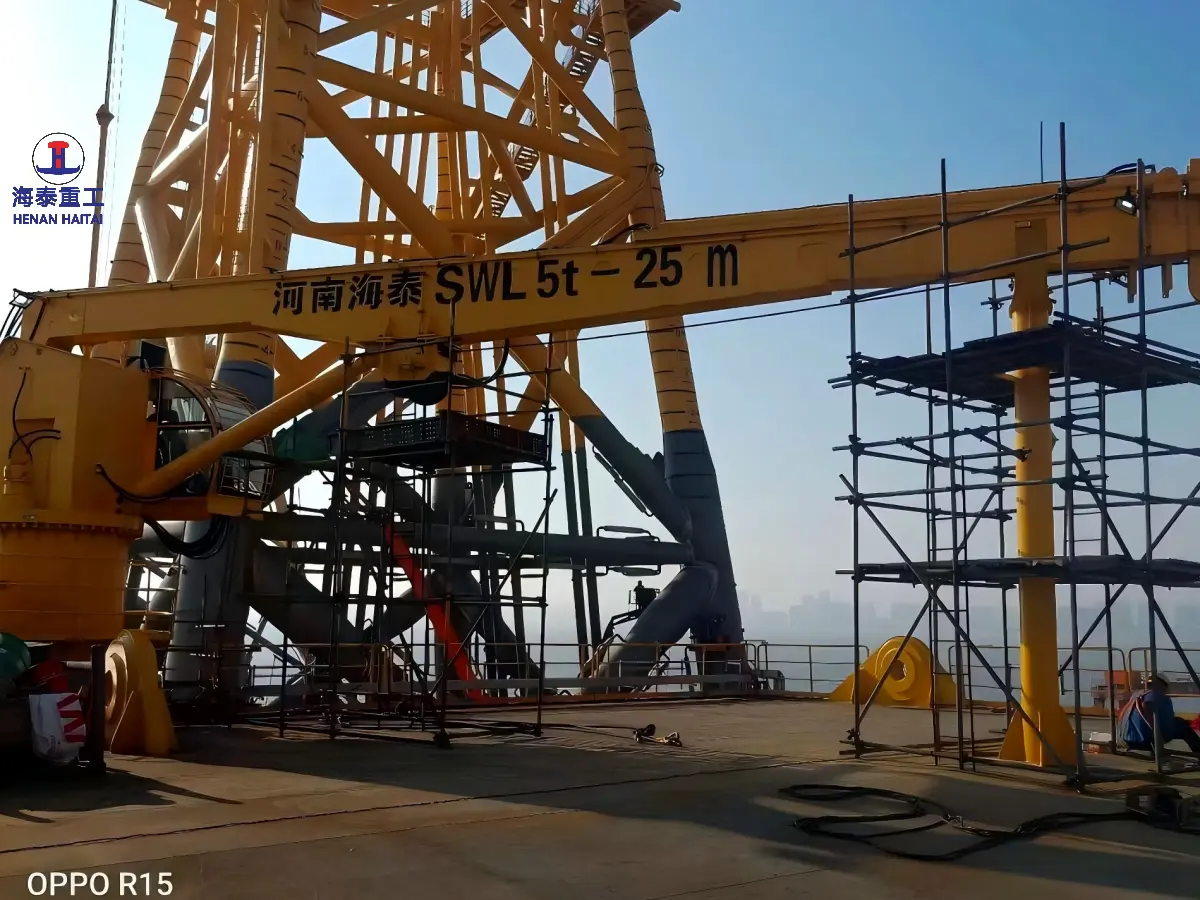
Suited to 5–10 t standard cranes (15 t on request) on multi-purpose work boats, offshore platforms and inland waterway vessels. The closed cab has a roof-mounted air-conditioning unit and suits hot, humid or cold waters. The winch hangs under the boom, and when idle the boom rests on a column fitted with climbing steps and ribs.
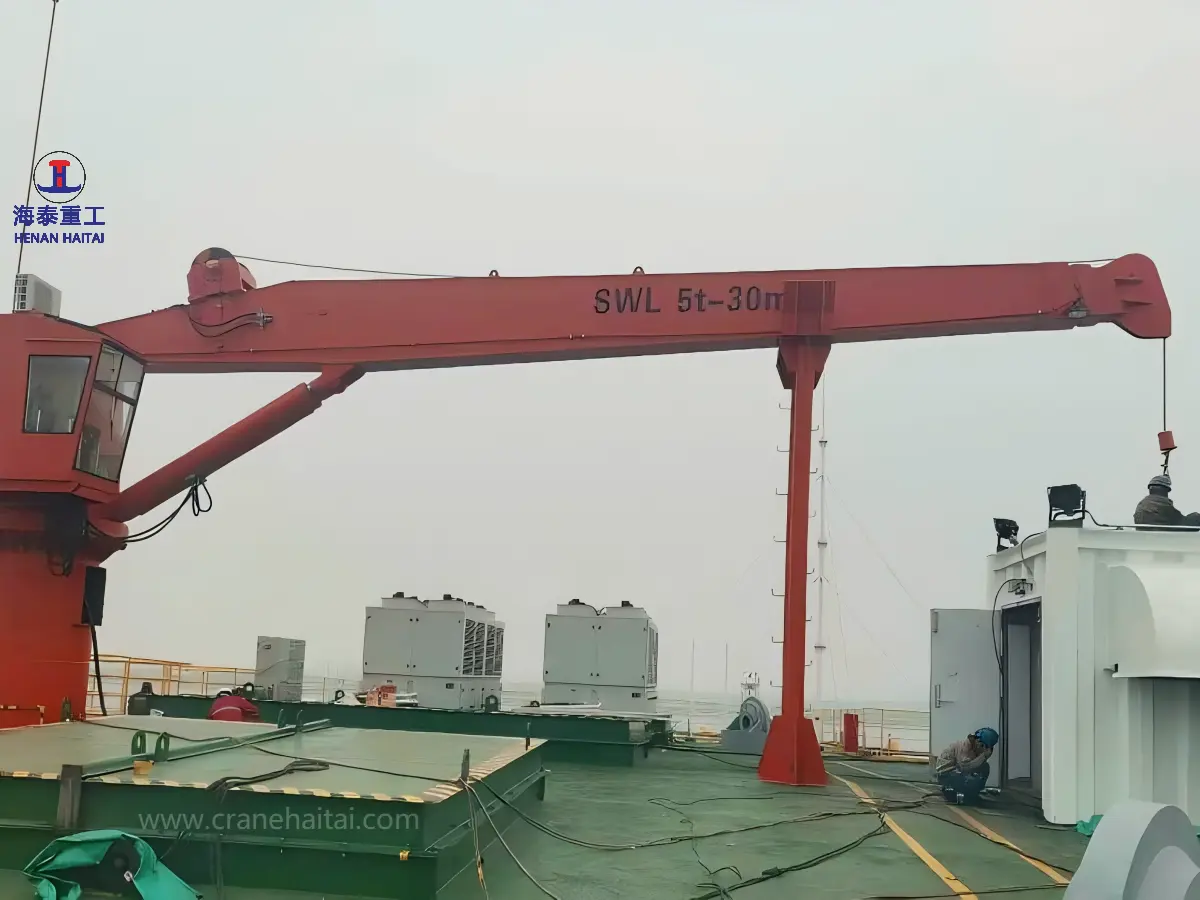
Suited to 1–10 t standard marine cranes on decks full of pipework, such as tankers and construction vessels. Dropping the cab shortens the tail swing and reduces deck footprint. The crane is controlled from the base, and the boom is retracted and rested on a support column at the deck front, clear of nearby equipment and workers.
| Item | Heavy-duty multi-section | Cab with underslung winch | Compact cab-free |
|---|---|---|---|
| Typical capacity | 8–10 t standard; 15–30 t custom | 5–10 t standard; 15 t custom | 1–10 t standard |
| Boom | Three sections, cable chain on the boom side | Telescopic box boom | Slim telescopic box boom |
| Winch and hook | Top-mounted winch, multi-fall block | Underslung winch, single hook | Compact winch, standard marine hook |
| Operator station | Side-mounted cab with wiper | Side-mounted cab with air conditioning | No cab, control at the base |
| Boom rest | Fully extended over the side for quay lifts; rest on deck when idle | Column with climbing steps and ribs | Support column at the deck front |
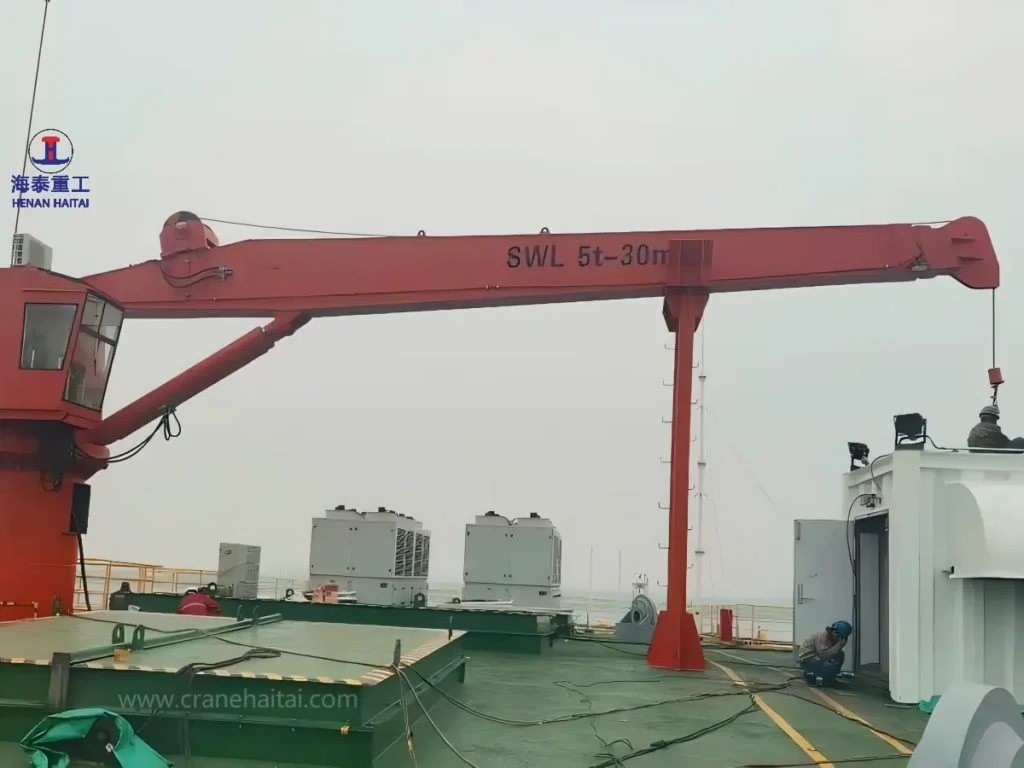
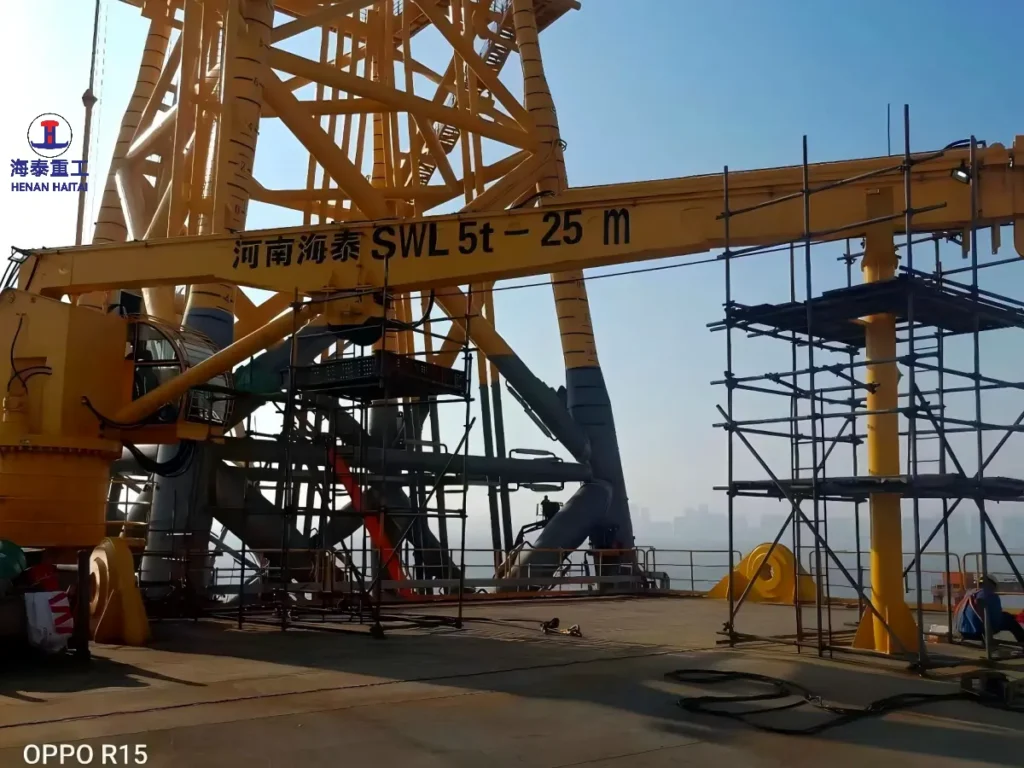
The standard table is a reference, and radius can be extended on request. The two marine cranes below are marked SWL 5 t at 30 m, longer than the 12–20 m maximum radius listed for a standard 5 t unit. Tell us the load and radius you need, and we will set the boom length and load chart to match.
Fill in what you know and send it back. Partial answers are enough for our engineers to start a GA drawing, load chart and foundation reaction table.
| # | Item to confirm | Your requirement |
| 1 | SWL and the radius it must be lifted at | |
| 2 | Minimum and maximum working radius | |
| 3 | Hoisting height required (5–30 m range) | |
| 4 | Vessel type, size and crane position on deck | |
| 5 | Pedestal height and deck thickness at the foundation | |
| 6 | Winch position (top-mounted or underslung) | |
| 7 | Cab or cab-free control, and climate (air conditioning needs) | |
| 8 | Power source (ship supply voltage / frequency) | |
| 9 | Boom rest position and free deck length | |
| 10 | Class society, coating colour and delivery date |
Need a Standard Telescopic Crane or a Heavy-Duty Custom Build? Whether you need a standard marine crane up to 10 tons or a custom-engineered 15–30 ton crane, Haitai’s engineering team will prepare the proposal and drawing for your vessel.
👉 [Request a Custom GA Drawing & Quote Today]










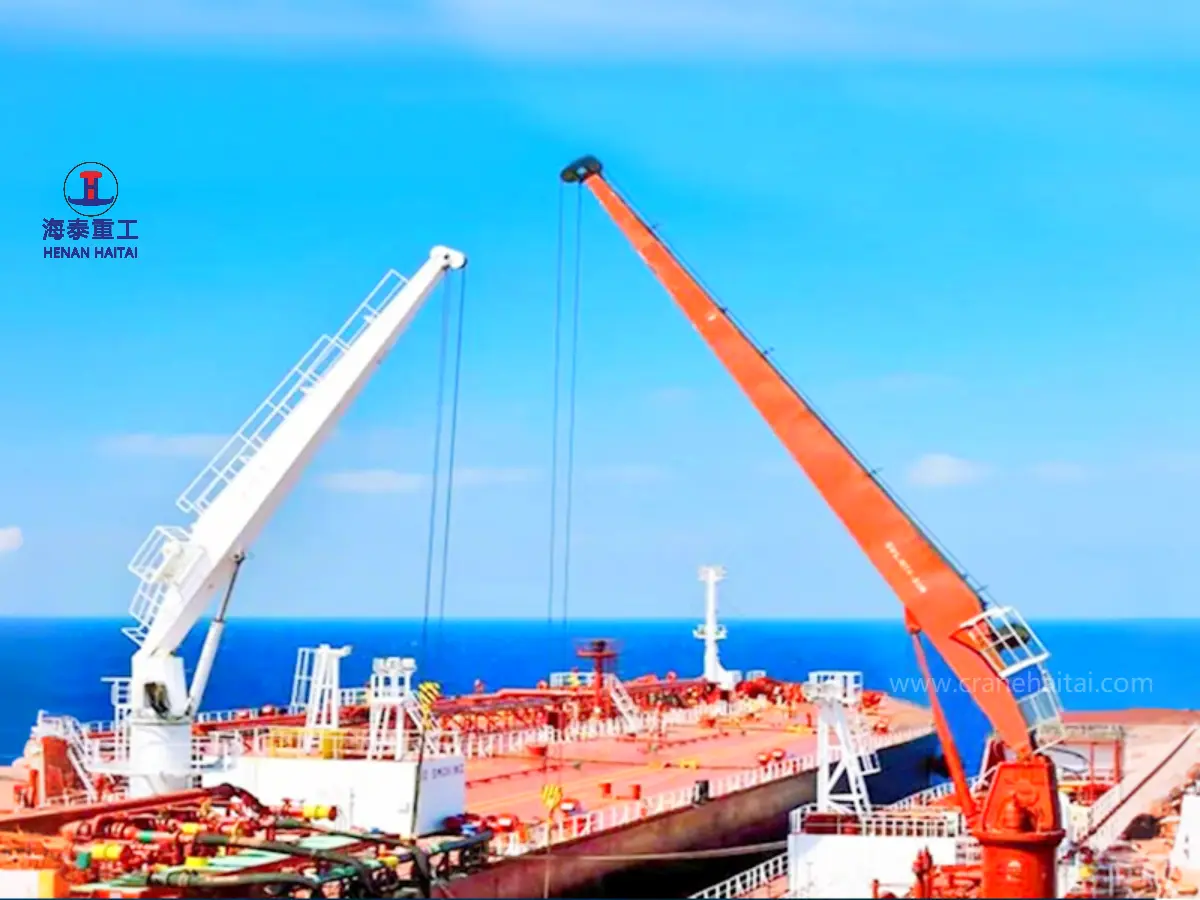
What Is Hydraulic Stiff Boom Marine Crane? Haitai hydraulic stiff boom marine crane is a pedestal-mounted deck crane built around one rigid boom. Hydraulic cylinders luff it, a slewing drive turns it through a full circle, and a hydraulic winch does the lifting. With no telescopic sections or knuckle joint, the load chart stays easy to read and upkeep stays low. Standard models cover 0.5 t to 20 t, and heavy-duty cranes up to 50 t are custom-engineered to your deck drawing. Capacity (SWL) Max Outreach Hoist Height Slewing Power 0.5 – 20 t standard, up to 50 t custom Up to 40 m 5-30 m 360° continuous Electro-hydraulic or diesel-hydraulic Stiff boom marine crane or fixed boom marine crane is one crane, two names. Buyers search for this crane under both names, and they mean the same thing. “Stiff” and “fixed” describe the boom length only. The boom cannot extend or fold, but the crane itself is far from static: it luffs up and down, slews around its pedestal, and hoists at every radius on its load chart. Outreach…

A marine arm crane is one of the most versatile pieces of deck equipment a vessel can carry. Unlike a straight-boom deck crane, a knuckle boom or articulated arm crane folds compactly when not in use, reaches over obstacles, and positions loads with precision that a fixed boom simply cannot match. For ship owners and procurement teams evaluating deck crane options, the choice between a straight boom and an articulated arm crane often comes down to one question: does your operation require the crane to work in confined spaces, reach below deck level, or handle irregular load positions? If yes, a marine arm crane is almost certainly the right choice. This page covers what marine arm cranes are, where they are used, what the key specifications mean, and how to evaluate suppliers before committing to a purchase. What Is a Marine Arm Crane? The Core Design Concept A marine arm crane — also called a knuckle boom crane or articulated marine crane — uses two or more boom sections connected by hydraulic-powered knuckle joints. This articulation allows the crane to…
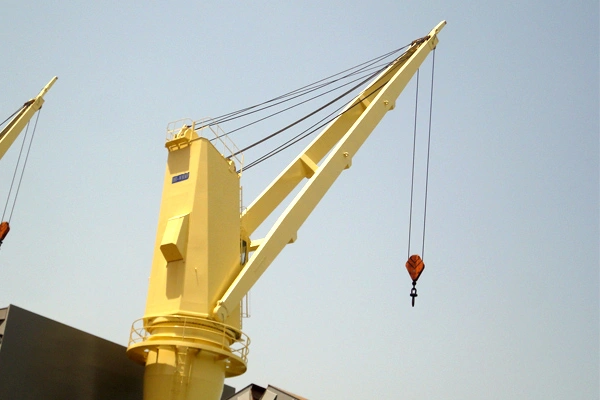
Selecting the wrong ship deck crane creates problems that follow you for the vessel’s entire operational life. Inadequate lift capacity, poor outreach, or a crane not certified by your classification society — any of these can delay port clearance, increase operating cost, or create liability exposure in the event of an incident. This page gives procurement managers, ship owners, and shipyard purchasing teams a clear, practical overview of what to look for when sourcing a ship deck crane. We cover equipment types, key technical parameters, certification requirements, and what distinguishes a reliable supplier from a risky one. HT crane manufacture and export ship deck cranes across a full capacity range — and we back every unit with classification society certification, factory load testing, and long-term spare parts support. What Is a Ship Deck Crane? The Basic Function A ship deck crane is a rotating lifting device permanently mounted on a vessel’s deck. It handles cargo loading and unloading at ports where shore-based equipment is unavailable or insufficient. It also supports deck operations, equipment transfers, and maintenance lifts during voyage. Vessel…