Container cranes are the backbone of modern port operations. Without them, the global movement of goods — from raw materials to finished products — would grind to a halt. At any major container terminal, crane selection directly determines how fast vessels are turned around, how efficiently yard space is used, and how well the entire logistics chain performs.
There are four main types of container cranes used in ports and terminals worldwide: the Rubber Tyre Gantry (RTG) crane, the Rail-Mounted Gantry (RMG) crane, the Ship-to-Shore (STS) quay crane, and the Container Straddle Carrier. Each serves a distinct role in container terminal operations, and choosing the right one starts with understanding how they differ.
This article covers each type in depth — what it does, where it fits, and what procurement teams should weigh before making a decision.
Rubber Tyre Container Crane (RTG Crane)
What Is an RTG Crane?
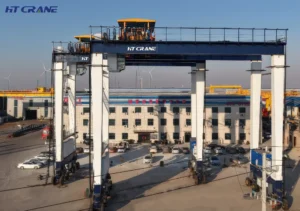
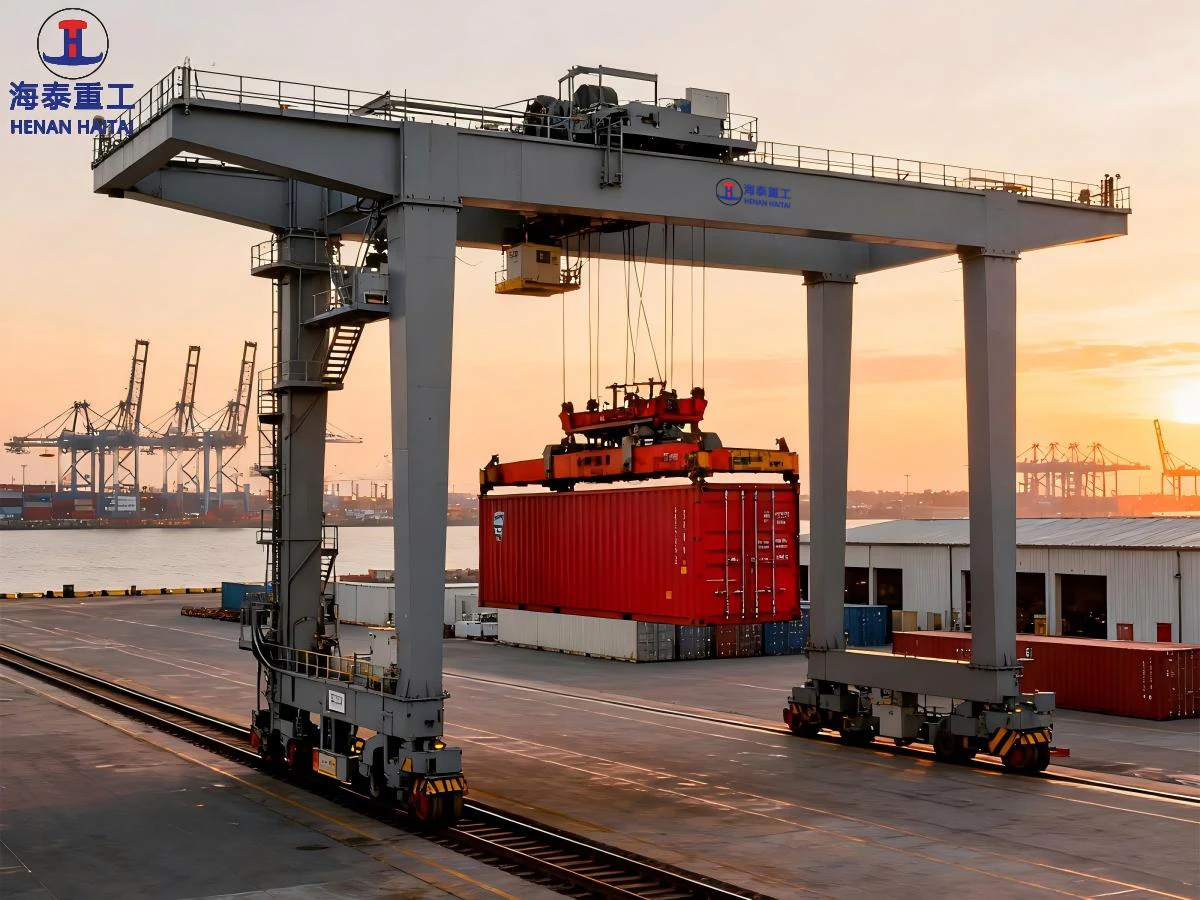
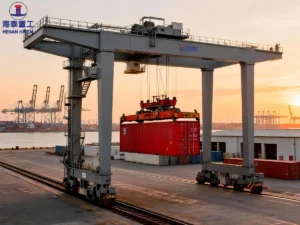
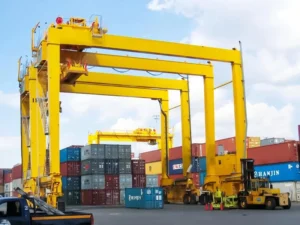
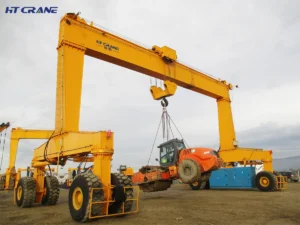
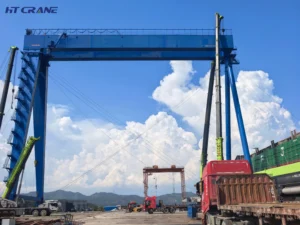
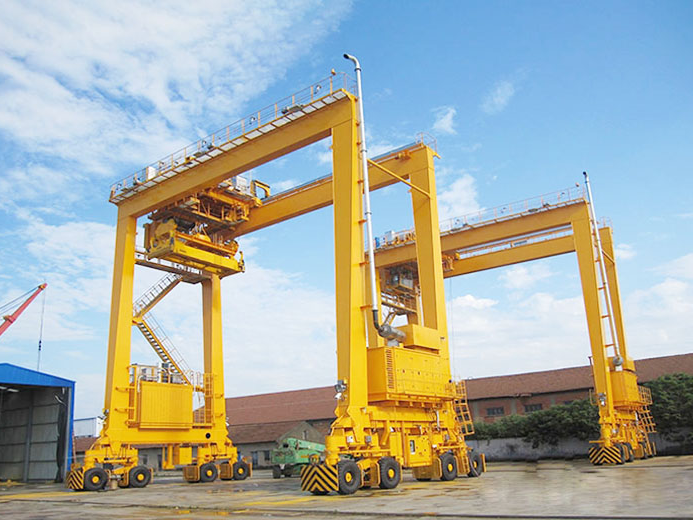
The Rubber Tyre Gantry crane is a mobile gantry crane that runs on rubber tyres across the terminal yard. It straddles multiple rows of stacked containers and is used for container storage, retrieval, and inter-row transfers within the yard.
Key Features
- Moves freely across the yard without fixed rail infrastructure
- Typically spans 6 container rows plus one truck lane
- Stacks containers up to 6 high
- Available in diesel-electric, hybrid, and fully electric configurations
- Can be retrofitted for semi-automation or full automation (ARTG)
Typical Applications
RTG cranes are the standard choice for general-purpose container terminals handling moderate to high volumes. They are widely deployed at coastal ports, inland container depots, and multipurpose terminals where yard layout flexibility is a priority.
Advantages
RTG cranes offer strong operational flexibility. Terminals can reorganize storage zones without dismantling fixed infrastructure. The lower upfront capital requirement compared to rail-based systems makes RTGs accessible for a broader range of terminal sizes. Modern electric RTG variants also support sustainability targets under ISO 14001 frameworks.
Limitations
Rubber tyre wear and pavement maintenance are ongoing cost factors. Diesel-powered models carry higher fuel and emissions costs over the long term. Positioning accuracy is lower than rail-mounted alternatives, which can constrain automation potential without significant additional investment.
Rail-Mounted Container Crane (RMG Crane)
What Is an RMG Crane?
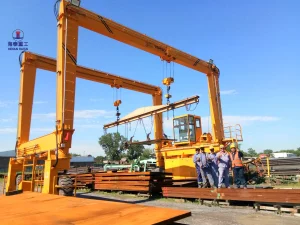
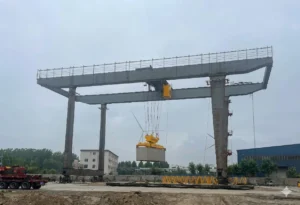
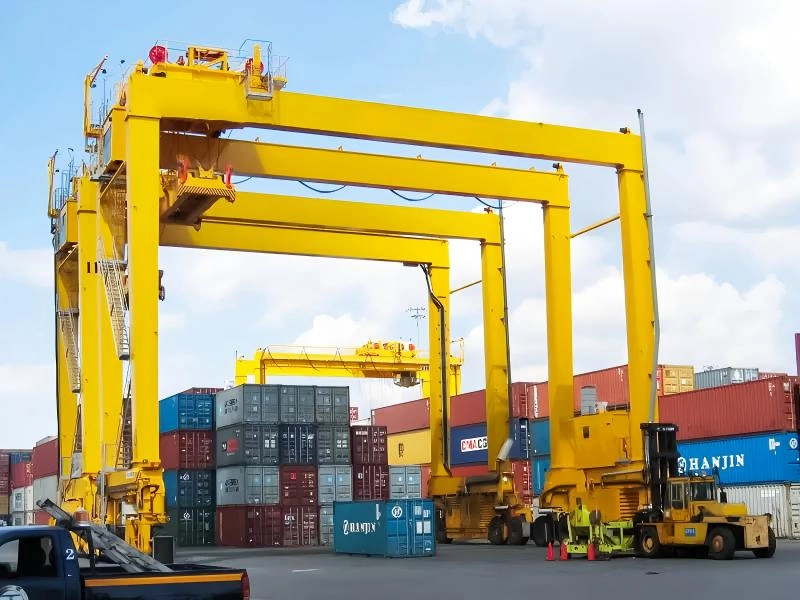
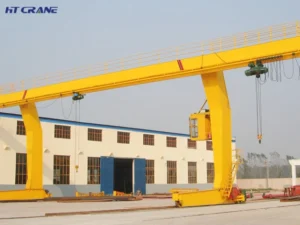
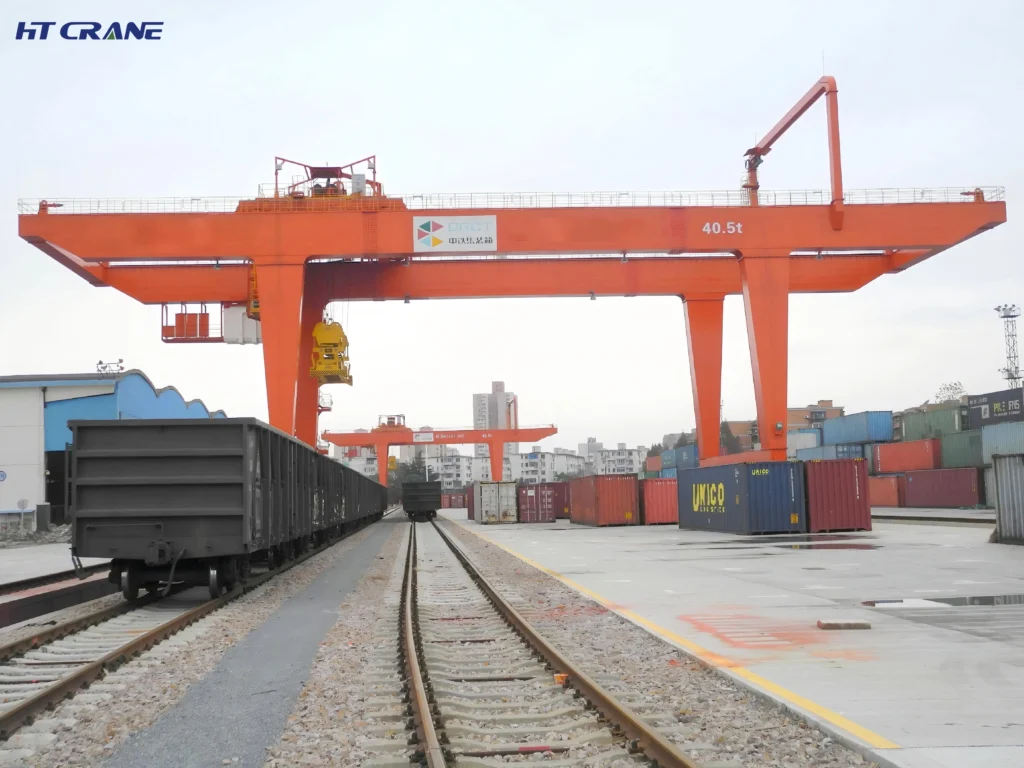
The Rail-Mounted Gantry crane operates on fixed steel rails set into the terminal yard surface. It covers a defined stacking block and is designed for high-precision, high-throughput container handling — particularly in automated or semi-automated terminal environments.
Key Features
- Fixed rail operation enables precise, repeatable positioning
- Stacking height typically reaches 7 containers high
- Lifting capacity of 40–65 tonnes under the spreader
- Fully compatible with automated terminal control systems
- Lower long-term energy costs compared to rubber-tyred alternatives
Typical Applications
RMG cranes are the preferred equipment for automated container terminals (ACTs), large transhipment hubs, and any facility with a defined automation roadmap. They are also used in rail-served inland terminals where consistent block stacking is essential.
Advantages
The fixed rail structure provides a stable platform for full automation integration. RMG cranes deliver high stacking density and require less manual intervention than rubber-tyred systems. Long-term operating costs — particularly energy and maintenance — are typically lower once the infrastructure is in place.
Limitations
Rail installation requires significant upfront investment in civil works. Yard layout is fixed once rails are laid, limiting future reconfiguration. RMG cranes are best justified where throughput volumes and automation ambitions support the infrastructure cost over time.
Ship-to-Shore Quay Crane (STS Crane)
What Is an STS Crane?
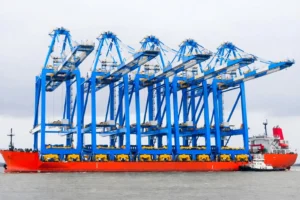
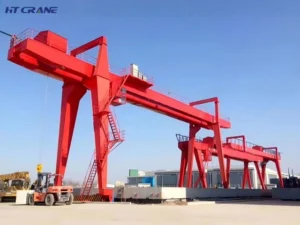
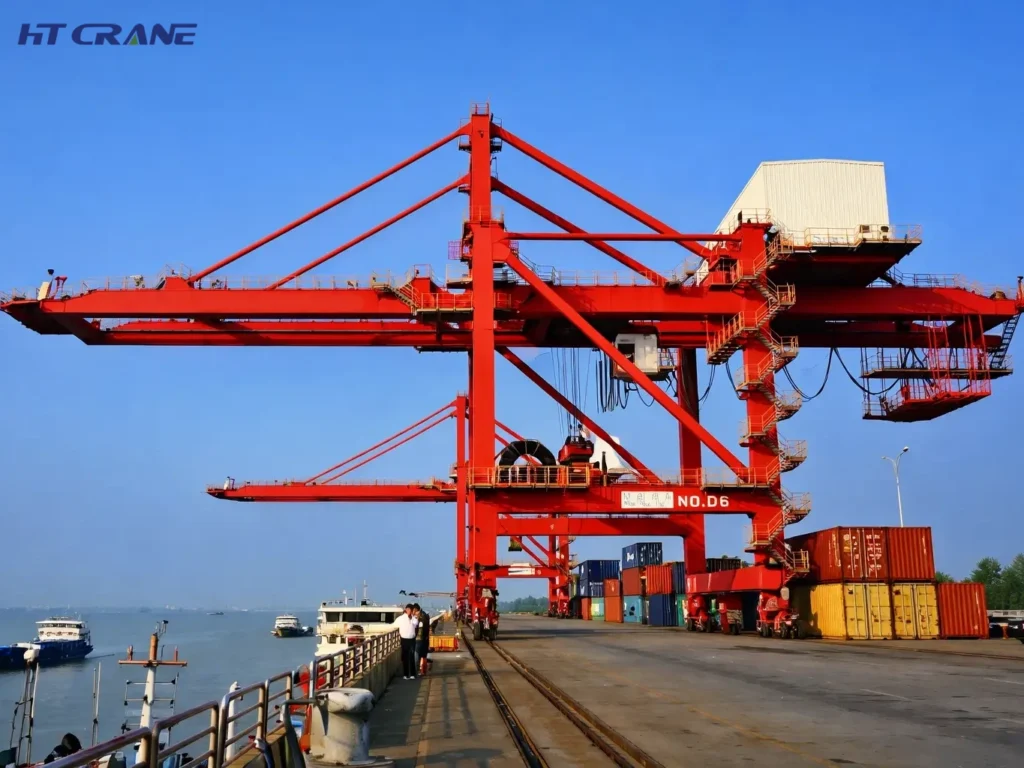
The Ship-to-Shore quay crane — commonly called a portainer or STS crane — is the large berth-side crane responsible for loading and discharging containers directly between vessel and quay. It is the first link in the container handling chain and sets the pace for everything that follows in the terminal yard.
Key Features
- Operates on fixed rails along the quayside
- Outreach classifications: Panamax (up to 13 rows), Post-Panamax (18–22 rows), Super Post-Panamax (24+ rows)
- Lifting capacity typically 50–65 tonnes under the spreader
- Twin-lift spreader options available for increased throughput
- Compliant with CE, EN, and ASME B30 standards depending on market
Typical Applications
STS cranes are essential at any deepwater container port handling modern container vessels. Super Post-Panamax STS cranes are increasingly specified as ultra-large container vessels (ULCVs) become the industry standard on major trade lanes.
Advantages
STS cranes deliver the highest ship discharge and loading rates of any berth-side equipment. Outreach capacity can be matched precisely to the vessel classes a terminal serves. Modern STS cranes support semi-automated and fully automated spreader operation, reducing cycle time and labour dependency.
Limitations
STS cranes are berth-specific equipment — they cannot perform yard stacking functions. Correct outreach specification is critical; under-specifying for anticipated vessel growth is a common and expensive mistake. Lead times for STS cranes are among the longest of any port crane type.
Container Straddle Carrier
What Is a Container Straddle Carrier?
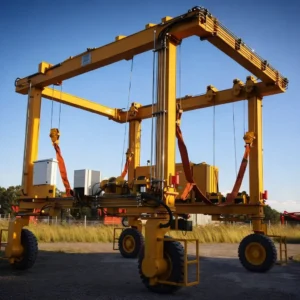
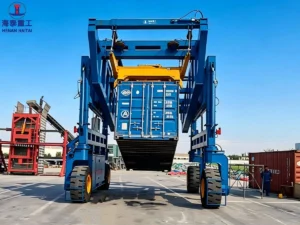
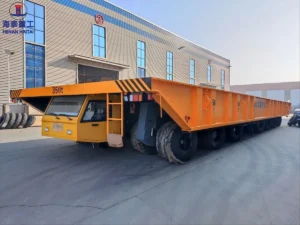
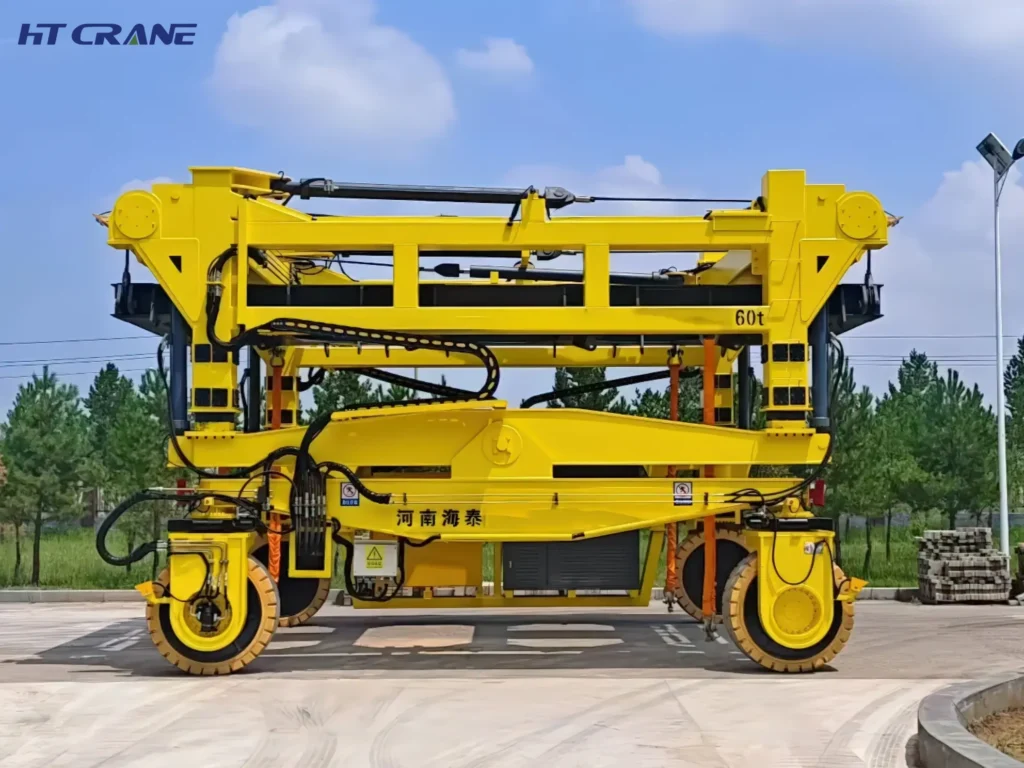
The container straddle carrier is a self-propelled rubber-tyred vehicle that drives over containers, lifts them, and transports them independently across the terminal. Unlike gantry cranes, it combines lifting and horizontal transport in a single machine.
Key Features
- Handles 20-foot and 40-foot ISO containers
- Standard stacking configurations: 1-over-1 (1+1) or 1-over-2 (1+2)
- Lifting capacity typically 50-60 tonnes
- Diesel-electric and fully electric variants available
- Can be deployed in automated straddle carrier (AutoStrad) configurations
Typical Applications
Straddle carriers are common at transhipment terminals, ro-ro ports, and facilities with variable container flows where point-to-point movement flexibility is more valuable than dense stacking. They are also used for container transport between quay and yard in terminals where ground-level speed matters.
Advantages
The ability to travel freely without fixed infrastructure makes straddle carriers highly adaptable. They are easier to redeploy as terminal layouts evolve and can handle containers in areas where gantry crane access is impractical.
Limitations
Straddle carriers require significantly more ground space per container than RTG or RMG systems. At high throughput volumes, the labour and maintenance cost per move is higher than gantry-based alternatives. Tyre wear and fuel consumption remain notable operating cost factors for diesel models.
Crane Type Comparison at a Glance
| Feature | RTG Crane | RMG Crane | STS Crane | Straddle Carrier |
|---|---|---|---|---|
| Primary function | Yard stacking | Yard stacking | Berth loading/discharge | Lift & transport |
| Mobility | High | Fixed (rail) | Fixed (rail) | High |
| Automation level | Moderate–High | High | Moderate–High | Moderate |
| Infrastructure need | Low–Moderate | High (rail civils) | High (quayside rail) | Low |
| Cost level (relative) | Moderate | Moderate–High | High | Moderate |
| Best use case | General terminals | Automated terminals | All container ports | Transhipment, flexible yards |
How to Choose the Right Container Crane
Selecting the right container handling equipment is a long-term capital decision. The following factors should guide your evaluation:
Port size and throughput volume. Higher throughput generally favours rail-mounted systems (RMG) for yard operations and larger outreach STS cranes at the berth. Lower-volume terminals often find RTG cranes or straddle carriers a better fit.
Yard layout and available land. Dense, constrained yards benefit from high-stacking RTG or RMG cranes. Terminals with more horizontal space may find straddle carriers viable for certain zones.
Automation requirements. If your terminal has a 5–10 year automation roadmap, RMG cranes provide the most straightforward path. RTG cranes can be automated but require more investment. Straddle carriers offer automation options at select terminal types.
Vessel size at your berth. STS crane outreach must cover the widest vessel class you intend to serve — not just today’s traffic. Specify for projected vessel growth, not current averages.
Future scalability. Consider which crane types allow you to expand capacity without replacing core infrastructure. Rail-mounted systems are harder to relocate but easier to automate at scale.
Most container cranes are custom-engineered to your terminal’s specifications — span, outreach, stacking height, power system, and automation interface. There is no off-the-shelf solution for a facility of any meaningful scale. Working with a crane supplier early in your planning process allows specifications to be aligned with your operational realities before procurement documents are finalized.
If you’re evaluating container crane options for a new terminal or expansion project, contact us to request a tailored specification review and custom solution proposal.

Conclusion
RTG cranes, RMG cranes, STS quay cranes, and container straddle carriers each occupy a distinct role in container terminal operations. No single type suits every situation. The best procurement outcome comes from matching crane type to your terminal’s throughput targets, layout, automation ambitions, and vessel profile — rather than defaulting to the most common option on the market.
Understanding the functional boundaries of each crane type is the starting point. From there, detailed specification work with qualified suppliers translates operational requirements into the right equipment at the right scale.
Frequently Asked Questions
What is the difference between an RTG crane and an RMG crane?
The primary difference is mobility. RTG cranes run on rubber tyres and can move between stacking rows, offering layout flexibility without fixed infrastructure. RMG cranes run on fixed rails, which limits repositioning but enables higher positioning precision and more straightforward automation integration. RTG cranes suit general-purpose terminals; RMG cranes are the preferred choice where automation is a defined operational goal.
Can one terminal use multiple types of container cranes?
Yes — and this is common at larger facilities. A typical full-service container terminal uses STS cranes at the berth for ship operations, RTG or RMG cranes in the yard for stacking, and may deploy straddle carriers or terminal tractors for horizontal transport between zones. The crane types are complementary, not interchangeable.
Are container cranes available as standard products or are they custom-built?
Container cranes are almost always custom-engineered. Span, outreach, lifting capacity, stacking height, power system, and automation interface are all specified to the individual terminal’s layout and operational requirements. Buyers should plan for a detailed technical dialogue with suppliers well before procurement deadlines.
What standards should container cranes comply with?
Key standards include EN 15011 for gantry cranes in European markets, ASME B30 series in North America, and ISO standards for lifting equipment globally. CE marking is required for cranes entering the European Economic Area. Buyers should confirm applicable standards in their jurisdiction and require full compliance documentation as part of the procurement process.
How long does it take to procure and deliver a container crane?
Lead times vary significantly by crane type and complexity. STS quay cranes typically carry the longest lead times — often 18 to 36 months from order to commissioning. RTG and RMG cranes generally range from 12 to 24 months. Straddle carriers may be faster depending on specification. Early engagement with suppliers during terminal planning is strongly recommended to avoid project delays.