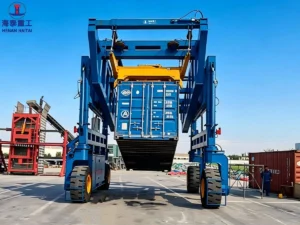
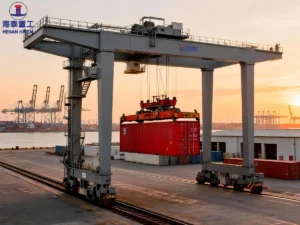
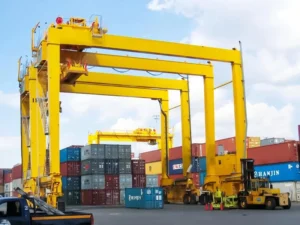
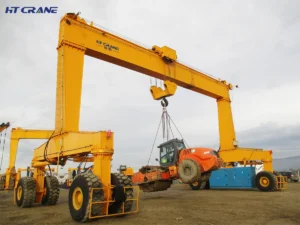
Budgeting for an RTG crane without knowing the price range is like negotiating blind. Most suppliers won’t publish list prices — yet procurement teams need ballpark figures before they can build a business case or shortlist vendors. That gap is exactly what this guide fills.
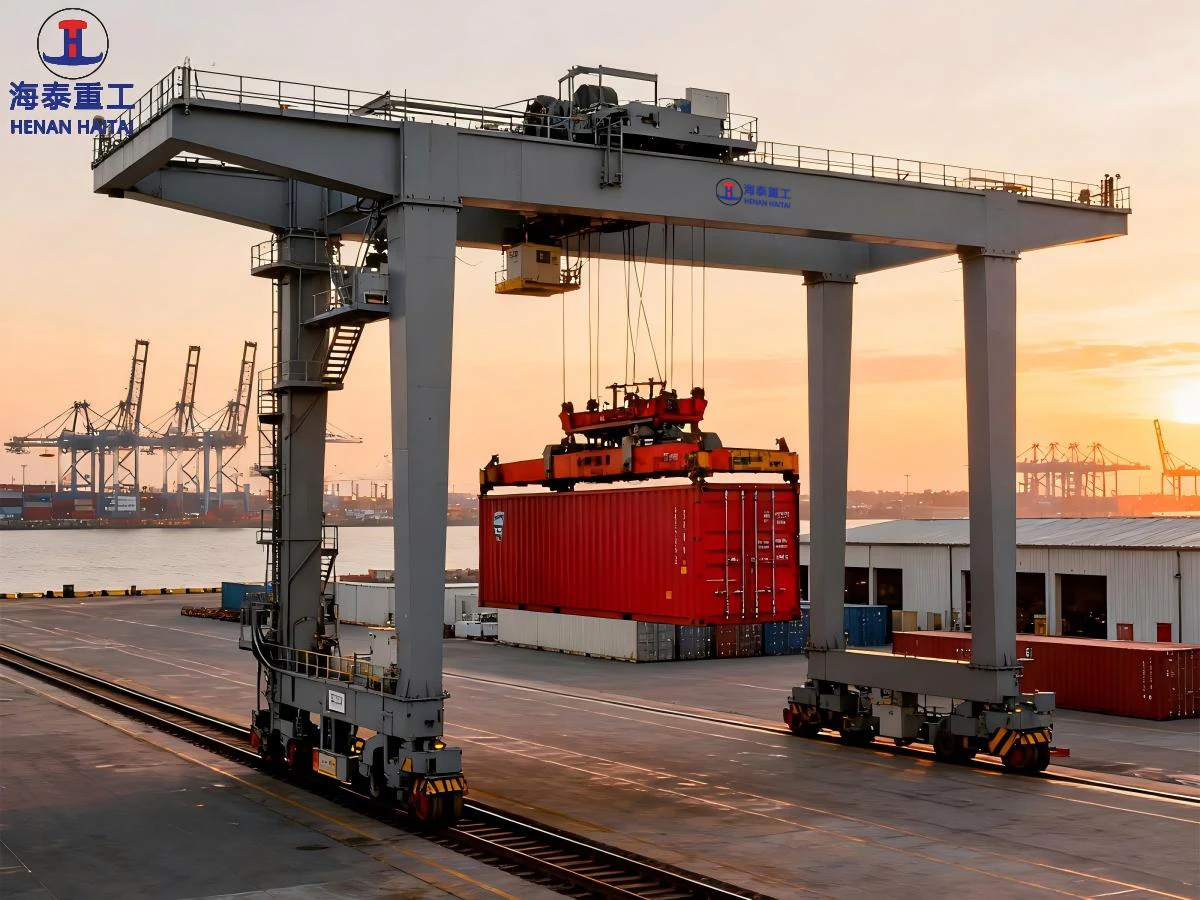
In 2026, the unit price of a standard rubber-tired gantry crane typically ranges from $700,000 to $1.5 million, depending on its configuration, drive system, and level of automation. The figures cited above reflect the ex-works prices offered by major manufacturers; once transportation, customs duties, and commissioning costs are factored in, the final landed cost of the equipment upon arrival at your site will be higher.
This article gives you a clear breakdown of what moves the price up or down, how to compare quotes properly, and where buyers commonly leave money on the table.
RTG Crane Price Ranges by Configuration (2026)
The table below reflects current market pricing based on supplier quotations and published industry procurement data. All figures are approximate ex-works USD and should be used for budgeting reference only — always request a formal quotation.
| Configuration | Lifting Capacity | Drive System | Approx. Price Range (USD) |
|---|---|---|---|
| Entry-Level RTG | 30–35 t | Diesel | $400,000–$500,000 |
| Standard RTG | 35–41 t | Diesel-Electric Hybrid | $700,000–$750,000 |
| Electric RTG (E-RTG) | 35–41 t | Full Electric / Cable Reel | $800,000–$900,000 |
| High-Capacity RTG | 41–50 t | Diesel or Electric | $900,000 – $1,000,000 |
| Automated RTG (A-RTG) | 35–41 t | Electric + Full Automation | $1 million – $1.2 million |
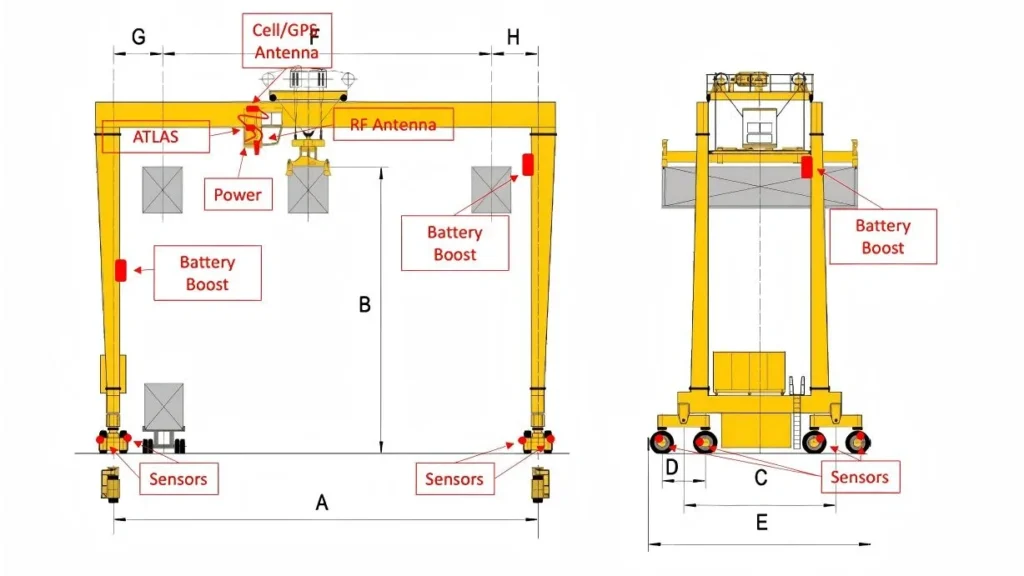
These ranges assume a standard 7-wide + 1 truck lane span and 1-over-5 stacking height. Wider span, higher stacking, or custom engineering requirements will push costs toward or beyond the upper end.
What Drives RTG Crane Costs Up — or Down
Understanding the cost structure helps you avoid paying for specifications you don’t need.
Lifting Capacity: Don’t Over-Specify
Most standard ISO containers weigh 20–28 metric tons gross. A 40-ton SWL (safe working load) unit handles virtually all standard box types with comfortable margin. Specifying 50-ton capacity adds structural and mechanical cost without operational benefit for most terminals.
Where higher capacity makes sense: overweight cargo hubs, ports handling heavy project cargo alongside containers, or yards that regularly handle twin-20 lifts.
Span Width: Match Your Yard Layout
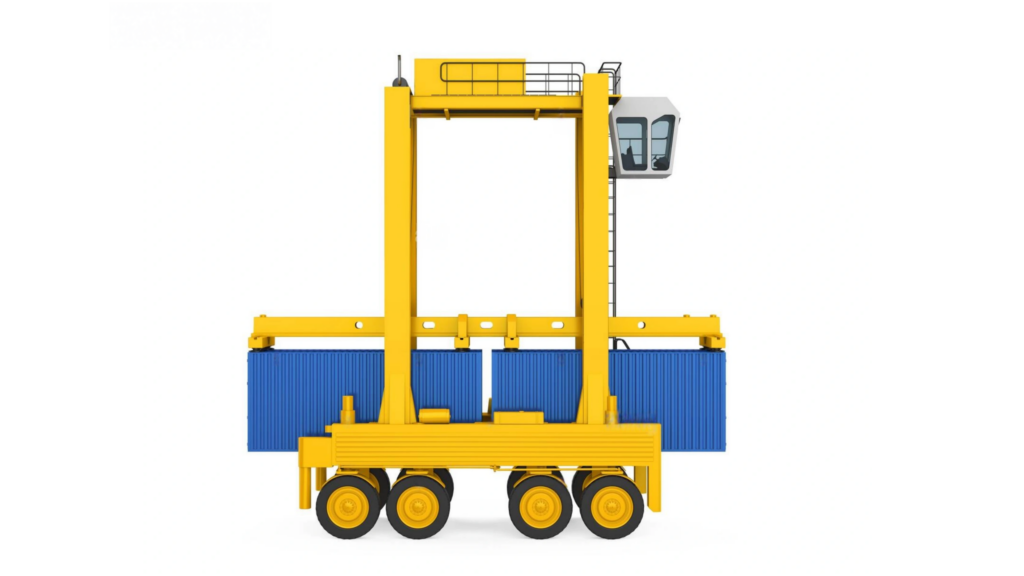
RTG cranes are configured to straddle 6, 7, or 8 container rows plus a truck lane. A wider span increases steel volume, trolley complexity, and structural engineering cost. Moving from 6-wide to 8-wide typically adds 10–20% to the base unit price.
The 7-wide + 1 lane configuration is the current industry standard for medium-to-large terminals. Smaller inland depots often select 6-wide to control cost.
Drive System: The Biggest Price Variable
This is often the single biggest variable in pricing:
| Drive System | Operating Cost | Emission Level | Typical Use Case |
|---|---|---|---|
| Diesel | Higher fuel cost | Higher emissions | Remote sites, no grid access |
| Diesel-Electric Hybrid | Moderate | Reduced by 30–40% | Transitional upgrades |
| Full Electric (E-RTG) | Lower long-term | Near zero | Ports with grid infrastructure |
| Cable Reel Electric | Lowest | Near zero | Fixed-lane, high-utilisation yards |
Electric RTGs (E-RTGs) carry a higher upfront cost but typically deliver lower total cost of ownership over a 15–20 year asset life. The International Transport Forum (2023) notes that terminal electrification is accelerating globally, with E-RTG adoption growing significantly in European and East Asian ports.
Automation Level: High Cost, High Return — at Scale
Semi-automated features — anti-sway control, auto-landing assist, remote operator cabins — add roughly $200,000–$500,000 per unit over a manual equivalent. These features improve cycle times and reduce operator fatigue in high-throughput environments.
Full automation (A-RTG) eliminates the on-board operator entirely, integrating with terminal operating systems via laser positioning and machine vision. The cost premium is substantial, but terminals handling 800,000+ TEU annually often recover that investment within 5–8 years through reduced labour and improved throughput consistency.
For smaller terminals, semi-automation typically offers a better return than full automation.
Supplier and Country of Origin
RTG cranes are manufactured by a relatively small number of global suppliers. Major producers include ZPMC (China), Liebherr (Germany/Ireland), Konecranes (Finland), and Kalmar (Finland).
From a buyer’s perspective, supplier selection is less about geography and more about compliance, delivery reliability, and long-term support. Chinese-manufactured RTG cranes are often more competitive in initial cost, but buyers typically pay closer attention to certification alignment, project timelines, and after-sales responsiveness.
At the same time, some Chinese manufacturers have significantly improved in these areas. For example, HaitaiCrane–manufactured RTG cranes already comply with multiple international standards, including CE, ISO, EAC, making them suitable for a wide range of global project requirements.
Hidden Costs Buyers Often Miss
The ex-works price is just the starting point. Here’s what experienced procurement teams build into their total budget.
Freight, Duties, and Site Delivery
RTG cranes ship partially assembled on heavy-lift vessels. Freight, port handling, import duties, and inland transport to your site typically add 8–15% of the ex-works price for international orders. For remote inland sites, this can climb higher.
Commissioning and Operator Training
Factory-trained technicians are required for on-site assembly, commissioning, and load testing. This cost is sometimes included in the supplier contract but often quoted separately. Budget $50,000–$150,000 per unit for commissioning if not included.
Operator training — especially for semi-automated or electric systems — adds further cost. New RTG operators typically require 2–4 weeks of structured training before independent operation.
Grid Upgrade for E-RTG Adoption
Switching from diesel to electric RTGs requires a power infrastructure assessment. Depending on your site, a substation upgrade or grid capacity expansion may be necessary before delivery. This is a one-time site cost, not a per-unit cost — but it can be significant and must be included in your business case.
Spare Parts and Maintenance Contracts
OEM maintenance contracts for RTG cranes typically run $80,000–$200,000 per unit per year, depending on utilisation, coverage scope, and geography. Some operators self-maintain after the warranty period using third-party parts, which reduces cost but requires qualified in-house technical staff.
How to Approach the RTG Crane Buying Process
Here’s a practical sequence used by experienced terminal procurement teams:
Step 1 — Define Your Operational Requirements First Capacity needs, lane configuration, power access, and annual TEU throughput should all be locked in before approaching suppliers. Vague briefs lead to vague quotes.
Step 2 — Request Detailed Technical Specifications Ask suppliers for full technical datasheets covering SWL, span, stacking height, motor ratings, control system specs, and compliance certifications (CE, ISO 9001, ISO 4301).
Step 3 — Compare Total Cost of Ownership, Not Just Unit Price Build a 10–15 year TCO model that includes fuel or electricity costs, maintenance, major overhauls, and resale value. A cheaper diesel unit may cost significantly more over its lifecycle than a pricier E-RTG.
Step 4 — Check After-Sales Support Coverage Ask suppliers specifically: Where is your nearest service depot? What is your average response time for critical breakdowns? Do you stock critical spare parts locally?
Step 5 — Verify Certification and Compliance Confirm that the crane meets applicable standards: CE marking for European markets, ISO 4301 for structural classification, and FEM standards where relevant. Non-compliant equipment can create serious liability exposure.
Making a Smart RTG Crane Investment in 2026
RTG crane pricing in 2026 reflects a market that is evolving quickly. Electrification, automation, and tighter emissions standards are reshaping the cost structure of new units. Buyers who focus only on the purchase price often end up with equipment that costs more to operate and harder to upgrade later.
The best procurement decisions combine clear operational requirements, a full TCO comparison, and careful supplier evaluation. If you’re starting the process, begin by defining your yard configuration and throughput targets. Then request formal quotations from at least three qualified suppliers with full technical specifications.
A well-specified RTG crane should serve your terminal reliably for 15–20 years. The few extra weeks spent on thorough procurement planning are well worth it.

FAQ
Q1: What is the average price of a standard RTG crane in 2026?
A standard diesel-electric RTG crane with 40-ton capacity, 7-wide span, and manual operation typically falls in the USD 2 million to USD 3 million range ex-works in 2026. Entry-level diesel-only units start around USD 2.5 million, while fully electric or automated configurations can reach USD 4 million to USD 6.5 million or more. These are budgetary benchmarks — your actual quote will depend on final specifications, supplier, and delivery terms. Always request a formal quotation with detailed line-item breakdown before committing to a budget figure.
Q2: Is a Chinese-made RTG crane significantly cheaper than a European one?
Yes, typically. Chinese manufacturers such as price RTG cranes 20–35% lower than European equivalents for comparable base specifications. However, the full picture includes after-sales support coverage, lead times, spare parts availability, and certification pathways. European manufacturers such as Konecranes and Cargotec Kalmar often offer stronger local service networks in Western markets. The right choice depends on your location, in-house maintenance capability, and long-term support requirements — not just the unit price.
Q3: How long does an RTG crane last, and does that affect the value calculation?
A well-maintained RTG crane has an operational lifespan of 15–20 years. Major structural components typically last the full asset life; drivetrain, electrical systems, and hoisting mechanisms require overhauls at 8–12 year intervals. This lifespan is why total cost of ownership matters more than purchase price. A unit that costs $500,000 more upfront but saves $120,000 per year in fuel and maintenance costs pays back the premium within 4–5 years and generates ongoing savings for the remaining asset life.
Q4: What is the difference between an E-RTG and a cable reel RTG?
Both are electrically powered, but the power delivery method differs. E-RTGs with battery or pantograph systems can move freely around the yard, drawing power from overhead or on-board storage. Cable reel RTGs draw power via a trailing cable wound on a motorised drum, which limits their movement to fixed lanes. Cable reel systems are generally simpler and cheaper to maintain, but they restrict yard flexibility. For terminals with fixed, predictable block layouts and high utilisation, cable reel is often the cost-effective choice. For yards requiring frequent lane changes, a battery or pantograph E-RTG is more practical.
Q5: Can RTG cranes be retrofitted or upgraded after purchase?
Yes, to a degree. Many manufacturers offer upgrade paths for control systems, anti-sway technology, and remote operation capability. Some diesel RTGs can be converted to diesel-electric hybrid configurations. However, major structural changes — such as increasing span or stacking height — are generally not feasible post-delivery. Plan your specifications carefully upfront to avoid costly limitations later. Discuss future upgrade options with your supplier during the procurement phase.