Choosing the wrong crane duty class is one of the most expensive mistakes in equipment procurement. It shortens machine life, drives up maintenance costs, and can create real safety risks on the floor. Yet many buyers still focus on lifting capacity alone — and overlook duty class entirely.
What makes this harder is that two separate classification systems exist worldwide. European and international projects follow the FEM/ISO system. North American projects rely on CMAA, HMI, and ASME standards. Each system uses different terminology and different rating labels — but they are all answering the same fundamental question: how hard will this crane work over its lifetime?
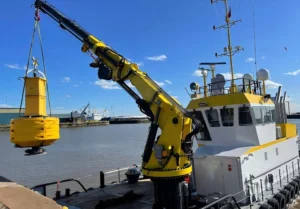
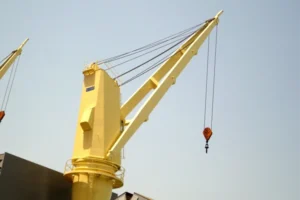
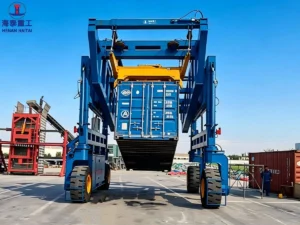
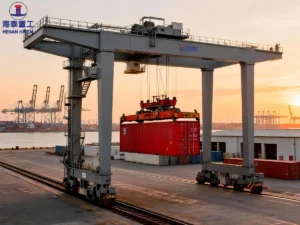
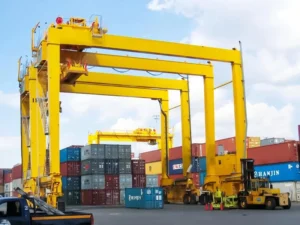
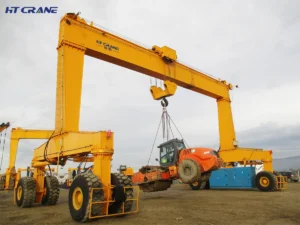
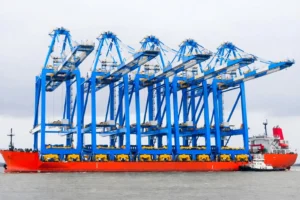
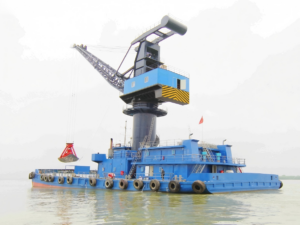
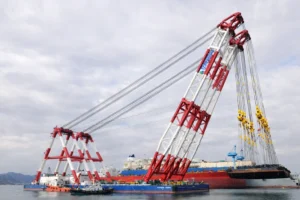
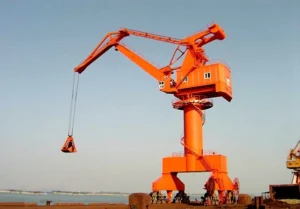
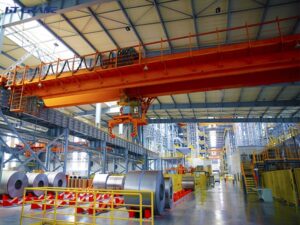
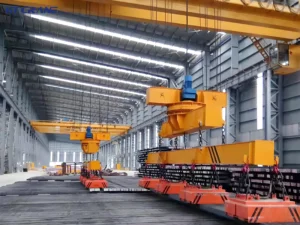
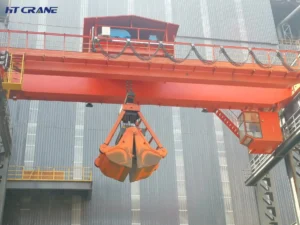
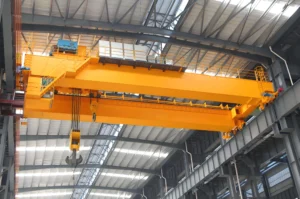
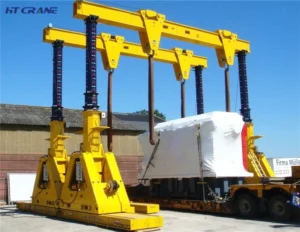
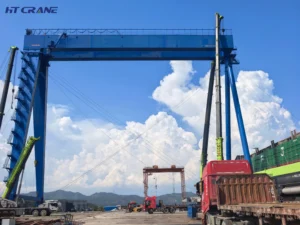
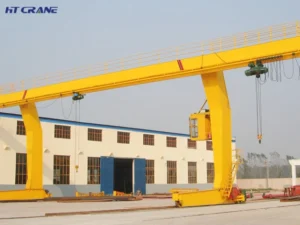
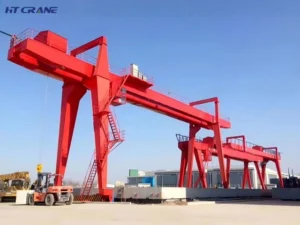
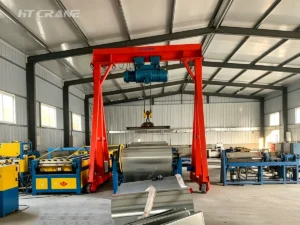
Cranes are split into four categories by load spectrum: light, medium, heavy and very heavy.
What Is Crane Duty Class and Why Does It Matter?
A crane duty class is a standardized rating that describes the expected workload intensity of a crane over its full design life. It is not simply about how heavy the loads are. It combines two variables: how heavy the loads are relative to the crane’s maximum capacity, and how frequently the crane operates.
These two factors together determine how quickly the crane’s structural and mechanical components accumulate fatigue. A crane lifting at full capacity every five minutes is under far greater stress than one lifting light loads once per hour — even if the peak weight is identical.
The Two Core Variables
Load spectrum describes the distribution of actual lift weights relative to the crane’s rated capacity. If most lifts are near the maximum, the load spectrum is heavy. If most lifts are light with occasional peaks, the spectrum is lighter.
Utilization class measures total operating hours or lift cycles over the crane’s design life. A crane running two shifts per day accumulates cycles far faster than one used for occasional maintenance work.
Both variables feed into the duty class calculation. Getting either one wrong leads to a misclassified crane.
What Happens When Duty Class Is Wrong
Underclassifying a crane — specifying a lighter rating to reduce upfront cost — is the most common mistake. The crane runs in conditions beyond its design parameters. Components fatigue faster than the manufacturer’s calculations predict. Maintenance intervals shorten. Repairs become frequent. In many cases, the total cost of ownership over five years exceeds what a correctly rated crane would have cost from the start.
Overclassifying wastes capital. A Class M7 crane installed in a light fabrication shop will outlast the building it sits in — but the excess investment delivers no operational benefit.
The FEM/ISO System: Europe and International Projects
The FEM 1.001 standard (published by the European Federation of Materials Handling) and ISO 4301 are the two most widely cited international frameworks. They share the same underlying methodology and map closely to each other, though their class labels differ.
FEM uses designations from 1Am through 4. ISO uses M1 through M8. Both classify cranes by combining the load spectrum class (Q1–Q4 in ISO) with the utilization group (U0–U9), producing a final duty class that drives structural and component design requirements.
| FEM Class | ISO Equivalent | Usage Level | Typical Application |
|---|---|---|---|
| 1Am | M1 | Very light, occasional | Maintenance shops, storage yards |
| 1A | M2 | Light, infrequent | Assembly workshops, repair bays |
| 1B | M3 | Light to moderate | General manufacturing, light production |
| 2m | M4 | Moderate, regular use | Machine shops, fabrication facilities |
| 2 | M5 | Heavy, frequent cycles | Steel service centers, busy workshops |
| 3m | M6 | Heavy, near-continuous | Hot metal handling, scrap yards |
| 3 | M7 | Very heavy, continuous | 24-hour steel production, bulk handling |
| 4 | M8 | Extreme duty | Electrolytic/magnet cranes, coil handling |
Most general manufacturing environments fall between M3 and M5. Port operations, steel mills, and continuous production facilities typically require M6 or above. The classification directly determines structural steel grade, weld specifications, motor insulation class, hoist thermal capacity, and brake duty cycle.
The North American Systems: CMAA, HMI, and ASME
North American markets use three separate but related classification frameworks. Understanding where each one applies — and how they differ — is essential for any buyer specifying or importing equipment across regions.
CMAA: The Standard for Overhead Bridge Cranes
The Crane Manufacturers Association of America (CMAA) publishes Specification No. 70 for top-running bridge cranes and No. 74 for under-hung cranes. CMAA uses a letter-based classification system with six service classes: A through F.
The classification is driven by load cycles per hour, average loads relative to rated capacity, and total operating hours. Class A covers infrequent, light service — standby or maintenance cranes. Class F represents continuous, severe-duty operation such as steel mill service cranes working around the clock.
CMAA Class D and E are the most commonly specified classes for industrial manufacturing environments in North America. Class D fits moderate-to-heavy service with regular cycles at varying loads. Class E applies to heavy service with high lift cycles and loads frequently near the rated capacity.
HMI: Hoists and Lifting Equipment
The Hoist Manufacturers Institute (HMI) applies its classification specifically to hoist mechanisms rather than to the full crane structure. HMI uses five classes: H1 through H5. These ratings govern the hoist unit itself — motor sizing, brake selection, gear service factor, and thermal duty.
An important nuance: the HMI class of the hoist does not always match the CMAA class of the crane structure it is installed on. In practice, engineers specify both independently. A crane body rated to CMAA Class D may carry a hoist rated to HMI H3 or H4 depending on the specific lift frequency and load profile of that hoist position.
ASME B30: Safety and Operational Requirements
The American Society of Mechanical Engineers publishes the B30 series of safety standards covering overhead cranes and hoists. ASME B30.2 covers top-running bridge cranes; B30.11 covers monorails and underhung cranes.
Unlike CMAA and HMI — which are design and classification standards — ASME B30 standards focus on safe use, inspection intervals, operator qualifications, and maintenance requirements. In many U.S. states, ASME B30 compliance is a legal requirement. It does not replace CMAA or HMI classification; it operates alongside them. A fully compliant North American crane typically references all three.
Mapping the Two Systems: FEM/ISO vs North American Standards
When sourcing equipment internationally — or specifying cranes for facilities that use both standards — buyers need a reliable cross-reference. The table below maps the two systems at the level of typical industrial applications.
| ISO Class | FEM Class | CMAA Class | HMI Class | Typical Use |
|---|---|---|---|---|
| M1–M2 | 1Am / 1A | A | H1 | Standby, maintenance |
| M3 | 1B | B | H2 | Light assembly, repair |
| M4 | 2m | C | H2–H3 | General manufacturing |
| M5 | 2 | D | H3 | Machine shops, fabrication |
| M6 | 3m | E | H4 | Heavy industrial, foundries |
| M7–M8 | 3 / 4 | F | H5 | Steel mills, 24hr production |
These mappings are functional approximations. The underlying calculations differ between systems. For cross-border procurement or compliance verification, always request that the supplier provide documentation under both standards.
How Duty Class Shapes the Physical Crane
This is where classification becomes directly relevant to procurement decisions. A higher duty class crane is built differently — not just rated differently.
Structure, Steel, and Welds
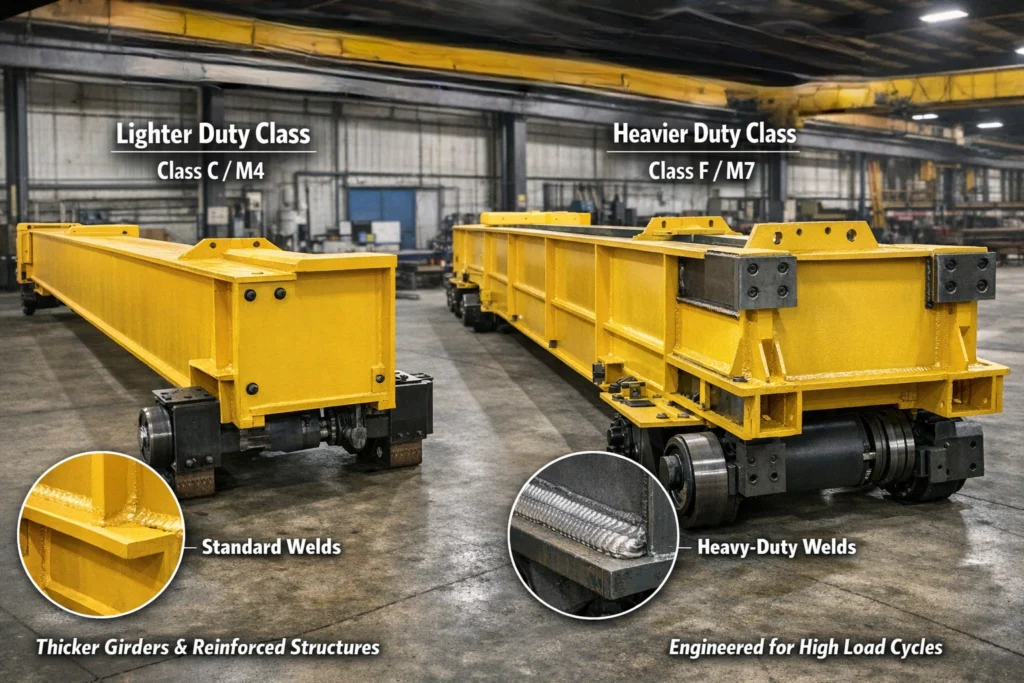
Higher duty class cranes use heavier gauge steel, reinforced end carriages, and more demanding weld specifications. Under EN 13001 (Europe) and CMAA Specification No. 70 (North America), structural calculations must account for total anticipated load cycles — not just peak load values. A Class F or M7 bridge crane will have significantly heavier main girders than a Class C or M4 unit of the same span and capacity.
Hoist and Motor Specifications
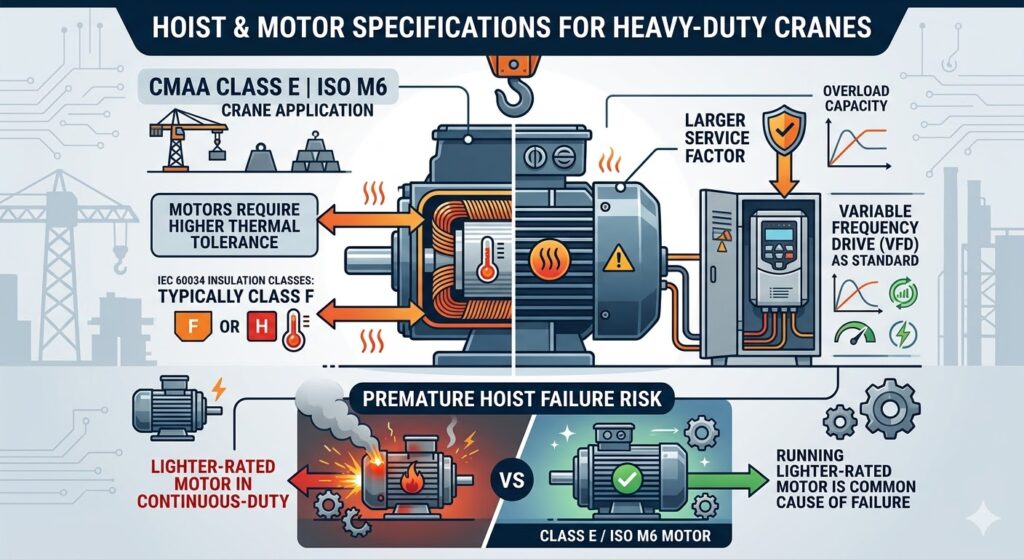
The hoist on a CMAA Class E or ISO M6 crane requires a motor with higher thermal tolerance, a larger service factor, and — in most cases — a variable frequency drive as standard. IEC 60034 defines insulation classes; motors on heavy-duty cranes typically require Class F or H insulation. Running a lighter-rated motor in a continuous-duty environment is one of the most common causes of premature hoist failure.
Brake and Drive Systems
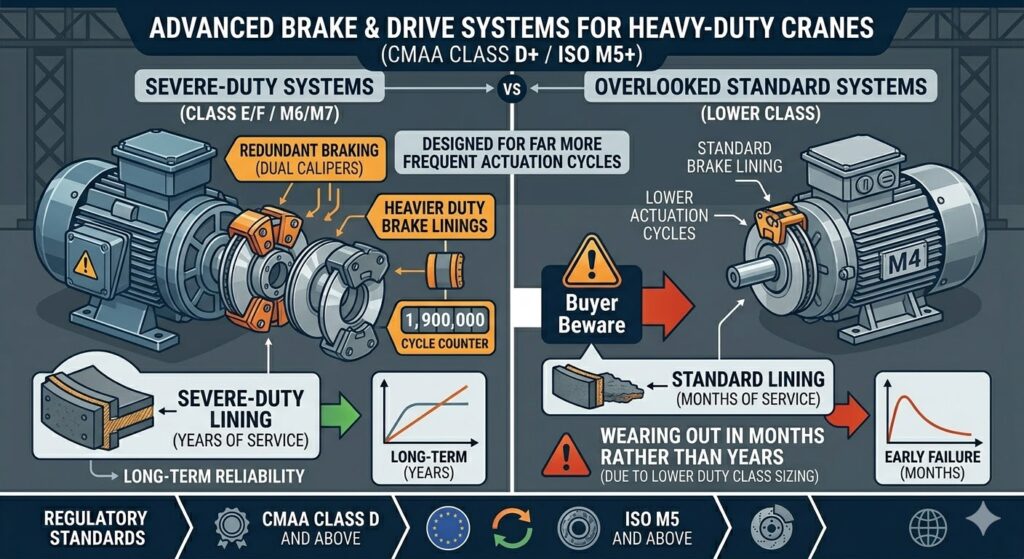
Cranes rated at CMAA Class D and above — or ISO M5 and above — require brake systems designed for far more frequent actuation cycles. In severe-duty applications (Class E/F or M6/M7), redundant braking is often specified. Buyers who overlook this detail often discover that their standard brake linings wear out in months rather than years, because the brake system was sized for a lower duty class.
A Practical Selection Framework
Use this three-step process before finalizing any crane specification.
Step 1 — Profile your operation. Estimate annual operating hours and average lift cycles per shift. Identify what percentage of lifts occur at various load levels relative to the crane’s rated capacity. One week of documented lift data is usually sufficient to establish a reliable profile.
Step 2 — Determine your regional standard. If the project is in North America, specify CMAA and HMI classes — and confirm ASME B30 compliance requirements with your local authority. If the project is in Europe or uses international supply chains, specify ISO M-class with reference to FEM 1.001. For cross-border projects, request documentation under both systems.
Step 3 — Verify component-level alignment. Confirm that the hoist, motor, brake, end carriages, and structural elements are all rated to the same duty class. Budget crane packages sometimes combine components from different duty levels. A mismatch here undermines the entire classification.
Summary and Key Takeaways
Crane duty class is an engineering parameter — not a marketing label. It determines whether the crane you buy will perform reliably in your specific operating environment, or begin failing years before it should.
The FEM/ISO system and the CMAA/HMI/ASME system both measure the same fundamental thing: workload intensity over time. The terminology differs, but the logic is the same. Understanding both systems gives you the vocabulary to specify correctly, compare suppliers across regions, and ask the right questions during procurement.
If you are unsure where your operation falls on the duty scale, document one week of actual lift activity. Load estimates and cycle counts from that data give any qualified supplier everything needed to recommend the correct classification — for either system.
Frequently Asked Questions
Q: What is the most commonly used crane duty class for general manufacturing in North America?
CMAA Class C and Class D cover the majority of general manufacturing environments in North America. Class C applies to moderate service — regular use with varying loads that are typically well below the crane’s rated capacity. Class D fits heavier service with more frequent cycles and loads that more regularly approach the rated limit. For most machine shops, fabrication facilities, and assembly plants, Class D is the most appropriate starting point. The correct answer depends on actual lift frequency and load distribution, not on industry category alone. Always validate against your specific operating profile before finalizing the specification.
Q: Is ASME B30 the same as a duty class standard?
No. ASME B30 is a safety standard, not a duty class classification. It governs inspection intervals, operator training requirements, load testing procedures, and safe use practices for overhead cranes and hoists. Compliance with ASME B30.2 or B30.11 is a legal requirement in many U.S. states and Canadian provinces. It operates alongside CMAA and HMI classification — a fully specified North American crane typically references all three. Think of CMAA/HMI as the design and rating standards, and ASME B30 as the operating and safety compliance standard.
Q: Can I use FEM/ISO ratings when buying a crane from a North American manufacturer?
Most major North American crane manufacturers are familiar with both systems and can provide documentation under FEM/ISO and CMAA/HMI classifications on request. This is increasingly common for multinational facilities, export projects, or operations where the end user’s internal standards reference ISO M-class. If you need cross-system documentation, request it explicitly at the quotation stage — retrofitting the paperwork after order placement is more complicated and sometimes requires third-party verification.
Q: What happens if I run a crane above its rated duty class?
The crane’s structural and mechanical components experience fatigue at a faster rate than the design calculations anticipate. Welds, end carriages, hoists, and brakes all accumulate stress cycles beyond their design parameters. In practice, this causes shortened inspection intervals, increased component failure rates, and higher maintenance spend. In regulated environments, it may also trigger compliance issues under ASME B30, EN 13001, or applicable local machinery directives. The immediate answer is not always crane replacement — but a professional engineering assessment of remaining service life is essential before continuing operation.
Q: What happens if I run a crane above its rated duty class?
HMI hoist class is determined by the hoist’s specific lift frequency and load spectrum — independent of the crane structure’s CMAA class. Start with the number of starts per hour the hoist will perform and the average load as a percentage of rated capacity. HMI H1 and H2 cover infrequent or light-cycle applications. H3 fits moderate industrial use. H4 and H5 apply to heavy and severe-duty continuous operation. If your crane structure is specified at CMAA Class D or above, verify that the hoist’s HMI class is consistent — a structural mismatch between crane body and hoist rating is a common and avoidable procurement error.