Buying a floating crane is one of the most significant capital decisions a marine or port construction company can make. The price range is wide, the technical variables are complex, and a poor choice can cost you far more in downtime, compliance issues, and operational inefficiencies than you initially anticipated. Whether you are sourcing a floating crane barge for a single harbor project or investing in a self-propelled vessel for multi-site offshore operations, the fundamentals of a smart purchase remain the same.
This guide cuts through the noise. It walks you through the critical specifications, structural considerations, regulatory requirements, and market realities you need to understand before signing any contract. By the end, you will have a clear framework to evaluate any floating crane for sale—and avoid the mistakes that catch buyers off guard.
1. Understanding What You Are Actually Buying
Floating Crane vs. Floating Crane Barge: Know the Difference
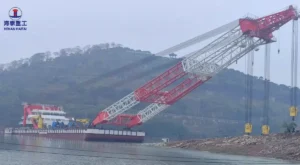
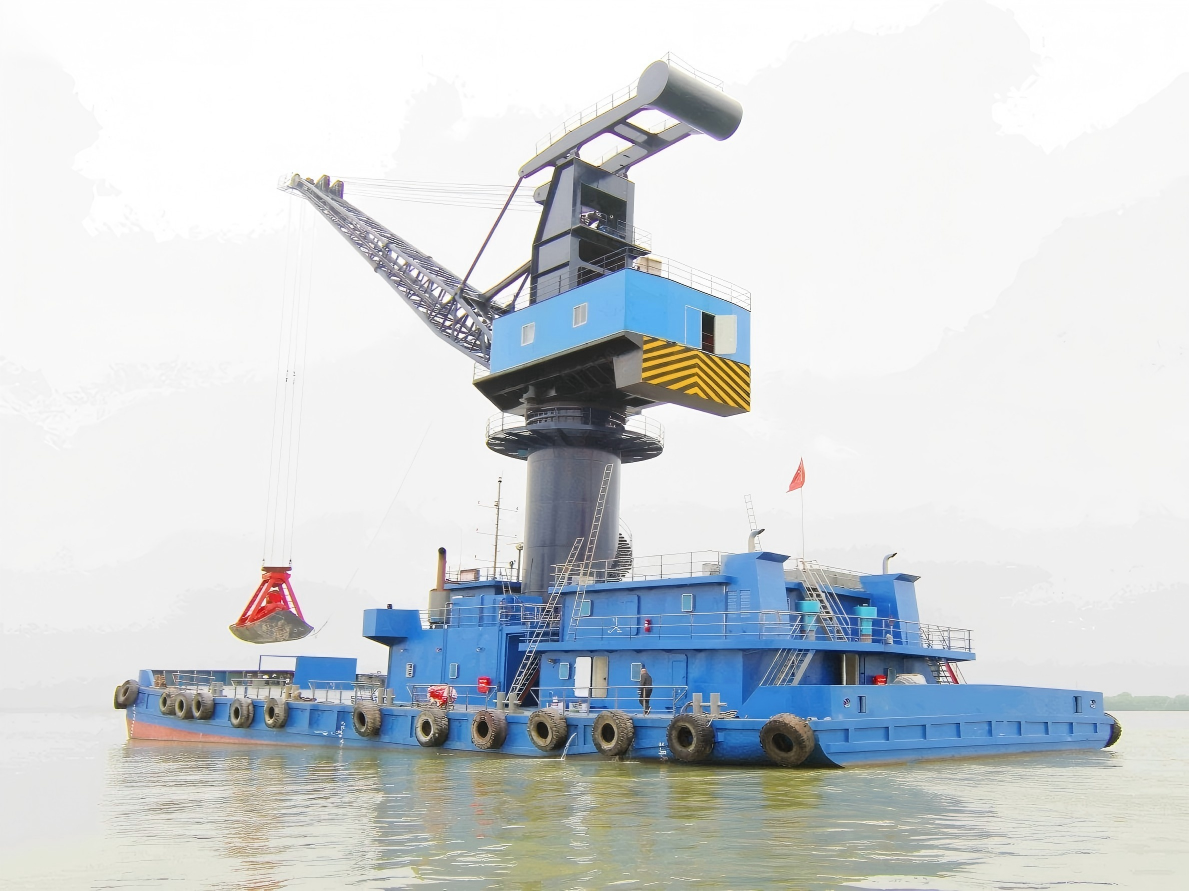
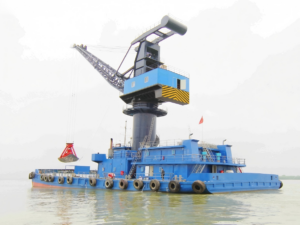
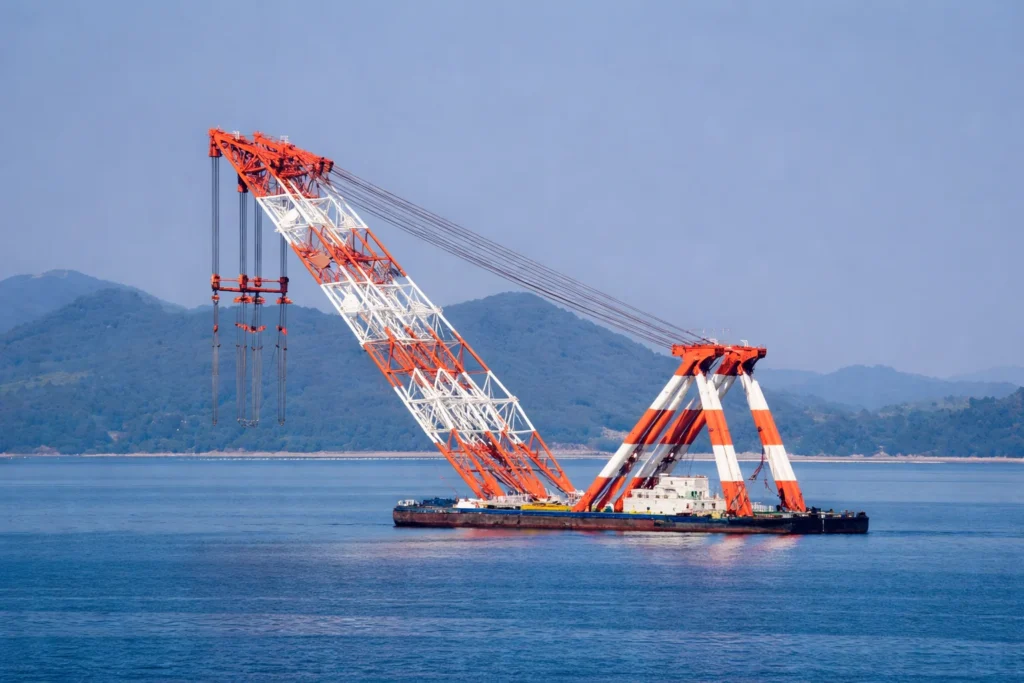
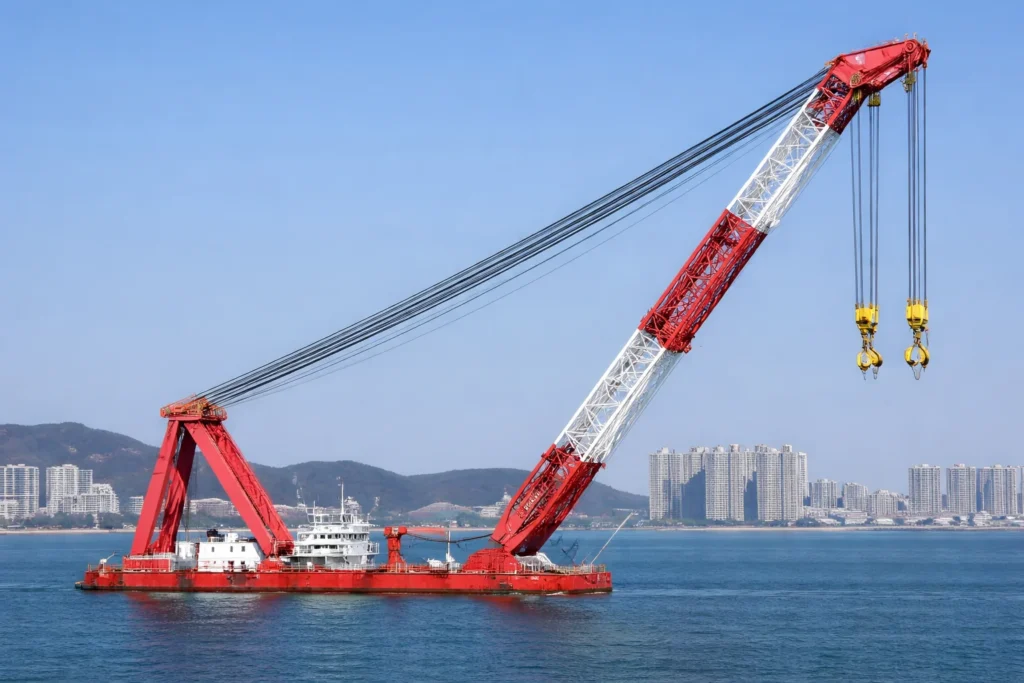
Not all floating cranes are the same category of asset. A floating crane typically refers to a self-propelled or semi-propelled vessel with a crane mounted on a hull designed primarily for lifting operations. A floating crane barge, on the other hand, is a non-self-propelled flat-deck platform fitted with a crane, requiring tugboat assistance for repositioning.
This distinction matters for your total operational cost. If your project site requires frequent repositioning—such as offshore wind installation or multi-location port dredging—a self-propelled floating crane reduces logistics overhead significantly. If your work is concentrated in one harbor basin, a floating crane barge will often deliver better value at a lower acquisition cost.
| Feature | Floating Crane | Floating Crane Barge |
|---|---|---|
| Self-propelled | Yes (typically) | No |
| Acquisition cost | Higher | Lower |
| Mobilization flexibility | High | Moderate (tug-dependent) |
| Deck workspace | Limited | Larger flat deck |
| Ideal use case | Multi-site offshore/port ops | Single-site heavy lift |
Source: International Association of Classification Societies (IACS) Vessel Classification Guidelines, 2022
Crane Type Mounted on the Vessel
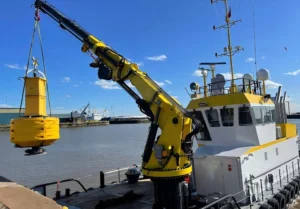
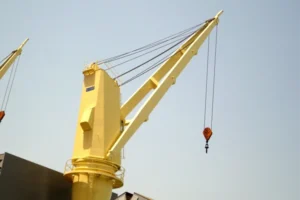
The crane configuration determines what jobs you can actually take on. Common types found on floating cranes for sale include:
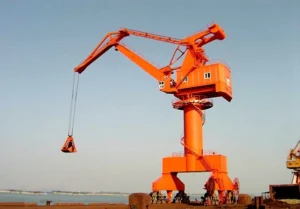
- Revolving deck cranes – most common; 360° slew rotation, suited for general heavy lift
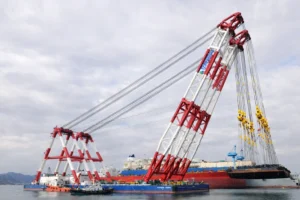
- Sheerleg cranes – fixed-boom, very high lift capacity, often seen on major salvage or bridge construction vessels
- Knuckle boom cranes – growing in popularity for offshore service and subsea installation work due to their precise load control
Before purchasing, confirm the crane type matches your project load profiles. A mismatch here typically cannot be corrected without a costly refit, so this decision deserves careful attention early in the process.
2. Key Technical Specifications to Evaluate
Lifting Capacity and Outreach
The two numbers that dominate every inquiry for a floating crane for sale are Safe Working Load (SWL) and outreach (boom radius). These are interdependent—most cranes deliver maximum capacity at minimum radius, with capacity dropping as the boom extends outward.
Always request the full load chart, not just the headline SWL figure. A crane advertised at 500 tonnes SWL may deliver only 180 tonnes at the working radius your project actually requires. Matching the load chart to your specific lift scenarios is the single most important technical step in the evaluation process.
| Capacity Class | Typical SWL Range | Common Application |
|---|---|---|
| Light duty | 50–200 t | Harbour maintenance, small bridge work |
| Medium duty | 200–500 t | Port construction, pipeline laying |
| Heavy duty | 500–2,000 t | Offshore platform installation, salvage |
| Ultra-heavy | 2,000 t+ | Jacket installation, major offshore ops |
Source: DNV Offshore Standards DNV-OS-H101, 2023 Edition
Hull Stability and Freeboard
Crane lifts on water introduce dynamic stability risks that land-based operations do not face. The hull must demonstrate adequate metacentric height (GM) under maximum lift conditions. Request the vessel’s stability booklet and inclining experiment report as part of your documentation review. For classified vessels, this documentation is maintained and updated by the classification society at each survey interval.
Stability documentation should be current and complete. Gaps in this record create operational and liability exposure that no pricing discount can adequately compensate for.
Crane Drive System
Modern floating cranes for sale increasingly feature electric or electric-hydraulic hybrid crane drive systems, which offer better precision load control, lower fuel consumption, and simpler maintenance schedules compared to traditional full-hydraulic drives. When reviewing specifications, pay attention to the crane control system generation—older control platforms may have limited spare parts availability or require proprietary service contracts that add to long-term operating cost.
3. Regulatory Compliance and Classification
Classification Society Requirements
Any commercially operating floating crane should be classed by a recognized classification society—DNV, Bureau Veritas, Lloyd’s Register, ABS, or equivalent. Classification confirms the vessel and crane have been independently surveyed against published technical standards and are fit for intended service.
When reviewing a floating crane for sale, request the following documentation as a baseline:
- Current Class Certificate (valid, not lapsed)
- Most recent Special Periodical Survey (SPS) report
- Crane test certificates (typically required every 5 years under ISO 4310:2022)
- Any outstanding conditions of class or notations
Classification status is a key cost driver. Vessels fully in class and free of outstanding conditions represent a more predictable total cost of ownership. Factor any gaps in class status into your budget planning, not just the headline purchase price.
Port State Control and Flag State Compliance
If you plan to operate the floating crane internationally or across different port jurisdictions, verify its flag state registration and whether it meets relevant port state control (PSC) requirements. Non-compliant vessels can be detained on arrival, halting your project at the worst possible time.
For operations in European waters, compliance with the Machinery Directive (2006/42/EC) applies to crane equipment. In the US, USCG requirements under 46 CFR govern domestic operations. Confirm the applicable regulatory framework for your operating area before finalizing any floating crane purchase.
4. Pre-Purchase Inspection: What to Verify
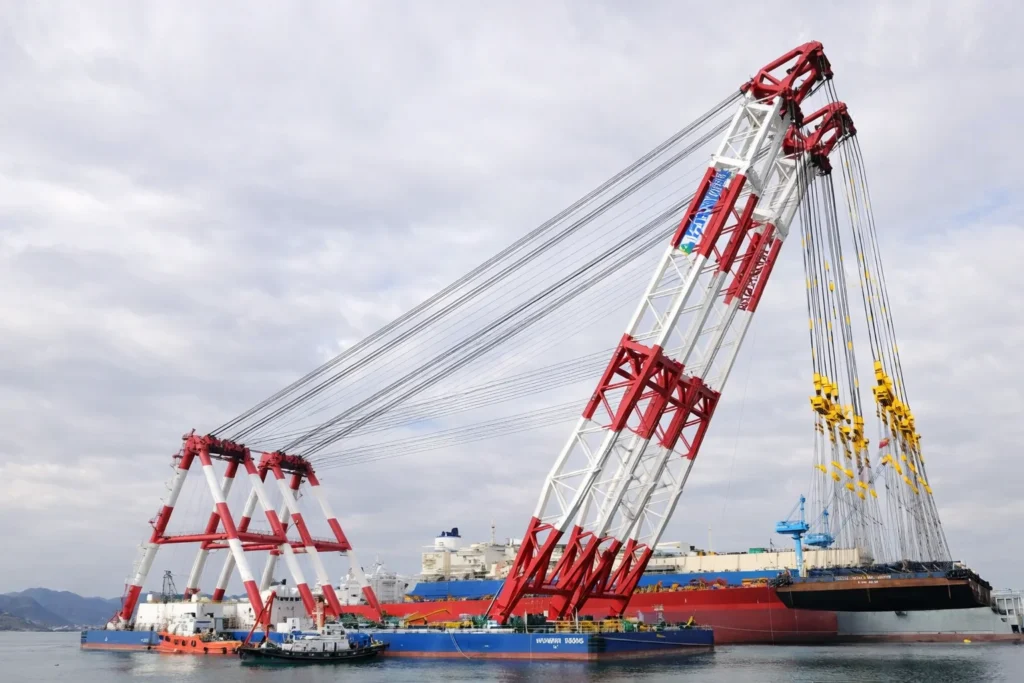
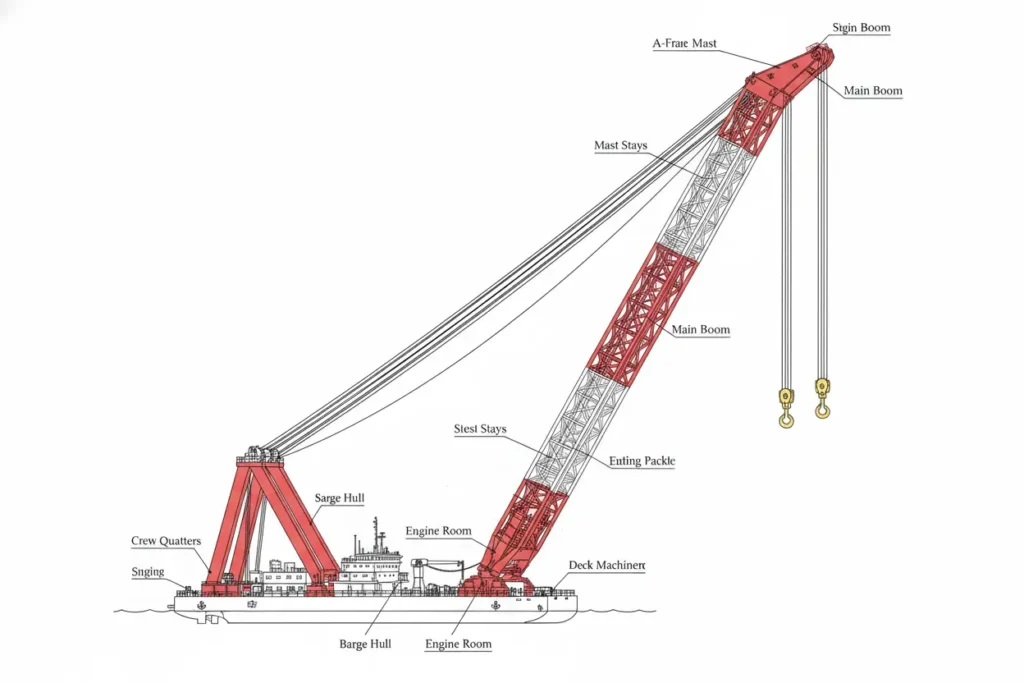
Hull and Structural Survey
Commission an independent condition survey from a qualified marine surveyor before committing to any floating crane barge purchase. Key inspection points include:
- Hull plate thickness measurements (ultrasonic testing) against original scantlings
- Corrosion mapping of keel, bilge, and crane pedestal areas
- Ballast tank condition – internal corrosion in ballast tanks is expensive to remediate and often underestimated
- Crane pedestal and deck reinforcement integrity – the interface between crane structure and hull bears concentrated dynamic loads
An independent survey cost is modest relative to total acquisition cost, and the findings provide a factual basis for your purchasing decision.
Crane Mechanical Inspection
The crane itself warrants a separate technical review beyond what the class survey covers. Key areas to assess include:
- Wire ropes and sheaves – inspect for wear patterns, broken wires, and fatigue indicators
- Slew ring condition – one of the highest-cost single components on a floating crane; replacement is a major undertaking
- Overload protection systems – confirm they are functional, calibrated, and compliant with current standards
- Crane manufacturer documentation – original manuals, parts lists, and service records are important for ongoing maintenance planning
Documentation Completeness
A floating crane for sale with complete, well-organized documentation is not just easier to operate—it is a lower-risk asset. Confirm you receive original builder’s specifications, crane manufacturer documentation, classification survey records, and operational manuals. Incomplete documentation creates ongoing compliance and maintenance challenges that compound over time.
5. Pricing and Cost of Ownership
New Build Floating Crane Pricing
Pricing for floating cranes for sale varies significantly based on configuration, lifting capacity, hull size, and installed crane technology. The table below reflects general indicative ranges for new build vessels based on publicly available shipyard and broker market data.
| Vessel Type | SWL Range | Indicative New Build Price Range (USD) |
|---|---|---|
| Floating crane barge | 100–300 t | $5M – $10M |
| Floating crane barge | 300–800 t | $10M – $15M |
| Self-propelled floating crane | 300–600 t | $15M – $30M |
Source: Indicative ranges based on published new build market data and shipyard quotation benchmarks (RINA, DNV market reports, Clarkson Research), 2022–2023. Figures are estimates only and subject to specification, yard location, and market conditions.
Total Cost of Ownership Considerations
Purchase price is only one component of the true cost of owning a floating crane. Buyers who evaluate total cost of ownership make better decisions than those focused solely on acquisition price. Key ongoing cost factors include:
- Classification and survey costs – periodic surveys, crane re-certification, and flag state requirements
- Crew and certification costs – STCW certification requirements, crane operator licensing
- Insurance – hull and machinery, P&I, and third-party liability coverage for heavy lift operations
- Maintenance reserves – wire rope replacement cycles, slew ring service intervals, drive system maintenance
- Mobilization and port costs – particularly relevant for floating crane barges that require tug assistance
Planning these costs over a 10-year horizon before purchase gives a much clearer picture of the actual investment involved.
6. Practical Buying Process: Step-by-Step
A structured acquisition process reduces risk and ensures you are comparing assets on a consistent, factual basis:
- Define your load requirements – produce a clear load chart requirement and operating profile before approaching sellers
- Identify the right vessel type – self-propelled floating crane or floating crane barge, based on your operational pattern
- Source through reputable channels – engage established marine brokers or work directly with shipyards for new builds
- Request the full documentation package – class certificates, stability booklet, crane test certificates, manufacturer documentation
- Commission an independent survey – hull structural survey plus crane mechanical inspection before any Letter of Intent
- Verify regulatory compliance for your operating jurisdiction and intended flag state
- Model total cost of ownership – budget for classification renewal cycles, crew certification, maintenance reserves, and insurance
Summary: The Smart Buyer’s Checklist
Choosing the right floating crane for sale comes down to matching the asset’s technical specifications—not its marketing description—to your actual operational requirements. The most important steps before any purchase are: obtain and validate the full load chart against your project requirements, commission an independent survey, verify current classification status, and confirm regulatory compliance for your operating area. A disciplined process at the front end of the acquisition saves significantly more than any price negotiation at the back end.

FAQ
Q1: What is the typical design lifespan of a new floating crane barge?
New floating crane barges are typically designed for a 25–35 year operational life, with hull life potentially extendable through steel renewal programs subject to classification society approval. Crane mechanical components—particularly slew rings and wire ropes—will require scheduled replacement multiple times within that service life. When evaluating a floating crane barge for sale, request the manufacturer’s recommended maintenance schedule and replacement intervals for major wear components so you can plan lifecycle costs accurately from the outset.
Q2: Do I need to re-class a floating crane if I change flag state?
Generally, yes. A change of flag state registration typically triggers a classification survey to confirm compliance with the new flag state authority’s requirements. The scope and cost of this process depends on the vessel’s specification, the receiving flag state’s requirements, and any gaps between existing documentation and applicable standards. Before finalizing any floating crane purchase that involves a flag change, consult directly with your intended classification society to define the survey scope and associated costs.
Q3: What is the difference between SWL and rated capacity on floating cranes?
Safe Working Load (SWL) is the maximum load a crane is certified to lift under defined conditions, incorporating a design safety factor. Rated capacity is the manufacturer’s stated maximum load at a given radius. In practice, the two terms are sometimes used interchangeably in commercial listings, but the SWL on the crane’s current test certificate—issued after physical load testing—is the figure that governs legal and operational use. Always request the crane test certificate alongside the load chart when evaluating any floating crane for sale.
Q4: Can a floating crane barge operate without a permanently assigned crew?
Floating crane barges can be unmanned between operations, but active lift operations require at minimum a certified crane operator, a deck supervisor, and safety personnel on board. Exact staffing requirements depend on flag state regulations, classification society requirements, and client-specific project specifications. For any floating crane barge purchase, factor in the cost of sourcing and maintaining appropriately certified personnel—particularly if the vessel requires STCW-certified crew for offshore or international operations.
Q5: What documentation should I always request before buying a floating crane for sale?
At minimum, request: (1) current classification certificate and any outstanding conditions of class; (2) stability booklet and most recent inclining experiment report; (3) crane test certificate (load test, valid 5 years under ISO 4310:2022); (4) most recent hull survey report including ultrasonic thickness measurement data; (5) original crane manufacturer documentation, manuals, and parts lists; (6) flag state registration documents. Complete documentation is not a formality—it is foundational to operating the vessel safely, maintaining class, and managing long-term maintenance costs effectively.