
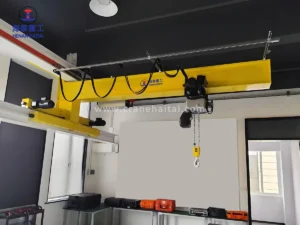
Ordering a crane starts with one document: the specification sheet. Every supplier, engineer, and project manager works from this single reference. When it is complete and accurate, the procurement process runs smoothly. When it is vague or incomplete, misalignments between buyer expectations and supplier output become almost inevitable.
This guide walks through the 12 parameters that belong on every crane specification sheet. Defining each one clearly — before you contact any supplier — gives your team a stronger foundation for comparison, negotiation, and final approval.
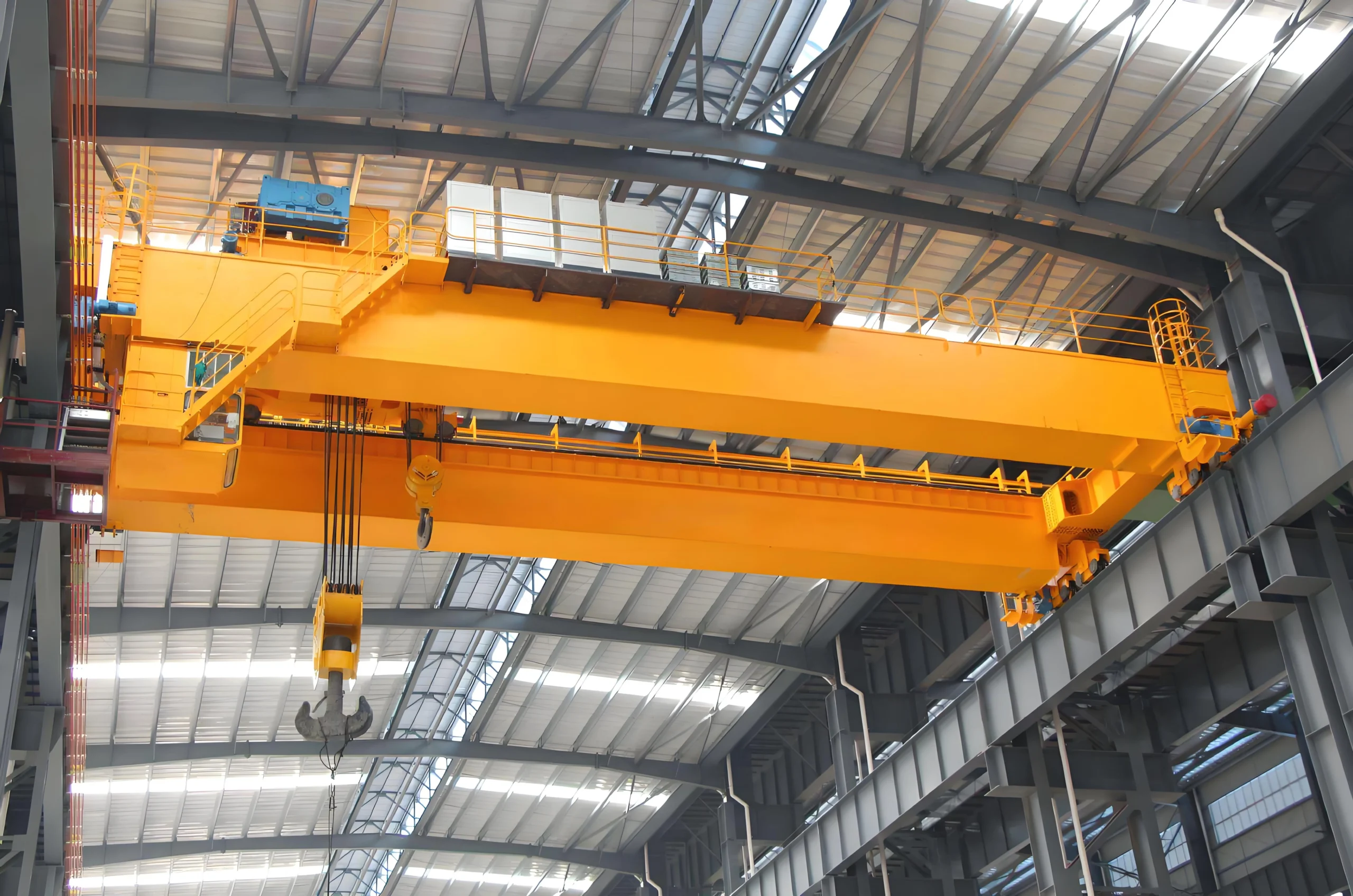
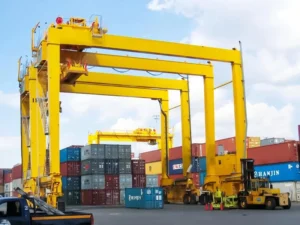
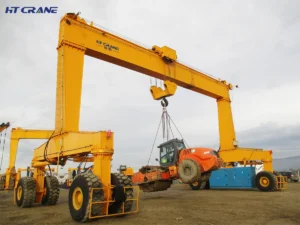
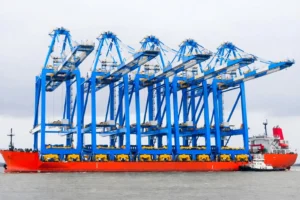
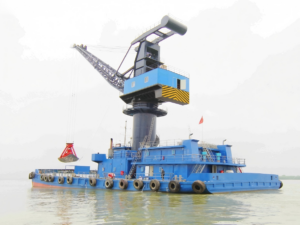
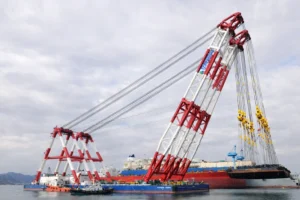
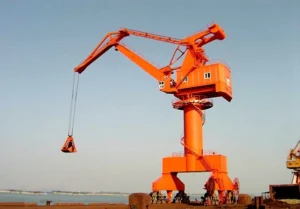
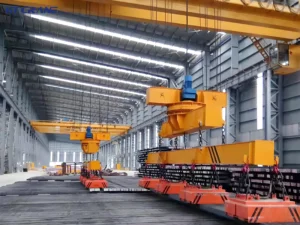
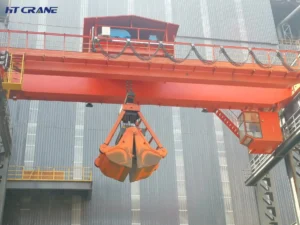
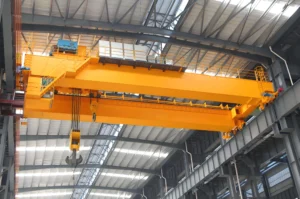
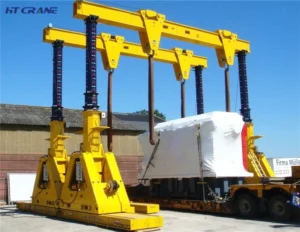
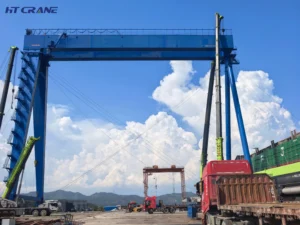
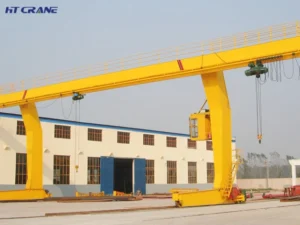
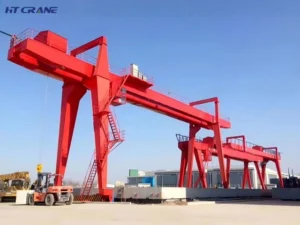
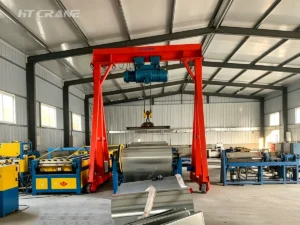
These parameters apply across crane types: overhead bridge cranes, gantry cranes,port cranes, and more.
Why the Specification Sheet Matters More Than the Quote
A crane is engineered to a defined set of conditions. Span, duty cycle, hook height, and environment all influence structural design, component selection, and long-term performance. Suppliers configure and build to the specification they receive.
A well-prepared spec sheet reduces back-and-forth during tendering, supports clearer supplier comparison, and helps your engineering and operations teams stay aligned throughout the project.
The Cost of an Incomplete Spec
Gaps in the specification are a known source of project delays and additional costs in crane procurement. Issues that commonly arise from incomplete specs include:
- Structural modifications to the facility after crane delivery
- Component replacements within the first year due to duty cycle mismatch
- Failed inspections caused by misaligned technical requirements
Identifying these gaps before ordering is significantly less costly than resolving them after manufacturing has begun.
Who Should Own the Spec Sheet
The specification sheet works best as a shared document across three functions — operations, engineering, and procurement — each contributing at a different stage.
Operations defines how the crane will actually be used: shift hours, load frequency, movement patterns, and environmental conditions. This is the most critical input. Without accurate operational data, every other parameter becomes an estimate.
Engineering translates operational requirements into technical specifications: structural loads, duty classification, power supply, and compliance requirements. They confirm what is feasible within your facility constraints.

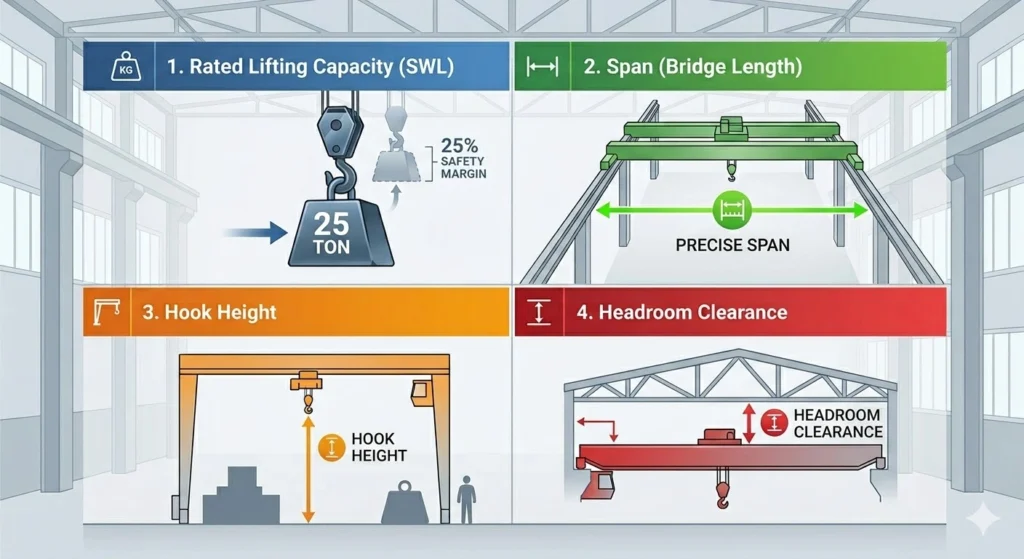
Parameters 1–4: Capacity and Geometry
These four parameters define the physical envelope of your crane. No other specification is valid until these are confirmed.
1. Rated Lifting Capacity (SWL)
Safe Working Load is the maximum load the crane is designed to lift under normal operating conditions. Define this in metric tons or kilograms. Always include a safety margin above your actual maximum load — typically 25% above the heaviest lift you expect to perform.
Do not design to your maximum. Design to your maximum plus realistic growth.
2. Span (Bridge Length)
For overhead and gantry cranes, span is the horizontal distance between runway rails or support legs. Measure this precisely. A span error of even 50mm can require rail repositioning or structural modification. Confirm your facility dimensions before finalizing this number.
3. Hook Height (Lift Height)
Hook height is the vertical distance from the floor to the hook at its highest point. Account for the load itself, rigging hardware, and any obstacles between the crane and the floor. Buyers frequently underestimate this value and lose usable lift height after installation.
4. Headroom Clearance
Headroom is the distance between the top of the crane structure and the ceiling, roof beam, or any obstruction above. Insufficient headroom is one of the most common specification errors in facility retrofits. Confirm building clearances during your initial site survey, not after the crane arrives.
Parameters 5–7: Motion and Speed
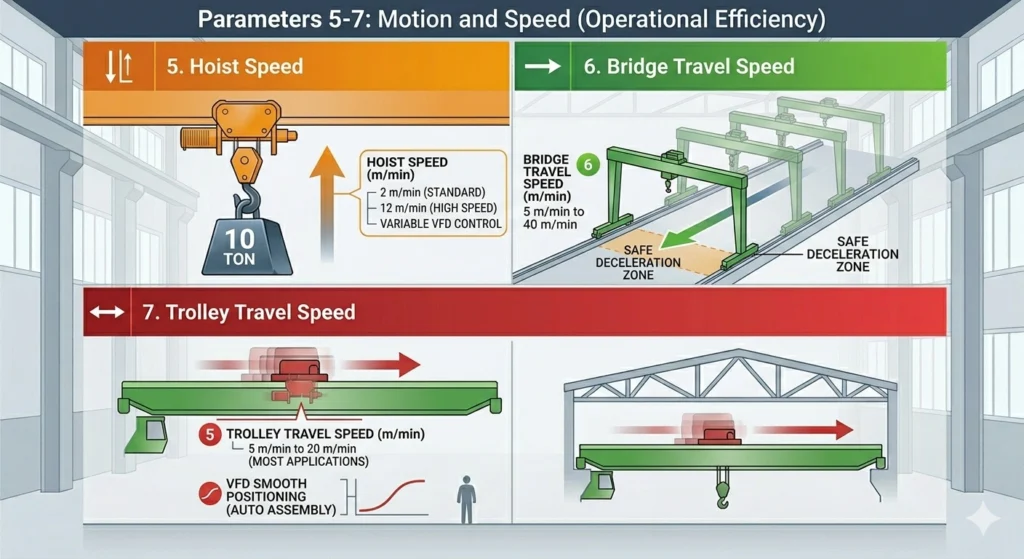
Speed parameters determine operational efficiency. They must match your production cycle, not just the catalogue options.
5. Hoist Speed
Hoist speed is the vertical travel speed of the hook, typically expressed in meters per minute (m/min). Standard industrial hoists range from 2 m/min to 12 m/min for single speed. Variable speed hoists offer finer control and are recommended for precision load placement or sensitive loads.
6. Bridge Travel Speed
Bridge travel speed governs how fast the crane moves along the runway. Higher speeds increase throughput but require longer runway lengths to decelerate safely. Typical range: 5 m/min to 40 m/min. Match this to your facility layout and cycle time requirements.
7. Trolley Travel Speed
Trolley speed controls lateral movement across the bridge. For most manufacturing applications, 5 m/min to 20 m/min is sufficient. High-frequency operations — such as automotive assembly — may require variable frequency drives (VFDs) for smooth positioning.
Crane Specification Sheet:Parameters 5–7: Motion and Speed
Parameters 8–9: Duty Cycle and Classification
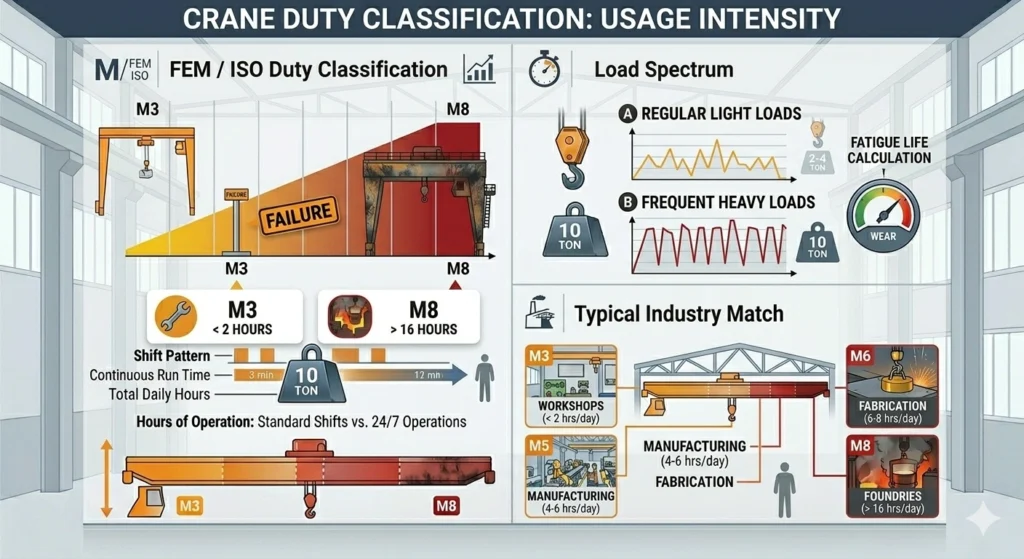
Duty classification is the parameter buyers most commonly get wrong. It is not about how heavy the load is. It is about how often and how intensively the crane operates.
8. FEM / ISO Duty Classification
The Fédération Européenne de la Manutention (FEM) and ISO 4301 standards classify cranes by usage intensity. Classifications range from M1 (light, infrequent use) to M8 (continuous heavy-duty industrial use). Selecting M3 for an application that demands M6 will result in premature mechanical failure.
| Classification | Daily Operating Hours | Typical Application |
|---|---|---|
| M3 | < 2 hours | Maintenance workshops |
| M5 | 4–6 hours | General manufacturing |
| M6 | 6–8 hours | Steel fabrication |
| M8 | > 16 hours | Foundries, steel mills |
9. Load Spectrum
Load spectrum describes the distribution of actual loads lifted over time. A crane rated for 10 tons may regularly lift 2–4 tons. This affects fatigue life calculations. Provide your supplier with realistic load distribution data, not just maximum capacity.
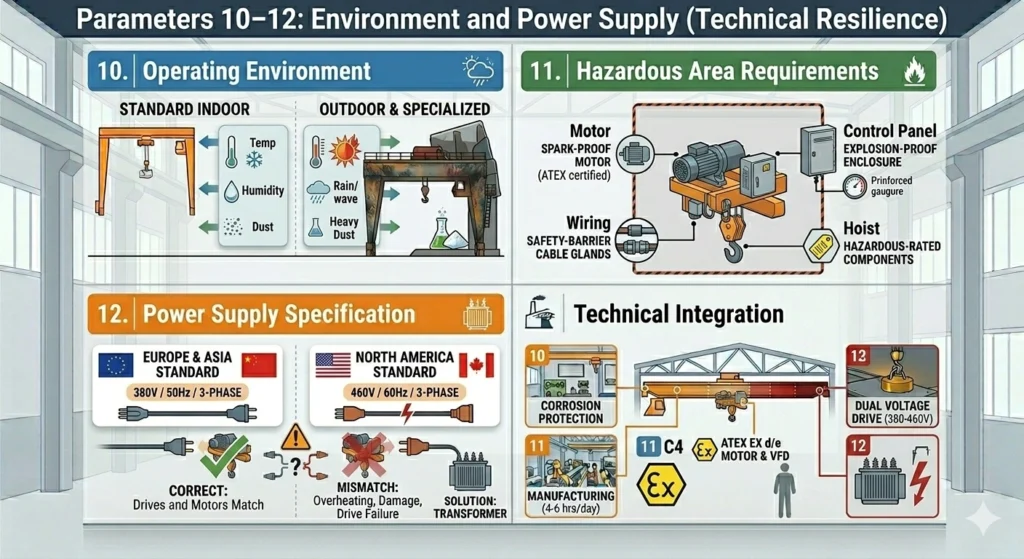
Parameters 10–12: Environment and Power Supply
Environmental and electrical parameters are often added as an afterthought. They should not be. They directly affect material selection, component ratings, and long-term reliability.
10. Operating Environment
Define the ambient temperature range, humidity levels, and any exposure to dust, chemicals, or corrosive substances. Outdoor cranes, marine environments, and chemical processing facilities each require specific protective treatments. EN 13001 and ISO 9374 provide guidance on environmental classifications for crane structures.
11. Hazardous Area Requirements
If your facility handles flammable gases, combustible dust, or explosive materials, your crane must meet ATEX (EU) or IECEx (international) certification requirements. This affects the motor, control panel, wiring, and hoist specifications. Failing to declare this requirement can create serious safety and legal liability.
12. Power Supply Specification
Define your facility’s voltage, frequency, and phase configuration. Common standards include 380V/50Hz/3-phase (Europe and Asia) and 460V/60Hz/3-phase (North America). Mismatched power supply specifications are a straightforward problem with costly consequences — transformers, rewiring, or complete drive replacement.
Before You Send the RFQ
A complete crane specification sheet is not a formality. It is a technical contract between you and your supplier. These 12 parameters protect you from miscommunication, protect your facility from undersized equipment, and protect your budget from change orders.
Review each parameter with your operations team. Confirm your facility dimensions on-site. Classify your duty cycle honestly, based on actual shift patterns. Then — and only then — send your request for quotation.
Suppliers can optimize a complete spec. They cannot fix an incomplete one after production begins.

Frequently Asked Questions
Q1: What is the difference between SWL and WLL on a crane spec sheet?
Safe Working Load (SWL) and Working Load Limit (WLL) are terms often used interchangeably, but they carry different technical origins. WLL is defined by component manufacturers — wire rope, shackles, hooks — and refers to the maximum load a single component is rated to handle. SWL applies to the complete lifting system and accounts for all components working together under defined conditions. For crane procurement, always specify SWL at the system level. Confirm that your supplier’s SWL calculation includes rigging hardware and dynamic load factors, not just the hoist capacity in isolation.
Q2: How do I determine the correct FEM duty classification for my application?
Start with your shift structure. How many hours per day is the crane in operation? Then estimate the average load as a percentage of maximum capacity across a typical shift. FEM 9.511 and ISO 4301-1 provide classification tables based on these two inputs. If you are unsure, consult your operations manager for actual cycle data — not estimated data. Selecting a classification that is one level too low is a common and costly error. When in doubt, move up one classification. The difference in upfront cost is minor compared to the cost of unplanned downtime or early component failure.
Q3: Does span measurement include the end trucks or just the rail–rail distance?
Span for an overhead bridge crane is measured rail centerline to rail centerline — the distance between the running surfaces of the two runway rails. End truck dimensions are separate. Your civil or structural engineer needs both figures: span for the crane itself, and overall bridge length (including end trucks) for runway clearance planning. Always request a certified outline drawing from your supplier before finalizing building dimensions or runway support structures.
Q4: What happens if I underspecify the hook height?
Underspecifying hook height is one of the most common and disruptive errors in crane installation. If the hook cannot reach the required elevation, your operational range is permanently limited. In some cases, the hoist drum can be modified, but this is expensive and may affect warranty. In other cases, the runway rails must be raised — a major structural project. Always add a minimum 300–500mm buffer above your calculated maximum hook requirement to account for rigging hardware, load geometry, and future operational changes.
Q5: Is a crane specification sheet the same as a crane data sheet from the manufacturer?
No. A buyer’s specification sheet defines what you require — it is your input document. A manufacturer’s data sheet or submittal drawing is their output — confirming how their product meets your requirements. Both documents are necessary. Your spec sheet drives the tender. The manufacturer’s data sheet confirms compliance. Review both side by side before issuing a purchase order. Any gap between your specification and the manufacturer’s submittal should be resolved in writing before order placement.