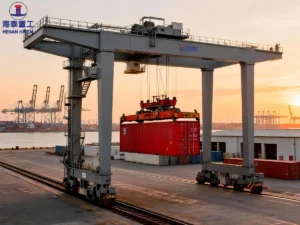
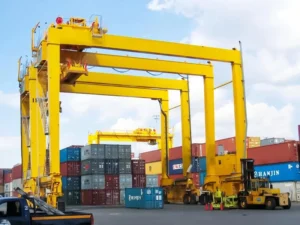
And across the EU, port operators face growing regulatory and commercial pressure to reduce the carbon footprint of their ground-side operations. Meeting all of these demands simultaneously — with equipment that is reliable, efficient, and environmentally compliant — requires careful equipment selection.
This project delivered two sets of straddle carriers to a container terminal operator in the Netherlands, one of Europe’s most active port markets. The equipment was engineered specifically for the operator’s yard layout, throughput requirements, and environmental compliance targets. The result was a measurable improvement in container transfer speed, yard traffic flow, and operational cost efficiency — delivered on schedule and commissioned without disruption to terminal operations.
Customer Background
Terminal Profile
The customer operates a medium-to-large container terminal in the Netherlands, handling a growing volume of containerized cargo from short-sea, feeder, and deep-sea services. The terminal’s geographic position — within one of Europe’s principal logistics corridors — means that vessel turnaround time directly affects supply chain performance for a wide range of European importers and exporters. Slow container transfer operations in the yard have commercial consequences that extend well beyond the terminal itself.
Operational Bottlenecks
Over the preceding years, the terminal’s container throughput had grown steadily. The existing ground transport fleet — a mix of terminal tractors and trailers — had not scaled proportionally. The result was visible: congestion in the container transfer zones between the quay cranes and the yard stacking area, with tractors queuing during peak vessel discharge operations and idle time accumulating in off-peak periods.
Specific Challenges
Several compounding factors made the status quo increasingly difficult to sustain:
- Rising labor costs: Each terminal tractor operation requires a driver and, in many configurations, a separate operator to manage trailer connections and release. Labor intensity per container move was higher than modern automated handling methods require.
- Limited yard space: The terminal’s yard footprint was fixed. Increasing throughput within the same space required more efficient equipment utilization — not simply more vehicles.
- Carbon emission pressure: Dutch port operators fall within the scope of European Union emissions regulations and the broader Dutch national commitment to climate targets. Diesel-intensive ground transport fleets face increasing cost exposure from carbon pricing and regulatory compliance requirements.
- Vessel turnaround targets: Shipping lines operating from the terminal applied commercial pressure to reduce vessel waiting time. Faster, more efficient container transfer from quay to yard was a competitive requirement, not just an operational improvement.
Why the Customer Chose Straddle Carriers
The Straddle Carrier Advantage
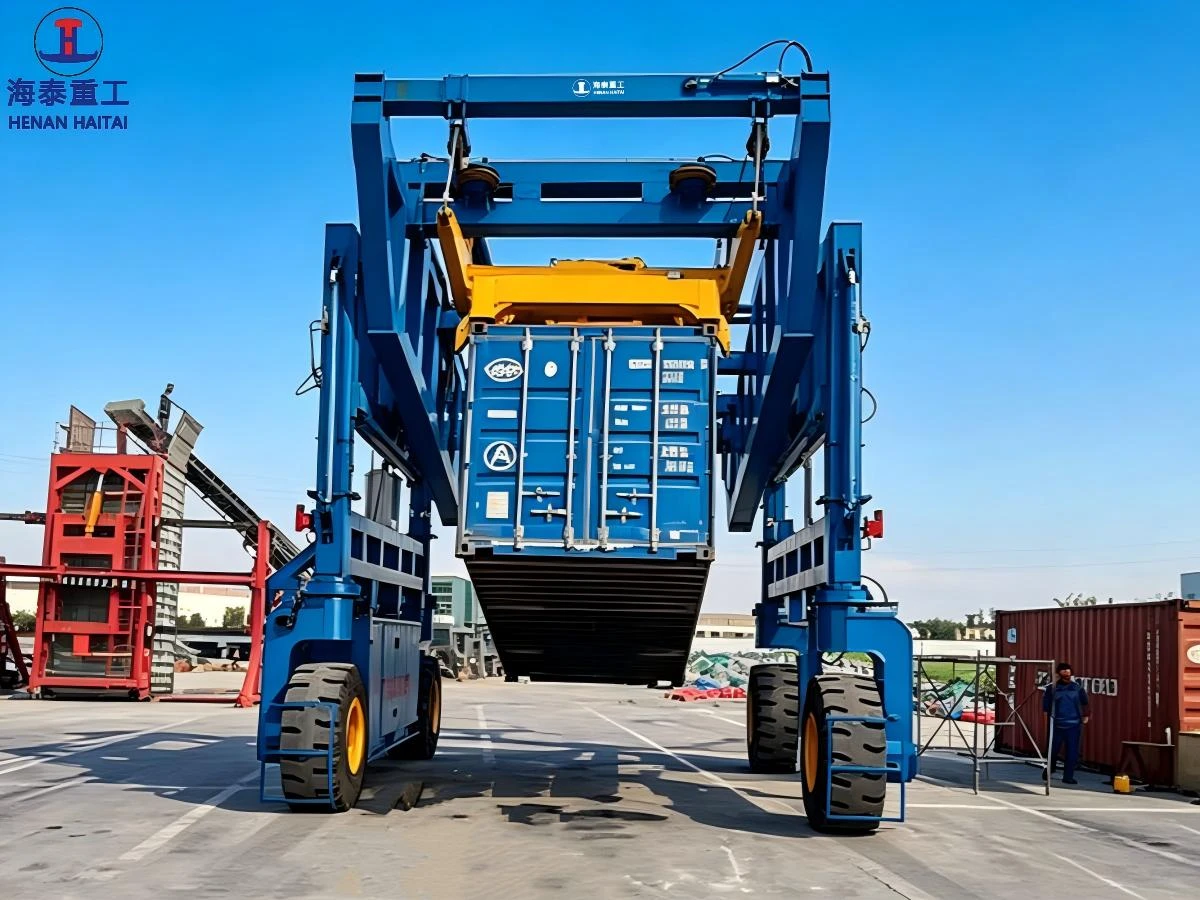
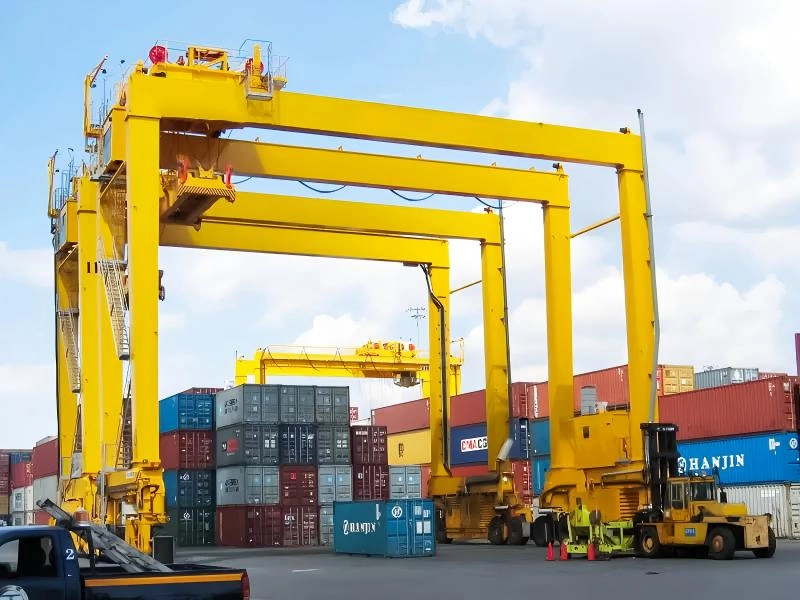
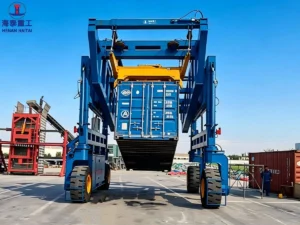
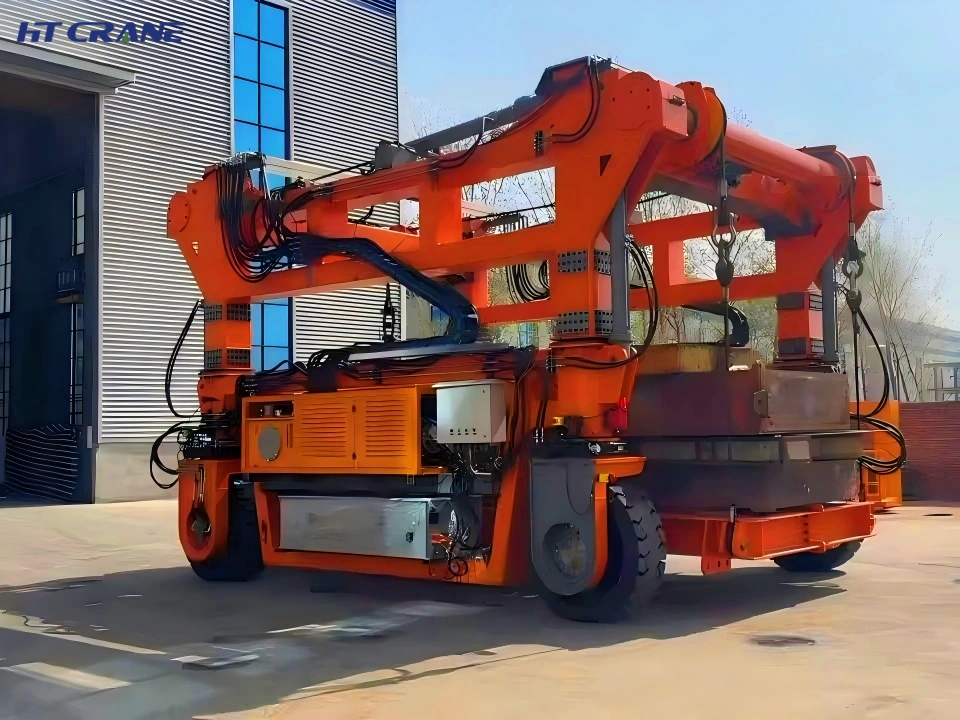
A straddle carrier eliminates that dependency. It lifts the container directly — straddling it — transports it across the yard, and places it in the stack without any intermediate vehicle. One machine, one operation, one cycle. For a terminal with limited yard space and a need for faster transfer cycles, this operational consolidation was the decisive factor.
Additional advantages that drove the selection:
- Flexible routing: Unlike terminal tractors running fixed lanes, straddle carriers can adapt their path to current yard conditions — avoiding congestion and optimizing routing in real time
- Independent stacking: The ability to stack containers two to three high without a separate crane increases storage density within the existing yard footprint
- Reduced traffic: Fewer vehicle interactions per container move simplifies yard traffic management and reduces the risk of ground-level incidents
- Scalability: Two units provide operational redundancy — if one is undergoing scheduled maintenance, the other maintains yard coverage
Fit for European Port Requirements
European port operators increasingly specify equipment that can integrate with terminal operating systems, support data-driven yard management, and meet environmental standards without requiring continuous regulatory exceptions. Straddle carriers — particularly modern diesel-electric and hybrid configurations — meet these requirements more cleanly than expanded tractor fleets.
Customized Technical Solution
Drive System and Emissions
The two units were configured with diesel-electric hybrid drive systems. In a diesel-electric configuration, the engine drives a generator rather than a mechanical drivetrain — electric motors handle traction and lifting. This allows the engine to operate at its most efficient load point regardless of the vehicle’s current demand, reducing fuel consumption during the variable-load cycles typical of yard operations. Regenerative energy recovery during container lowering operations feeds power back into the onboard system, further reducing net energy use.
Key Technical Features
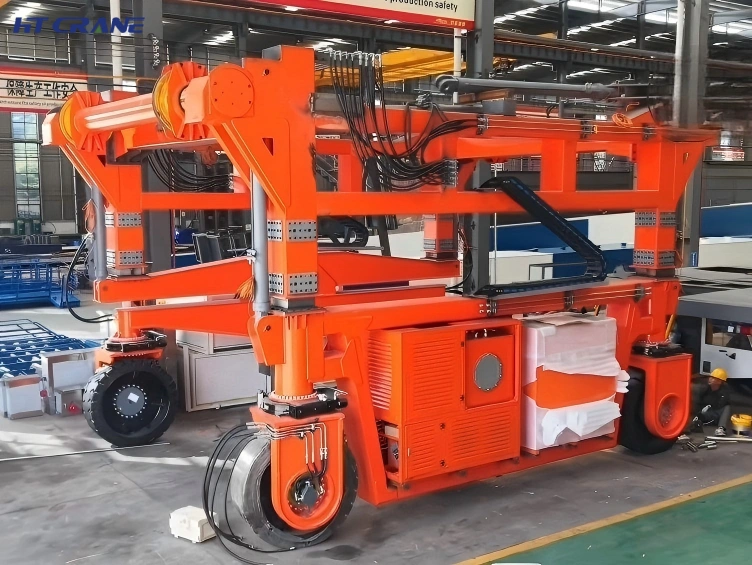
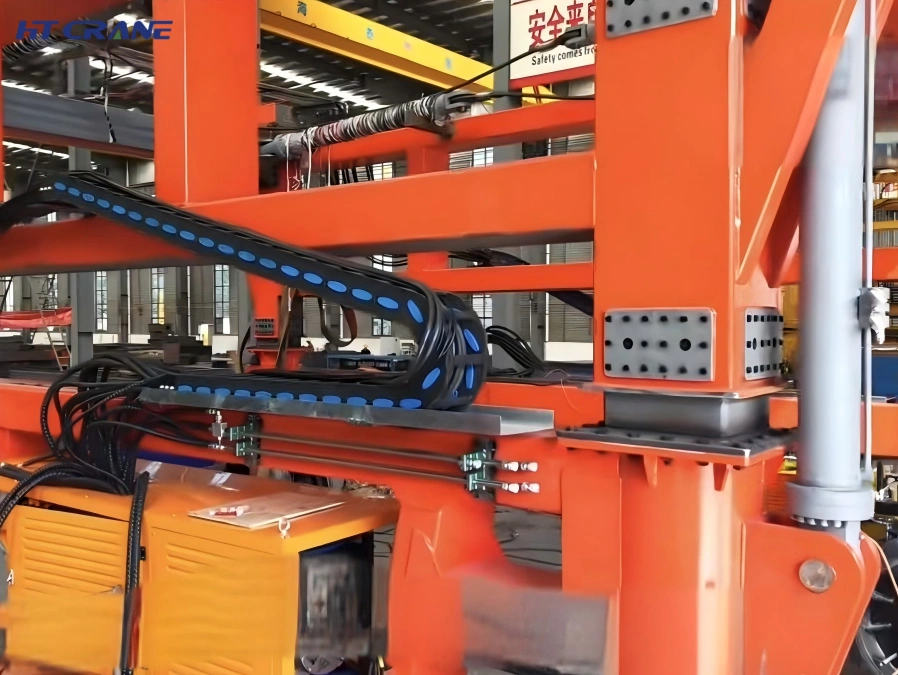
- Heavy-duty lifting capacity: Rated for the full range of standard ISO containers, including fully laden 40-foot units, with capacity headroom for operational safety margins
- Intelligent steering system: Multi-mode steering for tight yard navigation, including crab steering for lateral repositioning in confined spaces
- Anti-sway technology: Electronic load stabilization during travel and placement, reducing mis-picks and improving stack accuracy
- Automated monitoring system: Onboard telematics tracking engine performance, lift cycles, fuel consumption, and fault conditions in real time
- Reinforced anti-corrosion protection: Multi-layer coating system for coastal port environments with salt-laden air exposure
- Energy-saving control technology: Drive management logic that reduces engine output during low-demand phases — traveling without load, waiting for the next pick
- Ergonomic operator cabin: Climate-controlled, low-vibration cabin with optimized visibility for safe yard operation
- LED safety lighting: High-output LED work lighting for low-visibility conditions and night operations
Compliance
Both units were manufactured to CE certification requirements under the EU Machinery Directive and produced in accordance with ISO quality management standards. The electrical systems were designed to European safety specifications, and all documentation was provided in formats compatible with Dutch regulatory requirements.
Smart Port Features and Automation Technology
Intelligent Positioning Assistance
Each unit is equipped with a positioning guidance system that assists operators during container pickup and landing. Visual and audio cues guide precise spreader alignment over the container corner castings — reducing cycle time, minimizing mis-picks, and lowering the skill threshold for consistent high-quality operation. In a terminal working to reduce reliance on highly experienced operators, this system directly supports workforce flexibility.
Real-Time Equipment Monitoring
The onboard telematics system logs operational data continuously. Engine hours, fuel consumption per cycle, lift frequency, hydraulic system pressure, and fault event records are all accessible to the terminal’s maintenance team in real time. This data supports condition-based maintenance scheduling — addressing developing issues before they cause operational disruptions, rather than following fixed calendar-based service intervals.
Energy-Saving Operation
Drive management reduces engine load automatically during low-demand operating phases. Across full operating shifts, this translates to measurably lower fuel consumption per container move compared to conventional diesel-mechanical alternatives. Lower fuel burn directly reduces both operating cost and CO₂ emissions per TEU handled — a commercially and regulatory-relevant outcome for a European operator.
Safety Systems
- Anti-collision detection: Proximity sensors on all sides alert operators to obstructions in the travel path and adjacent work areas
- Overload monitoring: Load sensors prevent hoisting operations above rated capacity, protecting both the equipment and the load
- Emergency stop: Independent emergency stop accessible from the operator station and from ground level, with automatic safe state engagement
Designed for European Port Operations
Continuous Heavy-Duty Operation
Dutch port terminals operate around the clock — often seven days a week across multiple vessel call windows. The straddle carriers were specified for continuous duty-cycle operation rather than occasional or shift-limited use. Drive systems, structural components, and wear parts were selected for the high-frequency lifting cycles of a commercial terminal, not a lighter-duty industrial application.
Coastal Environment Durability
The Netherlands’ coastal and riverside port environments expose equipment to persistent moisture, salt-laden air, and the mechanical wear of high-frequency yard operations. The corrosion protection system — abrasive blast cleaning, zinc-rich primer, epoxy intermediate coat, polyurethane topcoat — was specified for the extended maintenance intervals that a busy terminal environment requires. Sealing specifications on electrical and hydraulic components were selected for the ambient humidity conditions of the operating site.
Environmental and Noise Compliance
Dutch environmental regulations and local planning conditions in port areas impose noise emission limits on yard equipment, particularly during extended operating hours. The diesel-electric drive system — which runs the engine at a steady, low-speed load point rather than varying it with demand — produces lower noise levels than conventional diesel-mechanical alternatives under load. This compliance advantage reduces the regulatory risk associated with future noise standard changes.
Operational Results After Commissioning
Following commissioning and the initial operational period, the terminal reported improvements across several measurable dimensions:
- Faster container transfer cycles: The consolidation of transport and stacking into a single vehicle operation reduced average container move time, increasing the number of moves per shift without additional labor
- Improved yard traffic flow: Fewer vehicle interactions per container move reduced congestion in the transfer zone and simplified yard traffic management during peak discharge operations
- Reduced fuel consumption: The diesel-electric drive system delivered lower fuel consumption per container move compared to the previous tractor fleet on equivalent transfer tasks
- Lower maintenance frequency: Condition-based maintenance scheduling, enabled by the telematics system, reduced unplanned downtime events in the months following commissioning
- Reduced labor intensity: Combining transport and stacking in one operation reduced the number of personnel required per container move
- Improved operational safety: The anti-collision system and overload monitoring contributed to a cleaner safety record in the transfer zone during the initial operational period
The customer confirmed that both units performed as specified through the initial operating period and indicated interest in further equipment cooperation for planned terminal capacity expansion.
Growing Demand for Smart Straddle Carriers in European Ports
Port Automation Is Becoming Standard
The European port sector is in an active transition toward automated and semi-automated yard operations. Labor cost pressures, throughput demands, and the commercial attractiveness of data-driven terminal management are all accelerating this shift. Straddle carriers with integrated telematics, positioning assistance, and automation-ready control architectures fit naturally into this transition — delivering efficiency gains without the full infrastructure investment that fixed automation systems require.
Low-Carbon Operations Are a Regulatory and Commercial Priority
The EU’s Fit for 55 framework, European Green Deal commitments, and national carbon pricing schemes in major port states are creating real cost exposure for terminals with high-emission equipment fleets. Hybrid and electric straddle carriers reduce that exposure directly. For terminals renewing equipment, the choice between diesel-only and low-emission alternatives is increasingly a financial risk management decision, not just an environmental preference.
Electrification Is the Direction of Travel
Fully electric straddle carriers — powered by battery or grid connection — are entering commercial service at European terminals. The diesel-electric hybrid systems in this project represent a practical intermediate step: meaningful emissions reduction without the charging infrastructure investment that full electrification currently requires at most terminals. As port power infrastructure develops, the transition from hybrid to full electric becomes more accessible.
Conclusion
This project demonstrates what a purpose-engineered straddle carrier solution delivers in a real European port environment. Two units, configured specifically for a Dutch terminal operator’s yard layout, throughput requirements, and environmental compliance targets, were manufactured, certified, exported, and commissioned on schedule — and produced measurable improvements in container handling efficiency and operating cost from the first weeks of operation.
For container terminal operators evaluating ground transport and stacking equipment — particularly in the European market where efficiency, automation readiness, and emissions compliance are all active procurement criteria — a modern straddle carrier solution offers a technically proven and commercially practical path to improved terminal performance.
Request a customized straddle carrier solution built around your terminal’s container mix, yard layout, and throughput targets. Contact us for smart port equipment consultation — our engineering team works with terminal operators to develop specifications that match real operational requirements, not standard product configurations. Discuss your container terminal project with our team and receive a tailored evaluation of how straddle carrier integration fits your operational development plans.

Frequently Asked Questions
What container sizes can a straddle carrier handle?
Modern straddle carriers are designed to handle the full range of standard ISO containers: 20-foot and 40-foot lengths, standard and high-cube heights, and both dry and refrigerated (reefer) units. The spreader — the lifting frame that engages the container’s corner castings — is typically adjustable or interchangeable to accommodate different container lengths. Reefer containers require additional electrical connection capability on the spreader for temperature maintenance during yard dwell; this is a specification option that must be confirmed during procurement if reefer handling is part of the terminal’s container mix.
How does a straddle carrier compare to a reach stacker for yard operations?
A reach stacker lifts containers using a telescopic boom and spreader — similar in concept to a large forklift. It is highly maneuverable and suited to smaller yards or operations where flexibility is more important than throughput. A straddle carrier straddles the container and lifts it through its frame structure, enabling both transport and stacking in a single vehicle. For higher-throughput terminals where container transfer speed and stacking density are the priority, straddle carriers deliver better cycle time efficiency. Reach stackers are more common in smaller depots, rail terminals, and operations where a single machine serves multiple functions rather than a dedicated transfer role.
What maintenance does a straddle carrier typically require?
Straddle carrier maintenance covers the drive system (engine, generator, and electric motors in a diesel-electric configuration), hydraulic system (fluid, filters, cylinders, and hoses), spreader mechanism, tyres, and electrical and control systems. Modern units with telematics monitoring support condition-based maintenance scheduling, reducing unplanned downtime by identifying developing faults before they cause operational failures. Tyre management is a significant maintenance cost in high-duty straddle carrier operations — tyre life depends on yard surface quality, load intensity, and operating speed. Planned maintenance intervals and tyre replacement cycles should be factored into the total cost of ownership calculation during procurement.
Are straddle carriers suitable for automated terminal operations?
Yes — modern straddle carriers can be integrated into semi-automated and automated terminal operating systems. Semi-automated configurations retain a human operator for the final container pick and placement movements while automating travel routing and positioning assistance. Fully automated straddle carriers — operating without human operators — are in service at several European terminals. The control architecture of the crane must be designed for automation integration from the outset; retrofitting automation onto equipment not originally designed for it is technically complex and expensive. Terminals planning future automation should specify automation-ready control systems when procuring new straddle carriers, even if full automation is not planned immediately.
How long does straddle carrier commissioning typically take after delivery?
On-site commissioning of a straddle carrier — including mechanical and electrical checks, system startup, operational testing under load, telematics integration, and operator training — typically takes five to ten working days per unit for a standard delivery to a prepared site. Projects involving integration with the terminal’s operating system, customized telematics platform connection, or site-specific configuration adjustments may extend this timeline. The commissioning schedule depends on site readiness, availability of terminal staff for operator training, and whether any configuration adjustments are identified during arrival inspection. A realistic commissioning schedule should be agreed with the supplier before delivery is confirmed.