Singapore stands as one of the world’s busiest ports, handling millions of containers annually with relentless efficiency. Port operators and terminal managers face constant pressure to minimize vessel turnaround times while ensuring safety, reliability, and cost-effectiveness. Selecting the right STS crane manufacturers is critical—wrong choices can lead to frequent breakdowns, high maintenance costs, and lost productivity in a high-volume environment.
STS (ship-to-shore) cranes form the backbone of container handling at quayside. They must deliver fast hoisting speeds, precise trolley movement, and robust performance under tropical conditions, heavy loads, and continuous operation. Many procurement teams struggle with balancing upfront investment against long-term reliability, energy efficiency, and compliance with international standards.
This guide cuts through the complexity. It highlights the top 5 STS crane manufacturers active or supplying in the Singapore market, based on delivery records, technical capabilities, and real-world performance in Southeast Asia. You’ll find practical selection criteria, comparison data, case examples, and actionable advice for your next procurement decision.
Whether you’re upgrading existing equipment or planning a new berth expansion, these insights help you choose STS crane manufacturers that align with Singapore’s demanding port environment. Let’s explore what sets the leaders apart and how to make an informed choice.
Why STS Cranes Matter for Singapore Ports
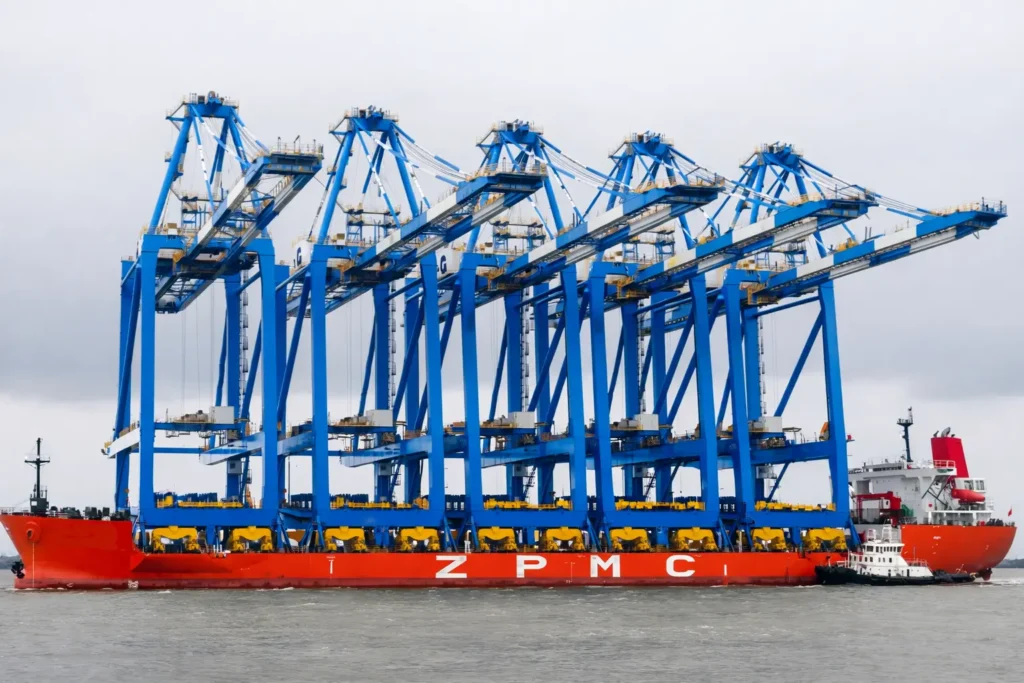

Singapore’s strategic location drives massive container throughput. Terminals require cranes that handle ultra-large vessels with outreach reaching 22+ container rows, twin-lift capabilities up to 65t or more, and high speeds for rapid loading/unloading.
Common pain points include downtime from mechanical failures, energy consumption in 24/7 operations, and integration with automation systems. Leading STS crane manufacturers address these with advanced anti-sway technology, energy-regenerative drives, and smart diagnostics.
Modern STS cranes typically feature:
- Lifting capacity: 50-65t single / twin-lift options
- Outreach: 60-75m for Post-Panamax and larger vessels
- Hoist speeds: 90 m/min loaded, 180 m/min empty
- Trolley speeds: 200-270 m/min
Compliance with standards such as ISO, FEM/EN 13001, and local MOM (Ministry of Manpower) safety requirements is non-negotiable. Recent data from 2024 deliveries show average specifications trending toward higher speeds and automation readiness.
Choosing the right manufacturer reduces total cost of ownership (TCO) through better reliability and lower lifecycle costs.
Key Factors When Selecting STS Crane Manufacturers in Singapore
Before diving into the top players, consider these practical criteria:
- Proven track record in regional ports — Especially deliveries to PSA Singapore or similar high-throughput terminals.
- Technical specifications matching your vessel mix and throughput targets.
- After-sales support — Local service presence, spare parts availability, and response times in Singapore.
- Energy efficiency and automation features — To meet sustainability goals and future-proof operations.
- Compliance and certification — Including CE, ISO, and classification society approvals where relevant.
Procurement teams should request detailed fatigue analysis, wind load data for local conditions, and references from similar Southeast Asian installations.
Top 5 STS Crane Manufacturers Supplying Singapore
Here are five prominent STS crane manufacturers with strong relevance to the Singapore market, drawn from global delivery records and regional projects.
1. ZPMC (Shanghai Zhenhua Heavy Industries)
ZPMC dominates global STS deliveries with high-volume production and large-scale automated solutions. The company has supplied significant equipment to Singapore’s mega port developments, including advanced dual-trolley models.
Strengths: Massive outreach options (up to 73m+), heavy-lift capabilities, and integrated automation systems. Their cranes often feature high trolley speeds (up to 240-270 m/min) and strong structural design for long service life.
Typical specs (2024 deliveries reference):
- Lift capacity: 65t under spreader (twin-lift capable)
- Outreach: 65-73m
- Hoist speed: 90/180 m/min
- Trolley speed: 240 m/min
ZPMC excels in cost-effective, high-capacity solutions for busy hubs like Singapore.
2. Konecranes
Konecranes brings Finnish engineering precision with a focus on smart port technologies. The company maintains a presence in Singapore and emphasizes reliability through purpose-built components and digital monitoring systems like TRUCONNECT.
Their STS cranes are known for low maintenance needs and high uptime. Features include advanced anti-collision, auto-landing, and energy-efficient drives.
Typical specs:
- Rail span: 30-35.5m
- Outreach: up to 75m
- Hoist speeds: 90 m/min loaded
- Trolley speeds: up to 300 m/min in advanced models
Konecranes suits terminals prioritizing predictive maintenance and automation integration.
3. Liebherr
Liebherr offers premium German/Swiss quality with modular designs and excellent energy efficiency. Their lattice boom structures provide rigidity while keeping weight optimized.
Liebherr cranes perform well in variable weather and deliver precise control. They support single and twin-lift operations with strong safety features.
Typical specs:
- Outreach: 40-73m+
- Lift height: 30-54m+
- Hoist speed: 60-90 m/min loaded
- Trolley speed: 180-240 m/min
Ideal for operators seeking durability and lower operating costs over decades.
4. Sany
Sany has gained traction in Singapore with direct deliveries, including orders for multiple 65t single-lift STS cranes to PSA terminals in recent years.
The manufacturer combines competitive pricing with solid performance and growing automation capabilities.
Typical specs:
- Capacity: 65t
- Hoist speed: 90 m/min full load / 180 m/min empty
- Trolley: up to 240 m/min
- Gantry travel: appropriate for quay operations
Sany provides a strong balance of value and reliability for expanding terminals.
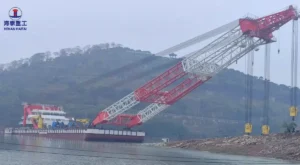
5. Haitai Crane (Henan Haitai Heavy Industry)
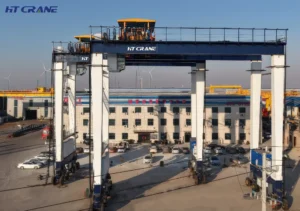
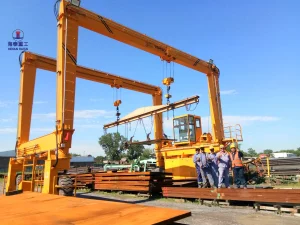
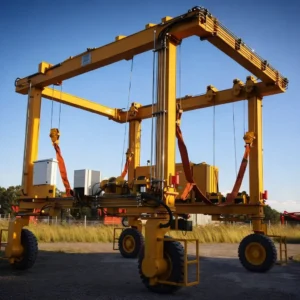
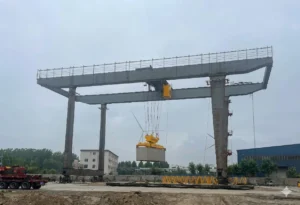
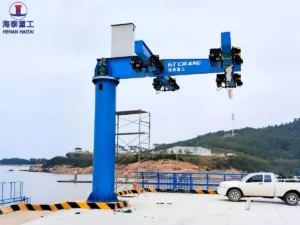
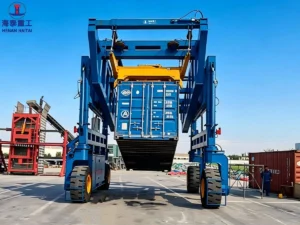
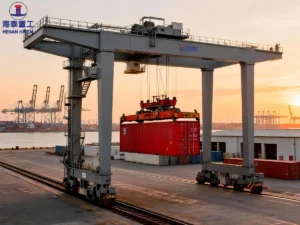
Haitai Crane stands out as a specialized Chinese manufacturer focusing on customized port and marine lifting solutions, including rubber tyred gantry cranes and related equipment. For STS applications, they offer tailored designs backed by classification society certifications (CCS, ABS, BV, etc.).
With expertise in deck machinery and port cranes, Haitai emphasizes intelligent monitoring, anti-collision systems, and efficient hydraulic/electric configurations. Their approach suits terminals needing flexible, cost-effective solutions with good local adaptation.
Haitai supports projects requiring reliable performance in Southeast Asian conditions, with focus on maintenance-friendly designs.
STS Crane Comparison Table
The table below compares typical specifications from recent models (data drawn from manufacturer documentation and 2023-2025 industry surveys; actual specs vary by custom order).
| Manufacturer | Typical Capacity | Outreach (m) | Hoist Speed (m/min loaded/empty) | Trolley Speed (m/min) | Key Strength | Standards |
|---|---|---|---|---|---|---|
| ZPMC | 65t (twin) | 65-73+ | 90/180 | 240+ | High volume & automation | ISO, FEM, local compliance |
| Konecranes | 65t | up to 75 | 90/180 | 240-300 | Smart diagnostics | EN 13001, CE equivalents |
| Liebherr | 65t (twin) | 40-73 | 60-90/150+ | 180-240 | Durability & efficiency | FEM, ISO |
| Sany | 65t | 60-70 | 90/180 | 240 | Value & regional deliveries | ISO, GB |
| Haitai | Custom 50-65t | Project-specific | 80-90/160-180 | 200-240 | Customization & monitoring | CCS, ABS, BV, ISO |
Sources: Aggregated from PEMA surveys 2024, manufacturer technical docs, and port project announcements (2023-2025). Always verify with supplier for exact project requirements.
Note: Wheel loads, power supply, and automation options should be matched to your quay design.
Practical Tips for Procurement and Maintenance
- Define your needs clearly — Calculate required outreach based on largest expected vessels and target moves per hour.
- Evaluate TCO — Factor in energy use, spare parts, and service contracts. Energy-regenerative systems can cut electricity costs significantly.
- Insist on local support — Singapore suppliers or authorized service partners reduce response times.
- Plan for automation — Future-ready features like anti-sway and OCR integration lower labor needs.
- Maintenance best practices — Schedule regular inspections of wire ropes, spreaders, and electrical systems. Use manufacturer CMS (Crane Management Systems) for predictive analytics.
For STS crane manufacturers like those listed, request FAT (Factory Acceptance Test) witnessing and comprehensive training for your operators.
Conclusion and Next Steps
Selecting from the top 5 STS crane manufacturers in Singapore involves weighing capacity, speed, reliability, and support. ZPMC leads in scale, Konecranes and Liebherr in smart technology, Sany in regional value, and Haitai in customized port solutions.
Prioritize suppliers with Singapore project experience and strong after-sales networks. Conduct site visits, review fatigue life calculations, and compare lifecycle costs before finalizing.
Ready to move forward? Contact shortlisted STS crane manufacturers with your detailed specifications. Many offer feasibility studies tailored to Singapore port conditions.
For more resources on port equipment selection, consider industry reports from PEMA or consult local maritime authorities.
FAQ
Q1: What is the typical lifespan of an STS crane from top manufacturers?
Well-maintained STS cranes from leading manufacturers can operate reliably for 25-40 years. Factors include operating cycles (often 4+ million), environmental conditions in Singapore, and adherence to preventive maintenance. Regular structural inspections and component replacements (e.g., ropes, wheels) extend service life. Ask manufacturers for fatigue analysis reports based on your expected throughput.
Q2: How do I choose between single-lift and twin-lift STS cranes?
Twin-lift configurations boost productivity by 30-50% in high-volume terminals by handling two 20ft containers simultaneously. Choose twin-lift if your vessel mix and quay layout support it. Single-lift may suffice for feeder operations or space-constrained berths. Evaluate your annual moves and vessel profiles with the manufacturer.
Q3: What maintenance is critical for STS cranes in tropical climates like Singapore?
Focus on corrosion protection for steel structures, regular lubrication of moving parts, and electrical system checks due to humidity and salt air. Monitor hoist and trolley ropes closely. Many modern cranes include remote diagnostics to flag issues early. Establish a service contract with the supplier or authorized partner for fast spare parts access.
Q4: Are there local regulations in Singapore affecting STS crane procurement?
Yes—comply with MOM safety requirements for lifting equipment, including operator training and periodic inspections. Cranes must meet structural and electrical standards suitable for port use. Work with manufacturers familiar with Singapore approvals to streamline certification.
Q5: Can smaller or specialized manufacturers like Haitai supply competitive STS solutions?
Yes. Companies like Haitai offer flexible customization, intelligent safety features, and competitive pricing while meeting international certifications. They suit terminals needing tailored outreach or integration with existing systems. Always request references and technical validation for your specific application.