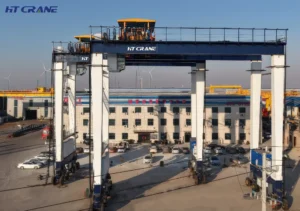
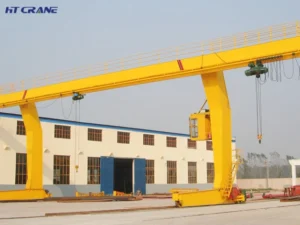
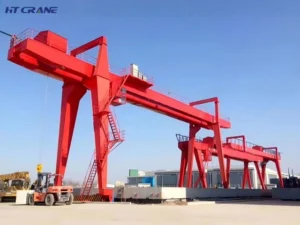
Procuring a ship to shore crane is one of the most significant capital decisions a port authority or terminal operator will make. These are complex, large-scale structures — not off-the-shelf equipment. A mismatch between crane specification and operational need can result in years of underperformance, costly retrofits, or safety liabilities. This guide is designed to help procurement teams, port engineers, and terminal planners understand the core selection criteria, ask the right questions, and approach the purchasing process with confidence.
What Is a Ship to Shore Crane and How Does It Work?
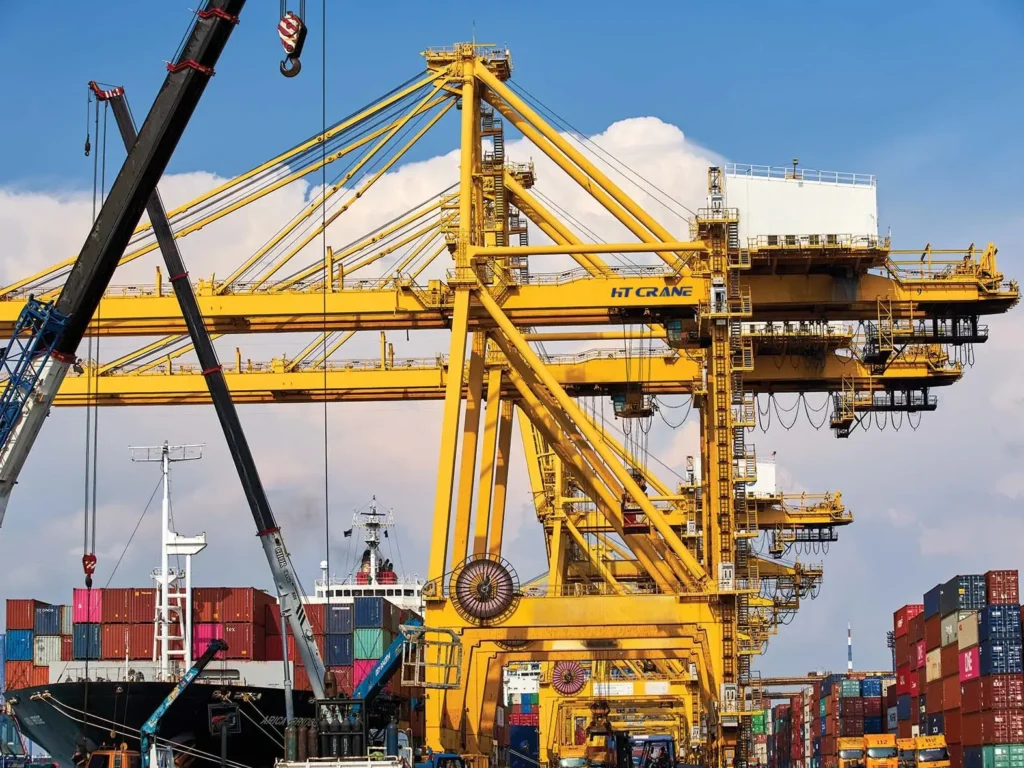

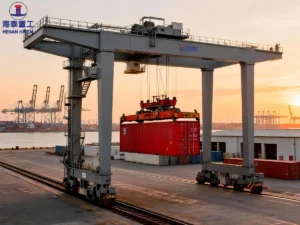
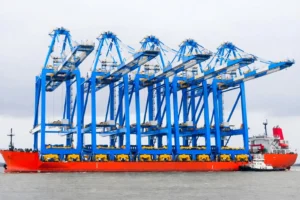
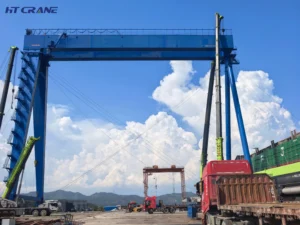
A ship to shore crane (commonly abbreviated STS crane) is a large gantry crane installed at a container terminal. It straddles a berth and extends a boom out over a vessel to lift shipping containers from the ship’s deck or hold, transferring them onto quayside vehicles or automated systems.
Core Structural Components
An STS crane consists of several key structural and mechanical systems:
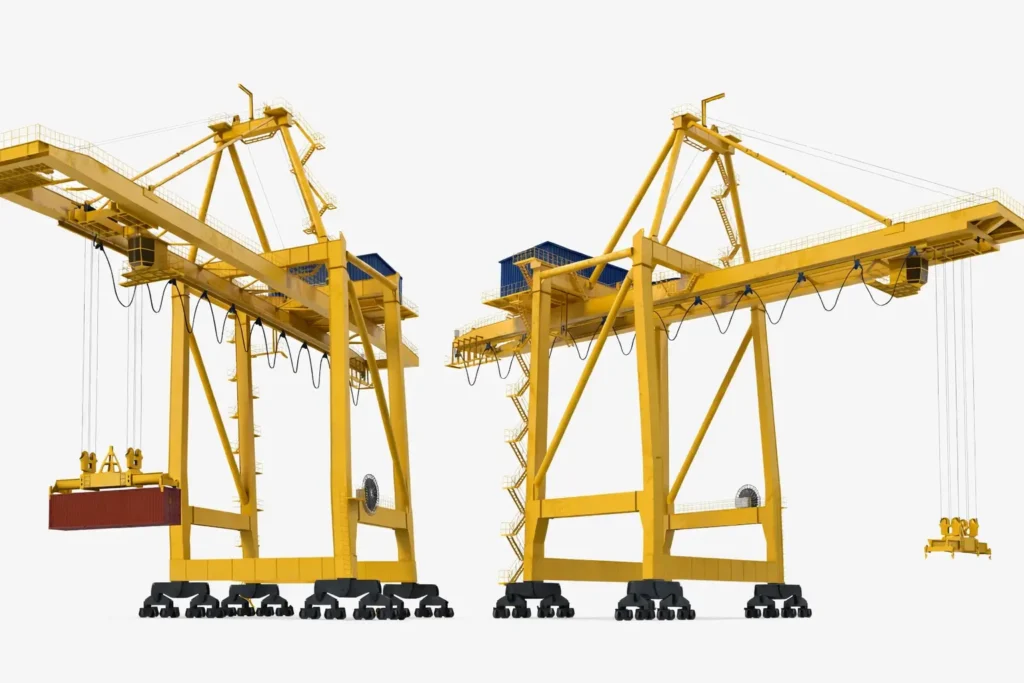
The portal frame sits on rail-mounted legs that travel along the quay. The boom extends seaward and can typically be raised to allow vessel access. The trolley runs along the boom carrying the spreader, which locks onto standard ISO containers for lifting. The machinery house sits at the apex and contains the hoist, trolley, and gantry drive systems.
How Container Handling Works
The spreader descends onto a container, latches via twistlocks, and the hoist lifts the load. The trolley then traverses the boom toward the landside, where the container is lowered onto a truck, AGV (automated guided vehicle), or rail system. Cycle times — the speed at which this sequence repeats — are a primary measure of terminal productivity.
Key Technical Specifications to Evaluate
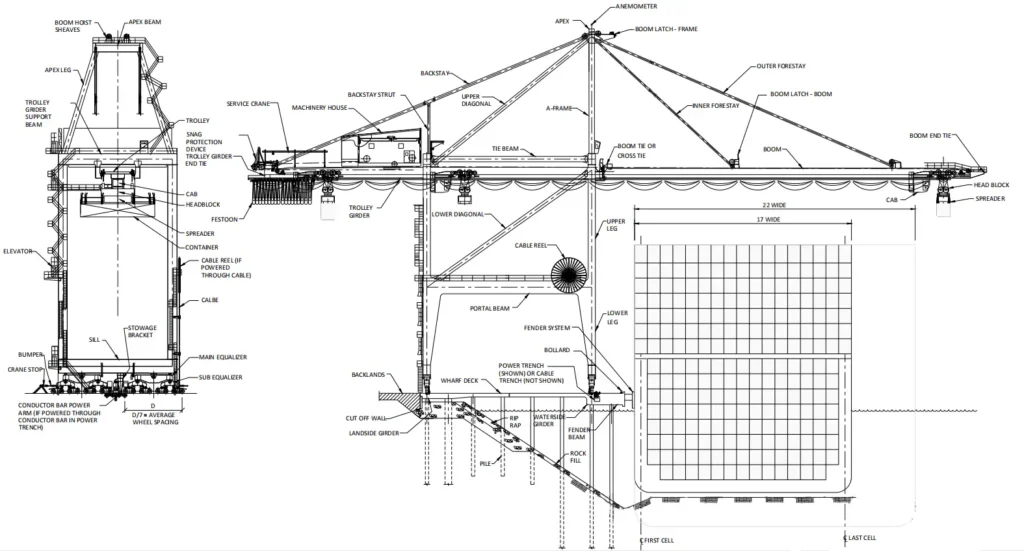
Before approaching any manufacturer or supplier, your procurement team should have clarity on the following parameters. These define the crane specification and drive the cost significantly.
Outreach, Backreach, and Lift Height
Outreach is the distance the boom extends from the quayside rail toward the water. This determines how many container rows across a vessel the crane can reach.
| Vessel Class | Typical Row Count | Recommended Outreach |
|---|---|---|
| Feeder / Small Regional | 10–13 rows | 35–42 m |
| Panamax | 13–16 rows | 42–50 m |
| Post-Panamax | 17–20 rows | 50–58 m |
| Ultra-Large (ULCV) | 21–24+ rows | 60–68 m |
Source: Terminal design benchmarks aligned with PIANC guidelines and current vessel deployment trends (2022–2024).
Backreach determines how far the crane can travel landside of the sea rail — important for matching with your quay transport system layout.
Lift height above rail defines how high the crane can hoist above the quayside rail, which must account for the tallest vessel class expected at your berth.
Lifting Capacity and Spreader Type
Standard STS cranes are rated at 40 to 65 tonnes Safe Working Load (SWL) under the spreader. This must account for the container weight plus the spreader itself, which typically adds 10–15 tonnes.
Twin-lift capability — the ability to lift two 20-foot containers simultaneously — is increasingly standard on new installations. Verify whether the rated capacity applies to single or twin-lift operations.
Hoisting Speed and Cycle Time
Hoist speed directly affects terminal throughput. Typical specifications range from 90 to 150 metres per minute under rated load. Empty hook speeds are typically 1.5 to 2× the loaded speed.
Trolley traverse speeds generally range from 180 to 240 metres per minute. Gantry travel speed is usually 45 metres per minute or less, though this has limited impact on cycle time in most operational scenarios.
Crane Classification: Which Type Do You Need?
STS cranes are not a single product category. There are meaningful differences between variants that affect capital cost, operational flexibility, and maintenance requirements.
Rail-Mounted Quay Cranes (RMQC)
This is the standard configuration at most container terminals worldwide. The crane travels on two parallel rails fixed to the quayside. It offers high stability, good load capacity, and well-understood maintenance requirements. The vast majority of global terminal infrastructure is built around this design.
Electrification and Drive Systems
Modern STS cranes are almost universally electrically powered via festoon cable or conductor rail systems. Variable frequency drives (VFDs) on hoist and trolley motors allow precise speed control and regenerative braking — feeding energy back into the grid during lowering cycles. This can reduce energy consumption by 20–30% compared to older resistor-controlled systems, according to industry energy studies.
Automation Readiness
If your terminal has plans to introduce semi-automation or full automation within your crane’s operational life (typically 25–30 years), specify automation-readiness from the outset. This includes provisions for:
- Anti-sway systems (laser or sensor-based)
- Positioning systems (encoder-based trolley and spreader positioning)
- Integration interfaces for Terminal Operating System (TOS) connectivity
- Camera and sensor mounting provisions
Retrofitting these systems after installation is significantly more expensive than specifying them at procurement.
Standards and Compliance Requirements
Ship to shore cranes are subject to a range of international and regional standards. Non-compliance can result in insurance issues, operational restrictions, or regulatory penalties.
Key Standards to Reference
- FEM 1.001 (Fédération Européenne de la Manutention) — widely applied for European crane design and classification
- ISO 4301 — classification of cranes by duty cycle and loading conditions
- EN 13135 — machinery requirements for cranes
- EN 15011 — specific to bridge and gantry cranes (applicable to STS design principles)
- ASME B30.2 — relevant for terminals operating under North American jurisdiction
- IEC 60204-32 — electrical equipment of cranes
All structural calculations should be verified by an independent third-party structural engineer, particularly for seismic loading requirements if your port is in an earthquake-risk zone.
Wind Load and Environmental Design Criteria
Wind loading is a critical structural design parameter. Most terminal locations require cranes designed to withstand:
- Operational wind speeds of 20–25 m/s
- Survival wind speeds of 55–70 m/s (in stowed/tied-down position)
If your port is in a typhoon or hurricane zone, specify the design wind speed clearly in your tender documents and verify the manufacturer’s calculations independently.
The Procurement Process: Step by Step
Buying a ship to shore crane is not a transactional purchase. It is a long-cycle engineering procurement that requires structured project management.
Define Your Terminal’s 20-Year Vision
Before writing a specification, model your future vessel mix. Container ships continue to grow in scale. A crane specified for today’s largest vessel may be undersized within a decade. Consult traffic forecasts, shipping line commitments, and long-term berth development plans before fixing outreach and lift height parameters.
Prepare a Detailed Technical Specification
Your tender specification should cover at minimum:
- Structural and mechanical design requirements
- Electrical system specification (power supply, drive technology)
- Painting and corrosion protection system (especially in salt-spray environments)
- Factory acceptance testing (FAT) and site acceptance testing (SAT) protocols
- Spare parts package and initial commissioning support
- Training requirements for operators and maintenance staff
A poorly written specification creates ambiguity that bidders will exploit. Engage an independent port engineering consultant to review your specification before tender release.
Evaluate Suppliers on More Than Price
Total cost of ownership matters more than purchase price alone. When evaluating bids, consider:
| Evaluation Criterion | Why It Matters |
|---|---|
| Manufacturer’s reference list | Proven track record reduces delivery risk |
| Local service support capability | Downtime response speed affects terminal revenue |
| Spare parts availability and lead times | Critical for minimising unplanned outages |
| Warranty terms and scope | Clarifies liability during the first operational years |
| Delivery schedule and penalties | Crane delays can impact vessel scheduling commitments |
Factory and Site Acceptance Testing
FAT should be completed at the manufacturer’s facility before shipment. Define acceptance criteria in the contract — not after. SAT takes place once the crane is erected at your terminal and should replicate operational conditions, including full-load testing and cycle time verification.
Common Procurement Mistakes to Avoid
Even experienced terminal operators make avoidable errors during STS crane procurement. The most common include:
Under-specifying outreach. Ordering a crane with 50 m outreach today may seem sufficient, but if ULCV calls increase within five years, your crane will be unable to reach outer rows — limiting productivity and vessel turnaround time.
Ignoring corrosion protection. In marine environments, paint system selection and steel surface preparation are not cosmetic decisions. A poorly specified paint system can lead to structural corrosion within 10 years. Specify paint systems to ISO 12944 Category C5-M (marine, very high corrosivity).
Insufficient spare parts planning. Operators often underestimate spare parts requirements at commissioning. Long-lead items — particularly electrical drives, rope drums, and spreader components — should be stocked locally from day one.
Weak contractual protections. Ensure your contract includes liquidated damages for late delivery, performance guarantees with measurable KPIs, and clear terms for defect liability.
Summary: Making a Confident STS Crane Investment
A ship to shore crane represents a long-term infrastructure commitment. The right specification — matched to your vessel projections, automation strategy, and operational environment — delivers decades of reliable, productive service. Getting it wrong is expensive to correct.
The key actions before committing to a purchase:
- Model your 20-year vessel mix before fixing technical parameters
- Engage an independent consultant to verify your specification
- Evaluate suppliers on total cost of ownership, not headline price
- Ensure your contract includes robust testing protocols and performance guarantees
- Specify automation readiness from the outset if there is any future automation intent
FAQ
Q1: How long does it typically take to procure and install a ship to shore crane?
From contract award to crane commissioning, the process typically takes 24 to 36 months. This includes manufacturing lead time (usually 18–24 months), ocean shipping, port delivery, erection, and acceptance testing. Projects in remote locations or with complex port access conditions may take longer. Procurement teams should factor this timeline into terminal capacity planning, particularly if the crane is replacing ageing equipment with a defined decommission date.
Q2: What is the typical operational lifespan of an STS crane?
Most ship to shore cranes are designed for a service life of 25 to 30 years, based on ISO 4301 duty classification. Actual lifespan depends heavily on maintenance quality, operating intensity, and the local environment. Cranes in high-corrosivity coastal environments with inconsistent maintenance programmes often require significant structural refurbishment well before the end of their design life. A robust preventive maintenance regime — aligned with the manufacturer’s recommended intervals — is the most reliable way to protect the investment.
Q3: What certifications should a reputable STS crane manufacturer hold?
Look for manufacturers with ISO 9001 quality management certification, along with demonstrated compliance with the structural and electrical standards applicable in your jurisdiction (FEM 1.001, EN 13135, ASME B30.2, or equivalent). For cranes destined for EU or UK terminals, CE marking is mandatory. Beyond certifications, request independent third-party structural analysis reports and ask for reference contacts at existing installations — direct feedback from operating terminals is more informative than any document.
Q4: Can an existing ship to shore crane be upgraded to handle larger vessels?
In some cases, yes — boom extensions and outreach modifications are technically possible, but they require full structural recalculation, potential reinforcement of the portal frame and legs, and re-certification of the entire structure. This is rarely straightforward or cost-effective compared to a new crane, particularly if the existing unit is already beyond 15 years of service. Any modification must be designed and certified by a qualified structural engineer, and the crane must undergo full re-testing before returning to operation.
Q5: How do I compare energy efficiency between different STS crane proposals?
Request detailed energy consumption data from each bidder, expressed in kWh per container move (kWh/move) under defined operating conditions. Modern cranes with regenerative drive systems and efficient hoist motors typically achieve significantly lower consumption than older designs. Also review the standby power consumption figure — cranes spend a meaningful portion of operational time in standby, and this adds up over a year. Specify that energy performance data must be validated during site acceptance testing, with defined tolerances, to hold manufacturers accountable after delivery.