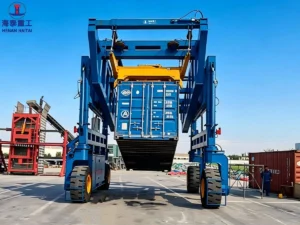
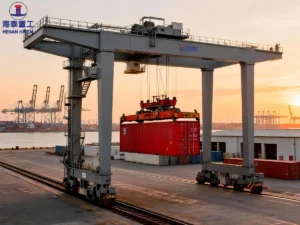
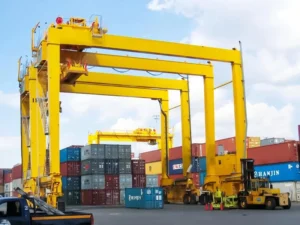
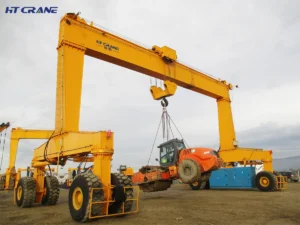
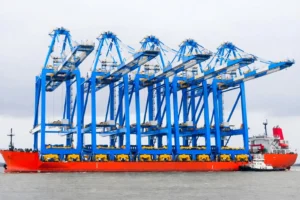
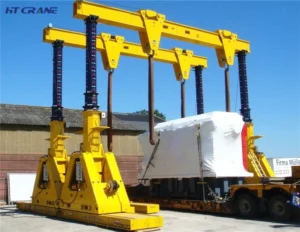
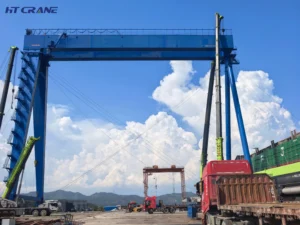
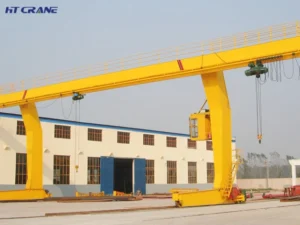
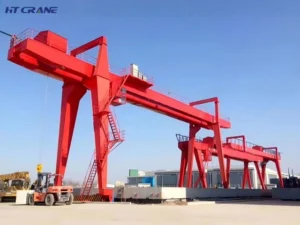
Most port equipment decisions come down to three options: a rubber-tyred gantry crane (RTG), an electric straddle carrier, or a hydraulic straddle carrier. Sales teams will tell you each is the right choice. This article will not do that.
This is a structured comparison built around decisions port procurement teams actually face — mixed cargo, constrained sites, infrastructure gaps, and a 15-year asset life. By the end, you will know which configuration fits which operation, and more importantly, which one does not fit yours.

Why the Spec Sheet Does Not Answer the Real Question
Procurement teams receive spec sheets showing lifting capacity, travel speed, and stacking height. What those sheets rarely show is the full cost of making that equipment operational in your specific yard.
An RTG might show impressive throughput per hour. But if your site requires six months of civil construction before it can run, that throughput figure is meaningless for year one. An electric straddle carrier might show lower energy cost per cycle — but if your grid supply is unreliable or absent, those savings never materialise. A machine that performs brilliantly in the wrong environment is not a good investment. It is an expensive lesson.
The right equipment is the one that becomes operational fastest, performs reliably under your actual site conditions, and delivers the lowest total cost over its working life. That answer is different for every operation — and it rarely matches what is on the front page of a brochure.
What Each Machine Is Actually Built For
Understanding the design intent of each machine clarifies where comparisons are meaningful and where they are not.
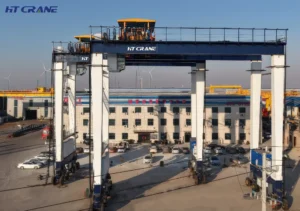
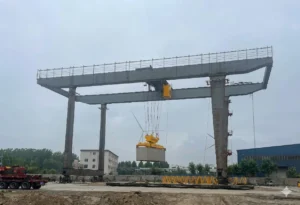
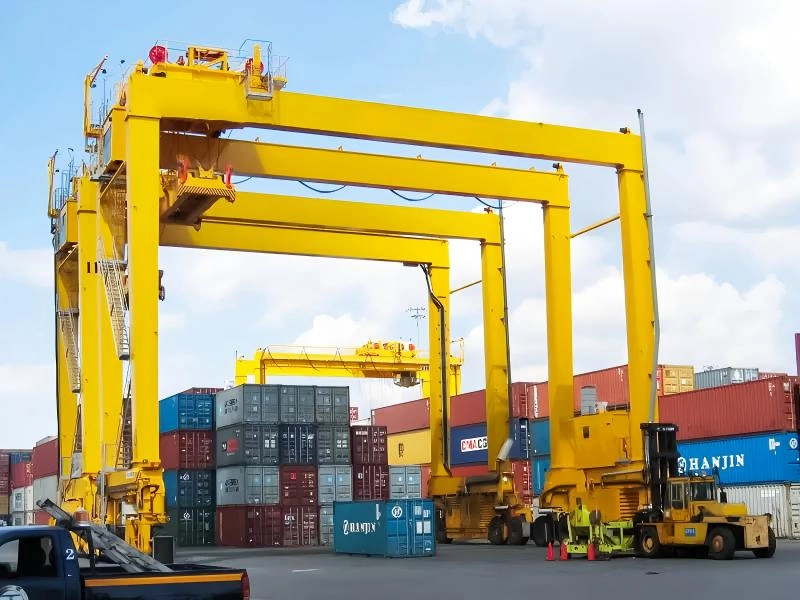
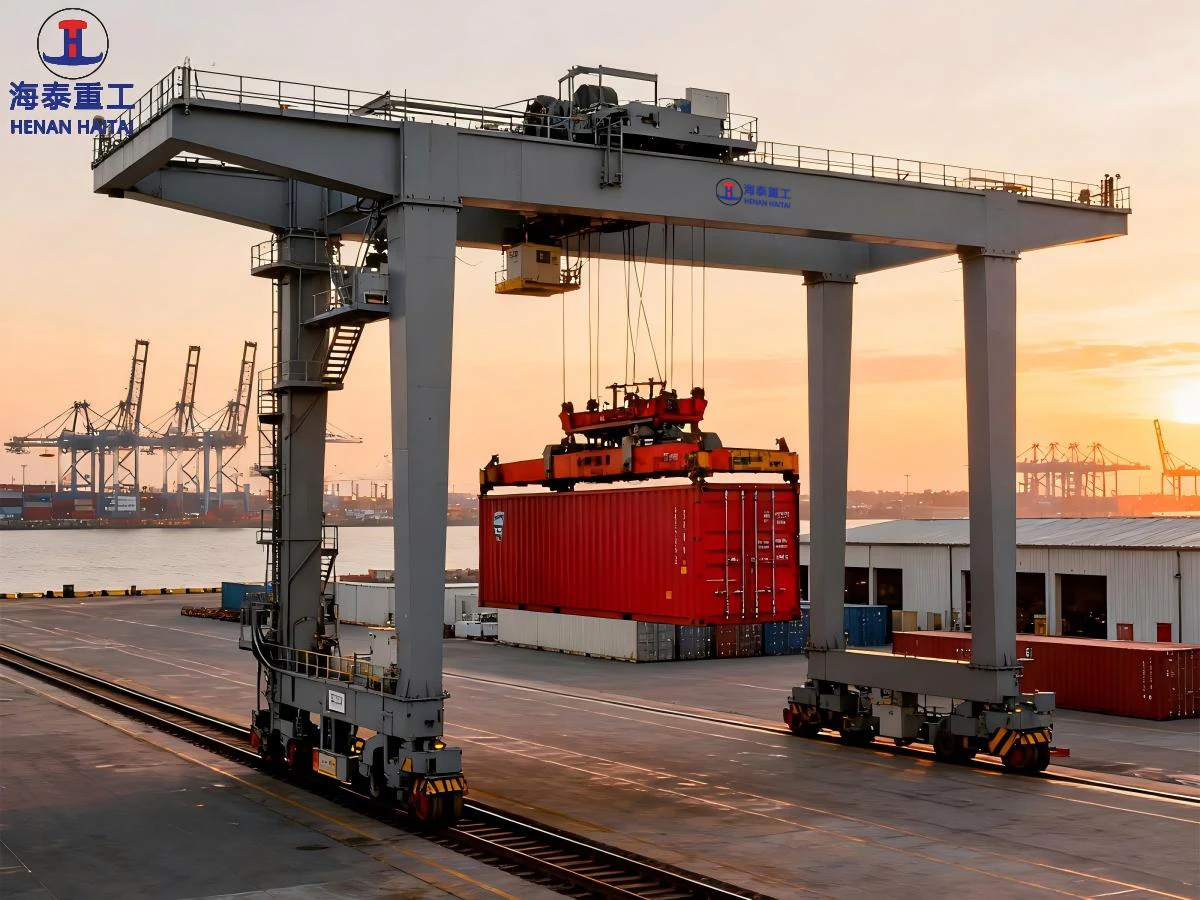
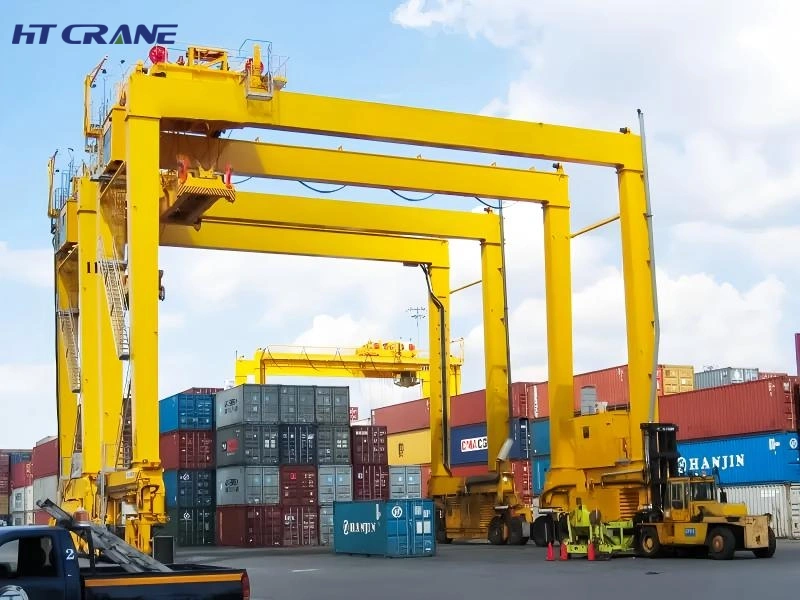
RTG cranes are large gantry structures mounted on rubber tyres that travel along fixed container lanes. They stack ISO containers up to six high at high speed and high density. The entire system — machine, power supply, crane runways, and lane markings — is designed for one specific job: maximising the number of standard containers per square metre of terminal at the highest possible throughput rate. RTGs do that job very well. Outside of it, their inflexibility becomes a serious limitation.
Electric straddle carriers straddle and lift containers, then transport them freely across the yard. Powered by an onboard generator or external cable reel, modern electric models offer lower emissions and reduced fuel cost compared to diesel alternatives. They handle containers well and tolerate limited cargo variation. However, their design envelope — structural, mechanical, and electrical — is centred on container weights, container dimensions, and environments where stable power is available.
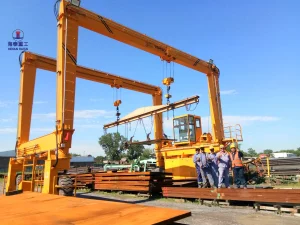
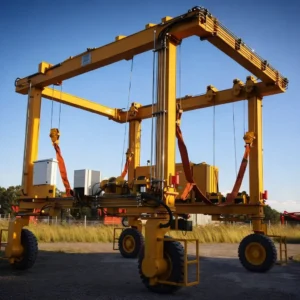
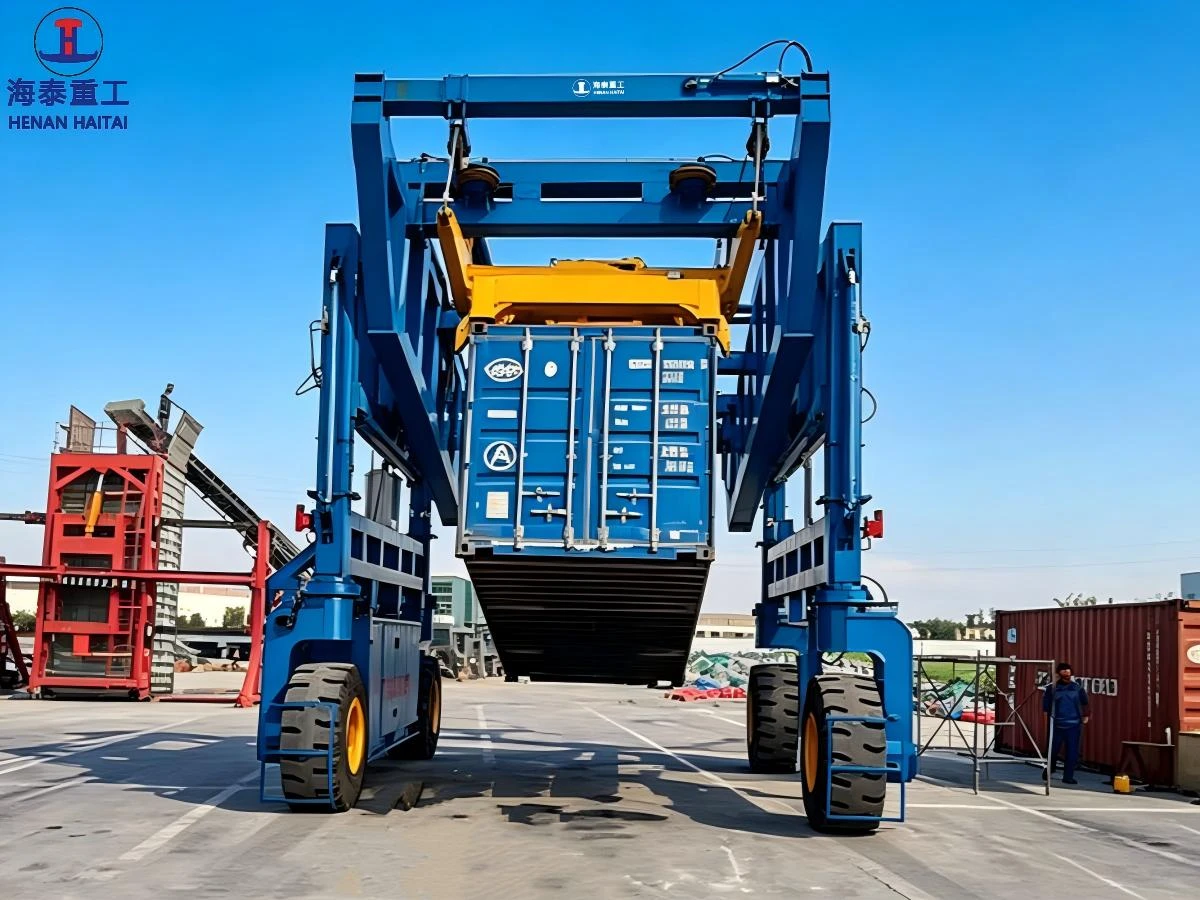
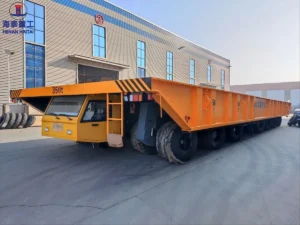
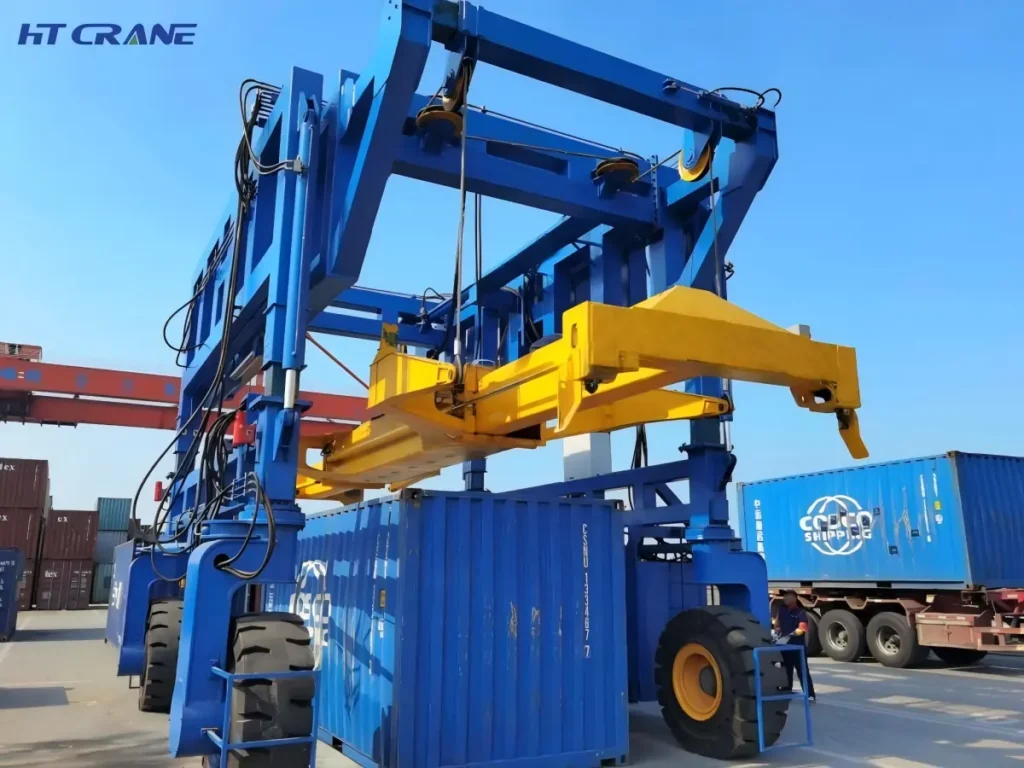
Hydraulic straddle carriers use an onboard diesel engine that drives hydraulic pumps supplying pressure to all machine functions: lifting, lowering, travelling, and steering through all four wheels independently. Every motion is controlled through proportional hydraulic valves, giving the operator smooth and stepless control at any load and any speed. The machine carries its own power source completely. It requires no external infrastructure, no crane runway, and no grid connection. Standard production capacities run from 30T through to 100T, with custom configurations available beyond that range for module yards, offshore logistics bases, and heavy industrial applications.
Seven Criteria That Determine the Right Choice
Infrastructure Requirement
This factor eliminates options before any other comparison begins.
An RTG system at a greenfield terminal is a construction project. Crane runways must be built to exact tolerances, power supply infrastructure must be installed, and the entire yard layout must be organised around fixed container lanes. From contract to first operational lift, 12 to 18 months is a realistic timeline for a new installation. In an established deep-water terminal where all of this is already in place, that cost is sunk. In a developing depot, a new inland facility, or any site without existing crane infrastructure, it is a barrier that changes the financial case entirely.
Electric straddle carriers are less demanding than RTGs, but they still depend on reliable power. In ports across Southeast Asia, West Africa, and parts of Central Asia, grid supply is variable enough that an electric model introduces an operational dependency with real consequences for machine availability. Cable reel systems add complexity to yard layout and constrain movement paths.
A hydraulic straddle carrier requires compacted road surface or concrete pavement capable of supporting its laden wheel loads. That is the entire site requirement. The machine arrives on a low-loader, is commissioned in days, and is lifting cargo before the week is out. For any operation where infrastructure is incomplete, developing, or simply absent, this self-contained capability changes the deployment equation entirely.
Cargo Flexibility
RTGs handle 20ft and 40ft ISO containers. That is their design scope. Steel coils, pressure vessels, prefabricated structural modules, out-of-gauge industrial components — none of these fit the RTG operational model. When project cargo arrives at an RTG-equipped terminal, a separate machine is needed to handle it.
Electric straddle carriers handle standard containers reliably and can be fitted with alternative spreader configurations for limited cargo variation. But their structural and mechanical design is optimised for container weights and geometry. Heavy project cargo at 80T or beyond is generally outside the design envelope of a standard electric model.
Hydraulic straddle carriers are configured from the outset for a mixed cargo environment. Four swappable attachment types cover the full range: a telescopic ISO spreader for 20ft and 40ft containers, a fixed lifting beam with adjustable hook points for steel structures and pipe sections, a rotating spreader for precise angular positioning in confined spaces, and a custom saddle frame for cylindrical or asymmetric loads including pressure vessels, LNG tanks, and fabricated modules. Multiple attachments can be supplied with one machine and exchanged in the field, making it practical to handle containers on one shift and structural steel on the next without a second machine or a rigging crew.

Deployment Speed
For a port or depot with a commercial opening date, deployment speed has a direct revenue consequence. Every week before the first container moves is a week of operational cost without operational income.
RTG deployment at a new site runs 12 to 18 months from contract to first lift — most of that time spent on civil works and infrastructure, not on the crane itself. Electric straddle carriers are faster, but site readiness for power supply and commissioning typically means 6 to 10 months from order. A hydraulic straddle carrier commissioned at a prepared yard is operational within days of arrival. There is no infrastructure programme to run in parallel. The machine is the programme.
Maintenance Model and Long-Term Serviceability
This is the factor most consistently underweighted in procurement decisions and most consistently regretted in operations.
RTG and electric drive systems are built around proprietary electronics. Fault diagnosis and component replacement require OEM-trained engineers and OEM-supplied parts. In markets where manufacturer service coverage is strong and response times are fast, this is manageable. In markets where OEM service is slow, expensive, or simply unavailable for extended periods, every major fault becomes a prolonged downtime event. The machine sits idle while the service request travels through a support structure not designed for that geography.
Hydraulic straddle carriers are maintained by hydraulic technicians. Pumps, motors, valves, and cylinders are standard industrial components available from multiple suppliers in most markets. Any qualified hydraulic engineer familiar with industrial mobile equipment can diagnose and repair the system without specialist training or proprietary tools. This is not a minor operational detail. It is the reason the FEM 1.001 design life of 15 to 20 years is actually achievable for buyers outside of the major port markets — because the maintenance model is realistic for the operators who own the machine, not just for the operators who live next door to an OEM service depot.
Operating Cost Per Cycle
Electric models carry a genuine energy cost advantage when grid power is available and stable. At a high-throughput terminal completing thousands of cycles per day, that difference accumulates into a meaningful sum over a year. This is a real advantage, not a marketing claim, and it should be weighted accordingly in any honest comparison.
Hydraulic models have higher fuel cost per cycle. Acknowledging this directly is more useful than minimising it. The question is what that cost differential looks like in the context of total cost of ownership over 15 years — which includes the capital cost of infrastructure, the cost of maintenance and downtime, the cost of a second machine when the cargo mix exceeds the primary machine’s design scope, and the cost of inflexibility when operational requirements change. In most non-terminal applications, the hydraulic model’s advantages across the other criteria produce a total ownership cost that is competitive with or lower than the electric alternative.
Stacking Density and Yard Utilisation
RTGs stack six-high in organised lanes. For land-constrained deep-water terminals handling hundreds of thousands of TEU annually, this density is a significant operational advantage. Every additional layer of stacking reduces the land area required per TEU stored.
Straddle carriers — electric or hydraulic — stack 1-over-2 or 1-over-3. Yard density is lower. For operations where land cost is not the primary constraint, where cargo is mixed, or where volume does not approach the density thresholds that make RTG stacking economically significant, this difference rarely drives the procurement decision.
Scalability as Operations Grow
RTG systems scale in large increments. Adding crane capacity means adding crane runway infrastructure, which means another construction programme. The system does not scale gracefully with gradual volume growth.
Straddle carriers scale by unit. One additional machine adds one unit of capacity with no civil works and no infrastructure expansion. Hydraulic models add a further dimension to this: each additional unit can carry a different rated capacity or attachment configuration. An operation might commission a 50T unit for container handling in year one, then add a 100T unit when a steel or module handling contract arrives in year three. Each machine is independently deployed, independently configured, and independently operational. The fleet grows with the business rather than ahead of it.
Decision Matrix
| Operating Scenario | Best Fit | Primary Reason |
|---|---|---|
| High-volume deep-water terminal, full existing infrastructure | RTG | Stacking density, peak throughput |
| High-throughput terminal, stable power, standard containers, emission targets | Electric straddle carrier | Energy cost per cycle, emissions compliance |
| Growing depot, mixed cargo, limited or no fixed power | Hydraulic straddle carrier | Self-contained, cargo flexibility |
| Remote or temporary project site | Hydraulic straddle carrier | No infrastructure dependency |
| Steel plant, fabrication yard, variable industrial loads | Hydraulic straddle carrier | Attachment flexibility, maintainability |
| Market with limited OEM service coverage | Hydraulic straddle carrier | In-house serviceable hydraulic system |
| Operation requiring fast deployment | Hydraulic straddle carrier | Days to commission vs months for alternatives |
Three Contractual Checks Before Any Purchase
Regardless of which configuration you select, three things must be confirmed in writing before signing a contract.
A CE Declaration of Conformity under EU Machinery Directive 2006/42/EC confirms the machine was designed, built, and tested to a documented standard — not simply claimed to be. This document is the manufacturer’s legal declaration, not a marketing certificate.
A full load test certificate from factory acceptance testing confirms the machine performed to its rated SWL before leaving the factory. The rated capacity on the spec sheet is a claim until this document exists. Any supplier who cannot produce it is asking you to accept that claim on trust.
Spare parts availability confirmed in writing for a minimum of five years protects the operating life of the asset. For hydraulic models this is less critical than for proprietary electronic systems, but it should still be in the contract. A supplier unwilling to commit to five years of parts supply is signalling something about their confidence in their own product.
Conclusion
RTG cranes are the right equipment for the operations they were designed for. Electric straddle carriers are the right choice where grid power is reliable, cargo is homogeneous, and emissions targets carry weight in the procurement decision.
For everything else — growing depots handling mixed cargo, remote and temporary sites, industrial yards with variable load requirements, and operations in markets where OEM service is a genuine constraint — the hydraulic straddle carrier is not a second-best option. It is the configuration built for those conditions, from the ground up.
The question is never which machine has the best specification. It is which machine actually works in your yard, with your cargo, in your market, on the first day it operates and on the last day before it is retired.