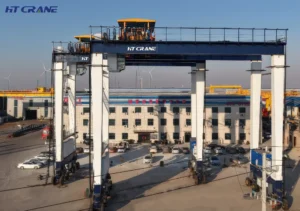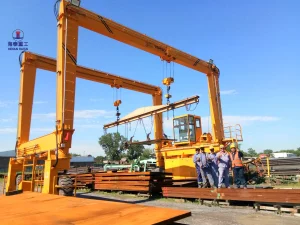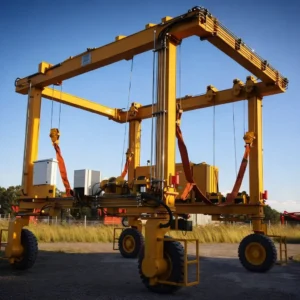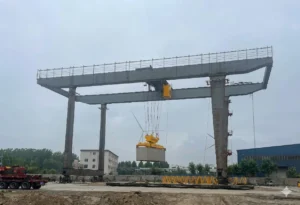

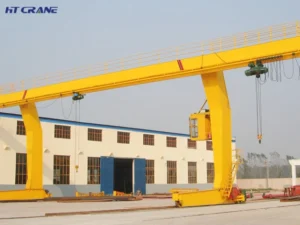
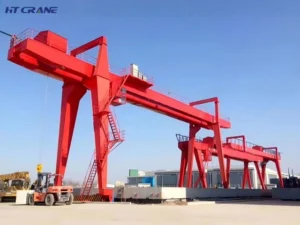
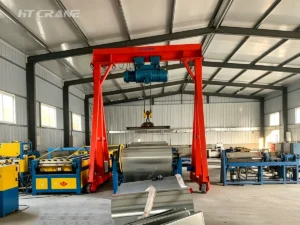
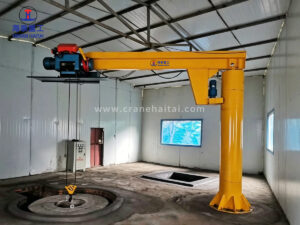
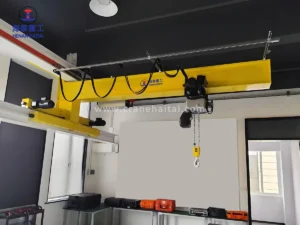
Many facilities fall between two categories. They have a building — but not one strong enough for a full overhead crane runway. Or they have outdoor yard space on one side and a covered structure on the other. A standard overhead crane does not fit. A full gantry crane wastes floor space. This is exactly the gap a semi gantry crane is designed to fill.
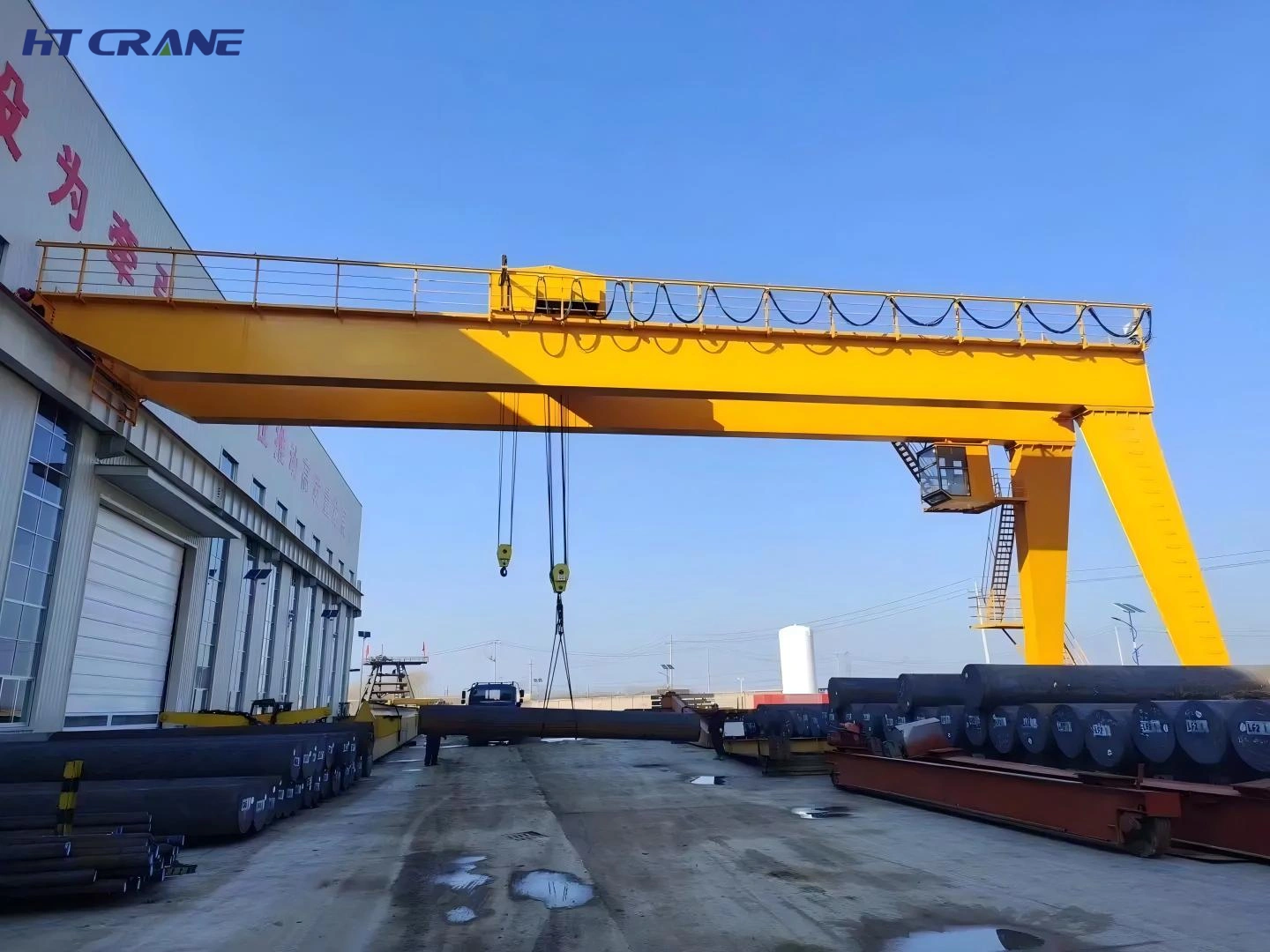
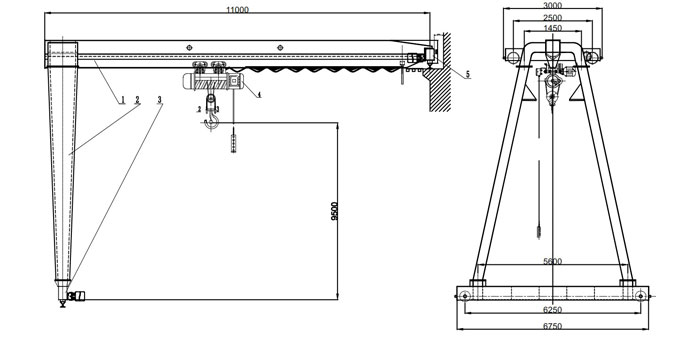
The semi gantry crane is a hybrid lifting system. One end of the bridge attaches to an elevated runway beam mounted on a building wall or column. The other end runs on a ground-level rail supported by a single structural leg. This combination gives the crane structural independence on one side while using existing building infrastructure on the other.
The result is a practical, space-efficient solution for workshops and warehouses where a conventional crane system — either overhead or full gantry — would require infrastructure investment the site cannot justify. This article covers how the semi gantry crane, where it performs best, how it compares to alternatives, and what to consider before specifying one.
What Is a Semi Gantry Crane?
Technical Definition
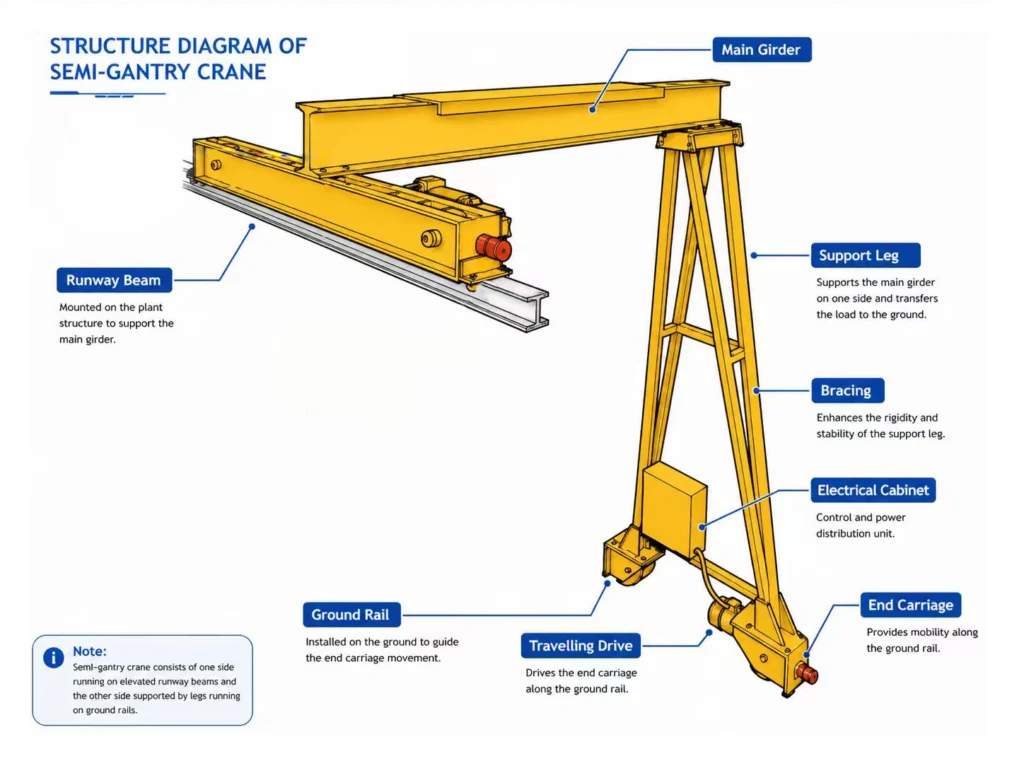
A semi gantry crane is a bridge crane where one end of the bridge girder is supported by an elevated runway beam fixed to a building structure, and the other end is supported by a self-standing leg that travels on a ground-level rail. It is neither a full overhead crane nor a full gantry crane — it shares structural elements of both.
Main Components
The system is built from five core elements:
- Bridge girder: The horizontal beam spanning the work area, connecting the elevated runway side to the ground-level leg
- Hoist and trolley: The lifting mechanism that travels along the bridge girder to position loads horizontally
- Elevated runway beam: Fixed to the building’s wall column or bracket, providing support on one side at height
- Supporting leg: A vertical structural member on the ground-level side, carrying the opposite end of the bridge
- Ground rail or wheel system: The travel surface for the supporting leg, allowing the entire crane to move along the bay length
How the Crane Moves
The crane travels longitudinally — along the length of the bay — with one end rolling on the elevated runway rail and the other rolling on the ground-level rail via the supporting leg. The trolley moves transversely along the bridge girder. The hoist raises and lowers the load. These three motions together give the crane full three-dimensional coverage of its working area.
Key Structural Advantages
Space Optimization
Compared to a full gantry crane, the semi gantry system eliminates one leg from the floor. On the elevated runway side, the floor is completely clear — no rail, no leg, no obstruction at ground level. This matters in workshops where floor space is occupied by production equipment, vehicle access routes, or material staging areas. The ground-level rail on the leg side is typically embedded or surface-mounted flush, minimizing interference with floor operations.
Lower Building Load Requirements
A full overhead crane distributes load across both sides of the building’s column structure. A semi gantry crane concentrates the building-side load on one wall or column line. This is manageable in existing workshops where only one column line has been assessed and reinforced for crane loads. It avoids the cost and disruption of upgrading both sides of the building to full overhead crane standards.
Indoor and Semi-Outdoor Adaptability
The semi gantry configuration suits mixed environments naturally. The elevated runway side sits within the sheltered building structure. The ground-level leg side can extend into a semi-outdoor area — a covered yard, an open-side workshop, or a loading dock. With appropriate weatherproofing on electrical components and corrosion protection on the leg and rail, the system operates reliably across this indoor-to-outdoor transition.
Common Applications of Semi Gantry Cranes
Steel Fabrication Workshops
Steel fabrication facilities often have a heavy column line on one side from the original building structure. Semi gantry cranes use this existing structure for the elevated runway while extending coverage to an adjacent open yard on the ground-rail side. Steel sections move from indoor fabrication to outdoor staging in a single crane operation.
Machinery Manufacturing Plants
Large machine assembly areas benefit from semi gantry coverage when one wall is structurally suitable for a runway and the opposite side is a production floor with equipment that cannot accommodate a second runway column line. The crane serves the full bay without restricting the equipment layout.
Warehouse Loading Areas
Warehouses with one open loading side use semi gantry cranes to bridge the transition between indoor storage and outdoor truck access. The crane travels from the interior racking area to the loading dock in a single movement, eliminating intermediate handling steps and reducing cycle time.
Mold Handling and Die Changes
Production facilities that handle heavy molds or dies require precise, low-speed lifting in confined areas. A semi gantry crane with variable frequency drive (VFD) speed control and fine positioning capability suits this application — particularly where mold storage is on one side of the building and the press line is on the other.
Maintenance Workshops and Repair Bays
Vehicle maintenance facilities, heavy equipment service workshops, and industrial repair bays often have irregular building structures where a full overhead runway is impractical. A semi gantry crane provides reliable lifting coverage with minimal structural intervention.
Semi Gantry Crane vs Gantry Crane
| Factor | Semi Gantry Crane | Gantry Crane |
|---|---|---|
| Ground footprint | One ground rail (one side only) | Two ground rails (both sides) |
| Floor space impact | Minimal — one side elevated | Both sides have rails and legs |
| Building dependency | Partial — one wall attachment | None |
| Outdoor suitability | Mixed indoor/outdoor | Fully outdoor capable |
| Infrastructure scope | Lower — one side uses building | Higher — both sides need ground prep |
| Best for | Facilities with one usable wall | Open yards, no building available |
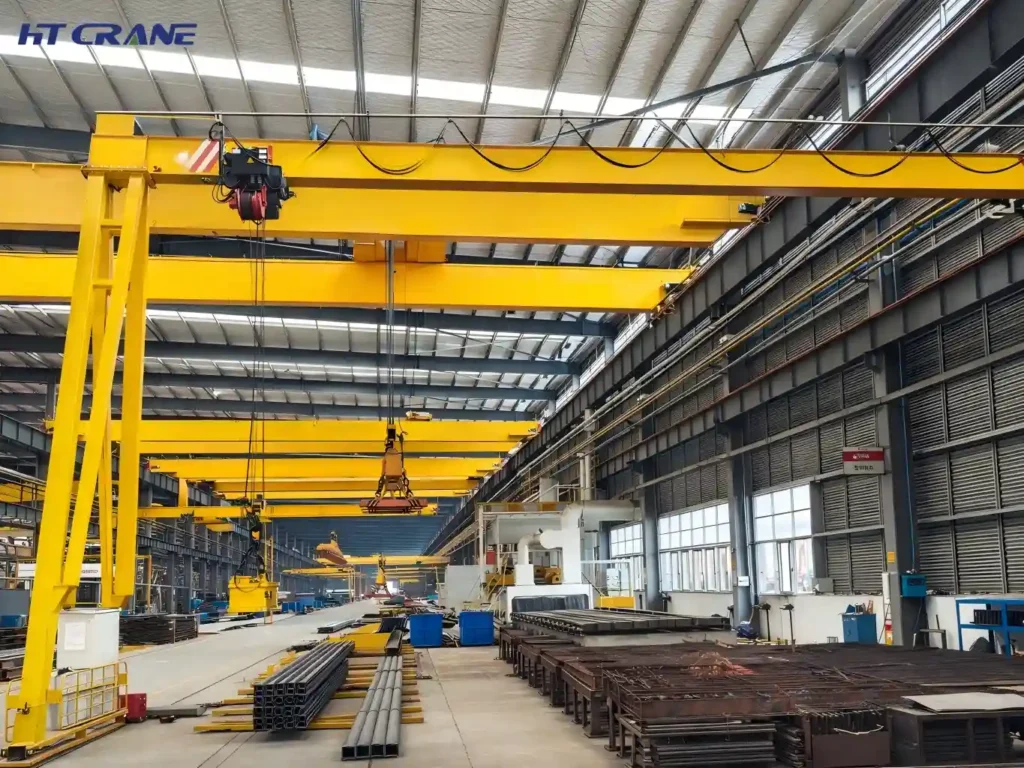
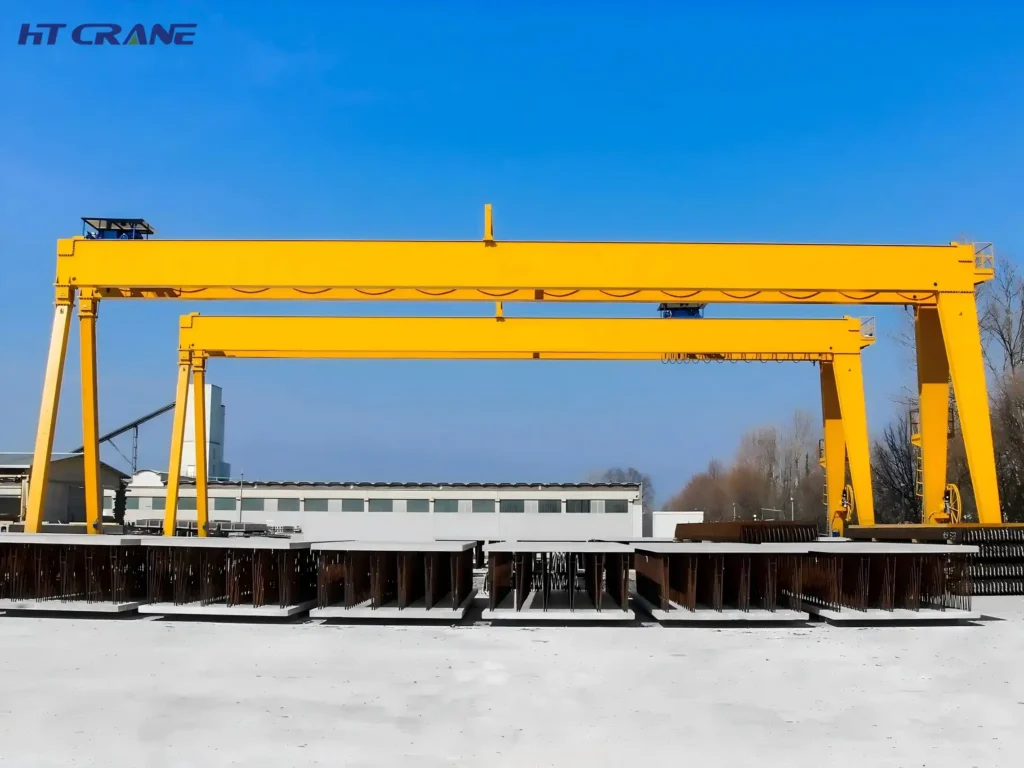
The full gantry crane is the right choice where no building exists or where the operation is entirely outdoors. The semi gantry crane suits transitional environments — partly enclosed, partly open — where one building wall is available for the elevated runway connection.
How to Choose the Right Semi Gantry Crane
Lifting Capacity and Span
Define the heaviest regular lift — not just the theoretical maximum. Semi gantry cranes are available from light-duty workshop configurations (1–10 tonnes) to heavy industrial systems ( 80 tonnes and above). The span — the distance between the elevated runway centerline and the ground rail centerline — determines the bridge girder size and the structural load on both support points.
Lifting Height and Available Headroom
Headroom on the elevated runway side sets the maximum hook height. The leg height on the ground-rail side determines how high the bridge can be positioned. Both dimensions must be confirmed before structural design begins. In facilities with low ceiling height on the building side, the headroom constraint will drive the entire crane configuration.
Indoor, Outdoor, or Mixed Use
If the crane serves a mixed indoor/outdoor zone, specify weatherproof electrical enclosures (minimum IP55 for outdoor exposure), corrosion-protected structural steel, and rail systems designed for outdoor temperature variation. All electrical components — drives, controls, pendant stations — must be rated for the environmental conditions of the ground-rail side.
Rail Installation Conditions
The ground-level rail requires an engineered foundation — either a reinforced concrete beam or a surface-mounted rail system on an existing floor with verified load capacity. The floor condition on the leg side must be assessed before rail installation is specified. Existing underground utilities, drainage systems, or soft ground can all affect the foundation design.
Frequency of Operation and Duty Class
Define the crane’s expected duty cycle. ISO 4301 classifies cranes from M1 (occasional use) to M8 (continuous heavy industrial use). A semi gantry crane in a high-frequency manufacturing environment needs a higher duty class rating, which affects the girder design, hoist selection, and drive system specification. Under-specifying duty class leads to accelerated wear and unplanned downtime.
Future Expansion
Consider whether the bay length is likely to extend, or whether a second crane on the same runway may be needed. Designing the elevated runway beam and the ground rail with future extension in mind — even if not immediately installed — avoids costly retrofitting of the support structure later.
Important Customization Options
Semi gantry cranes are configured to match specific operational requirements. Standard customization options include:
- Single girder vs double girder: Single girder suits light to medium loads and lower headroom; double girder handles heavier loads and delivers greater hook height
- Electric hoist options: Wire rope hoists for heavy-duty or high-lift applications; chain hoists for lighter-duty or lower-headroom configurations
- Remote control systems: Radio remote control eliminates pendant cable management in open work areas — useful on the semi-outdoor leg side
- Variable frequency drive (VFD): Smooth acceleration and deceleration for precise load positioning, with reduced mechanical stress on the drive and rail system
- Anti-sway technology: Electronic load sway control for precision placement of large or awkward loads at height
- Explosion-proof configurations: Available for petrochemical, chemical processing, and grain handling environments where ignition risk is present
- Outdoor weather protection: Sealed electrical enclosures, corrosion-resistant structural coatings, and heated control panels for cold climate installations
Conclusion
A semi gantry crane solves a specific structural problem — one that neither a full overhead crane nor a full gantry crane addresses cleanly. When a facility has one column line capable of supporting an elevated runway but lacks the infrastructure for a complete overhead system, the semi gantry crane provides full bay coverage with minimal additional structural investment.
Its hybrid design — one elevated runway side, one self-supporting ground-level leg — combines the floor-space efficiency of an overhead crane on one side with the structural independence of a gantry crane on the other. This makes it a practical, adaptable solution for workshops, warehouses, mixed indoor/outdoor operations, and facilities undergoing incremental infrastructure development.
For procurement teams evaluating lifting solutions in facilities with partial building support, a semi gantry crane is a technically sound and often cost-effective path forward. Configuration, capacity, span, and options should all be matched to the specific site — not selected from a standard product list.
Request a customized semi gantry crane solution based on your site dimensions, load requirements, and operational profile. Contact our engineering team for a consultation — the right configuration starts with the right site assessment.

Frequently Asked Questions
What is the maximum lifting capacity of a semi gantry crane?
Semi gantry cranes are available across a wide capacity range. Light-duty workshop versions typically handle 1 to 10 tonnes. Heavy industrial configurations — used in steel fabrication or machinery manufacturing — can reach 50 tonnes or more depending on bridge span and structural design. Capacity is determined by the girder size, hoist selection, and the load capacity of both the elevated runway beam and the ground-level leg foundation. There is no fixed upper limit; large-capacity systems are engineered to the specific site and load requirements rather than drawn from a standard catalogue.
Can a semi gantry crane be installed in an existing workshop without major structural work?
In many cases, yes — but it depends on the condition of the existing building column line used for the elevated runway. A structural engineer must assess whether the wall columns can carry the added runway beam and dynamic crane loads without reinforcement. If the columns are adequate, installation involves mounting the runway beam brackets, laying the ground rail, and erecting the leg. This is typically less disruptive than installing a full overhead crane runway, which requires both sides of the building to be assessed and often reinforced before work can begin.
What is the difference between a semi gantry crane and a wall-travelling crane?
A wall-travelling crane mounts entirely on a runway beam fixed to a single building wall, with the bridge cantilevering outward. It has no ground-level leg. A semi gantry crane spans the full bay width — one end on the elevated runway, the other on a ground-level leg and rail. The semi gantry covers a wider working area and handles larger loads than a wall-travelling crane, which is limited by the cantilever length and the structural capacity of the single wall mounting. For full bay coverage, the semi gantry crane is the appropriate choice.
How long does it take to install a semi gantry crane?
Installation time depends on ground rail foundation work, crane capacity, and whether the elevated runway beam requires new bracket fabrication or attaches to existing building steel. A straightforward installation in a prepared facility — with suitable columns and a flat concrete floor — can be completed in one to three weeks. Larger systems, or projects requiring new foundations and structural reinforcement, take longer. A realistic project timeline should be established during the engineering and site assessment phase, before procurement commitments are made.
Does a semi gantry crane require special maintenance compared to other crane types?
The core maintenance requirements — hoist, trolley, bridge drive, runway rails, and electrical components — are similar to those of an overhead or full gantry crane. One area requiring specific attention is the alignment between the elevated runway and the ground-level rail. If the two travel paths drift out of parallel or relative elevation, the bridge skews during travel, accelerating wear on the end trucks and rail system. Alignment checks should be part of the routine inspection schedule, particularly after any ground movement, building settlement, or significant operational changes.