Choosing between a floating crane and a rail-mounted gantry crane is one of the most consequential decisions in heavy-lift and marine construction planning. Pick the wrong type, and you face project delays, inflated costs, or operational limitations that can derail your entire schedule. The good news? Once you understand how each crane is designed to work, the right choice becomes clear.
This article breaks down the core differences between these two equipment categories — covering mobility, load range, application fit, and operational requirements. Whether you’re managing a shipyard, overseeing port infrastructure, or planning offshore construction, this guide gives you a practical framework for making the right call.
What Is a Floating Crane?
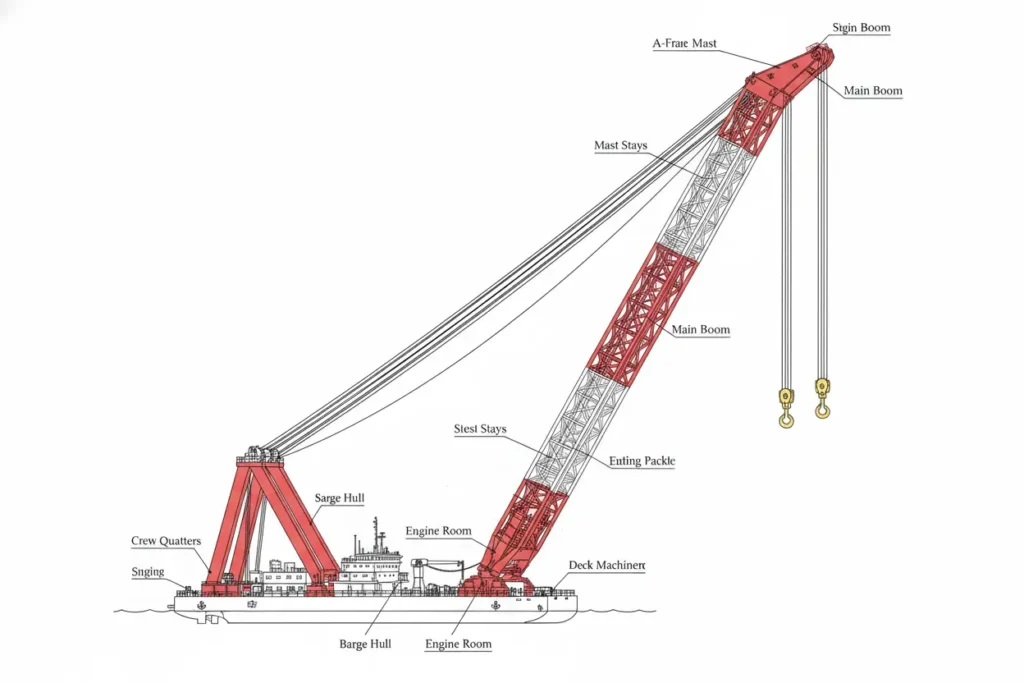
Basic Design and Structure
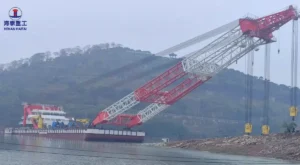
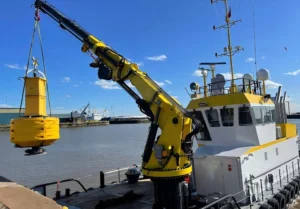
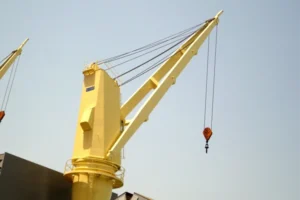
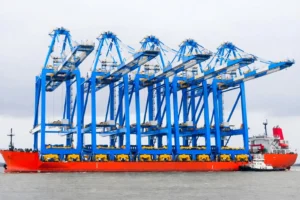
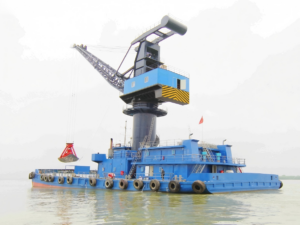
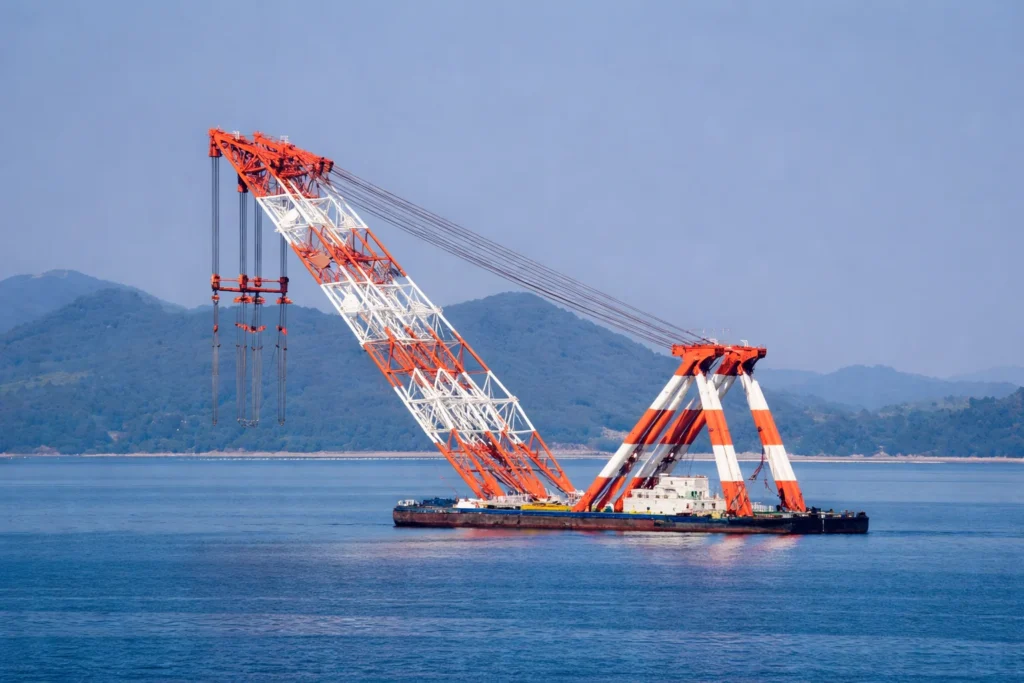
A floating crane is a crane system mounted on a pontoon, barge, or self-propelled vessel. The crane itself can be a fixed boom, luffing boom, or revolving type. The key feature is the floating platform — it moves with the water and can be repositioned across open water.
Most floating cranes are built to ISO 4301 and relevant classification society rules (such as DNV GL or Bureau Veritas), which regulate structural integrity under dynamic marine loading conditions.
Typical Lifting Capacity
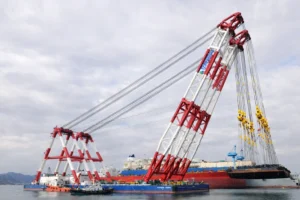
Floating cranes cover a wide capacity range. Smaller barge-mounted units start at around 50 tonnes. Heavy-lift floating cranes used in offshore oil and gas can exceed 14,000 tonnes — the Sleipnir, operated by Heerema, is one of the world’s largest at 20,000-tonne capacity. For standard port and marine construction use, capacities of 100 to 2,000 tonnes are most common.
Where Floating Cranes Are Used
Floating cranes excel in open water, coastal, and offshore environments. Common applications include:
- Offshore platform installation and decommissioning
- Bridge construction over rivers or bays
- Shipbuilding and ship repair at anchorage
- Subsea cable and pipeline laying
- Salvage operations
The ability to reposition freely across water makes them uniquely suited to projects where the worksite itself is dynamic or spread across a large water area.
What Is a Portal Crane?
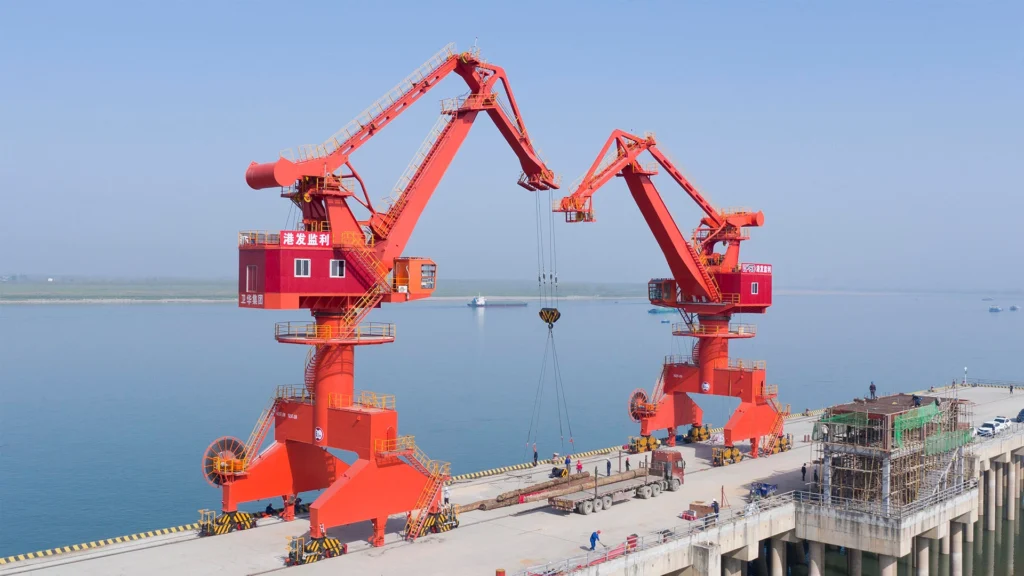
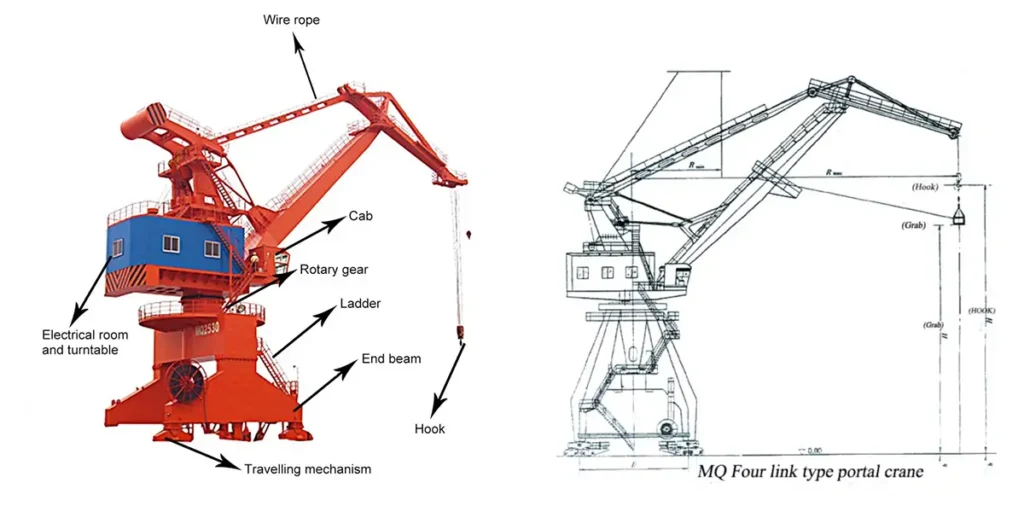
Basic Design and Structure
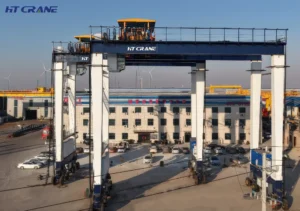
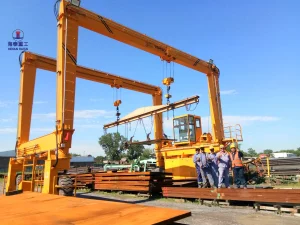
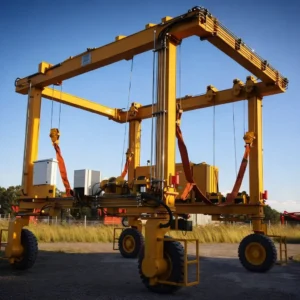
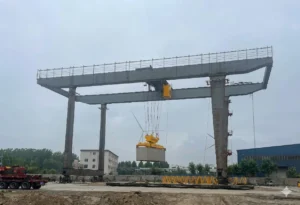
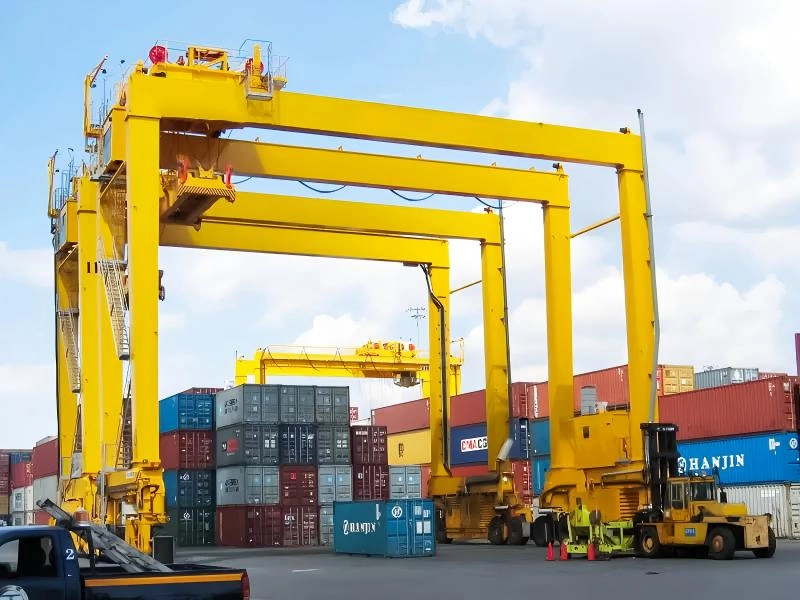
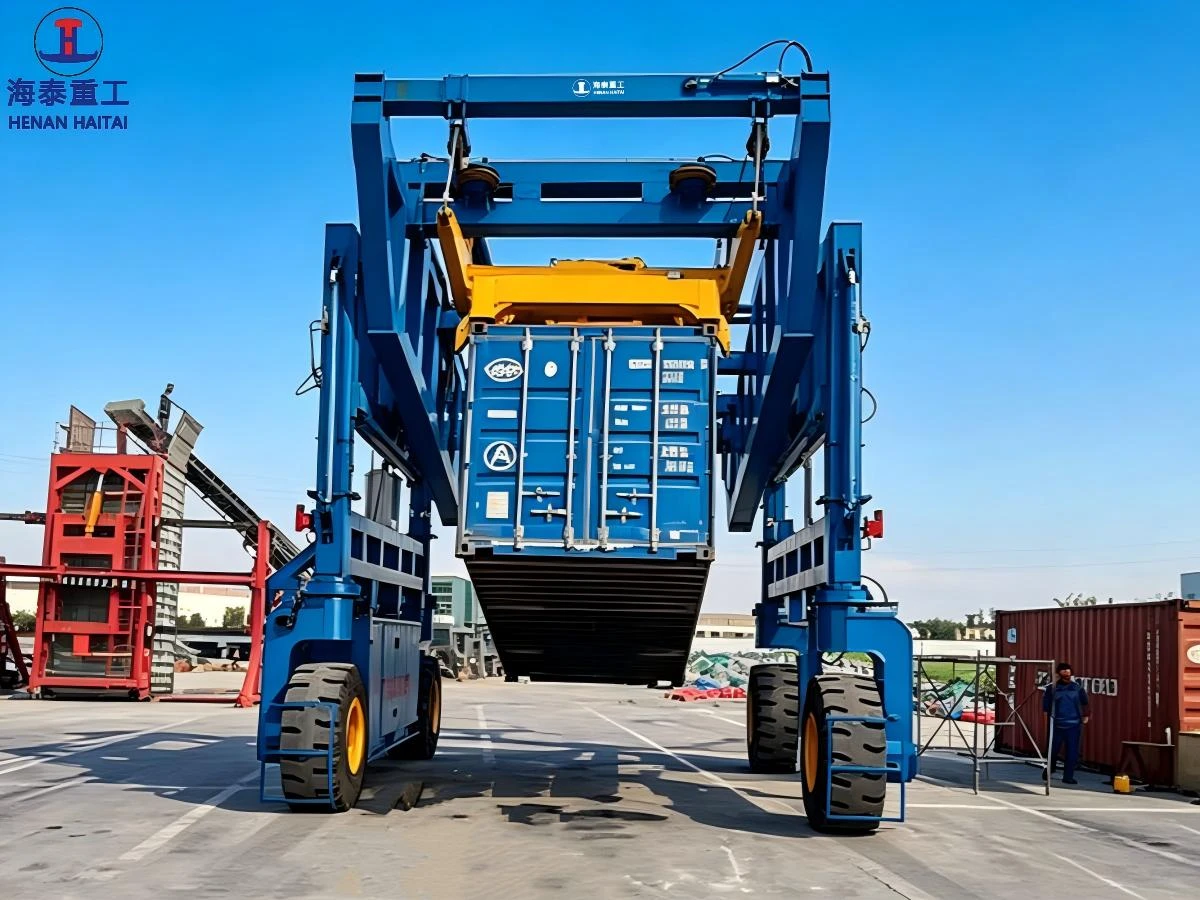
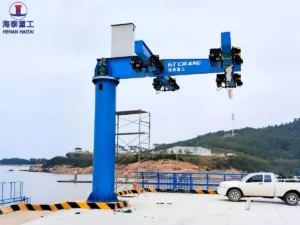
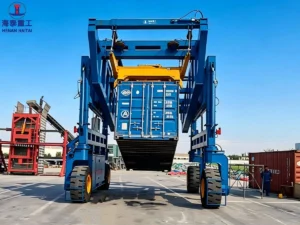
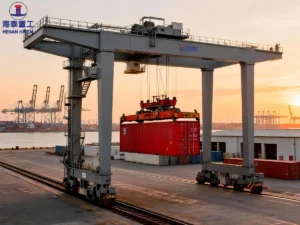
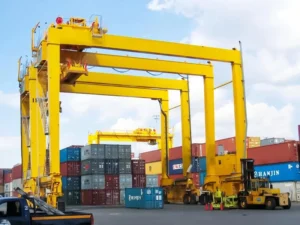
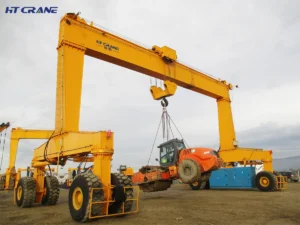
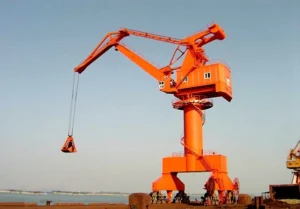
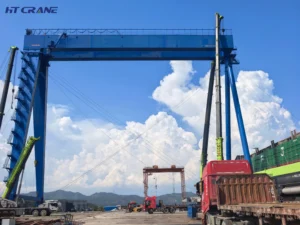
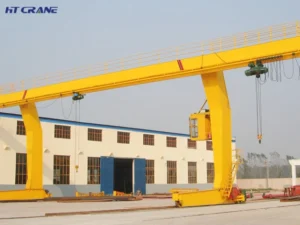
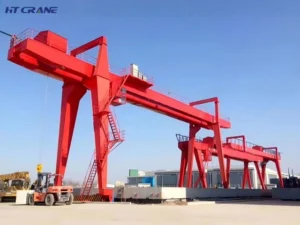
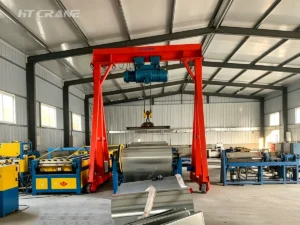
A portal crane — also called a gantry crane or harbor crane in some contexts — is a fixed or rail-mounted crane built on a portal frame (an inverted “U” structure). The crane sits on legs that straddle a defined track or work area, typically along a quayside or inside a shipyard hall.
This equipment type is commonly designed and certified to FEM (Fédération Européenne de la Manutention) standards and complies with EN 15011 or similar national regulations.
Typical Lifting Capacity
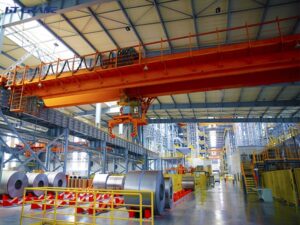
Shipyard gantry cranes used in heavy industrial environments typically range from 50 to 800 tonnes. Some large shipyard units — such as those in South Korean yards operated by Hyundai or DSME — reach 900 tonnes and above. Their lifting height and span can be precisely engineered for the specific facility layout.
Where Portal Cranes Are Used
These rail-mounted cranes are the backbone of fixed, high-throughput industrial operations. Their primary environments include:
- Shipyard block assembly and erection
- Heavy prefabrication yards
- Steel structure manufacturing facilities
- Rail equipment maintenance depots
- Large-scale port cargo handling (in tandem with other equipment)
Because they operate on a fixed track, this equipment type offers high repeatability, predictable cycle times, and easy integration into production workflows.
Head-to-Head Comparison
| Feature | Floating Crane | Portal Crane |
|---|---|---|
| Mobility | High — can navigate water bodies | Limited — fixed rail or track |
| Working Environment | Open water, offshore, coastal | Fixed land-based or quayside |
| Typical Capacity Range | 50 t – 20,000 t | 50 t – 900 t |
| Precision Placement | Moderate (subject to wave/current) | High (stable foundation) |
| Setup Time | Moderate to high | Low (once installed) |
| Operational Cost | Higher (marine ops, fuel, crew) | Lower (fixed infrastructure) |
| Regulatory Framework | IMO, DNV GL, Bureau Veritas | FEM, EN 15011, ISO 4301 |
| Best For | Offshore, bridge work, salvage | Shipyard production, fabrication |
Key Decision Factors: How to Choose
Factor 1 — Project Location and Water Access
If your project is in open water, on a river, or requires working away from a fixed dock, a floating crane is often the only viable option. Rail-mounted gantry cranes require a stable, prepared foundation and a defined track system. They cannot operate in the middle of a harbor or offshore.
On the other hand, if your worksite is a fixed shipyard or production yard with a consistent layout, this type of crane offers far more operational efficiency over time. The fixed structure means less rigging time per lift and greater positional accuracy.
Factor 2 — Lifting Frequency and Production Volume
Shipyard gantry cranes are designed for repetitive, high-volume lifting tasks. In a block assembly yard, one unit may complete dozens of lifts per day with minimal setup between each one. The fixed rail system allows precise positioning and faster cycle times.
Floating cranes are typically deployed for project-specific or low-frequency heavy lifts. Each operation requires careful planning — sea state assessment, positioning, anchoring, and weather windows. This is appropriate for offshore installations or one-off heavy civil lifts, but not efficient for continuous production work.
Factor 3 — Load Weight and Geometry
For extreme single-lift weights — think large topside modules, ship sections, or bridge spans — floating cranes have a clear advantage in maximum capacity. No land-based gantry crane approaches the 5,000 to 20,000-tonne range achievable with the largest semi-submersible crane vessels.
For moderately heavy loads in the 100 to 500-tonne range on land, a rail-mounted unit is often more practical, more cost-efficient, and simpler to operate within a production environment.
Factor 4 — Environmental and Regulatory Considerations
Floating crane operations are subject to marine regulations including SOLAS requirements, classification society rules, and port authority approvals. Weather limitations apply — operations are typically restricted when wave heights exceed 1.5 to 2.5 meters (depending on vessel design). Wind speed limits of 10–15 m/s are common for precision lifts.
Gantry-style cranes face their own regulatory environment (CE marking in Europe, OSHA crane standards in the US), but they operate in controlled, predictable conditions without the weather dependency of marine operations.
A Typical Scenario: Shipyard Block Erection
Consider a shipyard building 300-meter LNG carriers. The yard needs to lift prefabricated hull blocks weighing 300 to 600 tonnes and place them precisely onto the drydock berth. A rail-mounted gantry crane is the natural fit here — it operates on rails alongside the building berth, provides consistent lift heights, and integrates directly into the production schedule.
Now consider the same yard needing to float-out a completed vessel section to an outfitting quay 500 meters away. Here, a floating crane or sheerleg barge is used — the task requires water access and repositioning capability that no fixed crane can match.
The two crane types are not rivals. Many major yards operate both in parallel, each serving distinct phases of production and delivery.
Summary and Recommendations
Neither floating cranes nor fixed gantry cranes are universally superior. The right choice depends on where you work, how often you lift, and what you’re lifting.
Choose a floating crane when:
- The worksite is on or over water
- Load weights exceed land-based crane capacity
- The project requires relocating equipment between sites
- Offshore or salvage operations are involved
Choose a portal crane when:
- You operate a fixed shipyard, fabrication yard, or industrial facility
- High lift frequency and production throughput are priorities
- Load placement precision is critical
- Long-term infrastructure investment makes sense
When in doubt, consult your structural engineering team and review the relevant standards — ISO 4301 for crane classification, and your applicable national or classification society rules for the operating environment.
FAQ
Q1: Can a floating crane be used in a shipyard instead of a portal crane?
Yes, but it’s generally not efficient for daily production work. Floating cranes require water access, weather monitoring, and more setup time per lift. In a fixed shipyard environment, a rail-mounted gantry unit delivers faster cycle times and better positioning accuracy. Floating cranes are better reserved for specific heavy lifts — such as float-outs or block positioning over water — rather than routine block erection on a building berth.
Q2: What is the typical service life of a portal crane vs. a floating crane?
Shipyard gantry cranes typically have a design service life of 25 to 30 years with proper maintenance, in line with FEM and ISO 4301 fatigue classifications. Floating cranes have variable lifespans depending on marine corrosion exposure and structural loading cycles — major units are typically class-renewed every 5 years and can operate for 20 to 40 years with continuous maintenance and periodic class surveys.
Q3: How do weather conditions affect floating crane operations?
Weather is a primary operational constraint for floating cranes. Most units specify a maximum significant wave height (Hs) and wind speed for operations. Precision lifts offshore are often limited to Hs below 1.5 meters and wind speeds under 10–15 m/s. Land-based gantry cranes face fewer weather-related interruptions, though high wind speeds still apply as operational limits per manufacturer and standards specifications.
Q4: What certifications should I verify before procuring either crane type?
For portal cranes, verify CE marking (in Europe), FEM design class compliance, and relevant local safety certifications. For floating cranes, check the classification certificate issued by a recognized classification society (DNV GL, Bureau Veritas, Lloyd’s Register, etc.), the most recent survey date, and compliance with IMO and SOLAS applicable requirements. Always request the crane’s load chart and operational manual as part of the procurement process.