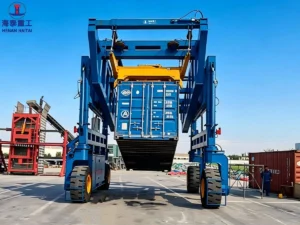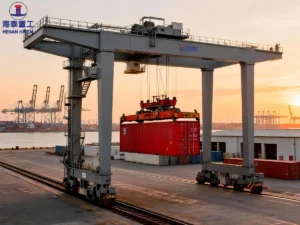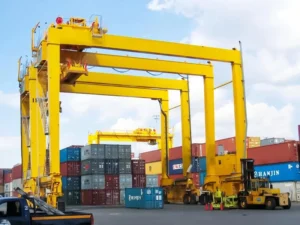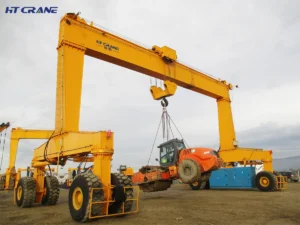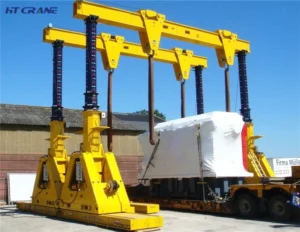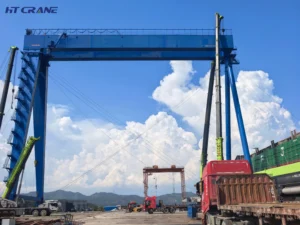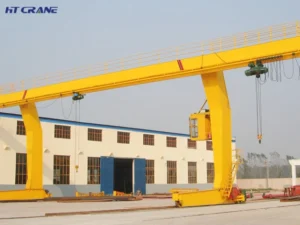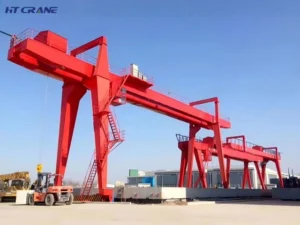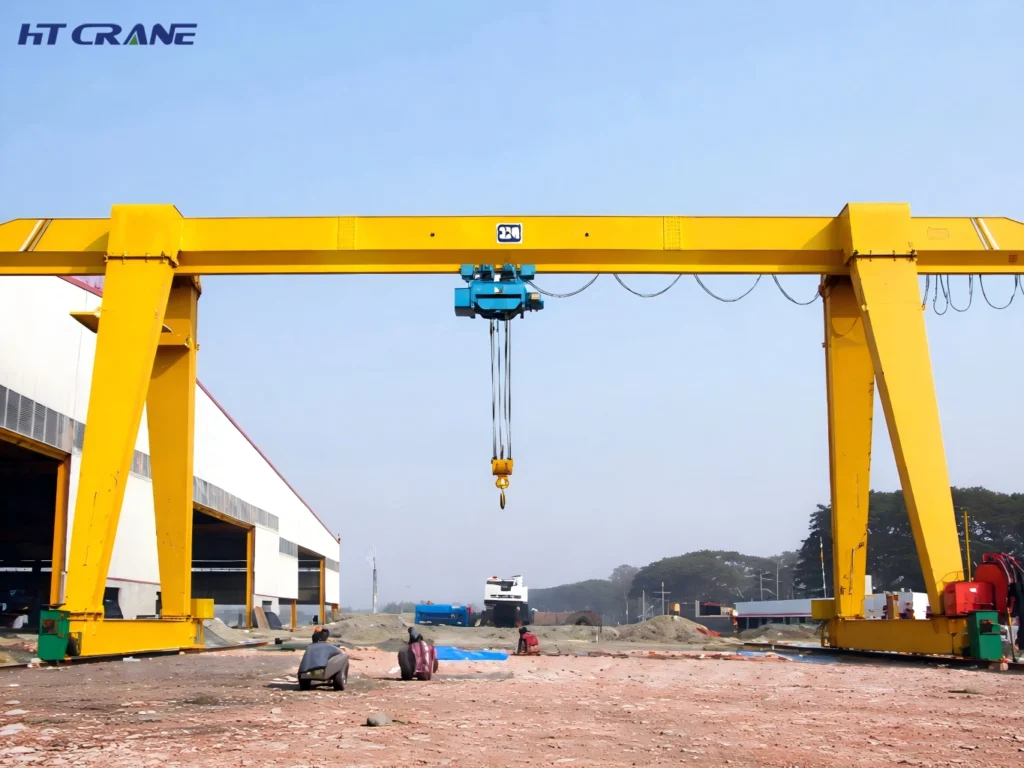


When the load is heavy, the span is wide, or the hook height requirement exceeds what a single girder crane can deliver — a double girder gantry crane is the answer. It is the structural choice for heavy industry, and for good reason: two main girders share the load, allow a higher-positioned hoist, and provide the structural rigidity needed for large spans and demanding duty cycles.
Buyers often reach the double girder decision after outgrowing a lighter crane or after realizing that a single girder model cannot meet their hook height or span requirements. The challenge then becomes specification: double girder cranes involve more variables, more civil infrastructure, and larger capital commitment than their lighter counterparts.
This page walks you through what defines a double girder gantry crane, what to specify, where it fits, and how to evaluate a supplier for a purchase of this significance.
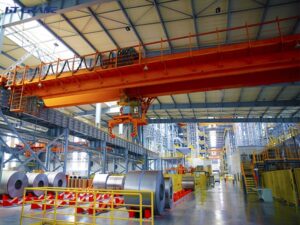
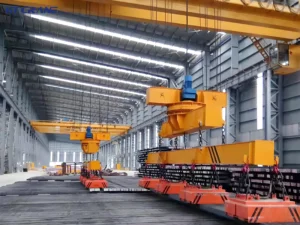
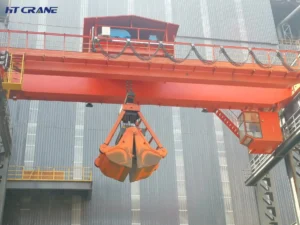
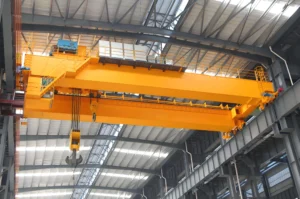
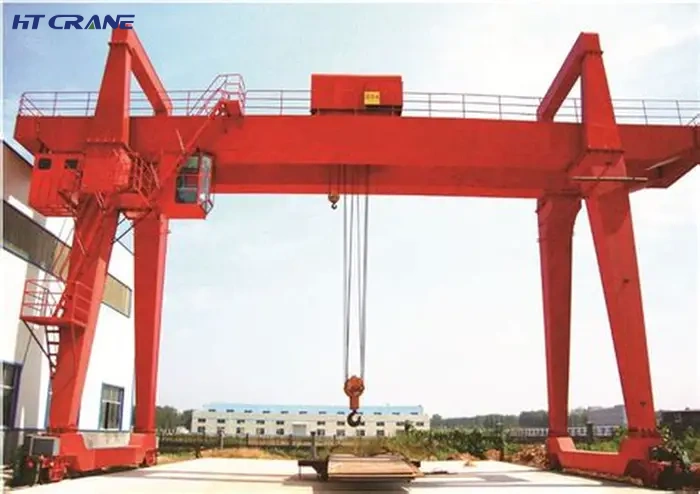
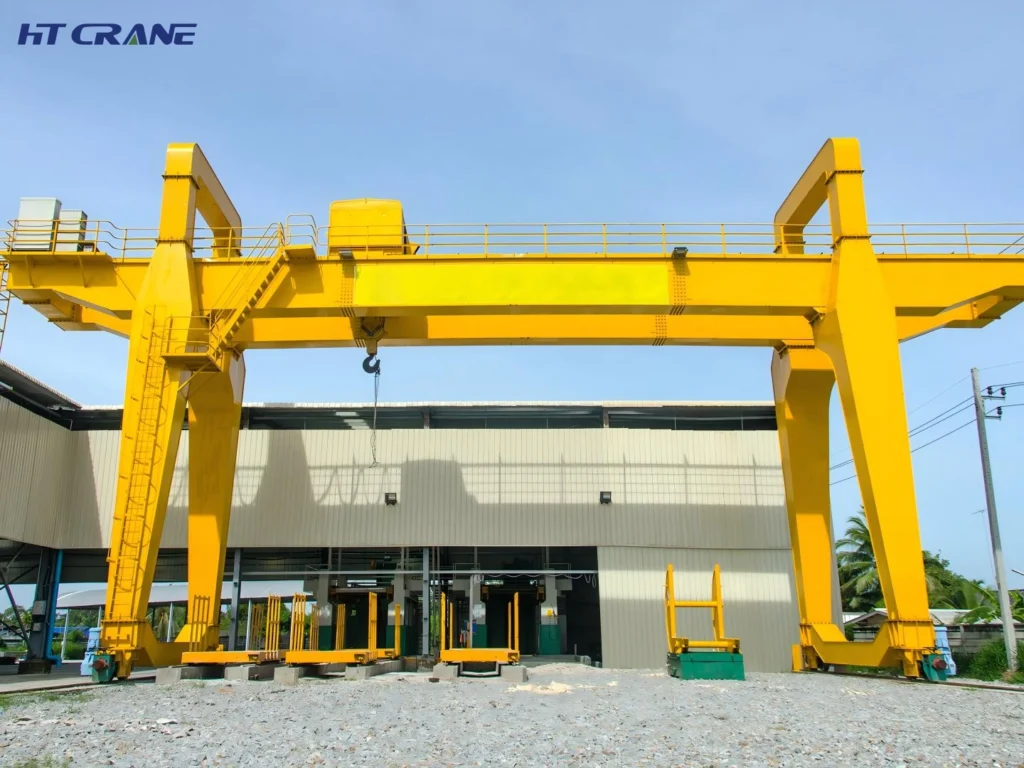
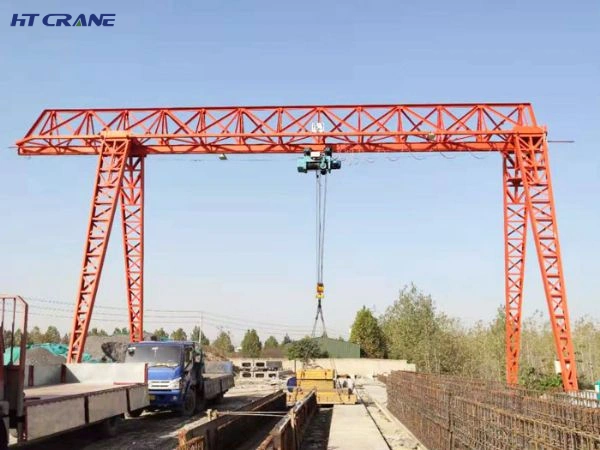
A double girder gantry crane uses two parallel horizontal girders — the main beams — supported at each end by leg structures that run on ground-level rails. The crane trolley, which carries the hoist, travels on rails mounted on top of the two girders. This top-running trolley arrangement is the defining structural feature that distinguishes a double girder from a single girder crane.
The top-running configuration provides two critical advantages: higher hook height for the same overall crane height, and the ability to carry much heavier loads over much larger spans. For heavy industrial applications, these two advantages are often non-negotiable requirements — which is why double girder gantry cranes dominate the heavy end of the market.
| Factor | Double Girder | Single Girder |
|---|---|---|
| Lifting Capacity | 10T – 500T+ | 1T – 32T |
| Span Range | Up to 60m+ | Up to 35m |
| Hook Height | Higher (trolley on top) | Lower (hoist below girder) |
| Structural Rigidity | High — suited for heavy duty cycles | Moderate |
| Hoist Type | Electric wire rope hoist or crane trolley | Electric wire rope or chain hoist |
| Capital Cost | Higher | Lower |
| Civil Infrastructure | Heavier rail foundation required | Standard foundation |
| Best Application | Shipyards, steel, heavy manufacturing | Workshops, small yards, logistics |
The clearest decision rule: if your SWL requirement is above 20 tonnes, or if your span exceeds 30 metres, a double girder design is almost certainly the correct structural choice. Below those thresholds, evaluate whether a single girder meets your hook height and duty cycle needs before committing to the higher capital cost.
Double girder gantry cranes are built using one of two girder types:
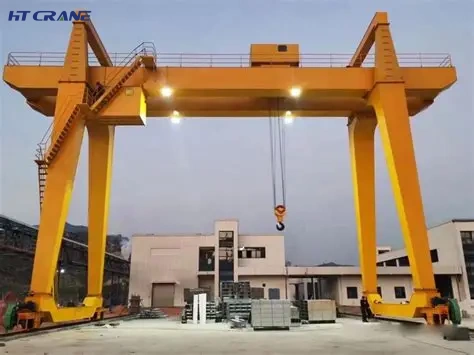
Box girder — a closed rectangular steel section fabricated from welded plate. Box girders are stronger, stiffer, and more durable than truss designs for equivalent spans. They are the standard for all medium to heavy-duty applications and for cranes in corrosive or outdoor environments. Box girder construction also allows easier inspection access to the internal structure during maintenance surveys.
Truss girder — an open lattice structure using rolled sections. Truss girders are lighter for equivalent span, which reduces leg loads and rail foundation requirements. They are used in applications where self-weight is a critical constraint — certain overhead electrical line applications and some light industrial double girder designs. For most heavy industrial procurement, box girder is the appropriate specification.
| Capacity Class | SWL Range | Span Range | Typical Application |
|---|---|---|---|
| Medium Heavy | 10T – 32T | 12m – 35m | Precast yards, fabrication shops |
| Heavy | 32T – 100T | 18m – 50m | Steel mills, module yards, port workshops |
| Extra Heavy | 100T – 320T | 25m – 60m | Shipyards, offshore construction |
| Special / Project | 320T – 500T+ | 30m – 80m+ | Ship lift systems, heavy lift projects |
| Parameter | Specification Range |
|---|---|
| Safe Working Load (SWL) | 10T – 500T (standard range) |
| Span | 12m – 80m+ |
| Lifting Height | 6m – 30m (custom heights available) |
| Hoisting Speed | 1 – 16 m/min (variable speed standard) |
| Trolley Travel Speed | 10 – 60 m/min |
| Gantry Travel Speed | 15 – 60 m/min |
| Drive System | AC VFD — all motions |
| Duty Class | ISO M4 – M8 (FEM 2m – 8m) |
| Girder Type | Box girder (standard) / Truss (on request) |
| Rail System | Fixed ground rails (crane-supplied or site-supplied) |
| Power Supply | Conductor rail or festoon cable |
| Control | Cabin, pendant, or radio remote |
| Design Standard | EN 13001, FEM 1.001, ISO 4301 |
| Certification | CE / ISO 9001 |
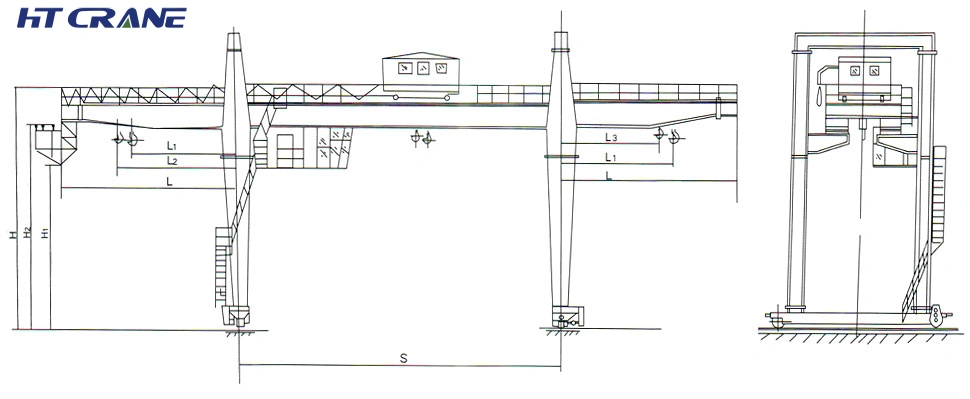
The hoist-trolley assembly on a double girder crane is a more substantial unit than the hoist on a single girder design. Three configurations are commonly specified:
Standard electric wire rope hoist trolley — the most common configuration for 10T–80T. A wire rope hoist is integrated into a four-wheel trolley that runs directly on the girder rails. This is the simplest and most maintainable arrangement.
Separate crab trolley (crane trolley) — used on heavy and extra-heavy cranes above 80T. The crab consists of a fabricated trolley frame carrying a dedicated hoist mechanism with drum, motor, gearbox, and brake system. This configuration handles the highest loads and duty cycles and is fully serviceable in the field.
Twin hoist configuration — two hoists on a single trolley or two independent trolleys on the same crane. Used when tandem lifts are required — lifting one end of a long, heavy object with each hoist simultaneously. Common in shipyards and structural steel fabrication.
Shipyards represent the most demanding double girder gantry crane environment. Cranes in this sector routinely operate at high duty cycles, handle loads close to their rated SWL, and work in a salt-air environment that accelerates corrosion. Spans of 40–60 metres are common to cover the full width of a ship block assembly area or drydock entrance.
For shipyard applications, the crane duty class is typically M6 or M7 per ISO 4301, reflecting the high lift frequency. Structural design includes additional corrosion protection, and maintenance access provisions — walkways, service platforms, and lifting points for hoist servicing — are built into the design from the outset. This is not a standard workshop crane scaled up. It is a specifically engineered machine for one of the most demanding industrial environments.
Steel service centers and rolling mill facilities use double girder gantry cranes for coil handling, slab transfer, and mold transportation. The defining characteristic of this application is thermal environment: cranes operating above areas where molten metal is processed must be specified for elevated ambient temperatures, with heat shields on structural and electrical components.
Coil handling cranes typically use C-hook attachments rather than a standard wire rope hook — a C-hook engages the coil’s inner bore and holds it during horizontal movement without requiring a sling. This is a specialized attachment that must be specified and load-rated as part of the original crane procurement, not added as an afterthought.
Precast concrete factories use large-span double girder gantry cranes to lift form molds, move cured elements through the production line, and load finished products for transport. Precast elements — wall panels, floor slabs, bridge beams — are heavy, often irregular in shape, and require precise placement.
Cranes in precast applications are typically 20T–80T with spans of 20–35 metres, operating at moderate duty cycles (M4–M5). The key specification requirements are accurate load positioning and reliable anti-sway control — a swinging concrete panel in a production line is a safety hazard and causes production disruption.
Module yards for oil and gas construction, wind turbine assembly facilities, and heavy logistics hubs all share a similar profile: large open areas, heavy and irregular loads, and the need for the crane to work across the full yard width. Double girder gantry cranes in these environments are typically 50T–320T with spans matching the yard width — often 30–60 metres.
For outdoor module yard applications, the crane must be designed for the site’s wind load zone, with storm anchoring systems and wind speed monitoring as standard. Structural corrosion protection must be appropriate for the coastal or industrial environment.
All hoist, trolley, and gantry travel motions use AC variable frequency drives as standard. This provides smooth, stepless speed control across the full operating range — from slow precision positioning to full travel speed. VFD drives also extend the service life of mechanical components by eliminating the shock loads that older contactor-controlled systems imposed on drive trains.
Energy regeneration on the hoist axis — feeding recovered braking energy back to the power supply — is standard on all cranes above 32T. In high-throughput operations with frequent long lowering cycles, regenerated energy meaningfully reduces operating cost over the crane’s service life.
Load swing is a safety and productivity issue on large-span, high-lift cranes. Our standard anti-sway system uses motion profile control — the drive system accelerates and decelerates the trolley according to a calculated profile that minimizes pendulum swing at the hook. For cranes handling precision loads or operating in restricted clearance environments, active anti-sway with encoder feedback is available as an upgrade.
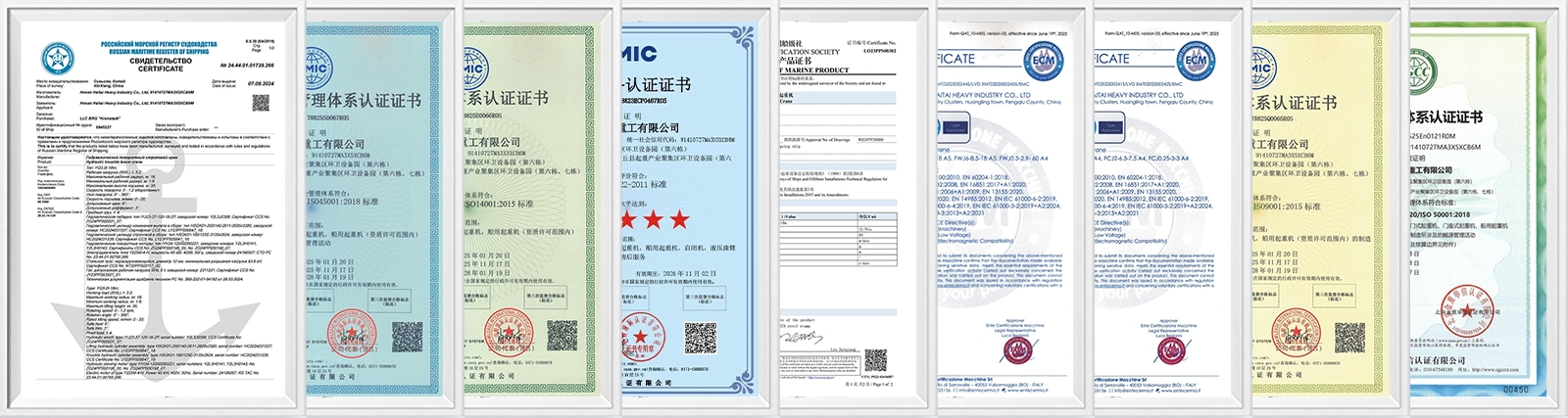
HT crane double girder gantry crane structures are designed to EN 13001 and FEM 1.001 standards. All primary structural welds are full-penetration welds completed by certified welders (EN ISO 9606-1). Non-destructive testing — ultrasonic or magnetic particle inspection — is performed on all critical joints as a standard manufacturing step, not an optional add-on.
Box girder camber is pre-set during fabrication to compensate for the deflection under full rated load, ensuring the girder remains level in service. Buyers should ask any supplier to confirm how camber is calculated and verified — it is a basic quality indicator that separates serious manufacturers from assemblers buying standard sections.
Our standard coating system for double girder gantry cranes specifies Sa 2.5 abrasive blast preparation followed by a zinc-rich primer, epoxy mid-coat, and polyurethane topcoat — total dry film thickness of 280–320 microns. For shipyard and coastal environments, an additional stripe coat on weld seams and exposed edges is applied as standard. Hot-dip galvanizing is available for specific structural components in highly corrosive environments.
A double girder gantry crane imposes significant wheel loads on its rail system. The maximum wheel load — which determines the foundation design — depends on the crane’s self-weight, maximum SWL, and the number of wheels per bogie. We provide full wheel load documentation as part of our pre-contract technical package.
Rail foundation design is a geotechnical and structural engineering task. The foundation must carry the wheel loads through the operating cycle and seasonal ground movement without differential settlement that would cause the crane to rack on its rails. Engage a qualified civil engineer with crane foundation experience before finalizing your site design — do not rely on the crane supplier to size the foundation.
Double girder gantry cranes in the heavy and extra-heavy categories have peak power demands of 200 kW to over 1,000 kW depending on capacity and speed. The electrical supply infrastructure — transformer, distribution board, conductor rail or festoon system — must be sized for the crane’s peak demand, not average demand. We provide detailed electrical supply specifications for each project.
At the scale of a double girder gantry crane purchase, supplier evaluation is as important as equipment specification. Four areas require particular attention:
Structural engineering credentials — does the supplier have in-house structural engineers, or do they rely on bought-in design services? Ask for the structural design standard applied and the method of verifying compliance. EN 13001 compliance should be verifiable, not self-declared.
Welding certification — all primary structural welders should hold current EN ISO 9606-1 certification. Ask for the welder qualification records as part of the quality documentation package.
Load test protocol — factory acceptance testing to 110% SWL is the minimum standard. For cranes above 100T, witnessed testing by an independent inspection body is strongly recommended. Confirm who witnesses the test and what certificate is issued.
Reference installations — request contact details for at least two operating customers with cranes of similar capacity and application. Visit if possible. A supplier with no verifiable operating references at this scale is a risk regardless of their quoted price.
A double girder gantry crane is a major capital investment with a service life of 20–25 years. Getting the specification right, choosing a supplier with genuine engineering capability, and ensuring the civil infrastructure is properly designed are the three things that most directly determine whether that investment pays off.
The specification process requires more upfront work than lighter crane categories — but the decisions made at specification stage are largely irreversible once manufacturing begins. Invest the time to define your load case, duty cycle, environmental conditions, and hook height requirements precisely before approaching any supplier.
HT crane team provides full pre-contract technical support at no cost: load case review, span and hook height confirmation, duty class calculation, and civil infrastructure guidance. Contact us with your project details and we will provide a complete technical proposal.










When the load is heavy, the span is wide, or the hook height requirement exceeds what a single girder crane can deliver — a double girder gantry crane is the answer. It is the structural choice for heavy industry, and for good reason: two main girders share the load, allow a higher-positioned hoist, and provide the structural rigidity needed for large spans and demanding duty cycles. Buyers often reach the double girder decision after outgrowing a lighter crane or after realizing that a single girder model cannot meet their hook height or span requirements. The challenge then becomes specification: double girder cranes involve more variables, more civil infrastructure, and larger capital commitment than their lighter counterparts. This page walks you through what defines a double girder gantry crane, what to specify, where it fits, and how to evaluate a supplier for a purchase of this significance. What Is a Double Girder Gantry Crane? A double girder gantry crane uses two parallel horizontal girders — the main beams — supported at each end by leg structures that run on ground-level rails.…