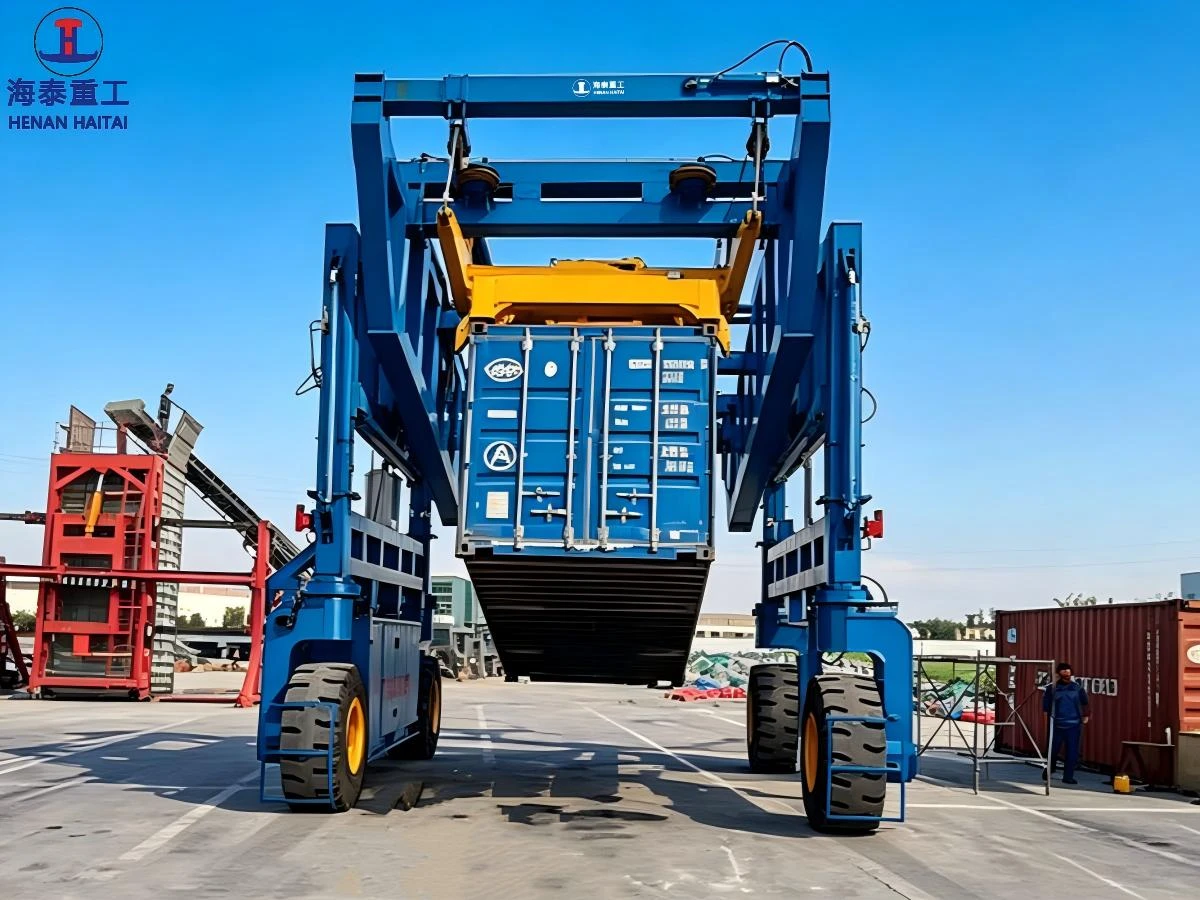
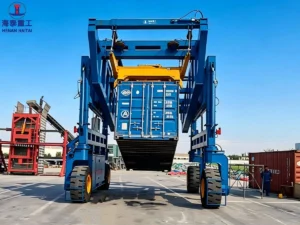
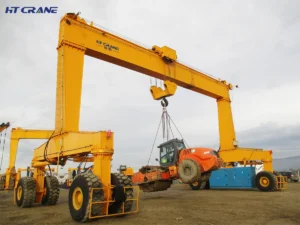
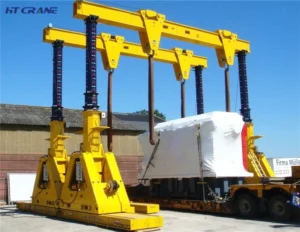
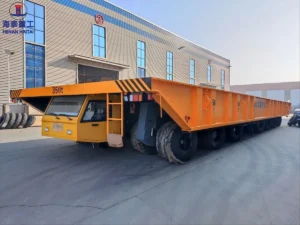
Buying a heavy-duty straddle carrier for the first time — especially for cross-border delivery — comes with real uncertainty. Lead times, customs clearance, technical compliance, and on-site commissioning all create risk. This case study documents exactly how we handled two 50-tonne hydraulic straddle carrier export to Romania: from the buyer’s initial inquiry to final handover.
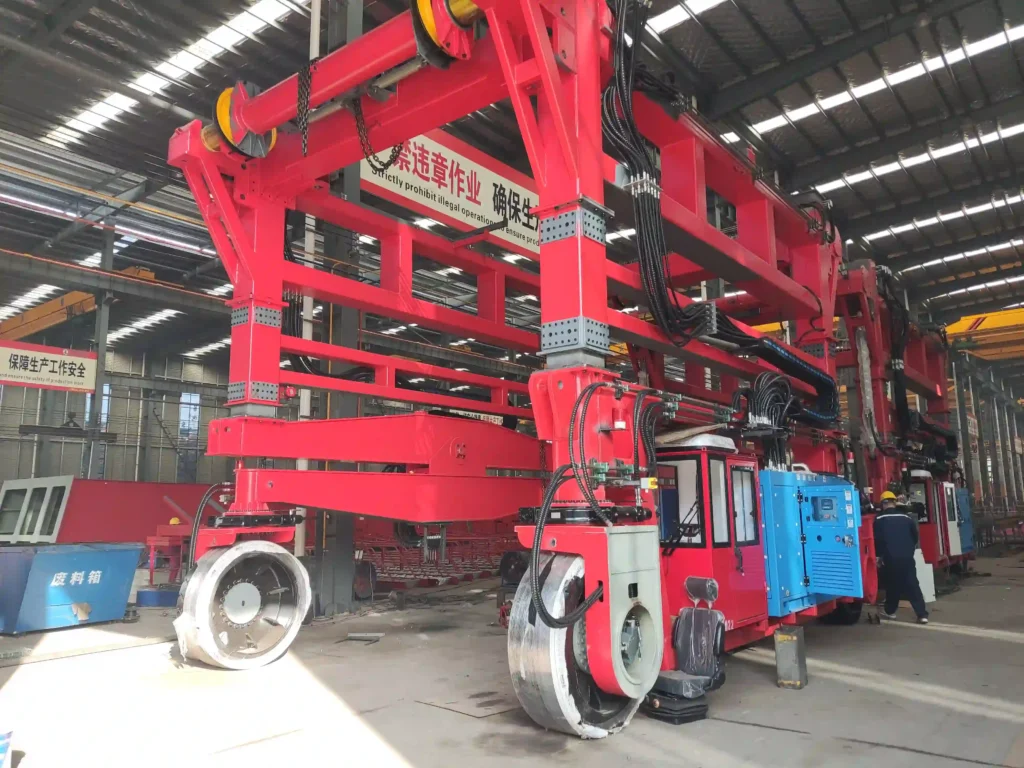
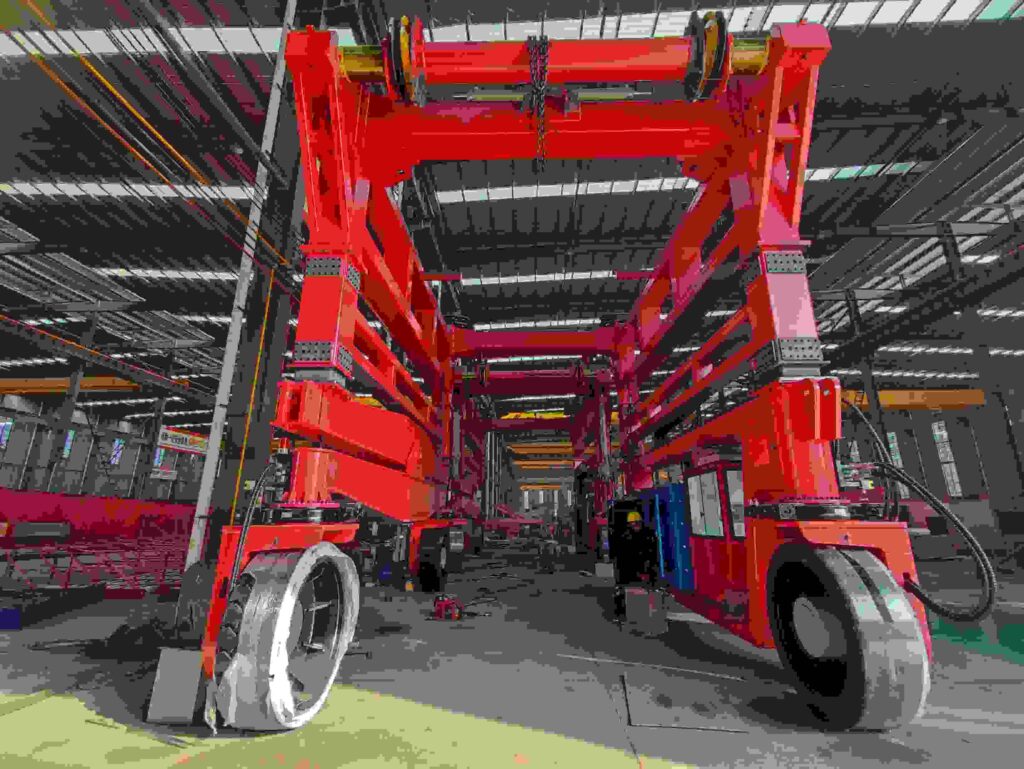
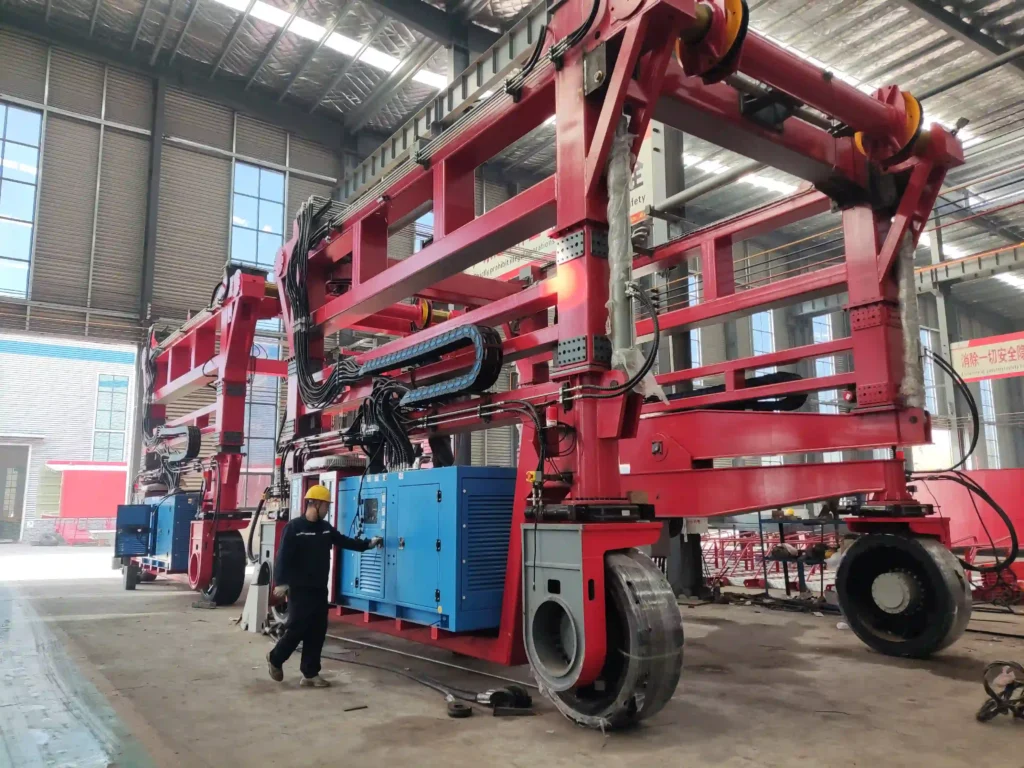
If you are evaluating a Hydraulic Straddle Carrier — whether in Eastern Europe or elsewhere — this article gives you a ground-level view of how the process works, what challenges arise, and how to avoid the most common pitfalls.
Project Background
The Buyer and Their Operation
The client is a privately owned heavy logistics company based in Constanța, Romania — a major Black Sea port city and one of the largest cargo transit hubs in Southeast Europe. Their facility handles oversized industrial cargo, prefabricated steel structures, and ISO containers for onward transport via road and rail.
Their existing equipment fleet was aging. Their previous straddle carrier — a diesel unit from a European manufacturer — had reached the end of its service life, and sourcing spare parts had become increasingly difficult and expensive.
They needed a replacement unit that could handle loads up to 50 tonnes, fit their existing yard layout, and be delivered within a realistic project timeline.
Why They Chose a Hydraulic Straddle Carrier
Hydraulic straddle carriers use a fully hydraulic drive and lifting system — unlike electric-over-hydraulic or fully electric models. For this client, the hydraulic configuration was preferred for three specific reasons:
- Their maintenance team already had hydraulic system expertise from other yard equipment
- The facility has no fixed high-voltage power infrastructure — a hydraulic diesel unit eliminates that dependency
- Hydraulic systems offer smoother low-speed load control, which matters when handling irregular or fragile industrial cargo
This is a common profile in Central and Eastern European heavy logistics operations — and it reflects a buyer segment that often gets overlooked in industry conversations focused exclusively on port automation.
Technical Specification: What Was Supplied
Core Machine Parameters
| Parameter | Specification |
|---|---|
| Lifting Capacity | 50T (under spreader / lifting beam) |
| Lifting Height | 5,500 mm (top of container) |
| Span (Inside Leg) | 4,500 mm |
| Overall Machine Width | 6,200 mm |
| Drive System | Diesel-Hydraulic (Cummins QSB6.7 engine) |
| Travel Speed (Laden) | 0–8 km/h |
| Travel Speed (Unladen) | 0–15 km/h |
| Steering | 4-wheel independent hydraulic steering |
| Tyre Configuration | 4 x solid rubber industrial tyres |
| Control System | Joystick + hydraulic proportional control |
| Cabin | ROPS/FOPS certified, climate-controlled |
| Safety Standards | CE Marking – EU Machinery Directive 2006/42/EC |
| Structural Standard | FEM 1.001, ISO 4301 crane classification |
Lifting Attachment
The client required flexibility across different cargo types. A dual-configuration lifting attachment was supplied:
- Standard ISO spreader (20ft / 40ft telescopic) for container handling
- Lifting beam with adjustable hook points for steel structures and irregular loads
Both attachments are certified to the 50T working load limit and include overload protection systems.
Customization for This Project
Several elements were adapted for this specific application:
- Extended leg clearance height to accommodate flatbed trailer loading at the client’s facility
- Cold weather hydraulic fluid specification (suitable to -25°C) for Romanian winter conditions
- CE documentation package in Romanian and English to satisfy local equipment registration requirements
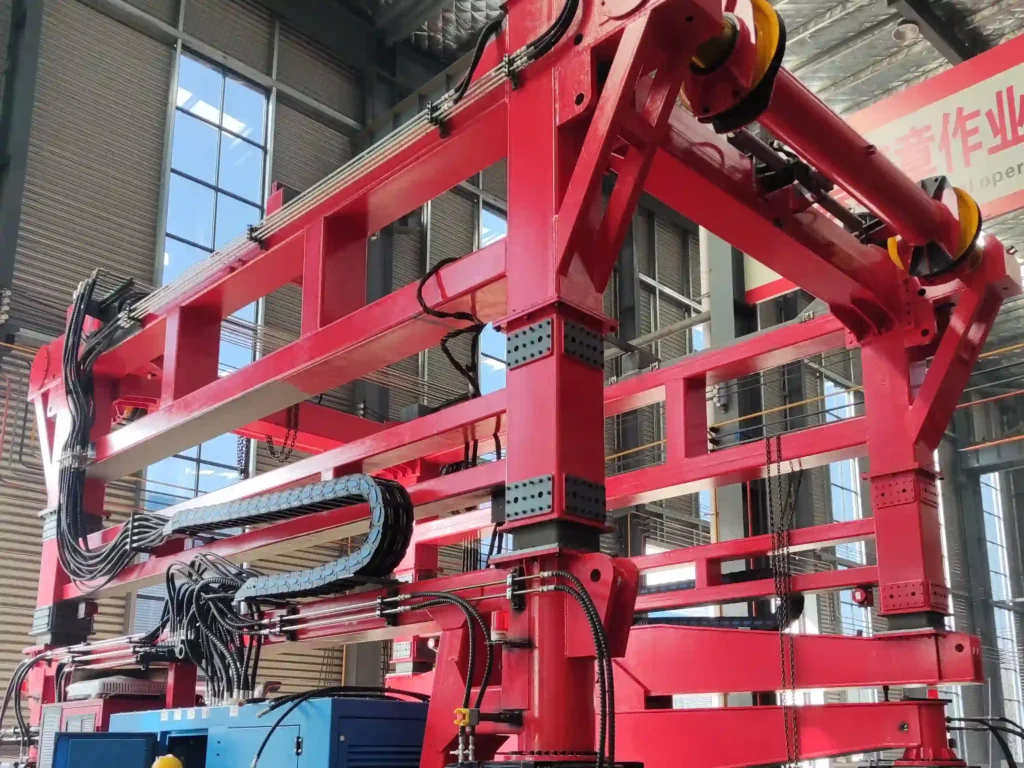
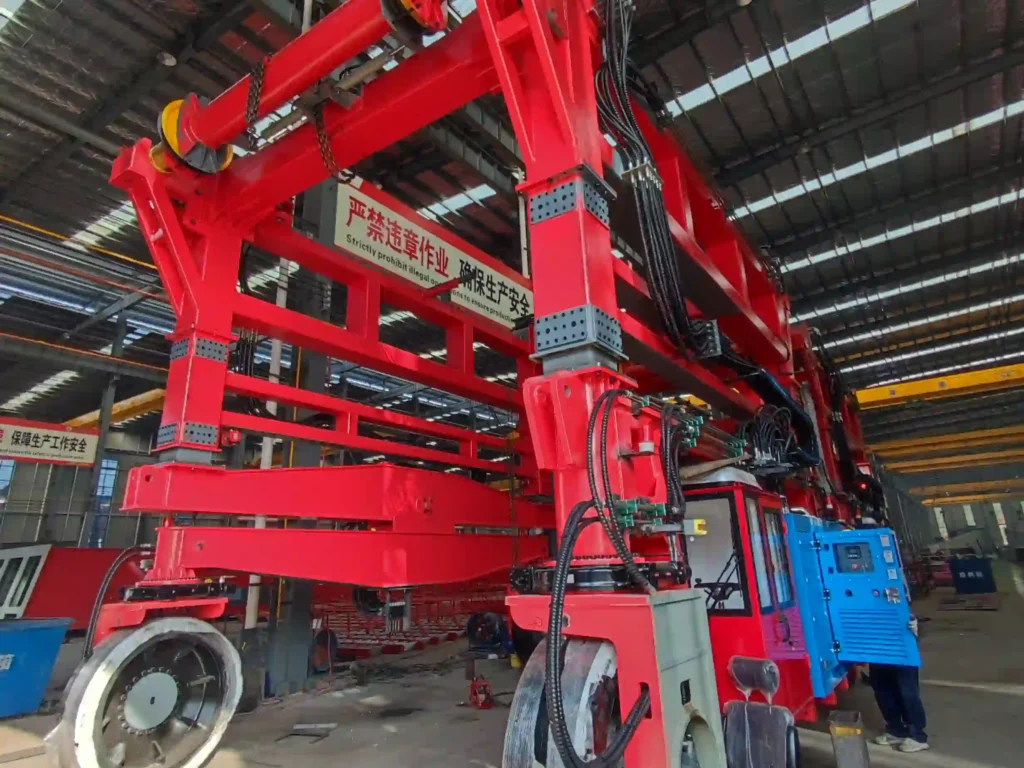
Export and Logistics Process
Documentation and Compliance
Exporting heavy equipment to Romania — an EU member state — requires full CE compliance documentation. This is non-negotiable. For this project, the documentation package included:
- CE Declaration of Conformity (EU Machinery Directive 2006/42/EC)
- Full load test report (factory acceptance test, witnessed by third-party inspector)
- Structural calculation report
- Electrical and hydraulic schematics
- Spare parts catalogue
CE certification was verified by a notified body prior to export. This step took approximately 15 working days and was factored into the project schedule from the outset.
Shipping and Customs
The machine was shipped from Qingdao port to Constanța port — a direct Black Sea route with a transit time of approximately 18–22 days.
Shipping configuration: flat-rack container + open-top container for the main machine body and detached components (spreader, cabin, counterweight). Total cargo weight: approximately 68 tonnes (machine + attachments + packing).
Customs clearance at Constanța was handled by the client’s local freight forwarder, with our team providing all required technical documentation. No customs delays occurred — a direct result of complete documentation prepared in advance.
Timeline Summary
| Phase | Duration |
|---|---|
| Order confirmation to production start | 7 days |
| Manufacturing and assembly | 65 days |
| Factory acceptance test | 5 days |
| Export documentation and CE certification | 15 days |
| Sea freight (Qingdao to Constanța) | 20 days |
| On-site installation and commissioning | 7 days |
| Total project duration | ~119 days |
On-Site Commissioning
Installation Process
Our two-person commissioning team traveled to Constanța for on-site installation. The machine arrived in three main sections to reduce shipping height. Reassembly took two days using the client’s yard crane.
Hydraulic system filling, circuit bleeding, and function testing were completed on day three. Full load testing — using the client’s actual cargo — was completed on day four and five, with the client’s engineering team present throughout.
Operator Training
Two of the client’s operators were trained on-site over three days. Training covered:
- Daily pre-shift inspection checklist
- Safe load handling procedures for containers and beam lifts
- Hydraulic system basic fault identification
- Emergency stop and recovery procedures
Training materials were provided in Romanian. A video recording of the key operating procedures was also supplied for future reference.
Handover
Formal handover was completed on day seven. The client’s technical manager signed off on the handover certificate after confirming all systems were operating to specification. The hydraulic Straddle Carrier entered active service the following week.
What This Project Demonstrates
Key Lessons for Buyers
Three things made this project run smoothly — and they apply to any similar procurement:
1. CE compliance was scoped from day one. Buyers who treat certification as an afterthought often face delays at customs or local equipment registration. Planning CE documentation into the manufacturing timeline — not as a last step — saved 3–4 weeks on this project.
2. Customization was defined before order confirmation. The cold-weather hydraulic spec and leg clearance height were confirmed during the technical review phase. Changes requested mid-production would have pushed the delivery timeline significantly.
3. The client’s team was involved throughout. Having the client’s engineers present at factory acceptance test meant there were no surprises at commissioning. This is strongly recommended for any first-time purchase from an overseas supplier.
Is This Solution Right for You?
Hydraulic straddle carrier is well-suited for heavy industrial logistics, port-adjacent storage yards, and intermodal facilities handling mixed cargo types. It is not the optimal choice for high-throughput ISO container terminals where an RTG crane or automated system would deliver better cycle efficiency.
If your operation matches the profile described in this case — mixed cargo, limited power infrastructure, experienced hydraulic maintenance team — this is a solution worth evaluating seriously.
Conclusion
This Romania project is a representative example of what a well-managed hydraulic straddle carrier export looks like: clear technical specification, compliance planned from the start, realistic timeline, and proper on-site handover.
The Hydraulic Straddle Carrier has been in service for over 14 months at the time of writing. No major technical issues have been reported. Routine maintenance has been carried out by the client’s own team using our supplied maintenance schedule.
If you are considering Hydraulic Straddle Carrier procurement — the starting point is a detailed technical brief. Define your load, your yard layout, your power situation, and your compliance requirements before approaching any supplier.