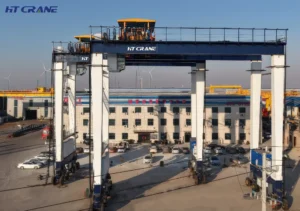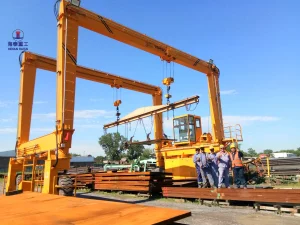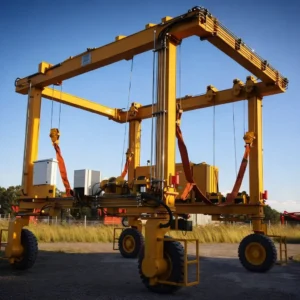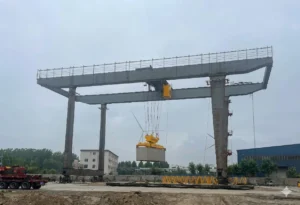
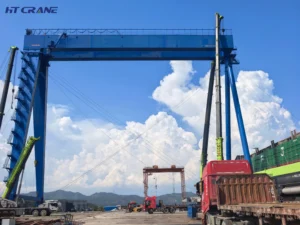
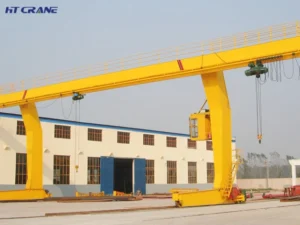
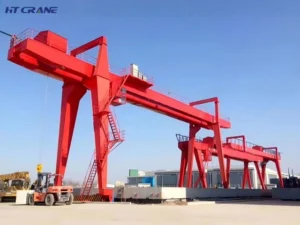
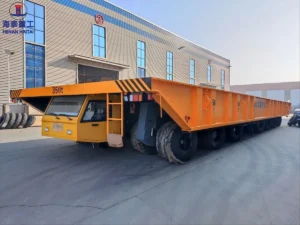
Saudi Arabia RTG crane market is rapidly shifting to electric, automated yard equipment driven by Vision 2030 goals. NEOM is building a fully electric automated terminal from scratch, while Jeddah’s mature ports are gradually modernizing existing fleets. Some Saudi buyers are replacing diesel equipment; others are specifying electric RTGs and remote control into a terminal that doesn’t have a diesel fleet to replace in the first place.
This article works through both markets and what each means for RTG specification in 2026, two real Haitai desert-adapted RTG cases, and supplier selection guidance for Saudi terminals.
Saudi Arabia RTG Crane Market Analysis
Saudi Arabia RTG crane market is developing around two connected priorities: expanding container-handling capacity and modernizing terminal equipment for higher efficiency, automation, and lower energy consumption. That shift is tied to Vision 2030 and the Kingdom’s push to become a global logistics hub, and it shows up differently at two locations.
- Port of NEOM is building a new container terminal around fully automated and electric equipment from the ground up.
- Jeddah Islamic Port, by contrast, is a mature environment where established operators are investing in infrastructure and gradually modernizing existing fleets.
Port of NEOM is building Terminal 1 around 30 electric RTGs and automated STS cranes, while Jeddah Islamic Port continues attracting large-scale investment from RSGT and DP World.
NEOM RTG Crane Development: A New Benchmark for Saudi Terminals
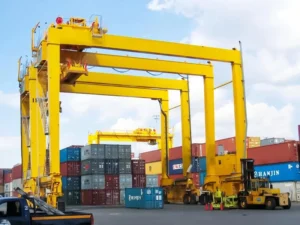
Port of NEOM is the clearest example of Saudi Arabia’s move toward automated, electric yard equipment. The official Port of NEOM website currently states that Terminal 1 will launch from 2027 onwards, built up to 1.5 million TEU of capacity across a 900-meter quay and two berths, with 10 STS cranes and 30 electric rubber-tyred gantry cranes. The terminal will also use Intelligent Guided Vehicles, automated STS cranes, and a smart fleet-management system integrated with the Terminal Operating System.
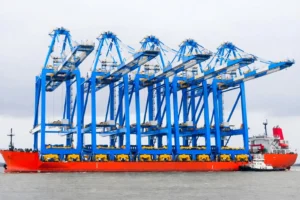
NEOM has separately described the arrival of the Kingdom’s first fully automated, remote-controlled STS and electric RTG cranes as a milestone in its development — worth reading as equipment delivery ahead of the terminal’s 2027 operational launch, the same pattern seen at other new-build automated terminals, rather than a sign the terminal is already running.
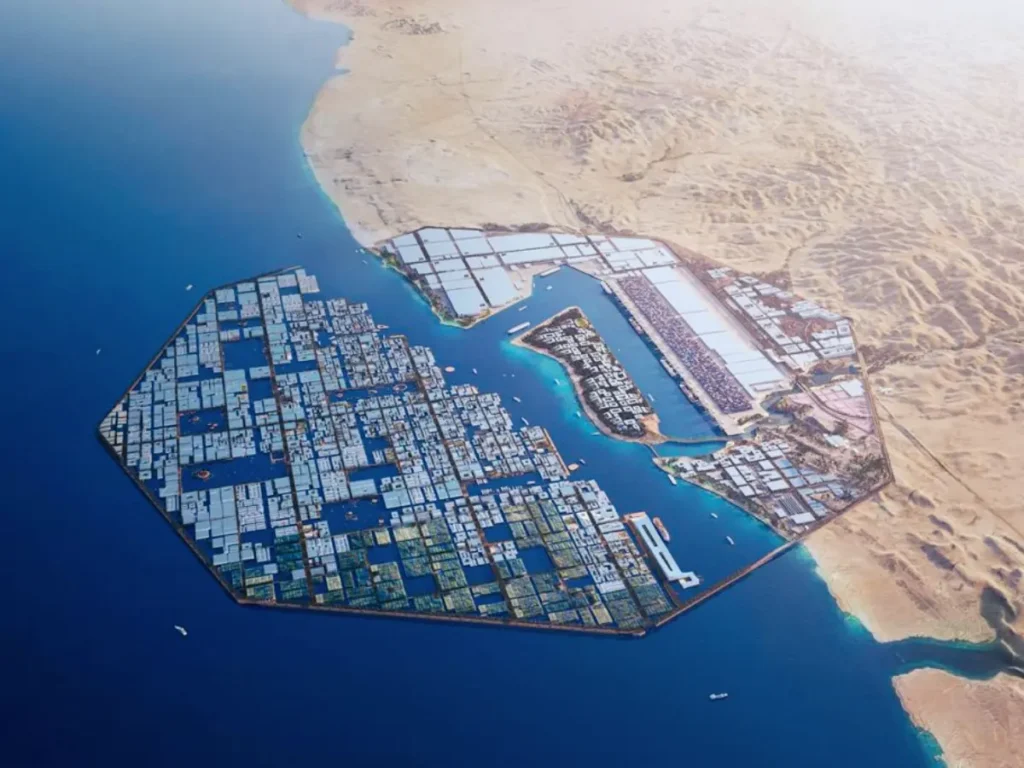
For suppliers, the more important point is that the RTG isn’t being procured as an isolated yard machine: it’s one part of a connected architecture spanning electric yard crane operation, automated ship-to-shore cranes, Intelligent Guided Vehicles, smart fleet management, TOS integration, a centralized control room, and remote operator functions. For a buyer researching an electric RTG crane for the Saudi market, NEOM is a genuine reference case precisely because the equipment choice is inseparable from the terminal’s automation and sustainability goals, not a bolt-on feature.
Why Electric RTG Cranes Matter at NEOM?
NEOM’s T1 development is built around renewable energy and fully electric equipment, which changes the equipment-selection process compared with a conventional project. A diesel RTG specification mainly turns on lifting capacity, span, stacking height, travel speed, and fuel consumption. An automated electric RTG project adds a longer list of engineering questions:
- how the RTG receives electrical power?
- what power quality is available at the yard?
- how the crane communicates with the TOS?
- what positioning technology is used?
- how anti-collision functions interact with adjacent equipment?
- how remote operation is handled, what happens when communication drops?
- how maintenance technicians safely access high-voltage components?
A supplier entering this segment of the Saudi market needs control architecture and electrical engineering capability that goes well beyond structural crane manufacturing — that side of the project can matter as much as the steel structure itself.
Jeddah RTG Crane Market: Large-Scale Terminal Investment
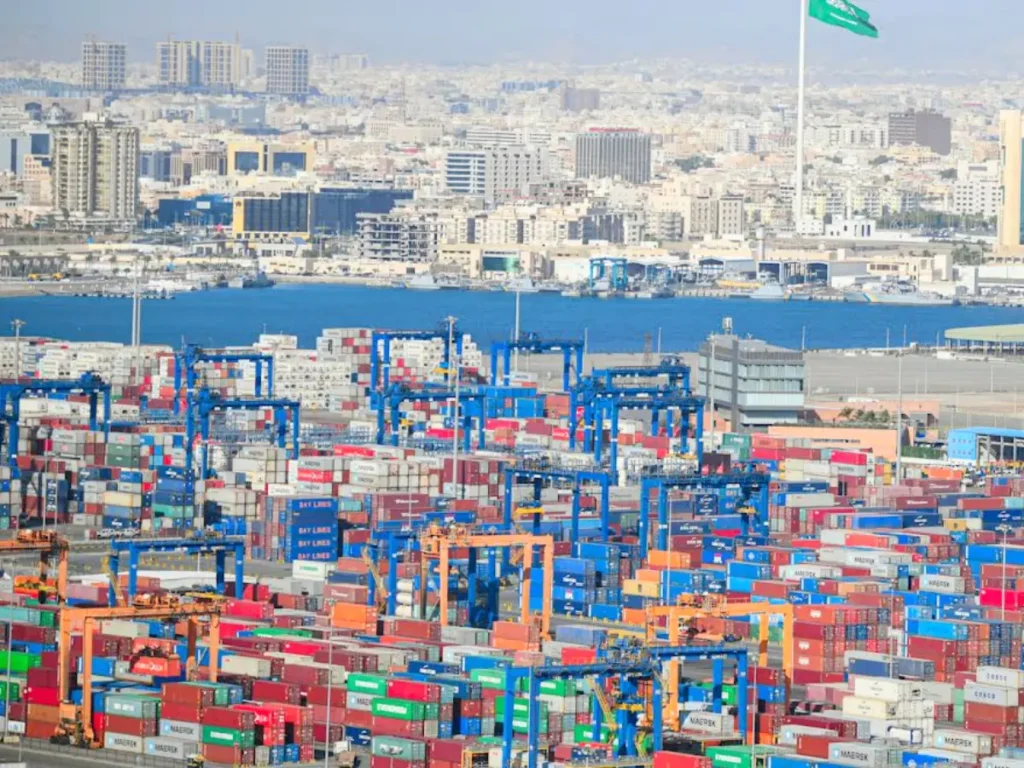
Jeddah Islamic Port is the other major side of the Saudi market. RSGT operates one of the country’s major container terminals there, with a published annual capacity of roughly 6.2 million TEU and 24 ship-to-shore cranes in operation. According to SISCO Holding’s 2025 annual report, RSGT has invested approximately SAR 3.5 billion in its Jeddah container terminal, including development of the North Terminal and integration of advanced technologies, and reduced fuel consumption 20% year-on-year by replacing diesel with hybrid equipment while cutting energy consumption 15%.
That’s a transition already underway inside an operating terminal, not a future plan — which is what makes Jeddah relevant to a different segment of buyers than NEOM. The opportunity at a mature port like Jeddah isn’t limited to new terminals; existing operations create ongoing demand for diesel RTG replacement, hybrid RTG upgrades, electric RTG conversion, automation retrofits, control-system modernization, and spare-parts and lifecycle support.
Jeddah Terminal Expansion Is Adding to Equipment Demand
Jeddah is developing through multiple parallel investments rather than one project. RSGT announced in late 2025 that it had signed a term sheet with CMA CGM for a potential joint venture to develop and operate Terminal 4, with a planned investment of roughly SAR 1.7 billion focused on advanced infrastructure, handling equipment, and sustainability upgrades. Separately, DP World has been expanding its own Jeddah operation: in March 2025, DP World and Mawani inaugurated an expanded terminal representing a SAR 3 billion (approximately US$800 million) investment, with DP World stating the terminal would be equipped with 17 Megamax quay cranes by the end of 2025 and able to handle up to five ultra-large vessels simultaneously.
Taken together, these projects show Saudi container terminals competing on capacity, vessel size, and technology at the same time — which for RTG suppliers translates into demand for yard equipment capable of matching the productivity gains being built into the quay side.
Electric RTG Crane Saudi Arabia: When Does It Make Sense?
Electric RTGs suit a terminal with adequate electrical infrastructure and a clear goal of cutting direct fuel consumption and emissions, but electric equipment isn’t automatically the right answer for every existing yard. Before committing, a terminal should evaluate available electrical capacity, cable or power-distribution arrangement, crane operating hours, travelling distance, expected lifting cycles, yard block arrangement, maintenance capability, and future automation plans.
For a new project like NEOM T1, electrical infrastructure can be designed around the crane fleet from day one. For an existing Jeddah yard, a hybrid RTG often provides an easier transition, cutting fuel consumption without requiring the same level of fixed electrical infrastructure a fully electric system needs.
Saudi Arabia RTG Crane Replacement: Diesel, Hybrid, or Electric?
The replacement decision should be based on the total operating environment, not the purchase price alone:
| Factor | Diesel RTG | Hybrid RTG | Electric RTG |
|---|---|---|---|
| Initial Equipment Cost | Lower | Medium–High | High, especially with infrastructure |
| Fuel Consumption | High | Reduced | No direct diesel fuel use |
| Direct Emissions | Higher | Lower | Very low at point of operation |
| Existing Yard Compatibility | High | High | Project dependent |
| Automation Potential | Good | Very Good | Excellent |
| Infrastructure Requirement | Moderate | Moderate | Higher |
| Best Application | Conventional operations | Replacement and transition projects | New smart/green terminals |
For Saudi buyers, a hybrid RTG tends to make sense where a terminal wants to cut diesel consumption but isn’t ready for a complete electrical conversion. A fully electric RTG fits better once the terminal’s infrastructure, operating system, and long-term environmental strategy have already been designed around electrification — trying to force a fully electric fleet onto a yard that isn’t ready for it usually costs more than the fuel savings justify.
Two Real Export Case to Saudi Arabia
Case 1: 10+10 Ton Electric RTG Crane Built for Extreme Heat
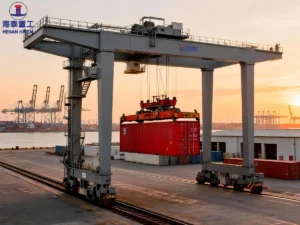
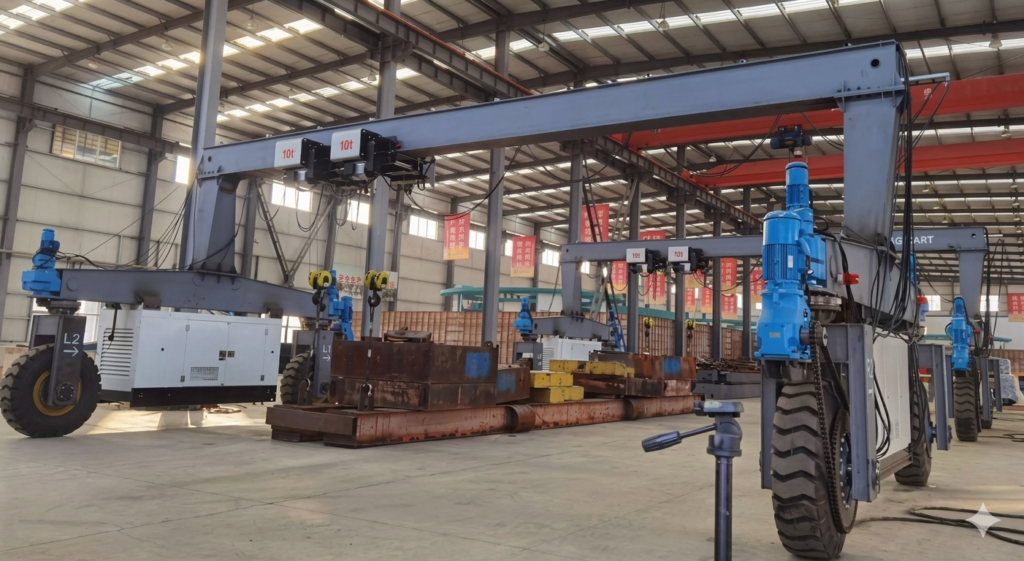
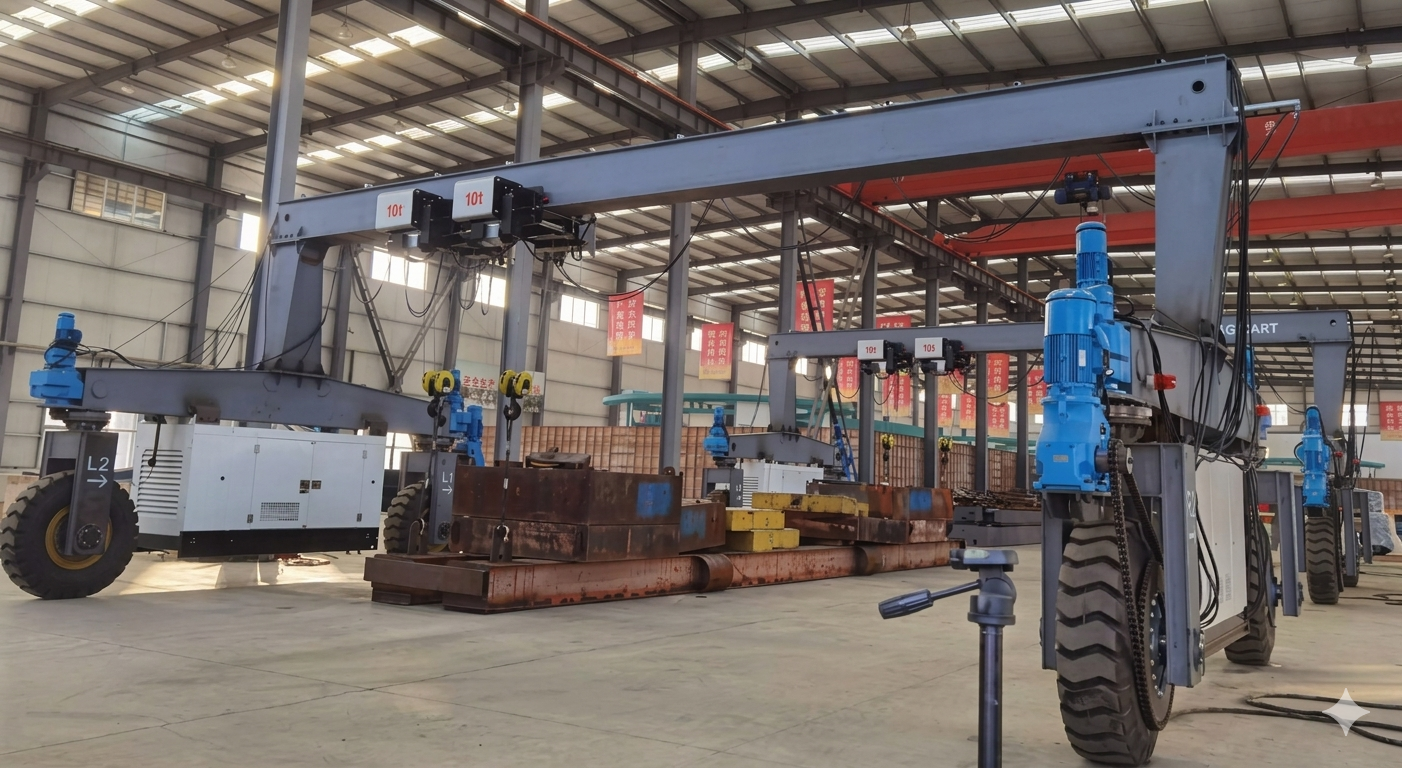
Haitai’s own Saudi export case offers a practical reference for electric RTG equipment under desert conditions. In 2021, Henan Haitai Heavy Industry Co., Ltd. exported an Electric Rubber-Tyred Gantry Crane 10+10t-10.8m to a Saudi industrial operator, replacing diesel-powered cranes that were struggling with three connected problems: fuel and maintenance costs that kept climbing with every shift, electrical failures and unplanned downtime once ambient temperatures pushed past 45°C, and tightening Vision 2030 environmental expectations the client’s existing diesel fleet couldn’t meet.
The 10+10 ton electric RTG crane case is relevant to any Saudi buyer researching electric RTG equipment because it addresses a problem a generic electric RTG specification tends to miss: the electrical system has to be engineered for the site’s actual climate — thermally managed cabinets, dust-sealed enclosures, UV-resistant coatings — not simply converted from a standard machine built for a temperate environment.
Uptime through peak summer heat exceeded the client’s expectations, and the client has since named Haitai a preferred supplier for future procurement.
| Parameter | Specification |
|---|---|
| Model | Electric Rubber-Tyred Gantry Crane 10+10t-10.8m |
| Rated Lifting Capacity | 10t + 10t dual hook |
| Lifting Height | 10.8 m |
| Drive System | Fully electric — zero direct emissions |
| Power Supply | Cable reel system |
| Control Mode | Operator cabin + wireless remote |
| Working Class | A5, ISO 4301 |
| Ambient Temperature | -20°C to +50°C |
| Corrosion Protection | Sa2.5 blast + three-coat system, DFT ≥300 μm |
| Certifications | ABS, CCS, BV |
| Export Year | 2021 |
| Destination | Saudi Arabia |
Case2: 60 Ton Hydraulic RTG Crane for Heavy-Duty Yard Lifting
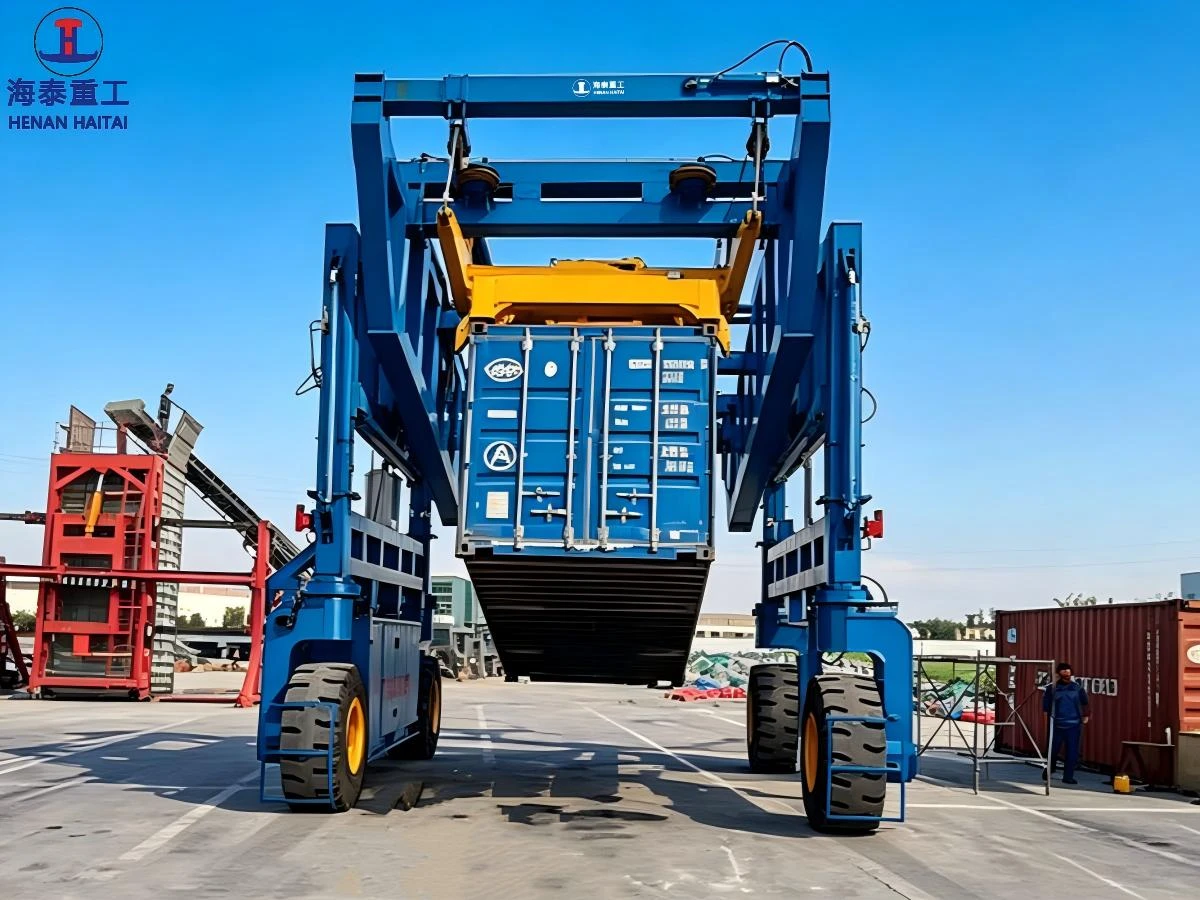
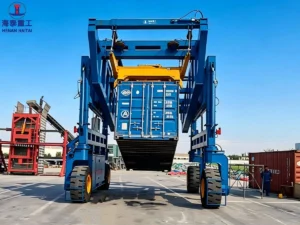
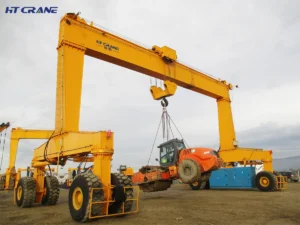
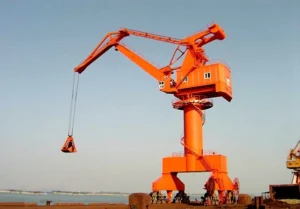
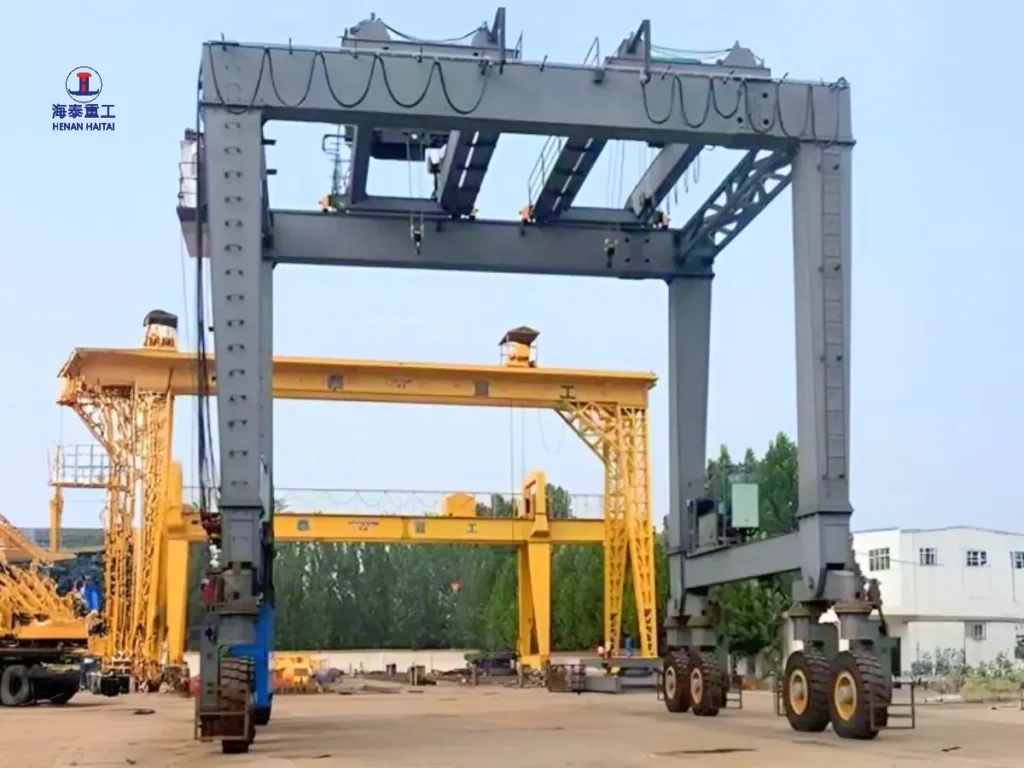
Haitai’s Saudi track record isn’t limited to electric equipment. In the same year, 2021, Haitai supplied a 60-ton, double-girder RTG crane with a 12.1-meter span to a separate Saudi customer for heavy-duty yard lifting and material handling — delivered alongside another Haitai gantry crane and a mobile crane as part of the same customer’s equipment fleet. Where the 10+10t unit above was a fully electric, dual-hook machine engineered for a specific desert-heat and emissions problem, this 60-ton unit runs on a hydraulic drive system, showing the range of power configurations Haitai has actually put into service in the Saudi market rather than a single standard product line.
The project profile is different from a port or container-yard application: this crane serves industrial yard lifting, precast concrete handling, and shipyard-adjacent work, where load points shift as operations evolve rather than staying fixed to a container stacking grid.
The tyred gantry crane was built at Haitai’s 80,000 m² facility in Henan Province under ISO 9001, ISO 14001, and ISO 45001 certified quality systems, with structural welds passing ultrasonic and magnetic-particle non-destructive testing. Before export, it cleared a 100% rated load test and a 125% dynamic overload test, both witnessed by an independent third-party inspector.
The 60 ton RTG crane shipped disassembled as break-bulk ocean freight with full export documentation — certificate of origin, packing list, and ABS certification records — and Haitai engineers supervised on-site assembly, VFD configuration, load testing, and operator training through to handover.
Haitai’s engineering team reviewed the customer’s yard surface, travel distance, lifting frequency, and power supply before finalizing the configuration, with the rubber-tyred undercarriage using multiple large tyres to spread the crane’s weight across a yard surface that — unlike a paved container terminal — may not be finished to the same standard.
The steel structure carries a coating specified for sustained outdoor exposure to heat, sand, and dust, and the crane went through Haitai’s standard sequence of structural welding, mechanical assembly, electrical installation, surface treatment, and functional testing as a complete unit before shipment.
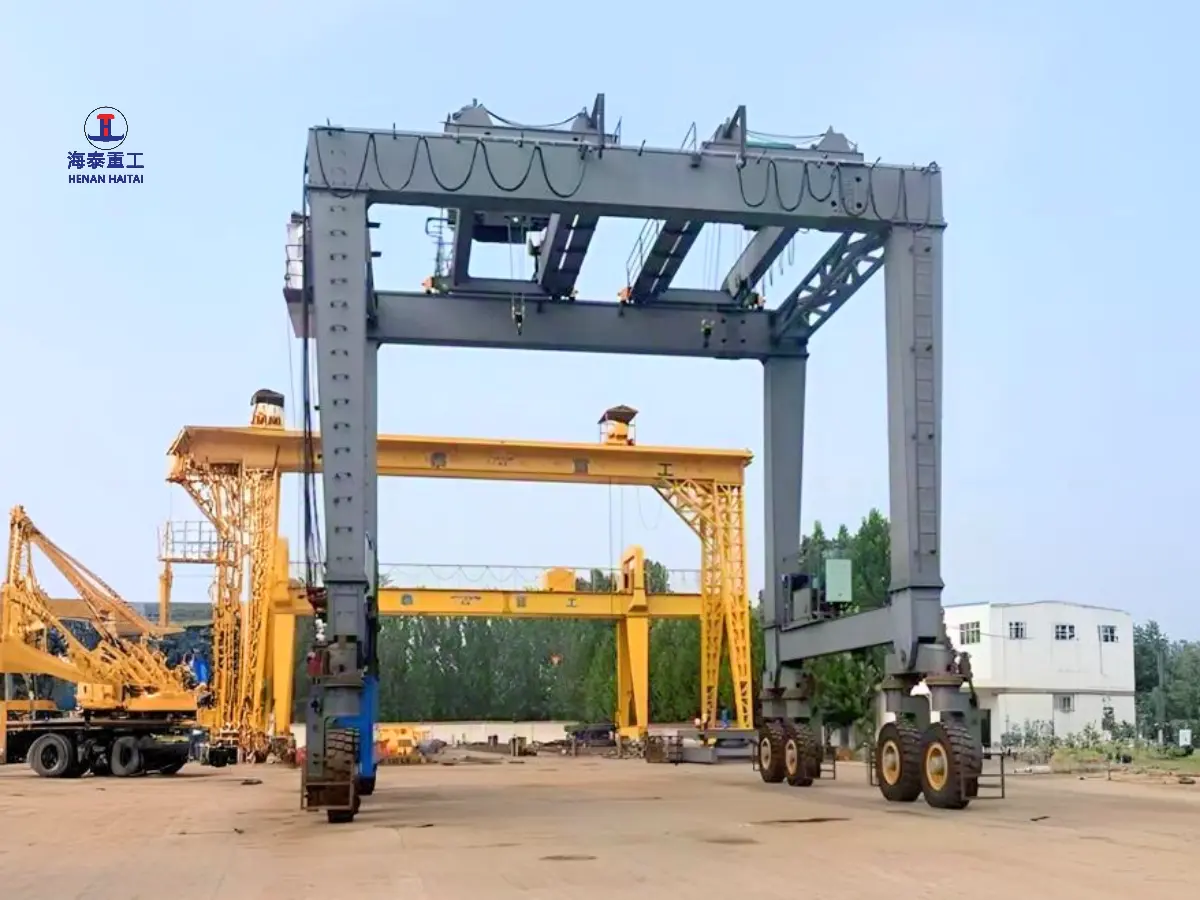
| Parameter | Specification |
|---|---|
| Equipment | Rubber-Tyred Gantry (RTG) Crane, double girder |
| Lifting Capacity | 60 tons |
| Span | 12.1 m |
| Drive System | Hydraulic |
| Application | Heavy-duty yard lifting and material handling |
| Manufacturing Year | 2021 |
| Destination | Saudi Arabia |
Together, the two Saudi cases make a useful pairing for buyers comparing options: one shows a fully electric RTG solving an emissions and reliability problem at a smaller capacity, the other shows a larger hydraulic RTG delivering flexibility and heavy-duty capacity to an industrial yard — the right choice in both cases came down to matching the drive system and configuration to the actual site problem, not defaulting to whichever technology sounds newest.
Desert Operating Conditions Matter for Saudi RTG Cranes
Saudi Arabia’s operating environment differs meaningfully from ports in temperate climates: high ambient temperatures, direct solar radiation, airborne dust, coastal salt exposure at Red Sea ports, long operating cycles, and wide temperature swings between day and night.
For an electric RTG specifically, the thermal design of the electrical system deserves particular attention — electrical cabinet cooling, motor temperature rise, VFD thermal management, cable protection, sensor reliability, dust sealing, UV-resistant coatings, and corrosion protection should all be evaluated against actual site conditions rather than a generic tropical or desert assumption. At Jeddah specifically, the salt-air environment tied to Red Sea maritime operations means the coating system should be specified for that exposure rather than treated as a standard paint spec.
Automation Requirements for Saudi RTG Crane Projects
Automation is becoming one of the strongest differentiators in the Saudi market. NEOM T1 is being built around automated STS cranes, electric RTGs, Intelligent Guided Vehicles, and a smart fleet-management system integrated with the TOS, which means future RTG procurement in this segment may require more than a conventional operator cabin.
Functions worth specifying at the initial engineering stage — rather than retrofitting later — include remote operation, anti-sway control, auto-steering, container position recognition, anti-collision protection, laser or camera-based detection, remote diagnostics, TOS communication, automated dispatching, and centralized fleet monitoring. Retrofitting automation onto a crane that’s already been delivered is usually more complicated and more expensive than specifying it from the start.
RTG Crane Maintenance in Saudi Arabia
Maintenance strategy should reflect both the local environment and the power system chosen. For conventional and hybrid RTGs, maintenance teams should regularly inspect the engine and generator, battery system, gearbox, brakes, tyres, steering system, wire ropes, sheaves, electrical cabinets, sensors, and safety systems. Electric RTGs add cable reels, power collection systems, VFDs, electric motors, high-voltage components, electrical insulation, and thermal management to that list.
Dust management deserves its own attention too — in a dusty environment, cooling efficiency and electrical equipment reliability both suffer if filters, cabinets, and ventilation systems aren’t maintained on schedule. Maintenance intervals should be set by operating hours as well as calendar time.
How to Choose an RTG Crane Supplier in Saudi Arabia?
A Saudi terminal operator should evaluate an RTG supplier on the complete project scope, not equipment price alone:
| Supplier Capability | What to Verify |
|---|---|
| Engineering Design | Customized configuration based on yard layout and operating conditions |
| Electric System | VFD, motors, cable reel or other power solution |
| Automation | Remote control, PLC, anti-sway, sensors and TOS integration capability |
| Environmental Design | High-temperature, dust and corrosion protection |
| Testing | Factory load test and third-party inspection options |
| Documentation | Drawings, manuals, certificates and electrical documentation |
| After-Sales | Spare parts, commissioning, operator training and technical support |
International export experience matters here specifically because Saudi projects often involve strict coordination among the manufacturer, port operator, customs, inspectors, and local installation teams — a supplier without that experience tends to show it during commissioning, not during the sales process.
Why Jeddah and NEOM Should Be Treated as Different Markets?
Although both are in Saudi Arabia, the procurement logic at each location is different enough that treating them as one market misses the point. NEOM represents a new-generation terminal designed around electrification and automation from the outset — its T1 plans center on electric RTGs, automated STS cranes, IGVs, and TOS-integrated fleet management.
Jeddah is a mature port environment where multiple operators are investing in infrastructure, capacity, and technology in parallel, with stronger near-term potential for RTG replacement, hybrid RTG upgrades, fleet modernization, automation retrofits, and ongoing spare-parts and maintenance support. A supplier’s content, technical proposals, and commercial approach should reflect that difference rather than pitching the same standard RTG package to both.
Conclusion
Saudi Arabia’s RTG market is moving toward electrification and automation faster than a conventional port-equipment market would suggest, and NEOM and Jeddah show why in two different ways.
- NEOM’s T1 is being designed around 30 electric RTGs, automated STS cranes, and a fully integrated automation architecture, now officially planned to launch from 2027 onwards — a strong forward reference point for Saudi smart-port equipment demand.
- Jeddah shows the other half of the market: RSGT’s roughly SAR 3.5 billion invested in its container terminal and DP World’s SAR 3 billion Jeddah expansion demonstrate that mature terminals are modernizing in parallel with new-build projects, not waiting for them.
Haitai’s own Saudi electric RTG case reinforces the practical lesson underneath both: electric equipment has to be engineered around the real site conditions — desert heat, dust, and in Jeddah’s case, Red Sea salt air — not simply converted from a standard machine.
For Saudi buyers, the useful question isn’t which RTG has the lowest purchase price. It’s which RTG architecture — hybrid for an existing Jeddah yard, fully electric for a new smart terminal, or automation-ready for future remote operation — actually matches the terminal’s power infrastructure, automation target, and long-term maintenance strategy.

FAQ
1. What is driving the Saudi Arabia RTG crane market in 2026?
The main drivers are port expansion, equipment modernization, automation, and energy-efficiency targets tied to Vision 2030. NEOM is developing a new automated electric terminal from the ground up, while Jeddah continues to receive large-scale investment in terminal infrastructure and equipment from established operators.
2. How many electric RTGs are planned for NEOM T1?
Port of NEOM’s current official information states that T1 is planned with 30 electric rubber-tyred gantry cranes and 10 STS cranes, alongside Intelligent Guided Vehicles and a smart fleet-management system integrated with the TOS, with the terminal planned to launch from 2027 onwards.
3. Should a Saudi terminal choose an electric or hybrid RTG?
Electric RTGs suit terminals with reliable electrical infrastructure and automation systems already planned in, as at NEOM. Hybrid RTGs tend to be more practical for existing terminals that want to cut fuel consumption without completely restructuring their yard power infrastructure, as RSGT has done at Jeddah.
4. Can an RTG crane operate reliably in Saudi Arabia’s high temperatures?
Yes, but the equipment has to be engineered for the actual ambient conditions rather than adapted from a standard machine. Electrical cabinets, VFDs, motors, cables, sensors, coatings, and cooling systems all need to be selected for high-temperature, dusty environments — Haitai’s Saudi electric RTG case was specified for ambient temperatures up to +50°C and built accordingly.
Q5. How should I choose an RTG crane supplier in Saudi Arabia?
Evaluate engineering customization, electric and automation capability, high-temperature design, factory testing, certification, commissioning support, spare parts, and international project experience — not price alone. For an automated terminal specifically, the supplier should also demonstrate the ability to integrate the RTG with the terminal’s control and operating systems.