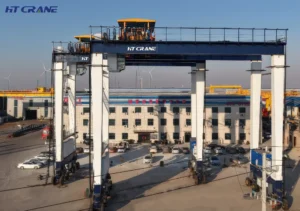
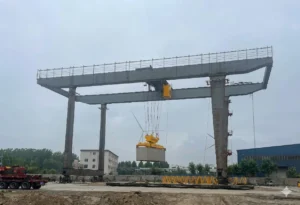
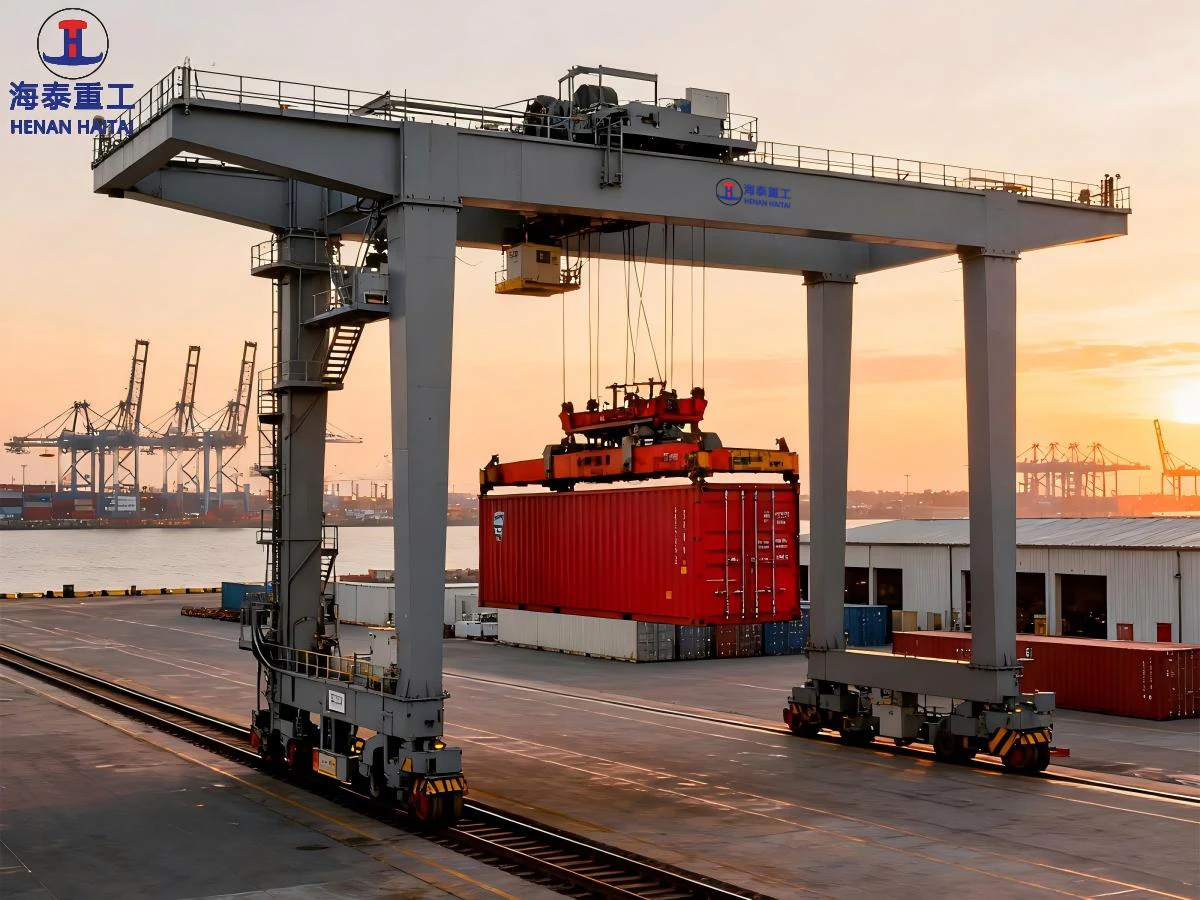
Mexico RTG crane market 2026 is closely tied to the expansion and modernization of Manzanillo, the country’s leading container port. Contecon Manzanillo added hybrid RTG and quay cranes through 2025 while continuing a multi-phase terminal expansion now in its fourth stage. This article covers Manzanillo’s RTG demand, hybrid and electric crane trade-offs, replacement planning, technical specifications, maintenance in a coastal climate, and supplier selection for Mexican container terminals.
Why Manzanillo Is the Main Reference RTG Crane Market in Mexico?
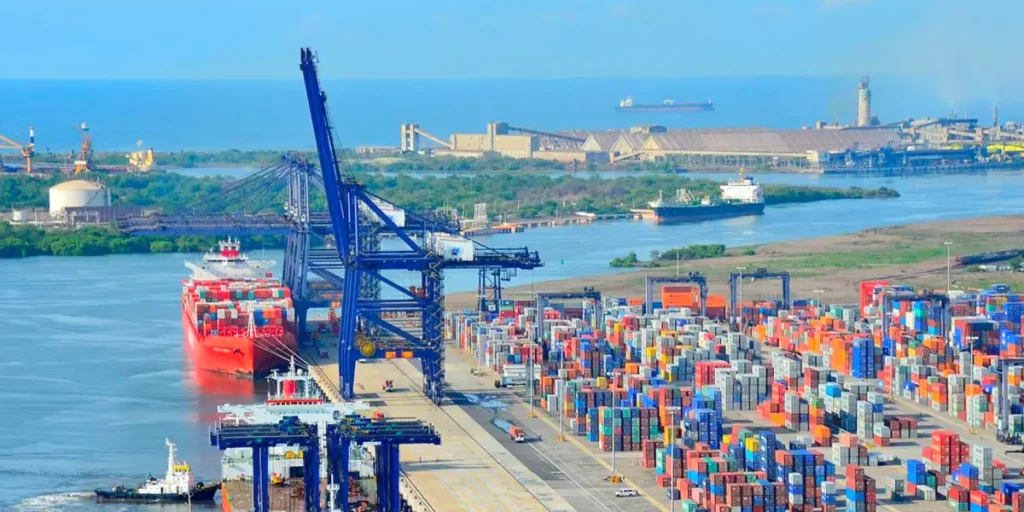
Mexico’s RTG crane market in 2026 is best read through one terminal: Contecon Manzanillo, where capacity expansion, fleet modernization, and a shift toward hybrid power are all happening in the same multi-phase project.
The port of Manzanillo handled 3,893,357 TEU in 2025, holding its position as Mexico’s leading container gateway, with Contecon Manzanillo alone moving 1,545,411 TEU of that total. For RTG suppliers and terminal engineering teams, that volume matters less than the pattern behind it — operators are no longer simply adding conventional diesel RTGs.
Mexico has several significant container ports, but Manzanillo shows the clearest example of expansion and equipment modernization developing together. Contecon Manzanillo — operated by ICTSI, which runs 33 terminals worldwide — has invested more than $300 million since 2023 in yard, berth, and equipment upgrades, and its cumulative investment across all expansion phases has now passed $900 million. That scale of commitment is what makes Manzanillo a useful reference point for the rest of the Mexican market, not just a single large order.
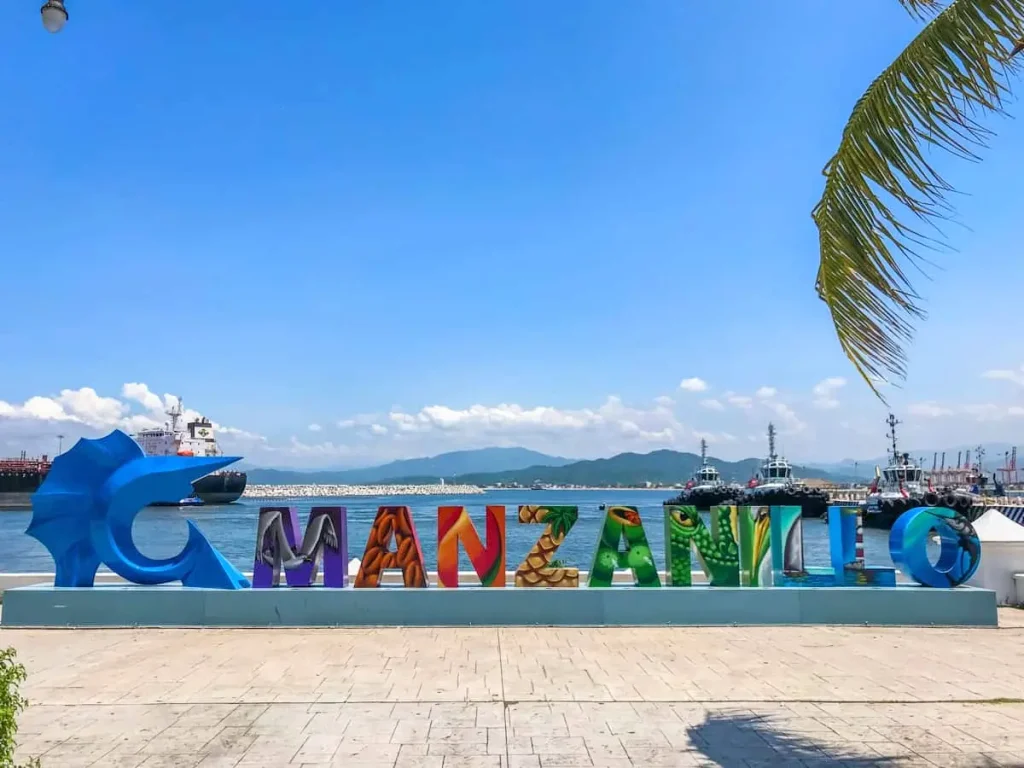
Manzanillo RTG Demand: Expansion and Replacement Together
Current RTG demand at Manzanillo comes from two connected sources. The first is terminal expansion — more berth length and yard space require additional container-handling capacity. The second is fleet modernization: existing terminals need to upgrade equipment while keeping daily operations running, creating demand for new RTGs that fit an existing yard layout but offer better fuel efficiency, reliability, and control.
Contecon Manzanillo illustrates both. In May 2025, the terminal received two new quay cranes designed for vessels up to 400 meters long, plus four hybrid RTG cranes to strengthen yard handling. That wasn’t the full year’s equipment program: in October 2025, Contecon received three additional hybrid RTGs as part of Phase 3B — seven hybrid RTGs added across 2025 overall, not four. Viewed this way, RTG replacement in Mexico is more accurately understood as part of a broader modernization strategy than as simple one-for-one equipment substitution.

Contecon Manzanillo: A Real Hybrid RTG Case
Contecon Manzanillo operates the Second Specialized Container Terminal of the Port of Manzanillo and holds ISO 14064 Carbon Neutral certification covering emissions measurement, reduction, and offsetting — a certification that’s becoming more relevant to global shipping line and investor requirements. Its hybrid RTGs combine diesel engines with lithium battery technology, which ICTSI states can cut fuel consumption by up to 50% compared with conventional equipment, alongside an AI-assisted remote-control system aimed at improving cargo movement, safety, and operator training.
That combination addresses three practical concerns at once: higher container-yard productivity, lower fuel consumption, and a working step toward smarter terminal operations. The lesson for buyers is that hybrid RTG technology should be evaluated as part of the whole terminal operating model, not simply as an alternative engine package bolted onto a standard machine.
Terminal Expansion Is Creating Additional RTG Demand
Contecon’s expansion continued into 2026. Phase 3B — 1,307 meters of quay, 12 hectares of additional yard, and 420 meters of added railway — was nearing completion in early 2026 as Phase 4 began. Phase 4 itself includes two new quay cranes, six additional RTGs, seven hectares of yard space, and more than 1,700 reefer container connections, funded by an investment the terminal’s CEO has put at roughly MX$2.4 billion (about US$139 million) specifically for this phase. Published targets for the completed expansion program vary somewhat by source, generally citing an installed capacity of 2 to 2.5 million TEU annually once Phase 4 is complete, expected around 2027.
For RTG suppliers, the relevant point is that equipment demand isn’t limited to the four hybrid RTGs delivered in May 2025 — it continues as the yard expands. The more useful procurement question for 2026 isn’t whether Mexico needs RTG cranes; it’s which RTG architecture fits the next generation of Mexican container terminals.
Larger Vessels Are Changing Yard Equipment Requirements
Contecon Manzanillo’s modernization is also tied to its ability to serve larger vessels. The terminal has stated its expanded infrastructure and equipment can handle vessels up to 400 meters long and up to 24,000 TEU in capacity — worth reading as a statement of infrastructure and crane-outreach capability rather than a claim that ships of that size call regularly, since vessels near 24,000 TEU are still concentrated mainly on Asia–Europe routes rather than transpacific Mexican services. The terminal has also passed 12 million TEU in cumulative throughput since starting operations in 2013.
Larger vessels put more pressure on landside and yard operations regardless of how often the largest ships actually call. A terminal built to handle bigger vessels needs enough yard capacity, RTG availability, and coordination between quay cranes, yard cranes, internal transport, and gate operations to convert berth productivity into real throughput — the RTG fleet can’t be sized independently of what the quay side is capable of unloading.
Hybrid RTG Cranes: Why the Technology Matters in Mexico
For an RTG running long hours daily, fuel consumption is a meaningful share of total cost of ownership, which is what makes the Contecon Manzanillo project a practical rather than theoretical example — ICTSI’s reported reduction of up to 50% in fuel consumption compared with conventional equipment translates directly into operating budget. When evaluating a hybrid RTG for a Mexican project, buyers should weigh annual operating hours, average lifting cycles, travelling distance, engine load profile, battery capacity, battery replacement cost, maintenance requirements, expected fuel savings, and local service capability together — a lower fuel bill doesn’t automatically mean a lower total cost once battery life and replacement are factored in.
Electric RTG Cranes: When Should Buyers Consider Them?
Electric RTGs offer another route to lower emissions, but suitability depends heavily on terminal infrastructure. A fixed electrical power system can suit a new terminal with planned utility infrastructure from the start; converting a large existing RTG fleet to electric power, by contrast, may require additional electrical distribution and cabling that a hybrid retrofit avoids. That’s part of why hybrid RTGs often offer a more flexible transition path for replacement projects specifically.
| Evaluation Factor | Conventional RTG | Hybrid RTG | Electric RTG |
|---|---|---|---|
| Initial Investment | Lower | Medium–High | High if infrastructure-dependent |
| Fuel Consumption | Higher | Lower | Very low direct fuel use |
| Existing Yard Compatibility | High | High | Depends on power infrastructure |
| Emission Reduction | Limited | High | Very high |
| Infrastructure Requirement | Moderate | Moderate | Higher |
| Replacement Project Suitability | High | Very High | Project dependent |
| Automation Potential | Good | Good | Excellent |
For Mexican terminals, hybrid systems tend to be most attractive when operators want to cut fuel consumption without rebuilding the entire yard’s power infrastructure — electric RTGs make more sense where that infrastructure is being built anyway.
Technical Specifications for an RTG Crane in Mexico
RTG specifications should be developed from the actual yard configuration rather than a standard catalog assumption — a typical container RTG spans six container rows plus a truck lane, though larger or customized systems may need a different span and stacking height. The items below should be confirmed before requesting a quotation:
| Specification | Typical Requirement | Why It Matters |
|---|---|---|
| Lifting Capacity | Container-specific configuration | Determines spreader and hoist system requirements |
| Span | Based on container rows and truck lane | Must match existing or planned yard blocks |
| Stacking Height | 4+1, 5+1, 6+1 or customized | Determines yard storage density |
| Travelling Speed | Project dependent | Affects cycle time and yard productivity |
| Power System | Diesel-electric, hybrid or electric | Influences operating cost and emissions |
| Control | Manual, remote or automated | Must match the terminal operating strategy |
| Safety System | Overload, limit, anti-collision, emergency systems | Supports safe high-frequency operation |
A supplier should also confirm tyre load, steering configuration, pavement condition, and container lane dimensions before finalizing the design — these details shape the undercarriage and steering system as much as the headline capacity figure does.
RTG Crane Replacement in Mexico: What Existing Terminals Should Check?
Replacing an RTG is more complicated than ordering a machine for a greenfield yard, because the replacement unit generally has to fit within the existing operating envelope. Before replacing an RTG, the terminal should collect the existing crane’s span, wheelbase, wheel diameter, stacking height, container block dimensions, truck lane width, power supply information, current PLC and VFD specifications, spreader type, operating cycle, and maintenance history, then check the new crane’s design against all of it.
This matters particularly at busy Mexican terminals, where replacement work has to be coordinated around ongoing operations — a crane that forces major changes to yard infrastructure increases both downtime and project cost. A customized replacement design frequently delivers better value than a lower-priced standard model once that disruption is priced in.
Manzanillo RTG Crane Maintenance Considerations
Manzanillo’s coastal location means corrosion and humidity have to factor into both RTG design and the maintenance program. Moisture, salt-laden air, rainfall, and temperature swings all affect structural coatings, electrical cabinets, cables, connectors, and mechanical components over time.
Routine maintenance for an RTG operating in Manzanillo should cover tyre condition, wheel alignment, the steering system, gearbox, brakes, wire rope, sheaves, the electrical cabinet, VFD cooling, sensors and safety devices, and — for hybrid units — the battery system, which should be built into the maintenance program from day one rather than treated as an accessory.
Lázaro Cárdenas: A Secondary Market Worth Watching
Manzanillo is the stronger starting point for understanding Mexico’s RTG crane market today because its throughput and active terminal expansion provide the clearest current evidence of equipment demand. Lázaro Cárdenas, Mexico’s other major Pacific container port, is worth tracking as a secondary market, but it deserves its own dedicated analysis — covering its own terminal equipment, replacement needs, and automation plans — rather than being treated as an identical market to Manzanillo based on regional proximity alone.
How to Choose an RTG Crane Supplier in Mexico?
A Mexican terminal operator should evaluate an RTG supplier on engineering capability, not equipment price alone. Chinese manufacturers can offer a competitive option for Mexican port projects, but the comparison should be based on the complete project package — international experience matters more for large RTG projects than for domestic ones, since shipping, assembly, and commissioning across a border introduce challenges a local project doesn’t have, and the ability to communicate clearly in English or Spanish with complete technical documentation meaningfully simplifies execution.
| Evaluation Area | What Buyers Should Check |
|---|---|
| Engineering | Customized RTG design and yard compatibility analysis |
| Manufacturing | Structural inspection, welding control and factory testing |
| Electrical System | PLC, VFD, sensors and safety-system integration |
| Energy System | Hybrid or electric configuration capability |
| Automation | Remote control, anti-sway and automation-ready interfaces |
| Documentation Package | Technical drawings, electrical documentation, spare-parts lists, installation and commissioning guidance, operator training |
| Export Experience | International projects, overseas commissioning, English/Spanish technical communication |
| After-Sales Support | Spare parts, troubleshooting, maintenance and training |
For a replacement project, the supplier should review the existing crane before finalizing the design. For a new terminal, the supplier should understand the future operating plan — including automation and energy targets — before the purchase order is signed.
Where the Mexico RTG Crane Market 2026 Is Headed?
The direction is becoming clearer: Manzanillo is expanding its infrastructure while adding hybrid equipment, and Phase 4 alone brings six more RTGs, seven hectares of yard, and two more quay cranes, on top of the hybrid units already delivered in 2025. Combined with the terminal’s stated ability to serve larger vessels, yard productivity is going to stay a live issue rather than a one-time upgrade. That points to four opportunity areas for RTG suppliers in Mexico: new RTG cranes for expanding yards and new container blocks; RTG replacement for terminals upgrading older fleets; hybrid RTGs for cutting fuel consumption and emissions without rebuilding terminal power infrastructure; and electric or automated RTGs for new terminals pursuing higher automation and environmental performance.
Conclusion
Mexico’s RTG crane market is best understood through Manzanillo’s development. The port handled nearly 3.9 million TEU in 2025, and Contecon Manzanillo has kept expanding with new quay cranes, hybrid RTGs, and additional yard infrastructure — seven hybrid RTGs delivered across 2025 alone, with Phase 4 already bringing six more. For Mexican terminal operators, the buying decision is moving well beyond basic lifting capacity: fuel consumption, replacement compatibility, automation, electrical infrastructure, maintenance, and lifecycle cost are now part of the same conversation. For an RTG supplier, the opportunity in Mexico isn’t simply selling another rubber tyred gantry crane — it’s providing equipment that fits the terminal’s existing yard and supports its next stage of growth.

FAQs
1. Why is the Mexico RTG crane market growing in 2026?
Growth is being driven by container throughput, terminal expansion, and equipment modernization happening together. Manzanillo handled nearly 3.9 million TEU in 2025, and Contecon continues investing in yard space, quay cranes, and RTGs through its Phase 4 expansion.
2. What is driving demand for Manzanillo RTG cranes specifically?
The main drivers are terminal expansion, larger vessel handling capability, yard capacity growth, and replacement of existing equipment. Phase 4 of Contecon’s expansion alone includes six additional RTGs and seven hectares of new container yard.
3. Why are hybrid RTG cranes gaining traction in Mexico?
Hybrid RTGs cut fuel consumption while keeping the operational flexibility of a rubber-tyred gantry crane. At Contecon Manzanillo, ICTSI has reported fuel-consumption reductions of up to 50% compared with conventional equipment — a meaningful saving for a crane that runs long hours daily.
4. Should a Mexican terminal choose electric or hybrid RTG cranes?
It depends on available power infrastructure, operating cycle, environmental targets, and budget. Hybrid RTGs tend to suit replacement projects where flexible energy use matters and full electrification isn’t yet in place; electric RTGs suit new terminals building electrical infrastructure from the start.
5. How should I choose an RTG crane supplier in Mexico?
Compare suppliers on engineering capability, yard compatibility, factory testing, electrical and automation systems, hybrid technology experience, spare-parts support, and international commissioning experience — not on price alone. A capable supplier should be able to customize the crane to the terminal’s actual operating requirements and review the existing equipment before finalizing a replacement design.