Marine lifting decisions carry consequences that onshore crane selections simply do not. The wrong equipment for an offshore construction project means delayed installation windows, additional mobilization costs, or lifts that the crane physically cannot execute. The wrong configuration on a vessel means idle cargo time, safety incidents, or equipment that cannot be serviced at sea. Getting the selection right from the start matters.
Two crane types dominate marine and offshore lifting applications: floating cranes and marine deck cranes. They are not interchangeable. A floating crane is a heavy construction tool — a dedicated lifting platform designed for large-scale offshore and port infrastructure work. A marine deck crane is an integrated vessel system — built for continuous cargo handling, supply operations, and maintenance lifts aboard ships, platforms, and offshore vessels.
The distinction seems simple. In practice, the right choice depends on project scale, lifting capacity requirements, operational environment, and whether the crane serves a temporary construction scope or a permanent onboard function. This article covers both systems in detail, compares them across the factors that matter most, and provides a practical framework for selecting the right crane for your marine project.
What Is a Floating Crane?
Definition and Structure
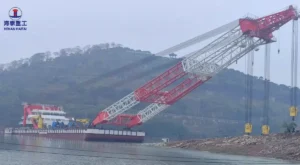
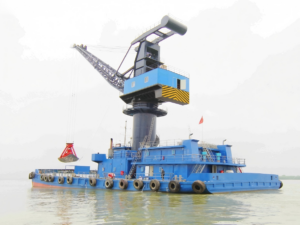
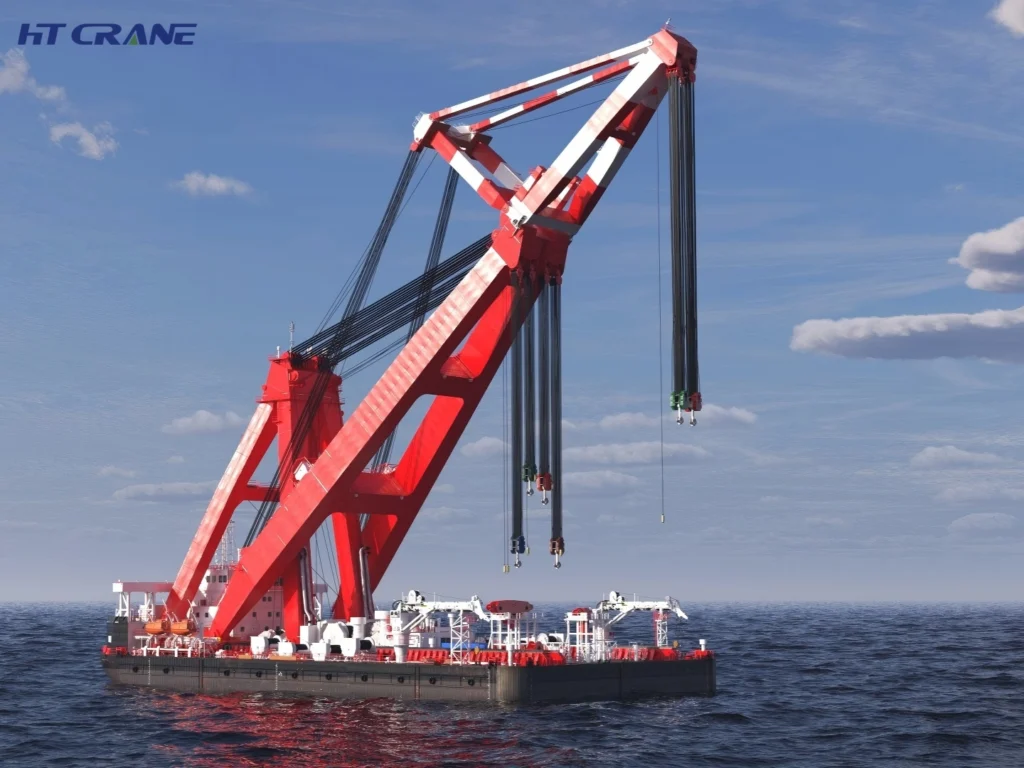
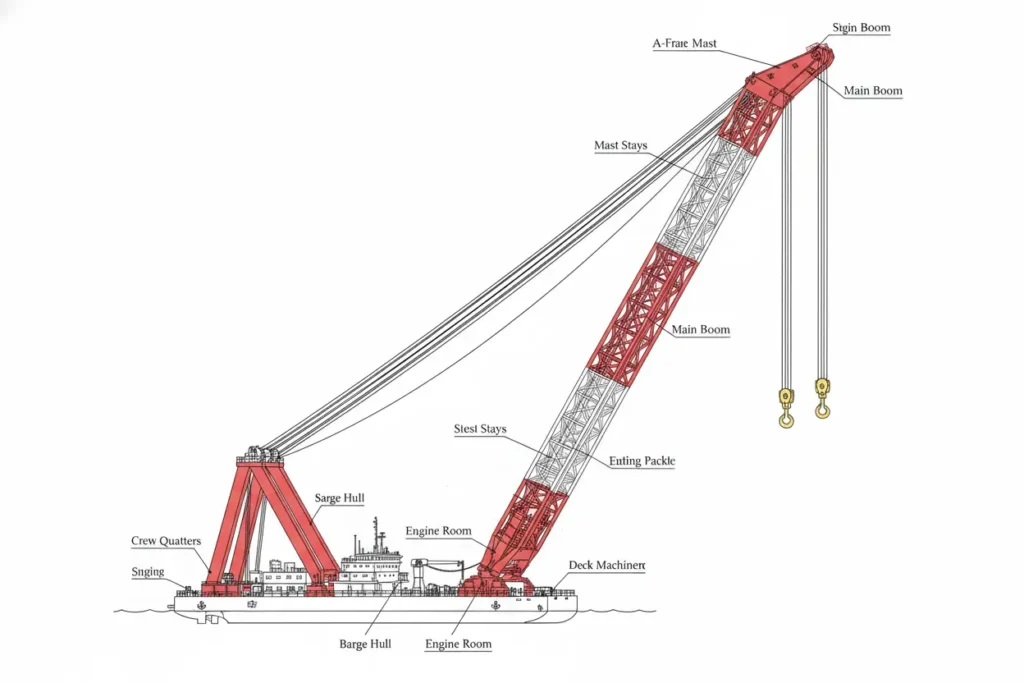
A floating crane is a heavy-lift crane system mounted on a barge or dedicated floating platform. The crane itself — typically a revolving slewing crane or a sheerleg configuration — is fixed to the floating hull, which provides both the operational platform and the buoyancy base. The entire assembly is purpose-built or purpose-converted for marine lifting operations.
Unlike vessel-mounted cranes, a floating crane is not a ship’s auxiliary system. It is the primary operational tool. The hull exists to support the crane; the crane defines the vessel’s function.
Working Principle
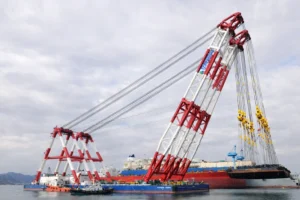
The floating crane lifts by combining the crane’s mechanical capacity with the stability of the hull. For ultra-heavy lifts, specialized sheerleg floating cranes use a fixed A-frame structure with a lifting block at the apex — sacrificing slewing capability for maximum vertical lift capacity.Stability is managed through ballast systems in the hull and, on more advanced units, through dynamic positioning systems that maintain the vessel’s position relative to a fixed reference point — critical during precision lifts in currents or offshore conditions.
Lifting Capacities
Floating cranes operate across an exceptionally wide capacity range:
- Medium-duty floating cranes: 100 to 500 tonnes — port construction, bridge segment lifts, salvage work
- Heavy-duty floating cranes: 500 to 3,000 tonnes — offshore platform installation, large ship lifts
- Ultra-heavy sheerleg cranes: 3,000 to 14,000+ tonnes — the largest offshore lift vessels in the world, used for FPSO installations, jacket installations, and the heaviest offshore construction lifts
Common Applications
- Offshore wind farm installation: Lifting and placing monopile foundations, transition pieces, and wind turbine components
- Port and bridge construction: Lifting prefabricated bridge segments, caissons, and port infrastructure components
- Ship salvage: Raising sunken or grounded vessels requiring lift capacities beyond any fixed crane
- Offshore platform installation: Setting jacket structures, topsides, and heavy offshore modules
- Heavy marine logistics: Transporting and placing oversized components that cannot be handled by conventional port equipment
What Is a marine deck cranes?
Definition and Structure
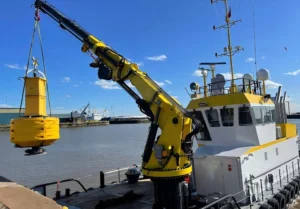
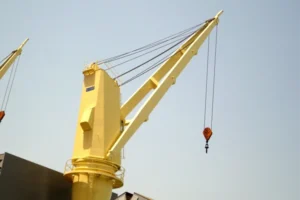
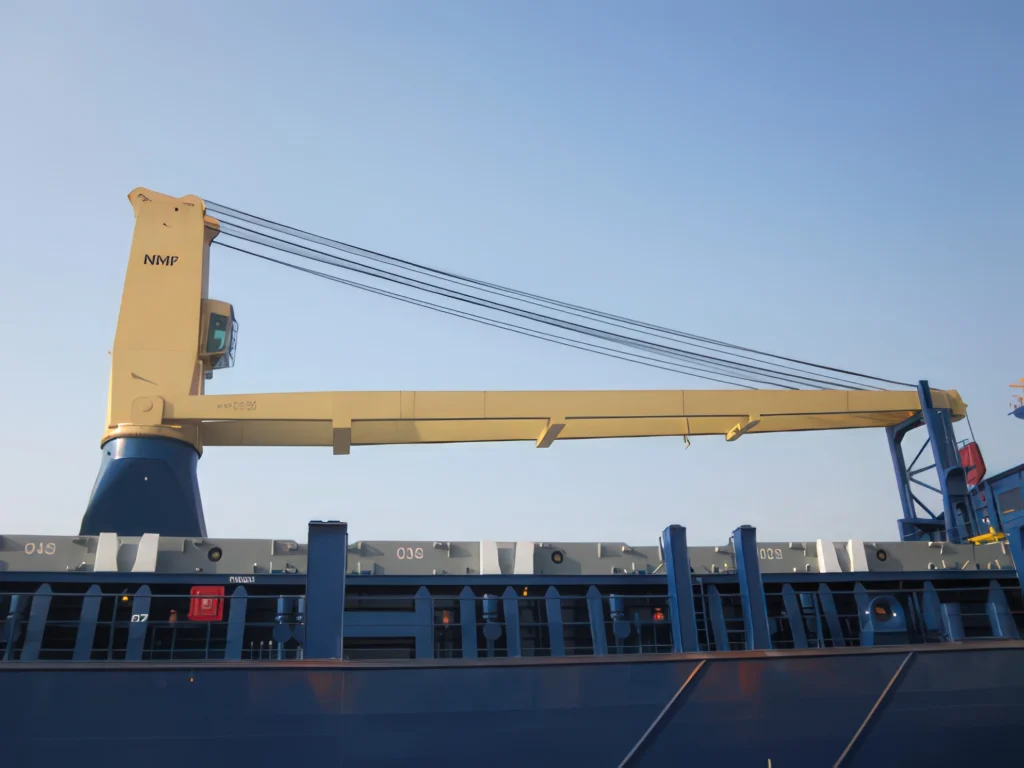
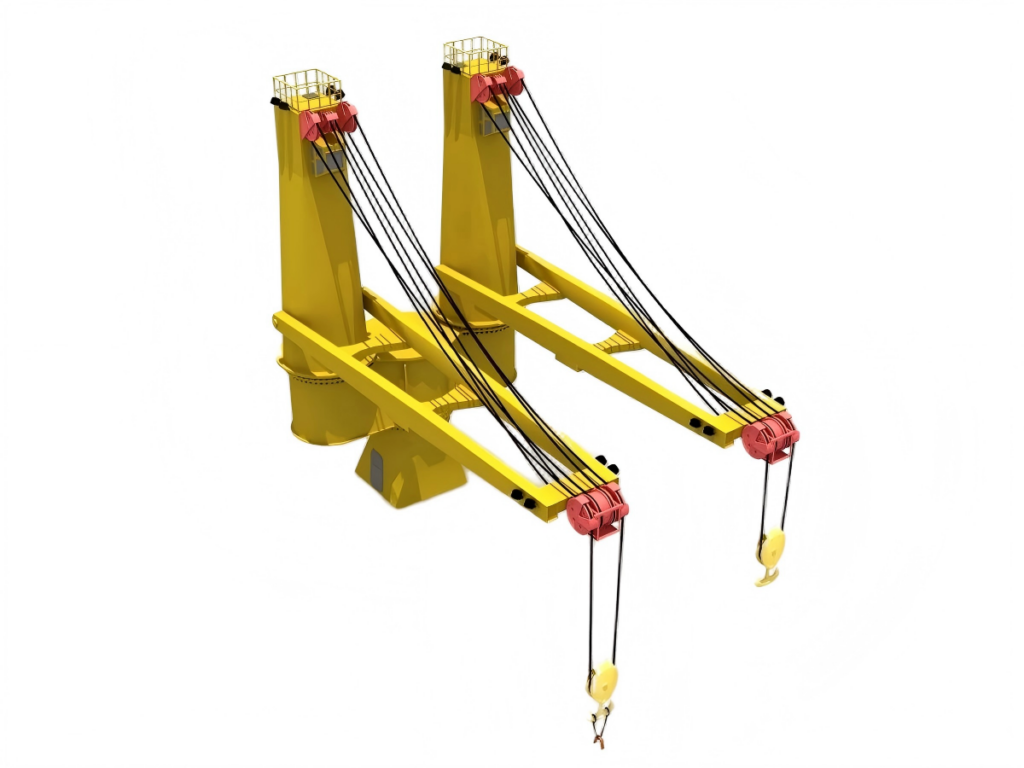
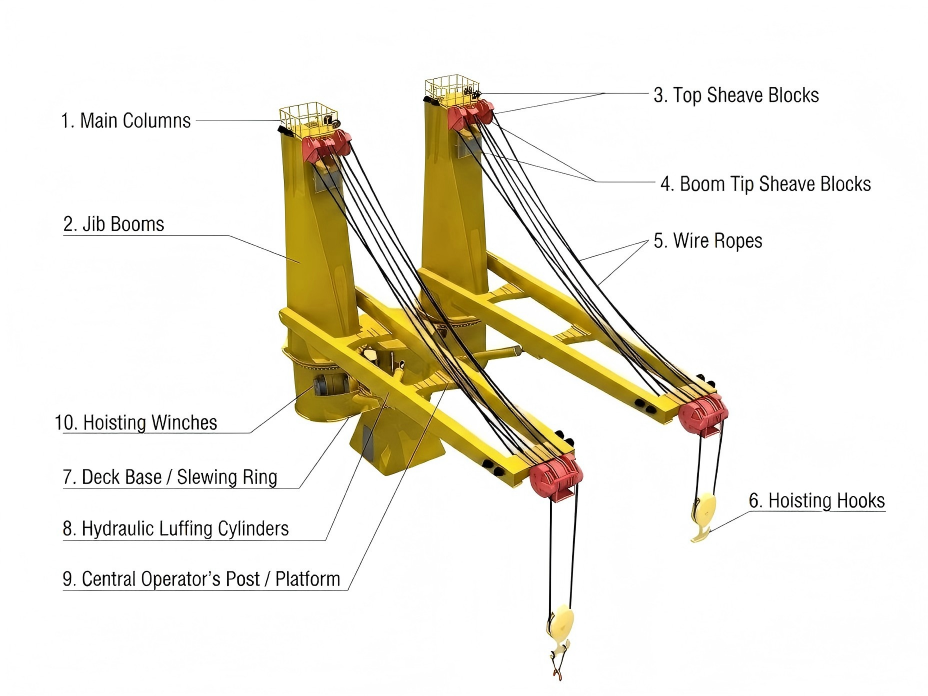
A marine deck cranes is a crane installed directly on the deck of a ship, offshore platform, or marine vessel. It is integrated into the vessel’s structure — typically mounted on a pedestal fixed to the deck — and operates as a permanent onboard lifting system. The crane moves with the vessel; it is not a separate operational platform.
Marine deck cranes are designed for frequent, repetitive use in open-sea conditions. They must function reliably in rolling, pitching, and heaving vessel motion — conditions that require specific structural design and, in some systems, active motion compensation.
Working Mechanism
Most marine deck cranes use hydraulic or electro-hydraulic drive systems. Hydraulic systems offer compact power density and reliable operation in marine environments, where electrical systems face greater corrosion and weatherproofing challenges. Knuckle boom configurations — where the boom articulates at a mid-point — allow compact stowage when not in use and precise load positioning in confined deck spaces. Telescopic boom designs extend operational reach without the complexity of knuckle articulation.
Lifting Capacity Range
Marine deck cranes operate in a lower capacity range than floating cranes:
- Light-duty deck cranes: 1 to 10 tonnes — fishing vessels, small supply ships, crew transfer vessels
- Medium-duty deck cranes: 10 to 100 tonnes — offshore supply vessels, general cargo ships, research vessels
- Heavy-duty deck cranes: 100 to 500 tonnes — heavy lift vessels, offshore construction ships with deck-mounted cranes, semi-submersible platforms
Common Applications
- Cargo loading and unloading: Handling containers, pallets, equipment bundles, and general cargo during port calls and offshore transfers
- Offshore supply operations: Lifting supplies, equipment, and personnel transfer baskets between supply vessels and platforms
- Oil and gas platforms: Material handling for drilling operations, equipment maintenance, and module installation support
- Maintenance operations: Lifting heavy components for overboard deployment, subsea equipment handling, and deck maintenance work
- Ship-to-ship transfer: Moving cargo between vessels at anchor or underway in calm conditions
Structural Differences Between Floating Crane and Marine Deck Crane
| Factor | Floating Crane | Marine Deck Crane |
|---|---|---|
| Installation platform | Barge or dedicated floating hull | Ship or platform deck |
| Mobility | Towed or self-propelled between sites | Moves with the vessel |
| Lifting capacity | Medium to ultra-heavy (100–14,000+ t) | Light to heavy (1–500 t) |
| Primary function | Construction and heavy infrastructure lifting | Cargo handling and onboard operations |
| Operational mode | Project-based deployment | Continuous onboard integration |
| Stability system | Hull ballast and dynamic positioning | Vessel motion; compensation systems on advanced units |
| Crew requirement | Dedicated crane crew and support vessel | Vessel crew with crane operators |
| Weather sensitivity | High for heavy lifts | Moderate — designed for sea-state operation |
Installation Platform
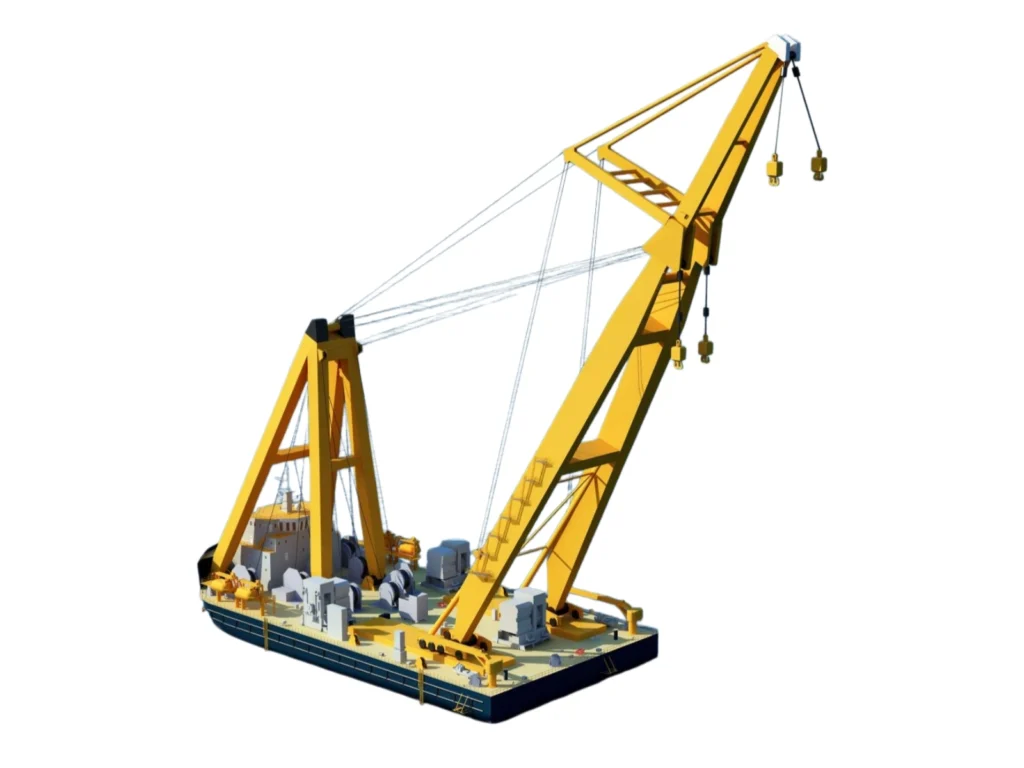
The most fundamental difference is where the crane is installed. A floating crane is a vessel in its own right — the crane and the hull are a single operational unit. A marine deck crane is a component of another vessel — it serves the ship or platform it is mounted on, and its operational scope is defined by that vessel’s mission.
Mobility and Deployment
Floating cranes are mobilized to a project site and positioned for a defined scope of work. Smaller units are towed; larger semi-submersible crane vessels are self-propelled. Either way, mobilization is a significant logistical and cost event. Marine deck cranes move continuously with their vessel — they are always available at whatever location the ship is operating.
Stability and Motion
A floating crane’s hull is designed and ballasted specifically to minimize motion during heavy lifts. Dynamic positioning systems on advanced units actively maintain position. A marine deck crane must function on a vessel that is doing something else — the vessel’s stability is optimized for its primary mission, not for crane operations. Advanced marine deck cranes use active heave compensation to counteract vessel motion during lifts, but they operate in a more challenging motion environment than a purpose-built floating crane hull.
Advantages and Limitations
Floating Crane
| Floating Crane | Detail |
|---|---|
| Advantage | Ultra-heavy lifting capability — capacity range no fixed or deck crane can match |
| Advantage | Flexible offshore positioning — can be placed precisely at any accessible water location |
| Advantage | Suitable for large-scale infrastructure projects with complex lift sequences |
| Advantage | Dedicated stability systems optimized for heavy lift operations |
| Limitation | High operational cost — mobilization, crew, support vessels, and weather delays |
| Limitation | Requires towing or self-propulsion for every site change |
| Limitation | Heavy-lift operations are weather-sensitive — significant wind and wave height restrictions |
| Limitation | Not suited for continuous cargo handling or routine operational lifting |
Marine Deck Crane
| Marine Deck Crane | Detail |
|---|---|
| Advantage | Integrated onboard operation — always available wherever the vessel is |
| Advantage | Designed for continuous use in sea-state conditions |
| Advantage | Compact design suits deck space constraints on operational vessels |
| Advantage | Lower operating complexity than a dedicated floating crane deployment |
| Limitation | Lower maximum lifting capacity compared to floating cranes |
| Limitation | Operational reach limited by boom geometry and vessel deck layout |
| Limitation | Performance depends on vessel stability — not optimized independently |
| Limitation | Not suitable for the ultra-heavy lifts required in large offshore construction |
How to Choose the Right Crane for Your Marine Project
Project Type
If the lifting scope is a construction project — installing offshore foundations, placing bridge segments, salvaging a vessel — the question is whether the lift capacity required matches a floating crane profile.
If the lifting scope is ongoing operational — cargo handling, platform supply, equipment maintenance — a marine deck crane integrated into the operating vessel is the appropriate solution.
Lifting Capacity Requirements
Define the heaviest single lift in the project scope. If that lift exceeds what any marine deck crane can practically achieve, a floating crane is the answer. If the lift profile is consistent with marine deck crane capacity — and the operational frequency favors an integrated onboard system — a deck crane is more appropriate.
Mobility and Deployment Model
A floating crane is deployed to a project site and demobilized when the scope is complete. This suits project-based work with defined timelines. A marine deck crane is permanently integrated into the vessel — it is available continuously but cannot be separated from the vessel for standalone project work. The deployment model should match the operational requirement.
Installation Environment
Nearshore port construction, offshore open-water installation, coastal bridge projects, and deep-water platform work all impose different environmental requirements on lifting equipment. Floating cranes designed for nearshore port work are not necessarily rated for the sea states of open-ocean offshore operations. Marine deck cranes on offshore platform supply vessels are specified for the sea states of the operating area. Match the equipment specification to the actual operating environment — not a generic marine category.
Budget and Operational Cost Structure
Floating crane operations are typically priced on a day-rate basis — equipment, crew, fuel, and support vessel costs accumulate daily. Project-based procurement favors defined scope and fixed-duration contracts. Marine deck cranes are a capital investment in the vessel — operational cost is absorbed into the vessel’s daily operating cost. The cost structure of each option should match how the lifting function fits into the project or operational budget.
Safety and Regulatory Compliance
Marine lifting equipment must comply with the classification requirements of the applicable marine authority for the operational area and vessel type. Major classification societies include :
- ABS (American Bureau of Shipping)
- DNV (Det Norske Veritas)
- CCS (China Classification Society)
- BV (Bureau Veritas)
Compliance with the relevant classification society’s crane rules is a legal requirement for most commercial marine operations — not an optional quality standard. Confirm which classification rules apply to your project before specifying equipment.
Customization Options for Marine Cranes
Floating Crane Customization
Floating cranes for major construction projects are often purpose-engineered or significantly modified from base configurations:
- Lifting capacity: Configured for the specific project lift weights — from port construction to offshore wind installation
- Boom length and geometry: Extended reach for offshore component placement at distance from the hull
- Dynamic positioning (DP) system: DP1, DP2, or DP3 classification depending on the offshore safety zone requirements of the project
- Anti-corrosion protection: Extended corrosion protection for long-term offshore deployment in salt water environments
Marine Deck Crane Customization
Deck cranes for vessel installation are specified against the vessel’s operational profile:
- Telescopic vs knuckle boom: Telescopic booms offer simpler operation; knuckle booms provide compact stowage and precision positioning in confined spaces
- Hydraulic control system: Standard hydraulic or electro-hydraulic proportional control for precise load positioning
- Heave compensation: Active heave compensation for operations in significant sea states where vessel motion would otherwise make precision lifts impractical
- Explosion-proof systems: Required for cranes operating on oil and gas platforms or vessels carrying flammable cargo
Future Trends in Marine Lifting Equipment
Offshore Wind Is Driving Floating Crane Innovation
The offshore wind sector’s rapid expansion — particularly in Europe and Asia — is creating demand for floating crane vessels capable of installing the next generation of larger, heavier wind turbine components. Monopile diameters and nacelle weights are increasing with each turbine generation. Crane vessel operators and shipyards are responding with new-build heavy lift vessels designed specifically for the offshore wind installation market.
Automation and Remote Operation
Semi-automated marine deck crane systems — where load positioning is assisted by electronic guidance rather than pure operator skill — are entering service on offshore supply vessels and platform cranes. Remote operation capability, allowing crane control from a protected station rather than an exposed cab, is increasingly specified for safety reasons in offshore environments.
Active Heave Compensation
Advanced active heave compensation systems, which use real-time motion sensing and hydraulic response to neutralize the effect of vessel motion on the lifted load, are extending the operational sea state envelope for marine deck cranes. Operations that previously required calm weather windows can now be performed in higher sea states — increasing equipment utilization and reducing project schedule risk.
Electrification and Low-Emission Systems
Electro-hydraulic drive systems and fully electric deck cranes are reducing the carbon footprint of marine crane operations. As offshore and shipping sectors face increasing pressure to reduce emissions under IMO regulations and EU shipping policy, low-emission crane drive systems are moving from a specification option to a procurement expectation.
Conclusion
Floating cranes and marine deck cranes solve different problems. Floating cranes are construction tools — purpose-built heavy lift platforms that bring extreme capacity and flexible offshore positioning to large-scale marine infrastructure projects. Marine deck cranes are operational systems — integrated vessel equipment designed for continuous cargo handling and daily marine lifting in the conditions of normal vessel operation.
The selection decision comes down to three questions: How heavy is the lift? Is the crane serving a construction project or an operational vessel? And does the crane need to operate independently, or as part of a ship’s permanent equipment?
For ultra-heavy offshore construction, platform installation, offshore wind, and salvage work — a floating crane is the appropriate tool. For vessel cargo operations, platform supply, and ongoing marine logistics — a marine deck crane integrated into the operating vessel is the right solution. Most marine projects fit clearly into one category when these questions are answered honestly against the actual scope.
Request a customized marine lifting solution for your project — whether a floating crane specification for a construction scope or a marine deck crane configuration for vessel integration. Contact our engineering team for an offshore crane consultation — we match lifting equipment to the real operational requirements of each project, not generic product categories.

Frequently Asked Questions
What is the maximum lifting capacity of a floating crane?
The world’s largest floating crane vessels — purpose-built sheerleg heavy lift ships — are rated at capacities exceeding 14,000 tonnes for tandem lift operations. Semi-submersible crane vessels used for offshore platform installation typically operate in the 5,000 to 10,000 tonne range. For most port construction and offshore wind installation projects, floating cranes in the 500 to 3,000 tonne range are the standard tool. The appropriate capacity depends entirely on the heaviest single lift in the project scope — floating cranes are selected and mobilized around that design lift, not a general capacity category.
Do marine deck cranes require special certification for offshore use?
Yes. Marine deck cranes installed on commercial vessels and offshore platforms must comply with the crane rules of the applicable classification society — ABS, DNV, BV, CCS, or another recognized authority depending on the vessel’s flag state and operating area. This involves design review, factory load testing, and periodic inspection during the crane’s service life. For cranes operating on oil and gas platforms or vessels in hazardous areas, explosion-proof certification for electrical components is an additional requirement. Classification compliance should be specified during procurement — it cannot be added after manufacture without significant rework.
What is active heave compensation and when is it required?
Active heave compensation (AHC) is a system that uses real-time vessel motion data — measured by accelerometers and motion reference units — to drive the crane’s hoisting mechanism in the opposite direction of vessel heave, neutralizing the effect of wave-induced vessel motion on the lifted load. Without AHC, a vessel heaving in one-metre waves imposes one-metre of uncontrolled vertical motion on the load — making precision lifts impractical and creating shock loads on both the crane and the lifted object. AHC is specified for marine deck cranes performing subsea equipment handling, offshore transfer operations in moderate sea states, or any lifting task where load stability is safety-critical.
What classification societies certify floating cranes and marine deck cranes?
The major international classification societies for marine crane certification are DNV (Det Norske Veritas, Norway), ABS (American Bureau of Shipping, USA), BV (Bureau Veritas, France), CCS (China Classification Society), and Lloyd’s Register (UK). Each publishes rules for crane design, load testing, and in-service inspection applicable to their classed vessels. The applicable classification society for a specific project depends on the flag state of the crane vessel or host vessel, the operating area, and any project-specific client or regulatory requirements. For offshore operations in regulated areas, DP (dynamic positioning) classification for the crane vessel may also be required alongside the crane certification.
How is a floating crane mobilized to a project site?
Smaller and medium-capacity floating cranes — typically up to a few thousand tonnes capacity — are towed between sites by tugboats. The crane barge itself is not self-propelled; it requires tug assistance for ocean transits and precise positioning at the work site. Larger semi-submersible crane vessels are self-propelled, equipped with their own propulsion systems and dynamic positioning capability for open-ocean transit and precise site positioning. Mobilization from the crane’s home port or previous project site to the new work location is a significant cost and schedule element in floating crane project planning — transit times can range from days to several weeks depending on distance and sea conditions.