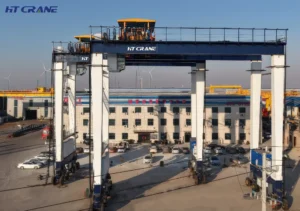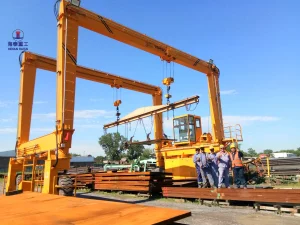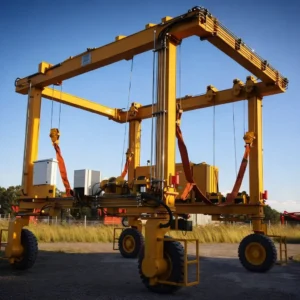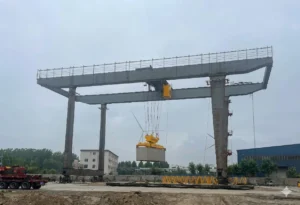
Finding a reliable marine travel lift at a competitive price is harder than it looks. Listings vary widely. Specifications are inconsistent. And the gap between a factory-direct price and a reseller markup can be substantial — without any difference in the equipment itself.
This guide is written for marina operators, boatyard managers, and procurement teams who are actively sourcing a marine travel lift for sale. It covers what factory-direct purchasing actually means, how custom configurations affect your final cost, and what to verify before committing to any supplier.
The goal is simple: help you buy the right boat hoist, from the right source, without paying more than you should.
What Factory-Direct Pricing Actually Means for Marine Travel Lifts
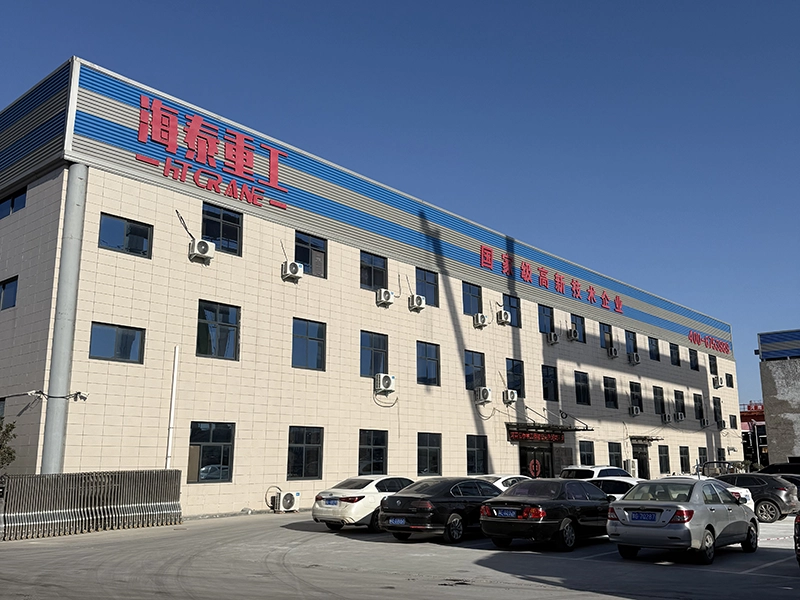
Buying direct from a marine travel lift manufacturer eliminates the intermediary margin. For equipment in this category, that difference is meaningful. A mid-range 100-ton boat hoist routed through a trading company or regional distributor typically carries an added margin of 10–20% over factory-direct pricing — with no corresponding increase in product quality or after-sales support.
How the Supply Chain Works
Most marine travel lifts available for sale reach buyers through one of three channels:
Direct from manufacturer. You deal with the engineering, production, and sales team at the factory. Lead times are confirmed against actual production schedules. Customization is handled internally. This is the most transparent purchasing route.
Authorized distributor. Regional distributors add local service capability and market knowledge. The margin premium is often justified when local installation, commissioning, and warranty support are included in the package.
Trading company or broker. These intermediaries source from multiple manufacturers and add margin without adding engineering or service value. Suitable only when speed of quotation matters more than price or technical depth.
For buyers with clear specifications and direct access to international suppliers, factory-direct procurement consistently delivers better value.
What to Ask a Supplier to Confirm Factory-Direct Status
Not every supplier claiming “factory price” operates their own production facility. Before proceeding, ask:
- Do you manufacture in-house or source from third-party factories?
- Can we arrange a factory visit or video inspection of our unit during production?
- Who handles engineering, warranty claims, and spare parts supply?
A genuine manufacturer answers these questions directly. A trading company typically deflects.
Custom Marine Travel Lift Configurations: What You Can Specify
One of the primary advantages of factory-direct purchasing is customization. Standard catalogue units cover common requirements. Custom configurations address specific operational needs that standard models cannot.
Lifting Capacity Range
Marine travel lifts for sale from established manufacturers span a wide capacity range:
| Capacity Range | Typical Application | Notes |
|---|---|---|
| 15–50 tons | Small marina, yacht club | Compact, easy to operate |
| 50–150 tons | Mid-size boatyard | Most common configuration |
| 150–300 tons | Commercial shipyard | Higher duty cycle required |
| 300–600 tons | Industrial / naval facility | Custom engineering standard |
| 600–1,000+ tons | Large shipyard, offshore | Full bespoke design |
Specify your capacity with a 20–30% buffer above your heaviest current vessel. Operating consistently at maximum rated load shortens structural and mechanical service life.
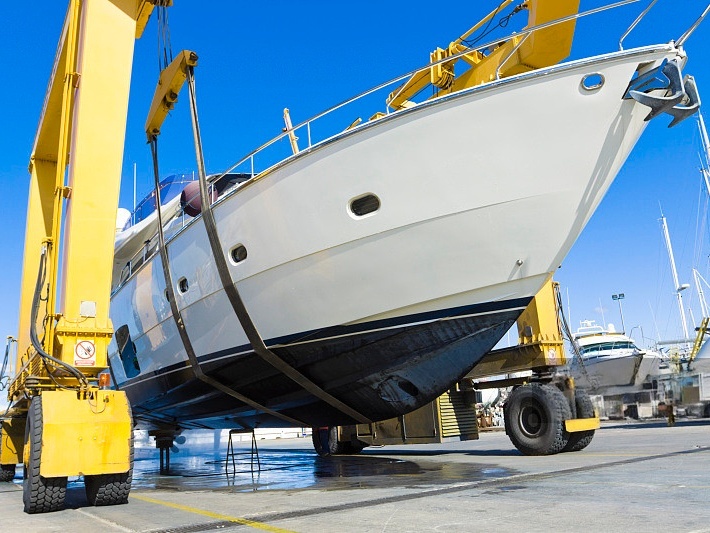
Beam Width and Leg Clearance
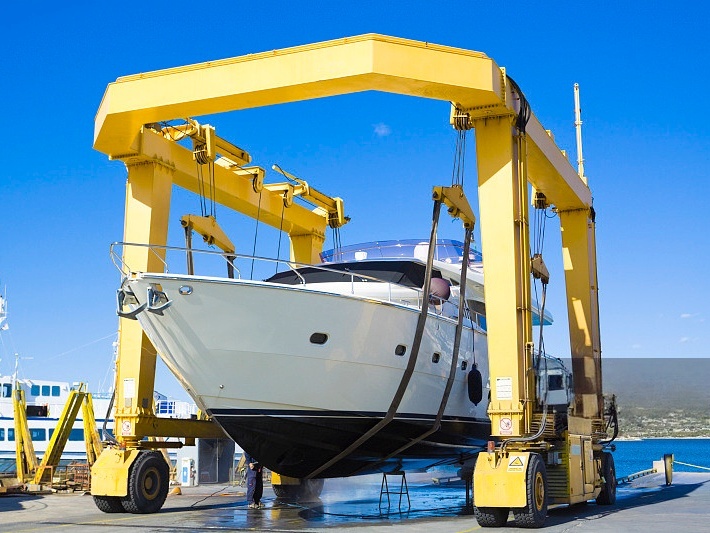
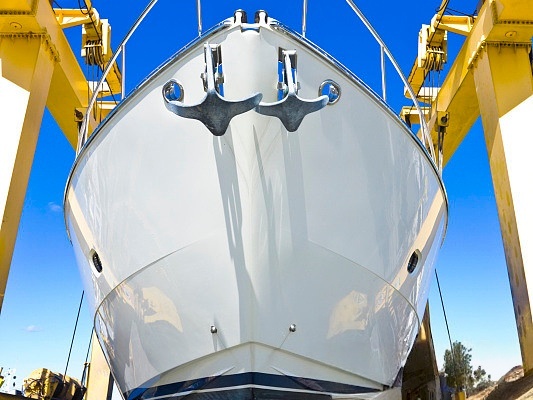
Beam width — the clear distance between the travel lift legs — determines the widest vessel you can handle. Standard configurations range from 5 to 30 meters. For facilities handling catamarans, wide-beam motor yachts, or mixed commercial fleets, beam width is often more critical than lifting capacity.
Custom beam widths beyond standard catalogue options are available from most manufacturers, typically with a 2–4 week addition to engineering lead time.
Wheel Configuration and Steering
Travel lift wheel configuration affects maneuverability and ground load distribution. Options include:
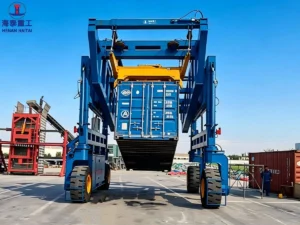
Four-wheel configuration. Standard for smaller units up to approximately 100 tons. Simple, cost-effective, suitable for facilities with adequate turning space.
Eight-wheel or multi-axle. Required for heavier units to distribute wheel loads across a larger hardstand area. Also improves maneuverability in tight boatyards.
All-wheel steering (crab steering). Allows lateral movement without turning the entire frame. Essential for narrow marina lanes and compact hardstand layouts.
Confirm your hardstand layout dimensions and turning radius constraints with your civil engineer before specifying wheel configuration.
Power and Control Options
Standard marine travel lifts use diesel-hydraulic drive systems. Electric-drive configurations are available for facilities with shore power infrastructure — increasingly preferred for indoor shipyards and facilities with emissions or noise restrictions.
Control options include:
- Pendant control: Standard, cost-effective, operator walks alongside the unit
- Radio remote control: Improves operator positioning and safety, now standard on most commercial-grade units
- Dual operator control: Available for large-capacity units where coordinated sling management requires two-person operation
Factors That Affect Marine Travel Lift Price
Buyers often request pricing before their specification is complete. This produces quotations that are not comparable and not reliable. Understanding what drives price helps you structure a more useful RFQ.
Capacity Is the Primary Cost Driver
Structural steel, hydraulic cylinder sizing, motor power, and wheel load capacity all scale with the rated lift. A 50-ton unit and a 150-ton unit from the same manufacturer are fundamentally different structures — not the same frame with a different rating plate.
Customization Adds Cost and Lead Time
Every deviation from a standard catalogue configuration adds engineering time and often requires custom-fabricated components. Common customizations that affect price include:
- Non-standard beam width
- Increased lifting height beyond standard
- Special corrosion protection (hot-dip galvanizing, marine-grade coatings)
- ATEX-rated electrical components for fuel handling areas
- Stainless steel hardware for high-salinity environments
Identify which customizations are operationally essential versus desirable. This gives you negotiating room without compromising functional requirements.
Certification and Compliance Costs
CE marking (EU Machinery Directive 2006/42/EC), third-party load testing, and documentation packages add cost but are non-negotiable for commercial operations. Budget for these from the start. Attempting to add compliance documentation after delivery is significantly more expensive than including it in the original order.
How to Evaluate a Marine Travel Lift Supplier Before Ordering
Price is one factor. Supplier capability is another. For equipment with a 20-year operational life, the supplier’s ability to support you after delivery matters as much as the purchase price.
Technical Submittal Review
Request a formal technical submittal — not a brochure or catalogue sheet — from every supplier you are seriously evaluating. A credible submittal includes:
- Certified dimensional drawings with tolerances
- Wheel load data under full rated capacity
- Electrical schematics and motor specifications
- Structural calculation summary
- Compliance certificates and test reports
Compare submittals against your specification line by line. Gaps between your requirement and the supplier’s offering should be resolved in writing before order placement.
After-Sales Support and Parts Availability
Ask each supplier directly: where is your nearest service engineer, and what is the lead time for major spare parts? Hydraulic pumps, drive motors, and control components have finite service lives. A supplier who cannot answer parts availability questions clearly is a supplier who will be difficult to work with when equipment needs attention.
References and Installed Base
Request references from existing customers operating similar configurations — ideally in comparable environments. A supplier with an established installed base in marina and shipyard applications is a lower-risk choice than one entering the marine sector from a general industrial background.
Ready to Request a Quotation
When you are ready to approach suppliers, bring a complete specification: capacity, beam width, lifting height, wheel configuration, power supply, duty cycle, certification requirements, and your hardstand layout. The more complete your input, the more accurate and comparable the quotations you receive.
Factory-direct purchasing of a marine travel lift delivers genuine value — but only when you approach it with a defined specification and a clear framework for evaluating suppliers. Use this guide as your baseline. Then contact manufacturers directly, request technical submittals, and compare on specification — not on headline price alone.

FAQ
Q1: What is the lead time for a custom marine travel lift ordered from a factory?
Custom marine travel lift lead times typically range from 16 to 28 weeks for mid-range configurations (50–300 tons), measured from order confirmation to factory completion. Standard catalogue units may be available in 12–16 weeks. Heavy-duty or highly customized units above 300 tons often require 24–36 weeks. International shipping adds 4–8 weeks depending on destination port and customs clearance. Request a phase-by-phase production schedule — covering engineering, procurement, fabrication, and testing — from your supplier at the quotation stage rather than relying on a single total estimate.
Q2: Is factory-direct purchasing safe for international buyers?
Yes, provided you apply standard due diligence. Verify the manufacturer’s production facility through a factory visit or third-party inspection service. Use a formal purchase agreement that specifies technical requirements, delivery milestones, payment terms tied to production stages, and warranty conditions. Request inspection at the factory before shipment — either in person or through an independent inspection agency. CE certification or equivalent compliance documentation provides an additional layer of technical assurance for international buyers purchasing from overseas manufacturers.
Q3: What certifications should a marine travel lift carry?
For European markets, CE marking under the Machinery Directive 2006/42/EC is mandatory. This requires a Declaration of Conformity and a technical file covering structural calculations, risk assessment, and electrical compliance. North American markets typically reference ASME B30 standards. Most commercial boatyards and marinas also require a third-party load test certificate before the unit enters service — this is separate from the manufacturer’s factory test and must be conducted on-site after installation. Confirm certification requirements with your local port authority or regulatory body before finalizing your specification.
Q4: Can a marine travel lift be modified after delivery to increase capacity?
Capacity upgrades after delivery are generally not straightforward and are rarely recommended by manufacturers. Lifting capacity is determined by the structural design of the frame, the hydraulic system sizing, and the wheel load rating — all of which are engineered as an integrated system. Modifying any one element without recalculating the full system creates safety risks and voids certification. If you anticipate capacity growth within the next 5–10 years, specify for your future requirement at the initial order stage. The incremental cost of specifying higher capacity upfront is significantly lower than a post-delivery modification or replacement.
Q5: What warranty terms should I expect from a marine travel lift manufacturer?
Standard warranty terms from established marine travel lift manufacturers typically cover structural components for 12–24 months and mechanical and hydraulic components for 12 months from commissioning or 18 months from shipment, whichever occurs first. Wear items — slings, seals, filters, brake pads — are generally excluded from warranty coverage. Confirm whether warranty service is provided by the manufacturer directly or through an authorized service partner in your region. For facilities in remote locations, negotiating an extended spare parts package as part of the purchase agreement is a practical way to reduce downtime risk during the warranty period and beyond.