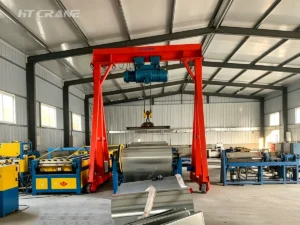
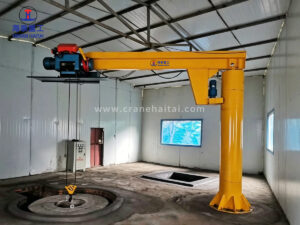
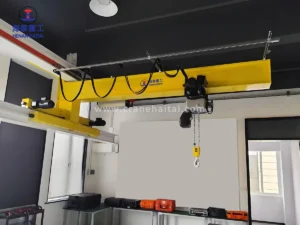
Handling bulk materials with a standard hook crane is the wrong tool for the job. Coal, iron ore, and metal scrap do not arrive in neat loads. They pile up. They spill. They need continuous, high-cycle movement — not manual scooping or conveyor-only logistics.
An overhead grab crane solves this problem directly. It combines the coverage of a bridge crane with a grab bucket attachment that opens, scoops, closes, and lifts in one automated cycle. No manual handling. No secondary equipment. One crane covers the full width of your storage bay and handles materials in continuous succession.
This article covers everything procurement teams need to know. You will find which grab crane configuration fits coal handling differently from ore or scrap. You will see the key specifications that determine cycle efficiency. And you will have a clear framework for submitting a specification that gets accurate quotes without rounds of back-and-forth.
What Is an Overhead Grab Crane?
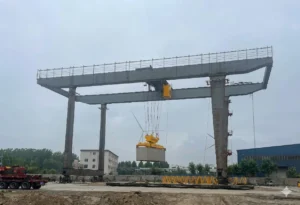
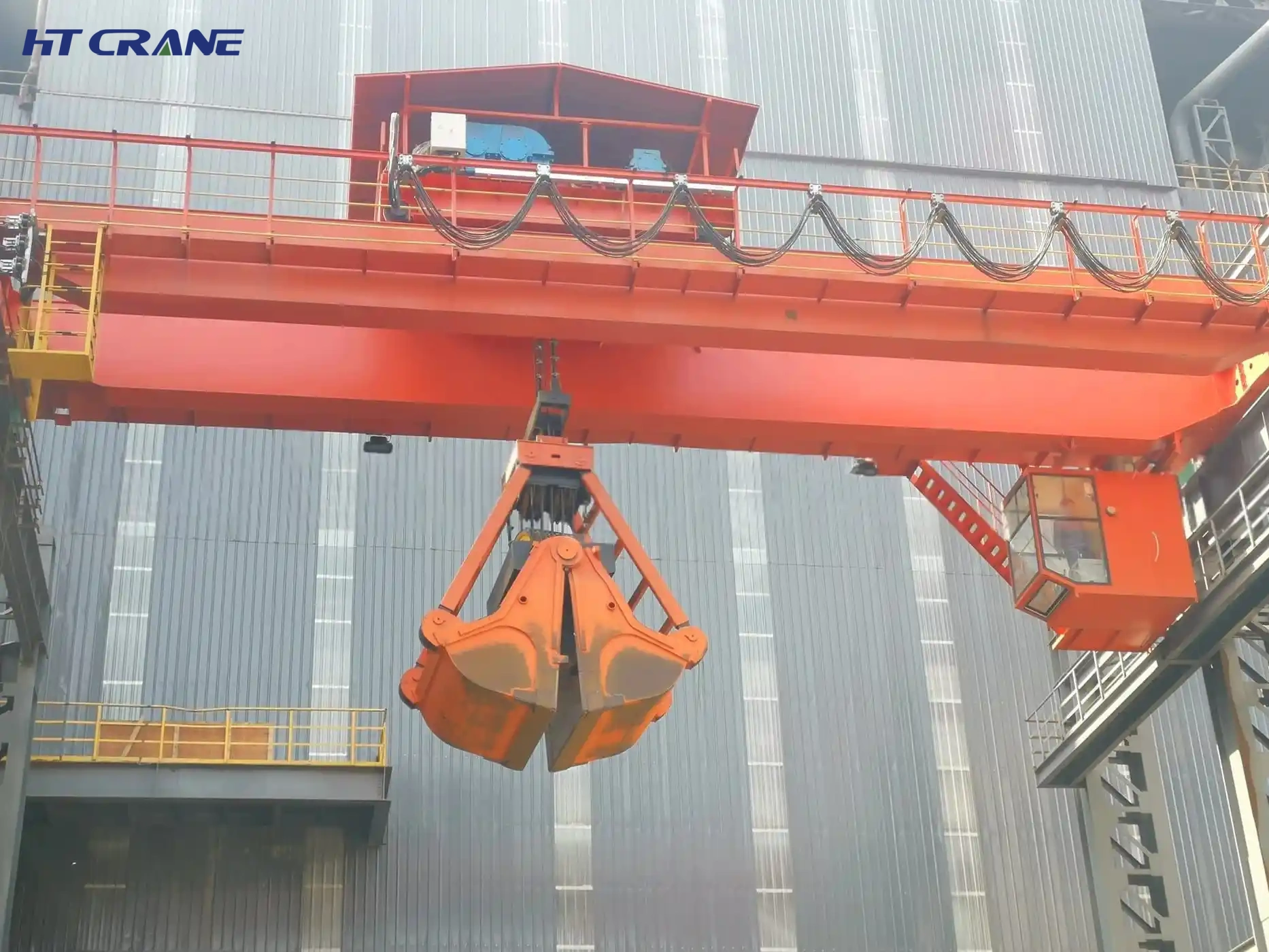
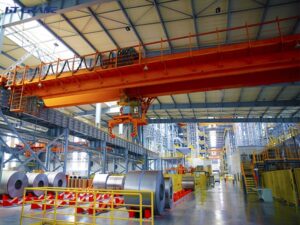
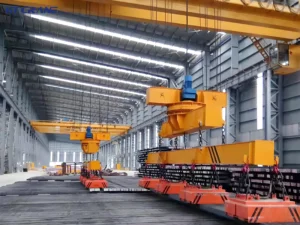
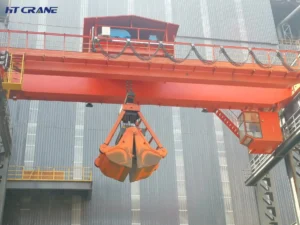
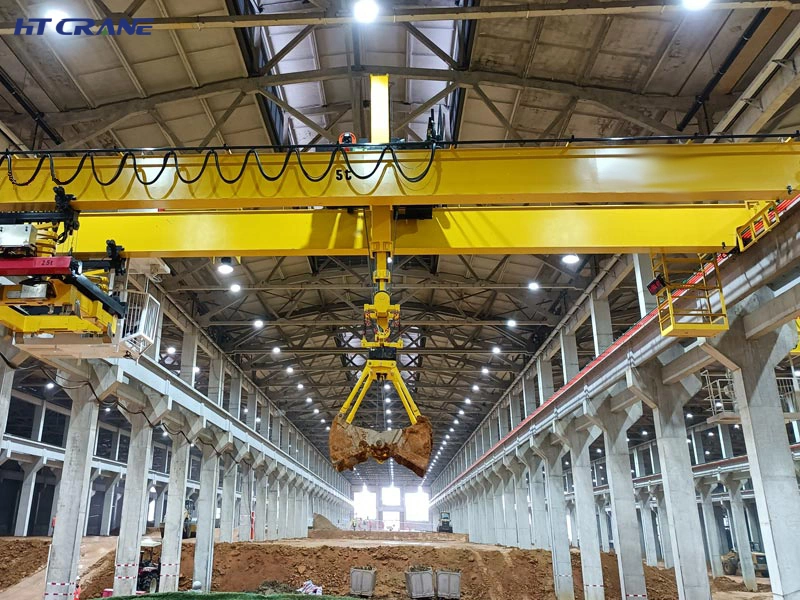
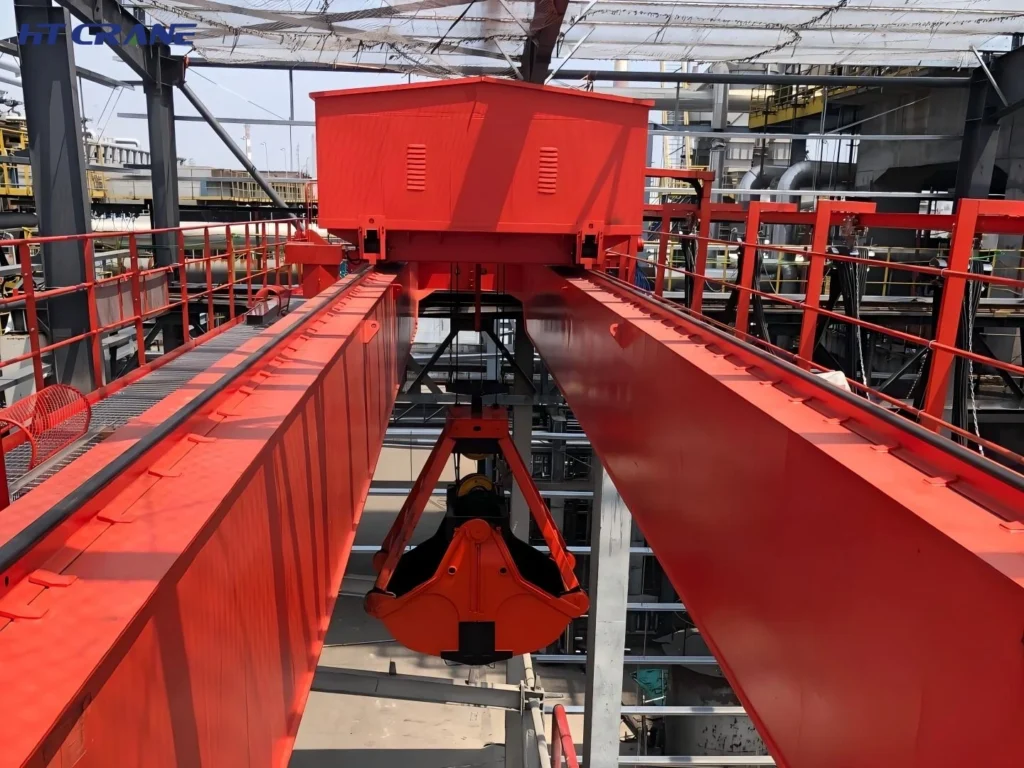
An overhead grab crane is a bridge-type crane fitted with a grab bucket instead of a hook. The crane travels on elevated runways mounted to the building structure. The grab bucket hangs from the hoist and opens and closes mechanically or electro-hydraulically to capture bulk material.
How the Grab Mechanism Works
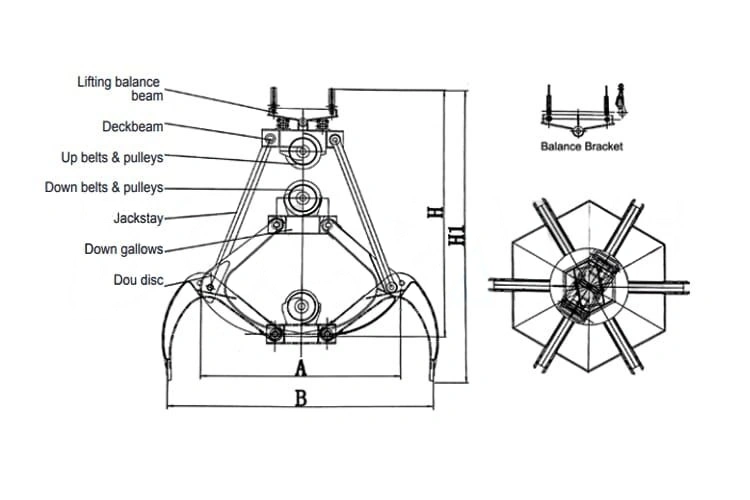
The grab bucket is the defining component. It attaches to the crane hoist via a rope or chain system. When the hoist lowers the bucket, it opens. The operator positions it over the material pile. The bucket closes, capturing a controlled volume of material. The hoist lifts the loaded bucket. The crane travels to the discharge point. The bucket opens and releases.
This sequence repeats continuously. Cycle time depends on grab capacity, hoist speed, crane travel speed, and operator efficiency. In high- throughput facilities, the grab cycle determines material flow rate more directly than any other variable.
Grab Crane Applications: Coal, Ore, and Scrap Differ Significantly
The three most common bulk material types — coal, iron ore, and metal scrap — place different demands on grab crane configuration. Treating them as interchangeable leads to equipment that underperforms or wears out early.
Coal Handling: High Volume, Fine Particles
Coal is a relatively low-density material. Fine coal dust is an additional challenge — it penetrates seals, reduces visibility, and creates ignition risk in enclosed spaces. Grab cranes handling coal need sealed electrical enclosures rated to at least IP54 or higher. In indoor coal storage facilities where dust concentration can reach hazardous levels, explosion- proof motor and control specifications are required.
Coal handling also tends to run continuously. Power plants and coking facilities operate around the clock. The overhead grab crane in these environments should carry an A6 or A7 work duty class rating per ISO 4301. A5 is insufficient for 24-hour cycling. Grab capacity selection typically targets 1–5 cubic meters depending on bay width and pile depth.
Iron Ore and Mineral Handling: Abrasion and Weight
Iron ore is dense — bulk density commonly ranges from 2.0 to 3.5 t/m³ depending on grade and moisture content. The same bucket volume that lifts 1.5 tons of coal can lift 4–5 tons of ore. Bucket and hoist capacity must account for this density difference at the specification stage. Undersizing the hoist for ore density is a common and costly error.
Ore is also highly abrasive. Bucket jaws and the inner surfaces of the grab shell wear faster than with coal or scrap. Specify hardened manganese steel liners for ore handling grabs. These extend bucket service life significantly compared to standard mild steel construction. Replacement liner kits should be part of the initial procurement, not an afterthought.
Scrap Metal Handling: Variable Shape, High Density
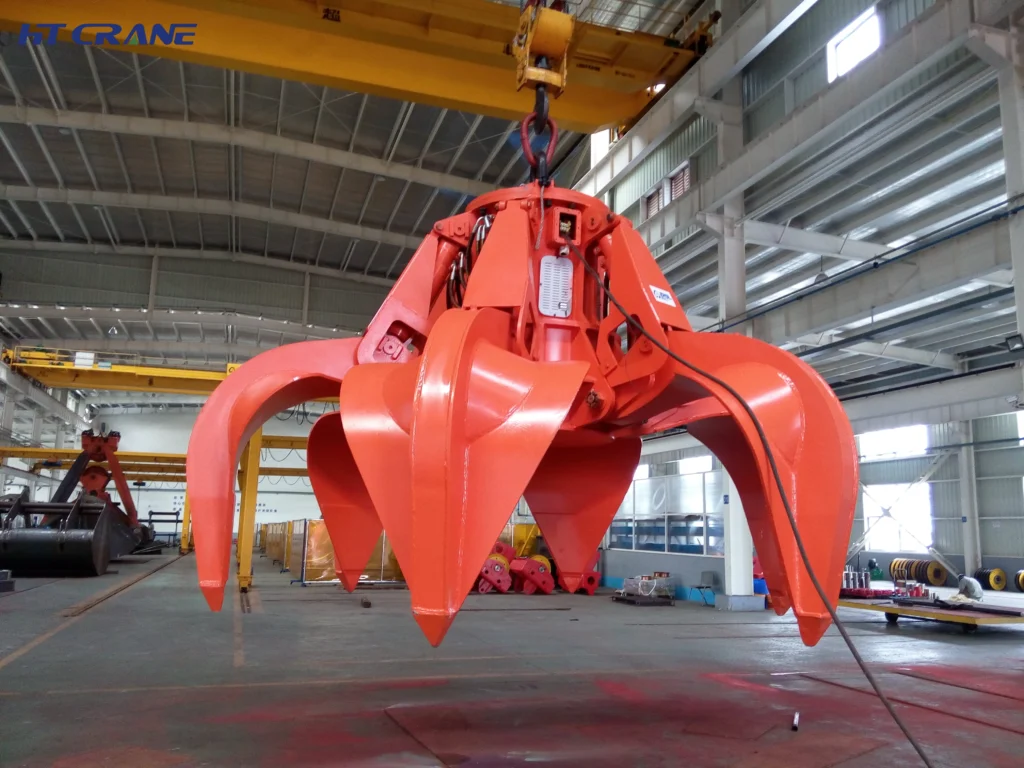
Scrap metal is the most mechanically challenging of the three materials. It is irregular in shape. Pieces interlock. The grab must apply sufficient closing force to penetrate the pile and hold the load without spillage during travel. Orange-peel grabs — typically with 4 or 6 tines — are the standard attachment for mixed metal scrap.
Scrap density varies widely. Loose shredded scrap has a bulk density of roughly 0.5–0.8 t/m³. Baled scrap or dense cast components can reach 3.0 t/m³ or more. The crane and hoist must be rated for maximum density conditions. Running at the lower end of the density range is not a safe basis for equipment specification.
Key Specifications for an Overhead Grab Crane
Getting specifications right before you request a quote prevents costly redesign during the engineering phase. The following parameters define the equipment.
Lifting Capacity and Grab Bucket Volume
These two figures must be specified together. Grab bucket volume (in cubic meters) multiplied by the bulk density of your material gives the actual lifted weight per cycle. The hoist rated capacity must exceed this figure with an appropriate safety margin — typically 25% above the calculated maximum load.
For reference, the Haitai QZ Grab Overhead Crane handles 5 to 32 tons of lifting capacity with spans from 10.5 to 40 meters and lifting heights from 6 to 34 meters. This range covers most indoor bulk storage and industrial processing facilities.
Span and Lifting Height
Span determines how much of your storage bay the crane covers. A crane with insufficient span leaves dead zones at the bay edges — areas where material piles but the grab cannot reach. Measure your rail-to-rail distance accurately. Add clearance for the end truck wheels on both sides.
Lifting height sets how high the loaded grab must travel before it clears the pile or the discharge structure. In deep storage pits or facilities with tall stockpiles, insufficient lifting height means the crane cannot complete a clean cycle. Always measure from the lowest pile surface to the top of the travel height needed.
Work Duty Class
Work duty class determines how the crane is structurally designed for fatigue over its service life. Per ISO 4301:
| Duty Class | Typical Application |
|---|---|
| A5 | Moderate use, 1–2 shifts, loads near rated capacity occasionally |
| A6 | Heavy use, 2 shifts, loads near rated capacity regularly |
| A7 | Very heavy use, continuous or near-continuous operation |
| A8 | Extremely heavy duty, maximum cycle frequency, full rated loads |
Coal and ore handling facilities running 24-hour operations typically need A6 minimum. Scrap yards with shift-based operations often work with A5. Confirm your daily cycle count and shift pattern before finalizing this specification.
Grab Bucket Type
| Grab Type | Material | Key Advantage |
|---|---|---|
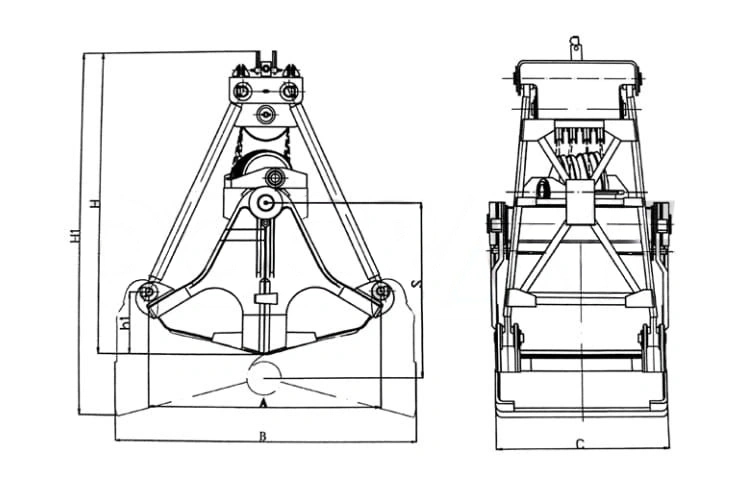
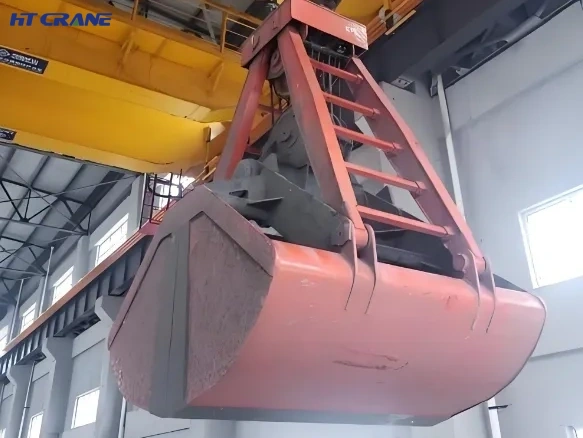
| Double-flap clamshell | Coal, grain, fine ore | Clean closure, high fill ratio |
| Orange-peel (6-tine) | Dense scrap, billets | Higher closing force, better retention |
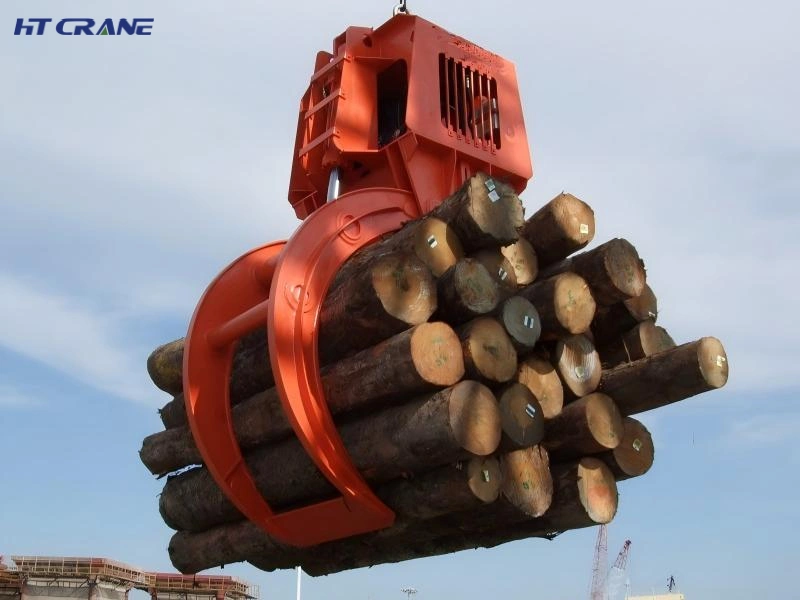
| Multi-jaw hydraulic | Logs, mixed bulk | Flexible opening geometry |
Select grab type based on material, not on what is cheapest or fastest to source. A wrong grab type costs more in spillage, cycle inefficiency, and early wear than the price difference between options.
Control System Options
Overhead grab cranes support three control modes. In bulk material environments, control mode affects both safety and cycle efficiency:
- Pendant (ground-level) — operator moves with the crane; suitable for lower-cycle, flexible operations
- Operator cabin — enclosed, elevated cab with full crane visibility; standard for high-cycle industrial facilities
- Wireless remote — useful for hazardous zones or supplementary control; not recommended as the primary mode for continuous grab operations
For coal dust environments, operator cabins should be positively pressurized and fitted with filtered air supply. This keeps dust out and protects the operator during extended shifts.
tructural Configuration: Single vs. Double Girder for Grab Service
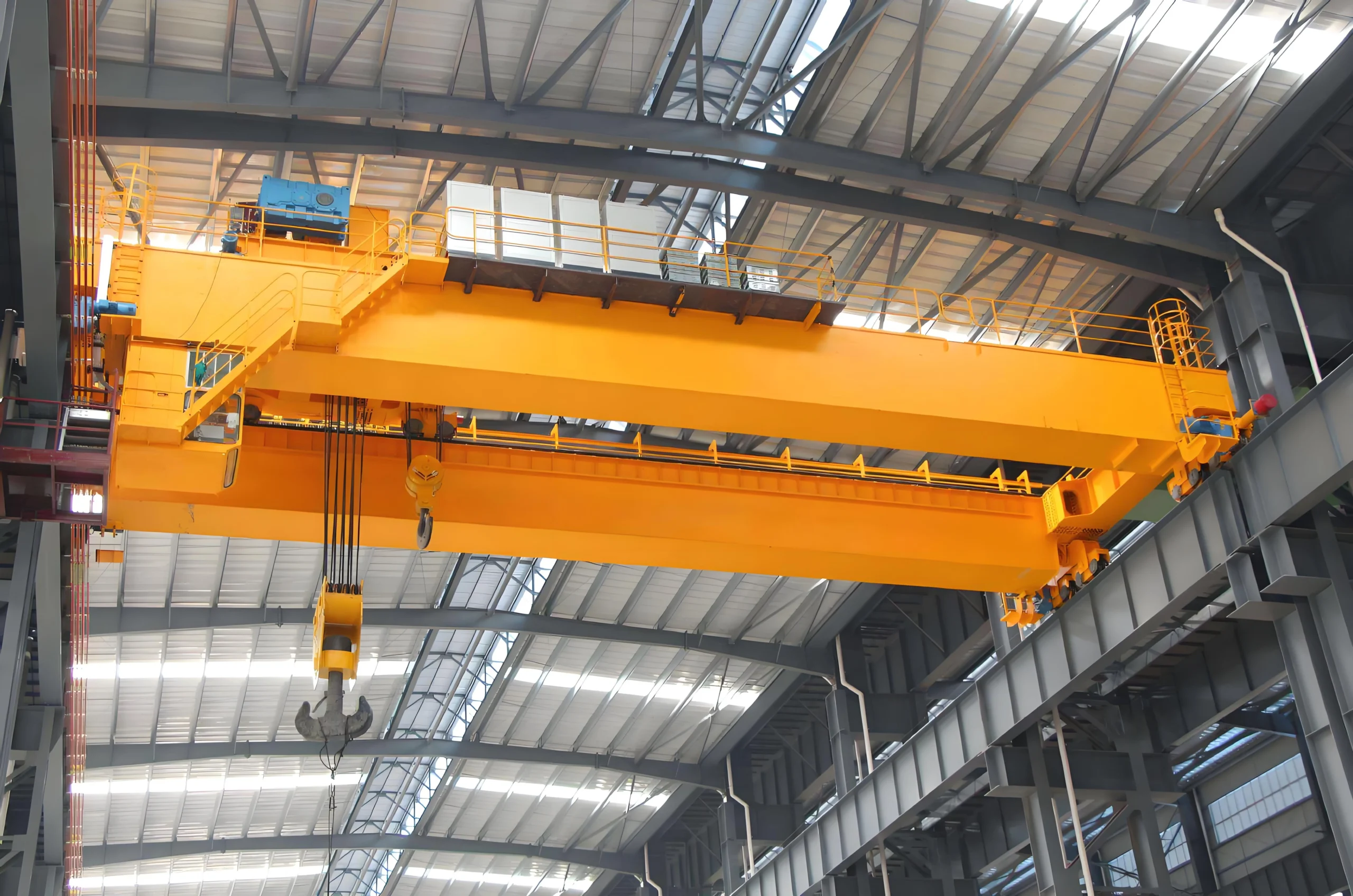
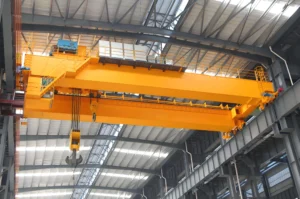
Standard grab overhead cranes for bulk materials almost always use a double girder configuration. The reasons are structural.
Grab buckets are heavy attachments. Even an empty orange-peel grab for 32-ton scrap service can weigh 3–5 tons. That dead weight adds directly to the hoist load at every cycle. Double girder cranes provide the structural headroom for heavier hoist units. The trolley sits on top of the main beams rather than hanging below them. This raises the hook height and allows taller lifting without raising the building runway height.
Single girder cranes can support grab service in lighter applications — typically below 10 tons and in lower-cycle environments. For anything above 10 tons or in A6+ duty class applications, double girder is the correct structural choice.
Summary and Next Steps
An overhead grab crane is a direct productivity investment for bulk material handling. The right configuration — grab type, hoist capacity, duty class, and control mode — determines whether the crane delivers consistent throughput or creates operational bottlenecks within the first year of service.
Coal, ore, and scrap each impose different technical requirements. Specify them separately. Do not apply a single standard configuration across materials with different densities, abrasion levels, and cycle patterns.
Before requesting a quote, prepare the following:
- Material type and bulk density (tons per cubic meter)
- Required lifting capacity (tons) — calculated from bucket volume × density
- Span between runways (meters)
- Required lifting height (meters)
- Daily operating hours and shift pattern
- Indoor or outdoor installation
- Dust, temperature, or explosion-proof requirements
- Preferred control mode (pendant / cabin / wireless)
Submit a complete specification. Incomplete inputs delay engineering review and push back your delivery schedule. The faster your supplier has full data, the faster your crane ships.

Frequently Asked Questions
Q1: What is the rated lifting capacity I need for my grab crane?
Calculate it from your material’s bulk density multiplied by your target grab bucket volume in cubic meters. For example, a 2 m³ bucket handling iron ore at 2.5 t/m³ bulk density lifts approximately 5 tons per cycle. Add a minimum 25% safety margin above this figure for the hoist rated capacity. This accounts for density variation, bucket overfill, and dynamic loads during travel. Never specify hoist capacity based on average density — use maximum expected density for the material you handle. Errors here result in hoist overload, premature mechanical wear, and potential safety incidents.
Q2: What work duty class does a coal handling grab crane need?
Coal-handling overhead grab cranes in power plant or coking facilities typically operate across two or three continuous shifts. This places them in the A6 or A7 duty class range per ISO 4301. A5 is not sufficient for 24-hour cycling — it is designed for moderate use with loads near rated capacity only occasionally. Confirm your daily cycle count and annual operating hours with your crane supplier before finalizing the duty class. Upgrading duty class at the specification stage costs less than a structural upgrade after delivery.
Q3: Do I need explosion-proof specifications for my coal grab crane?
It depends on your facility’s dust concentration classification. Fine coal dust in enclosed storage buildings can reach explosive concentrations under certain conditions. Facilities classified under ATEX Zone 21 or Zone 22 (per EU Directive 2014/34/EU) or equivalent national standards require explosion-proof electrical equipment — motors, controls, limit switches, and lighting. Outdoor coal yards with adequate ventilation typically do not require full explosion-proof specification. Have your facility hazard classification assessed before finalizing the electrical specification for your crane order.
Q4: What grab bucket should I use for mixed metal scrap?
For mixed metal scrap in a general scrap yard, a 4-tine orange-peel grab is the standard choice. It penetrates irregular scrap piles effectively and handles a wide range of piece sizes. For denser materials or baled scrap, a 6-tine grab provides higher closing force and better load retention during travel. Specify the grab material as hardened manganese steel for all scrap service — mild steel construction wears too quickly against sharp metal edges. Ask your supplier to provide grab weight along with the bucket capacity so you can confirm the combined load stays within hoist rated capacity.
Q5: Can an overhead grab crane be retrofitted onto existing runways?
In some cases, yes. The existing runway beams must be assessed for structural capacity to carry the increased load — a grab crane trolley and bucket is significantly heavier than a standard hook crane trolley at the same rated capacity. The runway rail size, beam span, and column connection details all need engineering review. If the existing structure was designed conservatively, a retrofit may be feasible with minor reinforcement. If it was sized tightly for the original hook crane, a runway upgrade is likely required. Provide your existing runway drawings and column load ratings to your crane supplier before committing to a retrofit approach.