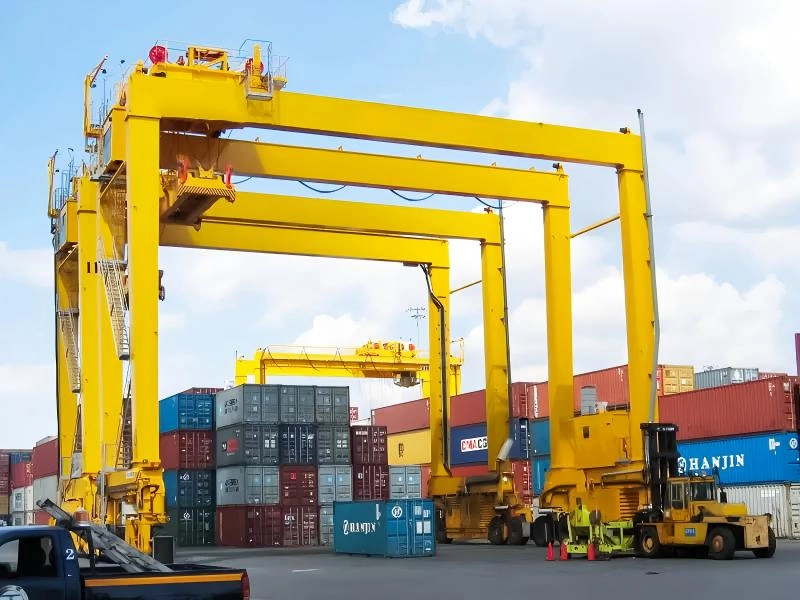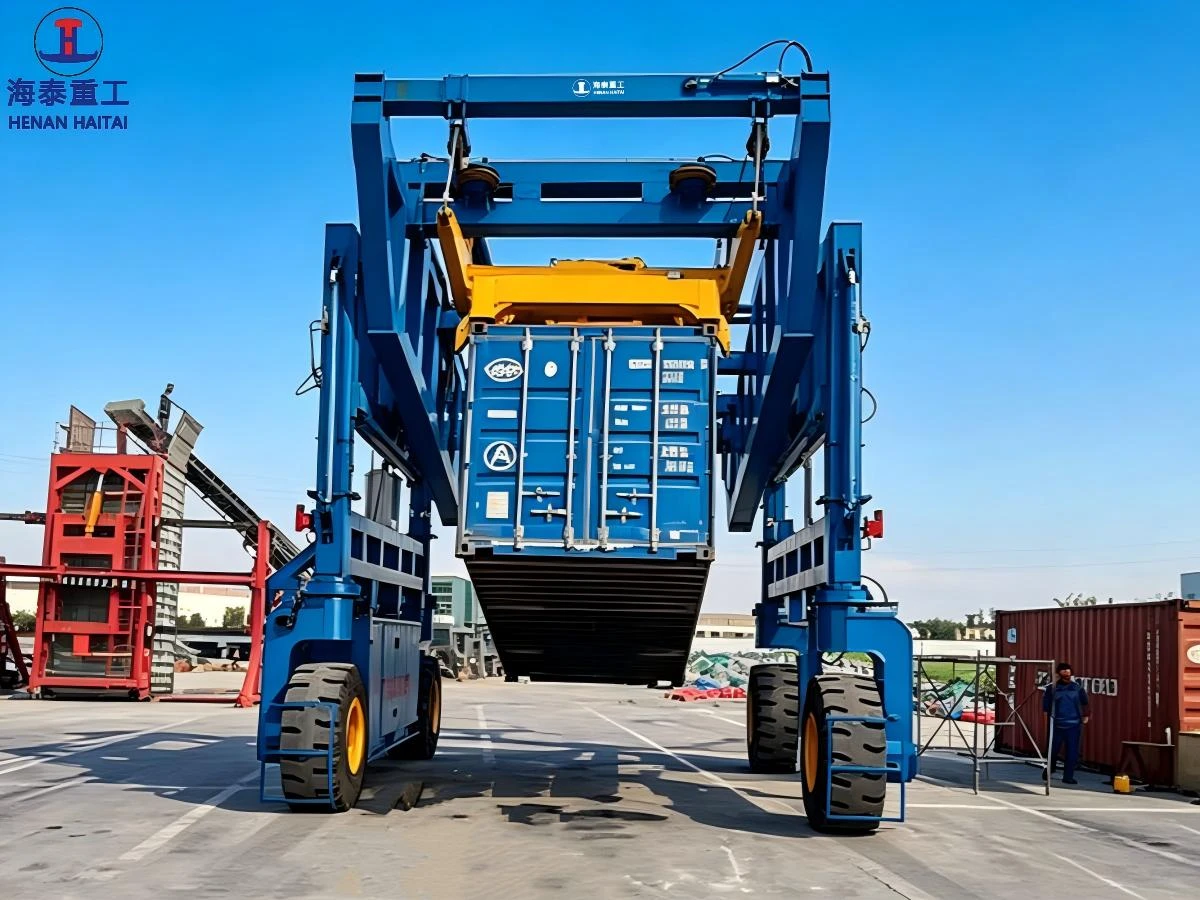
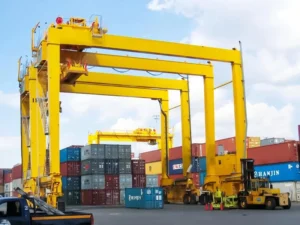
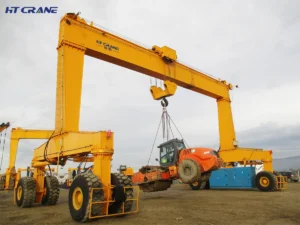
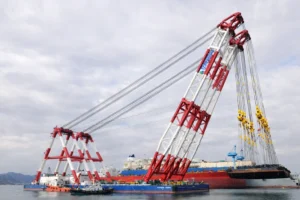
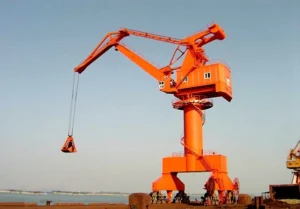
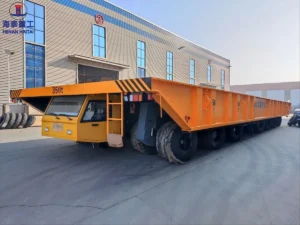
This case study details how Haitai designed, manufactured, and exported a 300 ton marine boat hoist to Guyana. It covers client requirements, technical specifications, export logistics, and post-delivery performance. This case study is a practical guide for shipyard operators and marine equipment buyers across the Caribbean and South America.
Maine Boat Lift Product Introduction Page for Preview

Project Background: Why Guyana Client Team Chose HT Crane for a 300 Ton Marine Boat Hoist?
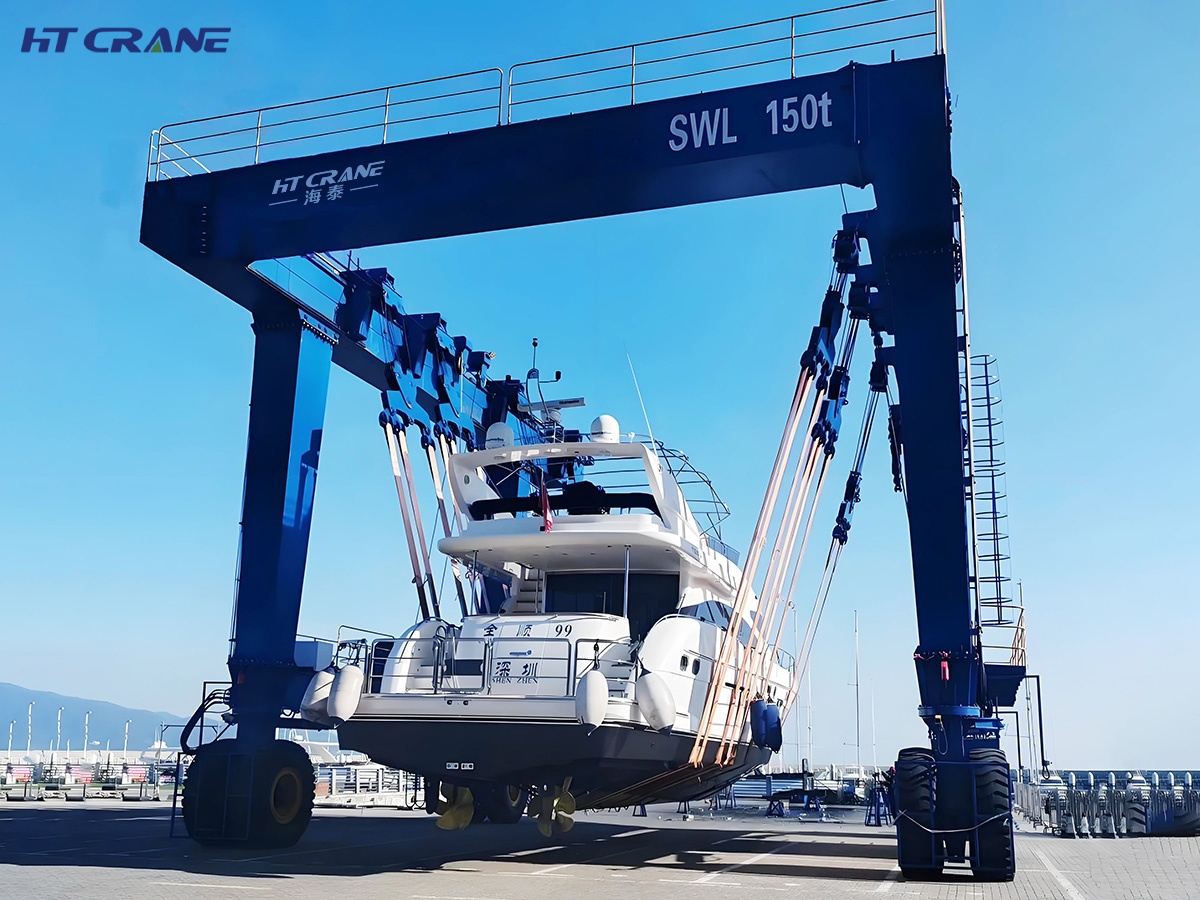
Guyana’s maritime sector is expanding rapidly, driven by offshore oil development and growing commercial shipping activity. A Guyana-based shipyard operator approached Haitai with a clear requirement: they needed a 300 ton marine boat hoist capable of hauling out and dry-docking vessels up to 280 tonnes.
Why they needed a 300-ton Marine Boat Hoist? Their existing equipment was a combination of wheeled cranes and manual blocking systems. It has created safety bottlenecks and limited daily throughput to just two vessel lifts per shift.
The client had evaluated several marine hoist suppliers from Europe and China before shortlisting Haitai based on a competitive technical proposal and proven export track record in Australia. This Haitai 300-ton marine hoist project marked the company’s first delivery to the Caribbean region.
Client Requirements and Technical Specification
The Guyana procurement team provided a piece of detailed scope ohotos that reflected the outdoor working site’s tidal basin layout and vessel mix.
They primarily haul out fishing trawlers, patrol vessels, and mid-size supply boats. This project equipment is depected to handle, lift and transfer vessels and boats ranging from 80 to 260 tonnes.
The key project equipment specification requirements were:
- With a rated capacity of 300-ton marine boat travel lift
- With a lifting height of 3.2 metres, it is used for hoisting and transferring yachts and vessels from offshore platforms into the sea
- With a clear span of 14 meters to accommodate wide-beam vessels
- With a travel speed of up to 5 m/min on the marine railway
- With adjustable sling space from 6m to 12m to handle different hull geometries without manual reconfiguration
- With hot-dip galvanized steel frame to resist from strong wind, salt errosion, and frequent rainfall
- With a PLC-based synchronous control system to maintain level lifts across all hoisting points for preventing hull distortion on fiber-reinforced vessels
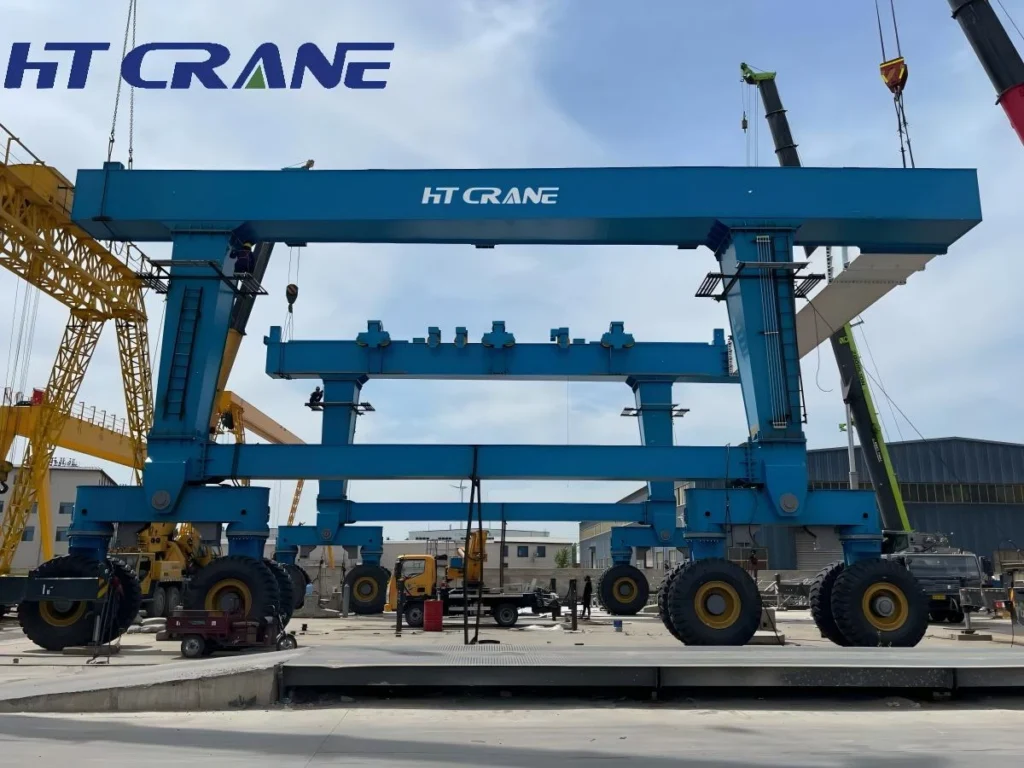
Table 1 — Haitai 300-Ton Marine Boat Hoist: Key Technical Specifications
| Parameter | Specification of 300 ton marine boat hoist |
|---|---|
| Rated Capacity | 300 tonnes |
| Clear Span | 14,000 mm |
| Lifting Height | 3,200 mm |
| Travel Speed (loaded) | ≤ 5 m/min |
| Sling Spacing (adjustable) | 6,000 – 12,000 mm |
| Control System | PLC synchronous multi-point control |
| Power Supply | 380V / 50Hz / 3-phase (site-adapted) |
| Structure | Hot-dip galvanized steel frame |
| Drive | Electric with variable frequency drive (VFD) |
| Certification | CE, ISO 9001 |
Design Decisions: Adapting the 300 Ton Marine Boat Hoist for Caribbean Marine Conditions
Guyana’s coastal environment introduced several design considerations beyond standard specifications:
- High ambient humidity
- salt-laden air
- regular tropical rainfall
HT Crane required to upgraded corrosion protection throughout the structure:
- Specifing hot-dip galvanizing for all structural steel members
- Using marine-grade sealed bearings on all travel wheels
- Applying IP65-rated electrical enclosures
- Fitting PLC control cabinet with air-conditioning to manage internal temperatures during peak-season operation
- Upgraded sling material to polyester webbing with stainless steel hardware, replacing standard wire rope slings to prevent hull surface damage on fiberglass vessels.
These adaptations added approximately 8% to the base equipment cost but were accepted by the client as essential for long-term reliability — a sound investment given Guyana’s distance from major equipment service centers.
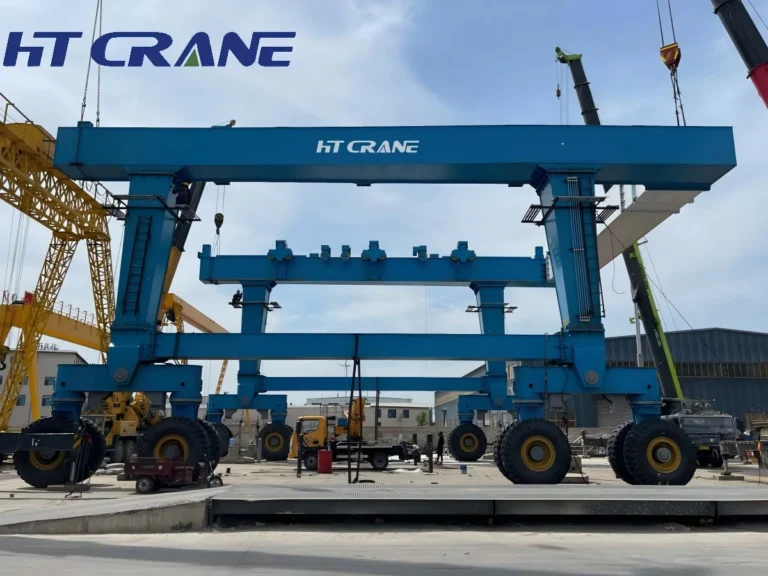
Export Logistics: Shipping the 300 Ton Marine Boat Hoist to Guyana
Transporting this 300 ton marine boat hoist crane overseas requires careful planning at every stage:
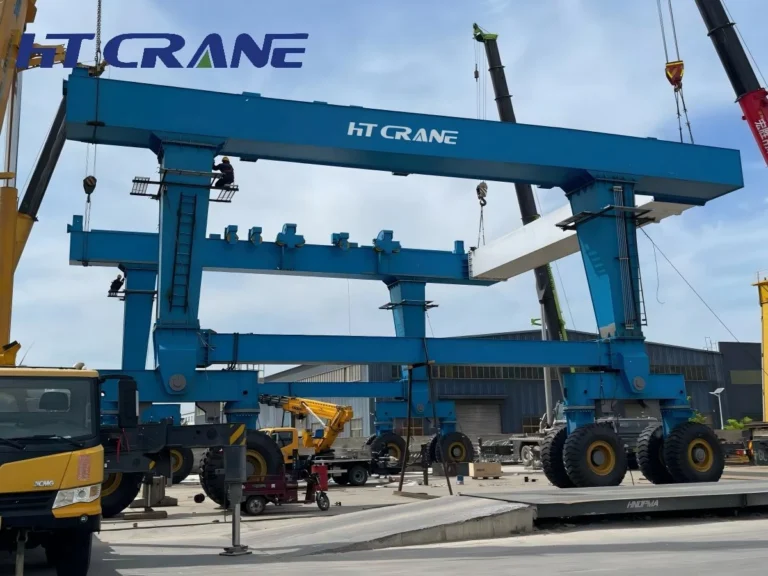
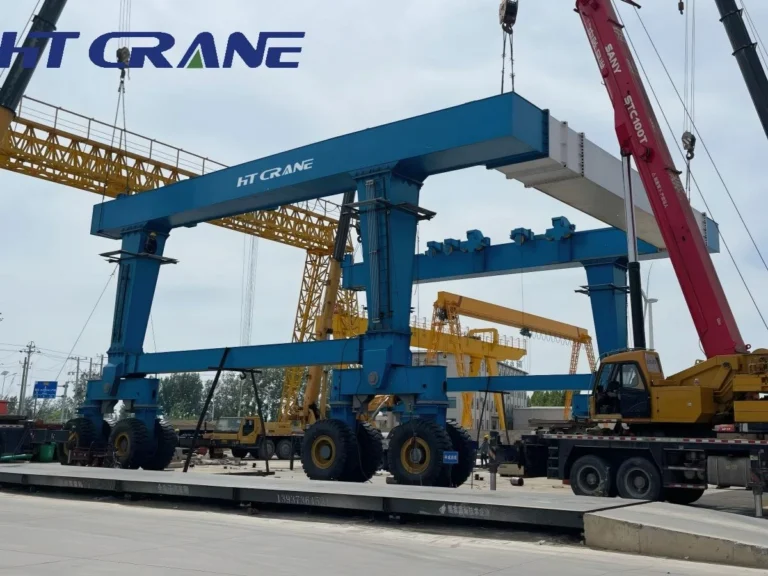
- The main structural frame — the gantry legs and crossbeam — were disassembled into sections within the allowable shipping dimensions for flat-rack containers.
- Haitai’s export team arranged four 40-foot flat-rack containers and one standard 20-foot container for electrical components and consumables.
- Documentation included CE conformity declarations, a structural calculation report, packing and weight certificates, and a detailed assembly manual translated into English.
- The shipment departed from Tianjin port and arrived at Georgetown, Guyana, 28 days later.
Two Haitai field engineers flew in for the on-site reassembly and commissioning phase, which was completed over six working days. The client’s maintenance team received a structured 20-hour training program covering daily inspection, sling change procedures, and PLC fault response.
Table 2 — Haitai 300 Ton Marine Boat Hoist vs. Previous Equipment: Operational Comparison
| Metric | Previous Setup | Haitai 300 Ton Marine Boat Hoist |
| Max Lift Capacity | ~120 tonnes (multi-crane rigging) | 300 tonnes (rated) |
| Daily Vessel Throughput | 2 lifts/shift | Up to 5 lifts/shift |
| Operator Headcount per Lift | 4–6 personnel | 2 personnel (PLC-controlled) |
| Hull Damage Risk | High (wire sling contact) | Low (polyester webbing slings) |
| Setup Time per Lift | 45–60 minutes | 12–15 minutes |
| Equipment Utilization | Seasonal (crane availability) | Dedicated, year-round |
Results: Performance After Commissioning
Three months after commissioning, the Guyana client reported measurable improvements across key operational metrics. Daily vessel haul-out capacity increased from two lifts per shift to an average of four to five — a 120% improvement in throughput. Operator headcount per lift dropped from six to two, reducing labor costs per cycle significantly. The synchronous PLC control system performed without fault across 180 lift cycles during the first quarter, including several challenging multi-hull configurations. The hot-dip galvanized structure showed no signs of corrosion, and the polyester slings completed the review period without visible wear beyond normal use.
The client has since initiated a second inquiry with Haitai for a 150-ton marine travel lift to complement the existing 300 ton boat hoist at a second basin location.
Key Lessons for Marine Equipment Buyers in the Caribbean and South America
This custom 300 ton marine boat hoist export to Guyana offers several actionable takeaways for buyers in similar markets. Environmental adaptation — corrosion protection, tropical-rated electrical components, marine sling materials — should be specified upfront, not treated as optional upgrades. Buyers should request a detailed site-adaptation report from their supplier before finalizing the order.
Choosing a marine hoist supplier from China with Caribbean export experience compresses both project risk and lead time. Haitai’s configurable platform approach meant the Guyana spec was matched without a ground-up custom design. If you are evaluating a 300-ton marine hoist for a shipyard project, contact Haitai with your basin dimensions, vessel weight range, and power supply details for a project-specific technical proposal.
The Complete Buyer’s Guide to Marine Travel Lift
For project inquiries, technical proposals, or 300-ton marine hoist pricing, contact our export team.

FAQs about Marine Boat Hoist Manufacturer – HT Crane
Q1. What is the lead time for 300 ton marine boat hoist from Haitai?
Standard production lead time for the Haitai 300-ton marine boat hoist is 75 to 100 days from order confirmation, depending on structural configuration and current factory load. For the Guyana project, manufacturing was completed in 85 days. Buyers can shorten the engineering phase by providing basin layout drawings, vessel weight range, and power supply specifications at the time of initial inquiry. Haitai recommends starting technical discussions at least four months before the target commissioning date.
Q2. Can the 300 ton marine travel lift handle fiberglass or aluminum-hulled vessels?
Yes. Haitai’s 300-ton marine hoist uses polyester webbing slings as standard for this configuration, which are safe for GRP, fiberglass, and aluminum hulls. The PLC synchronous control ensures all hoisting points rise at equal speed, eliminating the uneven loading that causes hull flexing and damage. Sling spread is adjustable between 6 and 12 meters, accommodating a wide range of beam widths without manual blocking adjustments between lifts.
Q3. What after-sales support does Haitai provide for the Guyana market?
Haitai provides a 12-month warranty on all mechanical and electrical components. For the Guyana and broader Caribbean market, after-sales support includes a remote PLC diagnostic service, a 12-month consumables package shipped with the machine, and English-language technical documentation. Haitai field engineers can be dispatched for on-site inspection or repairs within 7 to 10 business days. Spare parts — including slings, wheel sets, and control modules — are available through Haitai’s export parts program with air freight to Guyana typically within 5 to 7 days.
Q4. What certifications does the Haitai 300 ton marine boat hoist carry?
The Haitai 300-ton marine boat hoist is CE certified and manufactured under ISO 9001 quality management. Structural calculations are conducted in accordance with FEM 1.001 and relevant EN standards. For international export projects including Guyana, Haitai can supply a full documentation package: CE declaration of conformity, material mill certificates, non-destructive testing reports, factory acceptance test records, and load test certificates. Third-party inspection by SGS, BV, or equivalent agencies can be arranged at buyer request.