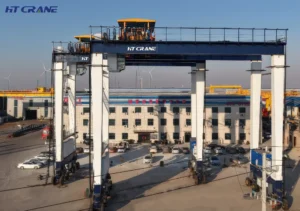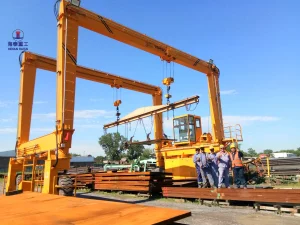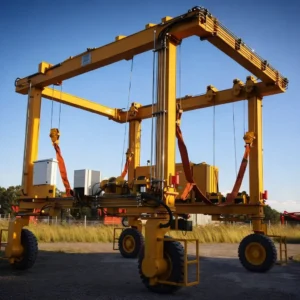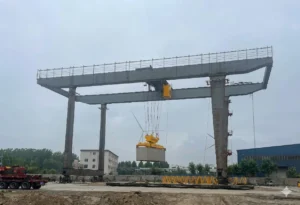
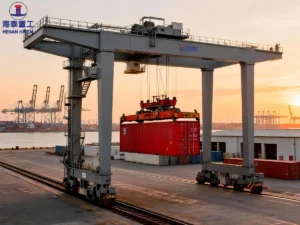
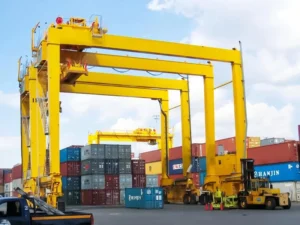
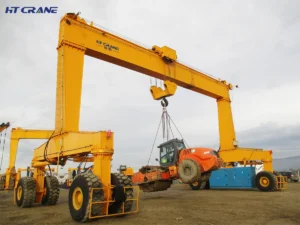
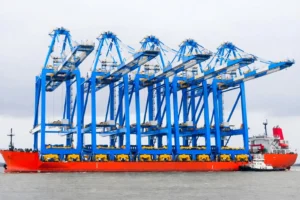
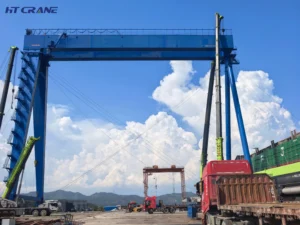
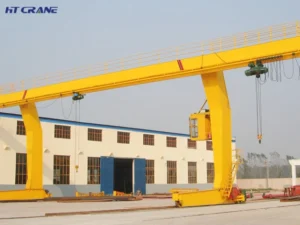
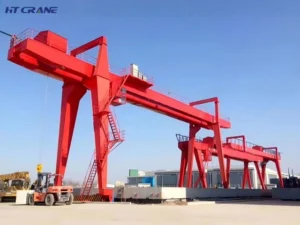
Anyone who has watched a container ship being worked at a busy terminal has seen an STS crane in action, even without knowing the name. The tall rail-mounted structure straddling the berth, its boom reaching out over the vessel’s hull, is the single piece of equipment that decides how fast a ship gets turned around.
An STS crane, short for ship-to-shore crane, is the large rail-mounted crane used at container terminals to load and unload containers between vessels and the quay. For terminal operators, port authorities, and EPC contractors sourcing new equipment, understanding what an STS crane actually is, matters when comparing quotations, writing technical specifications, or evaluating a supplier’s manufacturing capability.
This article breaks down how an STS crane works, its main structural parts, how it compares with gantry, RMG and RTG equipment, the specifications that matter for terminal planning, and the procurement questions buyers should ask a port crane manufacturer before placing an order.
Understanding the STS Crane: Definition and Core Function
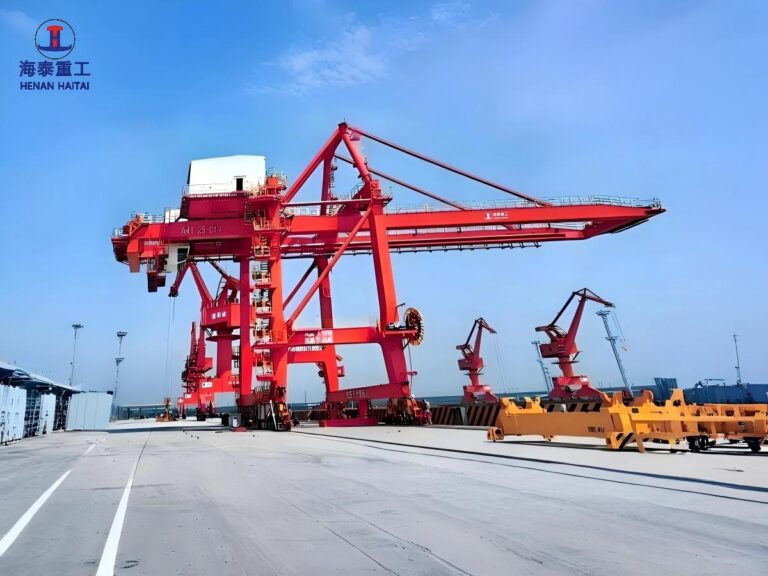
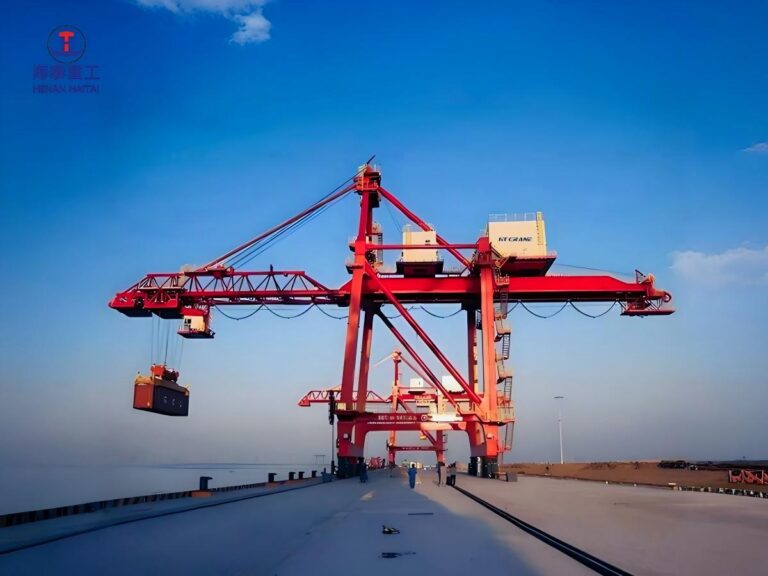
STS stands for ship-to-shore. An STS crane is a rail-mounted, boom-type container crane installed along the quay wall of a container terminal. Its job is singular but demanding: move containers directly between a ship’s cargo holds and the yard-side transfer point, using a spreader that locks onto the corner castings of a container.
Unlike general port cranes that handle bulk cargo, break-bulk, or project cargo, an STS crane is purpose-built around one cycle: land on a container in the vessel, hoist it clear of the hatch coamings, traverse the trolley along the boom and girder, lower it onto a chassis, internal transfer vehicle, or AGV, and repeat. A modern STS crane completes this cycle in roughly 90 to 120 seconds under normal conditions, and the crane’s productivity — usually measured in gross moves per hour — is one of the KPIs terminals use to benchmark berth performance.
Because the STS crane sits at the boundary between sea and land operations, it is almost always the largest and most capital-intensive single asset on a container terminal, and its structural design has to account for wind loading, seismic zones, vessel beam growth, and the outreach needed to service ultra-large container vessels.
Key Structural Components of an STS Crane
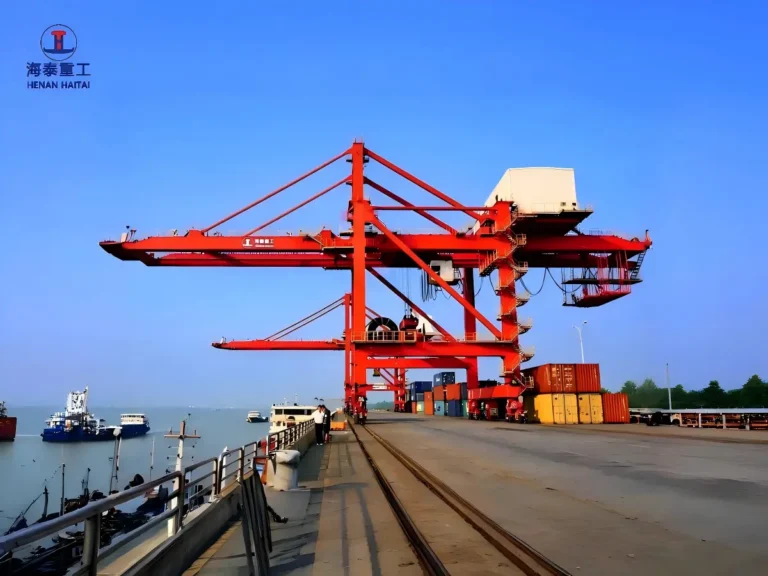
Every STS crane, regardless of manufacturer, shares a common structural logic, please view this diagram:
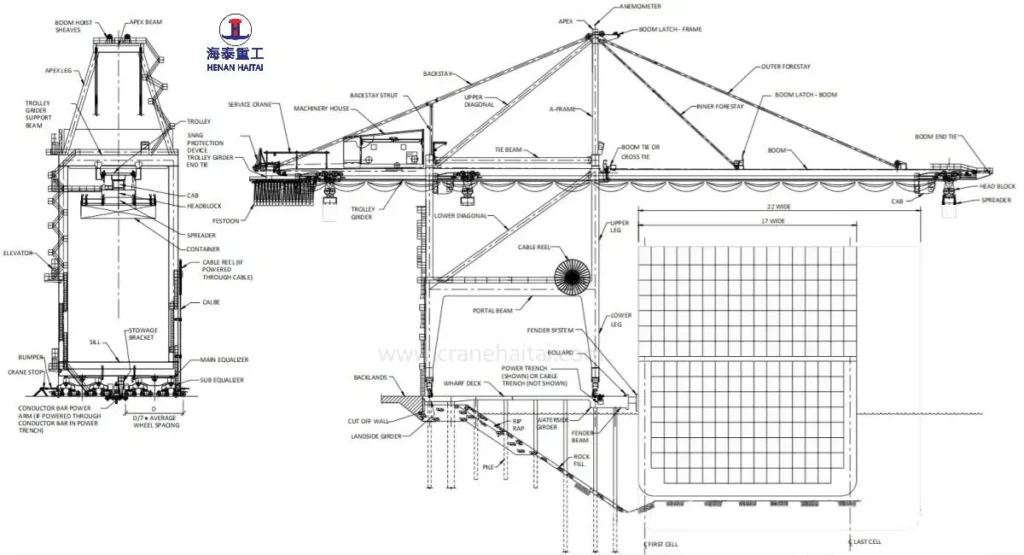
- Portal structure and legs — the steel frame that supports the entire crane and straddles the rail gauge, allowing trucks, AGVs, or rail-mounted transfer platforms to pass underneath.
- Boom — the seaward-side structural arm that can be raised (luffed) to allow vessel clearance during berthing, or lowered into working position to reach containers stacked on deck.
- Girder — the horizontal structure connecting the boom to the landside, along which the trolley travels.
- Trolley and hoist mechanism — carries the spreader, and moves along the girder and boom on a rope-driven or self-propelled system.
- Spreader — the load-handling attachment, telescopic to accommodate 20ft, 40ft, and 45ft containers, with twin-lift or tandem-lift versions capable of handling two 20ft boxes simultaneously.
- Gantry travel system — the wheel/bogie assembly and drive motors that move the entire crane along the quay rail, allowing it to reposition along the vessel’s length.
- Electrical house and control room — houses the PLC-based control system, variable frequency drives, and the operator’s cabin, which on newer STS cranes is often remote-capable for semi-automated or fully remote operation.
Buyers evaluating an STS crane manufacturer should pay close attention to how these subsystems are sourced — whether the steel structure is fabricated in-house, whether drive systems come from established brands, and whether the spreader is manufactured under license or built in-house, since these choices directly affect long-term parts availability.
STS Crane vs. Other Port Handling Equipment
Terminal planning documents frequently reference several crane types together, and confusing them leads to mis-specified tenders:
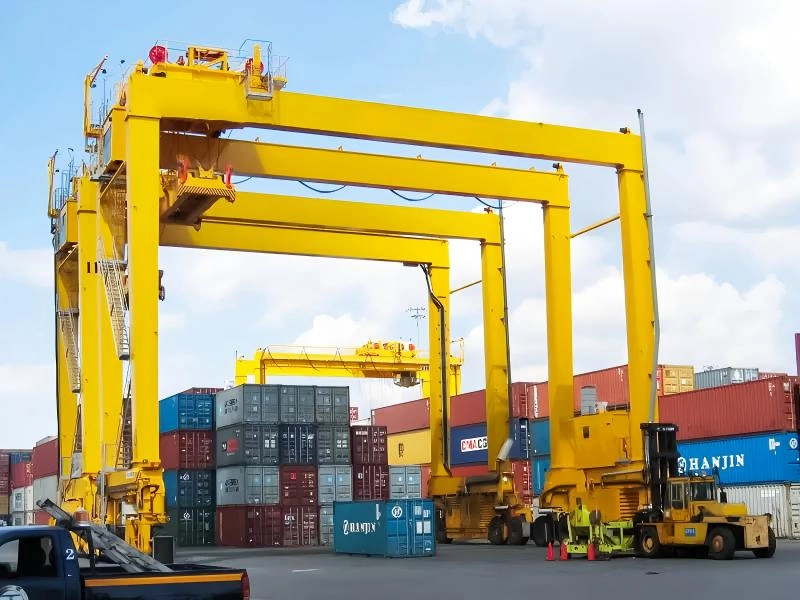
- STS crane vs. gantry crane — an STS crane is technically a type of gantry crane (it travels on rails and straddles a working area), but in port terminology “gantry crane” more often refers to yard equipment like RTG or RMG cranes, not the quayside machine. When a terminal document says “gantry crane” without qualification, always confirm whether it means the STS crane or the yard stacking crane.
- RTG (Rubber-Tyred Gantry) — operates in the container yard on tyres rather than rails, stacking containers between transfer points and the STS crane. It offers flexibility to move between blocks but has a smaller footprint and lower stacking height than rail-mounted yard cranes.
- RMG (Rail-Mounted Gantry) — also a yard crane, running on fixed rails within a block, generally used where yard density and automation are priorities.
- Mobile harbor crane — a wheeled or crawler-mounted crane, more flexible for multi-purpose berths handling breakbulk, bulk, and occasional containers, but with lower cycle rates and outreach compared to a dedicated STS crane.
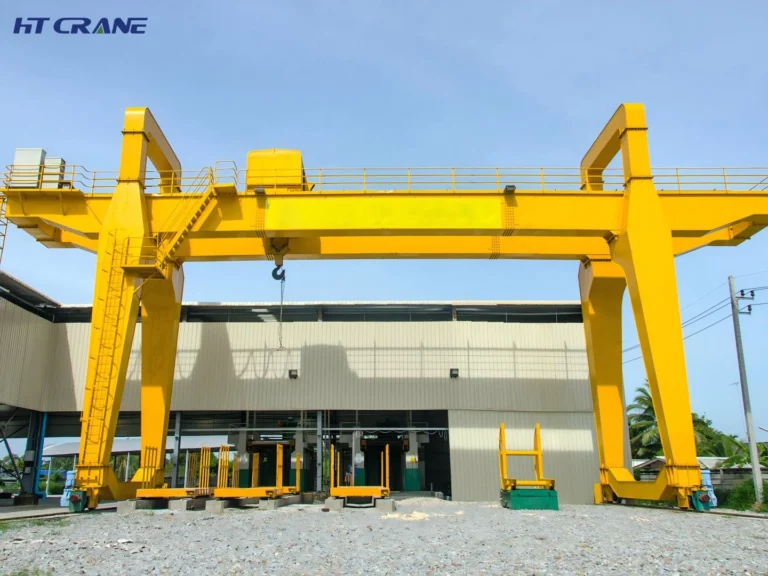
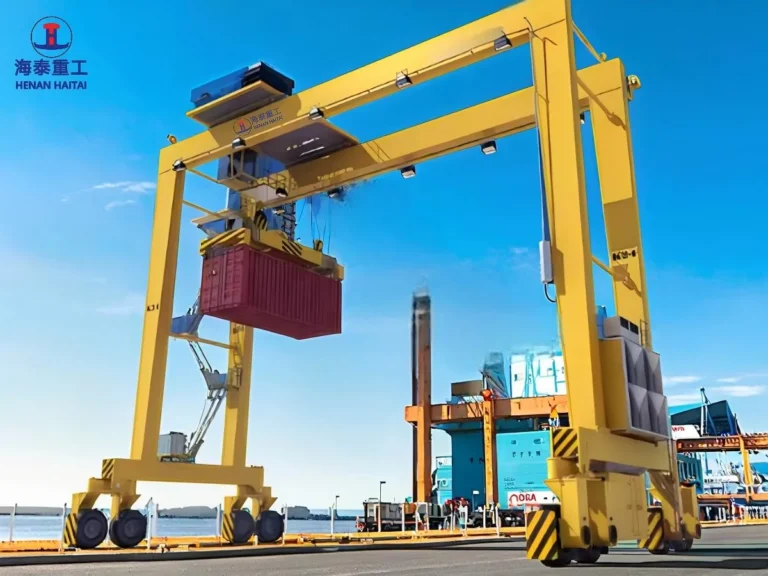
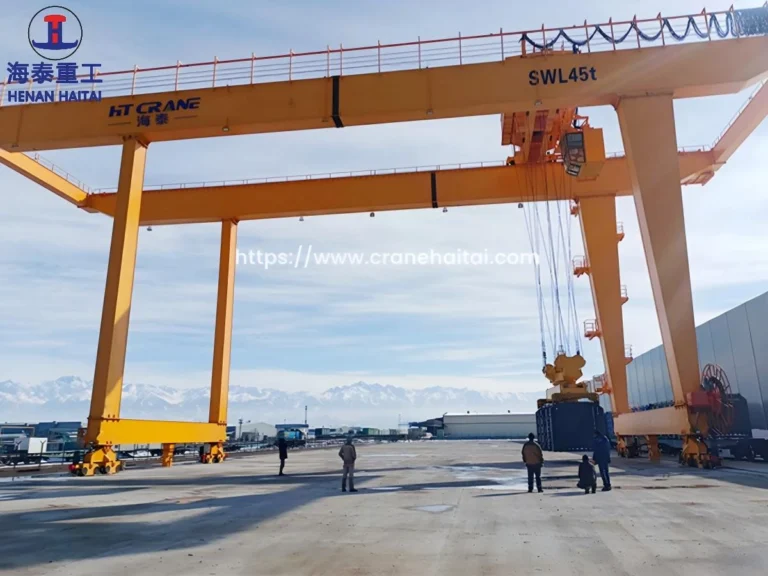
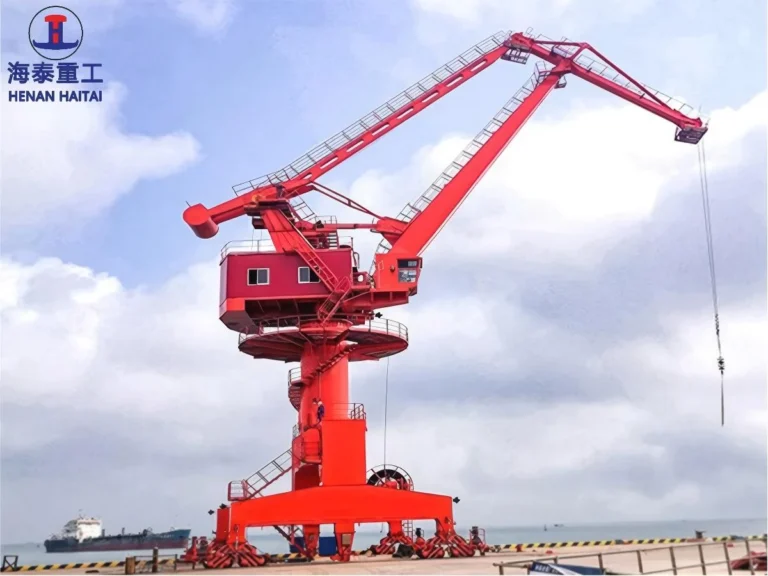
The STS crane remains the only piece of equipment in this list designed specifically for direct ship-to-shore container exchange at scale, which is why terminals handling regular container vessel calls invest in it as core infrastructure rather than auxiliary equipment.
Technical Specifications That Matter When Selecting an STS Crane
When a port authority or terminal operator issues a technical specification for an STS crane, the working range and capacity parameters below typically drive both design and price:
| Parameter of STS Container Crane | Hiatai STS Crane Range |
|---|---|
| Lifting Capacity (under spreader) | 35 – 65 tons |
| Front Outreach | 30 – 65 meters |
| Rear Outreach | 10 – 25 meters |
| Rail Gauge | 16 – 30.48 meters |
- Front Outreach (30–65 m) — the horizontal distance from the waterside rail to the tip of the boom, set according to the beam of the largest vessel the terminal expects to serve; wider outreach is required as terminals move from feeder to mainline vessel calls.
- Rear Outreach (10–25 m) — the landside working range needed for stacking on chassis, feeding AGVs, or reaching automated stacking cranes behind the crane.
- Rail Gauge (16–30.48 m) — the distance between the waterside and landside rails; the 30.48 m (100ft) gauge is the common international standard, while narrower gauges are used on constrained or retrofit berths.
- Lifting Capacity (35–65 tons under spreader) — covers single-lift operation for standard 20ft/40ft containers; twin-lift and tandem-lift configurations for handling two boxes per cycle are typically quoted separately at higher rated capacity.
Beyond these four parameters, hoisting and trolley speed, lift height above and below the rail, and wind/seismic design criteria also affect cycle time, deck stacking tiers, and steel tonnage. Buyers comparing quotations from different STS crane manufacturers should normalize all of these parameters before comparing price, since a lower quote sometimes reflects a smaller outreach or lower duty cycle rather than genuine cost efficiency.
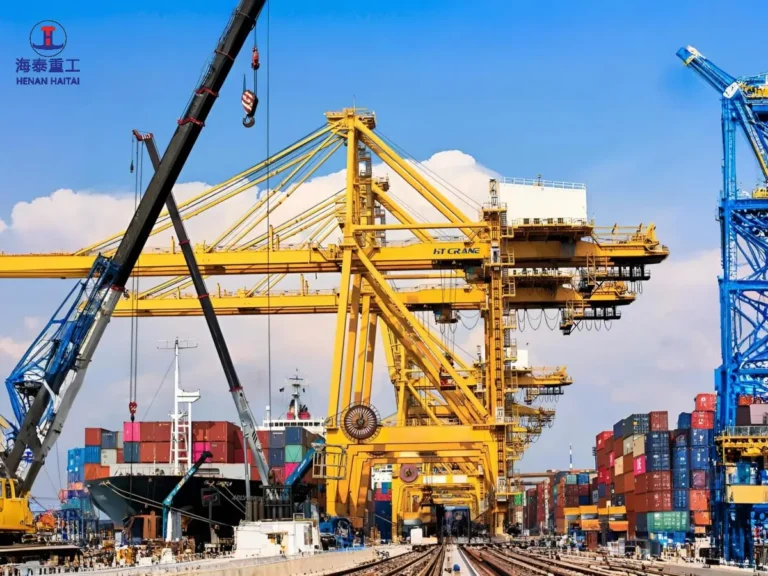
Application: STS Cranes in Container Terminal Operations
In a typical mid-sized container terminal expansion project, the scope usually includes two to four STS cranes ordered together to standardize spare parts, training, and maintenance procedures. A common project profile involves a terminal upgrading from feeder-vessel service to mainline calls, which pushes front outreach requirements toward the upper end of the 30–65 m range almost overnight, since mainline vessels are significantly wider than regional feeders.
Terminals in tropical coastal regions frequently specify enhanced corrosion protection packages — marine-grade coatings, sealed electrical enclosures, and stainless steel fasteners in splash zones — because salt exposure combined with high humidity accelerates structural degradation far faster than in temperate ports. Terminals in higher-latitude or seismic-prone regions instead prioritize wind-holding brake systems and storm pins that lock the crane to the rail during typhoon or cyclone warnings, since an unsecured STS crane can be blown off its rails in extreme wind events.
Commissioning an STS crane on-site also involves load testing at 100%, 110%, and sometimes 125% of rated capacity, dynamic testing of the trolley and hoist systems, and integration testing with the terminal operating system if the crane includes semi-automated features such as auto-steering of the spreader or anti-sway control.
Maintenance and Lifecycle Considerations for STS Cranes
An STS crane typically operates 16 to 24 hours a day at active terminals, which means preventive maintenance planning is inseparable from procurement decisions. Key wear items include wire ropes (replaced on a scheduled cycle based on load cycles rather than calendar time alone), wheel and bogie assemblies, spreader twist-locks, and brake linings on the gantry travel motors.
Terminals that skip structured maintenance contracts often see accelerated wear on the boom hinge pins and trolley rail, since these components carry the highest cyclic stress. A well-specified STS crane order should include a defined spare parts package for the first two to three years of operation, along with training for local maintenance teams, since shipping replacement parts internationally after a breakdown can idle a berth for weeks.
About Haitai Crane — Port Crane Manufacturer
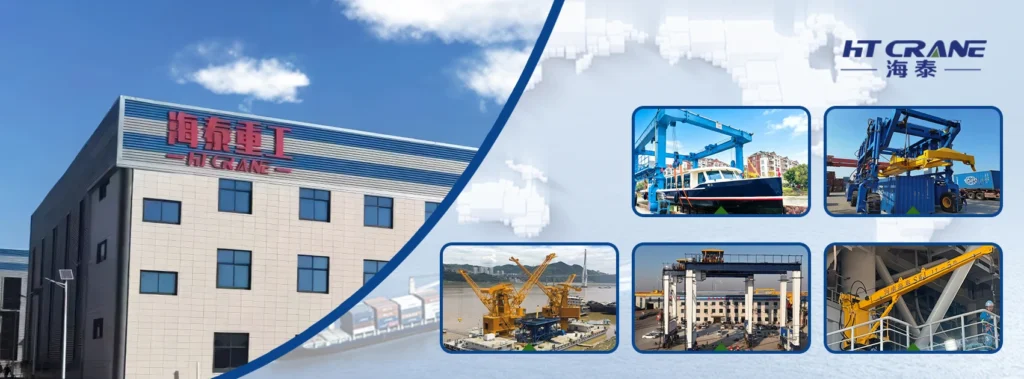
Haitai Crane has built its export business around exactly this kind of long-cycle, high-stakes equipment, supplying STS cranes and related port handling equipment to overseas terminal operators, EPC contractors, and port authorities across Asia, Africa, and the Middle East. The company’s manufacturing base covers structural fabrication, electrical system integration, and spreader assembly in-house, which shortens the supply chain buyers rely on when specifying front outreach, rail gauge, or lifting capacity outside standard catalog ranges.
Beyond production, Haitai Crane supports overseas projects with installation supervision at the destination port, factory acceptance testing before shipment, and spare parts packages sized to each terminal’s duty cycle and environment — from tropical, high-humidity berths requiring enhanced corrosion protection to wind-exposed coastlines requiring reinforced storm-lock systems. For terminal operators evaluating a port crane manufacturer for a new or replacement STS crane, this combination of in-house engineering and on-site project support is intended to reduce the lead-time and after-sales risk that typically come with large, custom-built port equipment. Contact this professional port crane manufacturer — Haitai Crane.
Procurement Guide: What to Check Before Buying an STS Crane
Before signing a contract with an STS port crane manufacturer, buyers should verify:
- Classification and certification — structural design verified against relevant class society or engineering codes (such as FEM, AS, or applicable local port authority standards), plus electrical compliance certificates.
- Reference projects — completed STS crane installations at ports with comparable vessel size and environmental conditions, not just total unit count.
- Local support infrastructure — whether the manufacturer has installation supervision teams, spare parts warehousing, or service agents near the destination port.
- Customization capability — ability to adjust outreach, lift height, and automation level to match terminal growth plans, rather than offering only fixed catalog models.
- Delivery and installation timeline — since an STS crane is typically shipped in modules and assembled on-site, Factory Acceptance Testing (FAT) before shipment reduces the risk of on-site rework.

Conclusion
An STS ship-to-shore crane is far more than a large piece of steel on rails — it is the productivity bottleneck and the single largest capital asset at most container terminals. Understanding its structure, how it differs from yard equipment like RTG and RMG cranes, and which specifications actually drive cost and performance puts terminal operators in a much stronger position when evaluating a port crane manufacturer and negotiating a technical specification that matches real operational needs rather than a generic catalog sheet.
FAQs about STS Crane Manufacturing and Procurement
Q1. What does STS crane stand for?
STS stands for ship-to-shore. An STS crane is the rail-mounted crane installed on a container terminal quay that transfers containers directly between vessels and the shore side.
Q2. What is the difference between an STS quay crane and a Gantry Crane?
An STS crane is technically one type of gantry crane, since it travels on rails and straddles the load area. In everyday port usage, though, gantry crane usually refers to yard equipment like RTG or RMG cranes, while STS crane specifically means the quayside ship-loading machine.
Q3. What is the typical lifting capacity of an STS quay crane?
Most STS cranes are rated between 35 and 65 tons under the spreader for single-container lifts, while twin-lift or tandem-lift STS cranes designed to handle two 20ft containers at once can be rated significantly higher.
Q4. How is outreach determined when selecting an STS container crane?
Front outreach, typically ranging from 30 to 65 meters, is set based on the beam of the largest vessel the terminal expects to serve, while rear outreach of 10 to 25 meters covers the landside stacking and transfer range. Terminals moving from feeder vessels to mainline services usually need to increase front outreach toward the higher end of this range.
Q5. What should buyers check before choosing an STS port crane manufacturer?
Buyers should verify structural certification, review comparable reference projects, confirm local installation and spare parts support, check customization options for future terminal growth, and request factory acceptance testing before the crane ships.