In the high-stakes world of port logistics and container terminal operations, the difference between profit and loss often comes down to equipment efficiency. Investing in straddle carriers is a significant capital expenditure, but when chosen correctly, these machines pay for themselves through enhanced productivity, reduced labor costs, and minimized downtime.
This article explores the financial mechanics behind straddle carrier ROI, offering a comprehensive guide on how to calculate your container handling return. We will also examine why Haitai has emerged as a global leader in this space, providing durable, technologically advanced machinery that guarantees a lucrative port equipment investment.
1. Understanding Straddle Carrier ROI: The Basics
Return on Investment (ROI) is a financial metric used to evaluate the efficiency or profitability of an investment. In the context of port operations, calculating straddle carrier ROI involves comparing the operational savings and revenue enhancements generated by the equipment against the initial purchase price and ongoing maintenance costs.
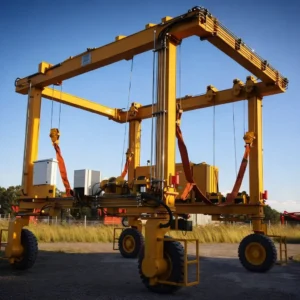
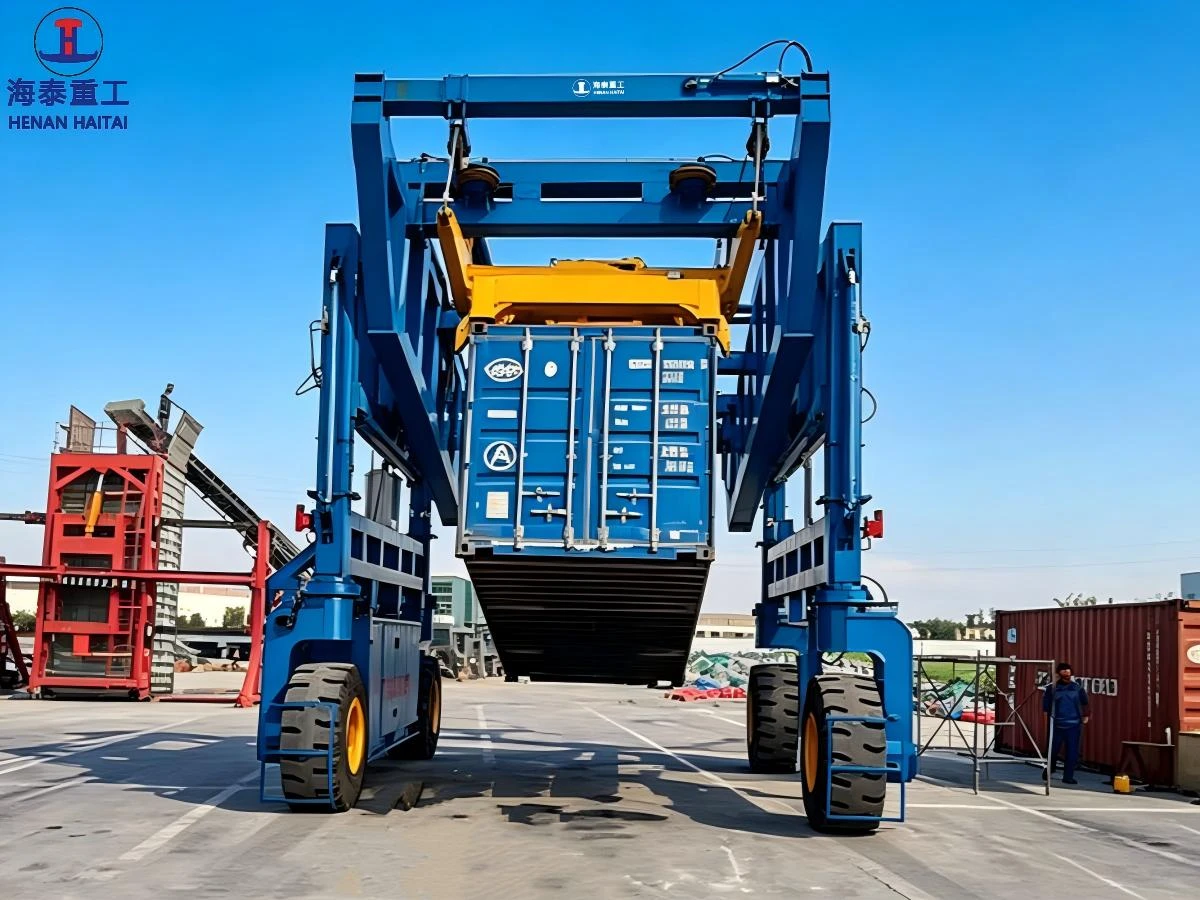
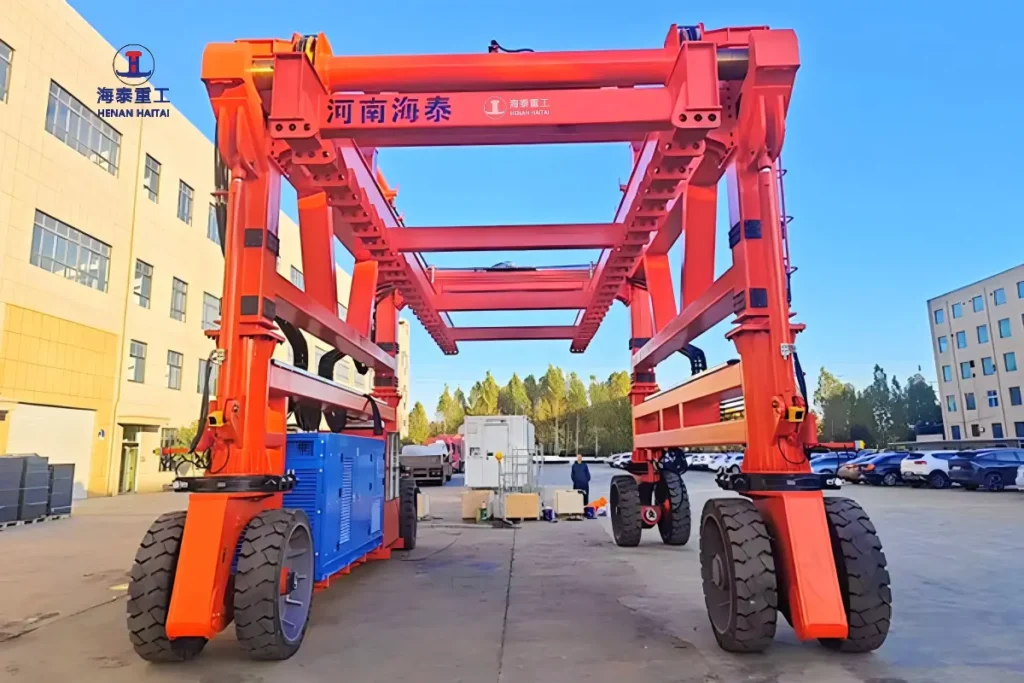
Unlike static cranes, straddle carriers offer unparalleled flexibility. They can lift, transport, and stack containers autonomously, acting as a bridge between the quayside and the yard. When calculating ROI, terminal operators must look beyond the sticker price and consider the Total Cost of Ownership (TCO). A cheaper carrier that breaks down frequently will yield a negative ROI, whereas a premium, highly efficient unit will accelerate your container handling return, paying for itself in a fraction of the time.
2. Key Metrics for Calculating Container Handling Return
To accurately gauge the financial impact of your next port equipment investment, you need to measure several critical performance indicators:
- Initial Capital Expenditure (CapEx): The purchase price of the straddle carrier, including delivery, assembly, and commissioning.
- Operational Expenditure (OpEx): Daily running costs, including fuel consumption (or electricity for hybrid models), routine maintenance, tire replacement, and operator wages.
- Throughput Capacity: The number of containers the carrier can move per hour (moves per hour). Higher throughput directly increases revenue potential.
- Uptime and Reliability: The percentage of time the machine is operational. Downtime halts operations, leading to delayed ships and costly demurrage penalties.
- Lifespan and Residual Value: The expected operational life of the machine (usually 10 to 15 years) and its salvage or trade-in value at the end of its lifecycle.
3. The Financial Formula: How to Compute Your Straddle Carrier ROI?
The basic formula for ROI is: ROI = ((Net Profit from Investment – Cost of Investment) / Cost of Investment) x 100
To adapt this for straddle carriers, terminal managers should use a multi-year projection model:
- Calculate Total Investment Cost: Add the purchase price, financing interest, and initial training costs.
- Calculate Annual Operational Savings/Revenue Gain: Determine how much you save by replacing older equipment or manual methods. Factor in faster ship-to-shore turnaround times, reduced fuel consumption, and lower labor requirements.
- Calculate Annual Costs: Include fuel, parts, maintenance, and operator salaries.
- Determine Net Annual Benefit: Subtract Annual Costs from Annual Savings/Revenue Gain.
- Calculate Payback Period: Divide Total Investment Cost by Net Annual Benefit. (e.g., If a carrier costs $1.5M and yields $500k in net annual benefit, the payback period is 3 years).
- Final ROI Calculation: Over a 10-year lifespan, the net benefit is $5M. ROI = (($5M – $1.5M) / $1.5M) x 100 = 233%.
4. Why Choose Haitai Straddle Carriers?
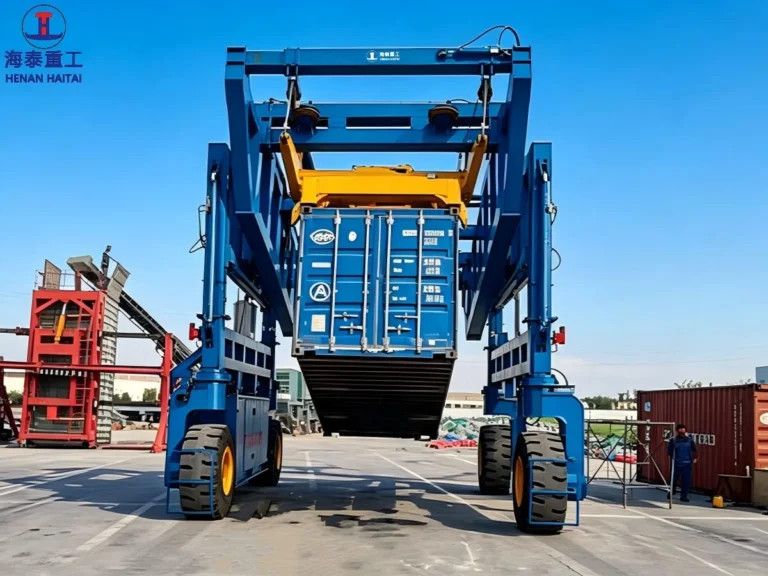
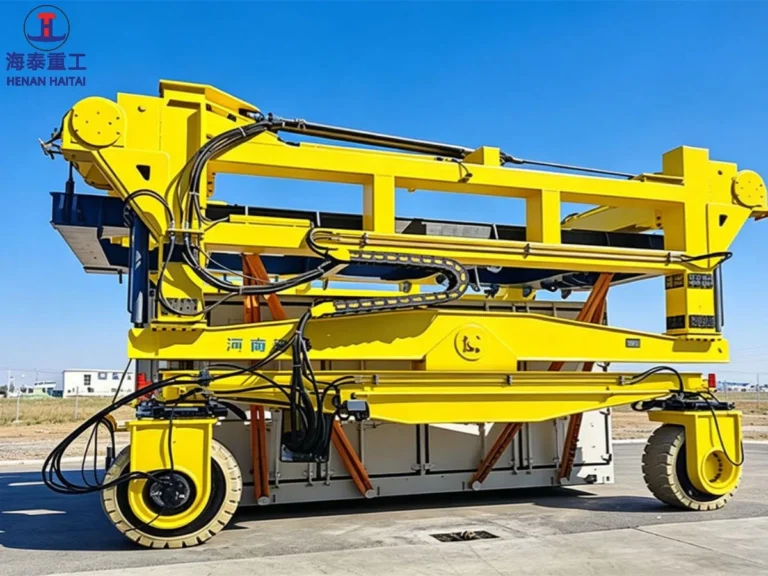
When it comes to maximizing straddle carrier ROI, the manufacturer you choose makes all the difference. Jiangsu Haitai is a globally recognized leader in port machinery, renowned for engineering equipment that drives profitability. Here is why a Haitai straddle carrier is the ultimate port equipment investment:
Unmatched Fuel Efficiency
Haitai straddle carriers are equipped with advanced diesel-electric hybrid systems and intelligent power management. By optimizing engine RPM and utilizing energy recovery systems during container lowering, Haitai carriers can reduce fuel consumption by up to 20% compared to traditional diesel-only machines. This massive savings on fuel directly accelerates your container handling return.
Superior Uptime and Durability
Downtime is the enemy of ROI. Haitai machines are built with heavy-duty structural steel and state-of-the-art components to withstand the harshest port environments. Their modular design allows for rapid servicing and easy access to critical components, ensuring your fleets spend more time moving containers and less time in the repair shop.
Advanced Automation and Safety Technology
Haitai integrates cutting-edge technologies such as anti-sway systems, automated steering, and collision avoidance. These features not only protect your valuable cargo and infrastructure but also reduce operator fatigue and training time. With Haitai, your operators achieve peak productivity safely from day one.
Exceptional After-Sales Support
A machine is only as good as the support behind it. Haitai offers a robust global supply chain for spare parts and 24/7 technical support. Rapid response times and preventative maintenance programs ensure that minor issues never evolve into major operational halts.
5. Real-World Straddle Carrier ROI: A Haitai Case Scenario
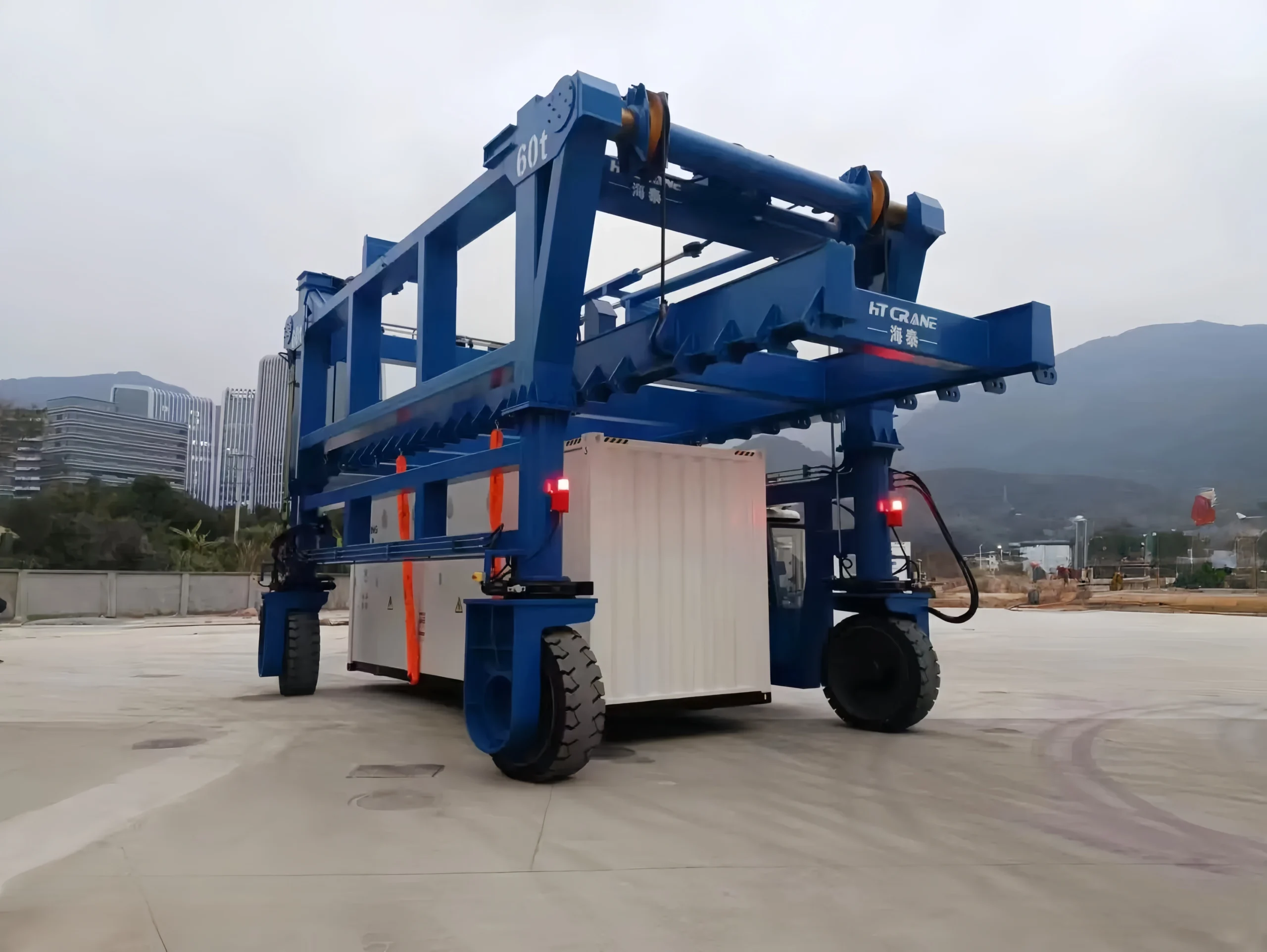
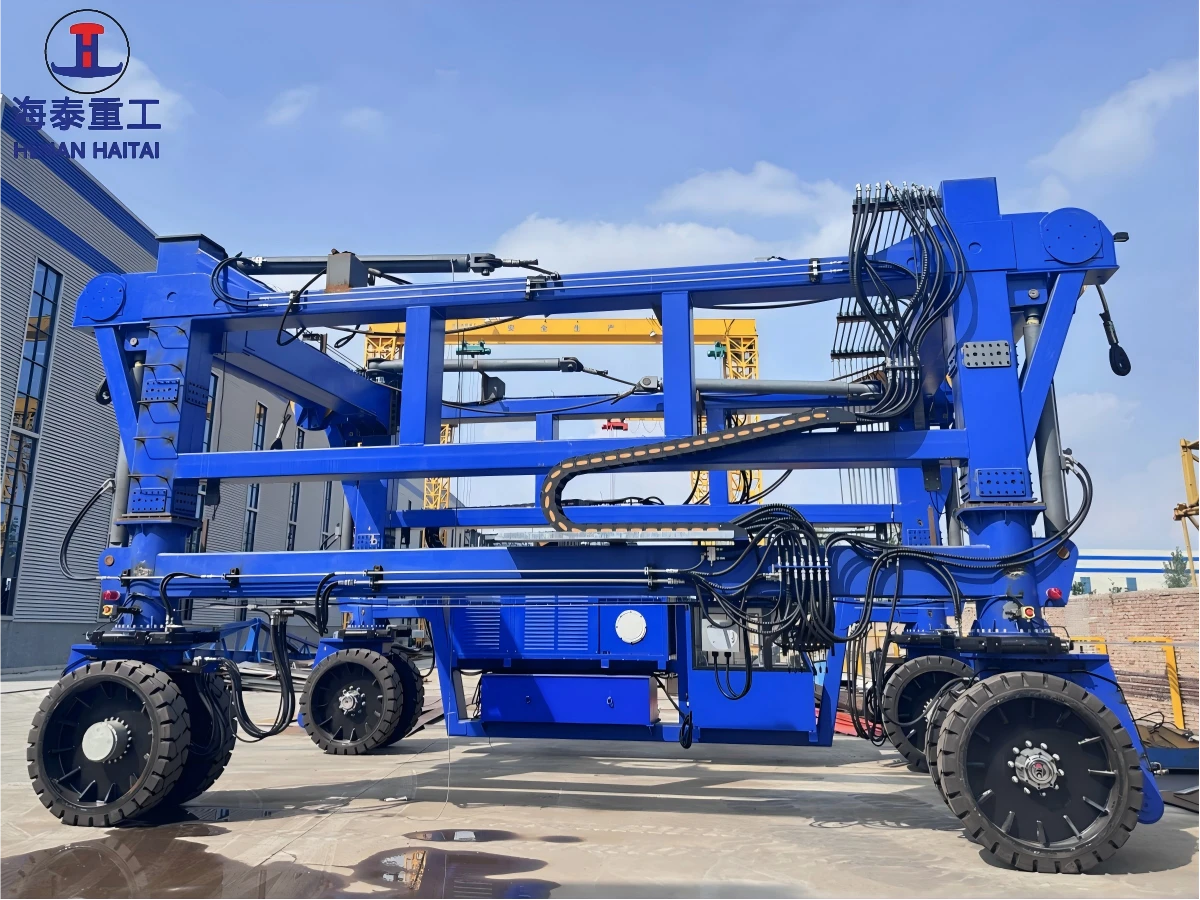
Imagine a mid-sized terminal replacing an aging fleet of reach stackers with three new Haitai straddle carriers.
- Investment: $4.5 million for three carriers.
- Fuel Savings: Haitai’s hybrid technology saves $50,000 annually per machine ($150,000 total).
- Labor Savings: Straddle carriers require fewer ground crews for spotting and chassis handling, saving $100,000 annually.
- Throughput Increase: Moving from 15 moves per hour to 25 moves per hour reduces ship turnaround time, allowing the terminal to handle 2 additional ship Calls per month, generating $300,000 in extra revenue annually.
Total Net Annual Benefit: $550,000. Payback Period: Approximately 8.1 years for the initial CapEx alone, but when you factor in the extended lifespan and reduced maintenance compared to the old equipment, the terminal experiences a positive cash flow by year 2 and an overall ROI exceeding 150% over the 12-year lifespan.
6. Strategies to Maximize Your Port Equipment Investment
To ensure your straddle carrier ROI is as high as possible, consider the following operational strategies:
- Invest in Operator Training: A highly skilled operator can squeeze out 15% more productivity from the same machine compared to an average operator. Haitai provides comprehensive training simulators to bring your staff up to speed quickly.
- Implement Preventative Maintenance: Don’t wait for parts to fail. Use Haitai’s remote monitoring software to predict wear and tear, scheduling maintenance during off-peak hours.
- Optimize Yard Layout: Ensure your terminal layout minimizes travel distances for the straddle carriers. Shorter travel distances mean less fuel burned and more moves per hour.
- Right-Size Your Fleet: Analyze your peak and off-peak volumes to determine the exact number of carriers needed. Over-investing ties up capital, while under-investing causes bottlenecks.
7. Conclusion to Complete Straddle Carrier ROI Guide
Calculating the ROI of heavy machinery requires a clear understanding of both upfront costs and long-term operational efficiencies. By measuring key metrics such as fuel consumption, uptime, and throughput, terminal operators can clearly see the financial benefits of upgrading their fleets.
When evaluating your next port equipment investment, Haitai stands out as a partner committed to your bottom line. With superior fuel efficiency, rugged durability, and intelligent design, Haitai guarantees a robust container handling return, turning a capital expenditure into a highly profitable, long-term asset.

FAQs about Haitai Straddle Carrier ROI
Q1. What is the average lifespan of a Haitai straddle carrier?
HT Crane’s straddle carriers are engineered for heavy-duty continuous operation and typically boast an operational lifespan of 12 to 15 years, depending on usage intensity and adherence to preventative maintenance schedules.
Q2. How does fuel efficiency impact the overall straddle carrier ROI?
Fuel is one of the highest ongoing operational expenses. Haitai’s diesel-electric hybrid systems can reduce fuel consumption by up to 20%. In high-volume terminals, this annual fuel savings alone can recoup a significant portion of the initial investment, drastically shortening the payback period.
Q3. Are Haitai straddle carriers suitable for smaller ports or intermodal yards?
Yes. Haitai manufactures a variety of models with different lifting capacities and stacking heights. Their flexible steering systems and compact designs make them highly maneuverable, making them an excellent port equipment investment for smaller, multi-user ports and inland freight stations.
Q4. How long does it typically take to see a positive return on a straddle carrier investment?
While this depends on terminal volume and local labor/fuel costs, most operators see a positive container handling return within 2 to 4 years. The primary drivers for a fast payback are increased throughput speeds, reduced ship waiting times, and lower fuel and maintenance costs compared to older equipment.
Q5. What kind of after-sales support does Haitai provide to protect my investment?
Haitai Crane offers a comprehensive after-sales network, including 24/7 technical support, a guaranteed global supply of OEM spare parts, and on-site maintenance training programs. This ensures that any potential downtime is minimized, protecting your operational efficiency and overall ROI.