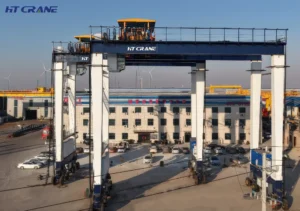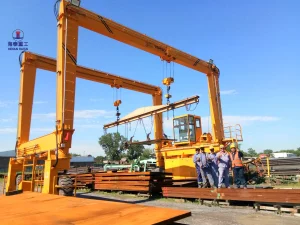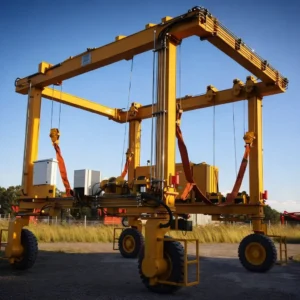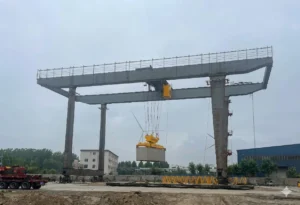

If your facility handles steel plates, scrap metal, or iron castings daily, a magnetic overhead crane can cut loading time by half — while reducing worker exposure to heavy lifting hazards. This guide explains exactly how the system works, which industries benefit most, and what you must check before purchasing.
Many procurement managers focus only on lifting capacity. But with magnetic overhead cranes, the magnet type, duty cycle, and power supply are equally critical to long-term performance. Getting these wrong leads to dropped loads, downtime, and costly repairs.
By the end of this article, you will know how to match the right magnetic crane to your operation — confidently.
How a Magnetic Overhead Crane Works


The Basic Lifting Mechanism
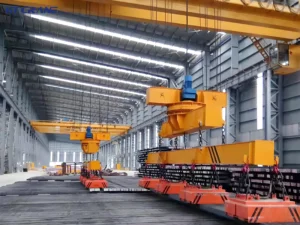
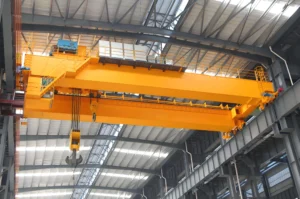
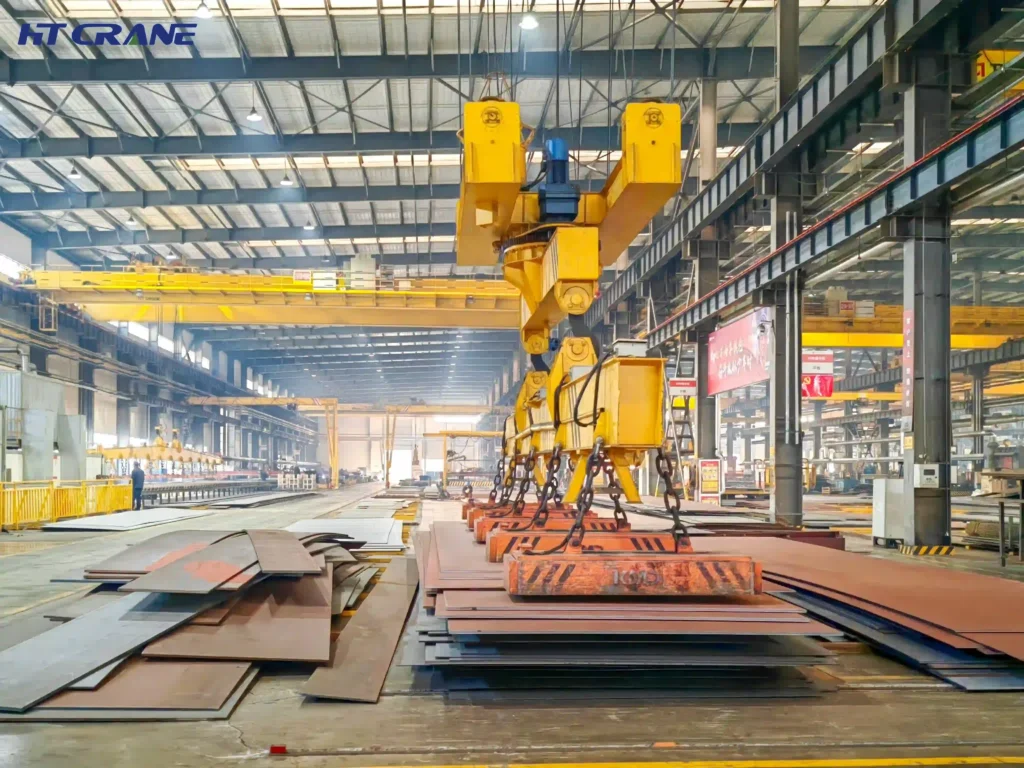
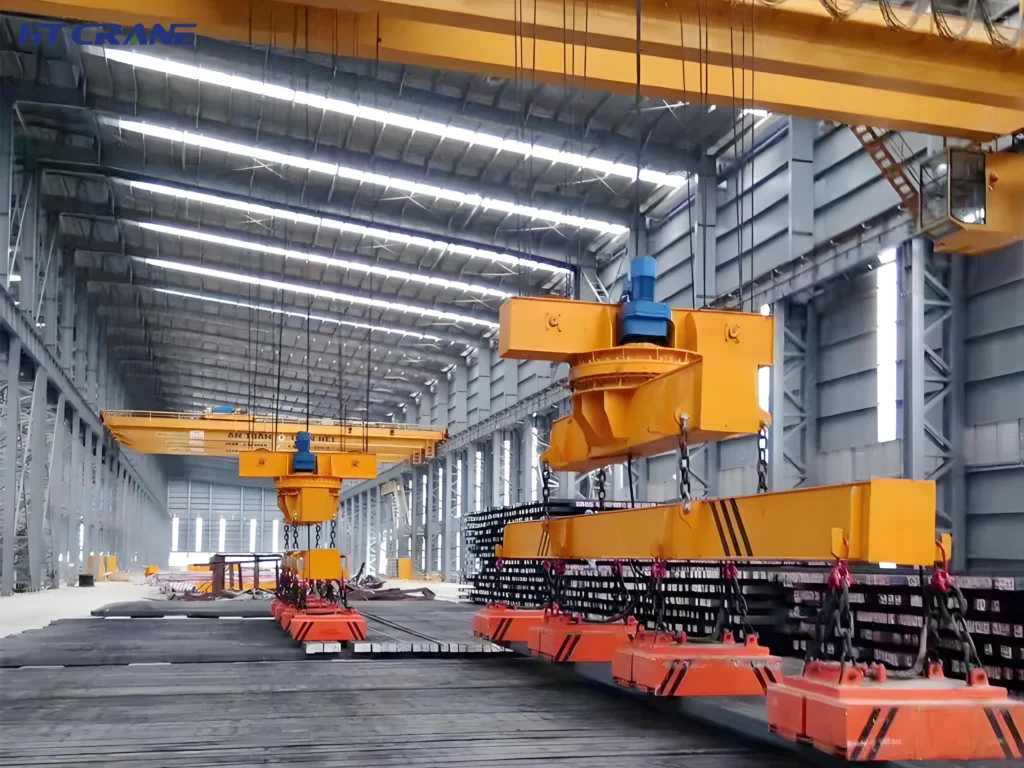
A magnetic overhead crane is a bridge crane fitted with an electromagnetic or permanent magnet lifting device instead of a hook or grab. The crane travels along elevated runway beams, and the magnet is suspended from the hoist trolley.
When the operator energizes the electromagnet, it generates a powerful magnetic field. This field attaches to ferromagnetic materials — primarily steel and iron — lifting them without any mechanical clamping.
The operator then travels the crane to the drop zone, cuts power to the magnet, and releases the load. The entire cycle is faster and safer than chain slings or manual hooks for bulk metal handling.
Electromagnetic vs. Permanent Magnet
There are two main magnet types used in overhead cranes:
| Feature | Electromagnet | Permanent Magnet |
|---|---|---|
| Power requirement | Continuous DC power | No power needed to hold load |
| Load release | Instant (cut power) | Requires mechanical release |
| Fail-safe risk | Drops load on power failure | Holds load during power failure |
| Duty cycle | Continuous or intermittent | Continuous |
| Best for | Scrap yards, foundries | Precision steel sheet handling |
Electromagnets dominate scrap processing and foundry work because of easy, fast release. Permanent magnets — including electro-permanent types — are preferred where power reliability is a concern or where precise placement of finished steel sheets is needed.
According to IEC 60204-32 (Safety of Machinery — Cranes), electromagnetic lifting devices must be equipped with backup power or mechanical retention to prevent uncontrolled load drops.
The Role of the Control System
Modern magnetic overhead cranes use pendant controls or radio remote controls. The operator manages three actions: crane travel, hoist movement, and magnet on/off switching.
Higher-end systems add load monitoring displays, which show the actual holding force in real time. This is especially useful when handling irregular scrap pieces where contact area — and therefore holding force — varies.
Key Industries That Use Magnetic Overhead Cranes
Steel Mills and Metal Processing Plants
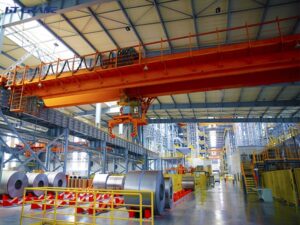
This is the most common application. Steel coils, billets, and plates are moved continuously across production floors. A magnetic overhead crane handles these loads faster than any hook-and-sling method, with no need to attach rigging to each piece.
Typical lifting capacities in this setting range from 5 tonnes to over 50 tonnes, depending on production volume.
Scrap Metal Recycling Yards
Scrap yards are the natural habitat of the electromagnetic crane. Irregular shapes, mixed sizes, and rapid cycling make hook-based lifting impractical. Electromagnets grab whatever is in range, making bulk material handling fast and efficient.
Duty cycle rating matters here. Scrap yard cranes often run at 100% duty cycle during peak hours. Choosing a magnet rated for continuous operation — not just intermittent — prevents overheating failures.
Foundries and Casting Facilities
In foundries, iron castings at various temperatures must be moved after molding. High-temperature electromagnets — rated to operate near hot workpieces — handle this task. Standard magnets are not built for this environment.
Always confirm the operating temperature range of the magnet before purchasing for a foundry setting.
Shipbuilding and Heavy Fabrication
Large steel structural sections, ship hull plates, and thick weldments are common in these facilities. Magnetic overhead cranes allow precise positioning of heavy steel assemblies without additional rigging, saving significant time during fabrication.
What to Check Before Buying a Magnetic Overhead Crane
Load Weight and Material Type
Confirm the maximum load weight and whether your materials are reliably ferromagnetic. Alloy steels with low iron content, stainless steel, and aluminum are not reliably attracted by standard electromagnets.
If your material mix includes non-ferrous metals, a magnetic crane is not the right primary solution.
Duty Cycle Rating
Duty cycle describes what percentage of operating time the magnet can be energized without overheating. Common ratings:
- 25% duty cycle: light intermittent use
- 50% duty cycle: standard industrial
- 100% duty cycle: continuous scrap or processing operations
Matching duty cycle to actual operation hours is one of the most overlooked steps in procurement.
Compliance and Certifications
In most markets, overhead cranes must comply with:
- ISO 4301: Classification of cranes
- FEM 1.001: European crane design standards
- ASME B30.2 (North America): Overhead and gantry cranes
- CE Marking (EU): Required for sale and operation in European markets
Always request documentation confirming compliance with the relevant standard for your region. Reputable suppliers provide this as standard.
Power Supply and Backup Systems
For electromagnets, stable DC power supply is essential. Fluctuations can reduce holding force unpredictably. Specify a regulated DC power unit.
For facilities with unreliable power, electro-permanent magnets offer a significant safety advantage — the load stays held even during a blackout.
Maintenance Essentials
Daily and Weekly Checks
- Inspect magnet face plate for wear, cracks, or embedded metal fragments
- Check cable connections and hoist limit switches
- Verify brake function on hoist and travel drives
Scheduled Servicing
Electromagnets should have coil resistance tested every 6–12 months to detect early insulation breakdown. Most manufacturers recommend a full magnet inspection at 2,000–3,000 operating hours.
Keeping a maintenance log aligned with ISO 9927-1 (Cranes — Inspections) ensures your equipment remains compliant and insurable.
Summary and Next Steps
A magnetic overhead crane is the right investment when your operation handles ferromagnetic materials at volume, speed matters, and manual rigging creates safety or efficiency bottlenecks.
The key decisions are: electromagnet or permanent magnet, correct duty cycle rating, compliance with regional crane standards, and reliable power supply design.
Before issuing an RFQ, document your load types, daily lifting cycles, facility power specs, and any temperature or environment constraints. A supplier who asks these questions upfront is one worth working with.
FAQ
Q1: Can a magnetic overhead crane lift stainless steel?
Standard electromagnets have significantly reduced holding force on austenitic stainless steel (such as 304 or 316 grades) because these grades are non-magnetic or weakly magnetic. Some ferritic stainless grades (like 430) respond better. If stainless steel is part of your regular material mix, test the magnet’s actual holding force on a sample before committing to a purchase. Never assume standard lifting ratings apply.
Q2: What happens if the power fails during a lift?
With a standard electromagnet, a power failure means the load drops. This is why IEC 60204-32 requires backup power systems or mechanical retention on lifting magnets used over people or passageways. Electro-permanent magnets solve this problem entirely — they hold the load without power. For critical applications, specify this type or require a UPS backup in the system design.
Q3: How do I calculate the right magnet size for my load?
Magnet manufacturers provide capacity charts based on material thickness, surface condition, and contact area. A clean, flat steel plate will achieve rated capacity. Irregular scrap, painted surfaces, or thin sheet may achieve only 30–60% of that rating. Always apply a safety factor — most engineers use 3:1 (three times rated capacity versus expected load). Confirm this calculation with your supplier in writing before ordering.
Q4: What is the typical service life of an overhead crane electromagnet?
A well-maintained industrial electromagnet typically lasts 8–15 years in standard duty applications. Coil insulation is the most common failure point. Operating within rated duty cycles, avoiding physical impacts on the magnet face, and performing scheduled coil resistance tests significantly extends service life. Keep replacement coil availability in mind when selecting a supplier.
Q5: Do magnetic overhead cranes require a special crane runway or structure?
The crane runway structure must be designed to handle both the crane’s rated lifting capacity and the dynamic forces from travel and braking. Adding a heavy electromagnet or increasing lifting capacity on an existing crane runway requires a structural assessment. Do not assume an existing runway is rated for an upgraded crane without engineering verification — this is a common and costly mistake.