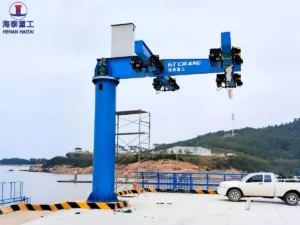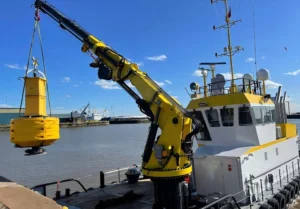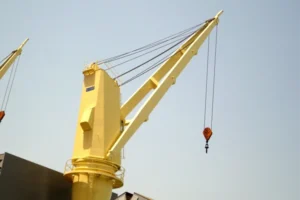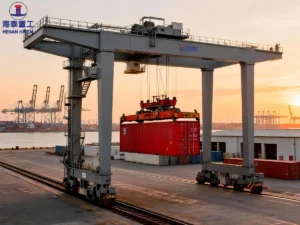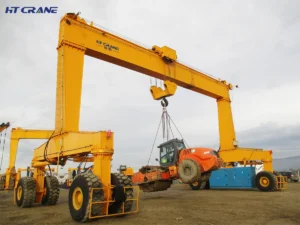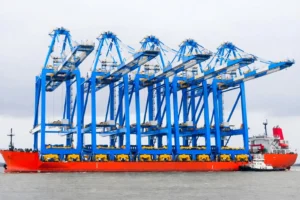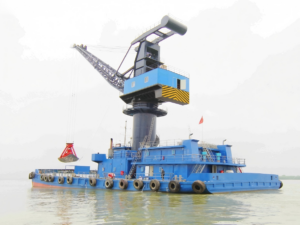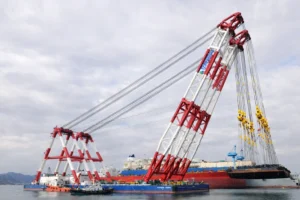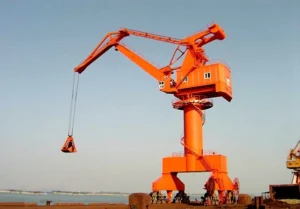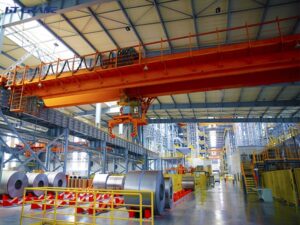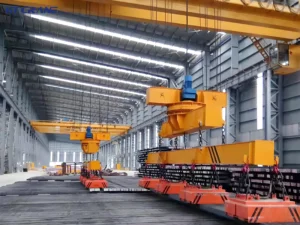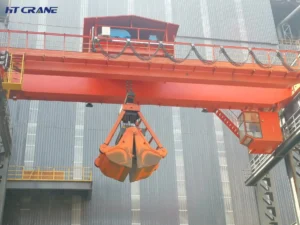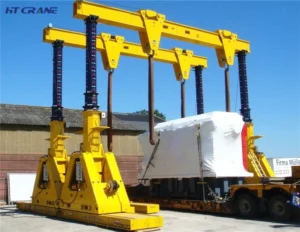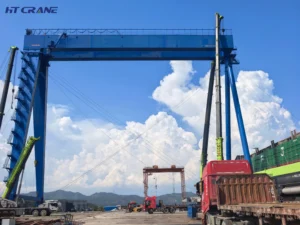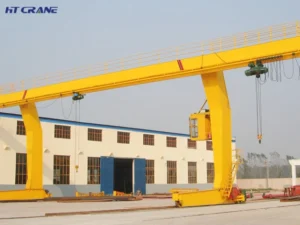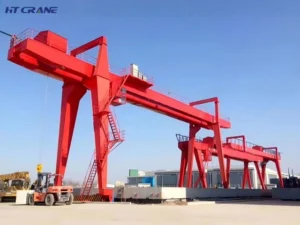


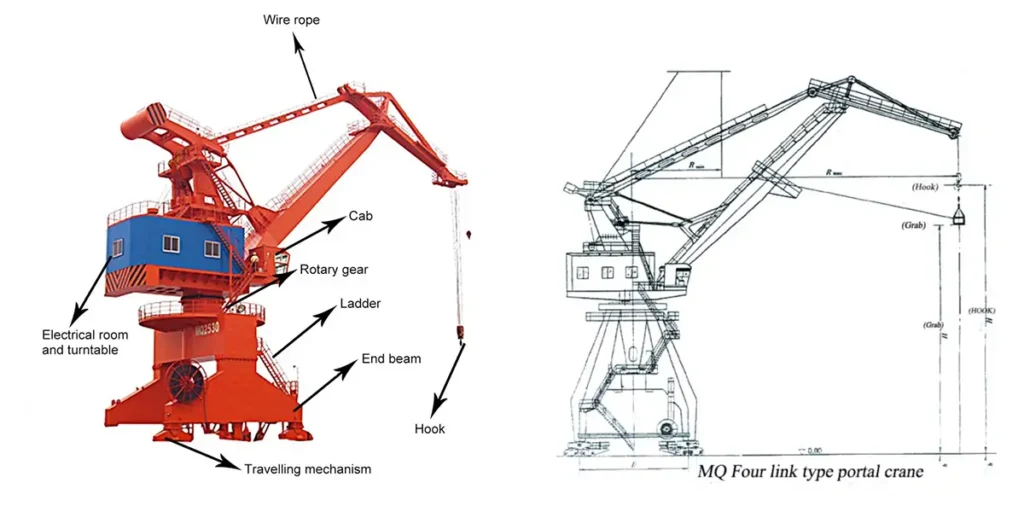
If you work at a port, shipyard, or bulk terminal, you’ve almost certainly seen a portal crane in action. It’s the large slewing crane mounted on a fixed or rail-mounted base that covers both the water and land side of a dock without ever needing to move its foundation. The boom luffs up and down to reach different distances, while the upper structure rotates a full 360° — making it one of the most versatile heavy-lift solutions available. Depending on the job, it can be fitted with a hook for general cargo or a grab for bulk materials like coal, ore, and grain. HT CRANE’s slewing portal crane and portal boom crane series meet CCS, ABS, BV, and DNV standards — so whether you’re outfitting a shipyard or running a busy bulk terminal, there’s a configuration built for your operation.
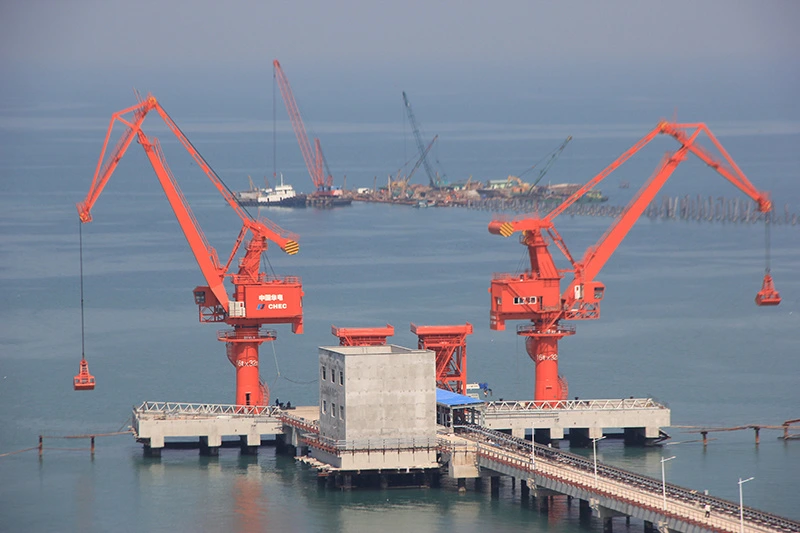
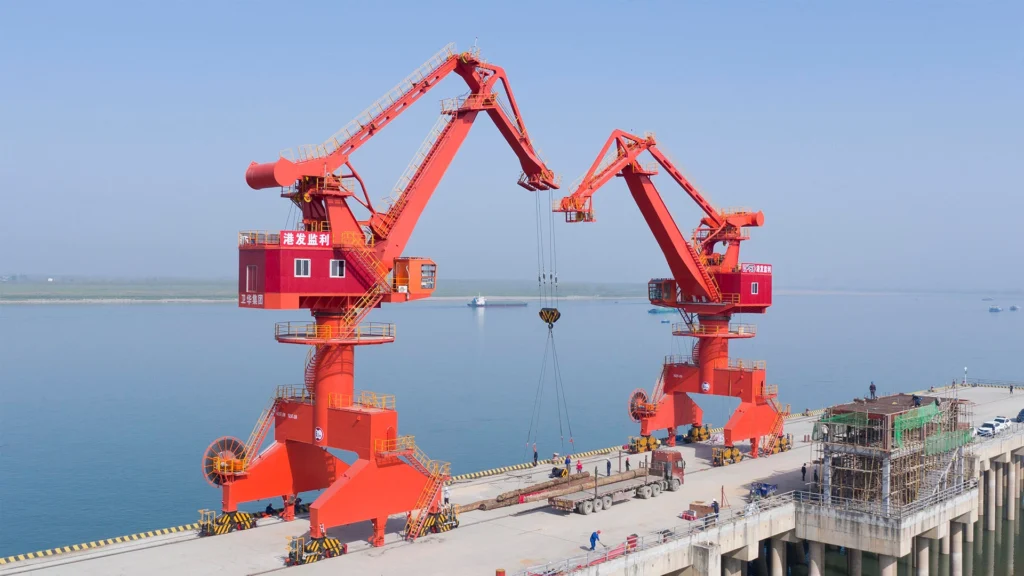
Every port is different. Every cargo mix is different. portal cranes are built with the features that matter most — reliable slewing performance, flexible attachment options, and certified structural integrity for the environments where failure isn’t an option.
A portal crane that can’t cover its full working arc wastes time and manpower. HT CRANE’s slewing portal crane rotates a complete 360°, while the boom luffs continuously to adjust the working radius. This means a single crane position serves both the vessel and the dock storage area — no repositioning, no delays. The luffing and slewing mechanisms can operate simultaneously, keeping load movement smooth and cycle times short.
Different cargo types shouldn’t require different cranes. portal boom cranes support both hook and grab configurations on the same machine. Hook mode handles general cargo, steel coils, and project freight with precise load control. Grab mode handles continuous bulk discharge — coal, grain, ore, and aggregates — at high throughput rates. Switching between configurations adapts the crane to your actual daily cargo mix rather than locking you into a single use case.
Smooth, controllable load movement matters more than raw speed in most port and shipyard environments. The AC variable frequency drive system on portal cranes allows precise speed adjustment across all mechanisms — hoisting, luffing, slewing, and travel. Operators get responsive control at both high speed for productivity and slow speed for accurate load placement. The system also reduces mechanical stress on drivetrain components, extending service intervals and lowering long-term maintenance costs.
Salt air, wind load, and high daily lift cycles are the baseline conditions at any active port — not exceptional circumstances. portal cranes are built with this environment as the design standard, not an afterthought. Structural steel undergoes shot blasting and multi-layer corrosion protection treatment. Key mechanical components are specified and tested for continuous heavy-duty operation. The result is a crane that maintains structural integrity and operational reliability across years of demanding service without requiring premature major overhaul.
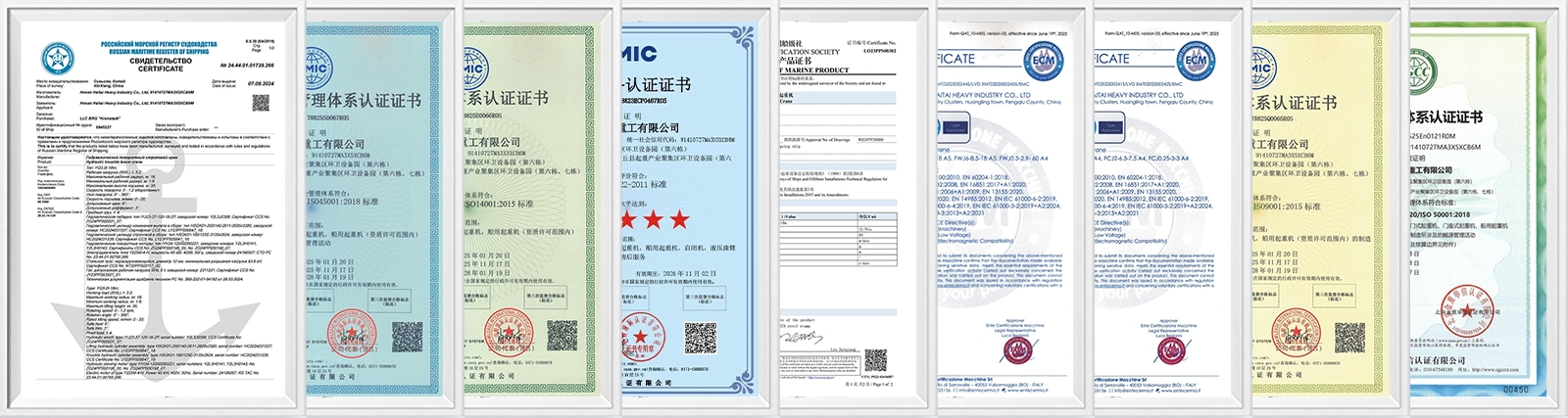
Procurement teams at shipyards, offshore operators, and port authorities need more than a manufacturer’s word on equipment quality. portal cranes carry certification from CCS, ABS, BV, and DNV — the classification societies whose standards govern marine and offshore lifting equipment globally. Every certified unit is produced under HT CRANE’s Class A Special Equipment Production License, issued by China’s national authority for special equipment manufacturing. This certification stack gives you the documentation you need for project approval, insurance compliance, and long-term asset management.
Getting the right crane starts with the right numbers. The specifications below reflect the standard performance range of portal cranes. Most projects have unique requirements — lifting capacity, working radius, hook height, and environmental conditions all vary by site. Every unit we produce can be configured to match your specific operational parameters.
| Parameter | Standard Range |
|---|---|
| Lifting Capacity | custom available |
| Working Radius (Max) | 10m — 40m |
| Lifting Height | 10m — 35m |
| Slewing Range | 360° continuous |
| Hoisting Speed | 10 — 40 m/min |
| Luffing Speed | 10 — 30 m/min |
| Slewing Speed | 0.5 — 2 rpm |
| Travel Speed (Rail) | 3 — 30 m/min |
| Power Supply | AC 380V / 50Hz (custom voltage available) |
| Work Duty Class | A5 / A6 |
| Certification | CCS · ABS · BV · DNV · RMRS |
| Operating Temperature | -20°C — +45°C |
Standard specifications cover the majority of port and shipyard applications. However, projects with higher lifting demands, extreme environmental conditions, or specific classification requirements may need a tailored configuration. HT CRANE’s engineering team works directly with procurement and project teams to develop specifications that fit the actual site conditions — including non-standard lifting capacities, extended working radius, offshore-rated corrosion protection, and alternative power supply configurations. If your project falls outside the standard range, contact us with your requirements and we’ll build the spec from there.
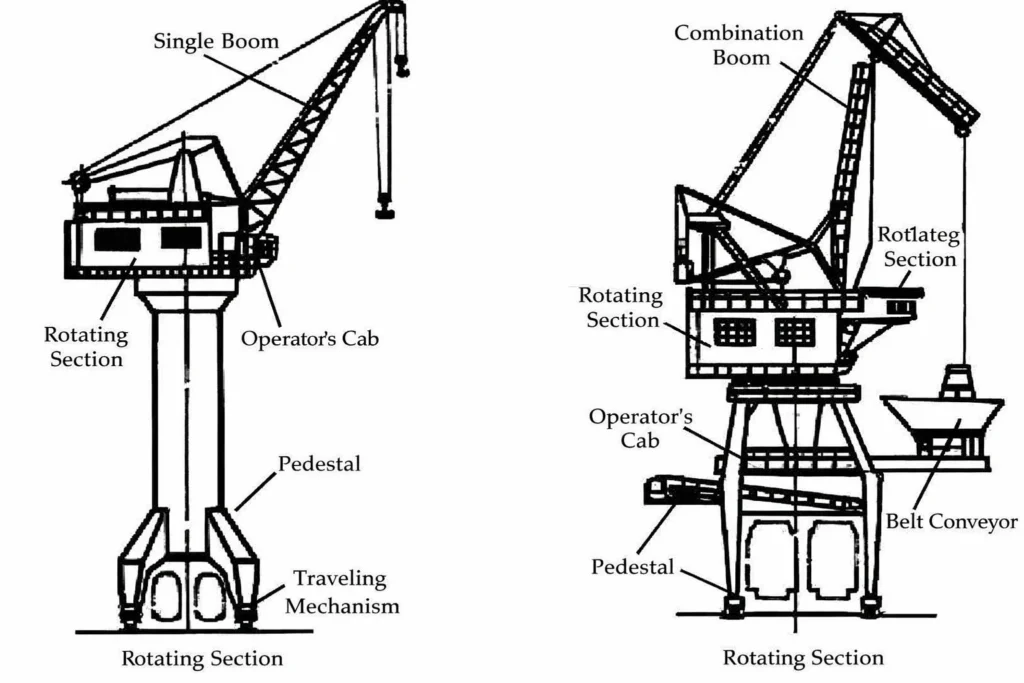
From busy commercial ports to remote offshore platforms, portal cranes handle some of the most demanding lifting environments in the world. Here are the five core application areas where portal cranes deliver consistent results.
Shipyards need cranes that handle hull block assembly, equipment installation, and vessel launching without switching machines. portal cranes cover the full beam of vessels under construction with high lift height and wide working radius. Variable luffing and 360° slewing keep cycle times short across the full length of the building dock.
Throughput is everything at a bulk terminal. Portal cranes fitted with grab attachments handle continuous coal, grain, and ore discharge cycles at high hoisting and slewing speeds. The grab configuration adapts to different bulk material types without equipment changes, giving operators flexibility across varying cargo streams.
Mixed cargo streams — steel coils, pipes, machinery, and break-bulk freight — require precise load control rather than raw speed. Hook-configured portal cranes give operators the accuracy needed for careful load placement on quayside or into storage. One crane covering a long dock frontage replaces multiple smaller machines.
Offshore environments demand certified equipment — no exceptions. portal cranes carry CCS, ABS, BV, and DNV certification, meeting the structural standards that offshore operators and regulators require. Marine-grade corrosion protection keeps performance reliable in conditions that wear down standard industrial equipment quickly.
Rail-mounted portal cranes give inland terminals heavy-lift capability without large footprint requirements. They adapt to the facility layout — serving multiple loading positions along the track — rather than forcing infrastructure modifications. A practical solution for river terminals handling steel, heavy machinery, or bulk materials.









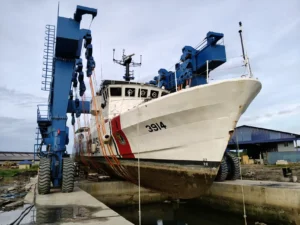
If you manage a marina, boatyard, or naval facility, you already know the pain: vessels stuck in the water waiting for maintenance, slipways that damage hulls, and cranes that simply weren’t built for boats. A marine travel lift solves all three problems in a single machine. It lifts, moves, and launches vessels safely — without fixed rails, without hull damage, and without slowing down your yard. This page covers everything you need to evaluate a marine travel lift: what it does, where it works, what makes ours different, and the full technical specs. If you are ready to specify a unit, our engineering team responds to enquiries within 24 hours. Product Description A marine travel lift — also called a boat travel lift, mobile boat hoist, or self-propelled boat hoist — is a rubber-tyred gantry crane designed specifically for vessel handling. The portal frame straddles the boat in the water. Polyester slings are positioned under the hull. The vessel is then lifted clear and driven anywhere on land. No rail tracks. No fixed infrastructure. Just one machine that handles haul-out,…
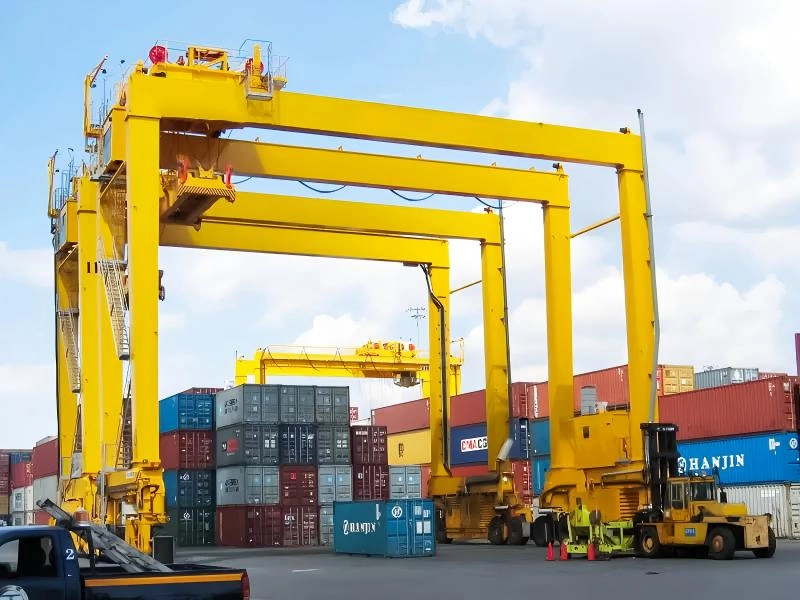
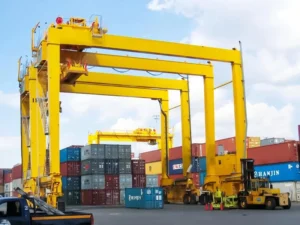
Choosing the right RTG crane supplier impacts your entire port or yard operation. A wrong choice means delays, downtime, and costly repairs. We help you avoid that. As a certified RTG crane manufacturer and exporter, we supply high-performance rubber tyred gantry cranes built for container terminals, intermodal yards, and logistics hubs worldwide. Product Description An RTG crane (Rubber Tyred Gantry Crane) is a mobile overhead crane designed to stack and move ISO containers in port container yards and inland depots. Unlike rail-mounted cranes(RMG Container Gantry Crane), RTG cranes run on rubber tyres — giving them full mobility across the yard without fixed infrastructure. 👉View Professional Buying Guide: RTG Crane vs RMG Crane: Which One Actually Fits Your Project? RTG cranes are the backbone of modern container terminal operations. They bridge the gap between ship-to-shore cranes and horizontal transport, enabling efficient container stacking, retrieval, and yard organization. Why Buy From Us? HT Cranes is a professional manufacturer of RTG cranes with over 15 years of lifting experience. Our cranes are exported to ports and logistics yards across Southeast Asia, the Middle…
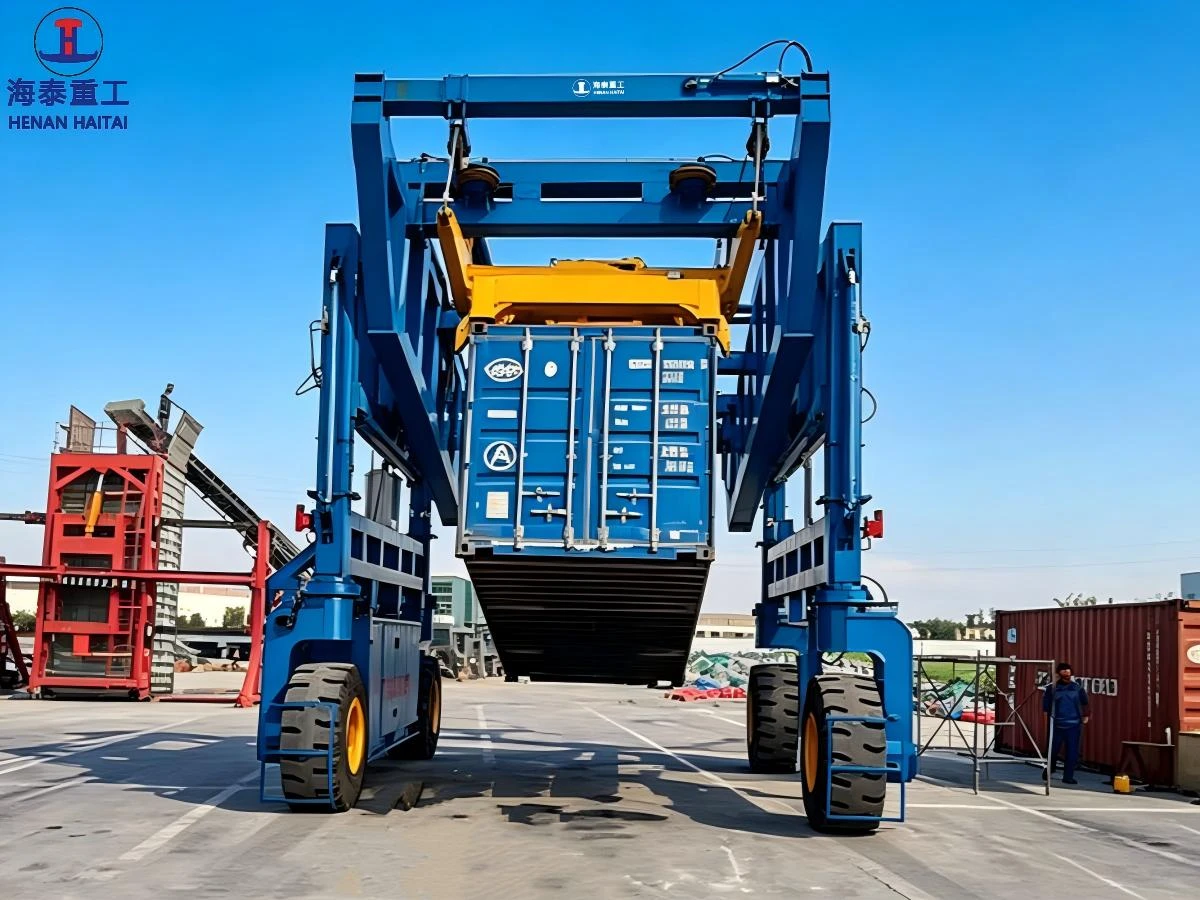
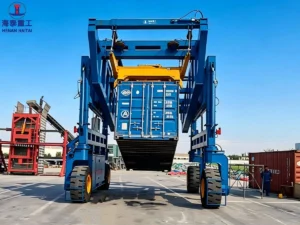
If you handle heavy containers, steel structures, or oversized industrial cargo — and your site lacks fixed power infrastructure — a hydraulic straddle carrier is likely the most practical solution available. It lifts, travels, and places loads without needing overhead structures, rails, or high-voltage power supply. One machine. Full mobility. Minimal civil works. What Is a Hydraulic Straddle Carrier? The Core Concept A hydraulic straddle carrier is a self-propelled heavy lift vehicle. It straddles a load — lifting from below using a hydraulic spreader or lifting beam — and moves freely across the yard on rubber tyres. The entire lift-and-travel cycle is powered by an onboard diesel-hydraulic system. Unlike electric or cable-reel powered cranes, the hydraulic straddle carrier carries its own power source. This makes it fully independent of yard infrastructure. You can deploy it anywhere your surface can support the wheel loads — no fixed installation required. How the Hydraulic System Works The engine drives hydraulic pumps that supply pressurized fluid to the lift cylinders, drive motors, and steering actuators. All motion — lifting, lowering, travelling, and steering —…