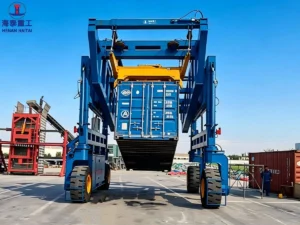
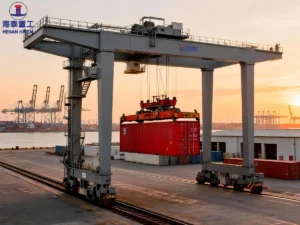
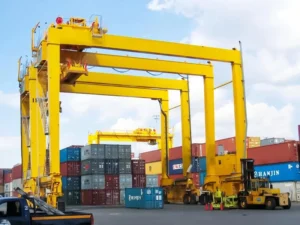
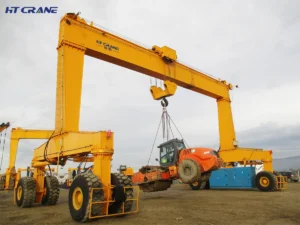
Selecting an RTG crane supplier is not a straightforward procurement decision. A rubber tyred gantry crane is a long-term operational asset — one that will affect your terminal’s throughput, fuel costs, maintenance workload, and automation capability for fifteen years or more. The supplier you choose determines not just the equipment you receive, but the engineering support, spare parts availability, and technical assistance that keeps that equipment running.
In 2026, the stakes are higher than they were even five years ago. Container terminals face simultaneous pressure to increase throughput, reduce carbon emissions, and integrate intelligent automation. RTG crane projects now require evaluation across dimensions that go well beyond lifting capacity and price — automation technology, energy efficiency, customization capability, and long-term service support are all commercially significant factors in the selection decision.
This guide provides an in-depth analysis of the key factors to prioritize when selecting an RTG crane supplier, helping you avoid common pitfalls during the equipment procurement process to make a more efficient and reliable investment choice.
What Is an RTG Crane?
Definition and Working Principle
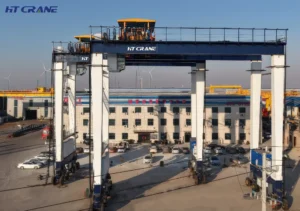
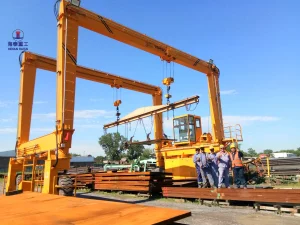
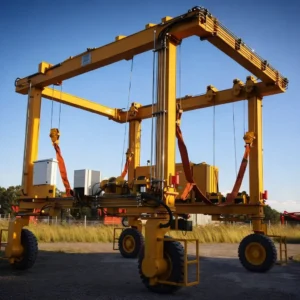
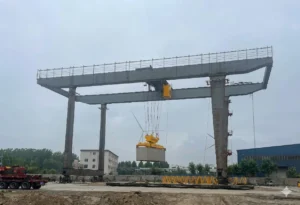
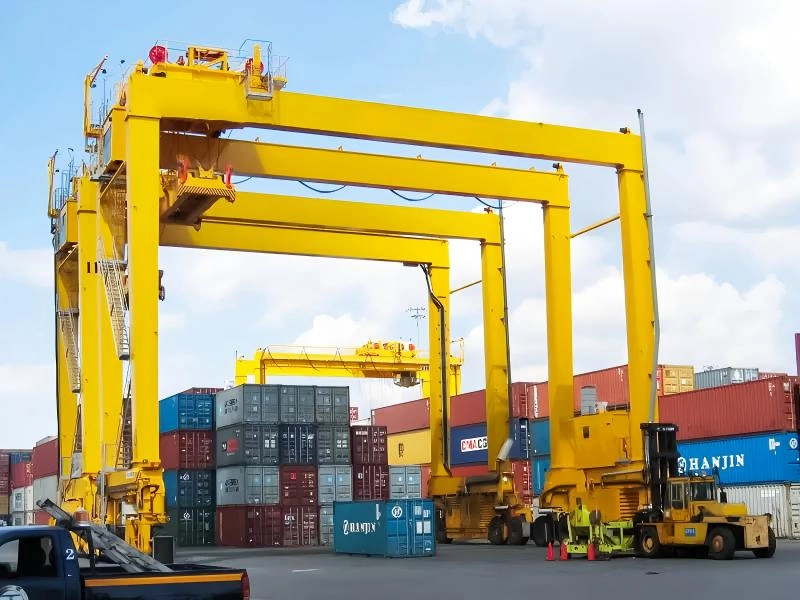
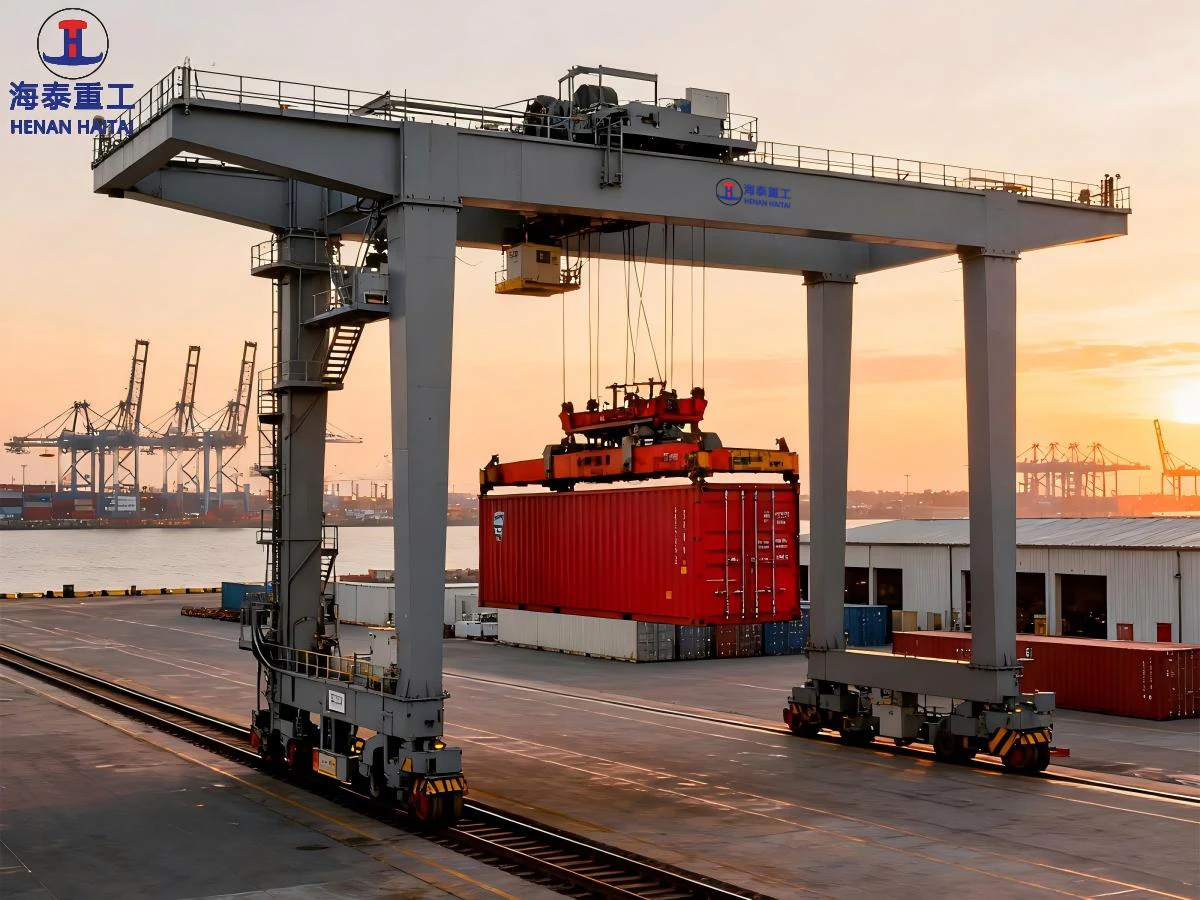
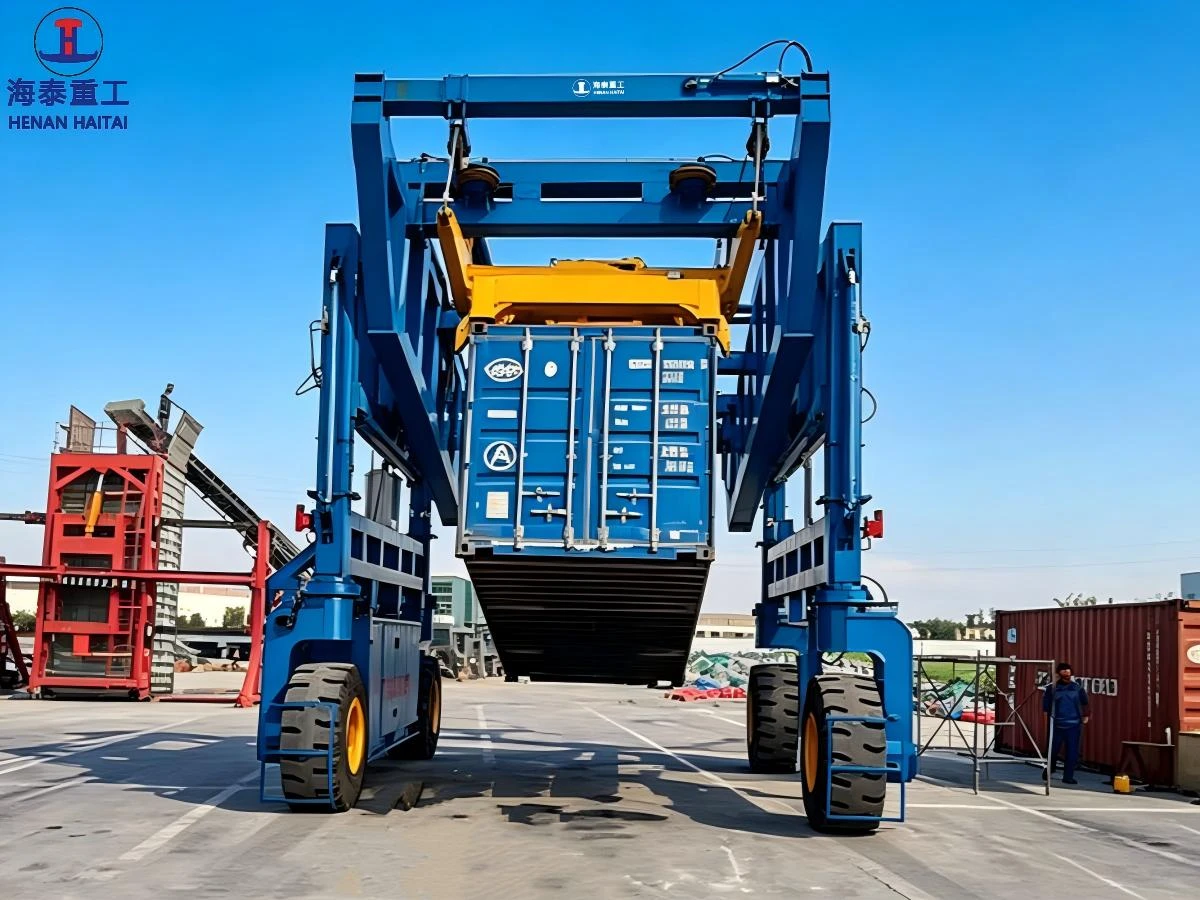
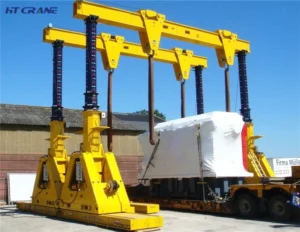
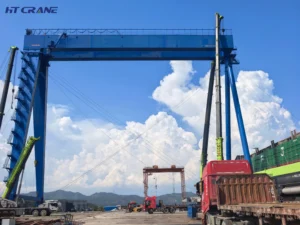
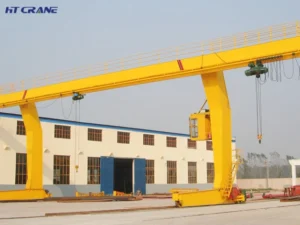
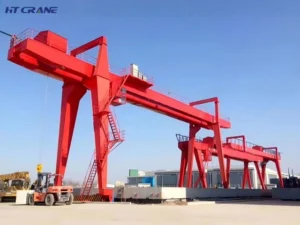
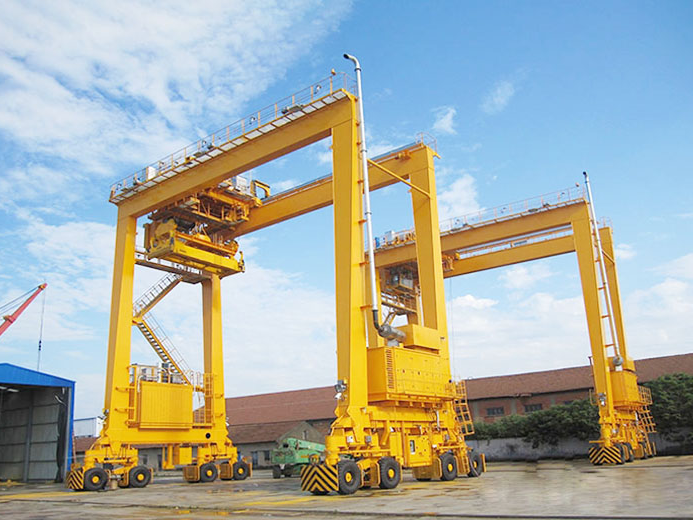
A rubber tyred gantry crane — RTG crane — is a self-propelled, wheeled gantry crane designed for container stacking and transfer in port yards and intermodal terminals. The crane straddles a row of containers, lifts them using a spreader attached to a trolley on the bridge, and positions them precisely within the stack. Unlike rail-mounted gantry cranes, RTG cranes travel on rubber tyres — giving them the flexibility to reposition between container rows and serve different yard zones without fixed rail infrastructure.
Typical Applications
RTG cranes are the dominant stacking system in container terminals worldwide. They operate in:
- Container yards: Stacking and retrieving containers in organized rows for vessel loading, truck pickup, and rail transfer
- Intermodal terminals: Transferring containers between truck, rail, and sea freight modes within logistics hubs
- Inland container depots: Managing container storage and distribution at facilities away from the main port
Why Supplier Selection Matters More in 2026
Port Automation Is No Longer Optional
Remote control RTG systems — where operators manage cranes from a central control room rather than the cab — are now standard in new terminal projects across Europe, Asia, and the Middle East. Semi-automated RTG systems with automated steering and intelligent positioning are increasingly common. Fully automated RTG terminals are operational at several major ports globally. Buyers who select suppliers without proven automation capability are locking themselves into equipment that will require replacement sooner than alternatives with a clear automation upgrade path.
Environmental Regulations Are Reshaping Procurement
The EU’s Fit for 55 framework, IMO port emission guidelines, and national low-carbon port policies in major maritime markets have made energy efficiency a compliance issue, not just a cost consideration. Diesel-only RTG cranes face increasing regulatory pressure in European and developed-market ports. Hybrid and fully electric RTG systems are gaining traction rapidly. A supplier who cannot offer credible low-emission drive options is not a viable long-term partner for terminals operating in regulated markets.
RTG Projects Are Long-Term Investments
An RTG crane purchased today will be in operation until the late 2040s or beyond. The supplier relationship extends well past delivery — spare parts availability, software updates for automation systems, and technical support for evolving operational requirements all depend on the supplier remaining a capable, committed partner over that horizon. Evaluating suppliers only on equipment specification and initial price ignores the majority of the relationship’s commercial value.
Key Factors When Choosing an RTG Crane Supplier
Manufacturing Experience
Port container handling equipment requires a level of structural engineering, quality control, and production management that not all crane manufacturers possess. Suppliers with a significant track record in RTG crane production — measurable in completed port projects, not just years in business — have worked through the engineering challenges that smaller or newer entrants have not yet encountered.
Engineering and Customization Capability
RTG cranes are configured to specific terminal parameters: lifting capacity, span (the number of container rows the crane straddles), stacking height, drive system type, and automation level. Most projects also involve site-specific requirements — voltage and frequency of local power supply, climate conditions (tropical humidity, sub-zero temperatures, coastal corrosion environments), and integration with existing terminal operating systems.
A supplier with strong in-house engineering capability can develop and validate these configurations without relying on third-party design work, which reduces both technical risk and delivery timeline uncertainty.
Automation Technology
The automation features of an RTG crane directly affect its long-term operational value. Key capabilities to evaluate include:
- Anti-sway systems: Electronic load sway control that stabilizes the spreader during travel and landing, reducing cycle time and improving stack accuracy
- Automated steering: Systems that guide the crane along the container row without constant operator input, enabling remote control operation
- OCR and container identification: Camera and reader systems that automatically capture container numbers during pick and place, reducing manual data entry and improving terminal operating system accuracy
- Intelligent diagnostics: Telematics systems that monitor mechanical and electrical condition in real time, enabling predictive maintenance
Evaluate whether the supplier’s automation systems are proprietary or sourced from established automation partners, and whether they have a demonstrated integration history with major terminal operating systems.
Quality Standards and Certifications
Certifications are not just documentation requirements — they indicate that the design, manufacturing process, and quality control system have been independently verified against defined standards. Relevant certifications for RTG crane procurement include:
- ISO 9001: Quality management system certification for the manufacturing facility
- CE marking: Required for equipment sold into European markets under the EU Machinery Directive 2006/42/EC
- FEM/DIN standards: European Federation of Materials Handling standards for crane structural and mechanical design
Factory load testing — demonstrating that the completed crane performs at rated capacity before shipment — should be a standard delivery requirement, not an optional addition.
Energy Efficiency and Sustainability
| Drive System | Fuel Consumption | Emission Level | Infrastructure Requirement |
|---|---|---|---|
| Diesel-mechanical | High | High | None |
| Diesel-electric | Medium | Medium | None |
| Hybrid (diesel-electric + battery) | Low | Low | Partial charging |
| Fully electric | None | Zero at point of use | Grid connection or cable reel |
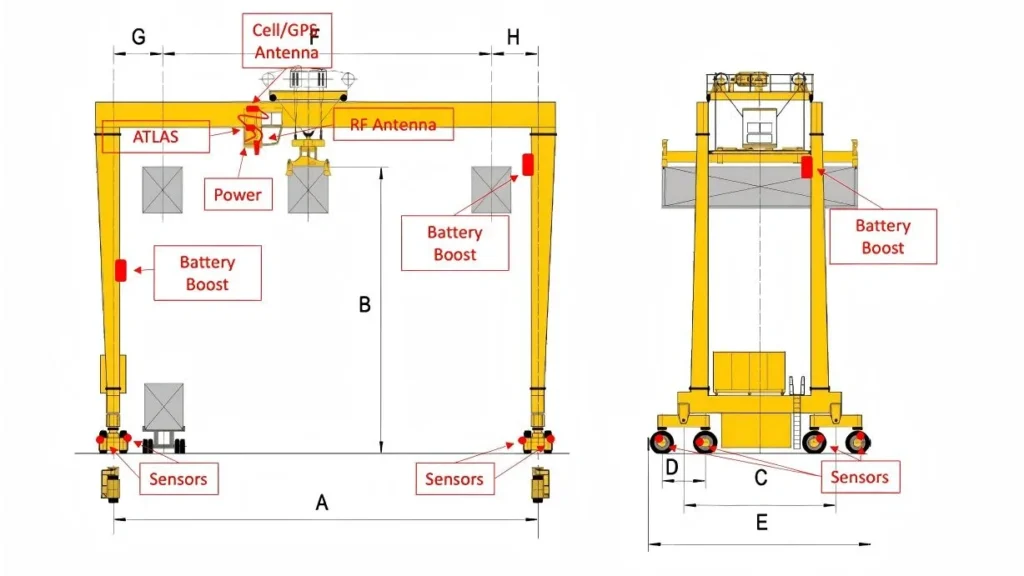
Regenerative braking — recovering energy during lowering operations and feeding it back into the drive system — is a standard feature on modern diesel-electric and hybrid RTG systems. On a terminal operating hundreds of lift cycles per shift, this recovery meaningfully reduces net energy consumption. For terminals with a clear path to grid connection, fully electric RTG systems eliminate diesel consumption entirely and are increasingly competitive on total cost of ownership.
After-Sales Support and Spare Parts
An RTG crane that cannot be serviced effectively has a lower operational value than its specification suggests. Evaluate the following before committing to a supplier:
- Spare parts availability: Are critical components — spreaders, wheel assemblies, drive components, control system modules — available from stock or with short lead times?
- Remote technical support: Can the supplier’s engineers diagnose faults and provide guidance remotely via the crane’s telematics system?
- Local service capability: Does the supplier have service engineers or authorized service partners in your region?
- Commissioning and training: Does the supplier provide on-site commissioning support and structured operator training as standard, or at additional cost?
After-sales support is one of the most significant differentiators between suppliers and one of the least thoroughly evaluated during procurement.
Delivery Capability and Project Management
RTG cranes are large, complex systems that require careful manufacturing scheduling, export logistics management, and on-site installation coordination. A supplier with proven export capability — established freight arrangements for oversized cargo, experience with customs documentation for crane equipment, and structured project management processes — reduces the risk of schedule overruns that cascade into terminal opening delays.
Ask specifically about the supplier’s typical manufacturing lead times for RTG cranes, their track record for on-time delivery, and how they manage schedule risks during production.
Common Mistakes When Buying an RTG Crane
Focusing Only on Purchase Price
Initial equipment price is one component of total cost of ownership — and in most terminal operations, not the largest one. Fuel consumption, maintenance frequency, spare parts cost, and unplanned downtime all contribute to the operating cost profile over a fifteen-year equipment life. A crane that costs less upfront but consumes more fuel and requires more maintenance can easily exceed the lifetime cost of a better-specified alternative.
Ignoring Automation Compatibility
Terminals planning to introduce remote control operations or semi-automated systems in the medium term need RTG cranes whose control architecture supports that upgrade. Buying equipment that cannot be automated — or can only be automated at prohibitive cost — creates a fleet replacement problem rather than an upgrade path.
Underestimating Maintenance Support Requirements
Port terminals operate around the clock. An RTG crane that goes offline during a peak vessel call creates real commercial consequences. Maintenance support — spare parts availability, remote diagnostic capability, and service engineer access — needs to be evaluated as rigorously as the equipment specification itself.
Choosing Suppliers Without Port Project Experience
General crane manufacturing experience does not translate automatically into RTG crane project capability. Container terminal environments impose specific requirements — structural loading from dynamic container stacking, integration with terminal operating systems, yard surface conditions, and round-the-clock operational demands — that suppliers without port project references may not have encountered and resolved.
Future Trends in RTG Cranes for 2026 and Beyond
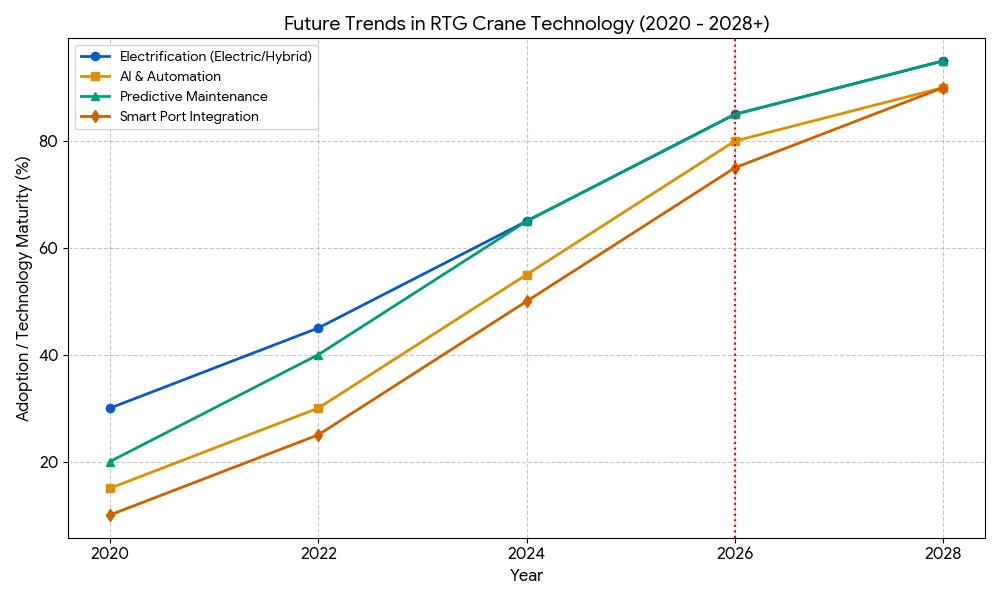
Electrification Is Accelerating
Fully electric RTG cranes — powered by grid connection via cable reels or overhead conductor bars — are operational at terminals in Europe, Asia, and North America. Battery-hybrid RTGs are bridging the gap for terminals without immediate grid connection capability. The direction is clear: diesel-only RTG systems face an increasingly constrained future in regulated markets.
AI-Assisted and Fully Automated Operations
Artificial intelligence is entering RTG crane operations through several channels: predictive maintenance systems that identify component wear before failure, automated positioning systems that reduce cycle time without operator intervention, and fleet management algorithms that optimize crane deployment across the yard. Fully automated RTG terminals — where cranes operate without human operators — are no longer experimental; they are commercial installations at major ports.
Predictive Maintenance and Remote Monitoring
Real-time telematics systems that monitor structural load, drive system performance, and electrical system health — and flag developing issues before they cause failure — are becoming standard on new RTG deliveries. Terminals that adopt these systems shift from reactive maintenance to planned maintenance, reducing downtime and extending component service life.
Smart Port Integration
RTG crane control systems are increasingly integrated with terminal operating systems, automated gate systems, and vessel planning software. The crane becomes one node in a connected terminal intelligence network rather than a standalone piece of equipment. Suppliers whose control systems are designed for this integration — with open architecture and established TOS compatibility — are better positioned to support smart port development.
Conclusion
Selecting an RTG crane supplier in 2026 requires evaluating far more than equipment specification and unit price. Automation capability, energy efficiency, engineering customization, quality certifications, after-sales support, and project management track record all determine the long-term value of the relationship — and the long-term performance of your terminal.
The terminals that make the best procurement decisions in this environment are those that evaluate TCO across a realistic equipment lifetime, ask the right questions about automation and service capability, and select suppliers with proven port project experience rather than the lowest quoted price.
The right RTG crane, correctly specified and properly supported, is a long-term competitive advantage for a container terminal. The wrong one is an operational liability that compounds over years.
Request a customized RTG crane solution built around your terminal layout, throughput requirements, and automation goals. Contact our engineering team for a port crane consultation — we work with terminal operators to develop specifications that match real operational needs, not standard product configurations.

Frequently Asked Questions
What is the typical lifting capacity range for RTG cranes used in container terminals?
Standard container terminal RTG cranes are designed around the maximum gross weight of ISO shipping containers — 30.48 tonnes for a 20-foot unit and approximately 36 tonnes for a 40-foot unit under SOLAS regulations. Most RTG cranes are rated at 40 to 50 tonnes SWL (safe working load) to provide a working margin above these maximums. Heavy-lift RTG configurations for terminals handling overweight or non-standard containers can be specified at higher capacities. The appropriate rating depends on the container mix and throughput profile of the specific terminal.
What is the difference between a semi-automated and a fully automated RTG crane?
A semi-automated RTG crane handles most of the travel and positioning sequence automatically but relies on a remote operator — working from a control room — to supervise the final landing and pickup movements. This is the most common configuration in new terminal projects, as it delivers significant labor efficiency gains while maintaining human oversight at the critical moment of container pick and place. A fully automated RTG operates without any human intervention during normal operations, using sensor systems and AI-assisted positioning to complete the full cycle. Fully automated systems require higher infrastructure investment and more sophisticated integration with the terminal operating system.
How does a hybrid RTG crane reduce fuel consumption compared to a diesel-mechanical system?
A hybrid RTG crane uses a diesel engine to generate electricity, which powers electric drive motors for travel and hoisting rather than driving the mechanical drivetrain directly. This configuration allows the engine to operate at its most efficient load point regardless of the crane’s current demand, reducing fuel consumption during variable-load yard operations. Regenerative braking — recovering energy when the spreader lowers a loaded container — feeds power back into the system, further reducing net consumption. In typical terminal operations, hybrid systems deliver meaningful fuel savings compared to diesel-mechanical alternatives over a full operating shift.
What certifications should I require from an RTG crane supplier for a European port project?
For a European port project, the minimum certification requirements are CE marking under the EU Machinery Directive 2006/42/EC and ISO 9001 quality management certification for the manufacturing facility. FEM design standards compliance and EN ISO 3834 welding certification are also standard requirements for port crane procurement in European markets. Third-party factory inspection — conducted by an accredited body such as Bureau Veritas, SGS, or TÜV — should be specified as a delivery condition. These requirements should be stated explicitly in the procurement specification, not assumed.
How long does an RTG crane typically last, and what affects its service life?
Well-maintained RTG cranes in standard container terminal operations typically achieve a service life of fifteen to twenty years before major structural refurbishment is required. Key factors that affect service life include duty intensity (number of lift cycles per shift), maintenance quality (adherence to scheduled servicing and prompt response to developing faults), environmental conditions (coastal corrosion exposure, temperature extremes), and drive system type (electric and hybrid systems generally have lower mechanical wear rates than diesel-mechanical alternatives). Telematics-based condition monitoring, where available, extends effective service life by enabling early intervention before minor issues develop into major failures.