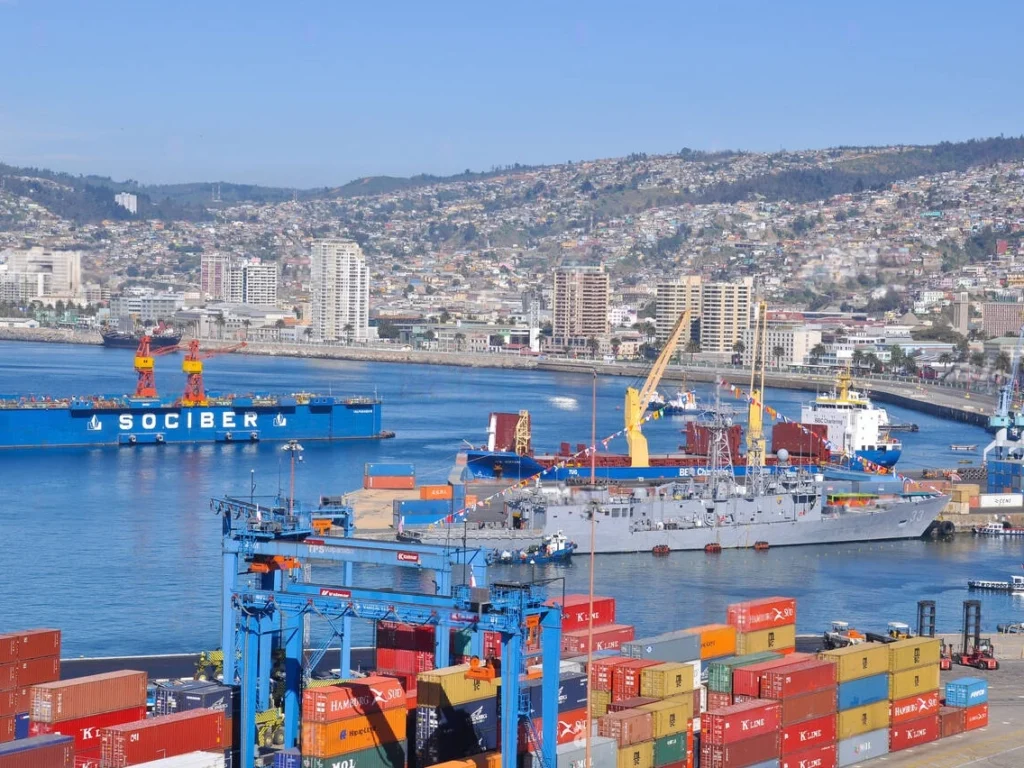
About the Client
The client is the terminal operator of Valparaíso Port — the most critical container hub on South America’s Pacific coast and the core gateway for Chilean import and export trade. As part of the “Shanghai Port – Valparaíso Green Shipping Corridor” initiative, the port committed to replacing aging Rubber Tyred Gantry Cranes (RTGs) with efficient, eco-friendly automated equipment.
If you’re sourcing heavy port equipment for seismic zones, standard specs won’t cut it. Valparaíso sits in the Pacific Ring of Fire — a region that has experienced multiple magnitude 9+ earthquakes historically. Add year-round salt spray from the Pacific Ocean and airborne copper concentrate dust from adjacent bulk cargo areas, and you have an operating environment that disqualifies most off-the-shelf solutions.
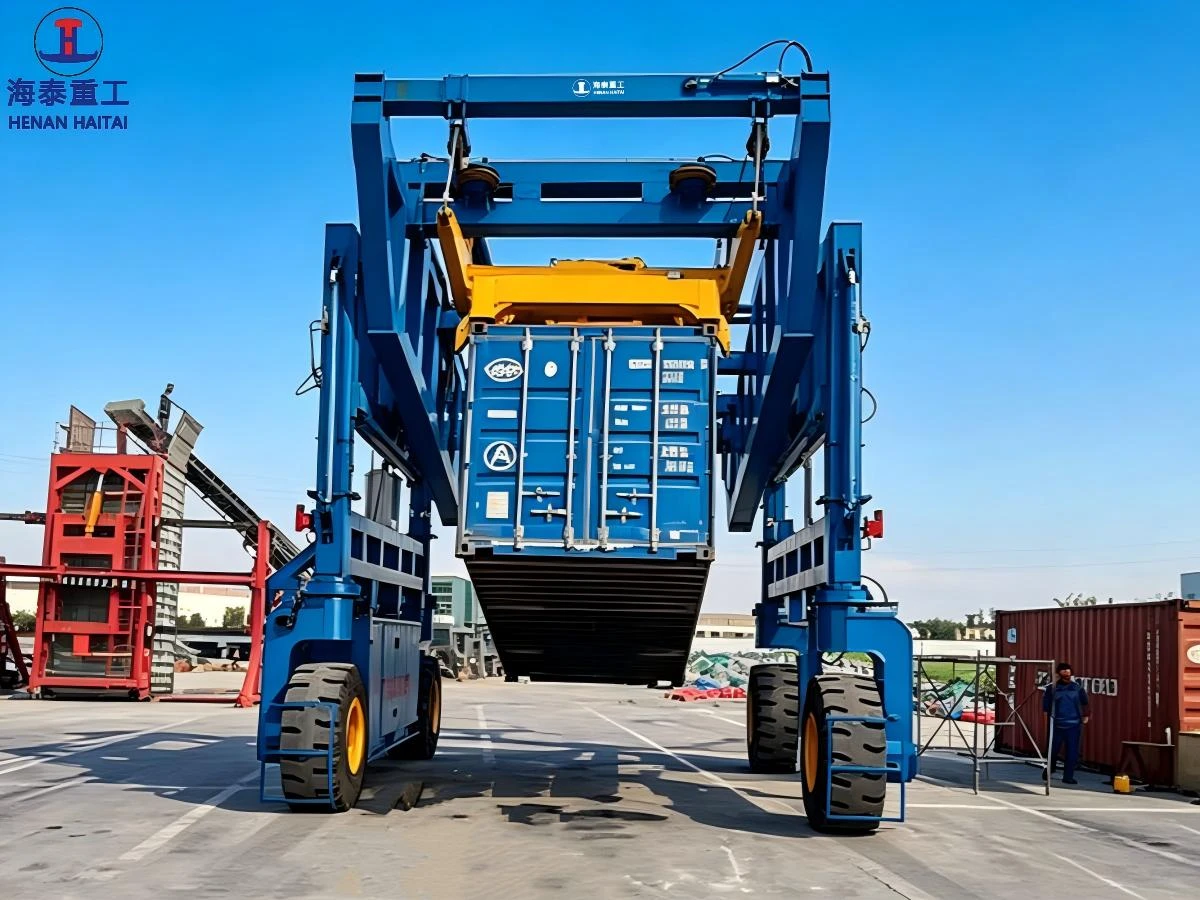
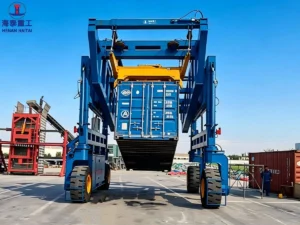
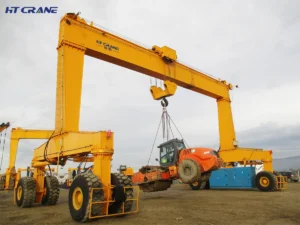
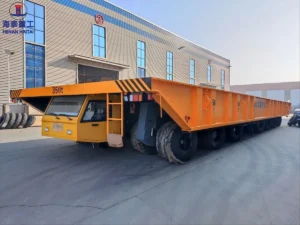
This case study documents how a fully customized 60T straddle carrier met those challenges — and the real performance data that followed.
Project Background: Why Valparaíso Demands a Different Standard
Three Environmental Threats Operating Simultaneously
Most port equipment is designed for one primary stress — heavy loads, or weather exposure, or rough terrain. Valparaíso Port presents three simultaneous threats that compound each other.
Seismic risk is the most critical. Chilean seismic standards require structural safety up to magnitude 9. Equipment that isn’t designed for this will experience frame fatigue, hydraulic line failures, and electrical cable damage during seismic events — not just during the peak shock, but from the cumulative effect of frequent smaller tremors.
High-salinity sea winds drive accelerated corrosion across all exposed surfaces. Standard paint systems degrade within two to three years in this environment. Electrical enclosures that meet basic ingress protection ratings still allow salt particle penetration over time.
Copper concentrate dust from the adjacent bulk cargo yard creates a secondary contamination risk. Fine metallic dust infiltrates electrical cabinets, motor housings, and control systems — causing short circuits, bearing wear, and sensor failures. This is a failure mode that port operators in non-mining environments rarely plan for.
What the Client Required
The client specified three non-negotiable performance thresholds:
- Seismic structural safety: ≥ Magnitude 9
- Dust and corrosion protection: IP55 rating minimum for core electrical components
- Automation: 5G remote control capability
Technical Solution: Three Layers of Customization
Seismic-Resistant Structural Design
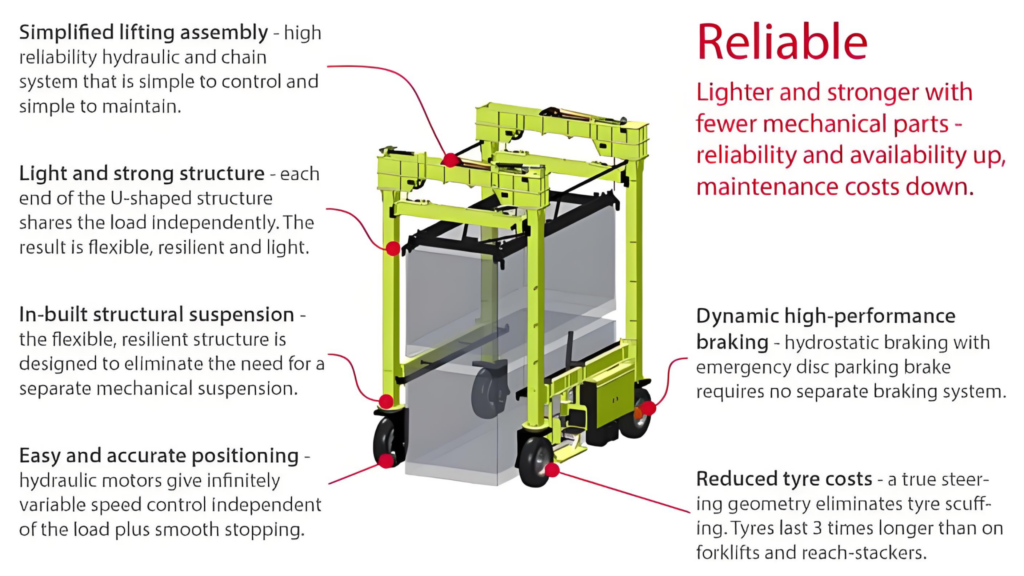
The entire machine frame was fabricated using Q345B low-alloy high-strength steel. This grade offers higher yield strength than standard structural steel, which matters when a frame must absorb repeated seismic loading without permanent deformation.
Box-type cross-sections and X-bracing were added at the critical junction points between the main beam and support legs — the areas most vulnerable to racking forces during lateral ground movement. ANSYS finite element simulation confirmed that structural deformation remains below 1/800 of span length under a magnitude 9 seismic event.
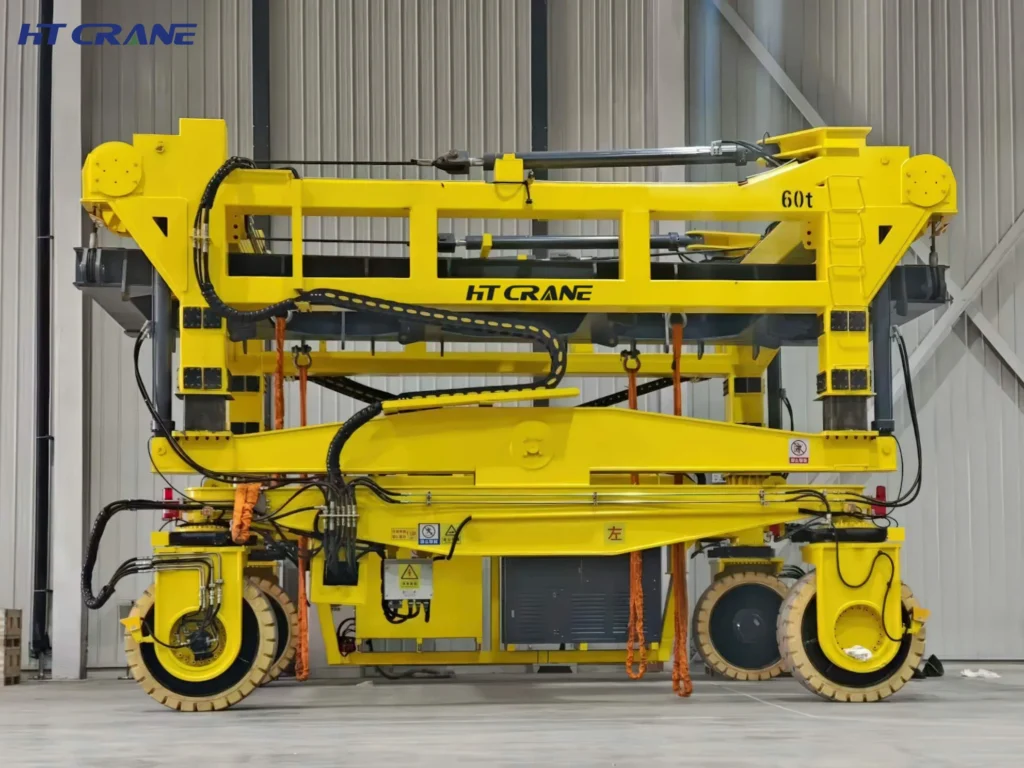
Hydraulic buffers and rubber damping pads were installed between the chassis and steering axles. These absorb seismic energy before it reaches hydraulic lines and electrical cable runs — protecting the systems most likely to cause operational failure after a tremor. Wind-proof iron wedges and seismic anchoring pins allow the machine to be locked to the ground rapidly when not in operation.
IP55 Electrical System and Dust Protection
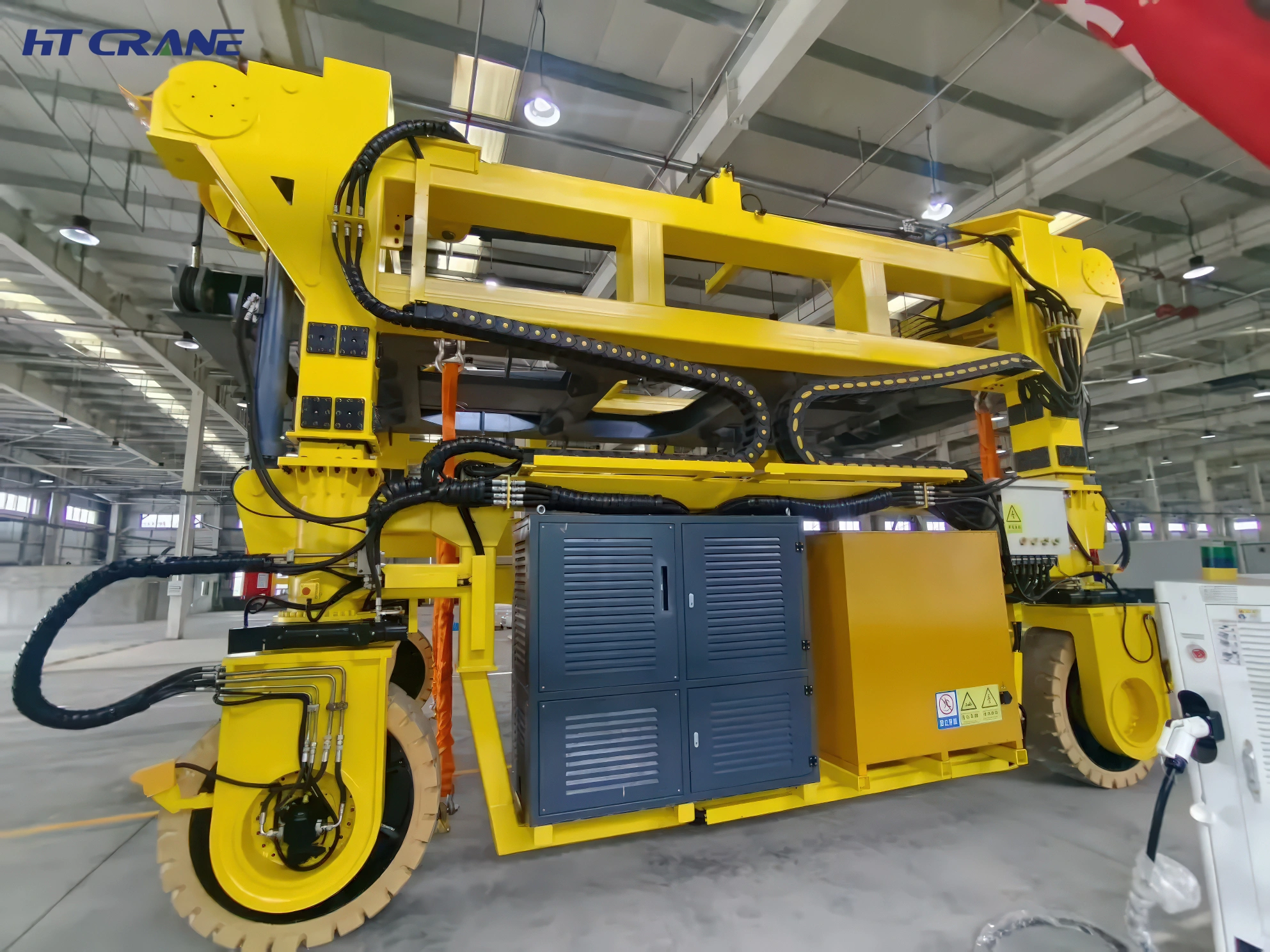
All core electrical components — cabinets, motors, and drive units — are enclosed to IP55 protection standard. The enclosure system uses a double-seal design combining maze seals with silicone strip gaskets, preventing fine copper dust and salt spray from reaching sensitive internals.
The cab and electrical room are pressurized using positive pressure fresh air units with HEPA H13 filtration (≥99.97% particle capture efficiency). By maintaining internal pressure above ambient, the system physically prevents dust-laden air from entering — even when access panels are briefly opened during maintenance. Actual measured dust concentration inside enclosures during operation: 0.2mg/m³, against a design threshold of 0.5mg/m³.
Anti-Corrosion Coating System
The full machine surface receives an epoxy zinc-rich primer base coat followed by a polyurethane topcoat. This two-layer system provides electrochemical protection at the primer level and physical barrier protection at the topcoat level.
Wire ropes, pulleys, and other wear-contact surfaces are coated with tungsten carbide — a material with hardness significantly exceeding standard steel. This triples resistance to salt spray corrosion and abrasive dust wear. The system is rated for a 20-year design service life under Valparaíso’s operating conditions.
Equipment Specifications
| Specification | Details |
|---|---|
| Rated Capacity | 60 Tons |
| Stacking Height | 4-High |
| Electrical Protection | IP55 (Core Components) |
| Seismic Rating | Structural Safety ≥ Magnitude 9 |
| Automation | 5G Remote Control (3km range) |
| Positioning | 4K HD Camera + LiDAR |
| Anti-Sway Accuracy | ±5cm (Fuzzy PID Control) |
| Surface Coating | Epoxy Zinc-Rich Primer + Polyurethane Topcoat |
| Wear Surface Treatment | Tungsten Carbide Coating |
| Design Service Life | 20 Years |
Automation System: Remote Operation at Scale
5G Remote Control Architecture
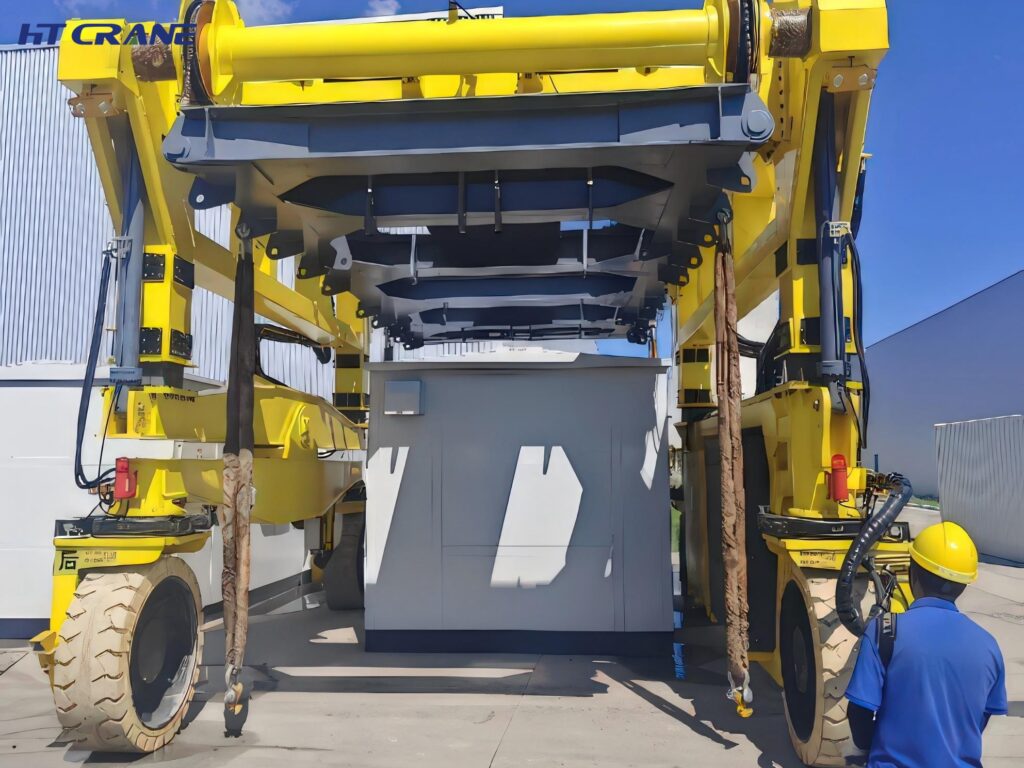
Operators control all 8 units from a centralized control center located 3km from the yard. The system uses 5G connectivity for low-latency command transmission, combined with 4K HD camera feeds and LiDAR-based positioning to give remote operators full situational awareness — with no visibility blind spots that would exist in a physical cab.
Intelligent Anti-Sway Control
The spreader anti-sway system uses a fuzzy PID algorithm to continuously correct pendulum motion during travel and positioning. Sway is controlled within ±5cm — a precision level that reduces collision risk with adjacent containers and port infrastructure, and supports consistent cycle times regardless of load dynamics.
Automated Yard Management
Containers are identified via RFID tags. The system automatically generates optimized stacking plans based on vessel schedules and retrieval priorities, reducing manual scheduling intervention by 40%. Energy consumption per move is reduced by 15% compared to the legacy RTG fleet — aligned with the Green Shipping Corridor carbon reduction commitments.
Measured Results: Six Months of Field Data
After six months of operational deployment, the performance data was as follows:
| Metric | Design Requirement | Actual Result |
|---|---|---|
| Seismic Capability | No structural damage in Mag 9 | Withstood Mag 7.8 with zero faults |
| Dust Concentration (Internal) | < 0.5mg/m³ | 0.2mg/m³ — exceeded standard |
| Daily Moves per Unit | ≥ 80 moves/day | 95 moves/day (+18%) |
| Equipment Uptime | — | 98% |
| Maintenance Cost Reduction | — | ↓ 25% |
The 98% uptime figure reflects the combined effect of the seismic damping system, IP55 enclosures, and modular component design. The 25% reduction in maintenance costs is directly attributable to the tungsten carbide wear surfaces and corrosion-resistant coating system — both of which extended service intervals compared to the previous RTG fleet.
Carlos Mendez, Project Director at Valparaíso Port, summarized the outcome: the equipment met all seismic and dust-proof requirements, and the automation system delivered an 18% efficiency gain over previous operations.
What This Case Means for Port Equipment Buyers
Customization Is Not Optional in Extreme Environments
Standard equipment catalogues are built for standard conditions. Ports in seismic zones, high-salinity coastal areas, or locations with industrial dust contamination require engineering decisions made specifically for those conditions — not adaptations applied after the fact.
The Valparaíso case demonstrates what happens when customization is treated as a core design requirement from the outset. The seismic frame, dust protection system, and coating specification were not upgrades added to a standard product. They were designed together as an integrated solution for a specific operating environment.
Automation Reduces Risk in Hazardous Conditions
5G remote operation removes operators from the yard during seismic events. That is not a minor operational benefit — it is a fundamental safety improvement in a region where ground movement can occur without warning. Buyers in seismic zones should evaluate automation not only for efficiency gains but for the risk reduction it provides to personnel.
Summary and Buyer Takeaways
The Valparaíso deployment validated that highly customized straddle carriers can meet extreme environmental requirements while delivering measurable operational improvements. The 98% uptime and 25% maintenance reduction were not projections — they are six-month field results from a live port operation.
For buyers evaluating equipment for similar environments, the key decisions are:
- Define your environmental parameters first — seismic zone rating, salinity level, dust type and concentration
- Specify IP rating by component — blanket ratings are less reliable than component-level specifications
- Require seismic simulation data — ANSYS or equivalent FEA documentation confirms structural claims
- Evaluate coating systems by substrate — wire ropes and wear surfaces need different treatment than structural steel
- Treat automation as a safety feature — not just an efficiency tool in high-risk environments
Complex port environments require equipment engineered for them. This case shows what that engineering delivers.

FAQ
What seismic standard should port equipment meet in Chile?
Chilean seismic design is governed by NCh2369, which covers industrial and port structures. For equipment operating in high-seismic zones, structural safety to magnitude 9 is the practical benchmark. Buyers should request FEA simulation data — specifically deformation ratios under peak seismic load — rather than relying on general claims. A deformation limit of 1/800 of span under magnitude 9 loading is a verifiable, specific standard to request from suppliers.
What is the difference between IP55 and IP66 for port electrical systems?
IP55 provides protection against dust ingress sufficient to prevent harmful deposits, and protection against water jets from any direction. IP66 adds full dust-tight sealing and protection against powerful water jets. For environments with fine metallic dust like copper concentrate, IP66 offers a higher margin of safety for long-term enclosure integrity. Buyers should specify the rating based on the actual dust particle size and concentration in their operating environment, not as a general preference.
How does 5G remote control compare to traditional cab operation for straddle carriers?
5G remote control eliminates operator exposure to yard hazards — including seismic events, dust environments, and collision risks. It also allows one operator to monitor multiple machines simultaneously from a centralized position. The tradeoff is dependency on network reliability and latency management. For ports investing in remote operation, LiDAR-based positioning and anti-sway algorithms are essential supporting technologies — the camera feed alone is insufficient for precision container placement.
What maintenance intervals should buyers expect from tungsten carbide-coated components?
Tungsten carbide coatings on wire ropes and pulleys typically extend service intervals by two to three times compared to uncoated steel in high-abrasion, high-corrosion environments. Actual intervals depend on cycle frequency and environmental severity. Buyers should request the manufacturer’s maintenance schedule specific to the coating system applied — and confirm whether the warranty covers coating degradation as a separate line item from structural components.
How do I evaluate whether a straddle carrier supplier can handle extreme environment customization?
Ask for documented case references in comparable environments — specifically seismic zones or high-salinity coastal ports. Request FEA simulation reports, coating system specifications with third-party test data, and IP rating certificates for individual components rather than the overall machine. Suppliers with genuine customization capability will provide engineering documentation, not just product brochures. On-site commissioning support and a regional spare parts commitment are also reliable indicators of serious after-sales capability.