


A boat jib crane is a marine-grade lifting solution designed specifically for docks, marinas, shipyards, and offshore platforms — where saltwater corrosion, confined space, and dynamic loads demand equipment built to a different standard. HaiTai Crane’s boat jib cranes deliver 0.5 to 20 tons lifting capacity, 180° to 360° rotation, and full C4–C5 marine corrosion protection from structural steel to electrical enclosures.
| Параметр | Стандартный диапазон | Custom Available |
|---|---|---|
| Грузоподъемность | 0.5 t – 20 t | Up to 50 t on request |
| Jib (Boom) Length | 3 m – 10 m | Up to 15 m |
| Rotation Angle | 180° / 270° / 360° | Настраиваемый |
| Высота подъема | 3 m – 12 m | Customizable |
| Тип подъемника | Electric chain / Wire rope | Manual available |
| Режим управления | Push-button / Radio remote | Cabin option |
| Защита от коррозии | Hot-dip galvanized + marine paint | C4/C5 ISO 12944 |
| Mounting Type | Column / Wall / Dock-embedded | Floating dock option |
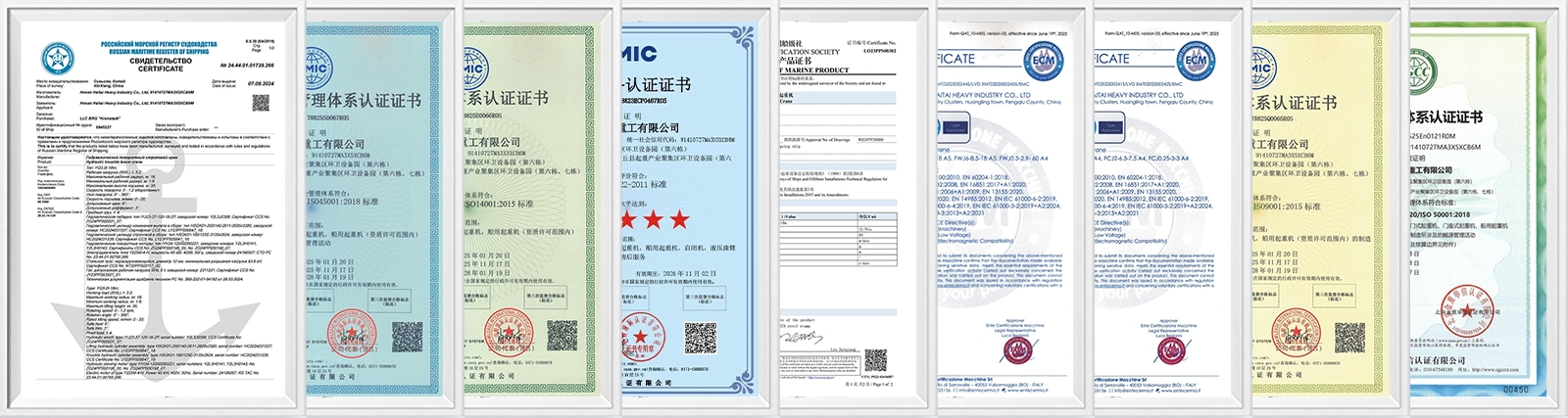
| Сертификация | CE, ISO 9001:2015 | CCS / BV on request |
| Источник питания | 380V / 50Hz (customizable) | Global voltage supported |
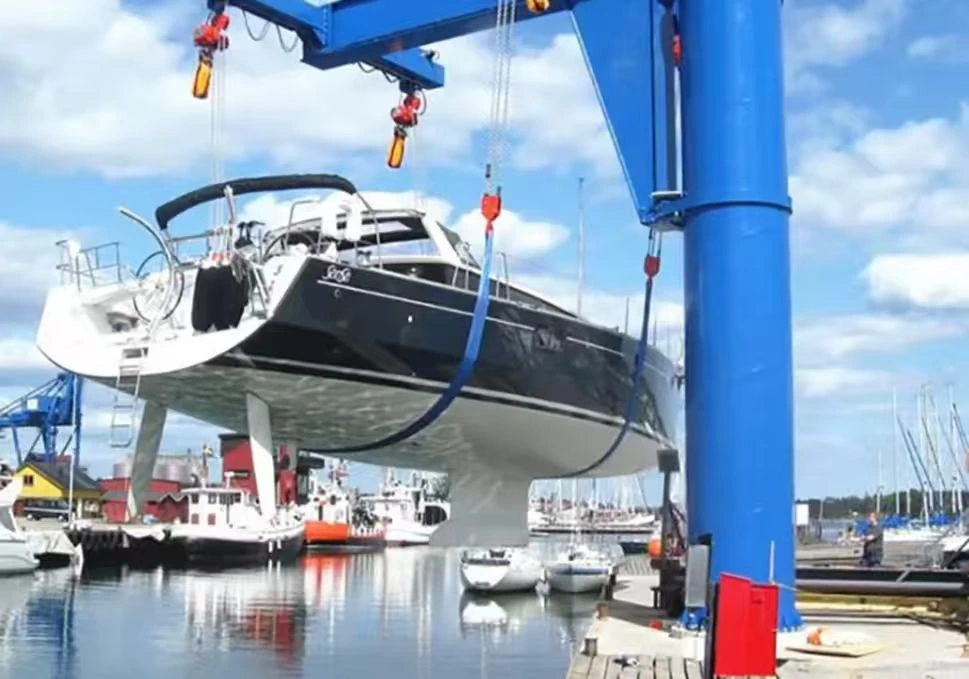
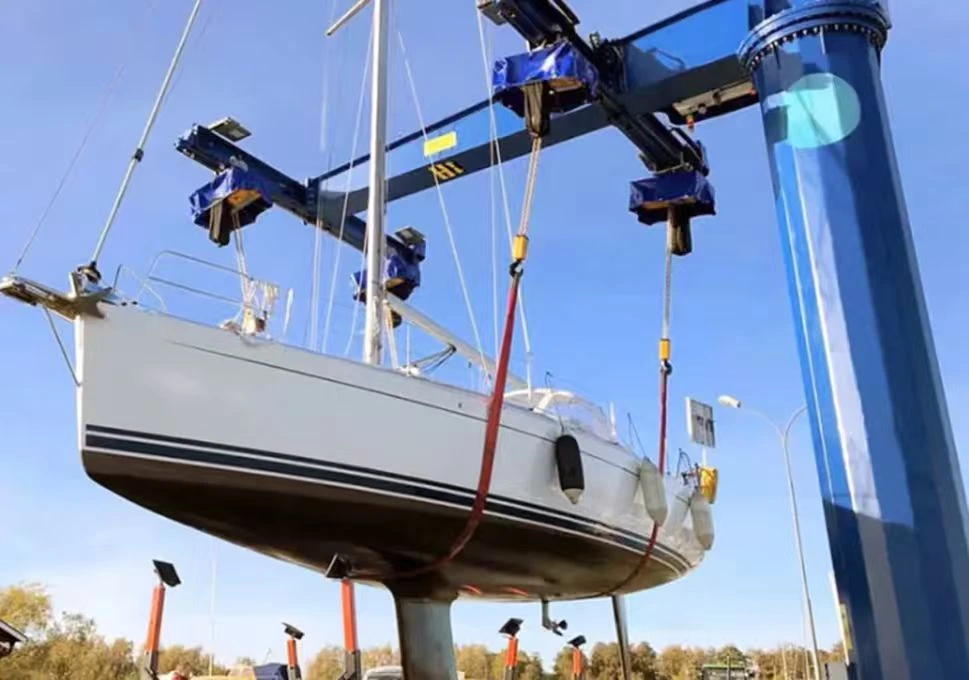
A boat jib crane consists of four core components: a vertical mast (column), a horizontal jib arm (boom), a rotation mechanism, and a hoisting unit. The mast is anchored to a concrete dock foundation or structural wall; the jib arm extends horizontally over the water or work area and rotates through a defined arc — 180°, 270°, or a full 360° depending on the mounting configuration and site geometry.
The hoist — either an electric chain hoist or wire rope hoist — travels along the jib arm, allowing the operator to position the hook precisely over the load before lifting. This combination of rotation and trolley travel gives a boat jib crane full coverage of its working radius without requiring the crane to move along a track or rail, which makes it particularly effective in space-restricted dock and marina environments.
Boat jib cranes and boat lift gantry cranes serve different operational profiles. A gantry crane straddles the vessel on two portal legs and requires significant apron width and a prepared rail or runway surface. A jib crane occupies a single column footprint and needs no ground-level rail infrastructure — making it substantially lower in both civil works cost and installation time.
For marinas, yacht clubs, and small shipyards handling vessels up to 20 t, a jib crane typically offers the better cost-to-capability ratio. For commercial shipyards handling vessels above 50 t with multi-point lifting requirements, a gantry configuration is generally more appropriate.
Salt spray is the primary structural threat in any coastal installation. HaiTai boat jib cranes are finished to C4–C5 corrosion category per ISO 12944, using a three-layer system: hot-dip galvanizing on structural steel, epoxy intermediate coat, and marine-grade topcoat. Electrical enclosures are rated IP65 minimum to prevent moisture ingress. Core mechanical components — bearings, gearboxes, hoist motors — are specified for marine environmental exposure, not adapted from standard industrial product lines.
This is the specification difference that determines whether a crane lasts 3 years or 15 years on a working dock.
All motorized rotation models are equipped with variable frequency drive (VFD) control on both the slewing mechanism and hoist. VFD control eliminates the mechanical shock loads that occur with direct-on-line motor starting — a critical feature when handling boats, where sudden load movement can cause vessel damage or operator safety incidents. Rotation speed is adjustable; load positioning is smooth and controllable from full-radius swing down to fine-increment adjustment.
HaiTai boat jib cranes are available in four mounting configurations to match different site conditions:
Every HaiTai boat jib crane is supplied with a standard safety package compliant with EN 15011 и FEM 1.001:
For facilities handling recreational vessels in the 0.5–10 t range, a column-mounted boat jib crane with 180°–270° rotation covers the standard dock-side lifting requirement: boat launching, retrieval, mast removal, and outboard engine servicing. A 5 t unit with a 6 m jib covers most vessels up to 40 ft LOA. Radio remote control allows single-operator handling, reducing labor cost on every launch cycle.
Shipyard applications demand heavier capacity and higher duty cycles. A 10–20 t boat jib crane positioned at a dry dock entrance handles small vessel placement and removal, equipment transfer, and component lifting during repair cycles. For shipyards processing multiple vessels per day, HaiTai recommends FEM 3m duty class specification and wire rope hoist over chain hoist for extended service life under high-frequency operation.
Port installations handling workboats, patrol vessels, and small cargo craft benefit from 360° rotation — allowing the crane to serve both the waterside and landside of a dock without repositioning. A 15–20 t unit with a 8–10 m boom covers most workboat handling requirements and can be equipped with an optional boat lifting frame and sling set for vessels without dedicated lifting points.
Deck-mounted boat jib cranes serve offshore vessels, naval platforms, and large yachts for handling tenders, rescue craft, and deck cargo. These installations require compliance with class society certification — CCS, ABS, BV, DNV, or LR depending on vessel flag state — and are supplied with classification society survey documentation on request.
Apply a minimum 25% margin above the heaviest vessel you will handle. A 4 t vessel requires a 5 t crane. This margin absorbs dynamic load factors during water-to-land transfer — the load does not lift clean in marine conditions; wind, wave action, and water drainage all add momentary overload. Specifying at exactly your vessel weight is an underspecification.
Jib length must clear the dock edge and reach the centerline of the vessel’s lifting point — typically the keel or dedicated lifting eyes. Measure from the column centerline to the vessel’s furthest lifting point, add 0.5–1 m clearance, and that is your minimum jib length. For dock edges with fender systems or safety rails, add fender projection to this measurement.
If the crane serves only one side of a dock (waterside lifting only), 180° rotation is sufficient and mechanically simpler. If the crane needs to transfer loads from water to a land-side staging area, 270° or 360° rotation is required. Confirm this against your site plan before specifying — adding rotation range after manufacture is not feasible.
| Operation Type | Daily Lift Cycles | Recommended FEM Class |
|---|---|---|
| Seasonal marina, low frequency | 1–5 | 1Am |
| Active marina, regular use | 5–15 | 2m |
| Shipyard, production use | 15–30 | 3m |
| Commercial port, intensive | 30+ | 3m–4m |
Coastal saltwater environments require C4–C5 corrosion specification as a minimum. Tropical or offshore environments with continuous salt spray exposure should specify C5-M (marine) per ISO 12944. Confirm also the available power supply (voltage, frequency, available amperage) before equipment order — HaiTai supports global voltage standards but needs confirmed site supply data for motor specification.
Компания HaiTai Crane, обладающая более чем 20-летним опытом производства и экспортом в более чем 80 стран, поставляет сертифицированные по стандартам CE и ISO 9001:2015 подъемные решения для портов, верфей и яхтенных пристаней по всему миру. От стандартных конфигураций до полностью разработанных по индивидуальному заказу конструкций, наша техническая команда адаптирует каждый кран к условиям вашей площадки и эксплуатационным требованиям.












Если вы управляете пристанью для яхт, верфью или военно-морским объектом, вы уже знаете эту проблему: суда, застрявшие в воде в ожидании технического обслуживания, стапели, повреждающие корпуса, и краны, которые просто не предназначены для работы с судами. Морской передвижной подъемник решает все три проблемы в одном устройстве. Он безопасно поднимает, перемещает и спускает суда — без стационарных направляющих, без повреждения корпуса и без замедления работы вашей верфи. На этой странице вы найдете все необходимое для оценки морского передвижного подъемника: что он делает, где работает, чем отличается наш, и полные технические характеристики. Если вы готовы заказать устройство, наша инженерная команда ответит на ваши запросы в течение 24 часов. Описание продукта Морской передвижной подъемник — также называемый лодочным передвижным подъемником, мобильным лодочным подъемником или самоходным лодочным подъемником — это козловой кран на резиновых колесах, разработанный специально для работы с судами. Портальная рама охватывает судно в воде. Полиэстеровые стропы располагаются под корпусом. Затем судно поднимается и перемещается в любое место на суше. Нет железнодорожных путей. Нет стационарной инфраструктуры. Только одна машина для вывоза грузов…

Выбор правильного поставщика кранов RTG оказывает влияние на всю работу вашего порта или складской площадки. Неправильный выбор означает задержки, простои и дорогостоящий ремонт. Мы поможем вам этого избежать. Будучи сертифицированным производителем и экспортером кранов RTG, мы поставляем высокопроизводительные козловые краны на резиновых колесах, предназначенные для контейнерных терминалов, интермодальных площадок и логистических центров по всему миру. Описание продукта: Кран RTG (козловой кран на резиновых колесах) — это мобильный мостовой кран, предназначенный для штабелирования и перемещения контейнеров ISO на портовых контейнерных площадках и внутренних складах. В отличие от кранов на рельсах (контейнерные козловые краны RMG), краны RTG работают на резиновых колесах, что обеспечивает им полную мобильность по территории без стационарной инфраструктуры. 👉Посмотреть профессиональное руководство по покупке: Кран RTG против крана RMG: какой из них действительно подходит для вашего проекта? Краны RTG являются основой современных операций контейнерных терминалов. Они заполняют пробел между портовыми кранами и горизонтальным транспортом, обеспечивая эффективное штабелирование, извлечение контейнеров и организацию работы на площадке. Почему стоит покупать у нас? Компания HT Cranes — профессиональный производитель кранов RTG с более чем 15-летним опытом работы в сфере подъемных работ. Наши краны экспортируются в порты и логистические центры Юго-Восточной Азии, Ближнего Востока и других регионов…
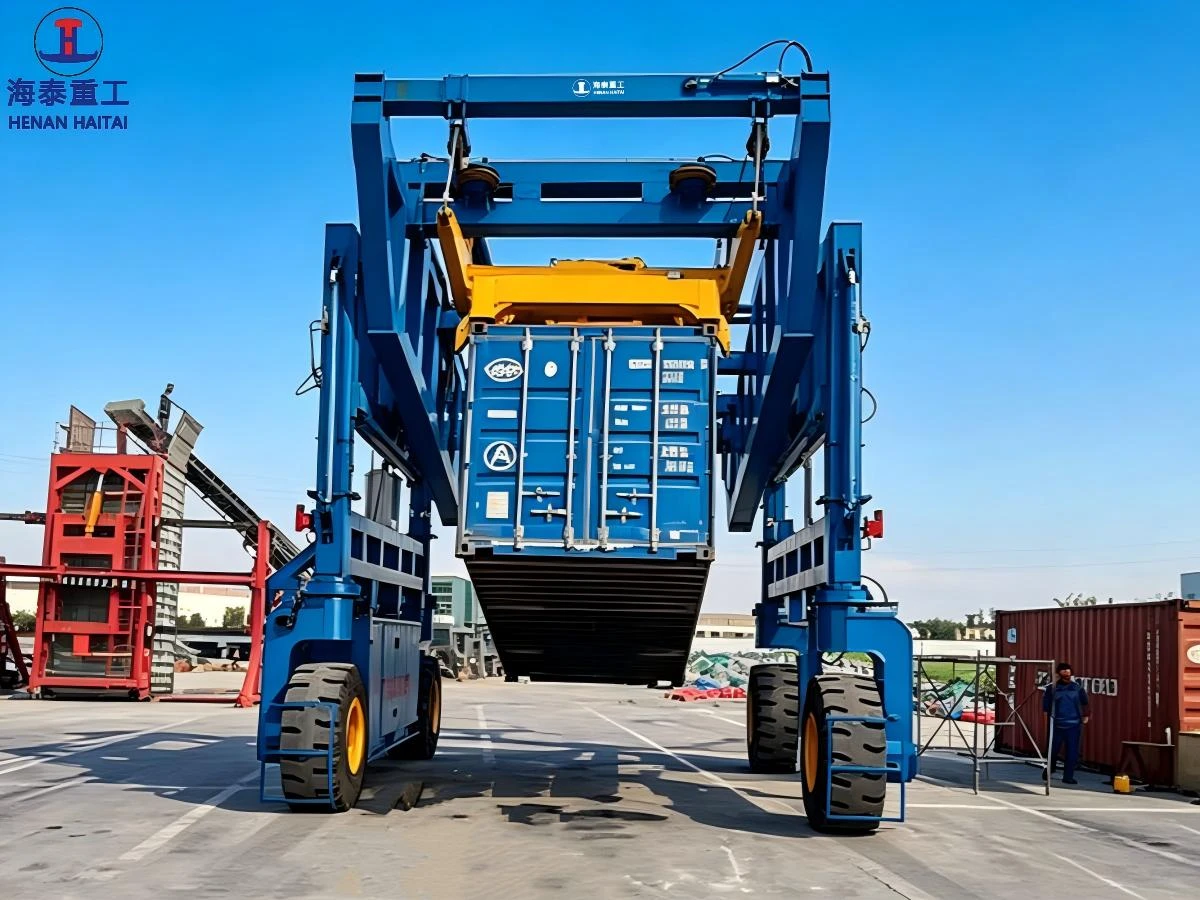
Если вы работаете с тяжелыми контейнерами, стальными конструкциями или негабаритными промышленными грузами, и на вашей площадке отсутствует стационарная электроэнергетическая инфраструктура, то гидравлический козловой кран, вероятно, является наиболее практичным решением. Он поднимает, перемещает и размещает грузы без необходимости использования подвесных конструкций, рельсов или высоковольтного источника питания. Одна машина. Полная мобильность. Минимум строительных работ. Что такое гидравлический козловой кран? Основная концепция. Гидравлический козловой кран — это самоходное транспортное средство для подъема тяжелых грузов. Он перемещается над грузом, поднимая его снизу с помощью гидравлического спредера или подъемной балки, и свободно перемещается по площадке на резиновых колесах. Весь цикл подъема и перемещения обеспечивается бортовой дизель-гидравлической системой. В отличие от электрических или канатных кранов, гидравлический козловой кран имеет собственный источник питания. Это делает его полностью независимым от инфраструктуры площадки. Вы можете использовать его в любом месте, где поверхность может выдержать колесные нагрузки — стационарная установка не требуется. Принцип работы гидравлической системы: Двигатель приводит в движение гидравлические насосы, которые подают жидкость под давлением в цилиндры подъема, приводные двигатели и рулевые приводы. Все движения — подъем, опускание, перемещение и рулевое управление —…


























