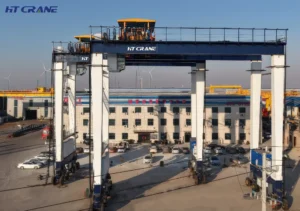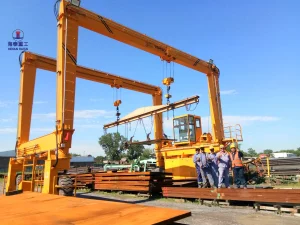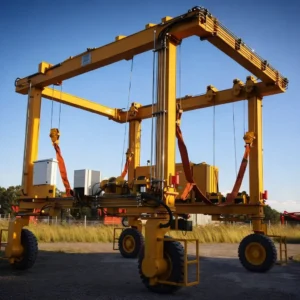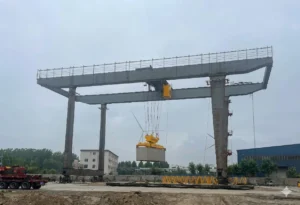

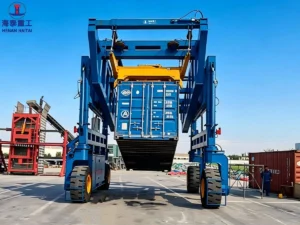
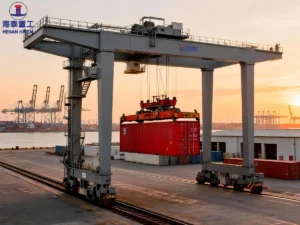
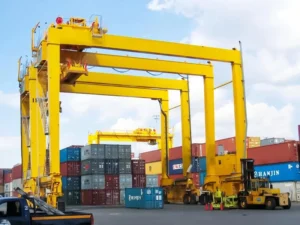
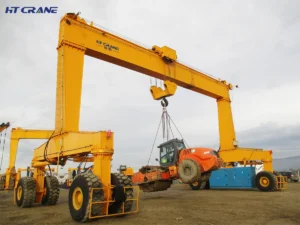
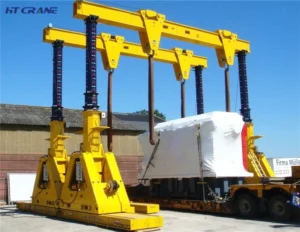
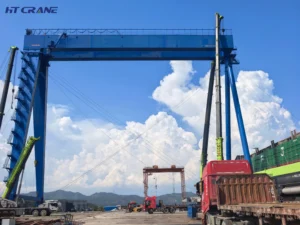
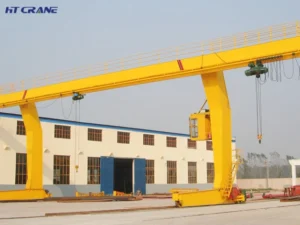
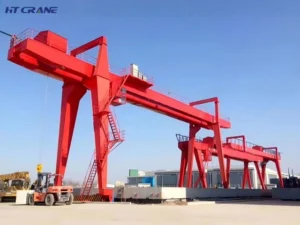
A single girder gantry crane is a practical overhead lifting solution for factories, yards, workshops, construction sites, and material handling areas without a full overhead crane runway. This guide explains its structure, specifications, applications, working conditions, and the main factors buyers should consider before ordering.
Qu'est-ce qu'un portique monopoutre ?
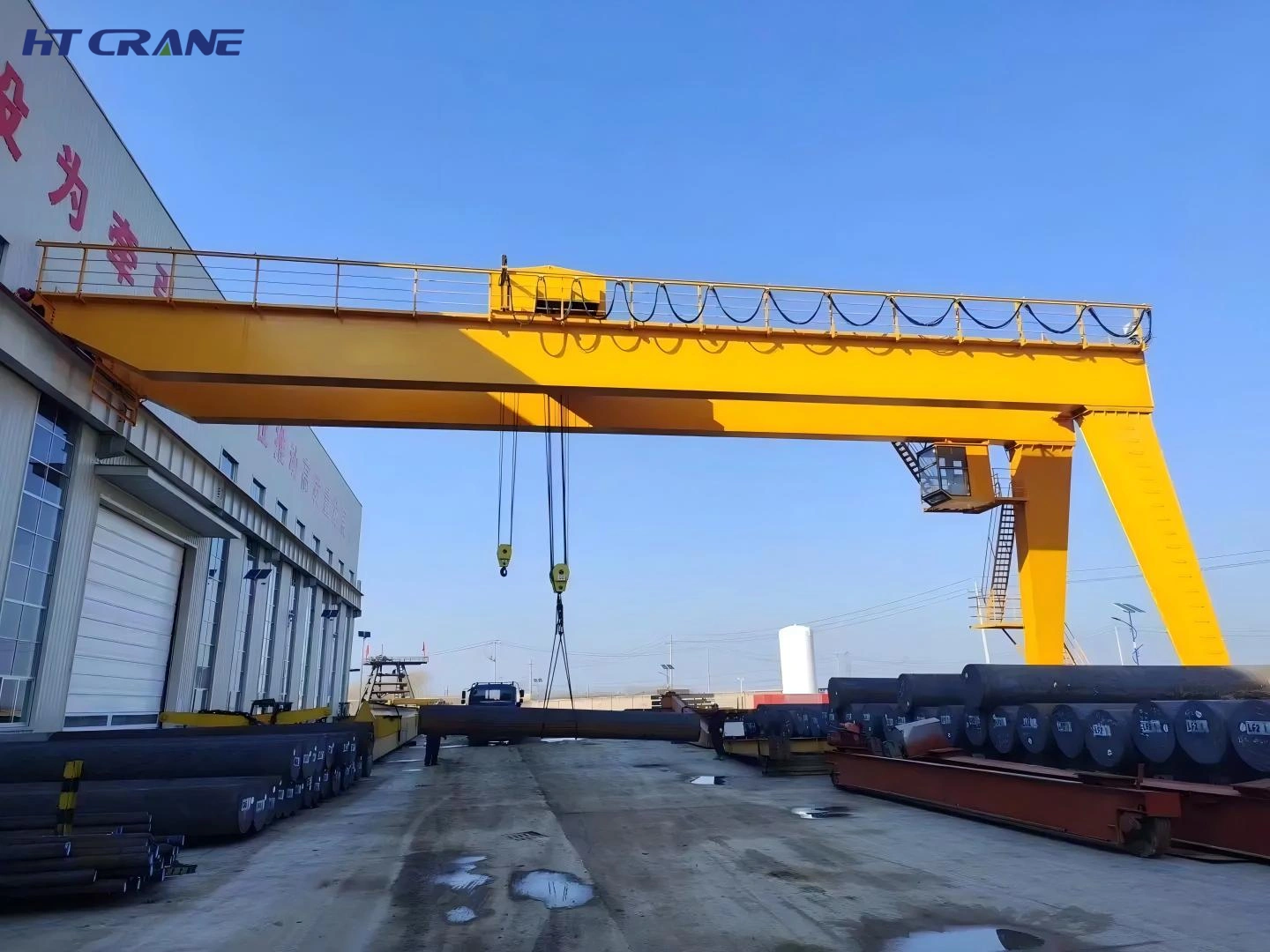
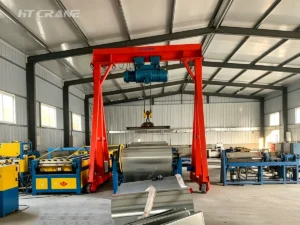
A portique monopoutre is a gantry-type lifting machine that uses one main horizontal girder supported by two legs. The legs travel along ground-mounted rails or prepared running paths, allowing the crane to move through an open working area. A hoist and trolley travel along the main girder to lift and move loads.
Unlike an overhead bridge crane, which normally operates on elevated runways attached to a building structure, a gantry crane carries its own supporting legs. This makes it suitable for outdoor yards, warehouses without suitable crane-supporting structures, fabrication areas, construction sites, and material storage zones.
The term “single girder” refers to the main bridge structure rather than simply the crane’s overall size. The final girder design, leg structure, trolley arrangement, lifting mechanism, and wheel configuration depend on lifting capacity, span, lifting height, working duty, and site conditions.
For electric hoist gantry cranes, Haitai’s product documentation lists a 3–20 t range, A4 working duty1, an operating temperature range of -20°C to +40°C, and spans from 11 m to 31.5 m for its MHA electric hoist gantry crane range.
Note: A4 is a standard FEM/ISO duty classification, generally covering light-to-medium, intermittent-use operation — higher duty classes apply to cranes running more continuously or under heavier repeated loading.
How Does a Single Girder Gantry Crane Work?
The operating principle is straightforward. The crane travels longitudinally along its rails while the electric hoist travels horizontally along the main girder, which then raises or lowers the load through its lifting mechanism. A typical single girder gantry crane includes the following main components.
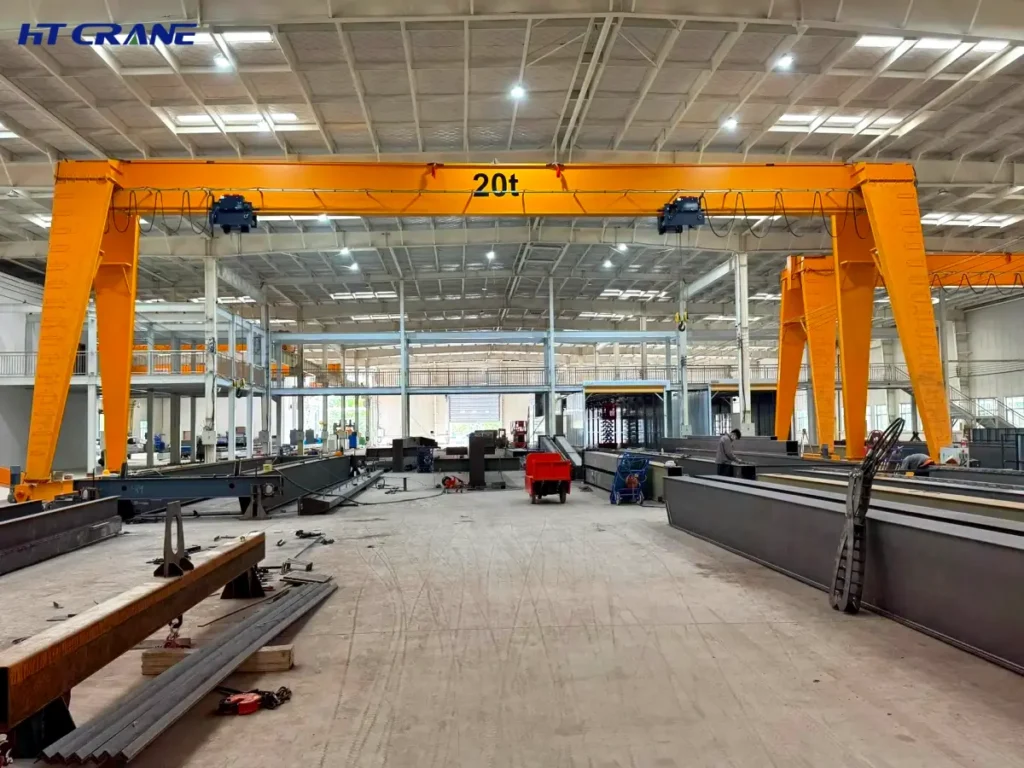
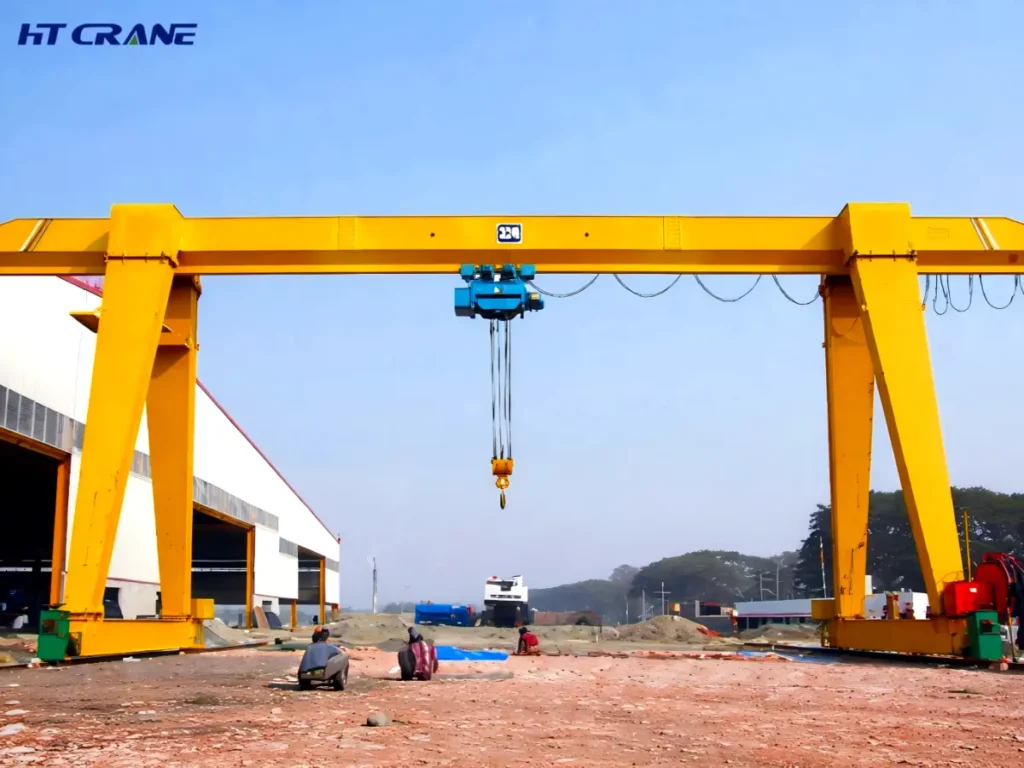
Main Girder: The main girder forms the horizontal load-bearing structure. Its dimensions and structural design are determined by lifting capacity, span, trolley load, deflection requirements, and operating conditions. For a box-girder design, steel plates are fabricated and welded into a closed structural section, providing a practical combination of structural strength and relatively compact construction.
Supporting Legs: The legs transfer the crane loads from the main girder to the traveling mechanism and ground rails. Their configuration can vary depending on crane capacity, span, required clearance, and site layout.
Electric Hoist and Trolley: The electric hoist provides vertical lifting. The trolley moves the hoist along the girder, allowing loads to be positioned at different locations across the crane span.
End Carriages and Wheels: Traveling mechanisms are installed at the lower part of the supporting structure. Depending on the crane design, the traveling system may use different wheel arrangements — Haitai’s brochure, for example, lists both four-wheel and eight-wheel configurations for different MHA electric hoist gantry crane combinations.
Electrical and Control System: The control system coordinates lifting, trolley travel, and crane travel. Depending on the project, control can be arranged through a pendant controller, remote control, or other specified control configuration.
Haitai Single Girder Gantry Crane Specifications Meaning
When comparing a single girder gantry crane, buyers should look beyond lifting capacity — the complete working condition determines whether a crane will perform properly after installation.
| Spécification | What It Determines |
|---|---|
| capacité de levage | Maximum rated load the crane is designed to lift |
| Portée | Distance between the crane’s supporting legs |
| Lifting height | Vertical distance available for lifting and handling |
| Working duty | Frequency and intensity of crane operation |
| Distance parcourue | Length of the crane’s working area |
| Hoist type | Lifting speed, configuration, and maintenance requirements |
| Alimentation électrique | Electrical compatibility with the installation site |
| Working temperature | Suitable environmental operating range |
| Control method | Operator control and positioning requirements |
| Wheel arrangement | Crane travel performance and load distribution |
For reference, Haitai’s MHA electric hoist gantry crane documentation specifies 3–20 t lifting capacity and 11–31.5 m span, with A4 working duty and -20°C to +40°C environmental temperature. These figures shouldn’t be treated as universal specifications for every single girder gantry crane — the actual crane must be engineered according to the customer’s required capacity, span, lifting height, working class, travel distance, and site conditions.
Single Girder Gantry Crane Applications
A single girder gantry crane can be used in many industrial material-handling situations where a fixed overhead crane runway is unavailable or unnecessary.
1. Factory and Workshop Material Handling
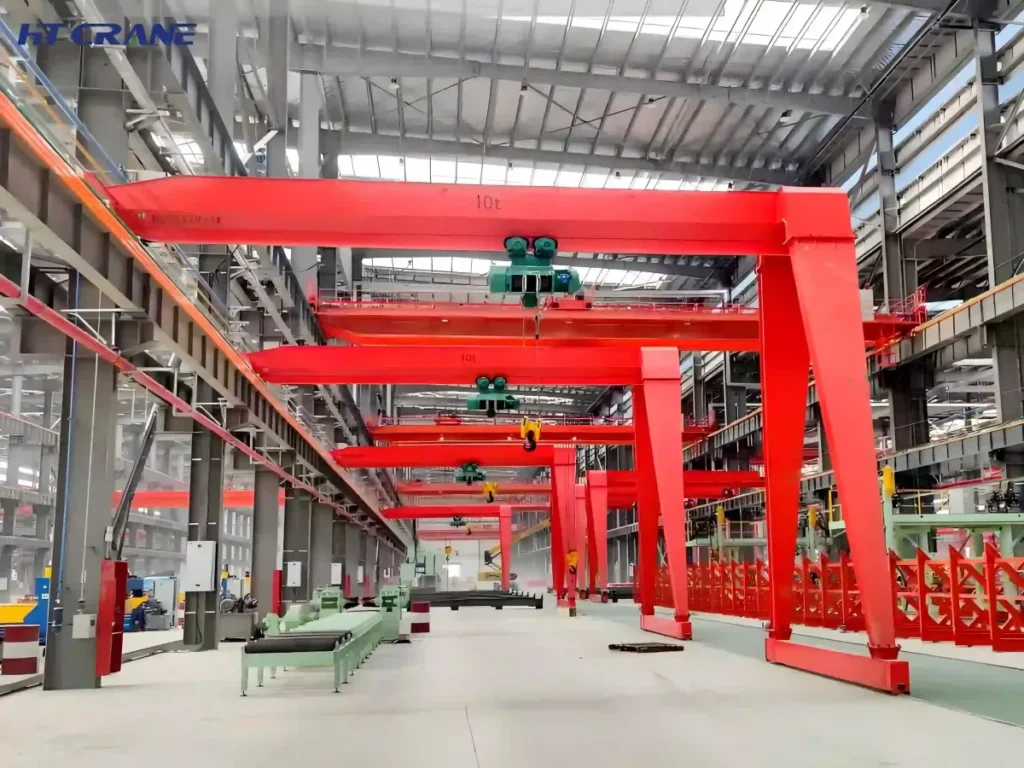
In manufacturing facilities, a gantry crane can handle steel components, machinery parts, fabricated structures, molds, and other heavy materials. For workshops with an open working area, the crane can travel along a defined route while the electric hoist positions loads across the span.
2. Outdoor Storage Yards
Outdoor yards frequently require lifting equipment that can cover large material storage areas. A gantry crane can be installed along ground rails and used for loading, unloading, stacking, and transferring materials. Typical applications include steel stockyards, precast component yards, equipment storage areas, and fabrication yards.
3. Construction Sites
Gantry cranes can also be adapted for construction-related lifting. The required configuration depends on the construction stage, load type, site access, and available foundation or rail arrangements. Haitai’s product documentation also includes a dedicated construction gantry crane category for loading, unloading, and material handling at construction sites such as highways, bridges, and power plants.
4. Railway and Open-Yard Operations
Open yards alongside railway infrastructure can require lifting equipment with sufficient span and clearance. The gantry structure allows the crane to work without relying on a building’s overhead columns.
5. General Industrial Material Handling
A single girder gantry crane can be configured for general industrial lifting where the required load range and duty cycle are compatible with an electric hoist gantry design.
Single Girder vs. Double Girder Gantry Crane
The choice between single and double girder construction depends on the working requirements rather than simply the desired lifting capacity.
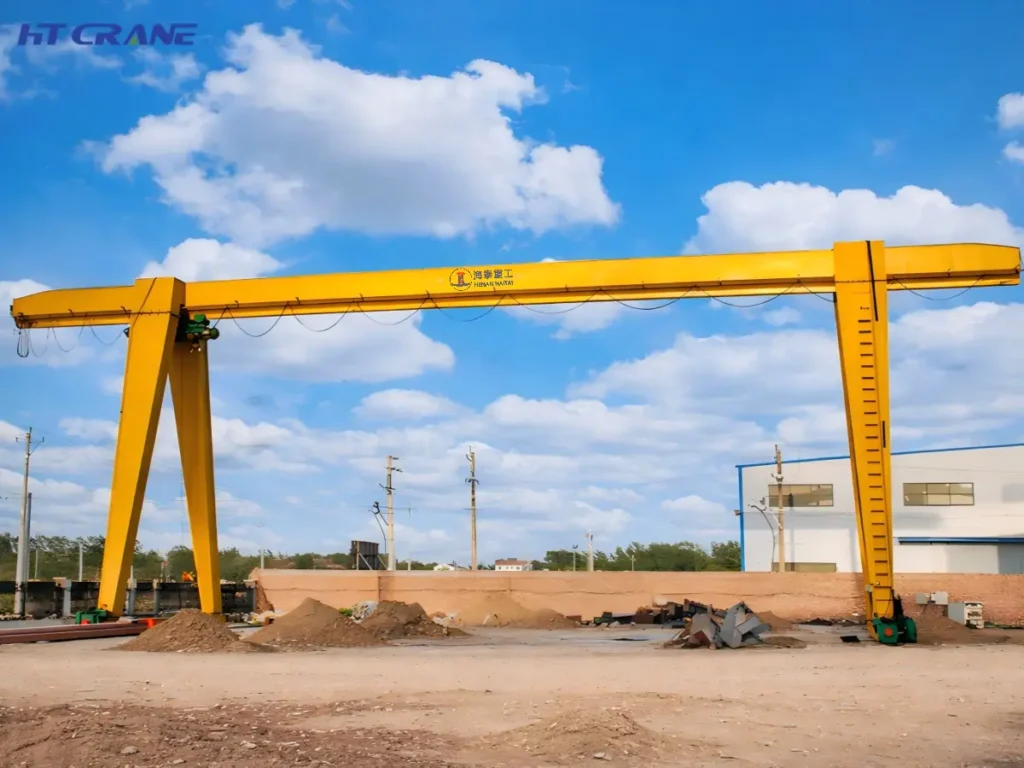
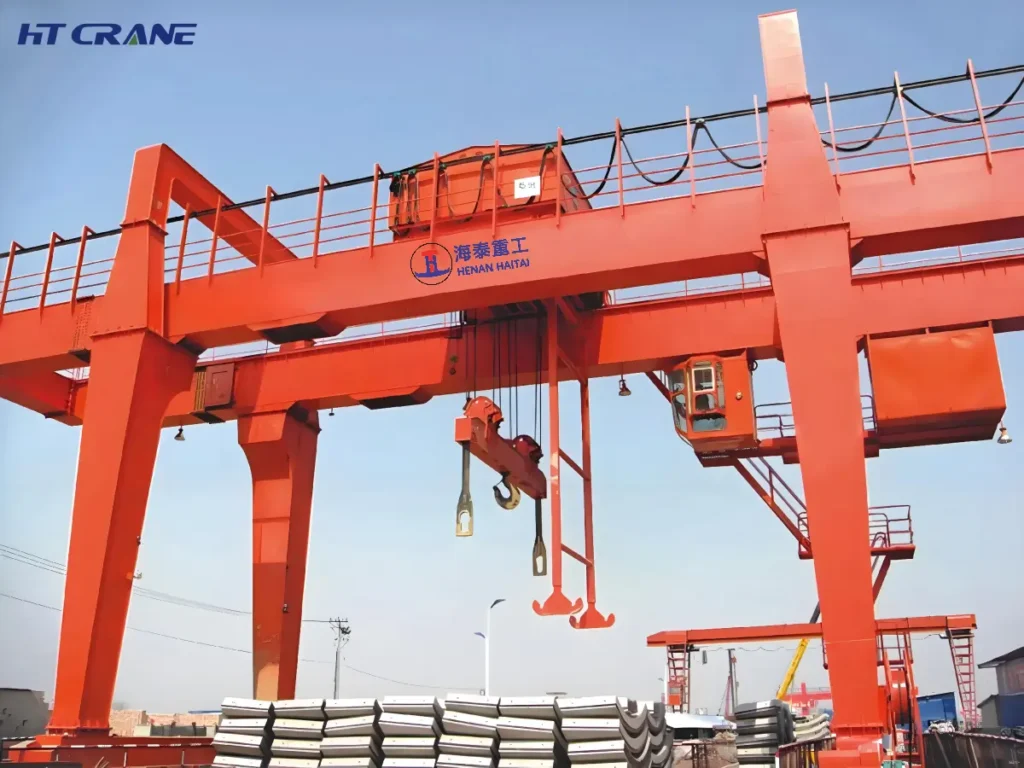
A single girder design generally uses one main bridge girder and is commonly paired with an electric hoist. It can be appropriate when the required lifting capacity, span, lifting height, and duty cycle are within the design range.
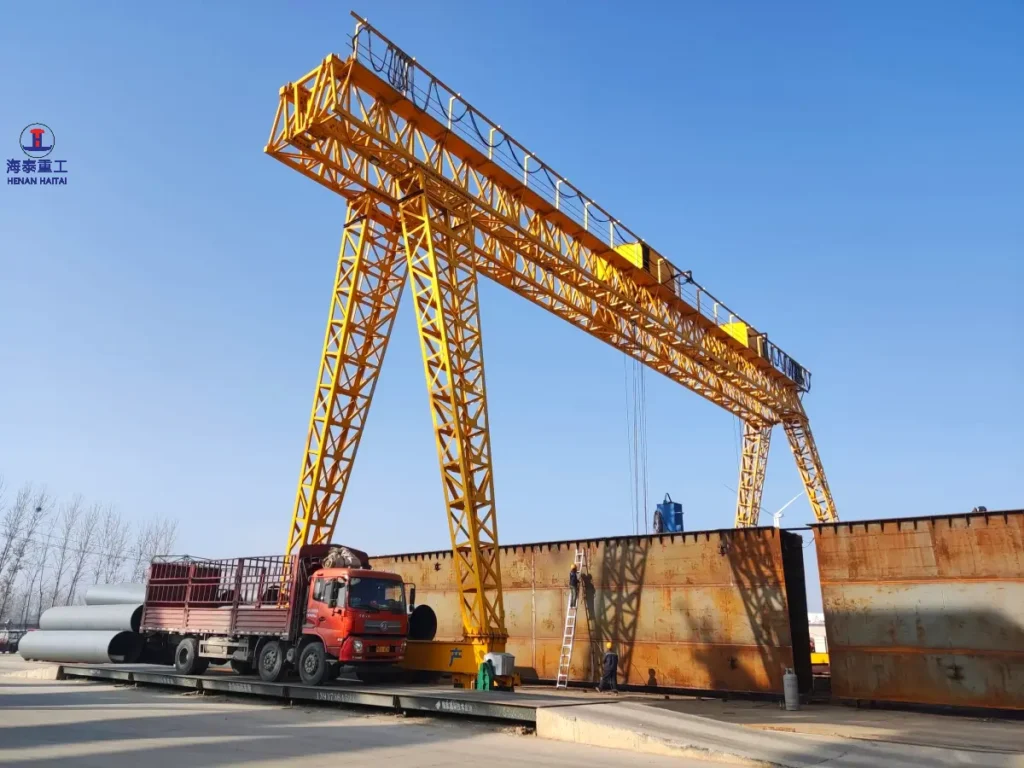
A double girder gantry crane uses two main girders and can accommodate different trolley and hoisting arrangements. It’s often selected for heavier loads, larger spans, greater lifting heights, or more demanding operating conditions.
Haitai’s brochure separately lists an A-type double girder gantry crane with a 5–200/50 t configuration — the “200/50” notation means a 200-ton main hook paired with a 50-ton auxiliary hook, a common configuration for handling both very heavy single loads and smaller supplementary lifts on the same crane — and describes it for loading, unloading, and material handling in enterprises, stations, ports, warehouses, and yards.
Buyers should not choose between single and double girder designs based only on tonnage. Span, headroom, duty class, lifting height, load dimensions, operating frequency, and site layout also need to be evaluated.
What Should You Consider Before Buying a Single Girder Gantry Crane?
1. Confirm the Maximum Load
The rated lifting capacity should be based on the heaviest load that needs to be handled, including any lifting accessories or special spreaders that form part of the lifting operation.
2. Measure the Required Span
The span determines how much working width the crane can cover. A larger span may require a different structural design, leg configuration, and wheel arrangement.
3. Check Lifting Height and Headroom
The required hook height should be measured according to the actual loading and unloading process. Low-clearance buildings, storage racks, trucks, railway wagons, and production equipment can all affect the required hook height.
4. Define the Working Duty
A crane used several times per day has different requirements from one operating continuously in a production yard. Working duty should therefore be specified during the quotation stage — the Haitai MHA electric hoist gantry crane listed in the supplied documentation has A4 working duty.
5. Consider the Environment
Outdoor cranes may face rain, dust, temperature changes, wind, and other environmental conditions. Coastal or corrosive environments may require additional protective measures. For overseas projects, the buyer should provide the actual installation location and environmental conditions rather than relying on a standard configuration.
6. Check Ground and Rail Conditions
A gantry crane transfers substantial wheel loads to the ground or foundation. Rail gauge, foundation design, rail alignment, drainage, and travel distance should therefore be confirmed before final engineering.
Single Girder Gantry Crane Customization List for Buyers
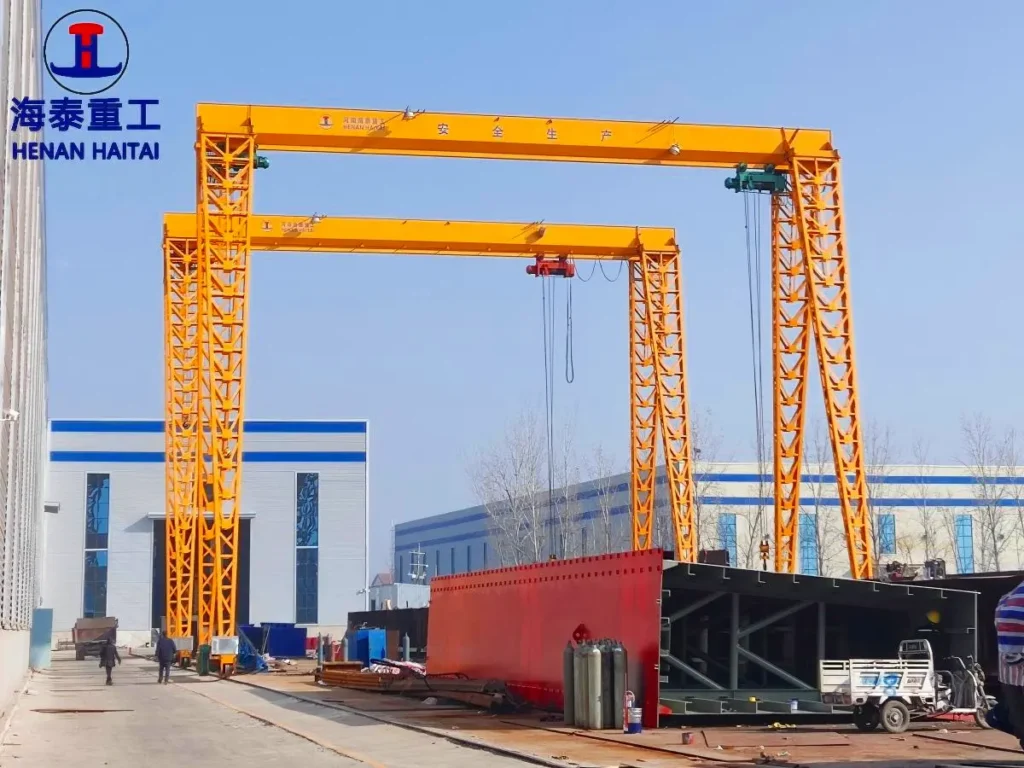
A single beam gantry crane is not normally a one-size-fits-all product. Important custom parameters can include lifting capacity, span, lifting height, travel distance, hoisting speed, trolley speed, crane travel speed, power supply, control method, wheel arrangement, and environmental protection.
Haitai’s documentation explicitly notes that customers can consult its technical engineers when special requirements exist or when listed parameters don’t match the project requirements. For an export project, a useful inquiry should therefore include:
- Capacité de levage nominale
- Required span
- Hook lifting height
- Crane travel distance
- installation intérieure ou extérieure
- Working temperature
- Working frequency or duty class
- Alimentation électrique
- Rail information
- Main load dimensions
- Local electrical requirements
- Required safety or certification standards
Providing these details at the beginning helps the manufacturer develop a configuration based on the actual application rather than simply quoting a standard crane.
Single Girder Gantry Crane Maintenance
Regular inspection and maintenance help keep the crane operating reliably. Important areas include the electric hoist, wire rope, hook, brakes, wheels, bearings, electrical components, traveling mechanism, structural connections, and rail condition.
Operators should also pay attention to abnormal noise, vibration, uneven travel, brake performance, electrical faults, and visible structural damage. For outdoor gantry cranes, the inspection program should also consider corrosion and weather exposure. Maintenance intervals should follow the manufacturer’s instructions and the applicable regulations or standards for the installation location.
Pourquoi choisir Haitai for a Single Beam Gantry Crane?
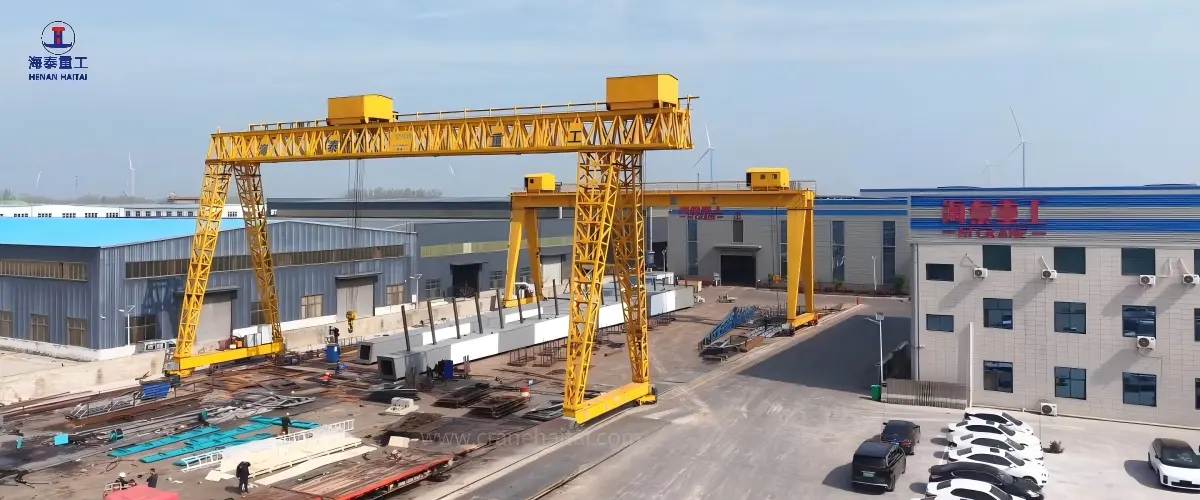
Based in Henan province, China, Henan Haitai Heavy Industry Co, Ltd. supplies gantry crane equipment for industrial material handling. The company’s supplied product documentation covers electric hoist gantry cranes, semi-gantry cranes, double girder gantry cranes, construction gantry cranes, and other specialized gantry crane configurations.
For a single girder gantry crane project, the important point is to match the crane configuration with the customer’s actual working conditions. Capacity, span, lifting height, duty class, travel distance, environmental conditions, and power supply should all be confirmed before production.
Conclusion
A single girder gantry crane provides a practical solution for lifting and transporting materials in factories, workshops, warehouses, construction sites, and outdoor yards. Its self-supporting gantry structure allows it to operate where a conventional overhead crane runway may not be available.
The most important specifications are not limited to lifting capacity. Span, lifting height, working duty, travel distance, hoist configuration, environmental conditions, rail arrangement, and power supply all affect the final crane design. For buyers comparing different models, the best starting point is to provide the complete working conditions to the crane manufacturer, so the single girder gantry crane can be designed around the actual load, site, and operating requirements.

FAQ About Single Girder Gantry Crane
Q1: What is a single girder gantry crane?
A single girder gantry crane is a crane with one main horizontal girder supported by legs that travel along ground rails or a prepared running path. An electric hoist and trolley are commonly used for lifting and horizontal load movement.
Q2: What is the typical capacity of a single girder gantry crane?
There is no universal capacity range because the crane is designed according to the application. In Haitai’s supplied documentation, the MHA electric hoist gantry crane is listed with a 3–20 t lifting capacity and an 11–31.5 m span.
Q3: What is the difference between a single girder and double girder gantry crane?
A single girder gantry crane has one main bridge girder, while a double girder gantry crane has two. The appropriate structure depends on capacity, span, lifting height, duty class, load dimensions, and operating conditions.
Q4: How do I choose the right single girder gantry crane?
Start with the maximum lifting load, span, lifting height, travel distance, operating frequency, installation environment, power supply, and load dimensions. These parameters provide the basic information needed for crane selection and engineering.
Q5: What information should I send when requesting a quotation?
Provide the lifting capacity, span, lifting height, crane travel distance, working environment, working frequency, power supply, and any special load-handling requirements. If available, drawings or site dimensions can also help the manufacturer develop the correct configuration.