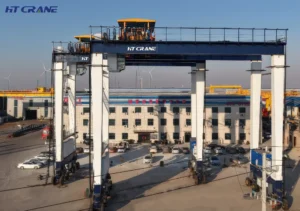
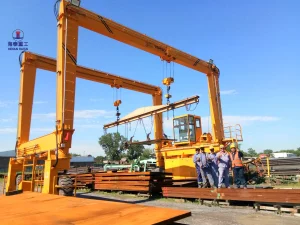
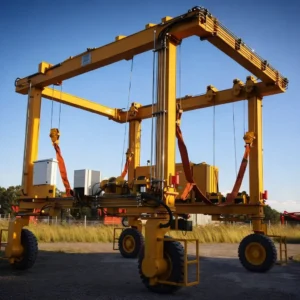
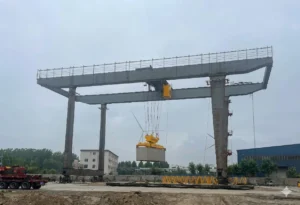
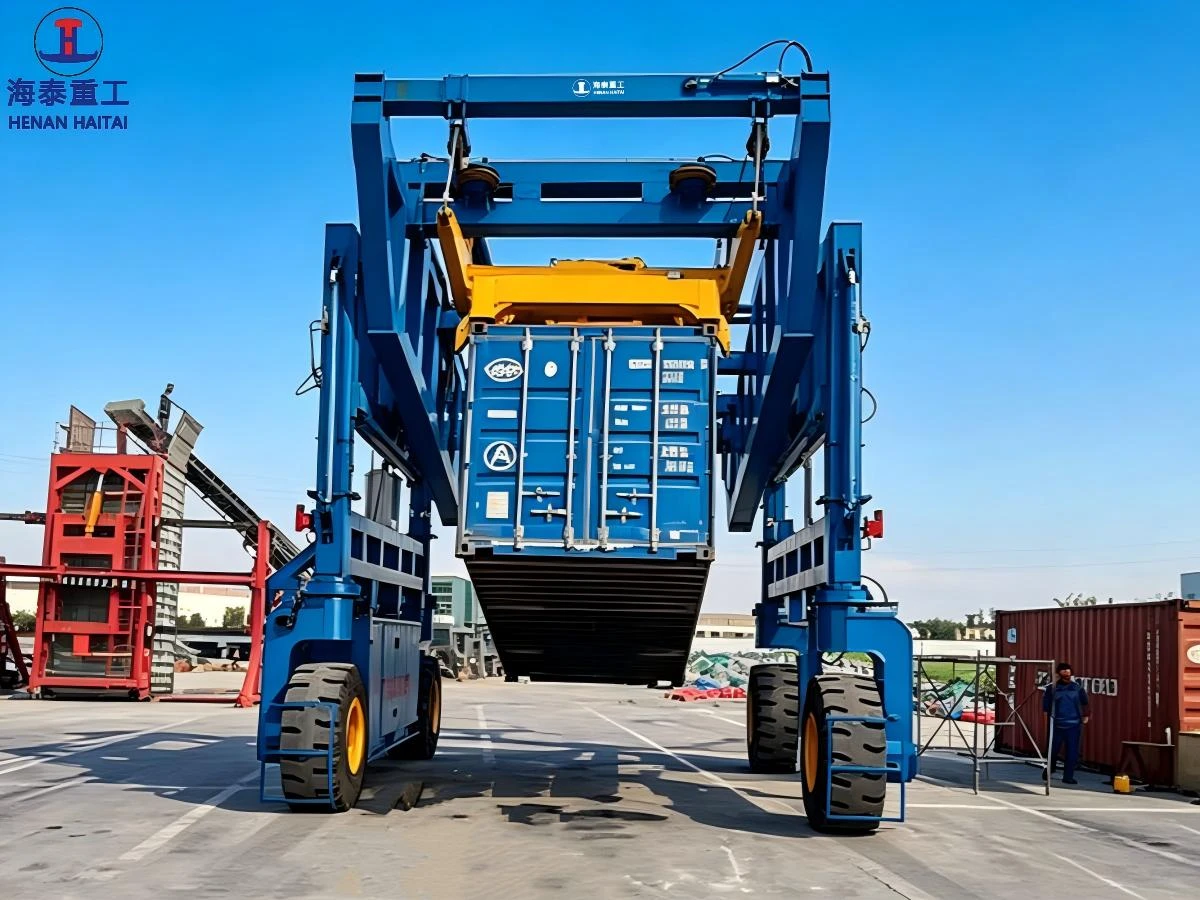
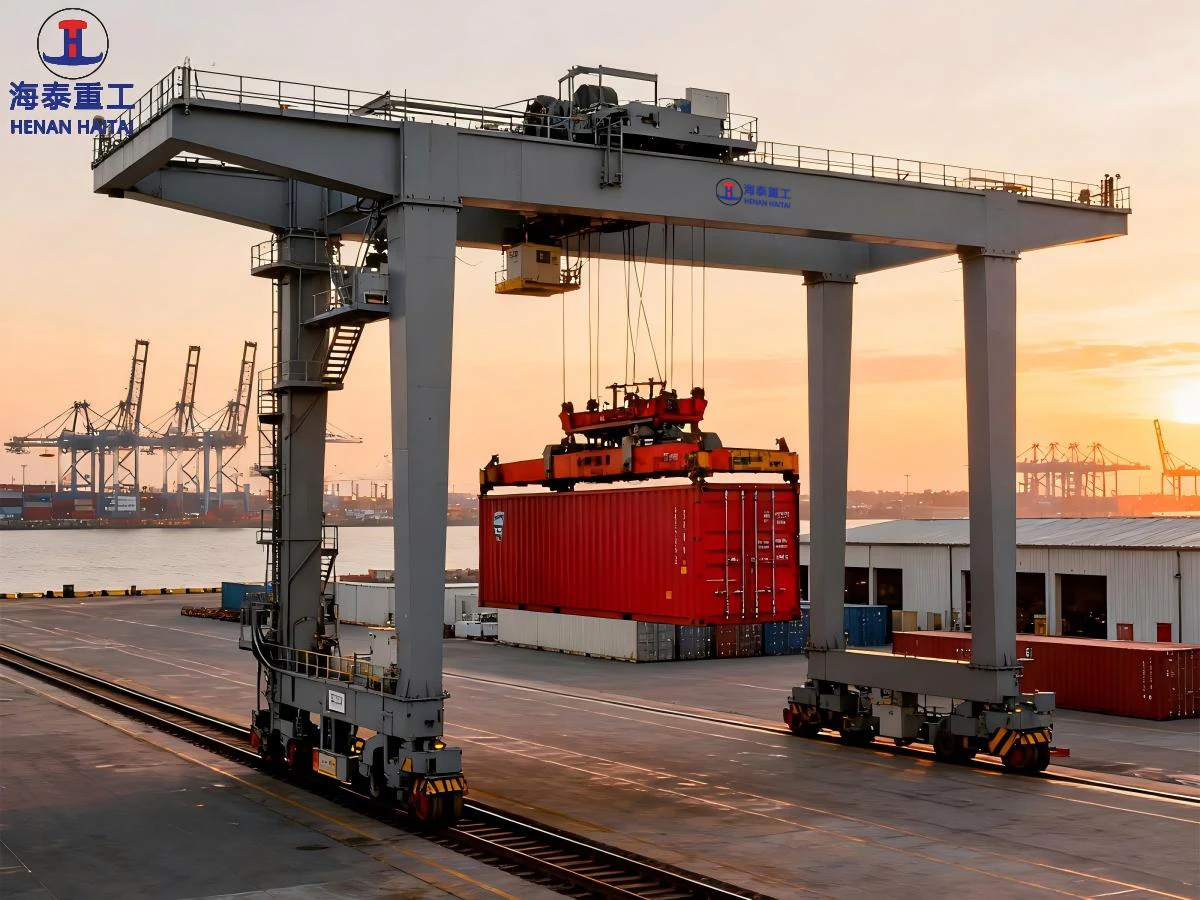
Container terminals running manual straddle carriers face a compounding problem: labor costs rise every year, shift changes create throughput gaps, and one operator error in a high-traffic yard can halt operations for hours. Automated straddle carriers solve all three simultaneously — removing the driver entirely and placing the machine under real-time Terminal Operating System (TOS) control, 24 hours a day, seven days a week.
This is not an experimental technology. Fully automated straddle carrier terminals have been operating continuously since 2006, and terminals that have made the transition consistently report improvements across safety, throughput, and long-term operating cost. The data is now nearly two decades deep.
This article explains how automated straddle carriers work, what measurable results operating terminals are seeing, and what specifications you must confirm before placing an order.
📋 Quick Reference
Спецификация Типичный диапазон Грузоподъемность 40–70 tonnes Высота штабелирования 1-over-2 to 1-over-3 (4 high) Navigation system DGPS + LiDAR + inertial (redundant) Drive options Diesel-electric, hybrid, full electric Global market size (2025) ~USD 522 million, CAGR 5.9% to 2033 Ready to spec your terminal?
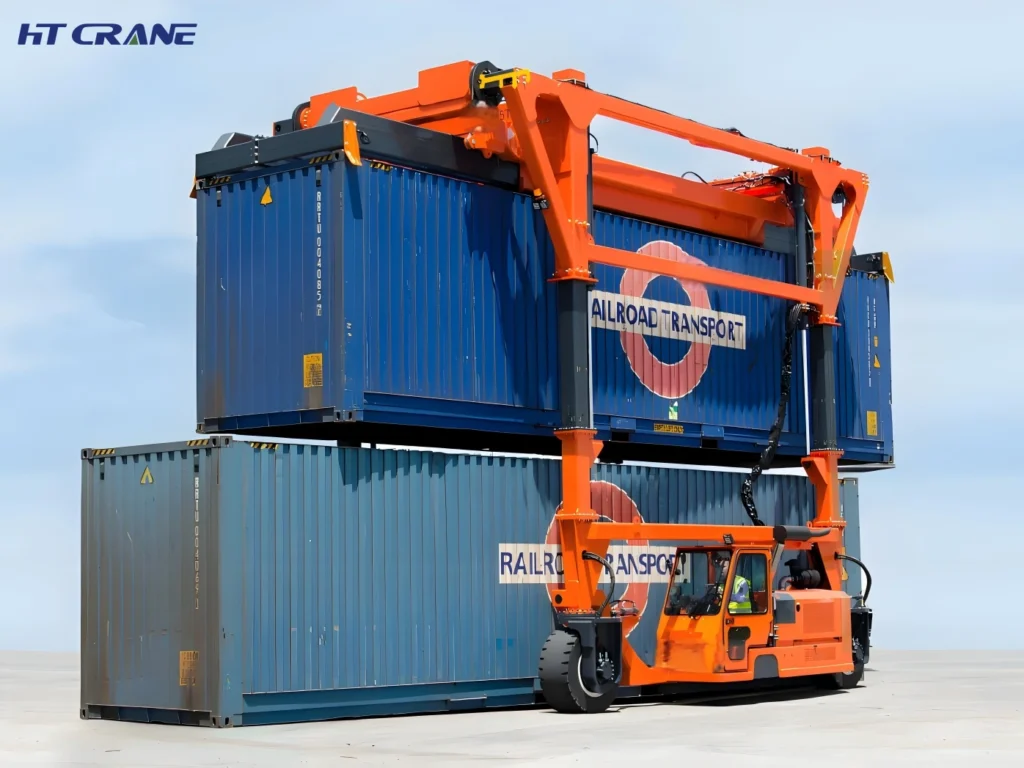
How Automated Straddle Carriers Work
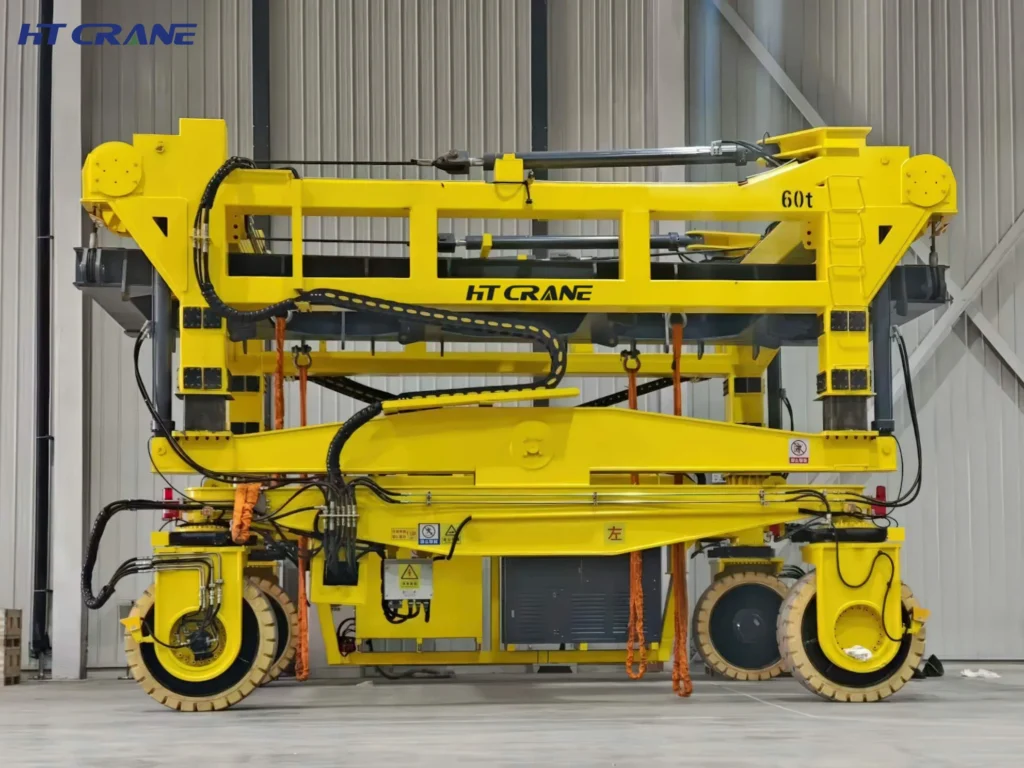
Navigation: Three Redundant Systems Working Together
The most common misconception about automated straddle carriers is that they rely on a single GPS signal. Every commercially deployed system uses at least three overlapping navigation methods to achieve centimeter-level positioning accuracy across all weather and lighting conditions.
The standard stack is: Differential GPS (DGPS) for global positioning, LiDAR for real-time obstacle detection and lane-keeping, and an Inertial Measurement Unit (IMU) to maintain accuracy when satellite signals are blocked by cranes or port structures. All three data streams are fused continuously by the onboard computer. If any one source degrades, the machine automatically reduces speed and triggers a remote monitoring alert — it does not estimate or guess its position.
Early installations used buried ground transponders for positioning reference. Modern systems have moved to LiDAR-primary approaches, which eliminate ground infrastructure installation and simplify long-term maintenance.
Task Dispatch: How the TOS Controls Every Move
The automated carrier does not decide what to move or where to go. Every movement instruction originates from the terminal’s TOS, which holds the full container inventory, vessel schedule, and yard plan. The TOS dispatches a job — pick up a specific container from a defined location and deliver it to the quay crane buffer — and the carrier executes it autonomously, selecting its own travel path and speed profile within defined yard zones.
TOS integration quality is one of the most critical factors in evaluating automated straddle carrier suppliers. Terminals already running a TOS from one vendor should confirm in writing that the automation platform will interface with their existing system without requiring a full TOS replacement. This single point has derailed more than one automation project during late-stage procurement.
Remote Oversight: What “Automated” Actually Means for Staffing
A persistent concern among terminal managers is that automation means zero human involvement. The operational reality is more precise. Every automated carrier fleet requires a team of remote operators who monitor multiple machines simultaneously via live camera feeds and system dashboards. When the system detects an exception — an unrecognized obstacle, a container identification mismatch, a mechanical alert — it pauses and transfers control to the remote operator.
During normal operations, one skilled remote operator can manage four to six machines simultaneously, compared to one machine per driver in a manual fleet. That ratio is what drives labor cost reduction. Automated straddle carrier operation is a reduced-headcount model, not a zero-headcount one.
Proven Results From Operating Terminals
Safety: Systematic Elimination of the Highest-Risk Scenario
The primary safety benefit of automated straddle carriers is structural, not behavioral. Human-vehicle collisions in a busy container yard — the category responsible for the most serious port injuries globally — are eliminated in the automated zone by design. The machine’s area scanners detect any object within its operating envelope and trigger an emergency stop before contact occurs. No driver fatigue, no visibility blind spots, no communication failures between ground staff and cab operators.
Terminals that have operated automated straddle carrier fleets for more than ten years consistently report that the automated yard zones achieve safety records that manual operations cannot match, regardless of training investment or procedural controls.
Throughput: 24/7 Operation Without Degradation
A manual fleet loses effective capacity at every shift change, during meal breaks, and progressively through a long shift as operator fatigue accumulates. An automated fleet operates at consistent speed and precision across all 24 hours. For terminals with vessel arrival patterns that do not align neatly with shift schedules — which is most terminals — this continuity eliminates a chronic throughput constraint.
Terminals transitioning from manual to automated operations typically report throughput improvements in the range of 15–30%, with the gains concentrated in overnight and early-morning windows where manual operations are most constrained by staffing availability.
Labor Cost Reduction: The Long-Term ROI Driver
Labor cost savings are the primary financial driver for most automated straddle carrier investments. The savings compound over time: as local wage levels rise, the fixed capital cost of automation becomes relatively cheaper each year. Terminals in high-wage markets — Northern Europe, Australia, the US West Coast — consistently achieve shorter payback periods for exactly this reason.
A realistic planning assumption for a mid-size terminal handling 200,000–500,000 TEU annually in a high-wage market is a 7–12 year full payback period on combined equipment and infrastructure investment. Long-term operational records from terminals running automated fleets for over a decade confirm that the economics hold and that operators reinvest in fleet expansion rather than reverting to manual operation.
📞 Sourcing Automated Straddle Carriers for Your Terminal?
Share your yard dimensions, annual TEU volume, and current drive system preference. Our engineering team will return a specification framework and supplier comparison within 48 hours.

Key Specifications to Confirm Before Purchasing
Stacking Configuration and Lifting Capacity
Automated straddle carriers are available in 1-over-2 и 1-over-3 stacking configurations, placing containers in stacks of three or four high respectively. The 1-over-3 (4-high) configuration delivers higher yard density per square meter but requires greater lifting capacity — typically 40–50 tonnes — and a taller mast structure that adds to unit cost and increases ground bearing load requirements.
Match the configuration to your yard’s ground bearing capacity and your dominant container type. A terminal handling predominantly 20-foot units has different center-of-gravity parameters than one handling 45-foot high-cube units. Confirm spreader compatibility and ISO container size range in the specification sheet before comparing supplier quotes.
Drive System: Diesel-Electric, Hybrid, or Full Electric
Three drive configurations are commercially available in 2025:
| Тип привода | Onboard Power | Infrastructure Need | Best Fit |
|---|---|---|---|
| Diesel-electric | Generator | Минимальный | Greenfield, remote terminals |
| Hybrid | Generator + battery buffer | Умеренный | Emissions-target terminals |
| Full electric | External charging only | Significant | Zero-emission mandates |
Hybrid drive is currently the most widely ordered configuration — it reduces peak generator load by 30–40% and meets most current emissions targets without requiring full charging infrastructure. Full electric units are available from multiple suppliers but require 12–18 months of infrastructure preparation on a brownfield site, including grid capacity assessment, charging point installation, and cable routing through an operating yard.
Cybersecurity Certification
Automated straddle carriers are networked industrial control systems. A cybersecurity incident affecting the TOS connection can disable an entire fleet simultaneously — a risk profile that does not exist with manual equipment. When evaluating suppliers, request documentation of МЕК 62443 certification status for the automation control system. This is the international standard for industrial control system cybersecurity. Also confirm the supplier’s incident response protocol and the isolation capability of individual machines if a network-level breach occurs.
Заключение
Automated straddle carriers are a mature, proven technology with close to two decades of uninterrupted operating data from terminals across three continents. The case for automation rests on three compounding advantages: labor efficiency through a four-to-six machines-per-operator ratio, throughput continuity through 24/7 operation, and a structural elimination of the highest-risk safety category in container yard operations.
The technology question is settled. The remaining decisions are implementation questions: which stacking configuration matches your yard, which drive system fits your infrastructure timeline, and which supplier’s TOS integration path creates least disruption to existing operations.
Three actions to take this week:
- Define your stacking height requirement (1-over-2 or 1-over-3) and annual TEU target — these two numbers frame every supplier conversation.
- Request IEC 62443 cybersecurity documentation from every supplier you shortlist.
- If your terminal runs an existing TOS, get written confirmation from shortlisted suppliers that their automation platform integrates without requiring a full TOS replacement.
Get a Specification Proposal for Your Terminal Our team returns a supplier shortlist and specification comparison within 48 hours of receiving your yard dimensions, TEU volume, and drive preference.
Часто задаваемые вопросы
Q1: What is the difference between an automated straddle carrier and a standard straddle carrier?
A standard straddle carrier is operated by a human driver seated in a cab mounted on the machine’s upper frame. An automated straddle carrier replaces the driver with an onboard sensor suite — LiDAR, DGPS, cameras, and IMU — and receives all movement instructions directly from the terminal’s operating system. The physical machine structure is broadly similar; the intelligence and control layer is entirely different. Automated units also incorporate mandatory safety systems including area scanners and emergency stop triggers that are not required on manually operated equipment. One remote operator monitors four to six automated machines simultaneously during normal operations.
Q2: How long does implementation take for an existing terminal?
Implementation timelines depend on whether your terminal is greenfield or brownfield. Greenfield deployments — where yard layout, ground infrastructure, and TOS can be designed for automation from the outset — typically run 18–24 months from equipment order to first automated operation. Brownfield retrofits of existing operating terminals add significant complexity: ground survey and potential reinforcement, TOS integration testing, phased transition periods during which automated and manual equipment share the yard, and staff retraining. Brownfield projects should be budgeted at 24–36 months. Infrastructure preparation costs and timelines should be scoped separately from equipment procurement.
Q3: What ROI timeframe should we plan for?
A realistic planning assumption for a mid-size terminal (200,000–500,000 TEU annual throughput) in a high-wage market is 7–12 years to full payback on combined equipment and infrastructure investment. Terminals in lower-wage markets will see longer payback periods because the labor-saving numerator is smaller, though throughput and safety benefits remain constant regardless of local wage levels. The strongest financial case is typically made in markets where port labor costs are rising faster than inflation — which currently describes most major port regions globally.
Q4: Do automated straddle carriers operate reliably in all weather?
Yes, within published operational parameters. LiDAR-primary navigation performs reliably in rain, darkness, and moderate fog — conditions that increase fatigue risk and error rates for human operators. Extreme weather events trigger defined safe-stop protocols. Every supplier publishes an operational envelope covering maximum wind speed, precipitation limits, and temperature range. Review this specification against your terminal’s climate data before purchase. Terminals in tropical and subtropical climates have extensive multi-year deployment records with automated carriers operating reliably through high-humidity, high-rainfall conditions.
Q5: What certifications should I require from a supplier?
Require as a minimum: Маркировка CE for the complete machine (mandatory for EU markets, accepted as a quality baseline globally); ISO 9001 quality management certification for the manufacturing facility; and МЕК 62443 industrial cybersecurity certification — or a documented compliance roadmap — for the automation control system. For electric or hybrid drive units, request battery system certification to IEC 62133 or equivalent. Structural design and load ratings should reference FEM (Fédération Européenne de la Manutention) standards. Ask suppliers to provide the specific standard version number and the name of the certifying body — not just the standard name.