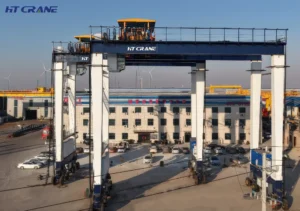
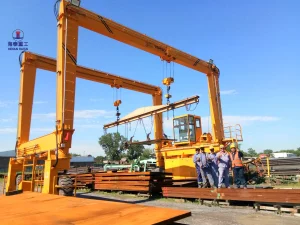
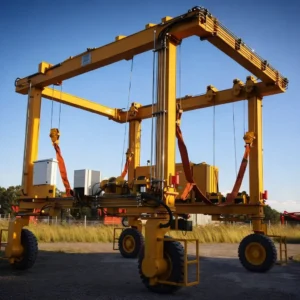
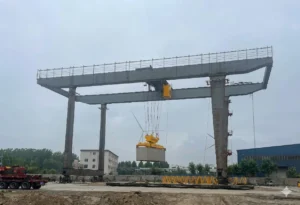
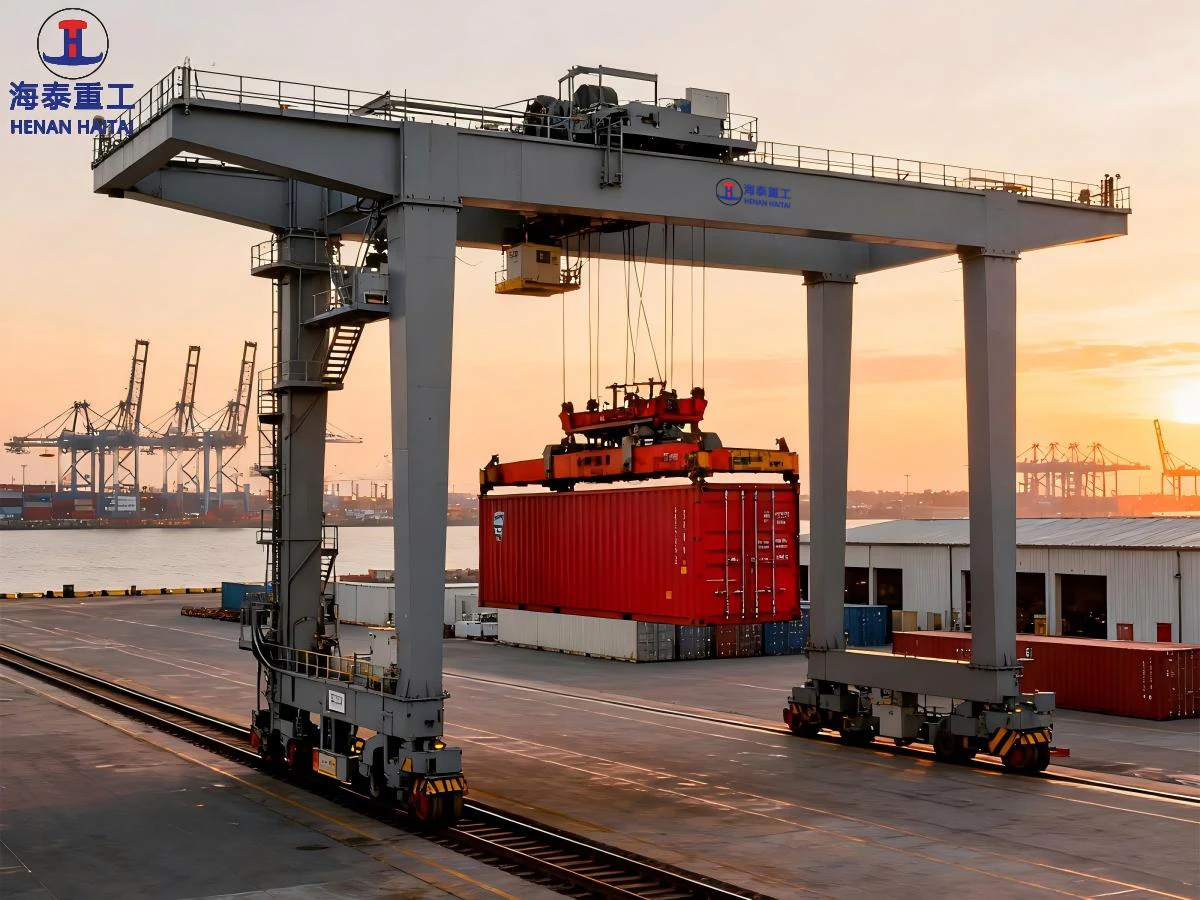
Thailand RTG crane market 2026 is increasingly shaped by Laem Chabang Port, the country’s main container gateway and the logistics backbone of its Eastern Seaboard industrial zone. At Laem Chabang Port, capacity expansion, equipment modernization, and smarter yard operations are developing side by side. TIPS Terminal B4 has invested roughly US$7.46 million in four hybrid RTG cranes, while Hutchison Ports Thailand’s Terminal D has reached its full planned complement of remote-controlled quay and yard cranes. This article covers Laem Chabang’s equipment upgrades, smart and green terminal trends, technical specifications, and supplier selection for 2026 projects.
Why Laem Chabang Is Central to Thailand’s 2026 RTG Market?
Thailand’s RTG crane market in 2026 is being written almost entirely at one location: Laem Chabang Port, the country’s main container gateway and the logistics backbone of its Eastern Seaboard industrial zone. Rather than a market driven by one new mega-project, Thailand is showing a more layered pattern — new yard capacity, fleet modernization, and automation upgrades happening at the same terminal complex, sometimes at the same time. For RTG crane suppliers and terminal engineering teams, that mix changes what a specification needs to account for. This article works through what’s actually happening at Laem Chabang in 2026, the technical decisions it’s forcing, and what a buyer should check before placing an order.
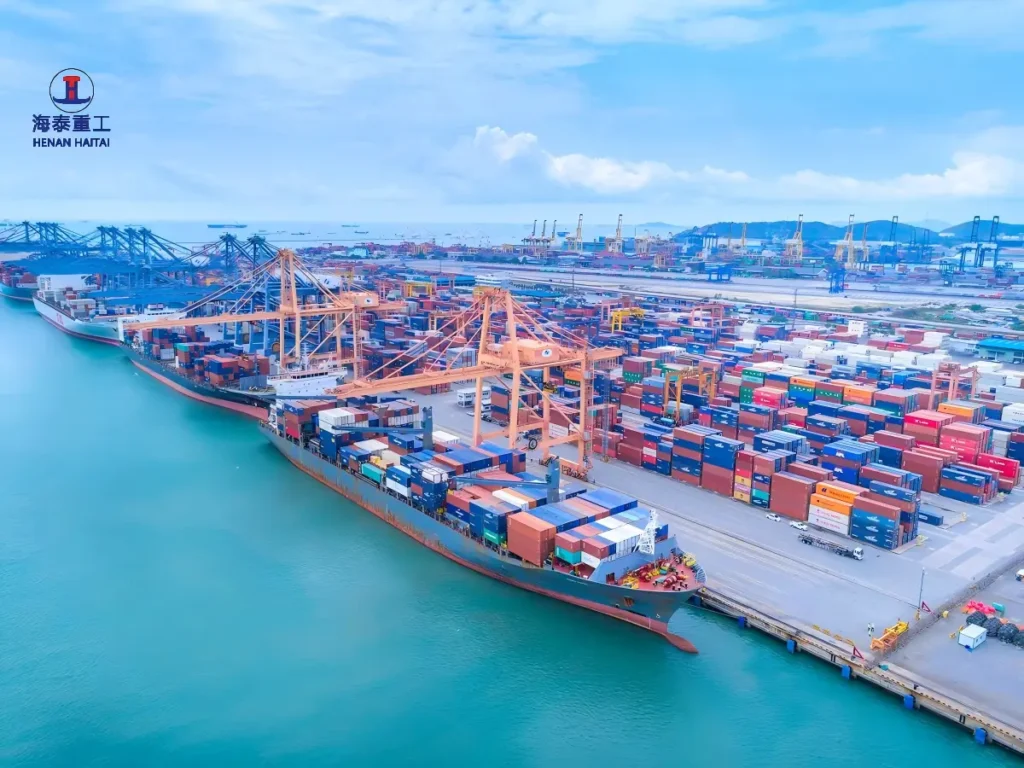
Terminal operators at Laem Chabang are not simply buying additional lifting capacity. Two flagship projects — TIPS Terminal B4 and Hutchison Ports Thailand’s Terminal D — show operators actively evaluating hybrid power systems, electric drive, remote control, anti-collision technology, and auto-steering as standard parts of a modern RTG specification, not optional extras bolted on later.
That demand splits into two distinct drivers.
- The first is capacity expansion: container volumes keep pressuring yard handling systems, and operators need more equipment to avoid bottlenecks between quay and yard.
- The second is modernization: older diesel-powered fleets become more expensive to run and maintain as fuel costs and emissions targets tighten, pushing operators toward hybrid or electric alternatives even where raw lifting capacity isn’t the constraint.
A newly built terminal can specify electric or hybrid RTG craness from day one; an existing yard adding or upgrading equipment has to fit within its current layout, power infrastructure, and terminal operating software. That second case is the more technically demanding one, and it’s where supplier evaluation matters most.
TIPS Terminal B4: Four New Hybrid RTG Cranes
In June 2026, TIPS Co., Ltd. — a Thai-owned container terminal operator — took delivery of four new hybrid rubber-tyred gantry cranes for Terminal B4 at Laem Chabang. The investment was reported at approximately US$7.46 million, or more than THB 250 million, with the stated aim of increasing terminal capacity, improving container-yard management, and developing B4 into what TIPS describes as a Smart and Green Terminal.
The four GENMA-brand RTGs were manufactured by Jiangsu Rainbow Industrial Equipment Co., Ltd. and arrived in Thailand on June 9, 2026, with installation, testing, and commissioning originally scheduled for completion by August 4, 2026 — a target that has since passed; buyers researching this project should confirm current commissioning status directly with TIPS before citing it as complete.
The hybrid power system is the headline feature: TIPS has stated it can cut fuel and energy consumption by up to 60% compared with a conventional diesel RTG, a figure the company’s Vice President has tied directly to TIPS’ ESG commitments and long-term sustainability strategy. It’s worth being precise about what this project actually represents, though. TIPS has consistently framed it as capacity growth and green modernization — nothing in the public record indicates these four units are replacing decommissioned diesel cranes on a like-for-like basis.
It’s a strong example of hybrid power entering mainstream Thai procurement, and a useful data point for the market’s replacement and modernization trend more broadly, but it shouldn’t be read as direct evidence of a one-for-one fleet replacement at B4 specifically.
TIPS describes B4 as a high-technology container terminal with a 300-meter berth and a 14-meter approach channel and berth draft, able to accommodate most Post-Panamax vessels.
Laem Chabang Container Yard Capacity Keeps Expanding
The need for more yard equipment isn’t limited to one terminal. TIPS’ own CY2 area — a separate container yard near checkpoint 3 of Laem Chabang Port — covers roughly 50,240 square meters (about 30 rai) with capacity for approximately 7,612 TEUs, equipped with RTGs alongside reach stackers and empty-container handlers for both full and empty container management.
Separately, a 2026 management disclosure from a Thai listed company reported a THB 327 million investment in a Laem Chabang Container Yard 3 project, covering 28 rai and targeting roughly 200,000 TEUs of throughput. Development is scheduled from Q2 2026 through Q1 2027, with operations planned to begin in Q2 2027. Projects like this matter to RTG manufacturers because new yard capacity typically brings fresh requirements for container positioning, stacking density, and internal traffic management — demand that builds alongside terminal expansion rather than separately from it.
Hutchison Ports Thailand’s Terminal D: A Reference for Automated RTG Operations
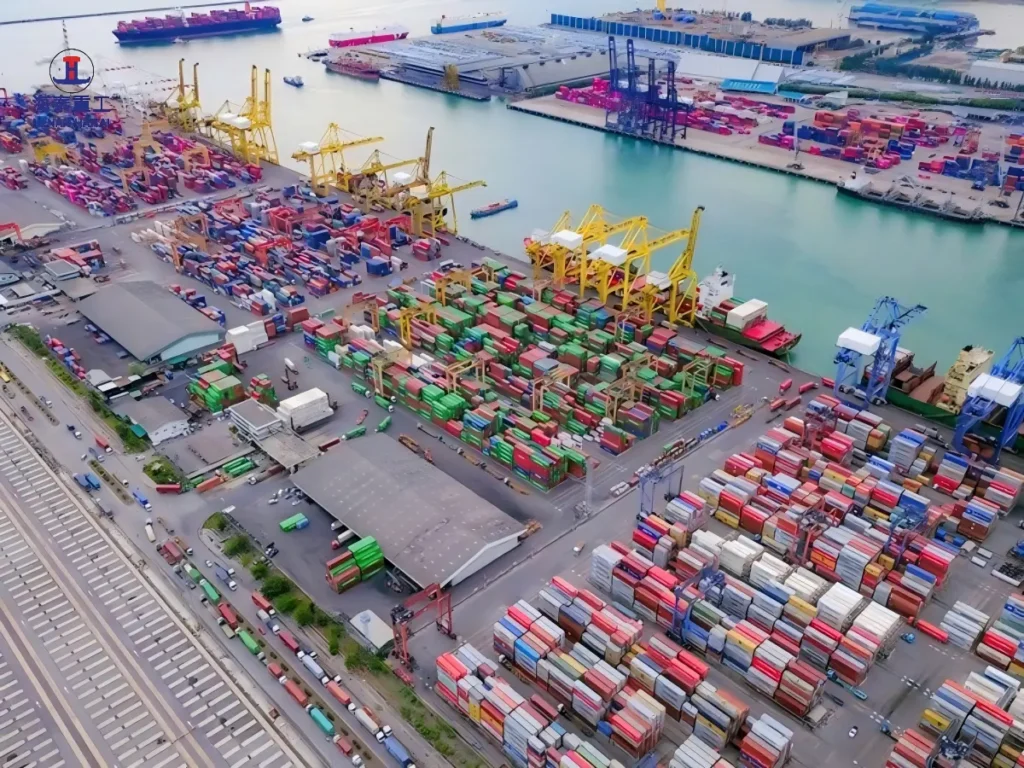
Terminal D is Thailand’s clearest working example of automated, remote-controlled RTG operation at scale. Hutchison Ports Thailand’s published plan for the terminal called for a full complement of 17 super-post-panamax quay cranes and 43 remote-controlled rubber-tyred gantry cranes, across a 1,700-meter quay with an expected annual handling capacity of roughly 3.4 million TEU.
Based on the company’s own equipment updates, that target has effectively been reached: a 2024 company publication put the terminal at 14 quay cranes and 36 RTGs at that stage; Hutchison Ports Thailand then reported seven additional remote-control yard cranes added in October 2025 (bringing RTG count to 43) and three additional remote-controlled quay cranes received in December 2025 (bringing quay crane count to 17).
In other words, Terminal D appears to have reached its full planned equipment complement by the end of 2025 — worth noting as a completed milestone rather than a future promise, though reaching the terminal’s designed 3.4 million TEU annual throughput is a separate, longer-term operational ramp-up, not something equipment delivery alone confirms.
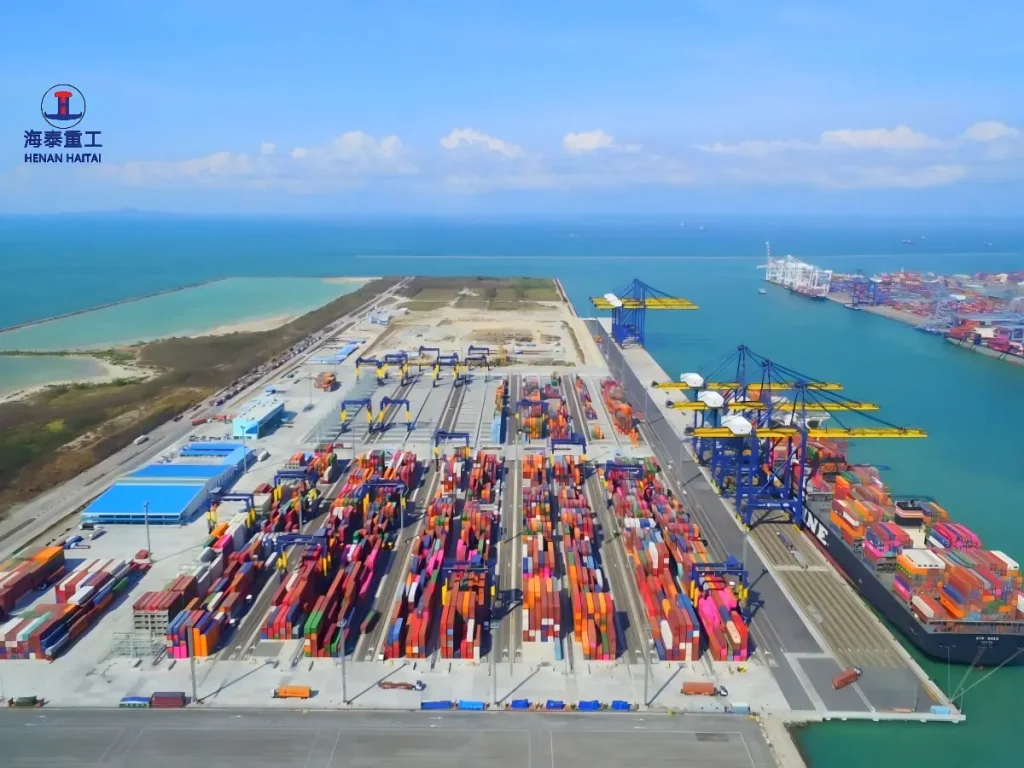
For buyers researching a remote-controlled RTG crane for a Thai project, Terminal D is a genuine operating reference rather than a theoretical case: the RTGs there are integrated with the terminal operating system, positioning sensors, and automated transport equipment as one connected system, not deployed as standalone cranes with remote control added afterward.
What Smart Terminal Development Means for RTG Buyers?
A smart terminal isn’t simply an RTG with a remote-control add-on. In a modern container yard, the crane typically needs to communicate with the terminal operating system, positioning sensors, anti-collision systems, and yard management software as one integrated architecture. For a new project, that means the following functions are worth specifying at the initial engineering stage rather than retrofitting later:
- Remote operator station
- PLC-based control
- Contrôle anti-roulis
- Container positioning
- Auto-steering
- Anti-collision protection and target detection
- Remote diagnostics
- TOS communication interfaces
- Camera monitoring
Technical Specifications for an RTG Crane in Thailand
The right RTG configuration depends on container size, stacking height, lane width, yard density, and operating cycle — a conventional container RTG serves a different purpose than a hybrid or remote-controlled machine built for a smart terminal.
| Spécification | Typical Consideration | Smart / Green Terminal Focus |
|---|---|---|
| Capacité de levage | Container and spreader configuration | Stable high-frequency operation |
| Portée | Based on container rows and truck lane | Optimized for yard utilization |
| Hauteur d'empilement | 4+1, 5+1, 6+1 or project-specific | Accurate container positioning |
| Système d'alimentation | Diesel-electric, hybrid or electric | Fuel and emission reduction |
| Travelling Control | VFD with controlled acceleration | Precise positioning, smoother operation |
| Safety | Limit switches and overload protection | Anti-collision and target detection |
| Automation | Manual cabin control | Remote or semi-automated operation |
Thailand’s climate should be part of the original specification, not an afterthought. High humidity, heavy rainfall, and sustained heat all affect electrical equipment, control cabinets, coatings, cables, and mechanical components over time, so a supplier should evaluate the actual site environment before finalizing the RTG design rather than applying a generic tropical-climate assumption.
Hybrid RTG Cranes: Why They’re Gaining Traction?
The TIPS B4 project shows hybrid RTG technology is now a practical purchasing option in Thailand, not a future concept. Hybrid RTGs combine diesel-electric and energy-storage technology to cut fuel consumption across repeated yard cycles, with the actual savings depending on duty cycle, operating hours, travel distance, lifting frequency, and energy-management strategy. For an existing terminal, hybrid RTGs can offer a path to lower emissions without requiring a full conversion of the yard to fixed electrical infrastructure.
The relevant procurement question isn’t simply whether a hybrid RTG uses less fuel. A full evaluation should weigh initial equipment cost, fuel consumption, the battery or energy-storage system, maintenance cost, expected operating hours, replacement-cycle requirements, technical support availability, and long-term spare-parts supply — a lifecycle comparison that matters even more when weighing a replacement RTG against a new hybrid unit.
Electric RTG Cranes: When They Make Sense?
Electric RTGs suit terminals with reliable electrical infrastructure and clear emissions-reduction targets. Hutchison Ports Thailand’s move to electric-powered equipment at Terminal D — reaching its full planned 43-unit electric RTG fleet alongside 17 electric quay cranes, as covered above — gives Thai buyers a working reference: electric RTG technology is already proven at a major Laem Chabang terminal, so future projects can be evaluated against real operating data rather than theoretical benefits alone.
RTG Crane Replacement in Thailand: What Should Be Checked?
Replacing an RTG is a different exercise from specifying equipment for a new yard. The replacement unit has to fit an existing operating environment, so the supplier should review the current RTG’s dimensions, container rows, wheel tracks, electrical system, stacking height, and traffic arrangement before manufacturing starts. The table below covers what should go into the RFQ:
| Article | Information Required |
|---|---|
| Existing RTG | Capacity, span, lifting height, wheel arrangement and dimensions |
| Yard Layout | Container rows, truck lanes and working clearances |
| Power | Existing voltage, frequency and power distribution |
| Operating Cycle | Lifts per hour, travelling distance and operating hours |
| Système de contrôle | Current PLC, VFD, sensors and automation interfaces |
| Environment | Temperature, rainfall, humidity and corrosion conditions |
| Future Upgrade | Remote control, electric drive or terminal software integration |
A replacement crane needs to do more than fit the existing physical envelope — it should leave enough flexibility for a future automation or energy upgrade, since the next equipment cycle in Thailand is increasingly likely to involve one or both.
Maintenance Requirements for RTG Cranes in Thailand’s Climate
Thailand’s climate demands particular attention to electrical and structural maintenance. High humidity can affect electrical cabinets, connectors, and sensors without proper sealing and ventilation; heavy rainfall can create yard drainage problems and raise corrosion risk; sustained high temperatures add thermal stress to motors, drives, and electrical components. Routine maintenance should cover:
- Tyre and wheel inspection
- Steering-system inspection
- Gearbox and brake inspection
- Wire-rope and sheave inspection
- VFD cooling and electrical inspection
- Control cabinet cleaning
- Sensor calibration and anti-collision system testing
- Emergency-stop testing
- Corrosion inspection
For electric or hybrid RTGs, the energy system adds another maintenance layer — battery condition, thermal management, and charging equipment all need their own place in the schedule, not an ad hoc check when something goes wrong.
How to Choose an RTG Crane Supplier in Thailand?
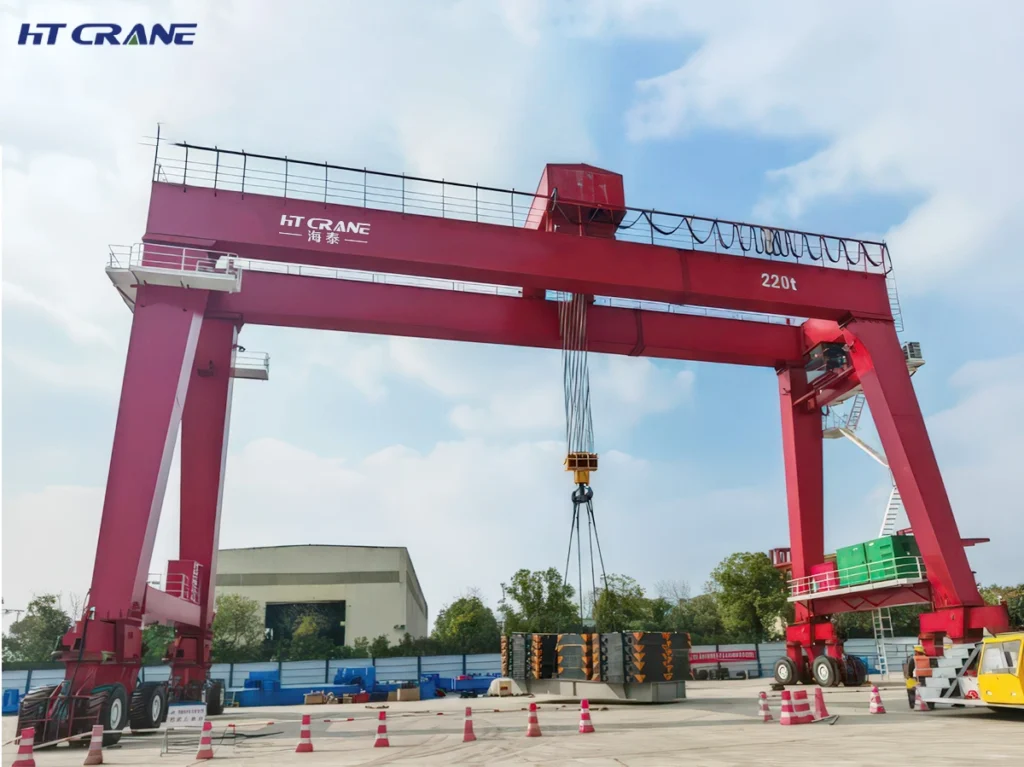
Evaluating a supplier on price alone misses most of what determines whether a project runs on schedule. A capable RTG supplier should be able to demonstrate:
- Customized engineering design
- Factory testing
- Electrical and control documentation
- Automation integration capability
- Installation and commissioning support
- Operator training
- Spare-parts support
- Remote technical assistance
- Maintenance documentation
- Experience with international export projects
For a replacement project specifically, the supplier should be willing to inspect the existing yard arrangement and compare the new crane’s dimensions against the current machine before finalizing a design. For a smart-terminal project, automation architecture should be discussed and agreed before the purchase order is signed — not treated as a detail to resolve during commissioning.
Conclusion to Thailand RTG Crane Market 2026
Thailand’s RTG crane market in 2026 is best understood as several things happening at once rather than a single trend: TIPS Terminal B4 shows hybrid power entering mainstream procurement as part of a capacity and sustainability upgrade; Hutchison Ports Thailand’s Terminal D shows what a fully realized remote-controlled RTG fleet looks like in daily operation; and steady yard expansion around Laem Chabang — from CY2 to the newly disclosed CY3 project — shows demand isn’t confined to the two flagship operators.
For buyers, the real procurement question in 2026 isn’t simply choosing between suppliers on price. It’s matching equipment architecture — conventional, hybrid, or electric and automated — to the terminal’s actual duty cycle, power infrastructure, and automation roadmap, starting the specification from the yard and operating plan rather than from a standard catalog machine.

FAQs about Thailand RTG Crane Market 2026
Q1. Why is RTG crane demand growing in Thailand?
Demand is supported by container-terminal expansion, new yard capacity, and equipment modernization happening together. Laem Chabang is the clearest example, with new hybrid RTGs delivered to TIPS Terminal B4 in mid-2026 and a fully built-out remote-controlled RTG fleet already operating at Hutchison Ports Thailand’s Terminal D.
Q2. What is a Laem Chabang RTG crane used for?
A Laem Chabang RTG crane is used mainly for container stacking and yard handling. The exact configuration — span, stacking height, truck lane width, and automation level — depends on the specific terminal’s operating cycle and layout.
Q3. Should Thai terminals choose diesel, hybrid, or electric RTG cranes?
It depends on the terminal’s power infrastructure, operating cycle, budget, and emissions targets. Hybrid RTGs suit replacement or modernization projects where flexible energy use matters and full electrical infrastructure isn’t in place; electric RTGs suit terminals with stable power supply and a stronger decarbonization commitment, as demonstrated at Hutchison Ports Thailand’s Terminal D.
Q4. Are remote-controlled RTG cranes already used in Thailand?
Yes. Hutchison Ports Thailand’s Terminal D operates a remote-controlled RTG fleet integrated with the terminal operating system, and by the equipment updates the company has published, the terminal had reached its full planned complement of 43 remote-controlled RTGs and 17 quay cranes by the end of 2025.
Q5. How should I choose an RTG crane supplier in Thailand?
Compare suppliers on engineering capability, factory testing, control-system integration, automation experience, commissioning support, spare-parts availability, and international project experience — not on price alone. For a replacement project, the supplier should verify the existing yard and equipment configuration before finalizing the design.