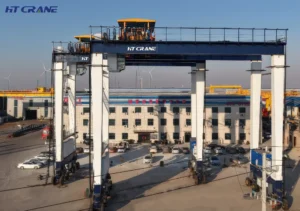
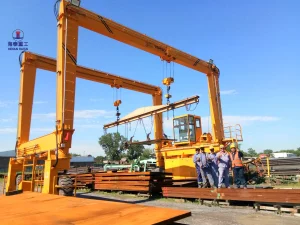
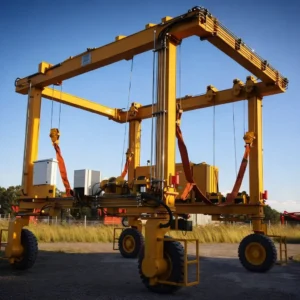
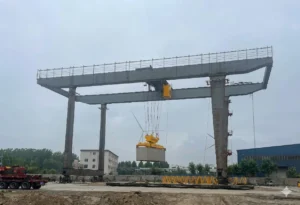
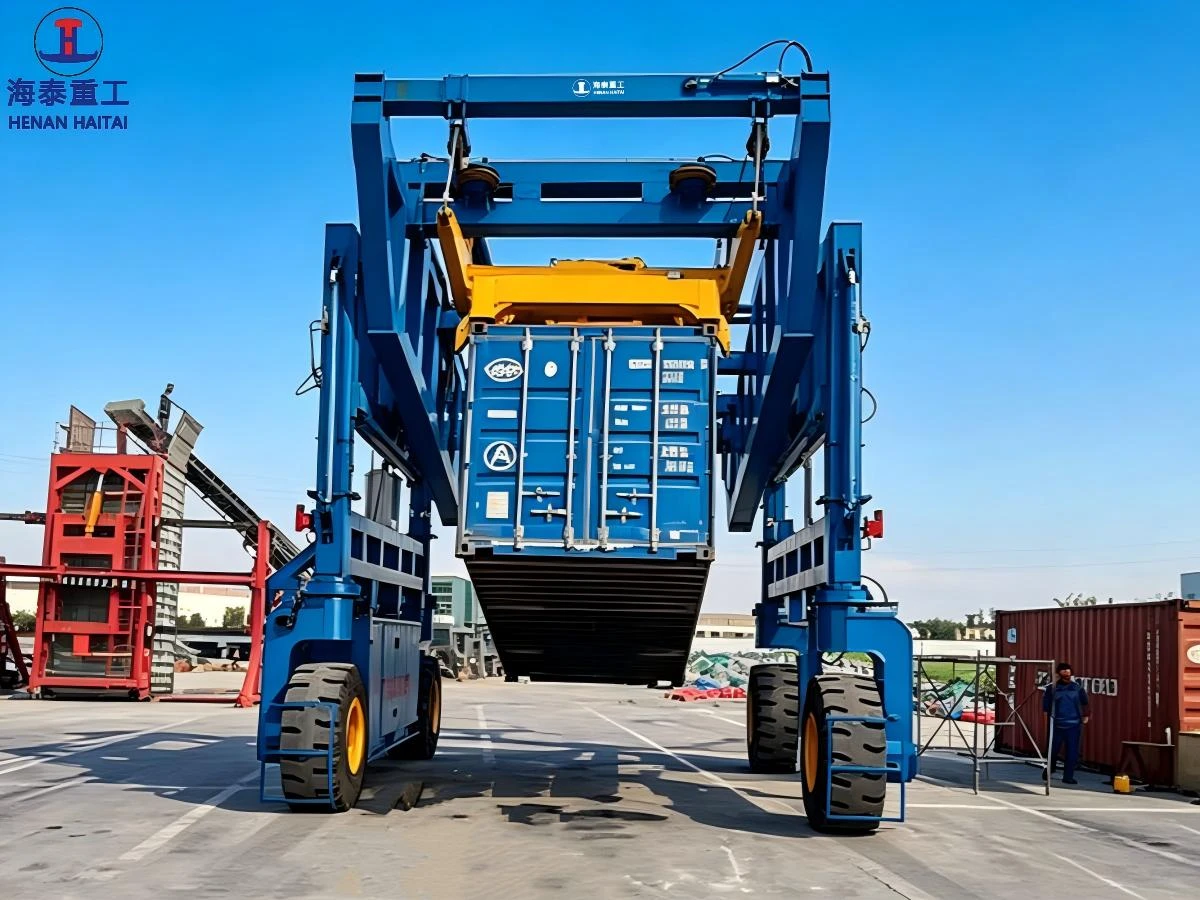
Choosing the right RTG crane depends on lifting capacity, yard layout, operating frequency, and power supply. This guide compares four common RTG crane configurations and explains how to select a suitable rubber tyred gantry crane for container yards, ports, and industrial facilities.
Introduction: Why RTG Crane Selection Matters?
Choosing between RTG crane types affects more than the lifting capacity on the nameplate. A rubber tyred gantry crane (RTG crane) travels on rubber tyres instead of fixed rails, so it can move between working areas and adapt to different yard layouts — but the right machine for a precast yard, a container block, and a steel stockyard are not the same machine.
Some operations need compact construction and economical handling. Others need higher capacity, a stiffer structure, or lower local emissions. Haitai presents its RTG range as four configurations: single girder hoist, double girder, hydraulic, and electric. This guide explains how they differ, where each fits, and what to settle before asking for a quotation.
One point is worth clearing up first, because it is the most common source of confusion: these four are not four exclusive categories. Single girder and double girder describe the structure. Hydraulic and electric describe the drive system. A double girder RTG can be hydraulic or electric — Haitai’s 60-ton hydraulic RTG for Saudi Arabia is a double girder machine — and diesel-generator-driven RTGs are part of the range too. The four configurations below follow Haitai’s selection video, and each choice (structure, then drive) should be made separately.
Qu'est-ce qu'une grue RTG ?
An RTG crane is a mobile gantry lifting system carried on rubber tyres. It is used to handle shipping containers, industrial materials, and heavy loads wherever flexible equipment movement matters. Unlike a rail-mounted gantry crane, it travels over suitable paved or prepared surfaces and does not need a continuous rail system — which is also why yard surface strength becomes part of the specification.
Typical applications include container yards and intermodal facilities, port terminals and cargo areas, industrial storage and material yards, manufacturing facilities that need a mobile gantry, and project sites where the lifting position changes. The configuration that fits depends on the load, working dimensions, travel routes, operating frequency, and available power.
Main RTG Crane Types and Their Differences
1. Single Girder Hoist RTG Crane
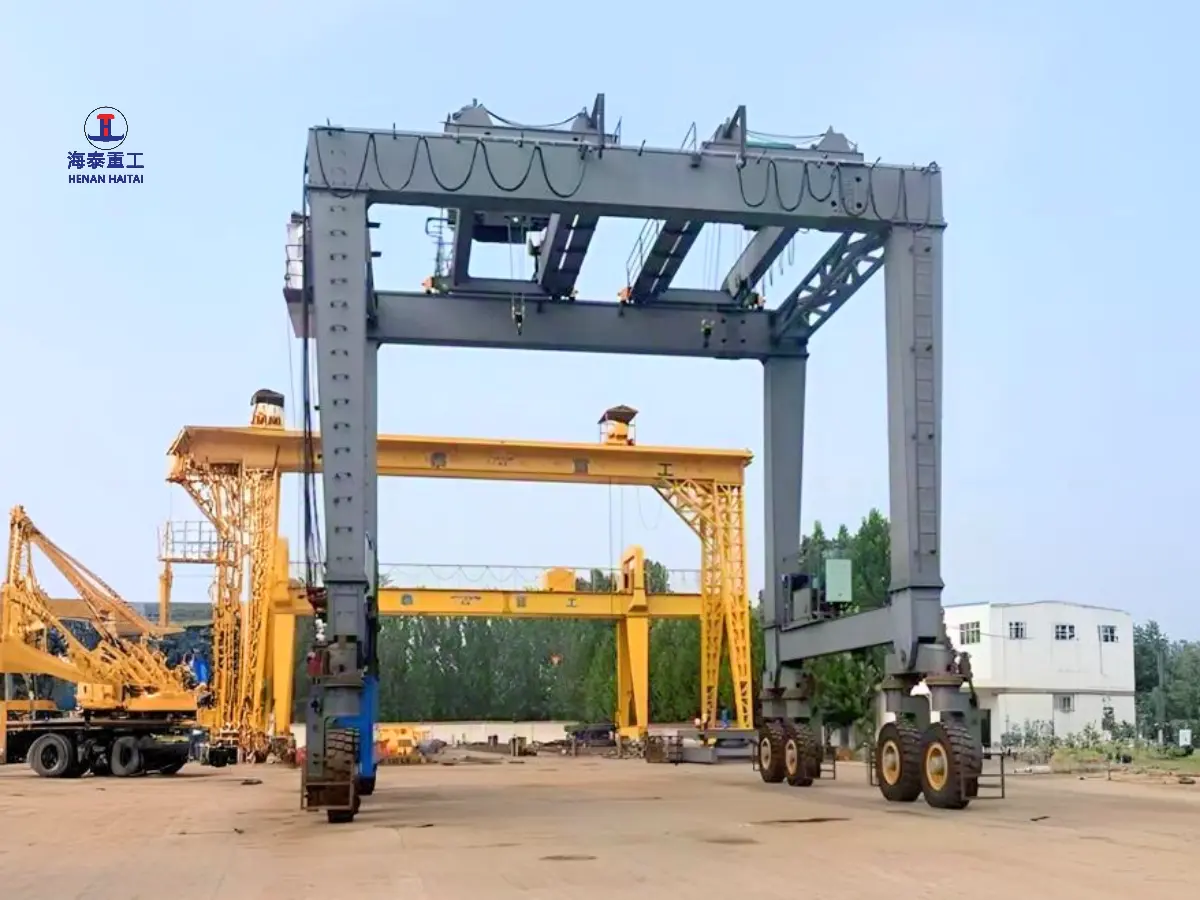
A single girder hoist RTG carries its hoist and trolley on one main girder supported by two legs on rubber tyres. Haitai’s single girder RTG uses an enveloping trolley that wraps around the main beam, which keeps the load stable and preserves headroom. The legs form a rigid inverted-U frame in welded box section for wind and torsion resistance outdoors, and the drive and steering are built into the base, so the crane can relocate without rails, travel crab-wise, and turn through 90 degrees.
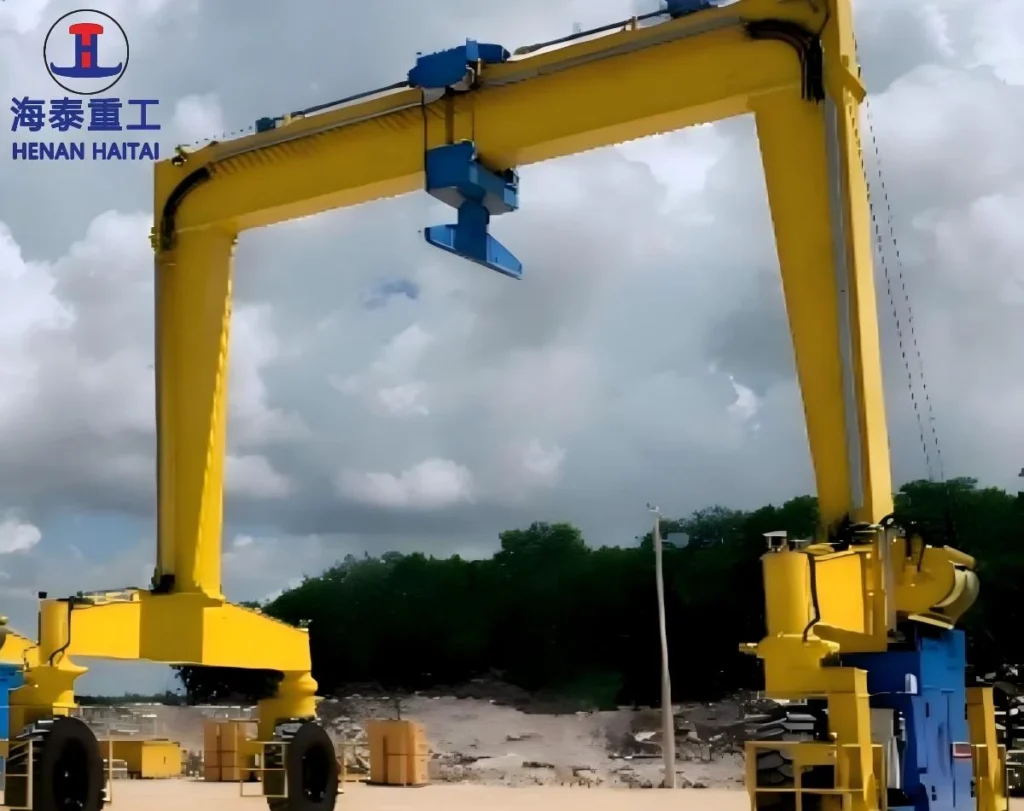
In Haitai’s selection video the single girder hoist configuration carries a reference range of 5–32 tons, but that range is a starting point, not a ceiling: a 40-ton, 19.8 m span single girder RTG was exported to the USA in November 2023 for a precast girder yard serving bridge and high-speed rail work. The actual capacity for a project depends on the selected model, span, lifting height, and duty classification.
Key features:
- One main girder keeps the structure simple and the layout open.
- Enveloping trolley design for load stability and headroom.
- Crab travel and 90-degree steering for tight or changing yard layouts.
- Diesel-generator or electric drive options.
Applications typiques : Precast and fabrication yards, industrial storage areas, equipment handling, smaller logistics yards, and selected container operations. Confirm lifting height, span, load dimensions, and duty classification before settling on this structure.
2. Double Girder RTG Crane
A double girder RTG uses two main girders to carry the lifting system. The deeper, stiffer structure suits heavier loads, wider spans, and more demanding duty when it is engineered for them. Haitai’s selection video gives a reference range of 32–75 tons, and, as with the single girder range, real projects sit on both sides of it: the YTL90t-8m double girder RTG delivered to the Casablanca area of Morocco is rated 90 tons, while a 12.5+12.5-ton dual-hoist double girder RTG with an 18 m span (as recorded in the project documentation) went to a steel factory in Argentina in 2018.
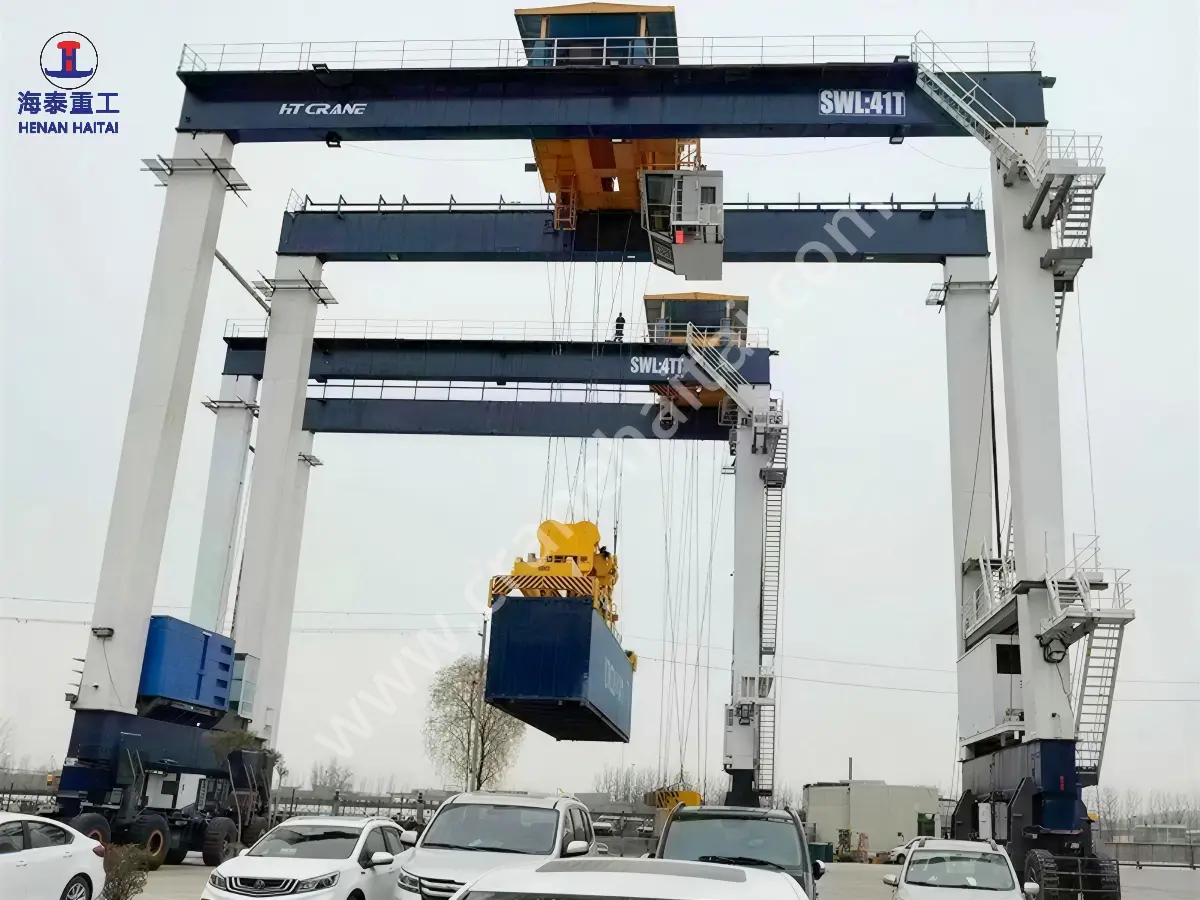
Key features:
- Heavy-duty bridge structure for higher capacities.
- Greater structural rigidity for demanding or wide-span operation.
- Room for multi-hoist arrangements, such as the dual-hoist configuration used in Argentina.
- Flexible configuration for ports and large material yards.
Applications typiques : Large container yards, heavy industrial storage, port operations, and projects involving substantial or oversized loads. The final design should account for load distribution, lifting height, span, wheel loads, travel conditions, and duty.
3. Hydraulic RTG Crane
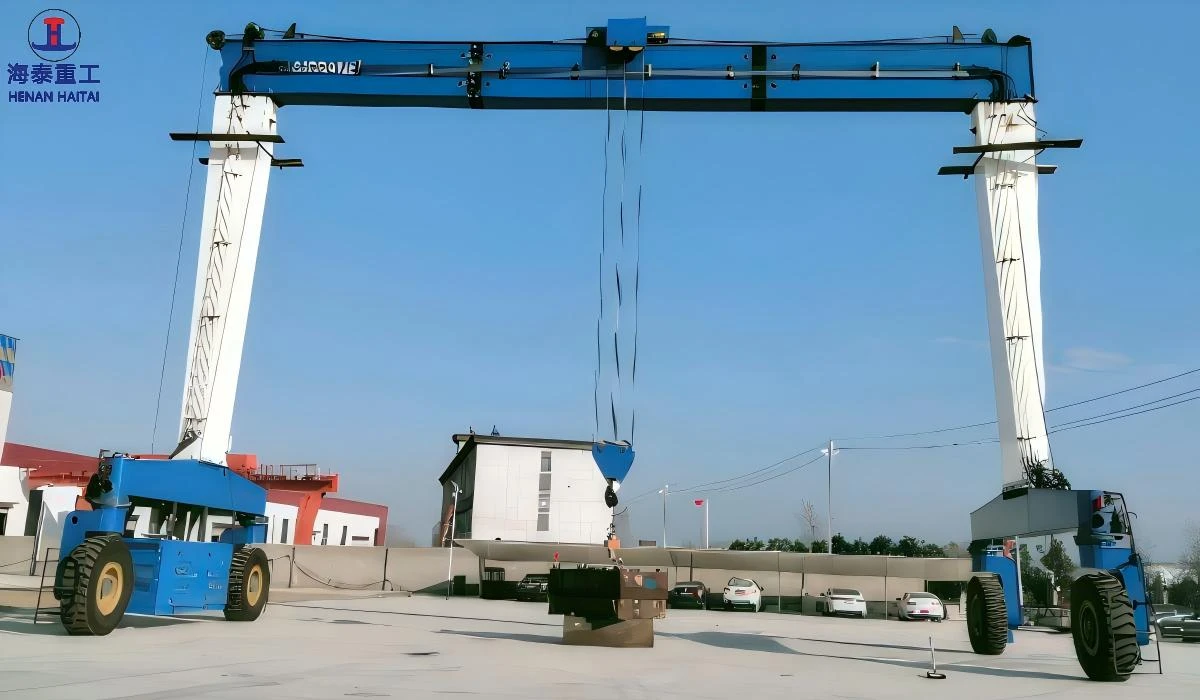
“Hydraulic” describes the drive system, not the frame. In a hydraulic RTG, hydraulic motors and cylinders do the work that electric drives would otherwise do, and the supplier should state exactly which functions — lifting, travel, steering, positioning — are hydraulic on the model being quoted. Some hydraulic machines lift on large cylinders instead of wire-rope hoists, as the unit pictured below does.
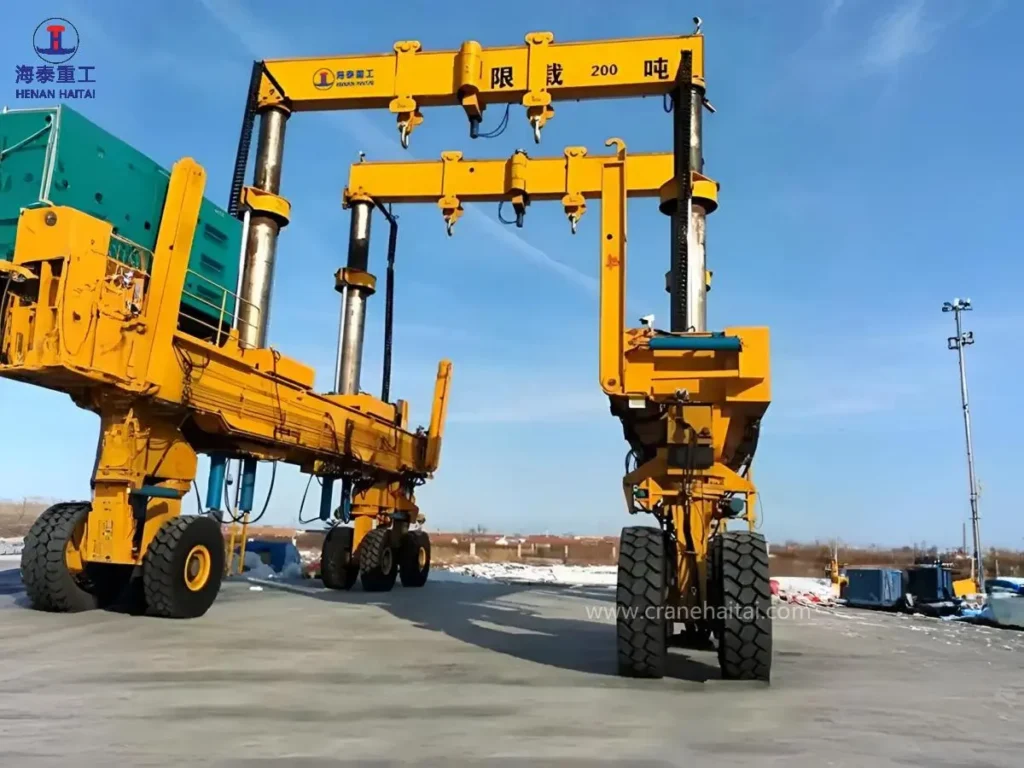
Hydraulic lifting gives smooth, stepless control and strong load holding at low speed, which suits heavy loads that must be placed slowly and precisely. The trade-offs are real: lifting speed is usually lower than a wire-rope hoist, lifting height on cylinder-lift designs is limited by cylinder stroke, and the hydraulic circuit — oil, hoses, seals — needs disciplined maintenance, especially in extreme heat or cold. Haitai’s 60-ton, 12.1 m span hydraulic double girder RTG, supplied to Saudi Arabia in 2021 for heavy-duty yard lifting, was built with coatings and an undercarriage specified for sustained heat, sand, and dust.
Before ordering, ask for: the hydraulic power source, operating pressure, key component specifications, maintenance access, expected service conditions, and which crane functions are hydraulically driven.
4. Electric RTG Crane
An electric RTG drives its crane functions with electric motors. Power typically arrives through a cable reel or another approved supply arrangement, so there is no onboard combustion engine and no local exhaust. That makes electric RTGs attractive where emissions, noise, and fuel handling matter — provided the yard has the electrical infrastructure to support them.
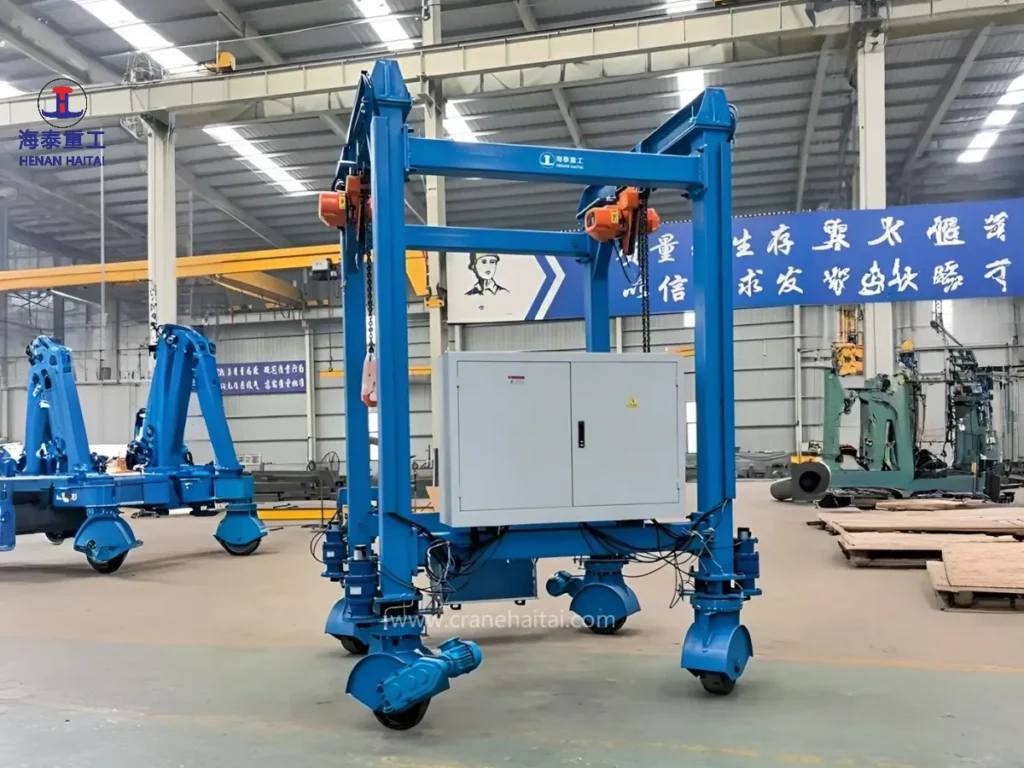
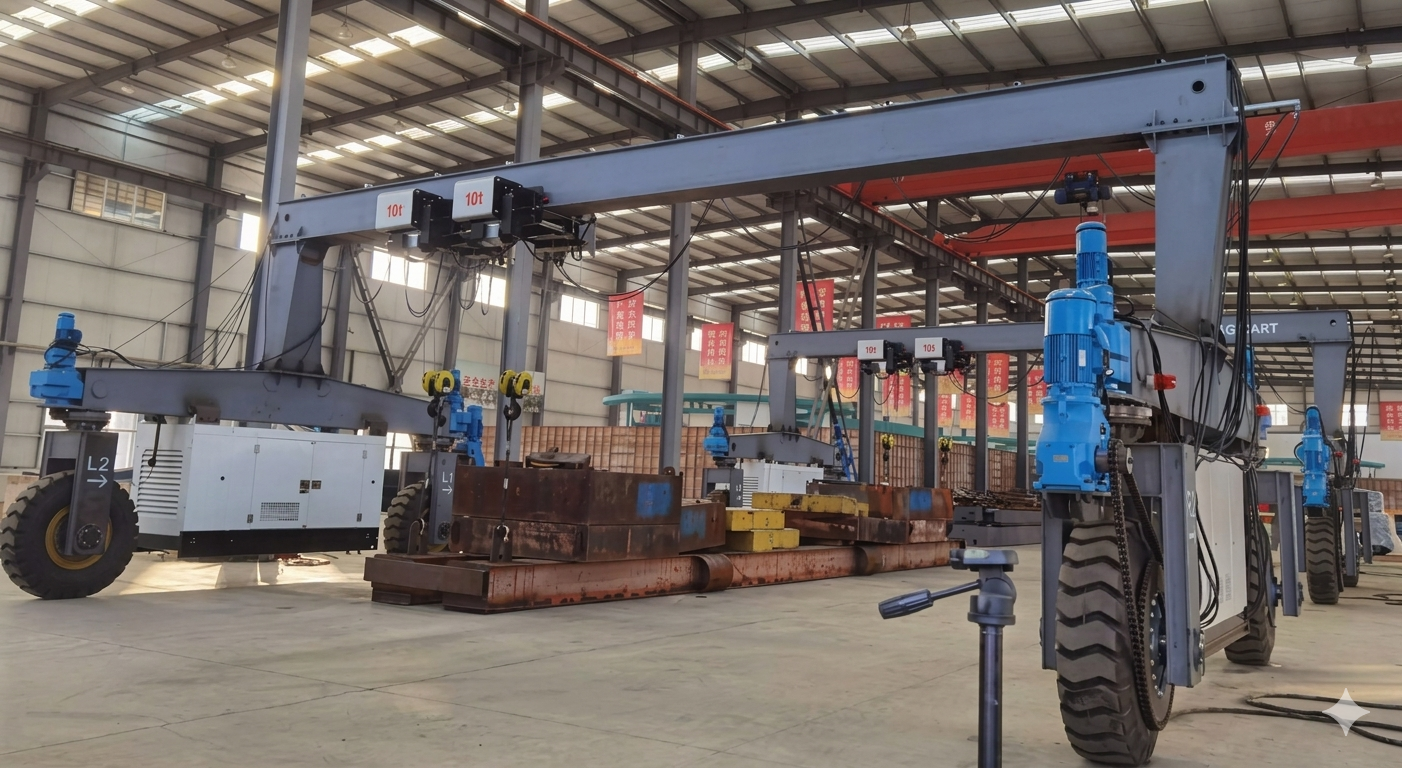
Electric configurations also scale across sizes: the compact unit pictured has electric chain hoists and motor-driven wheels, while Haitai’s 10+10-ton electric RTG for Saudi Arabia (2021) is a fully electric, cable-reel-fed dual-hook machine that replaced diesel-powered cranes and was designed for ambient temperatures from -20°C to +50°C. A cable-reel supply does limit the travel route and distance, so the yard layout should be checked against the cable arrangement before electric drive is chosen.
Before ordering, confirm: the voltage and frequency available, the cable or power-connection system, travel requirements, and the total operating cost — electricity use, maintenance, infrastructure investment, and expected utilization.
RTG Crane Types Comparison Table
The table below summarizes the four configurations. Because they are classified on different axes, a given project usually needs one choice from the structure rows and one from the drive rows.
| RTG Crane Type | Classified By | Haitai Reference Capacity | Applications typiques |
|---|---|---|---|
| Single Girder Hoist RTG | Structure (one main girder) | 5–32 tons; larger units built to order (e.g. 40 tons) | Precast yards, industrial storage, equipment handling, smaller logistics yards |
| RTG à double poutre | Structure (two main girders) | 32–75 tons; units above and below this range built to order | Ports, large yards, heavy steel and industrial cargo |
| Hydraulic RTG | Système d'entraînement | Confirm by model | Heavy, slow, precisely placed loads; yards with demanding site conditions |
| Electric RTG | Power supply and drive | Confirm by model | Yards with grid power and fixed routes; emissions-conscious operations |
The capacity ranges are Haitai’s reference ranges from its selection video. They are not hard limits and are not interchangeable across designs; the supplier must confirm the rated capacity of the exact model and operating configuration before quotation.
How to Choose the Right RTG Crane for Your Project?
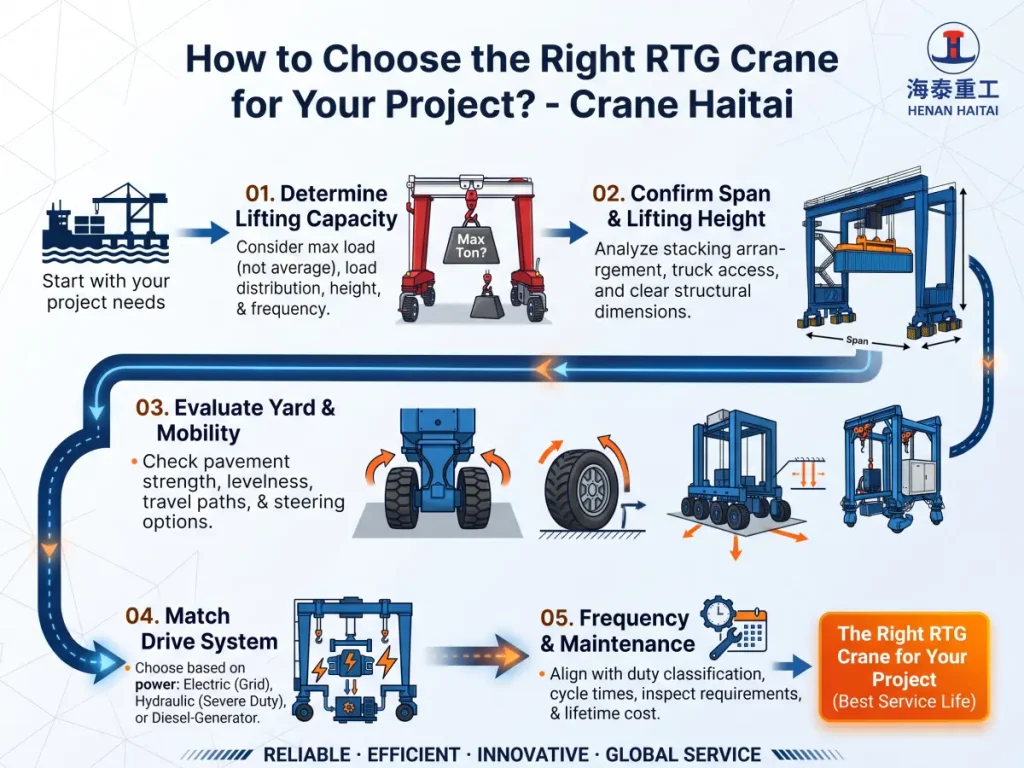
1. Determine the Required Lifting Capacity
Start with the heaviest load the crane must handle in normal operation, including lifting attachments that count toward the rated load. Do not size on the average load: maximum load, load distribution, lifting height, and working frequency all count. A yard moving moderate industrial loads may be well served by a compact single girder RTG; a facility moving substantially heavier components needs a double girder designed for that duty.
2. Confirm the Span and Lifting Height
Span sets the width the crane must cover, and lifting height sets clearance and structural dimensions. For container yards, consider the stacking arrangement, truck access, and clearance above the highest stored load. For industrial yards, consider the dimensions of stored material, transport vehicles, and any overhead obstructions. An accurate site layout lets the manufacturer recommend a configuration instead of a generic model.
3. Evaluate Yard Conditions and Mobility
An RTG is only practical where the yard surface and travel paths can safely carry it. Evaluate pavement strength and condition, levelness and drainage, travel distance and turning requirements, working and maintenance space, wind and weather exposure, and traffic separation and operator visibility. Check the crane’s wheel loads and steering arrangement against the actual site, not against a typical one.
4. Match the Drive System to Your Power and Duty
Choose structure and drive separately. If the yard has grid power and fixed travel routes, electric drive removes local emissions and fuel handling. If loads are heavy, slow, and precisely placed, or site conditions are severe, hydraulic drive may fit better. If there is no fixed power supply, a diesel-generator drive keeps the crane independent of the yard. Compare the real system architecture of each quotation rather than the product name, since a crane can combine electric power with hydraulic components.
5. Consider Operating Frequency and Maintenance
A crane working several shifts a day needs a different duty classification and component specification from one used occasionally. Discuss expected operating hours, lifting cycles, load distribution, ambient conditions, and maintenance access with the manufacturer, and ask for the proposed duty classification, component details, inspection requirements, and recommended maintenance intervals. The right crane is not the one with the lowest purchase price — it is the one that meets the operating requirements reliably over its service life.
Technical Information to Prepare Before Requesting an RTG Crane Quotation
Clear technical information lets the container yard crane manufacturer evaluate the project and prepare an accurate proposal:
| Information Required | Details to Provide | Pourquoi c'est important |
|---|---|---|
| Capacité de levage nominale | Maximum required load in tons | Determines the basic crane design |
| Portée | Required working width in meters | Defines the coverage area |
| Lifting height | Required hook or load lifting height | Determines clearance and hoisting configuration |
| Load type | Containers, steel components, machinery, or other materials | Influences lifting attachments and load handling |
| Working duty | Shifts per day, lifting cycles, expected utilization | Supports duty classification and component selection |
| Alimentation électrique | Available voltage, frequency, and energy arrangement | Determines electrical compatibility and drive choice |
| Yard conditions | Pavement, travel paths, weather, and available space | Affects mobility, wheel loads, and safe operation |
| Standards and certification | Applicable project or customer requirements | Clarifies inspection and documentation needs |
For container handling, also specify container sizes, stacking arrangement, the truck or trailer interface, and any required spreader. For non-container lifting, provide the load dimensions, lifting points, and any special handling requirements.
Why Work with Haitai Crane – A Professional Chinese RTG Crane Manufacturer?
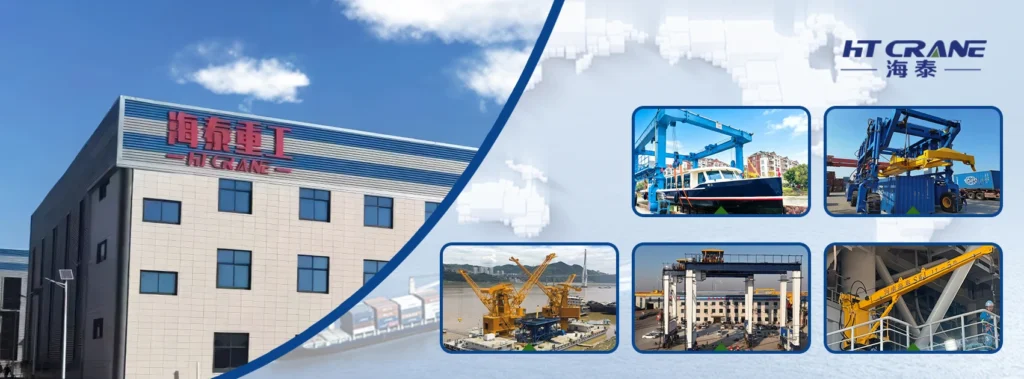
Henan Haitai Heavy Industry Co, Ltd.(HT Crane) builds RTG cranes in Henan Province, China, and ships them to yards in Asia, the Middle East, Europe, and the Americas. The projects below show the four configurations in practice, and how the structure and drive choices overlap in real orders:
| Configuration | Capacity and Span | Destination | Notes |
|---|---|---|---|
| Single girder RTG | 40 tons, 19.8 m span | USA, November 2023 | Precast girder yard for bridge and high-speed rail work |
| Double girder RTG | 90 tons, 8 m span (YTL90t-8m) | Région de Casablanca, Maroc | VFD drive, 8-wheel bogies, coastal corrosion protection |
| Double girder RTG, hydraulic drive | 60 tons, 12.1 m span | Saudi Arabia, 2021 | Heavy-duty yard lifting; heat, sand and dust conditions |
| Electric RTG | 10+10 tons dual hook, 10.8 m lifting height | Saudi Arabia, 2021 | Cable reel supply; replaced diesel cranes; -20°C to +50°C |
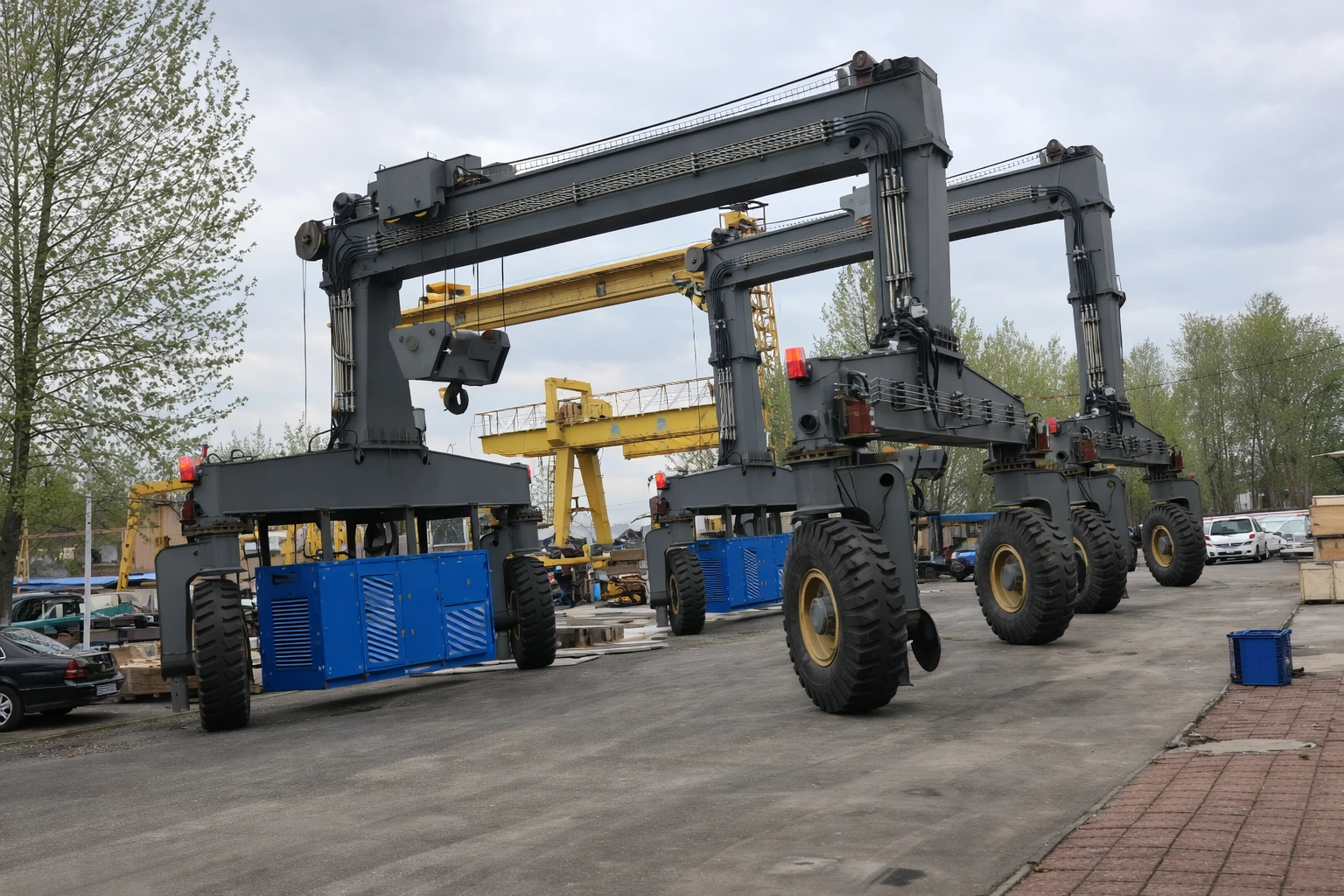
Company certifications include CCS, ABS, BV, and RINA. For international projects, clarify the scope of supply at the quotation stage: the main crane structure, hoisting equipment, travel and steering systems, electrical controls, safety devices, documentation, inspection, shipping, and installation responsibilities. Confirm the applicable design standards and any third-party inspection or certification the destination market requires, so the specification, the quotation, and the delivered crane say the same thing.
Conclusion: Choose an RTG Crane Based on Real Operating Requirements
The right choice among RTG crane types comes from two separate decisions. Structure — single or double girder — follows from capacity, span, rigidity, and duty. Drive — hydraulic, electric, or diesel-generator — follows from the yard’s power supply, site conditions, and operating cost. A single girder RTG suits compact and medium-capacity work; a double girder RTG suits heavier lifting; hydraulic and electric systems should each be judged by the functions they drive, their maintenance needs, and the infrastructure behind them.
Before placing an order, confirm the exact rated capacity, span, lifting height, duty classification, site compatibility, and applicable safety requirements. A project-specific technical assessment is the most reliable way to select a rubber tyred gantry crane that is safe, efficient, and cost-effective to run. Contact Haitai Crane with your load, site layout, and power details to discuss a suitable RTG configuration.

Foire aux questions
1. What are the main RTG crane types?
Haitai presents four common configurations: single girder hoist, double girder, hydraulic, and electric RTG cranes. They describe different aspects of the design — girder arrangement for structure, hydraulic or electric for the drive — so a single crane can be, for example, a double girder RTG with hydraulic drive.
2. What is the lifting capacity of a single girder RTG crane?
In Haitai’s selection video the single girder hoist configuration has a reference range of 5–32 tons, and larger units are built to order — Haitai exported a 40-ton, 19.8 m span single girder RTG to the USA in 2023. The rated capacity for a project depends on the model, span, lifting height, and duty classification.
3. When should I choose a double girder RTG crane?
Consider a double girder RTG when the project needs heavier lifting capacity, a wider span, or a stiffer structure. Decide on the required load, span, lifting height, duty cycle, and site conditions rather than on the girder count alone — Haitai’s double girder RTGs range from a 12.5+12.5-ton dual-hoist unit to a 90-ton heavy-duty crane.
4. Is an electric RTG crane better than a hydraulic RTG crane?
Neither is better for every application. Electric RTGs remove local emissions and fuel handling and fit yards with suitable power infrastructure; hydraulic RTGs give smooth, controlled lifting for heavy, precisely placed loads but need careful oil and hose maintenance. Compare the complete system design, energy supply, maintenance needs, and lifecycle cost before deciding.
5. What information should I provide when requesting an RTG crane quotation?
Provide the rated lifting capacity, span, lifting height, load type, operating frequency, yard layout, ground conditions, available power supply, and required standards or certifications. For container handling, include container sizes, stacking requirements, and spreader specifications. This lets the manufacturer recommend a suitable configuration.