Case Summary
On August 9, 2018, Henan Haitai Crane exported a 12.5+12.5 ton dual-hoist RTG crane to a customer in Argentina. Two independent 12.5 ton hoists provide a combined synchronized lifting capacity of 25 tons, giving the customer a practical solution for handling long steel bar stock and other heavy loads in an outdoor yard.
| Project Dimensions | Details |
|---|---|
| Product Model | YTL 12.5+12.5 Ton Dual-Hoist RTG Crane |
| Export Date | August 9, 2018 |
| Destination | Argentina |
| Type de grue | Dual-Hoist Rubber-Tyred Gantry Crane |
| Hoist Configuration | 12.5 + 12.5 Tons |
| Synchronized Lifting Capacity | 25 Tons |
| Portée | 18 m |
| Application | Heavy-Duty Yard Material Handling |
| Supplier | Henan Haitai Heavy Industry Co., Ltd. (Haitai Crane) |
Dual Hoist RTG Crane Export Project Overview
Henan Haitai Crane mainly produces rubber tyred gantry cranes, rail mounted gantry cranes and other marine deck machinery products, which have been certified by CE, ISO, CCS, ABS, BV, RINA and so on.
On August 9, 2018, Haitai Crane exported a customized 12.5+12.5 ton dual-hoist RTG crane to a steel factory customer in Argentina.
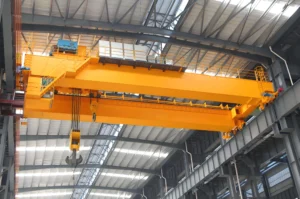
The Rubber tyred crane equipment is built around two independent 12.5 ton hoists mounted on the same girder; when the two hoists operate together under the approved configuration, they provide a combined lifting capacity of 25 tons.
That two-point arrangement sets this machine apart from a conventional single-hoist RTG crane, since a load can be supported and lifted from two points along its length rather than one.
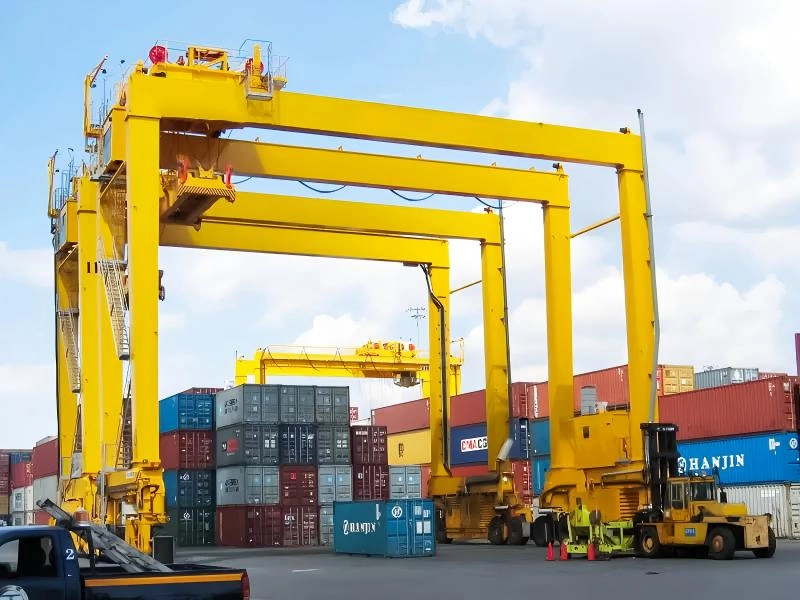
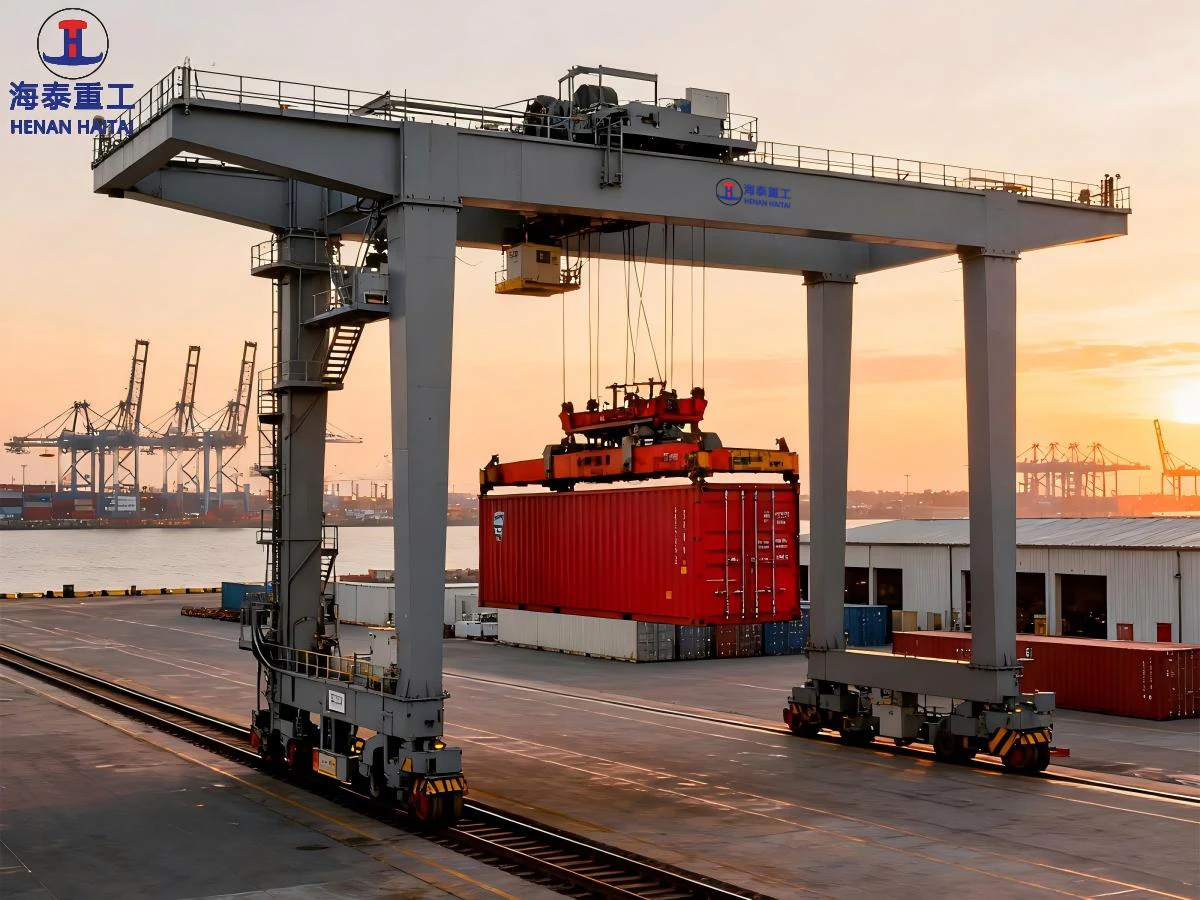
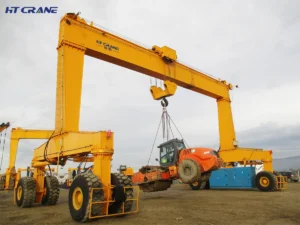
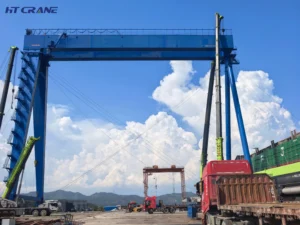
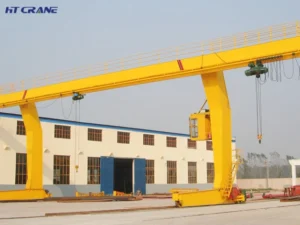
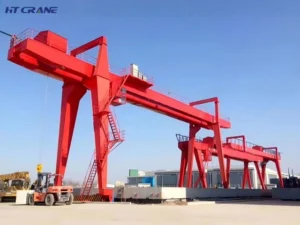
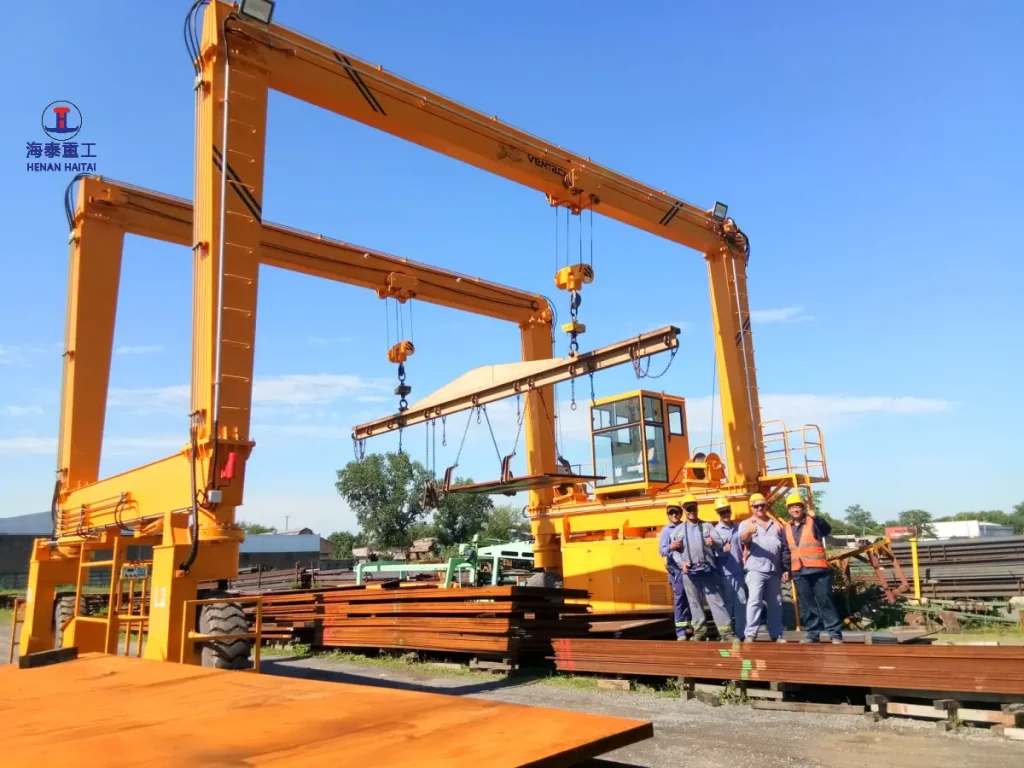
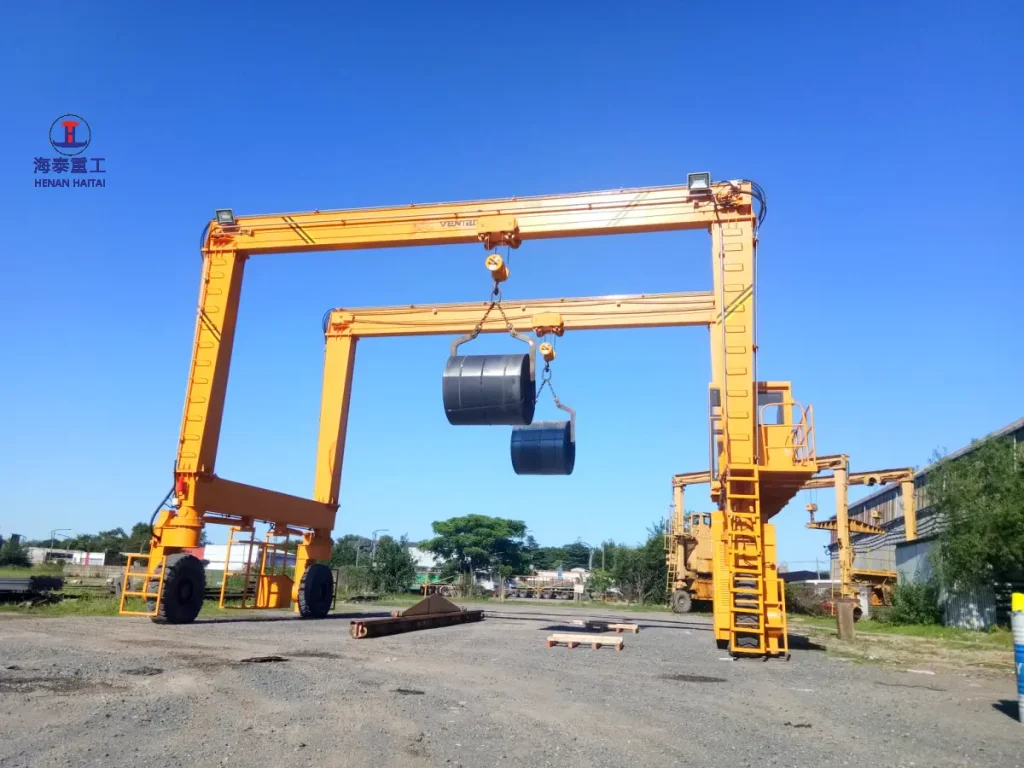
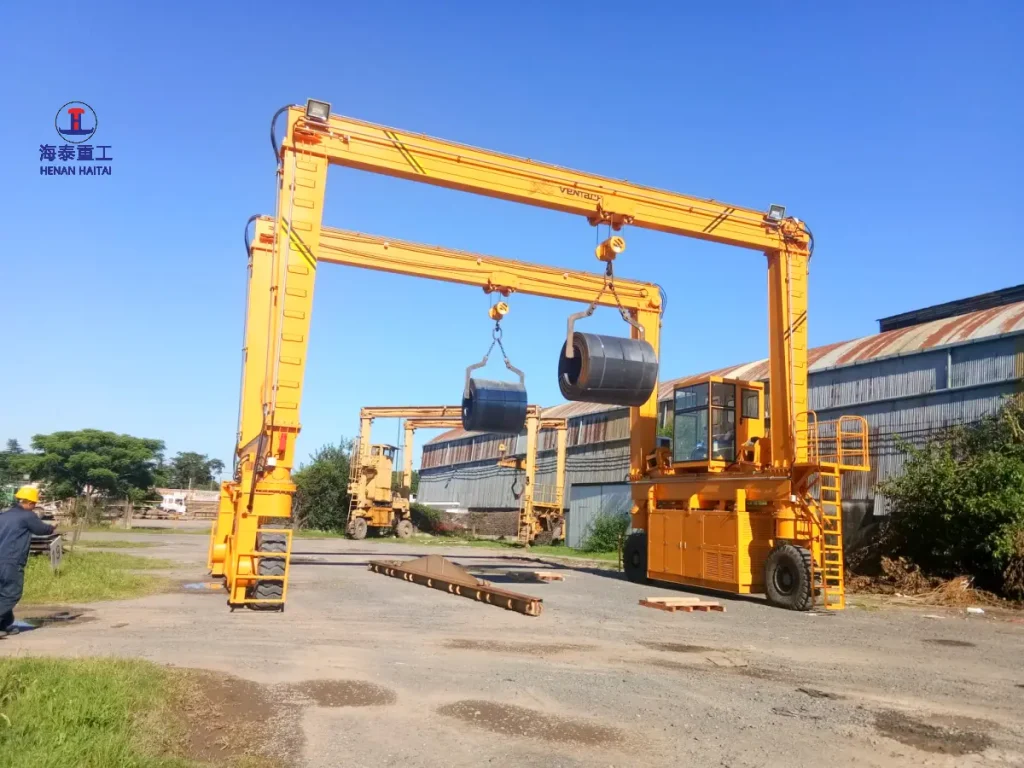
The project photos show the RTG crane in Argentina: one taken during operation, lifting a bundle of steel plates in the customer’s yard while the commissioning team stood by.
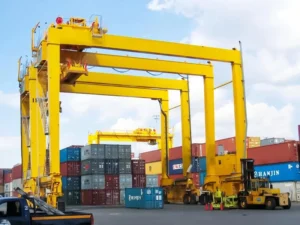
Two hoist trolleys are visible along the upper girder in the right image (view in Photo 1), running on rubber tires at each corner leg rather than fixed rails.
Product Specifications: RTG crane Exported to Argentina on August 9, 2018
| Project Aspects | Specifications |
|---|---|
| Export Date | August 9, 2018 |
| Destination | Argentina |
| Type de grue | Dual-Hoist Rubber-Tyred Gantry Crane (Hydraulic Rubber-Tyred Handling Machine) |
| Hoist Quantity | 2 |
| Rated Capacity per Hoist | 12.5 Tons |
| Hoist Configuration | YTL 12.5 + 12.5 Tons |
| Synchronized Lifting Capacity | 25 Tons |
| Portée | 18 m |
| Application | Heavy-Duty Yard Material Handling (steel plastes / steel coils / precast materials) |
12.5+12.5 Ton Dual-Hoist Configuration
The key feature of this 25 ton RTG crane is its dual-hoist arrangement. Each hoist is rated for 12.5 tons, and when the two hoists work synchronously, they provide a combined lifting capacity of 25 tons under the approved operating configuration.
That distinction matters for procurement: the equipment should be specified as a 12.5+12.5 ton dual-hoist RTG crane, not treated as though each hoist were individually rated for 25 tons. The two-point lifting arrangement is particularly useful for long structural members or loads that benefit from support at two positions, and it can help maintain load balance during lifting and positioning — provided the load, rigging arrangement, center of gravity, and operating procedure are all suited to synchronized lifting.
Why a Dual-Hoist RTG Crane Made Sense for This Application?
A dual-hoist configuration gives an RTG crane more flexibility than a single lifting point when the load is long or its weight is distributed along its length — instead of concentrating the load at one hook, the two hoists can support it at separate positions. That matters for steel bar stock and similar long material, which the crane in this project was used to lift and reposition in the customer’s yard.
The rubber-tyred undercarriage adds a second layer of flexibility: unlike a rail-mounted gantry crane, the unit can travel across its working area on tires and be repositioned as the yard’s storage layout changes, rather than being fixed to a single track.
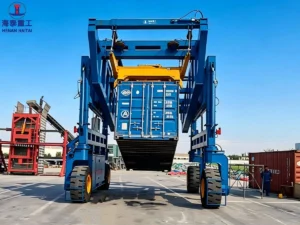
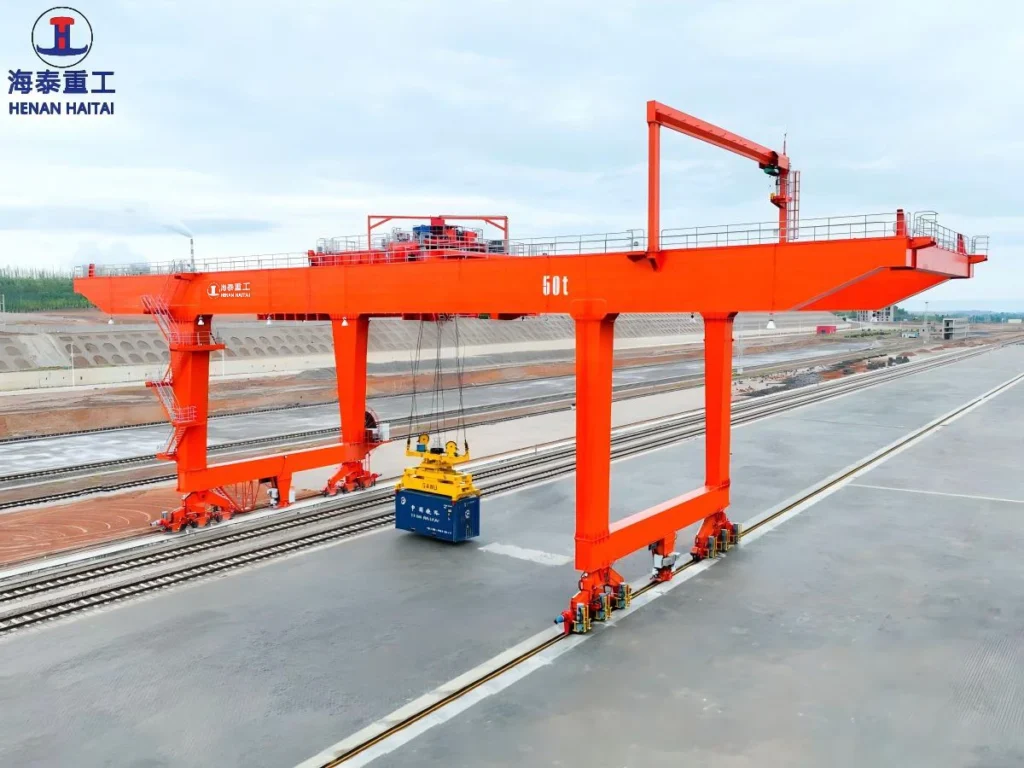
Grue RTG
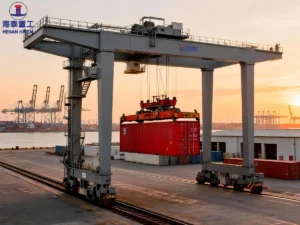
Grue RMG
12.5+12.5 Ton RTG Crane Design and Manufacturing Considerations
A dual-hoist RTG crane requires close coordination between its structural, mechanical, electrical, and control systems, since two hoists may lift the same load at once. Henan Haitai Crane’s fabrication sequence for this unit followed the standard process — steel structure fabrication, welding, mechanical assembly, electrical installation, surface treatment, and functional inspection — with particular attention to structural rigidity and traveling stability, since the crane has to support a lifted load while moving across the yard rather than lifting from a fixed position.
Haitai 25 Ton RTG Crane Exported to Argentina
This project reflects the kind of technical back-and-forth a dual-hoist order usually needs: before production, Haitai’s engineers confirmed the load dimensions, lifting method, and yard conditions with the customer, since a 25-ton synchronized system is a different specification from a single 25-ton hoist and needs to be defined clearly in the quotation rather than assumed. For a similar order, the same starting point applies — define the load characteristics and required lifting method before settling on a rated capacity.
Customer Feedback: RTG Crane Working Photos in Operation
Why Work with Haitai for a Dual-Hoist RTG Crane?
Haitai engineers each RTG crane order around the customer’s actual lifting requirement rather than a standard catalog spec — for a dual-hoist unit, that means confirming individual hoist capacity, synchronized lifting capacity, load dimensions, and control configuration before production starts. The 12.5+12.5 ton crane exported to Argentina in August 2018 is one example of that process: two 12.5-ton hoists configured to give the customer a 25-ton, two-point lifting capability suited to long steel bar stock, rather than a single large hoist that would not have matched the load.
Conclusion
The dual-hoist RTG crane exported to Argentina on August 9, 2018 gives its two 12.5-ton hoists a combined 25-ton lifting capacity when operated synchronously, while its rubber-tyred undercarriage lets the unit move within the yard without fixed rails.
For buyers considering a similar configuration, the main takeaway is that a synchronized dual-hoist system is not the same as a single hoist of the same combined rating — the load, rigging, and control requirements need to be specified accordingly.
After reading this case project, if you have any questions or want to get a similar product quote, please click the following button to contact Simon via Call, WhatsApp or Email.

FAQ
Q1. What does 12.5+12.5 ton mean on an RTG crane?
It means the RTG crane has two hoists, with each hoist rated for 12.5 tons. When the two 12.5 ton hoists operate synchronously within the approved configuration, the combined lifting capacity is 25 tons. Each individual hoist remains rated at 12.5 tons.
Q2. Can two 12.5 ton hoists always lift 25 tons together?
The combined 25 ton capacity applies only when synchronized lifting is permitted by the dual hoist crane’s design and operating configuration. Load distribution, rigging, center of gravity, control system, and operating procedures must all meet the manufacturer’s requirements.
Q3. What is the advantage of a dual-hoist RTG crane?
A dual-hoist arrangement allows loads to be supported at two lifting points. This can be useful for long structural components and loads that require better distribution during lifting and positioning.
Q4. Can Haitai provide a similar RTG crane for Argentina?
UN: Yes. Haitai can develop customized RTG crane solutions according to the customer’s required lifting capacity, hoist configuration, working dimensions, load characteristics, and yard conditions.
Q5. What information should be provided for a dual-hoist RTG crane quotation?
Customers should provide the required lifting capacity of each hoist, combined lifting requirement, load dimensions and weight, lifting height, working area, traveling requirements, power supply, working frequency, and other site conditions. This information allows engineers to determine an appropriate configuration.