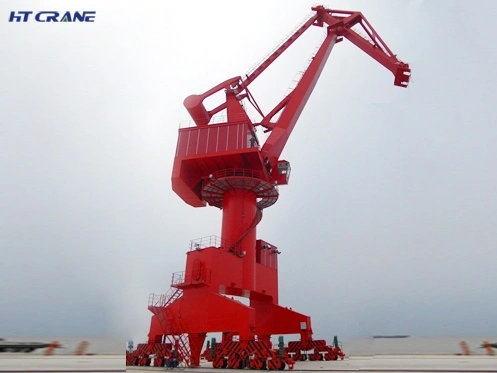
Guindaste portuário

Guindaste de doca flutuante

A crane mounted on a floating platform or barge, designed for harbor loading/unloading, bridge construction, water rescue, and marine engineering, capable of adjusting to water level changes with flexible mobility.
  • Capacidade de elevação: 10 t – 80 t+
  • Comprimento da lança: 15 m – 80 m+
  • Altura de elevação: 10 m – 50 m+
  • Alcance de giro: 360° (modelos giratórios)
Garantia de Qualidade
seguro e estável
desempenho poderoso
serviço pós-venda perfeito

If you manage a marina, boatyard, or naval facility, you know the frustrations: vessels waiting endlessly for maintenance, docks that aren’t designed for heavy loads, and cranes that aren’t suited for waterborne operations. A Guindaste de doca flutuante solves all these problems in one versatile machine. It lifts, moves, and positions vessels safely — without permanent dock modifications, without hull damage, and without slowing down your workflow.

This page covers everything you need to evaluate a Floating Dock Crane: how it operates, where it performs best, what sets ours apart, and the complete technical specifications. When you’re ready to specify a unit, our engineering team responds to enquiries within 24 hours, helping you get the right crane for your facility.

Solicite um orçamento


Apresentação do produto

A Floating Dock Crane is a heavy-duty lifting system mounted on a barge, pontoon, or dedicated floating platform. It provides mobile, high-capacity lifting capability directly over water — without requiring fixed quayside infrastructure or shore-based crane access.

Unlike a shore-mounted crane, a floating dock crane moves with its hull. It can be towed or self-propelled to any accessible waterway location, positioned alongside a vessel or structure, and deployed for lifting operations that fixed land cranes cannot reach. This independence from shore infrastructure makes it the practical choice for shipyard docking operations, port construction, offshore installation, ship salvage, and coastal infrastructure projects.

The crane is available in slewing boom and fixed sheerleg configurations, across a wide capacity range from light-duty barge-mounted units to heavy offshore lift systems. Drive systems cover hydraulic, diesel-electric, and electro-hydraulic options. All units are engineered to the applicable marine classification society standards — ABS, DNV, BV, CCS, or Lloyd’s Register — depending on the vessel’s flag state and operational area.
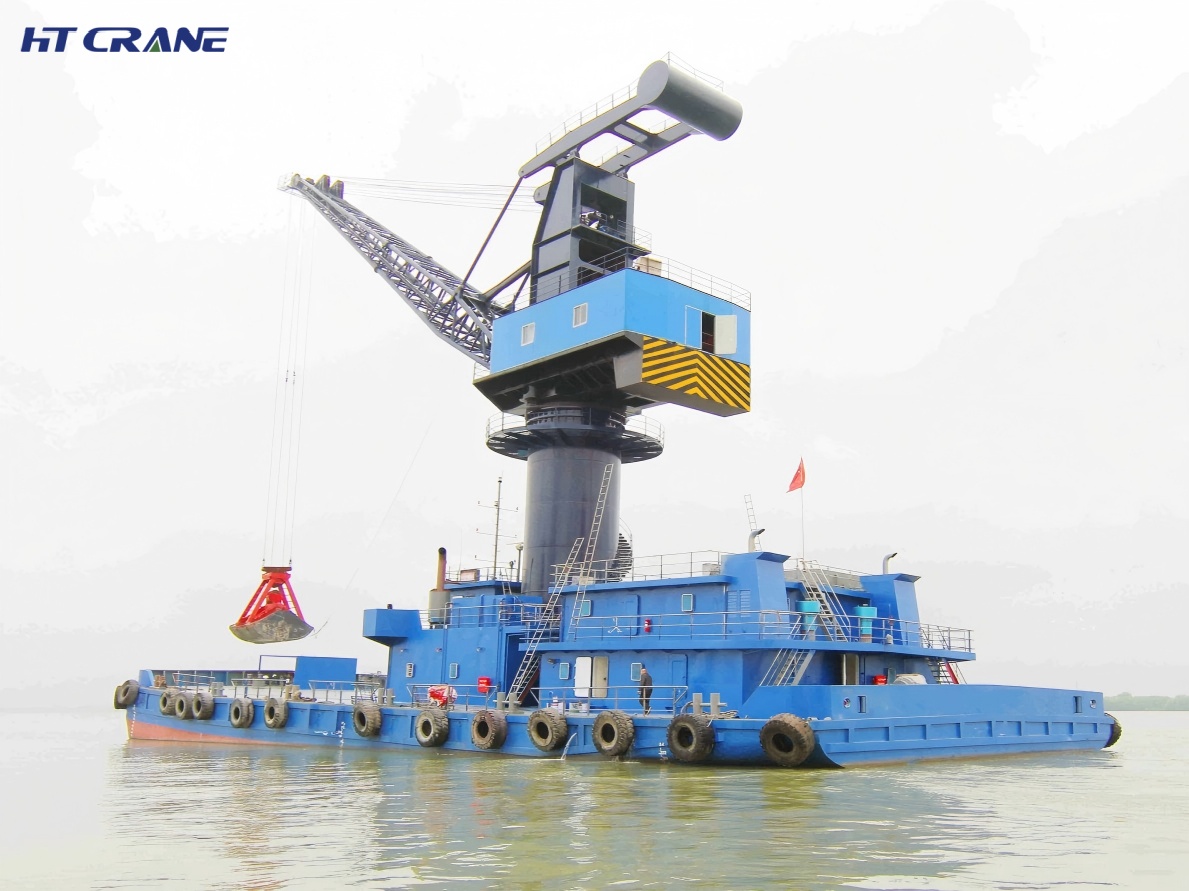
Floating Dock Crane Floating Dock Crane 1 1
Guindaste de doca flutuante

All specifications are customized to project requirements. Final parameters are confirmed during engineering review.


Parâmetros do produto

ParâmetroGama padrãoNotas
Capacidade de elevação10 t – 80 t+Sheerleg configurations for ultra-heavy lifts
Boom TypeSlewing / Fixed Sheerleg / Knuckle BoomEspecífico da aplicação
Faixa de giro360° (slewing models)Fixed on sheerleg configurations
Boom Length15 m – 80 m+Customized to lift radius requirement
Altura de elevação10 m – 50 m+From waterline to hook at maximum height
Velocidade de içamento0 – 5 m/min (loaded)VFD controlled; varies by capacity
Velocidade de rotação0 – 1 rpmLoad and configuration dependent
Sistema de acionamentoHydraulic / Diesel-Electric / Electro-Hydraulic—
Hull TypeBarge / Pontoon / Semi-SubmersibleEspecífico do projeto
Dynamic PositioningOptional DP1 / DP2 / DP3For offshore applications
Método de controleOperator Cab / Remote ControlStandard cab; remote available
Temperatura de trabalho-20°C a +45°CPacote para clima frio disponível
ClassificaçãoABS / DNV / BV / CCS / Lloyd’s RegisterFlag state and operating area dependent

Estrutura principal e componentes

Crane Superstructure

  • Slewing crane: rotating upper structure with luffing boom, slewing ring, and hoisting machinery mounted on a fixed pedestal
  • Fixed sheerleg: A-frame or bipod configuration with a lifting block at the apex — maximum capacity for vertical-axis lifts
  • All structural steel welded to EN ISO 3834 welding quality standards

Floating Hull (Barge / Pontoon)

  • Steel hull designed and constructed to carry the crane’s dead load and maximum dynamic lift loads
  • Ballast tanks for trim and heel adjustment during lifting operations
  • Mooring system: anchor winches, bollards, and fender arrangements
  • Hull dimensions and stability calculated for the specific crane capacity and deployment area

Sistema de içamento

  • Wire rope drum winch — single or double fall reeving to rated SWL
  • Hydraulic or electro-hydraulic power unit driving the hoisting drum
  • Load cell integrated into the hoisting system for real-time SWL monitoring
  • Upper limit switch and overload protection as standard

Slewing and Luffing Mechanism (Slewing Models)

  • Rack-and-pinion or hydraulic slewing drive — 360° continuous rotation
  • Luffing cylinder or wire rope luffing system for boom angle control
  • Slewing and luffing limit switches at operational envelope limits

Operator Cab and Controls

  • Enclosed, climate-controlled operator cab at elevated position for clear sightlines
  • Full crane control from cab: hoisting, slewing, luffing, and hull functions
  • Optional radio remote control for operations where cab visibility is restricted
  • CCTV cameras on boom tip and hook block for precision placement assistance

Electrical and Hydraulic Systems

  • Diesel generator set (onboard power generation) or shore power connection
  • Hydraulic power unit with redundant circuits for critical functions
  • IP55 rated electrical enclosures for marine environment
  • Emergency stop at all operator positions

Principais características

① Fully Mobile Over Water — No Shore Infrastructure Required

The crane and hull assembly can be towed or self-propelled to any accessible waterway location. Lifting operations can be conducted at any point along a coastline, river, or harbor — independent of quayside crane availability or shore access constraints.

② Wide Capacity Range — From Maintenance Lifts to Ultra-Heavy Installations

Available from 10-tonne barge-mounted service cranes to multi-thousand-tonne sheerleg heavy lift vessels. A single platform can be configured for the specific lift profile of the project — eliminating the need to mobilize oversized equipment for standard lifts.

③ Marine Classification Compliance

All cranes are designed, manufactured, tested, and documented to the crane rules of the applicable classification society: ABS, DNV, BV, CCS, or Lloyd’s Register. This includes structural design review, load testing, and ongoing inspection documentation for the operating vessel’s certification.

④ Corrosion Protection for Marine Environments

Multi-layer marine-grade coating system applied to all structural steel:

  • Abrasive blast cleaning: Sa 2.5
  • Zinc-rich epoxy primer (minimum 60 µm DFT)
  • Epoxy intermediate coat
  • Anti-fouling or polyurethane topcoat for above-waterline surfaces
  • Hot-dip galvanizing or equivalent on wire rope fittings and hardware

⑤ Hydraulic and Diesel-Electric Drive Options

  • Hydraulic drive: Compact power density; reliable in salt-water environments; standard for medium-capacity barge cranes
  • Diesel-elétrico: Engine runs at a constant efficient load point; suitable for large-capacity systems where energy efficiency over extended operations is a priority
  • Electro-hydraulic: Combines electric motor drive with hydraulic transmission for precise, low-noise operation

⑥ Dynamic Positioning for Offshore Applications

DP1, DP2, and DP3 classified dynamic positioning systems are available for floating crane vessels operating in offshore environments where anchor mooring is impractical or where station-keeping precision is required during lifts. DP classification is project-specific and confirmed during engineering.


Aplicações

Shipyard Docking and Undocking Operations

Floating dock cranes are the primary lifting tool in shipyards that operate floating dry docks. The crane lifts vessels — or major hull sections — during docking, undocking, block assembly, and launch operations. Barge-mounted slewing cranes serve medium-capacity shipyard work; larger sheerleg systems serve heavy ship sections and complete vessels.

Port Construction and Infrastructure Installation

Port expansion projects require lifting prefabricated caissons, sheet pile sections, mooring dolphins, and quay wall elements into position over water. A floating dock crane positioned alongside the construction front provides precise placement capability that shore-based equipment cannot reach.

Offshore Wind Foundation Installation

Monopile foundations and transition pieces for offshore wind turbines require lift capacities in the hundreds of tonnes, placed precisely at offshore locations. Large floating crane vessels — including purpose-built semi-submersible heavy lift ships — are the primary installation tool for this application.

Ship Salvage Operations

Raising a sunken, grounded, or damaged vessel requires floating crane capacity, underwater access, and the ability to position alongside the casualty regardless of shore access. Floating crane systems — sometimes operating in tandem for the heaviest salvage lifts — are the standard tool for marine salvage operations globally.

Bridge and Coastal Infrastructure Construction

Prefabricated bridge segments, pier structures, and waterway crossing elements are lifted and placed by floating crane from the water surface. This approach minimizes traffic disruption on shore and provides access to locations where temporary land-based crane pads cannot be established.

Offshore Oil and Gas Platform Support

Platform jackets, module installations, and heavy equipment lifts during offshore field development require floating crane capacity positioned at the installation site. Crane vessels with DP capability maintain position during lifts without mooring infrastructure in open water.

River and Inland Waterway Projects

Canal construction, lock gate replacement, dam infrastructure, and river bridge construction all involve lifting operations over water where shore access is limited. Smaller floating cranes — on pontoon hulls sized for the waterway — provide access to these confined environments.

Floating Dock Crane Floating Crane 2 1

Floating Dock Crane vs Shore-Based Crane

FatorGuindaste de doca flutuanteShore-Based Crane
Location flexibilityFully mobile — any accessible waterwayFixed to land — quayside access required
Water coverageLifts directly over water surfaceLimited by boom reach from shore
Infrastructure requirementSelf-sufficient — hull is the platformRequires crane pad, rail, or runway
Maximum capacityUp to 1000 t (specialist vessels)Typically limited by structural foundation
Offshore capabilityYes — with DP or anchor mooringNão
Operational cost structureDay-rate project deploymentCapital asset with fixed operating cost
Best forOffshore construction, salvage, port worksRoutine quayside cargo handling

Por que escolher a HaiTai Crane?

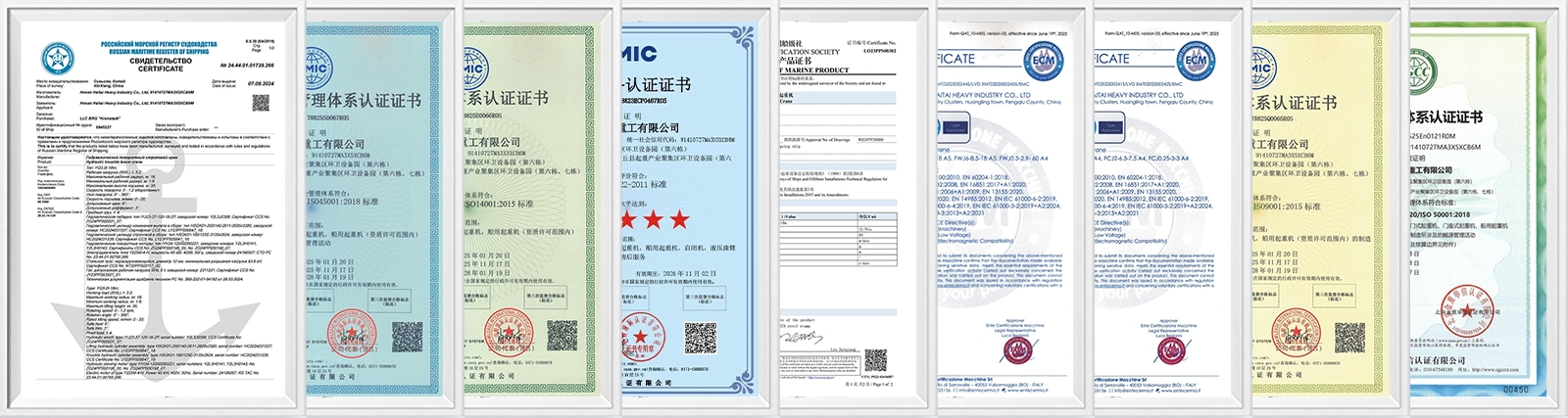
Com mais de 20 anos de experiência em fabricação e exportações para mais de 80 países, a HaiTai Crane fornece soluções de elevação com certificação CE e ISO 9001:2015 para portos, estaleiros e marinas em todo o mundo. De configurações padrão a projetos totalmente personalizados, nossa equipe técnica adapta cada guindaste às condições do seu local e às suas necessidades operacionais.

Leon
10+ Anos de experiência.
5,000+ Clientes
50+ Países

Simão

Especialista em Soluções para Guindastes · Guindaste HT

Especializada em soluções para exportação de pontes rolantes, incluindo guindastes pórticos, guindastes portuários, guindastes para contêineres, guindastes para embarcações e pontes rolantes suspensas. Há mais de 10 anos, auxiliamos clientes globais com consultoria pré-venda, seleção de capacidade e configurações específicas para cada local.

Honras e Certificados

Serviço

Consultoria técnica pré-venda
Nossa equipe de engenharia analisa o layout do seu pátio, as necessidades de produção e a infraestrutura antes de recomendar uma configuração. Fornecemos propostas técnicas, desenhos de layout e cálculos de carga — sem custo algum — antes que você se comprometa com a compra.
Testes de Aceitação em Fábrica (TAF)
Todos os guindastes passam por testes de carga total em nossa fábrica antes do envio. Os compradores podem acompanhar o teste pessoalmente ou por videoconferência. Relatórios e certificados de teste são emitidos após a conclusão.
Instalação e Comissionamento
Nossa equipe de serviço no local cuida de toda a montagem do guindaste, comissionamento elétrico e integração do sistema em suas instalações. O comissionamento inclui treinamento de operadores e documentação de entrega.
Fornecimento de peças de reposição
Mantemos um estoque global de peças de reposição para todos os modelos de guindastes que fornecemos. Componentes críticos — spreaders, motores de içamento, inversores de frequência, módulos PLC — estão disponíveis para envio em 48 a 72 horas. Contratos de fornecimento de longo prazo estão disponíveis para operadores de frotas.
Programas de manutenção preventiva
Oferecemos contratos de manutenção anual que abrangem inspeções, lubrificação, substituição de peças de desgaste e auditorias de segurança. O diagnóstico remoto através da nossa plataforma de monitoramento de guindastes permite a identificação precoce de falhas antes que causem paradas não planejadas.
Garantia
Garantia padrão: 24 meses a partir da data de comissionamento, cobrindo componentes estruturais, mecânicos e elétricos em condições normais de operação. Garantia estendida e contratos de serviço disponíveis.

Por que nos escolher?

Força poderosa
Nossos produtos são vendidos diretamente da fábrica, com qualidade garantida. Eles têm ótima aceitação em todo o país e recebem feedbacks positivos de nossos clientes há muito tempo!
Experiente
Nossos produtos são vendidos diretamente da fábrica, com qualidade garantida. Eles têm ótima aceitação em todo o país e recebem feedbacks positivos de nossos clientes há muito tempo!
Garantia de Qualidade
Nossos produtos são vendidos diretamente da fábrica, com qualidade garantida. Eles têm ótima aceitação em todo o país e recebem feedbacks positivos de nossos clientes há muito tempo!
Serviço sem preocupações
Nossos produtos são vendidos diretamente da fábrica, com qualidade garantida. Eles têm ótima aceitação em todo o país e recebem feedbacks positivos de nossos clientes há muito tempo!

Perguntas frequentes

Caso ainda tenha alguma dúvida, entre em contato com nossa equipe de suporte por e-mail. Responderemos o mais breve possível para ajudá-lo(a).
What classification society certification does a floating dock crane require?
The applicable classification society depends on the flag state of the crane vessel and its operating area. The major societies are ABS (USA), DNV (Norway), BV (France), CCS (China), and Lloyd's Register (UK). Each publishes specific crane rules covering structural design, load testing, and periodic inspection. For offshore operations in regulated areas, additional requirements may apply — including DP classification for the hull and compliance with local coastal state regulations. Classification society requirements should be specified during the inquiry stage so they can be incorporated into the engineering design from the outset. Attempting to add classification compliance after manufacturing is technically complex and expensive.
What is the difference between a slewing floating crane and a sheerleg crane?
A slewing floating crane has a rotating upper structure — the boom can swing through 360 degrees, allowing the crane to lift at any bearing from the hull without repositioning. This is the most operationally flexible configuration and is the standard choice for shipyard and port construction applications. A sheerleg crane uses a fixed A-frame or bipod structure with a lifting block at the apex. It cannot slew — the hull must be positioned and the mooring adjusted to align the lift axis. In exchange for that constraint, a sheerleg achieves higher vertical lift capacity for a given structural weight. Sheerleg configurations are the standard design for the very heaviest offshore installation lifts.
Can a floating dock crane operate in open offshore conditions?
Yes, but the crane and hull must be specifically designed and rated for the intended offshore sea state. Standard barge-mounted cranes designed for sheltered harbor and shipyard use are not rated for open offshore conditions — they have operating sea state limits that are appropriate for calm or sheltered water. Offshore floating crane vessels designed for open-water operations incorporate larger, more stable hull forms, higher-rated structural designs, active heave compensation, and — for the most demanding applications — dynamic positioning. The intended operating environment, including maximum operating sea state and wave height, must be specified during the engineering phase so the crane and hull are correctly configured.
What is active heave compensation and when is it needed on a floating crane?
Active heave compensation (AHC) is a system that uses real-time hull motion data — from accelerometers and motion reference units — to drive the hoisting mechanism in the opposite direction of hull heave. This neutralizes the effect of wave-induced vertical motion on the lifted load. Without AHC, a hull heaving in swell imposes uncontrolled vertical motion on the load, making precision lifts dangerous and creating shock loads on both the crane structure and the object being lifted. AHC is specified when the crane will perform precision lifts in conditions where wave-induced heave cannot be avoided — subsea equipment installation, offshore platform maintenance, and any operation where load stability is safety-critical at the deployment sea state.
How is a floating dock crane transported to the project site?
Smaller and medium-capacity floating cranes are typically towed between locations by tugboats. The crane hull is not self-propelled; it requires tug assistance for ocean transit and positioning at the work site. Larger crane vessels — including semi-submersible heavy lift ships — are self-propelled, equipped with their own propulsion and, in some cases, dynamic positioning. For project deployments to international destinations, the crane vessel may be transported as cargo on a heavy transport vessel (float-on/float-off or semi-submersible transport ship) to reduce transit time and exposure to ocean conditions during delivery. The appropriate transport method depends on the hull size, the transit distance, and the sea conditions of the delivery route.

Mensagem

Sinta-se à vontade para entrar em contato conosco.

Formulário de contato
Por favor, especifique sua necessidade considerando os seguintes aspectos:
  • De qual produto de guindaste você precisa?
  • Qual é a capacidade máxima de elevação (em toneladas) necessária para o seu projeto?
  • Poderia especificar a altura de elevação (em metros) necessária?
  • Poderia fornecer detalhes sobre o ambiente de trabalho, como as condições do solo, as limitações de espaço e quaisquer obstáculos?
  • Qual a frequência de uso esperada e a duração do projeto?

produtos relacionados

STS Crane Ship-to-Shore Container Handling at Scale
Guindaste STS — Manuseio de contêineres de navio para terra em grande escala

Os terminais de contêineres operam com base na capacidade de movimentação. Cada hora que um navio passa atracado aguardando movimentação de carga representa uma hora de receita perdida — para a companhia de navegação, o operador do terminal e a autoridade portuária. A pressão para movimentar contêineres mais rapidamente, lidar com navios maiores e manter os equipamentos funcionando 24 horas por dia é constante e só aumenta. Um guindaste STS (ship-to-shore) é a linha de frente dessa operação. É a máquina que determina a rapidez com que um navio é preparado, quantas movimentações por hora o terminal pode realizar e se o porto está preparado para lidar com a próxima geração de navios porta-contêineres ultragrandes que entrarão em serviço. O que é um guindaste STS? Um guindaste STS — abreviação de guindaste ship-to-shore — é um grande guindaste pórtico sobre trilhos posicionado no cais de um terminal de contêineres. Ele levanta contêineres diretamente entre o convés do navio e o cais, utilizando uma barra espaçadora que se encaixa em cantoneiras padrão de contêineres ISO. A lança se estende sobre o navio para alcançar várias fileiras de contêineres e se retrai quando os navios precisam passar. A altura de elevação, o alcance e a folga sob a viga são…

Leia mais
floating crane installing offshore platform equipment
Guindaste flutuante — Solução de içamento pesado para projetos marítimos e offshore

O içamento de cargas pesadas na água apresenta problemas que os equipamentos terrestres simplesmente não conseguem resolver. Guindastes fixos necessitam de infraestrutura permanente. Guindastes móveis não alcançam locais de trabalho offshore. E as barcaças convencionais não possuem a capacidade de içamento necessária para obras de construção marítima, salvamento ou desenvolvimento portuário de grande porte. Um guindaste flutuante resolve todos esses três problemas, levando capacidade de içamento de cargas pesadas certificada diretamente para o local de trabalho, onde quer que ele esteja. Os guindastes flutuantes da HT CRANE são construídos de acordo com os padrões CCS e estão disponíveis com certificação ABS, BV e DNV. Capacidade de içamento, raio de ação e configurações de energia personalizadas estão disponíveis para atender às necessidades específicas do seu projeto. Se você procura um guindaste flutuante à venda que seja certificado, comprovado e configurável, você está no lugar certo. O que é um guindaste flutuante? Um guindaste flutuante é um guindaste de grande porte montado em um pontão ou barcaça, projetado para operar diretamente na água. Ele não requer infraestrutura costeira permanente, tornando-se a solução ideal para construção marítima, salvamento, instalação offshore e projetos hidroviários onde guindastes convencionais simplesmente não conseguem chegar. A maioria das unidades suporta acessórios de gancho e garra, adaptando-se a diferentes tipos de carga e requisitos de tarefa em…

Leia mais
slewing portal boom crane bulk cargo terminal
Guindaste de pórtico — Solução de giro para cargas pesadas em portos e estaleiros

O que é um guindaste pórtico? Se você trabalha em um porto, estaleiro ou terminal de granéis, certamente já viu um guindaste pórtico em ação. Trata-se de um grande guindaste giratório montado sobre uma base fixa ou sobre trilhos, que cobre tanto o lado da água quanto o lado da terra de uma doca sem precisar mover sua fundação. A lança se eleva e desce para alcançar diferentes distâncias, enquanto a estrutura superior gira 360°, tornando-o uma das soluções de içamento de cargas pesadas mais versáteis disponíveis. Dependendo da tarefa, ele pode ser equipado com um gancho para carga geral ou uma garra para materiais a granel como carvão, minério e grãos. As séries de guindastes pórticos giratórios e guindastes pórticos com lança da HT CRANE atendem aos padrões CCS, ABS, BV e DNV — portanto, seja para equipar um estaleiro ou operar um movimentado terminal de granéis, existe uma configuração ideal para sua operação. Principais características do guindaste pórtico: Cada porto é diferente. Cada tipo de carga é diferente. Os guindastes de pórtico são construídos com as características que mais importam: desempenho de giro confiável, opções flexíveis de acessórios e integridade estrutural certificada…


Leia mais
Principal