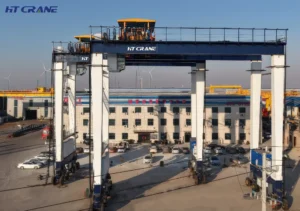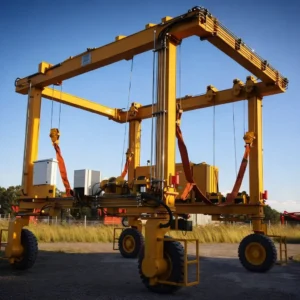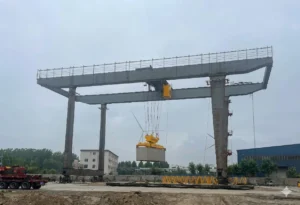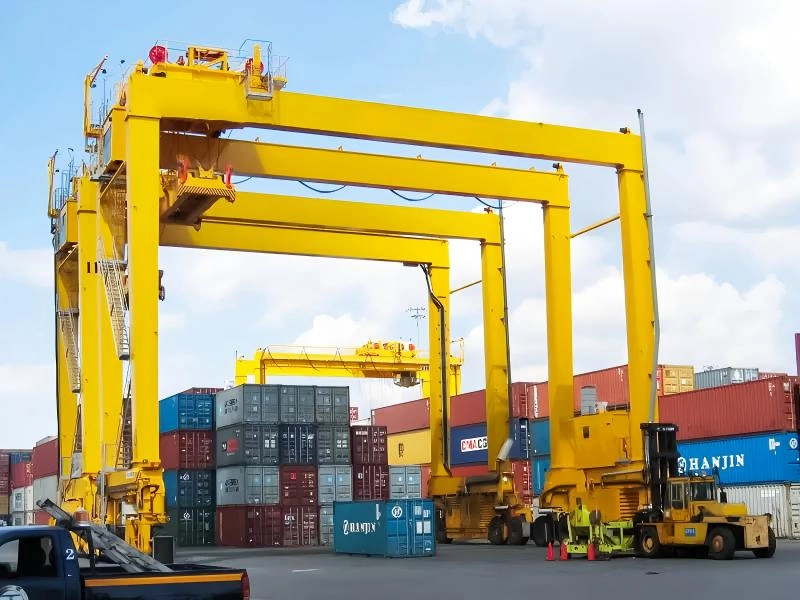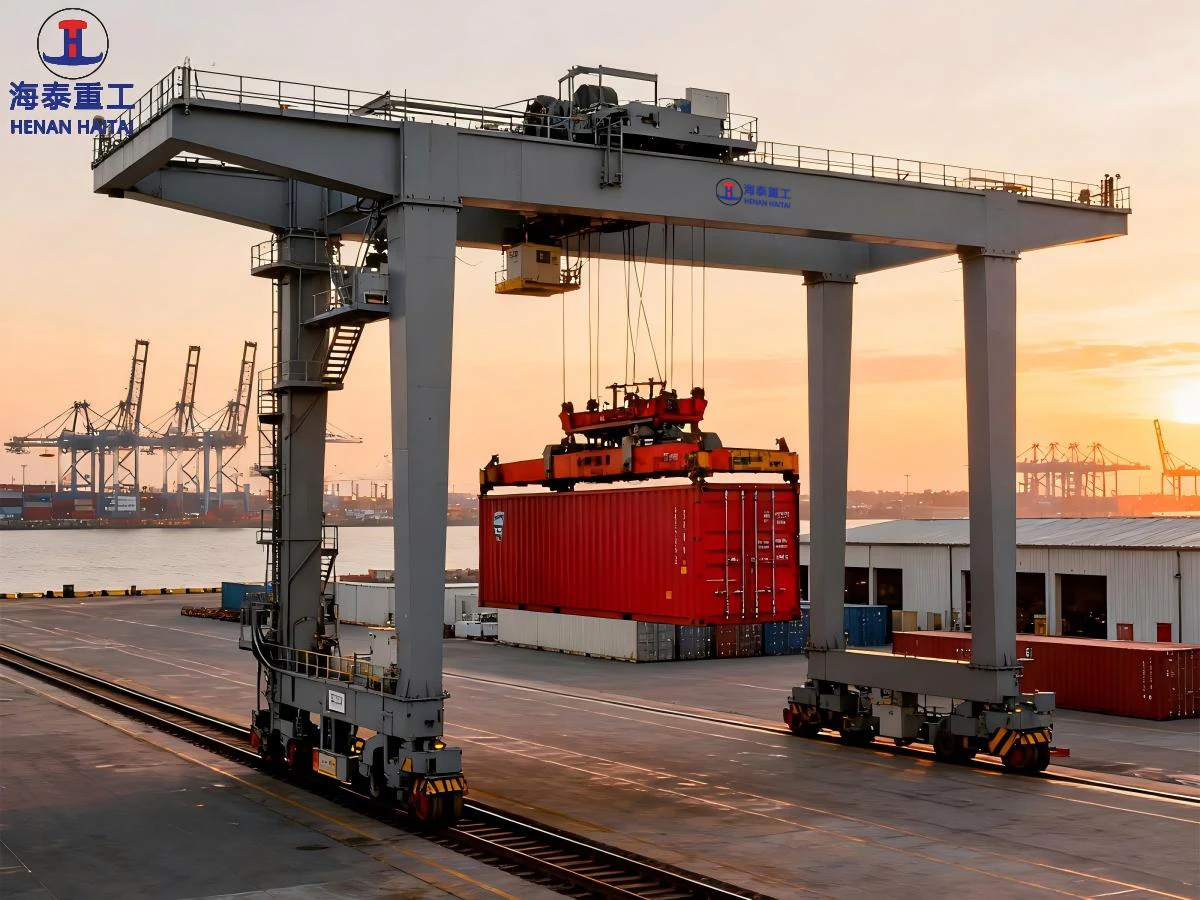
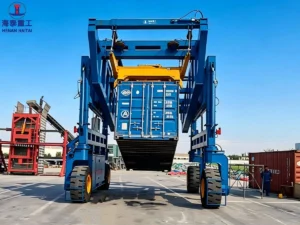
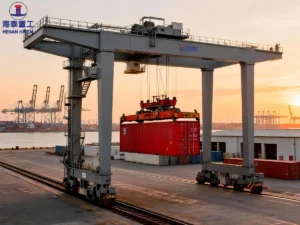
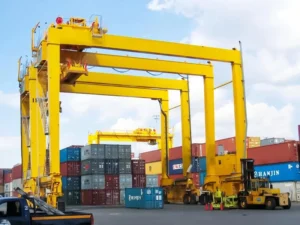
Argentina RTG crane market is best understood through Buenos Aires, where established container terminals already operate mixed fleets of rubber-tyred gantry cranes from international manufacturers. Official port data records RTGs across Terminals 1–3, Terminal 4 and Terminal 5, while a $143 million expansion at Dock Sud is adding capacity outside Puerto Buenos Aires.
This article reviews the existing fleet, replacement opportunities, technical requirements, and Haitai’s 2018 dual-hoist RTG export case for a steel factory in Argentina.
Buenos Aires RTG Fleet in Argentina: What the Existing Equipment Tells Us?
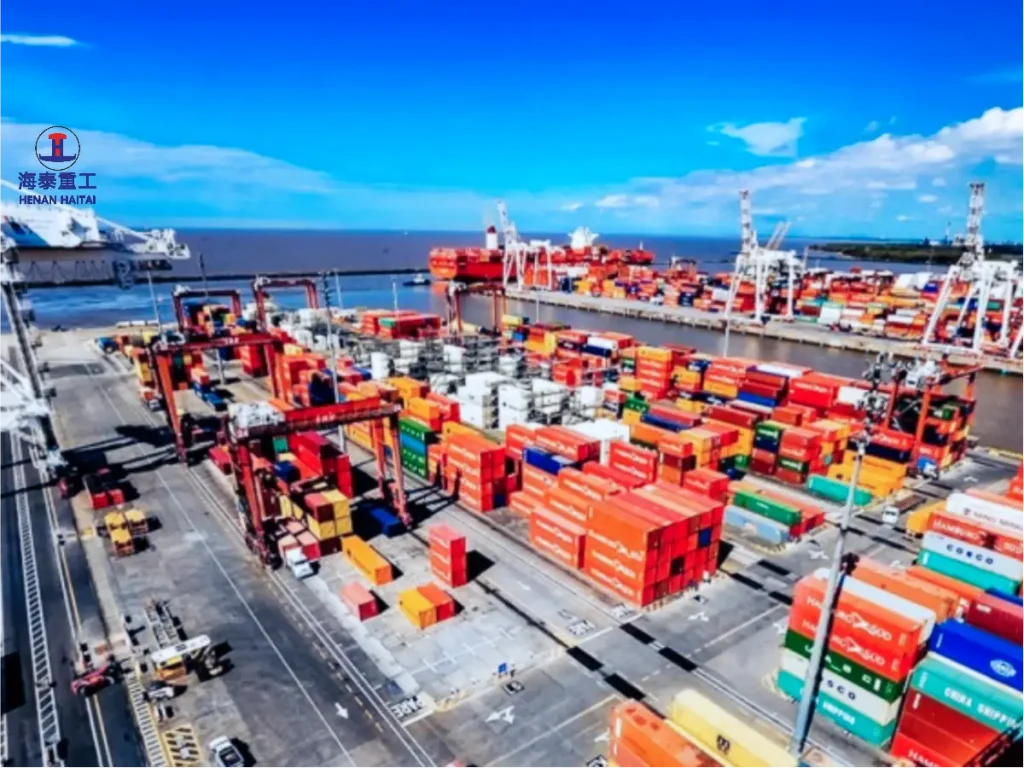
Argentina’s RTG crane market runs through Buenos Aires, where a mature container-handling system already operates rubber-tyred gantry cranes alongside rail-mounted gantry cranes, mobile quay cranes, and reach stackers.
That makes Argentina a different kind of market from one built mainly on new greenfield terminals — the stronger opportunity here is the combination of an existing equipment fleet, replacement cycles, terminal modernization, and additional capacity being added outside the flagship port.
Buenos Aires isn’t a single-equipment market. Official information from the Argentine government’s port authority lists RTG cranes across several terminals, and the mix of brands and vintages says as much about future demand as the raw crane count does:
| Terminal | RTG Fleet | Manufacturers | Listed Capacity |
|---|---|---|---|
| Terminales 1–3 | 23 RTGs | Paceco, ZPMC | — |
| Terminal 4 | 16 RTGs | Konecranes, Kalmar, ZPMC | 50 tons |
| Terminal 5 | 10 RTGs | MHI/Bardella, Sisu, Kalmar, ZPMC | 41 tons |
A terminal running multiple generations and brands of RTGs has ongoing requirements that go beyond simply adding capacity — replacement cranes, electrical upgrades, spare parts, and compatibility with current yard layouts all matter. Replacement demand in this kind of environment doesn’t necessarily mean swapping in an identical model.
A new RTG may need to match existing container block dimensions, current stacking height, wheel track, travelling lanes, electrical requirements, spreader configuration, yard operating software, and established maintenance practices. For a supplier entering the Argentine market, the ability to customize an RTG for an existing terminal is often worth more than a fixed standard specification.
Existing Fleet Creates Replacement Opportunities
Argentina already has a working base of RTG equipment, so fleet age and modernization matter as much as new-build demand when evaluating the market. An operator doesn’t need to rebuild an entire container yard to improve performance — replacing selected RTGs is a practical approach when specific machines carry higher maintenance costs, outdated controls, or declining parts availability.
A replacement project commonly targets older diesel RTGs, outdated motors and drives, PLC and control-system modernization, improved operator safety, lower fuel consumption, remote monitoring, and preparation for future automation. In a mixed-fleet environment like Buenos Aires, where different machines entered service at different times, the supplier should start with an honest assessment of the existing crane rather than jumping straight to a new-machine quote.
Dock Sud Expansion: Demand Beyond Puerto Buenos Aires
Puerto Buenos Aires remains central to Argentina’s container logistics, but the wider metropolitan port cluster is also seeing real investment. At Dock Sud, Exolgan — operator of Argentina’s second-largest container terminal and part of the ITL (International Trade Logistics) holding group — began construction in late 2025 on a US$143 million berth expansion, its first major upgrade in years.
Work started with the demolition of one of three obsolete quay cranes, and the roughly two-year project includes widening the access channel to accommodate Neopanamax vessels of up to 14,000 TEU, alongside new-generation ship-to-shore and yard equipment. Exolgan has also tied the project to broader sustainability commitments, including a 30% reduction in the terminal’s carbon footprint to date and a target of carbon neutrality by 2050.
For an RTG supplier, what matters here is that container-terminal expansion outside the flagship port typically brings additional yard-handling requirements — the actual RTG configuration will depend on the final yard layout and equipment plan once the berth work progresses. Argentina’s market is therefore better understood as a Buenos Aires metropolitan container-equipment cluster than as a single port.

Container Yard Crane Argentina: What Buyers Should Specify?
A container yard RTG has to fit the physical geometry of the yard — a technically capable crane can still be the wrong choice if its span, wheelbase, or stacking height doesn’t match the existing block:
| Especificación | What the Buyer Should Confirm? |
|---|---|
| Capacidad de levantamiento | Container weight, spreader configuration and required safety margin |
| Durar | Number of container rows and truck lane width |
| Altura de apilamiento | 4+1, 5+1, 6+1 or customized arrangement |
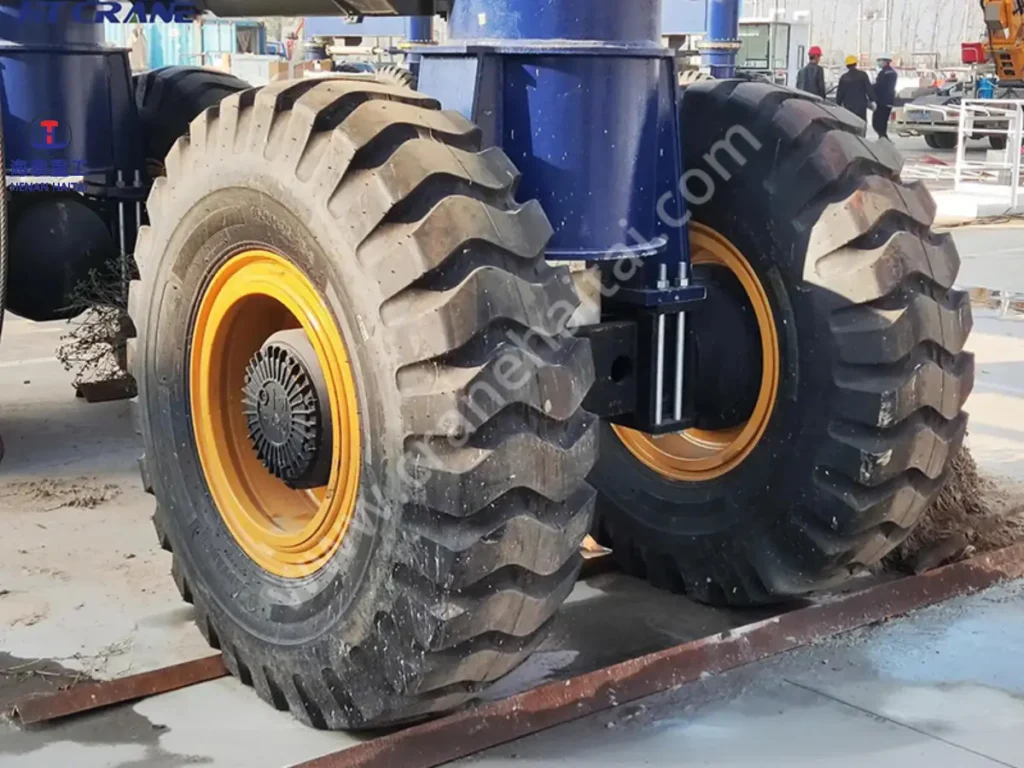
| Configuración de ruedas | Wheel quantity, wheelbase, steering system and tyre size |
| Travelling Speed | Required yard cycle time and travelling distance |
| Sistema de energía | Diesel-electric, hybrid or electric configuration |
| Sistema de control | PLC, VFD, cabin, remote monitoring and automation interface |
| Safety | Overload, travel limits, anti-collision and emergency systems |
For a replacement project specifically, the supplier should record the dimensions of the existing RTG before designing the new one. Even a small difference in wheel gauge or overall width can create real problems operating within an already-established container block.
Haitai RTG Crane Export Case in Argentina
12.5+12.5 Ton Dual-Hoist RTG Crane Exported to Argentina in 2018
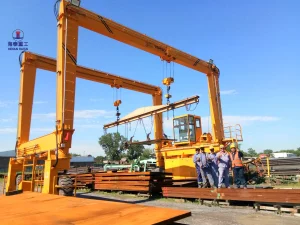
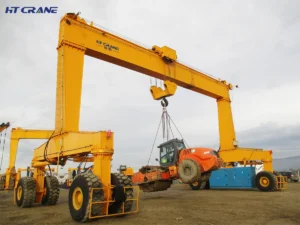
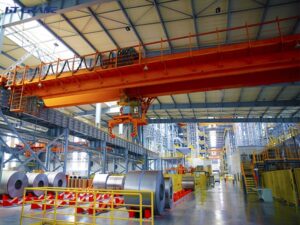
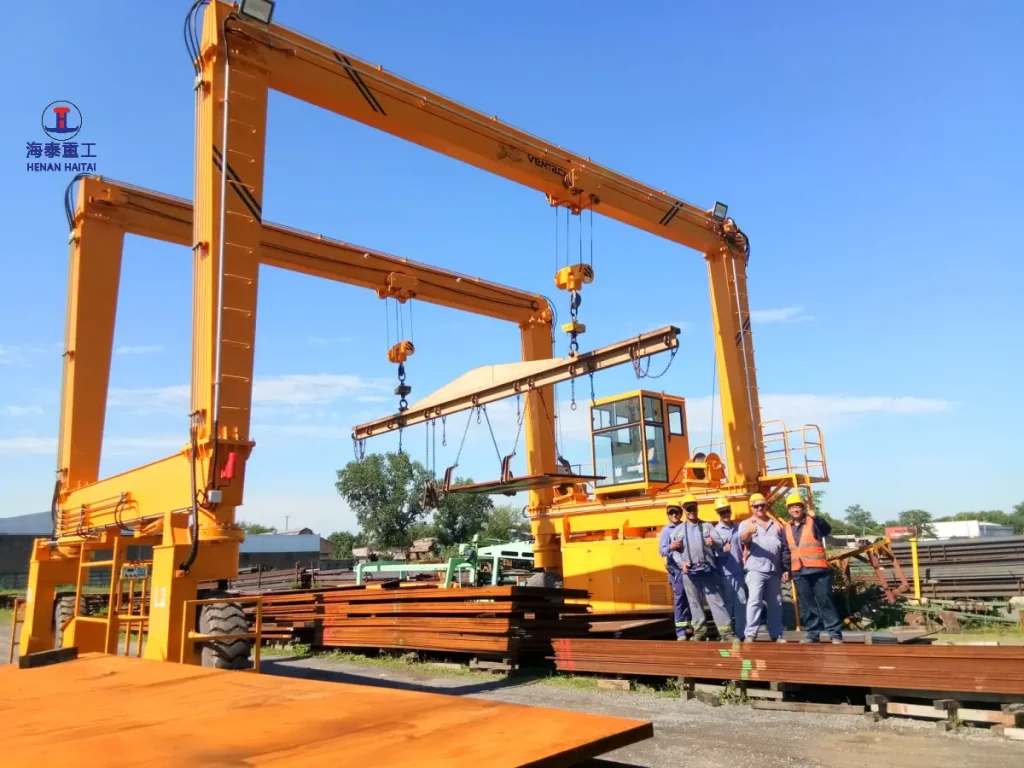
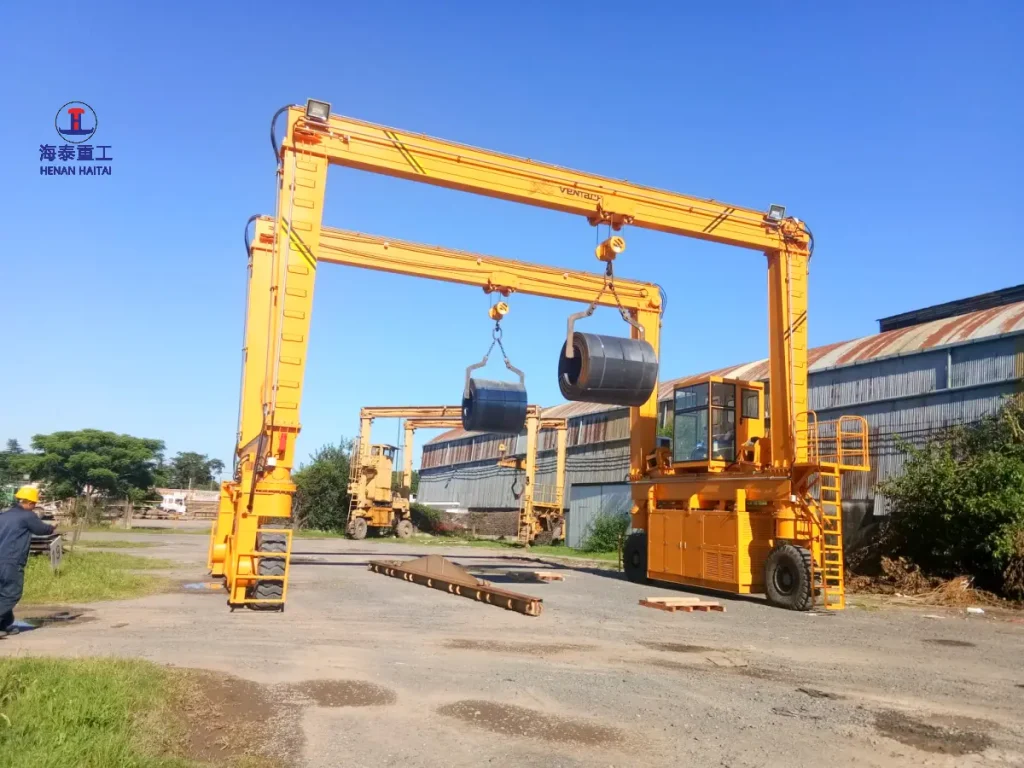
Haitai has an established RTG export reference in Argentina dating back to 2018. On August 9, 2018, Haitai exported a customized YTL 12.5+12.5 Ton Dual-Hoist RTG Crane to a steel factory customer in Argentina — a double-girder, rubber-tyred machine built around two independent 12.5-ton hoists mounted on the same girder, with a span of 18 meters as recorded in the project documentation. The customer used the crane to lift and reposition steel bar stock and steel coils in an outdoor yard, work that benefits from support at two points along a long load rather than a single central hook.
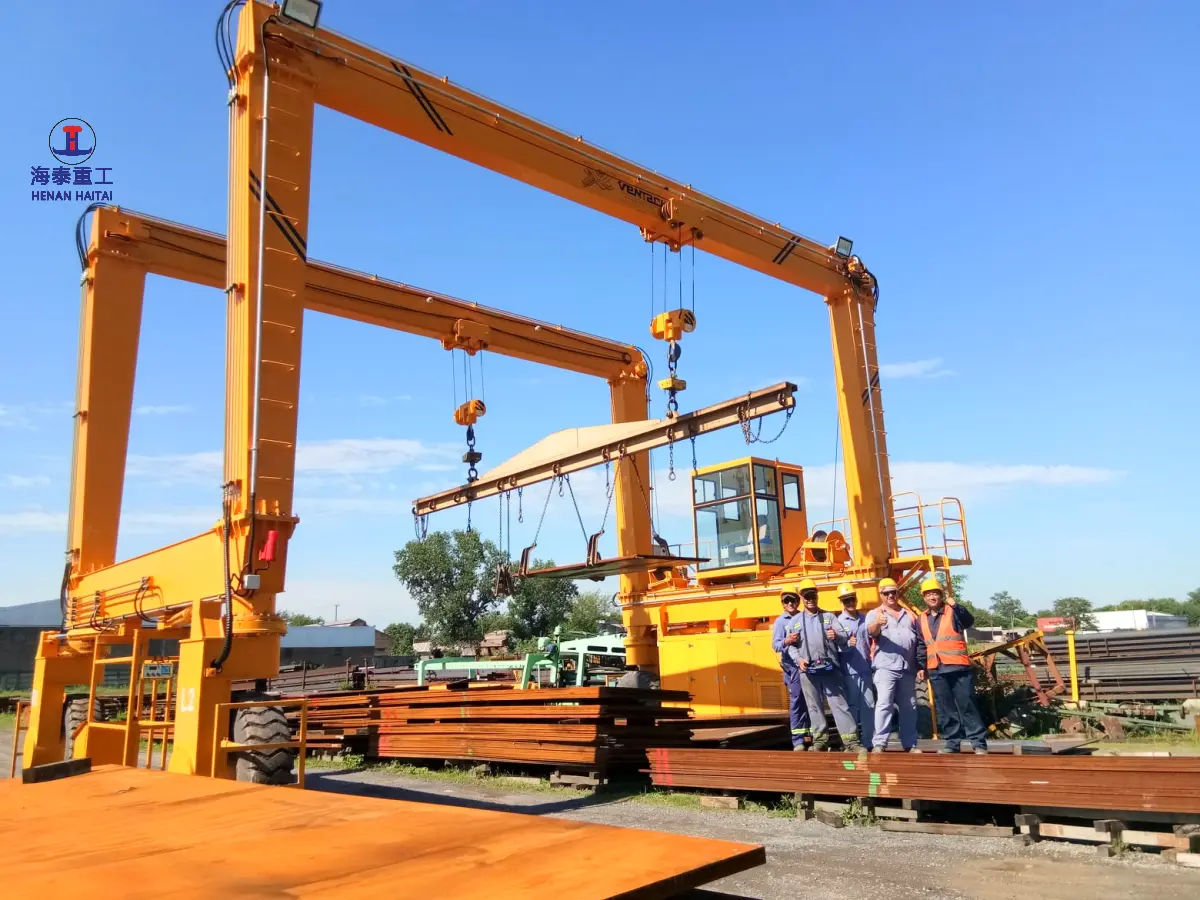
This case is valuable precisely because it’s a different RTG application from the 40–50-ton class normally associated with container-yard stacking. Rather than treating every RTG as a container crane, the Argentina project is a customized solution for industrial lifting and long-material handling — relevant to any Argentine buyer in steel, fabrication, or heavy machinery who assumes an RTG only belongs in a port yard.
| Parámetro | Especificación |
|---|---|
| Product Model | YTL 12.5+12.5 Ton Dual-Hoist RTG Crane |
| Fecha de exportación | August 9, 2018 |
| Customer | Steel factory, Argentina |
| Tipo de grúa | Dual-Hoist Rubber-Tyred Gantry Crane |
| Hoist Configuration | Two independent hoists, 12.5 tons each |
| Synchronized Lifting Capacity | 25 tons (under approved configuration) |
| Durar | 18 m (as recorded in the project documentation) |
| Estructura | Double-girder gantry |
| Movilidad | Rubber-tyred travelling system |
| Solicitud | Steel bar stock and steel coil handling |
| Certifications (supplier scope) | CE, ISO, CCS, ABS, BV, RINA |
12.5+12.5 Ton Dual-Hoist Configuration: Why the Distinction Matters?
A 12.5+12.5-ton configuration is not the same thing as a single 25-ton hoist, and the distinction matters for procurement, not just terminology. Each hoist is independently rated at 12.5 tons; the combined 25-ton synchronized capacity only applies when the two hoists operate together under the crane’s approved configuration — load distribution, rigging, center of gravity, synchronization between the hoists, brake coordination, and operating procedure all have to meet the manufacturer’s requirements for that combined rating to hold. Buyers should specify this type of crane explicitly as a dual-hoist unit, and confirm lifting-point spacing, hoist synchronization, individual versus combined lifting loads, and emergency-stop behavior during the engineering stage — not after the crane is already in production.
The two-point arrangement suits long structural members and loads distributed along their length, which is exactly the steel bar stock and coil handling this Argentina project was built for. A wider span, like the 18 meters recorded for this project, reduces how often the load or crane needs repositioning, but it also raises the structural and stability demands on the gantry — another reason span shouldn’t be treated as a simple catalog number without confirming it against the actual technical drawing for a given order.
RTG Crane Replacement in Argentina: When Should a Terminal Replace a Machine?
Replacement becomes worth evaluating once maintenance costs and downtime start outweighing the value of keeping an existing machine running. Typical warning signs include frequent electrical faults, obsolete PLC or drive components, high diesel consumption, repeated gearbox or brake failures, excessive tyre wear, structural corrosion, reduced lifting performance, and difficulty sourcing spare parts. The buyer should calculate lifecycle cost rather than comparing purchase prices alone — a lower-cost diesel RTG can look attractive upfront while a hybrid or electric unit delivers lower operating costs over a longer period. The right call depends on duty cycle, available infrastructure, maintenance resources, and the terminal’s modernization plans, not on sticker price.
Electric and Hybrid RTG Crane Opportunities in Argentina
Argentina’s RTG market shouldn’t be treated as electric-only. Existing fleets can stay diesel-powered for years while new equipment and replacement projects gradually introduce lower-emission technology alongside them. Hybrid RTGs make sense where a terminal wants to cut fuel consumption while keeping rubber-tyred flexibility; electric RTGs tend to be more attractive where stable electrical infrastructure and a suitable power-distribution design are already available, emissions targets matter, and long-term automation is planned. An electric RTG without adequate power infrastructure adds civil and electrical cost that can erode the case for going electric in the first place — and a hybrid machine should be evaluated on battery lifecycle and maintenance requirements, not projected fuel savings alone.
Maintenance of RTG Cranes in Buenos Aires
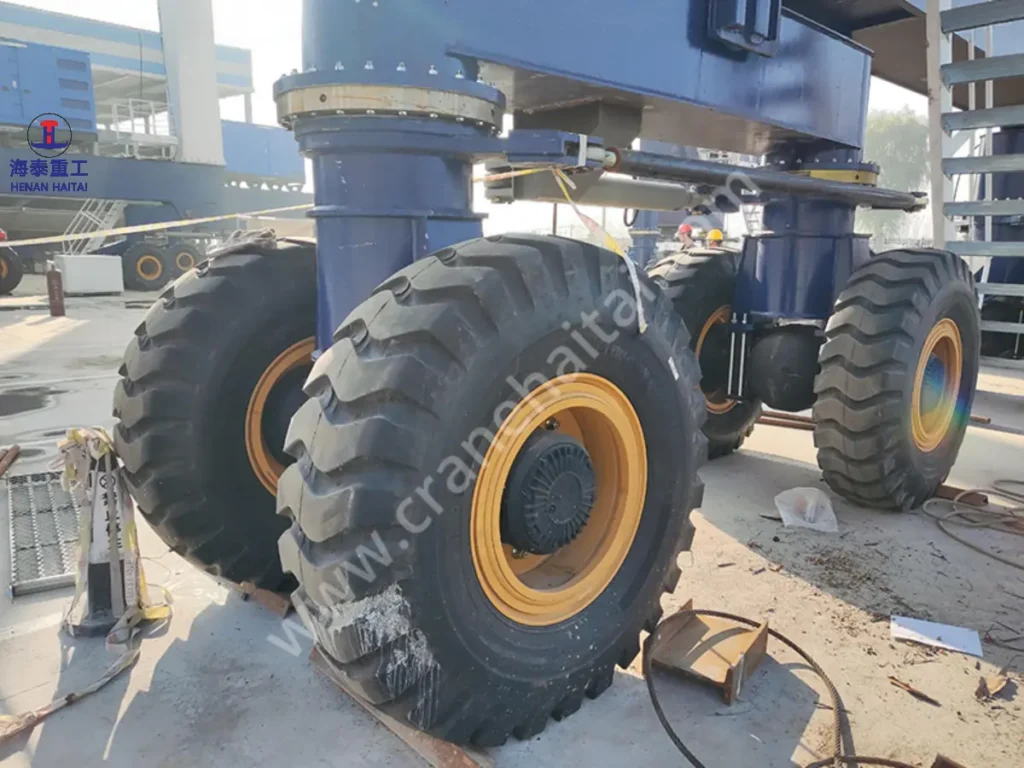
The coastal environment around Buenos Aires calls for regular inspection of both mechanical and electrical systems. Maintenance teams working on port-adjacent RTGs should monitor tyre condition, wheel alignment, the steering system, brakes, gearbox, wire rope, sheaves, electrical cabinets, VFD cooling, limit switches, emergency systems, and corrosion protection. Humidity and continuous outdoor exposure affect electrical connections and structural coatings over time, which makes regular inspection particularly important for older equipment. For any replacement RTG, maintenance accessibility is worth building into the design stage — components that are easy to inspect and replace reduce downtime over the equipment’s working life.
How to Choose an RTG Crane Supplier in Argentina?
A reliable RTG crane supplier should support both new and replacement projects, not just quote a standard machine:
| Supplier Capability | What Argentine Buyers Should Check? |
|---|---|
| Engineering | Customized design based on site layout and existing fleet |
| Manufacturing | Welding inspection, structural quality control and factory testing |
| Electrical | PLC, VFD, motors, sensors and safety-system integration |
| Energy | Diesel-electric, hybrid and electric RTG options |
| Documentation | Drawings, manuals, certificates and test records |
| Export Experience | Previous overseas RTG projects and shipping experience |
| After-Sales Service | Spare parts, commissioning, training and remote technical support |
For an established Buenos Aires terminal, compatibility with the existing fleet is its own evaluation criterion. A new crane shouldn’t become an isolated system requiring entirely different spare parts, controls, or maintenance procedures unless there’s a clear reason to make that change.
Buenos Aires RTG Crane Market: Key Procurement Priorities
Based on the existing equipment environment, buyers preparing an RTG purchase or replacement project should focus on five areas: yard compatibility (span, wheel gauge, and stacking height matching the actual yard); equipment sized to the required operating cycle rather than selected on rated capacity alone; control technology (PLC, VFD, and remote monitoring that support future upgrades); maintenance (spare-parts availability and technician support, which matter enormously for equipment in high-utilization terminals); and lifecycle cost across fuel, electricity, tyres, maintenance, batteries, and component replacement. These five factors matter most when comparing a new RTG against a replacement machine, where the temptation to compare on purchase price alone is strongest.

Conclusión
Argentina’s RTG crane market centers on an existing equipment base rather than a purely greenfield opportunity. Buenos Aires already runs a substantial installed RTG fleet across multiple terminals, mixing established international manufacturers — Paceco, ZPMC, Konecranes, Kalmar, MHI/Bardella, and Sisu among them — which creates ongoing requirements for replacement, modernization, and maintenance regardless of whether any new terminal gets built. At the same time, Exolgan’s $143 million expansion at Dock Sud shows that capacity investment is continuing outside the flagship port, and will bring its own yard-equipment requirements once the berth work and channel widening are further along.
Haitai’s 2018 Argentine dual-hoist case adds a different dimension to that picture: a 12.5+12.5-ton RTG crane built for a steel factory shows that rubber-tyred gantry technology serves industrial lifting applications just as well as it serves container yards, provided the dual-hoist configuration, span, and load requirements are engineered around the actual cargo rather than assumed from a catalog spec. For Argentine buyers, the decision that matters isn’t which RTG crane is cheapest — it’s which configuration actually fits the existing yard, the cargo, the operating cycle, and the maintenance resources available to keep it running.
Preguntas frecuentes
Q1. What is driving the Argentina RTG crane market in 2026?
Demand is supported by the existing RTG fleet across Buenos Aires terminals, ongoing equipment replacement and modernization, and new capacity investment at Dock Sud, where Exolgan is running a $143 million berth expansion. Official port records confirm RTG fleets from multiple international manufacturers already operating across Buenos Aires.
Q2. Where are RTG cranes used in Argentina?
RTG cranes are used mainly in container terminals and yards, but customized rubber-tyred gantry cranes also serve industrial cargo, steel, machinery, and project-material handling applications — Haitai’s 2018 dual-hoist crane for a steel factory is a working example outside the container-yard context.
Q3. What RTG crane capacity is typical in Buenos Aires?
The existing Buenos Aires terminal fleet includes RTGs in roughly the 41–50-ton range according to official equipment records for Terminal 4 and Terminal 5, while industrial applications outside container yards — like Haitai’s dual-hoist case — may call for a completely different configuration.
Q4. Is RTG crane replacement a good opportunity in Argentina?
Yes. Buenos Aires has an established mixed-brand RTG fleet spanning several terminals and multiple equipment generations, which naturally creates demand for replacement machines, control-system upgrades, energy-efficiency improvements, and long-term spare-parts support.
Q5. Does Haitai have an RTG crane export case in Argentina?
Yes. Haitai exported a YTL 12.5+12.5 Ton Dual-Hoist RTG Crane to a steel factory customer in Argentina on August 9, 2018, with an 18-meter span and a synchronized 25-ton lifting capacity across its two hoists. It’s a useful reference for buyers considering a customized RTG solution for industrial lifting rather than standard container-yard stacking.