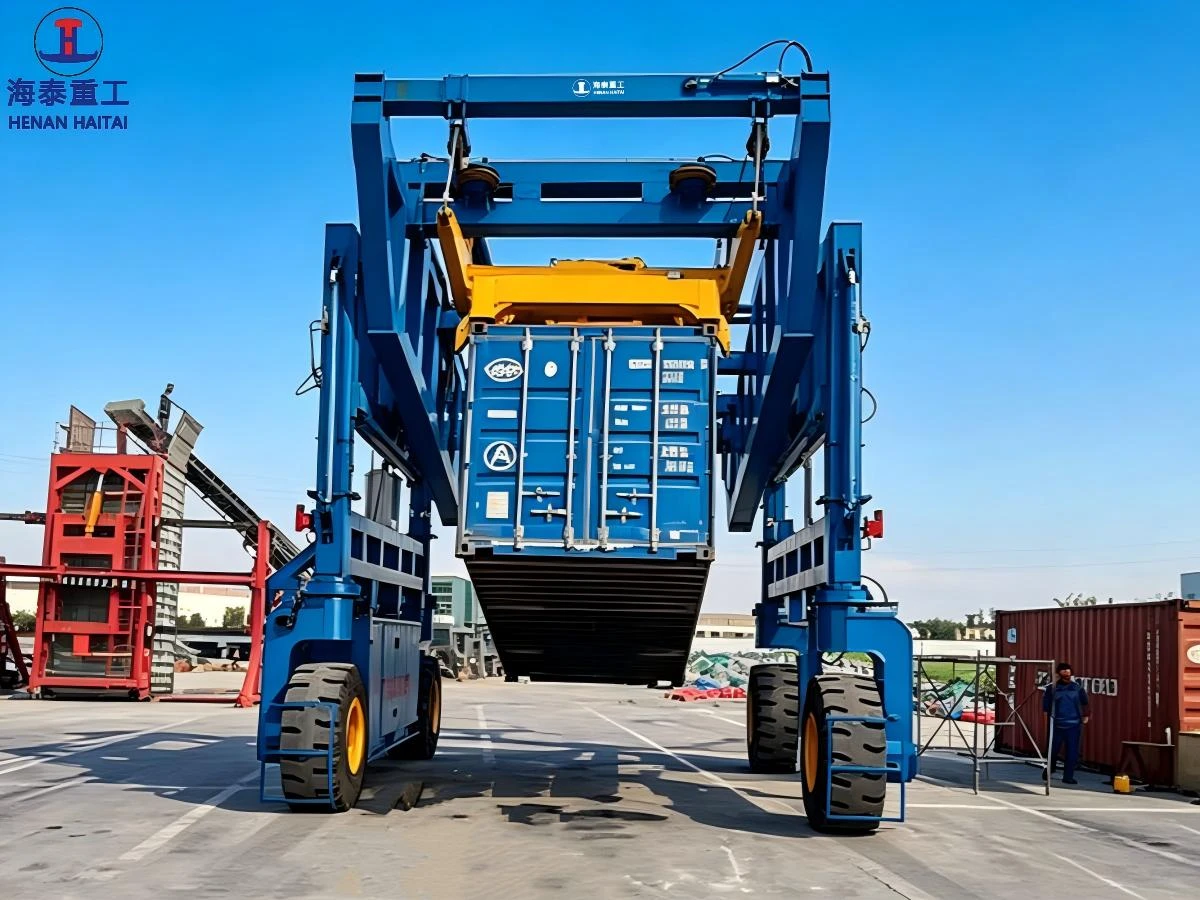
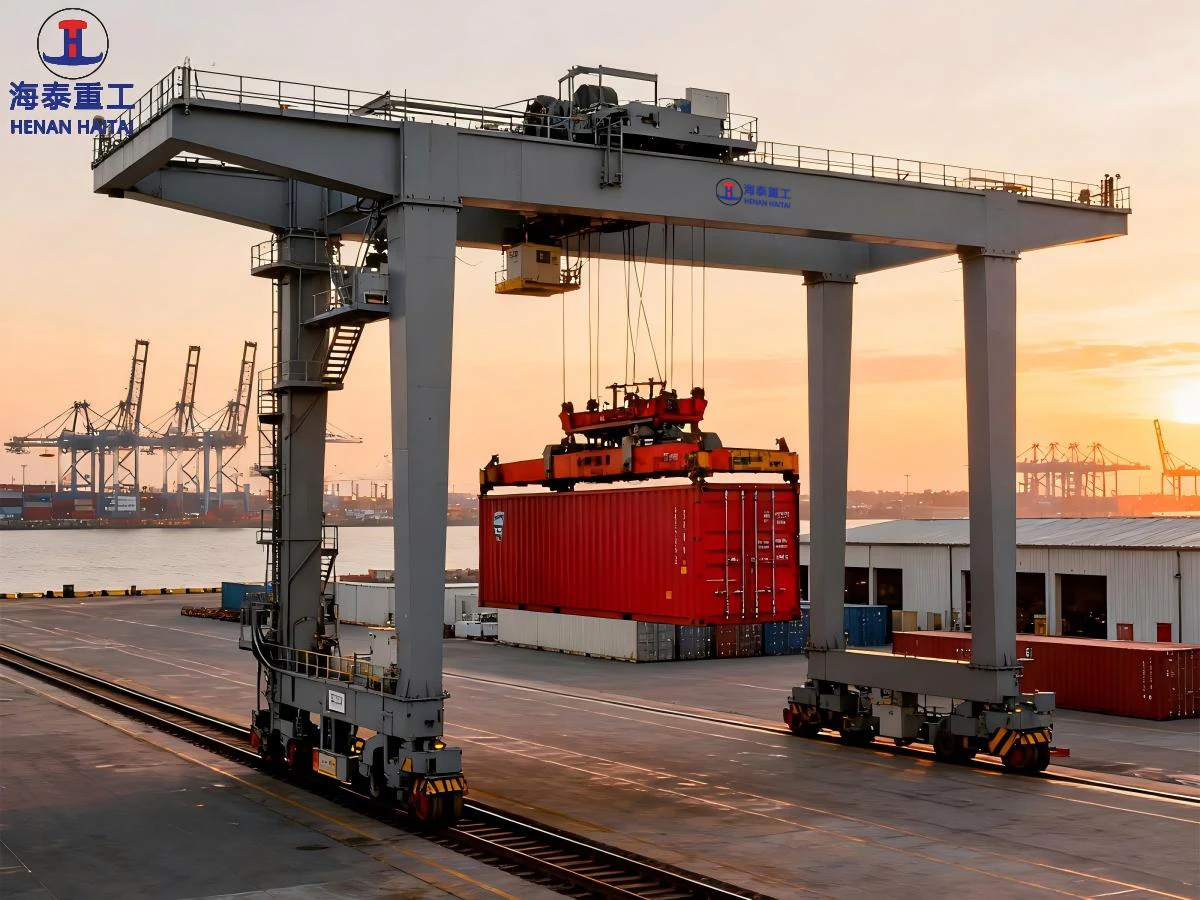
This project delivered two sets of 60T straddle carriers to a container terminal in Sweden — a modern port operator committed to increasing yard efficiency, reducing emissions, and ensuring operational continuity through harsh Nordic winters. The carriers were engineered from the ground up for this environment: cold-weather adapted, low-emission drive systems, intelligent automation features, and reinforced for coastal corrosion conditions.
This article documents the project from customer requirements through technical solution, manufacturing, delivery, and operational results after commissioning.
Customer Background and Project Challenges
Terminal Profile
The customer operates a medium-to-large container terminal on Sweden’s coast, handling a growing volume of containerized cargo serving both regional and international shipping routes. Over the past several years, throughput at the terminal had increased steadily — putting pressure on the existing yard handling fleet and creating bottlenecks in container transfer operations.
The terminal’s existing equipment fleet was aging. Older handling machinery was consuming more fuel, requiring more frequent maintenance, and delivering less throughput per operating hour than modern alternatives. The combination of rising fuel costs and higher maintenance frequency was creating a cost problem that newer, more efficient equipment could address.
Operational Pain Points
Several specific challenges shaped the requirements for this project:
- Labor-intensive operations: The existing yard layout required more manual coordination between vehicles and operators than a modern terminal should need. Reducing that dependency — without sacrificing throughput — was a core project goal.
- Harsh winter conditions: Sweden’s coastal port environments expose equipment to sub-zero temperatures, snow accumulation, ice on yard surfaces, and the additional corrosion risk of salt-laden coastal air. Equipment that cannot handle these conditions reliably creates unplanned downtime at exactly the moments when weather already complicates operations.
- Yard efficiency: Container dwell time in the yard was higher than the terminal’s commercial targets required. Faster, more flexible container movement between vessel berths, storage blocks, and gate areas was needed.
- Environmental compliance: European port operators face increasing pressure to reduce carbon emissions from yard equipment. The Swedish market in particular has strong policy and commercial drivers toward low-emission port operations.
Why the Customer Chose 60T Straddle Carriers
The Case for Straddle Carriers Over Conventional Systems
The terminal evaluated several handling system approaches before selecting straddle carriers. Conventional yard tractor and trailer combinations were familiar but required significant labor per container move and limited stacking flexibility. Reach stackers offered stacking capability but less yard mobility for high-frequency transfer operations.
Straddle carriers offered a combination that neither alternative matched cleanly: the ability to lift, carry, and stack containers in a single vehicle operation, moving freely across the yard without fixed infrastructure. For a terminal with a compact yard layout and a need to move containers quickly between multiple zones, this flexibility was the decisive factor.
Why 60T Capacity Matched the Terminal’s Requirements
The terminal handles a mix of standard 20-foot and 40-foot containers, including fully laden heavy units. A 60-ton lifting capacity provides a working margin above the maximum gross weight of standard ISO containers (which reach up to approximately 36 tonnes for a 40-foot unit under IMO/SOLAS regulations). This capacity headroom ensures that the equipment is not operating at its limits during routine heavy lifts — which directly affects wear rates, cycle times, and long-term reliability.
Two units were specified to provide operational redundancy. With two straddle carriers in service, the terminal can maintain yard operations if one unit is undergoing scheduled maintenance — a practical necessity for a terminal that cannot afford extended equipment downtime.
Customized Technical Solution
Core Lifting and Drive Specification
The two units were configured around a 60-ton rated lifting capacity with a diesel-electric hybrid drive system. The diesel-electric configuration delivers the traction and lifting power required for heavy container handling while reducing fuel consumption compared to a conventional hydraulic-mechanical drivetrain. In stop-and-go yard operations — where straddle carriers frequently accelerate, lift, travel short distances, and lower loads — the efficiency gains from electric drive during low-load phases are meaningful over a full operating shift.
Nordic Cold-Weather Package
A dedicated cold-weather engineering package was developed for this project, covering the following elements:
- Cold-resistant hydraulic system: Hydraulic fluid specification and system design optimized for cold-start performance and stable operation at low temperatures
- Electrical system insulation protection: Wiring harnesses, junction boxes, and control system enclosures specified for cold-weather conditions, preventing condensation-related faults
- Anti-slip drive system: Traction control calibrated for reduced-grip yard surfaces — wet concrete, packed snow, and ice accumulation on travel paths
- LED lighting system: High-output LED work lighting for the reduced visibility conditions of Nordic winter operations, including early darkness and weather-related visibility reduction
Safety and Control Systems
- Anti-sway technology: Electronic load sway control to stabilize the container during travel and positioning, reducing cycle time and improving accuracy when landing containers in the stack
- Intelligent safety monitoring: Real-time monitoring of structural load, hydraulic pressure, and drive system parameters, with operator alerts and automatic protective responses for out-of-range conditions
- Anti-collision system: Proximity detection on all sides of the vehicle to alert operators to obstructions in the travel path
Protección contra la corrosión
Coastal port environments accelerate steel corrosion through salt-laden air and moisture exposure. The structural steel on both straddle carriers units received a multi-layer corrosion protection system: abrasive blast cleaning to Sa 2.5 standard, zinc-rich epoxy primer, intermediate epoxy coat, and a polyurethane topcoat. This system is designed to provide durable protection through a full maintenance cycle in a coastal operating environment.
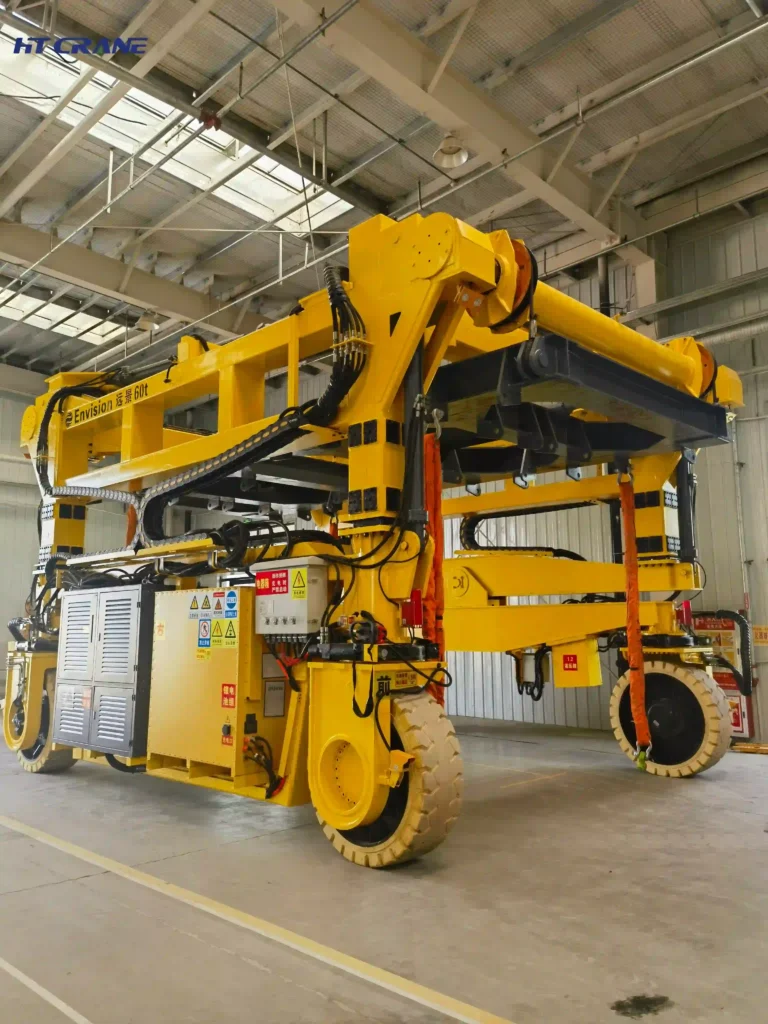
Both units were manufactured to CE standards under the EU Machinery Directive and designed in accordance with ISO manufacturing and safety standards applicable to heavy container handling equipment.
Smart Port Automation Features
Automated Positioning Assistance
Each unit is equipped with a positioning assistance system that guides operators during container pickup and landing operations. Visual and auditory cues assist the operator in aligning the spreader accurately over the container corner castings — reducing mis-picks, shortening cycle times, and lowering the skill level required for consistent performance. In a terminal looking to reduce dependence on highly experienced operators, this feature has direct value for workforce flexibility.
Real-Time Equipment Monitoring
An onboard telematics system logs operational data continuously: engine hours, fuel consumption, lift cycles, hydraulic system pressure, and fault events. This data is accessible to the terminal’s maintenance team in real time, enabling condition-based maintenance scheduling rather than fixed-interval servicing. The result is fewer unexpected breakdowns and more efficient use of maintenance labor and parts inventory.
Energy-Saving Drive Management
The diesel-electric drivetrain incorporates drive management logic that optimizes engine load across the operating cycle. During low-demand phases — traveling without a load, waiting for the next pick — the system reduces engine output to match actual demand. This reduces fuel consumption per container move and lowers particulate and NOx emissions during yard operations, supporting the terminal’s environmental compliance targets.
Intelligent Safety Protection System
Beyond the physical anti-collision detection, the safety monitoring system integrates overload protection — preventing lift operations if the detected load exceeds the rated capacity — and emergency warning functions that alert both the operator and ground personnel to safety-critical conditions. All safety functions are logged for post-incident review and compliance reporting.
Designed for Sweden’s Harsh Climate
The Challenge of Nordic Port Operations
Port equipment operating in Sweden’s climate faces conditions that simply do not apply in temperate or tropical markets. Ambient temperatures below -20°C are not unusual in winter. Yard surfaces become slippery from ice and compacted snow. Hydraulic systems that are not cold-adapted suffer sluggish response and increased wear during cold starts. Electrical systems without proper insulation develop condensation faults as equipment moves between cold outdoor environments and heated maintenance bays.
Equipment that is not specifically adapted for these conditions does not fail dramatically — it degrades gradually. Cycle times increase slightly. Fault frequency rises. Maintenance intervals shorten. Over a full winter season, these marginal effects add up to a meaningful reduction in fleet availability and an increase in operating cost.
Engineering for Cold-Weather Reliability
The cold-weather package developed for this project addressed each of these failure modes directly. Cold-resistant hydraulic fluid ensures consistent system response from cold start through full operating temperature. Electrical system insulation prevents condensation-related faults during temperature cycling. Anti-slip traction control maintains safe travel on compromised yard surfaces. The heated cabin ensures operator performance is not degraded by cold exposure during long shifts.
These are not comfort features. They are reliability features — engineering decisions that maintain equipment performance and availability through conditions that standard configurations cannot handle.
Manufacturing, Delivery, and Installation
Engineering Confirmation
After order placement, the engineering team worked with the customer to finalize technical drawings covering the structural design, drive system layout, cold-weather package specification, and electrical system configuration. The customer’s technical team reviewed and approved the drawings before fabrication began. This stage included confirmation of the CE compliance documentation package required for European market delivery.
Production Process
Manufacturing proceeded through the following sequence:
- Fabricación de acero: Main structural frame components cut, formed, and welded to dimensional tolerances verified by in-process inspection
- Drive system assembly: Diesel-electric drivetrain components assembled and pre-tested at the sub-assembly stage
- Ensamblaje eléctrico: Control panels, telematics systems, safety monitoring equipment, and cabin systems installed and wired
- Cold-weather package installation: Hydraulic system components, electrical insulation, and cabin climate system installed and verified
- Tratamiento de superficie: Full corrosion protection system applied and inspected before final assembly
Factory Testing
Both completed units underwent a structured factory acceptance test covering rated load testing, operational function verification across all control systems, safety system response testing, and cold-start simulation testing. The test results were documented and provided to the customer as part of the delivery package.
Export Logistics and Delivery
The two Straddle Carriers units were transported to the port of export as oversized cargo., loaded onto specialized sea freight for shipment to Sweden, and cleared through Swedish customs on arrival. The project was delivered within the agreed schedule, with the customer’s logistics team coordinating receiving at the destination port.
On-Site Commissioning
The manufacturer’s commissioning team supported installation, system startup, and final acceptance testing at the terminal. Operator training was conducted on site, covering equipment controls, daily inspection procedures, and the telematics monitoring interface. The units were handed over to the customer in fully commissioned operating condition.
Operational Results After Commissioning
Improved Yard Transfer Efficiency
Following commissioning, the terminal reported measurably faster container transfer cycles compared to the previous equipment. The combination of flexible yard movement, anti-sway positioning assistance, and operator guidance systems reduced average cycle time per container move — directly increasing the number of container moves per shift without adding labor.
Reduced Fuel Consumption
The diesel-electric drive management system delivered a reduction in fuel consumption per container move compared to the conventional equipment it replaced. Across two units running full operational shifts, this reduction represents a meaningful decrease in both operating cost and yard emissions — contributing to the terminal’s environmental performance targets.
Lower Maintenance Frequency
Real-time monitoring data from the telematics system enabled the terminal’s maintenance team to shift from fixed-interval servicing to condition-based maintenance. Early-warning alerts for developing faults allowed maintenance to be scheduled during planned downtime rather than responding to unexpected breakdowns. The result was a reduction in unplanned downtime events in the months following commissioning.
Reduced Labor Intensity and Improved Safety
The positioning assistance system and intelligent safety monitoring reduced the cognitive load on operators during high-frequency lifting cycles. Fewer mis-picks and smoother container stacking translated into less re-handling work and a cleaner, more organized yard operation. The anti-collision system provided an additional safety layer in a busy terminal environment.
Customer Feedback
The terminal management confirmed that both units performed as specified through the first winter season following delivery — including periods of sub-zero temperatures and adverse yard surface conditions. The customer indicated interest in further equipment cooperation for planned terminal expansion phases.
Conclusión
This project demonstrates what a well-specified, properly engineered straddle carrier solution can deliver in a demanding real-world environment. Two 60T container straddle carriers, designed specifically for Nordic winter conditions and modern smart port operational requirements, were manufactured, exported, and commissioned at a Swedish terminal — on schedule and to specification.
The combination of 60-ton lifting capacity, diesel-electric hybrid drive, cold-weather engineering, and intelligent automation features addressed the customer’s core challenges: yard efficiency, winter reliability, emissions reduction, and reduced labor intensity. The operational results after commissioning confirmed that the engineering decisions made during the project development phase translated into real performance improvements in the field.
For port operators evaluating container handling equipment — particularly in cold-climate markets or facilities with mixed indoor/outdoor or compact yard conditions — a purpose-engineered straddle carrier solution offers a practical, proven path to improved operations.
Contact us for a customized straddle carrier solution matched to your terminal’s capacity, layout, and climate requirements. Request a tailored smart port handling system — our engineering team will assess your site and develop a specification built around your operational profile.