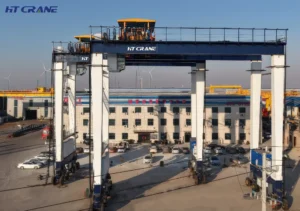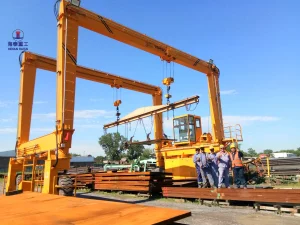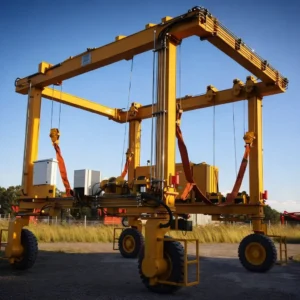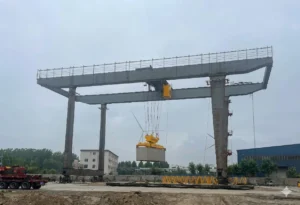
Planning to buy a hydraulic gantry crane for heavy lifting? This guide explains pricing factors, key specifications, custom options, hydraulic systems, installation requirements and practical purchasing considerations for industrial lifting projects.
Want to buy a hydraulic gantry cranes? A Complete Guide to Pricing, Specs and RFQ Request
Buying a hydraulic gantry crane is usually a project decision rather than a simple equipment purchase. The required lifting capacity may be clear, but the final configuration depends on lifting height, span, load dimensions, available installation space, load center of gravity, operating frequency, and how the load needs to be positioned after lifting.
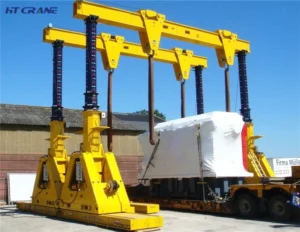
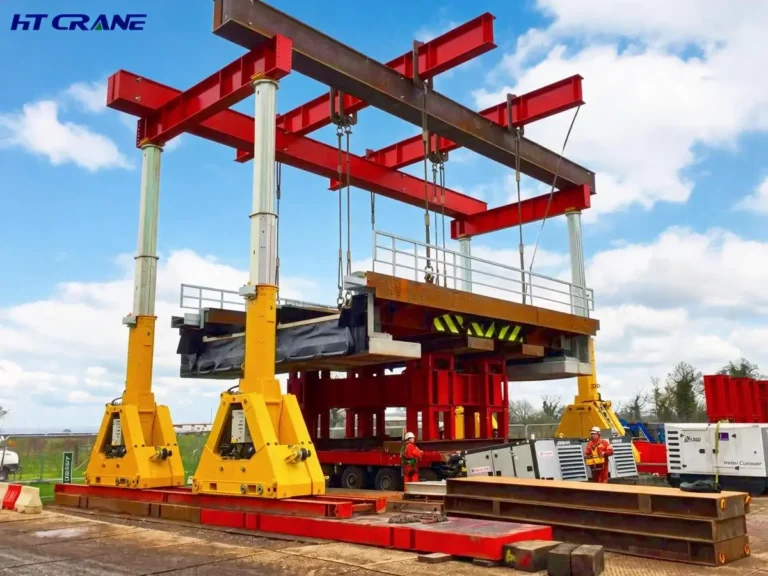
Hydraulic gantry systems are commonly selected when a conventional mobile crane can’t reach the working area or when a permanent overhead crane structure is impractical. A typical system uses hydraulic lifting units and an overhead beam to raise heavy equipment vertically. Some configurations can also move the suspended load along skid tracks or use side-shift equipment for positioning. Industry applications include transformer installation, bridge components, power-plant equipment, industrial machinery, and heavy maintenance work.
For buyers comparing suppliers, the important question isn’t simply “How much does a hydraulic gantry crane cost?” The better question is “What configuration will safely complete my lifting operation?” Once the application is defined, manufacturers can calculate the required capacity and provide a meaningful quotation.
What Is a Hydraulic Gantry Crane?
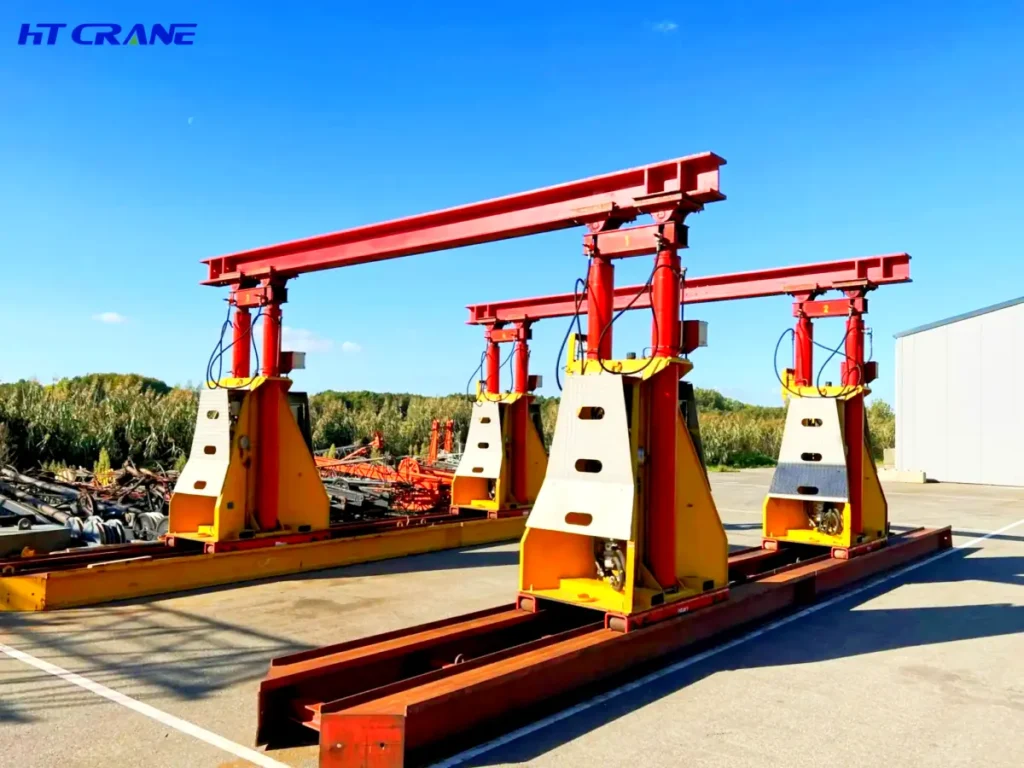
A hydraulic gantry crane is a heavy lifting system that uses hydraulic cylinders to raise a load through vertical lifting units connected to an overhead header beam. Unlike a conventional overhead crane, it doesn’t require a permanent runway or building structure.
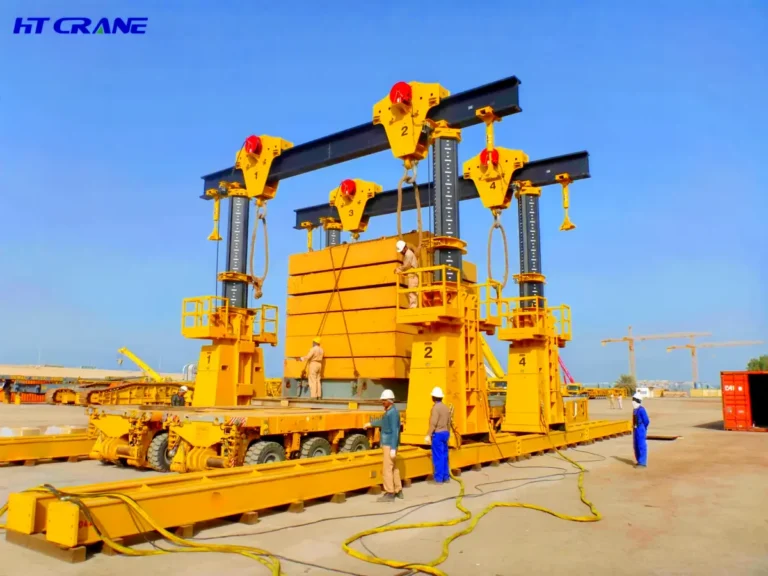
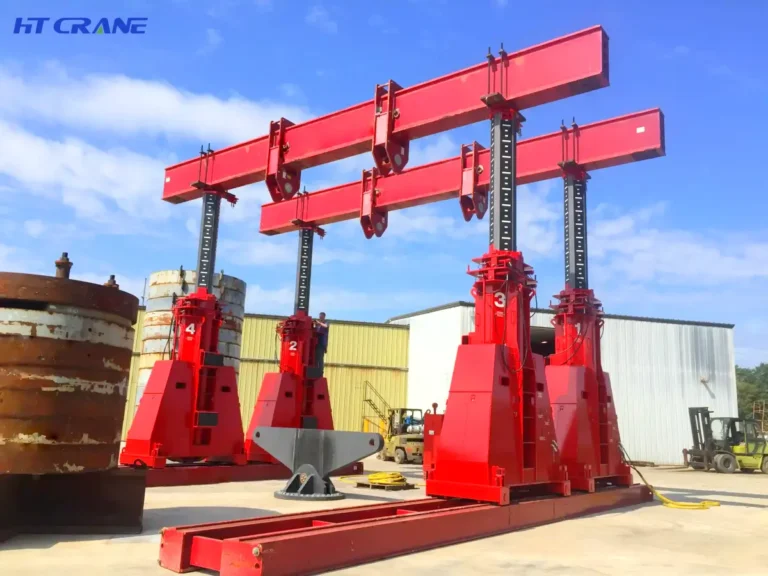
It is particularly useful for lifting large machinery in areas with limited headroom or restricted access. A typical portable hydraulic gantry can consist of multiple telescopic legs, hydraulic power units, control equipment, and a header beam. When horizontal movement is required, skid tracks, rollers, or other positioning equipment can be incorporated into the lifting system.
This configuration makes the equipment suitable for projects such as transformer replacement, power-generation equipment installation, bridge construction, shipyard lifting, industrial plant maintenance, and machinery relocation.
The correct design depends heavily on the actual load. A 100-ton machine that’s compact and centrally balanced may require a very different configuration from a 100-ton machine with a long body, high center of gravity, or offset lifting points.
Hydraulic Gantry Crane Specifications Buyers Should Check
Before requesting a quotation, prepare the basic lifting data. This lets the manufacturer determine whether a standard configuration is suitable or whether a custom system is required.
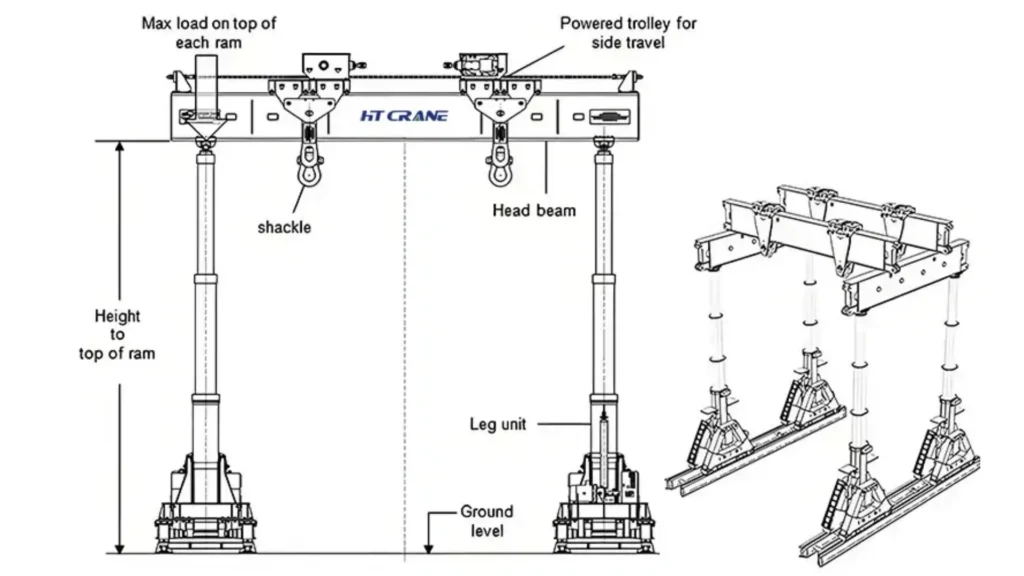
① Lifting Capacity
Rated capacity is the starting point, but it shouldn’t be considered in isolation. The supplier needs to understand the actual load weight, lifting points, load distribution, and center of gravity — an offset load can increase the force carried by individual legs even when the total load stays below the system’s nominal capacity, which is why center-of-gravity position gets so much attention in hydraulic lifting practice generally. For this reason, share the actual load drawing with the manufacturer’s engineering team whenever possible, rather than supplying only the total weight.
② Lifting Height
Lifting height determines the required stroke and telescopic leg configuration. A 3-meter lifting requirement is very different from a project requiring the load to clear a tall foundation, transport frame, or production line. Some hydraulic gantry systems use multiple telescopic stages, and their rated capacity can vary depending on the extension stage — worth confirming explicitly rather than assuming the nameplate capacity holds at full extension.
③ Span and Load Dimensions
The gantry must provide sufficient clearance around the load. When requesting a quotation, provide load length, load width, load height, required clearance, required gantry span, and lifting-point spacing. These dimensions let engineers determine the header beam arrangement and leg positions before committing to a design.
④ Lifting Speed and Control
Lifting speed matters when the equipment is used for repetitive production work or scheduled maintenance. For heavy and high-value loads, controlled and synchronized movement is usually more important than maximum lifting speed — multi-point hydraulic systems can synchronize lifting positions to help keep the load level during a lift.
What Determines the Final Price of Hydraulic Gantry Crane?
When comparing suppliers, it helps to separate the equipment cost from project-specific requirements. A basic hydraulic lifting gantry may include the lifting legs, hydraulic power unit, control system, and header beam. Additional equipment may be required when the load needs to travel or shift after being lifted.
Side-shift units, for example, can move a suspended load laterally along the header beam. Skid tracks provide a guided path for horizontal movement of the gantry. These accessories change both the equipment configuration and the overall project budget. Other cost factors include electrical requirements, control cabinet configuration, painting or corrosion protection, testing, spare parts, packaging, shipping, and on-site commissioning.
For an export project, the quotation should clearly identify what’s included. Buyers should check whether the offered price covers the hydraulic power unit, control system, lifting beams, tracks, rigging accessories, testing documents, spare parts, and export packaging — a lower headline number that excludes several of these is not actually the lower-cost option once the full scope is priced out.
Custom Hydraulic Gantry Crane Options
Custom design becomes important when the lifting area has unusual dimensions or access restrictions. Typical customization includes special lifting height, extended or reduced span, a customized header beam, different hydraulic cylinder capacity, remote or wired control, synchronized multi-point lifting, a side-shift mechanism, a skidding system, special wheel or track arrangement, customized electrical supply, and corrosion-resistant coating.
A power-plant maintenance contractor needing to remove a large transformer from a confined area where a mobile crane can’t be positioned is a typical case for this kind of customization — the gantry gets configured around the existing equipment rather than forcing the site to accommodate a standard crane. The same logic applies to valve maintenance on an offshore platform, where restricted space and a corrosive marine environment call for a gantry built with enhanced corrosion protection and marine-rated electrical equipment rather than a standard onshore configuration, and to bridge-component lifting where conventional mobile crane access is restricted and the gantry has to be sized to the specific span and load geometry of the structure being installed.
Where Are Haitai Hydraulic Gantry Cranes Used?
The equipment is particularly useful when a heavy load must be lifted vertically in a location where conventional cranes have limited access.
Power Plants and Shipyards
Hydraulic gantry cranes can be used for transformer installation, generator components, turbines, boilers, and other heavy maintenance work.
Shipyards may use them for machinery installation, ship components, and heavy equipment positioning where available crane coverage is insufficient.
Industrial Machinery Installation
Factories may need to install presses, generators, transformers, production equipment, or other machinery inside existing buildings, where limited headroom and restricted access can make conventional cranes difficult to use.
Bridge Construction
Bridge sections and structural components can be lifted from transport equipment and positioned accurately, and hydraulic gantry crane systems can be combined with skidding equipment for controlled horizontal movement where a permanent crane or mobile crane access isn’t practical for the site.
Heavy Equipment Maintenance
For maintenance contractors, portability can matter as much as capacity. A modular hydraulic gantry crane can be transported to a work area and assembled around the load instead of requiring major changes to the building or production site.
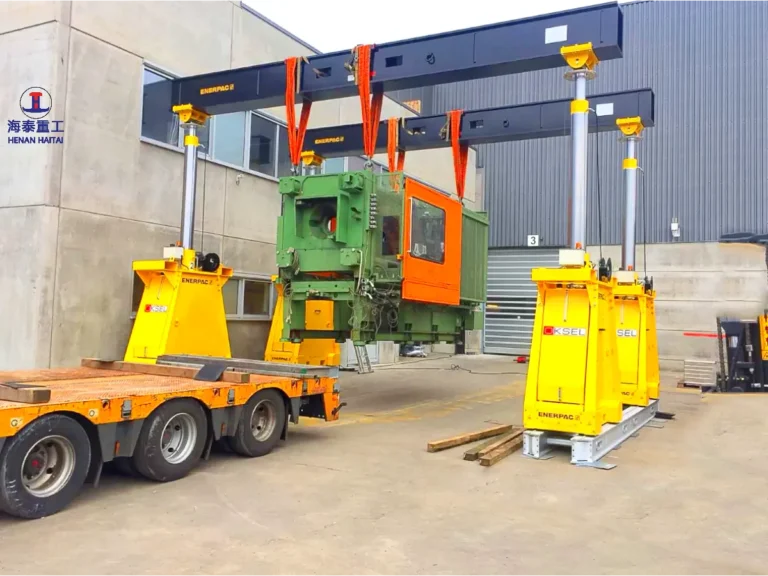
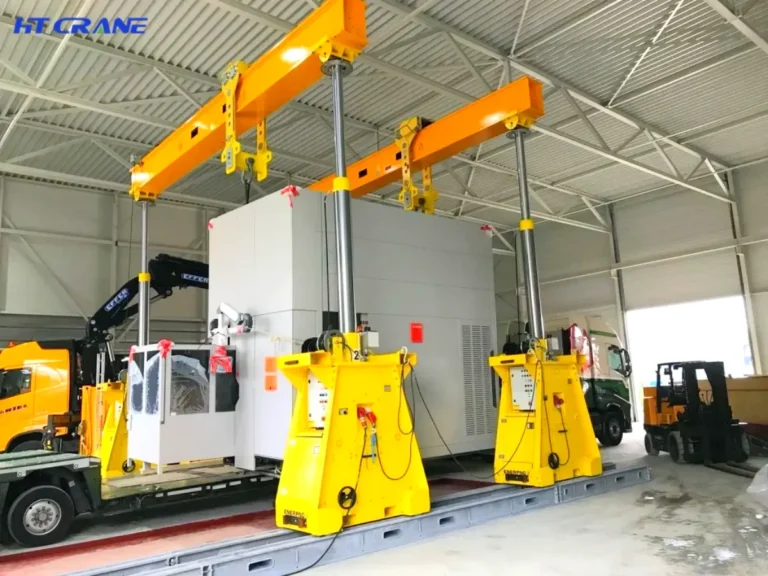
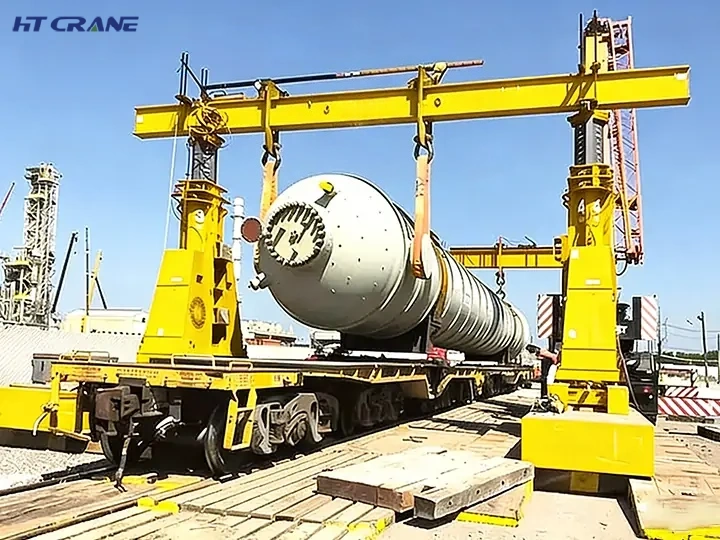
How to Choose the Right Hydraulic Gantry Crane?
Start with the lifting operation rather than the product catalog. Ask these questions before contacting a manufacturer:
- What is the maximum load weight?
- What are the load dimensions?
- Where is the center of gravity?
- Where are the lifting points?
- How high must the load be raised?
- What span or clearance is available?
- Does the load need horizontal movement?
- Does it need side shifting after lifting?
- What power supply is available?
- What environmental conditions will the equipment face?
- How often will the gantry be used?
- What standards or inspection documents are required?
The answers provide the engineering basis for equipment selection. For a one-time machinery installation, portability and setup time may matter more than production speed. For a maintenance contractor using the system across multiple projects, modular construction, transport dimensions, and accessory compatibility carry more weight.
Installation, Testing and Maintenance
Hydraulic lifting equipment should be installed on a stable, adequately supported surface. Skid tracks must be properly aligned and supported when used for horizontal movement — an uneven or inadequately supported track creates real risk for the gantry, the load, and the operators working around it.
Before operation, the hydraulic circuit, hoses, cylinders, control system, structural connections, and lifting accessories should all be checked. Maintenance normally includes hydraulic oil inspection, hose and fitting checks, cylinder inspection, structural examination, and periodic testing according to the applicable operating requirements. For equipment used outdoors, coating damage and corrosion should also be monitored — in coastal or offshore applications, environmental protection should be specified at the purchasing stage rather than treated as an afterthought once the equipment is already in service.
How to Buy a Guindaste pórtico hidráulico from a Manufacturer
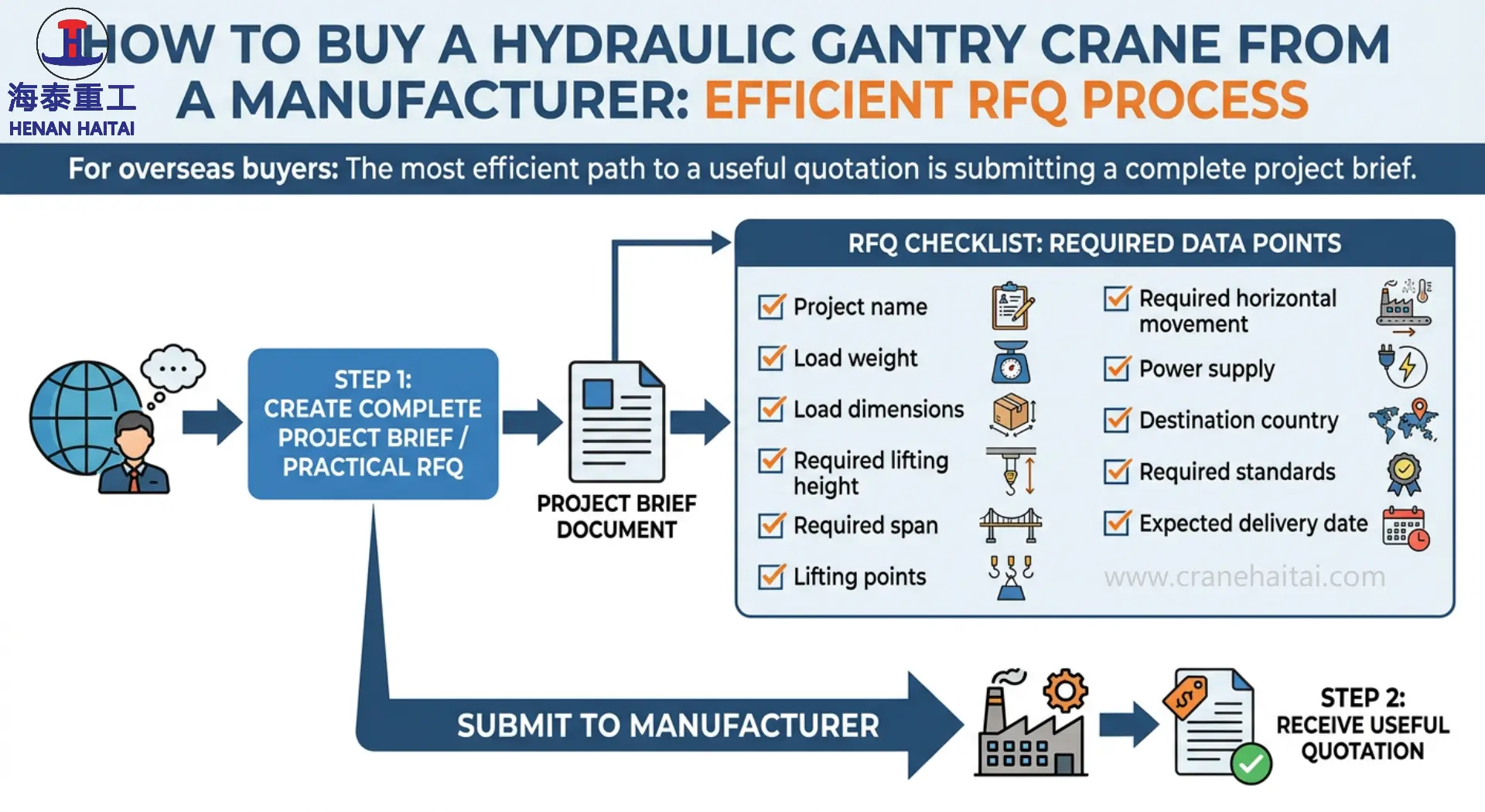
For overseas buyers, the most efficient way to get a useful quotation is to send the manufacturer a complete project brief. A practical RFQ should include:
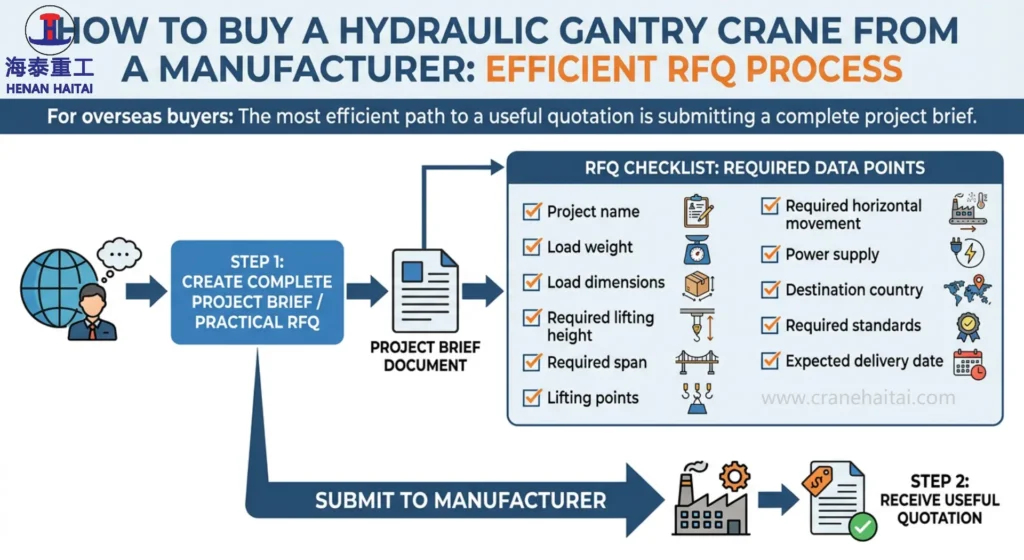
- Project name:
- Load weight:
- Load dimensions:
- Required lifting height:
- Required span:
- Lifting points:
- Center of gravity:
- Working environment:
- Required horizontal movement:
- Power supply:
- Destination country:
- Required standards:
- Expected delivery date:
If a load drawing, site photograph, or layout drawing is available, include it with the RFQ — these documents help engineers identify clearance problems before manufacturing begins. For custom projects, buyers should also request the general arrangement drawing, technical specification, hydraulic schematic, electrical configuration, testing requirements, spare-parts list, and installation instructions before placing the final order.
Why Consider Guindaste Haitai for a Custom Hydraulic Gantry Crane?
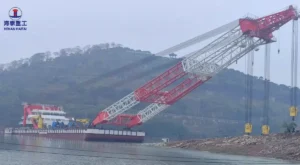
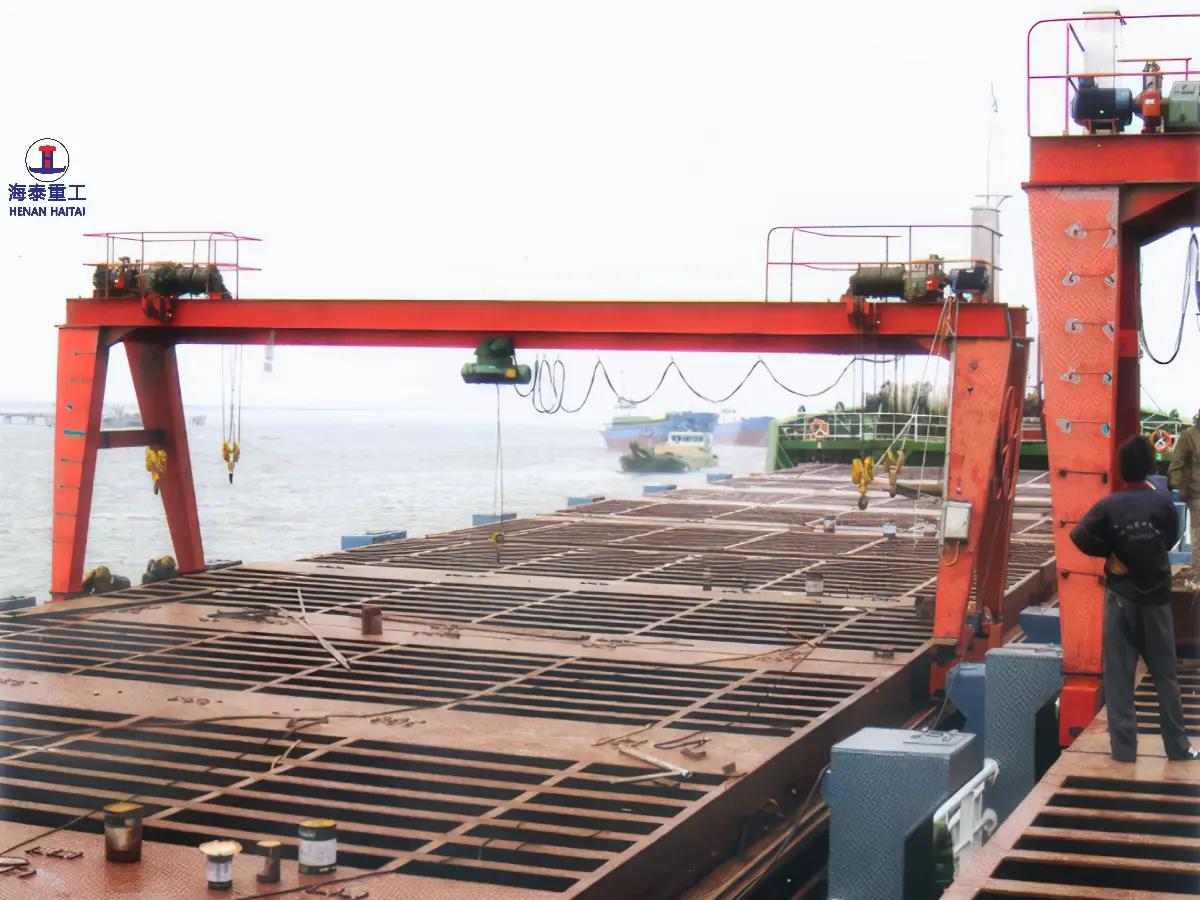
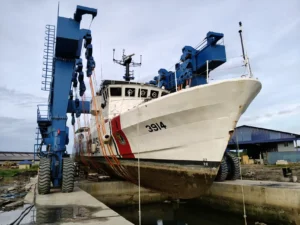
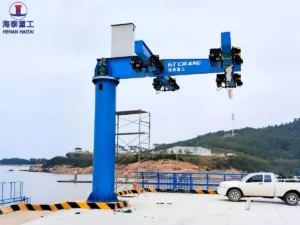
Henan Haitai Heavy Industry Co., Ltd. (Haitai Crane), based in the Fengqiu crane industrial park in Henan Province, produces pedestal cranes, rubber-tyred gantry cranes, mobile boat hoists, hydraulic gantry systems, translation cranes, hatch cover gantry cranes, and other marine deck machinery, certified to CCS, ABS, BV, and RINA standards. For a hydraulic gantry project, the engineering process starts with the actual lifting conditions rather than a fixed catalog model — the technical team evaluates capacity, lifting height, span, load dimensions, hydraulic configuration, control requirements, and site conditions before developing the equipment specification.
For international buyers, the project is coordinated around export packaging, transportation requirements, factory inspection, commissioning support, and technical documentation. If your project involves a transformer, generator, bridge section, ship component, industrial machine, or another oversized load, providing the load drawing and lifting requirements is the most practical first step toward an accurate quotation.
Conclusão
The right hydraulic gantry crane is determined by the lifting operation, not simply by the largest capacity listed in a catalog. Load weight, center of gravity, lifting height, span, clearance, hydraulic configuration, and horizontal positioning requirements all influence the final design and price.
For buyers comparing hydraulic gantry crane prices, the most useful approach is to compare complete technical configurations rather than headline tonnage — a lower initial quotation may not include the control system, lifting beam, tracks, side-shift equipment, testing, or other items the actual project needs. Whether the requirement is a compact lifting system for machinery maintenance or a customized heavy-duty gantry for industrial installation, a detailed project specification gives the manufacturer enough information to design the appropriate solution and provide a realistic quotation.

FAQs – Hydraulic Gantry Crane Manufacturer
Q1: How much does a hydraulic gantry crane cost?
The price depends on lifting capacity, lifting height, span, hydraulic equipment, control system, header beam, transportation equipment, customization, testing, and project requirements. A detailed load specification is needed for an accurate quotation.
Q2: What information should I provide when buying a hydraulic gantry crane?
Provide the load weight, dimensions, center of gravity, lifting points, required lifting height, span, available working space, horizontal movement requirements, power supply, working environment, and destination country.
Q3: Can a hydraulic gantry crane be customized?
Yes. Lifting height, span, hydraulic capacity, header beam, control system, side-shift equipment, skid tracks, electrical configuration, and surface protection can all be customized according to the project.
Q4: What is the difference between a hydraulic gantry and a conventional crane?
A hydraulic gantry uses hydraulic lifting units and an overhead beam, and can be installed where a permanent crane runway or large mobile crane isn’t practical. It’s particularly useful for confined-access heavy lifting projects.
Q5: Can a hydraulic gantry move a load horizontally?
Yes, depending on the configuration. Skid tracks, travelling systems, or side-shift equipment can be incorporated when the load needs to be moved after lifting.
Q6: Does the center of gravity affect hydraulic gantry selection?
Yes. An offset center of gravity can cause uneven load distribution between lifting units, so load geometry and lifting-point arrangement should be considered during equipment selection, not adjusted afterward.
Q7: What industries use hydraulic gantry systems?
Common applications include power plants, shipyards, bridge construction, industrial machinery installation, offshore maintenance, transformer handling, and heavy equipment relocation.
Q8: How can I get an accurate hydraulic gantry crane quotation from Haitai?
Send Haitai the load weight, dimensions, lifting height, span, lifting-point information, center of gravity, working environment, and any available drawings or site photos. The engineering team can then evaluate the application and prepare a suitable configuration and quotation.