
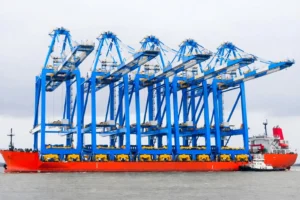
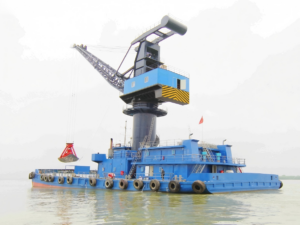
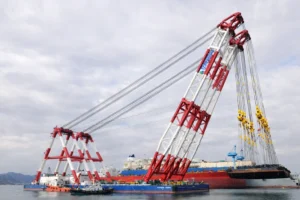
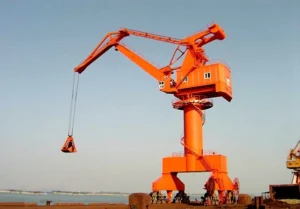
In October 2019, Haitai Crane delivered an 800 ton floating crane to Chongqing Zhongjiang Shipbuilding Co., Ltd., a state-owned shipyard in Fuling, Chongqing that builds river-sea direct-transport vessels, bulk carriers, and inland cargo ships. Mounted on a steel pontoon for Yangtze River service, the crane handles hull block erection at a river-terrace berth with no room for a large crawler crane. Installation and operator training ran through November, and the crane entered full production service in December 2019.
800 Ton Guindaste flutuante Project Details
Haitai Crane delivered an 800 ton floating crane to Chongqing Zhongjiang Shipbuilding in Fuling, Chongqing in October 2019. In Decebmer 2019, installation and training completed, the floating crane began its underwater operation to support hull block erection for river-sea vessels.
| Manufacturer | Henan Haitai Heavy Industry Co., Ltd. (Haitai Crane) |
|---|---|
| Client | Chongqing Zhongjiang Shipbuilding Co., Ltd., part of Chongjiang Shipping Group (state-owned) |
| Location | Fuling District, Chongqing, China — Yangtze River |
| Client Business | Builder of river-sea direct-transport vessels, bulk carriers, and inland river cargo ships; a representative enterprise in Chongqing’s river-sea intermodal shipping sector |
| Equipamento | 800 ton floating crane, pontoon-mounted, 360-degree slewing |
| Certificação | China Classification Society (CCS) |
| Delivery | October 2019 |
| Installation & Training | November 2019 |
| Operation Start | December 2019 |
A Shipyard Built Into the Riverbank
Fuling District sits on the Yangtze River in southeastern Chongqing, home to Chongqing Zhongjiang Shipbuilding Co., Ltd., part of the state-owned Chongjiang Shipping Group and one of the representative builders behind Chongqing’s river-sea intermodal fleet — the river-sea direct-transport vessels, bulk carriers, and inland cargo ships that move goods between the upper Yangtze and coastal ports. Like most yards built into a narrow river terrace, the shipyard has little flat ground to spare for a large crawler crane’s outrigger footprint.
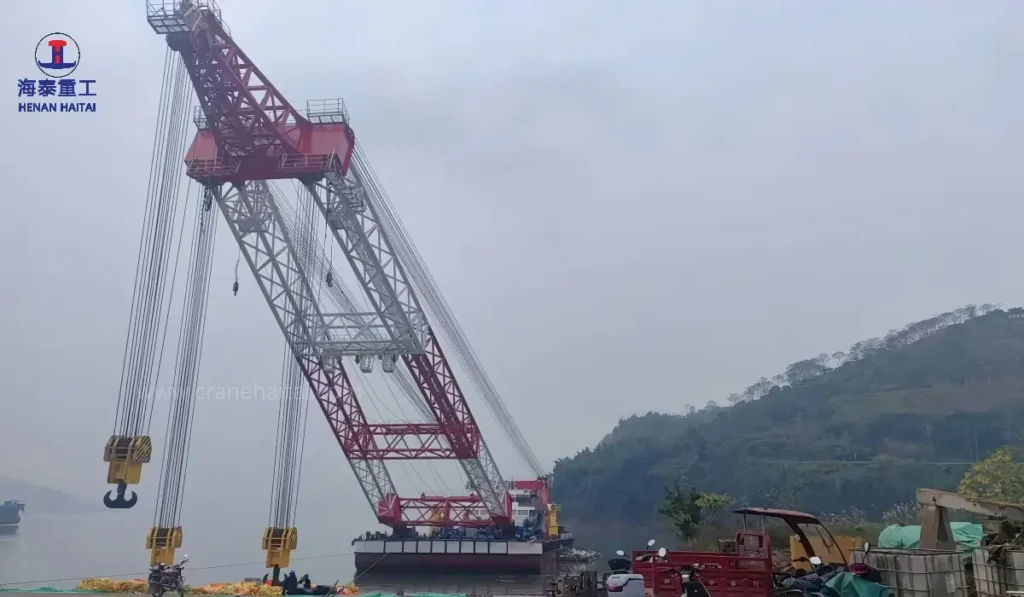
Haitai Crane supplied an 800 ton floating crane to solve that problem — a pontoon-mounted unit that lifts hull blocks from the water side of the berth instead of from land. The vessel left the fabrication yard in October 2019, arrived at the Fuling berth under its own power, and after installation and crew training in November, began commercial lifting service in December 2019.
Delivery, Installation, and the Path to Commercial Operation
The project ran on a compressed schedule typical of river-engineering work, where contractors need equipment on site before seasonal water levels shift. The hull and superstructure were completed and load-tested at the builder’s fitting-out quay, then delivered upriver to Fuling in October 2019, moving through the Three Gorges ship lock system under class survey. November was set aside for on-site installation — commissioning the slewing gear, hoist winches, and spud-leg mooring system — alongside operator and maintenance-crew training conducted jointly by Haitai Crane’s service engineers and the shipyard’s own crane operators. By early December 2019, the unit had passed its final load test at rated capacity and moved into daily production lifts.
800 Ton Floating Crane Technical Specifications
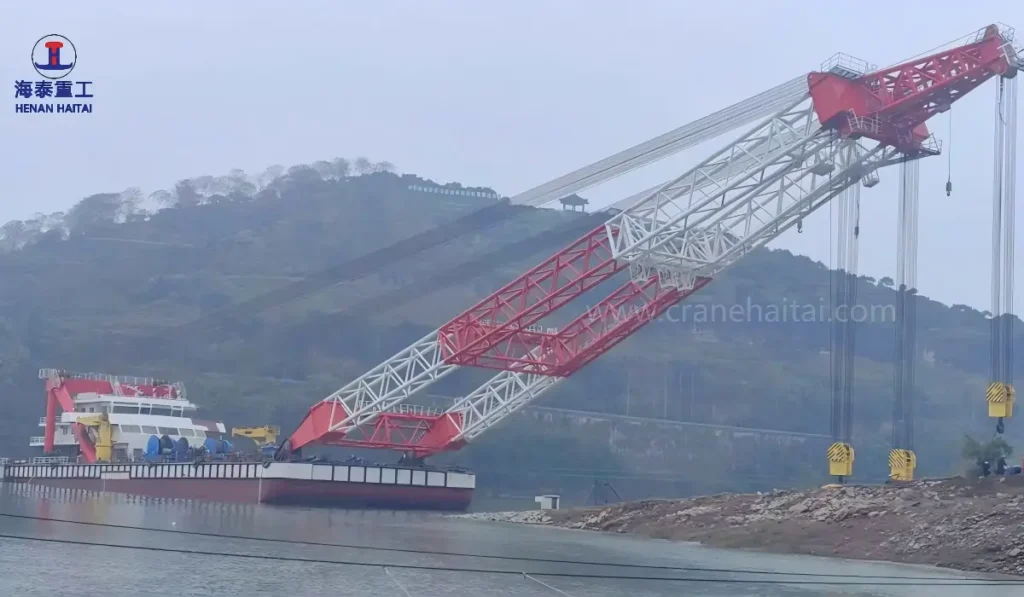
The vessel is built around a welded-steel pontoon hull sized for Yangtze River draft restrictions, carrying a fully revolving upperworks that turns 360 degrees independent of hull heading — a requirement for working alongside a shipyard berth where the crane cannot always point its bow toward the load.
Main hoist capacity is rated at 800 tons at short radius, stepping down on the load chart as boom radius increases, with a secondary auxiliary hoist sized for lighter, faster-cycle work such as rigging changes and outfitting lifts.
Boom geometry is a lattice-type luffing jib, chosen over a fixed boom for the reach flexibility that hull-block work demands.
Slewing, luffing, and hoisting are driven through a diesel-hydraulic power pack, selected for the torque control needed when lowering large steel blocks onto tight tolerances.
Station-keeping during a lift relies on a four-point spud-leg system rather than dynamic positioning, appropriate for river current speeds and the shallower water found along the Fuling riverbank.
Why a Floating Crane Fit the Fuling Shipyard?
The constraint was straightforward: hull blocks and deckhouse sections for river-sea direct-transport vessels and bulk carriers can weigh well past what a shore-based crawler crane rated for yard duty can lift, and there is no space at a river-terrace berth to set outriggers for a land crane rated that high.
A floating crane solves both problems at once: It lifts from the water side of the hull under construction, and the pontoon itself is the foundation, so no crane pad or ground preparation is needed. This section of the Yangtze sees a wide seasonal swing between summer high water and winter low water, so the yard schedules its heaviest block-erection lifts for the lower-current window from December through February, when the floating crane’s spud legs find firmer holding on the riverbed.
Between hull-block lifts, the same crane handles heavier outfitting cargo — main engines, deckhouses, hatch covers, and other oversized components — moving them directly from a supply barge onto the vessel under construction without a second crane or a temporary jetty. For a state-owned yard building for Chongqing’s river-sea intermodal fleet, that combination of lifting capacity and water-side reach was the deciding factor over adding a second shore-based crawler crane.
Spare Parts, Maintenance, and Long-Term Support
River-going lifting equipment sees harder wear than a yard crane — silt in the cooling water, humidity in the hydraulic system, and long duty cycles between scheduled dry-docking. Haitai Crane’s package for this project included a two-year spare-parts kit for the hoist winches and slewing bearing, a maintenance schedule tied to operating hours rather than calendar time, and a service agreement covering remote technical support plus an annual on-site inspection.
For buyers evaluating a similar purchase, the parts that matter most for uptime are the main hoist wire rope, hydraulic seals, and spud-leg cylinders — components worth specifying local or regional stocking for before the crane goes into service, not after the first failure.
About Haitai Crane — Class-A Special Floating Crane Manufacturer
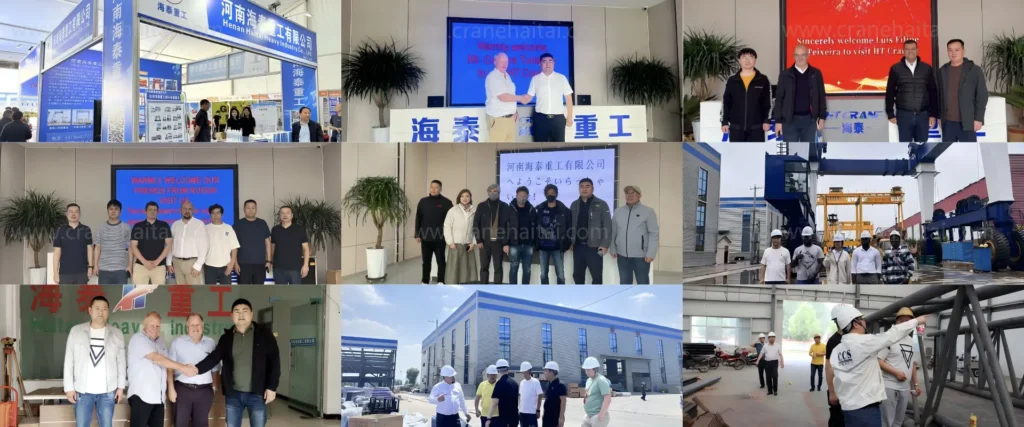
Henan Haitai Heavy Industry Co., Ltd. is a nationally certified Fabricante de equipamentos especiais Classe A for gantry and portal cranes in China, with a track record of export projects across Southeast Asia, Central Asia, the Middle East, Africa, and Europe. Haitai Crane designs and builds gantry cranes, floating cranes, and rubber-tired gantry cranes for port, shipyard, and infrastructure customers, with export experience across multiple markets.
- 37+ certificados de teste de tipo de equipamento especial
- 23+ patentes de modelo de utilidade
- Sistemas de gestão da qualidade, ambiental e de saúde ocupacional certificados para ISO 9001 / ISO 14001 / ISO 45001
- Reconhecimento por sociedades de classificação: ABS, CCS, BV, DNV, RMRS, ZC
- 40.000 m² Instalações de produção com usinagem CNC, soldagem robótica e corte a laser.
- 60+ soldadores certificados (CCS, ABS, BV)
- Serviço de atendimento telefônico 24 horas em todo o país e rede internacional de suporte pós-venda.
This 800 ton floating crane project for Chongqing Zhongjiang Shipbuilding in Fuling sits alongside deliveries such as the company’s 70 ton YTL hydraulic Rubber tyred gantry crane supplied to a terminal yard in Romania in 2019. Vessel and crane structures are fabricated in-house, with hydraulic and electrical integration and load testing carried out before delivery, and each unit designed around the customer’s site constraints rather than sold off a fixed catalog.
Closing
An 800 ton floating crane is not the right tool for every heavy-lift job, but at a river-terrace shipyard with no room for a large crawler crane, it can do what a land crane physically cannot. For Chongqing Zhongjiang Shipbuilding, the October 2019 delivery, November installation and training, and December start of operations added water-side lifting capacity that keeps pace with the state-owned yard’s build schedule for river-sea direct-transport vessels, bulk carriers, and inland cargo ships.

Frequently Asked Questions about Haitai’s 800 Ton Floating Crane
Q1. What is the maximum lifting capacity of this 800 ton floating crane, and does it change with boom radius?
The rated capacity is 800 tons at the floating crane’s shortest working radius; like any mobile or floating crane, that figure steps down as the boom radius increases, so lift planning is done against the vessel’s published load chart rather than a single flat number.
Q2. Can a floating crane operate directly on a river like the Yangtze, or is it built for coastal and offshore use only?
This unit was purpose-built for inland river service — the pontoon draft, mooring system, and stability calculations were sized for Yangtze River conditions at Fuling, Chongqing rather than open-water duty, which is a different design case from a harbor or offshore floating crane.
Q3. How long does delivery and installation typically take for an 800 ton floating crane?
For this project, transit and delivery took place in October 2019, with installation, commissioning, and operator training completed the following month; total lead time depends on fabrication schedule, inland waterway transit distance, and how much on-site outfitting is required before the first load test.
Q4. What maintenance does a floating crane of this size need to stay in service?
Beyond routine hoist and slewing-gear servicing, the main wear items are the hoist wire rope, hydraulic seals, and spud-leg cylinders; scheduling maintenance by operating hours rather than calendar time, and holding a spare-parts kit for those components locally, is what keeps unplanned downtime down on a river-duty crane.
Q5. Is operator training included when purchasing a floating crane like this one?
Yes — for this project, operator and maintenance-crew training was carried out on site alongside installation, run jointly by the manufacturer’s service engineers and the customer’s own crane crew, so the operating team was ready before the crane moved into commercial lifting service.