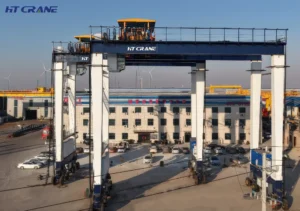
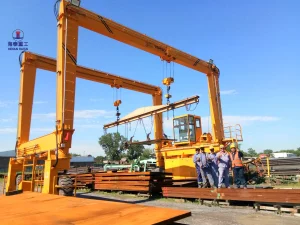
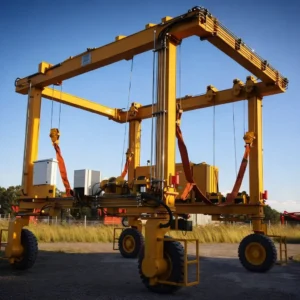
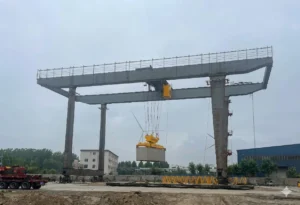
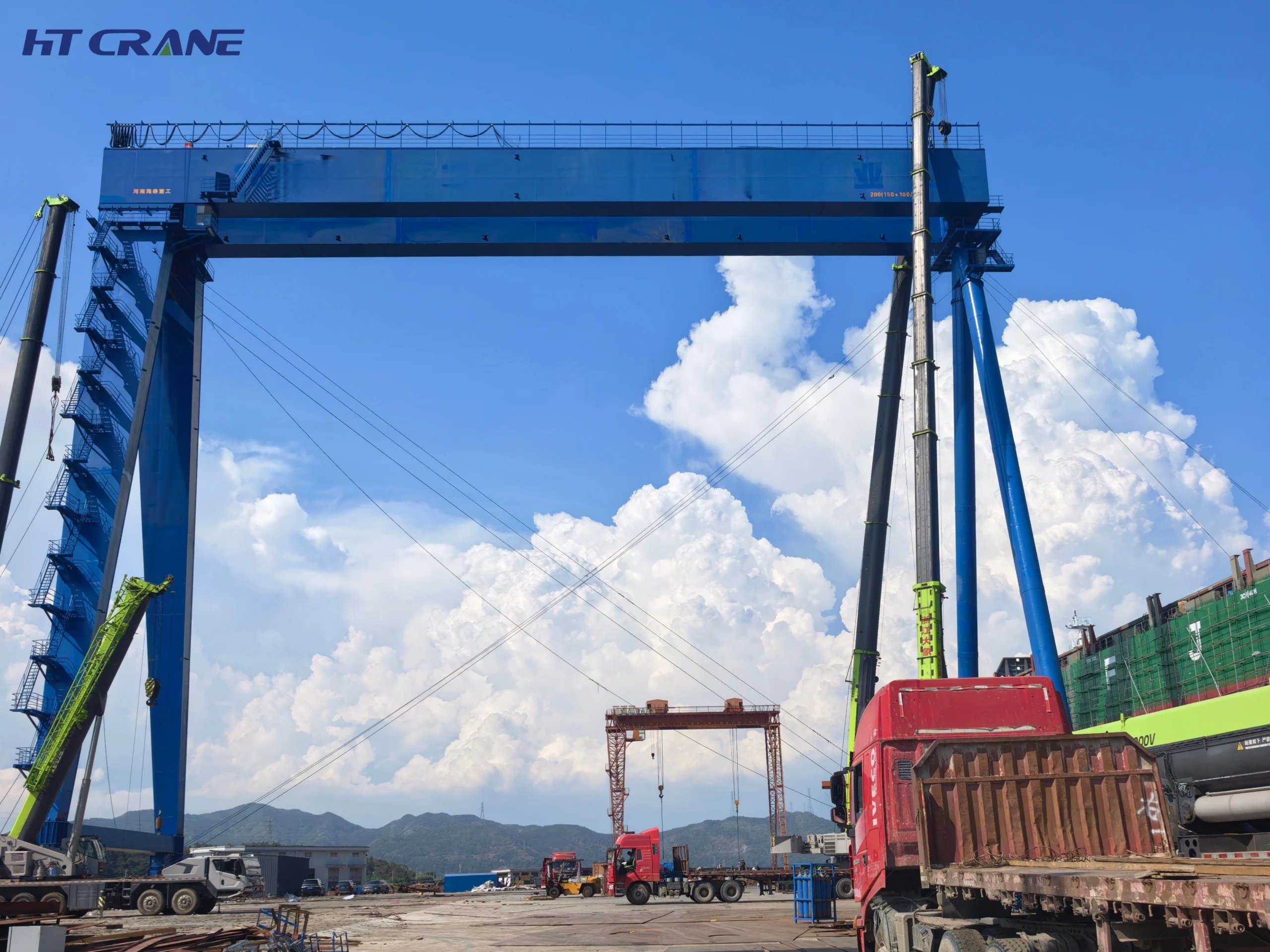
A double girder gantry crane is designed for demanding outdoor lifting and material handling in yards, ports, warehouses, railway-related sites, construction areas, and industrial facilities. This guide explains the configurations, specifications, applications, structural advantages, and key purchasing considerations based on Haitai’s gantry crane product range.
What Is a رافعة جسرية مزدوجة العوارض?
A double girder gantry crane is a heavy-duty gantry lifting system built with two main horizontal girders supported by legs, designed for high-capacity material handling.
The defining feature of this equipment is its bridge structure, which consists of two parallel main load-bearing girders. This robust dual-girder design provides exceptional structural rigidity, allowing the crane to handle massive loads and achieve significantly wider spans than single-girder models.
The complete crane travels along the ground or designated rails, letting it handle loads across an open working area without a conventional overhead crane runway inside a building. Unlike overhead bridge cranes that run on elevated runway beams inside a facility, gantry cranes are supported by independent vertical legs that travel along ground-level rails.
This structure is particularly suited to projects that need greater lifting capacity, larger working dimensions, or a crane built specifically for demanding outdoor material handling.
Double Girder Gantry Crane Structure
The basic structure consists of the main girders, supporting legs, traveling mechanism, lifting equipment, trolley, electrical system, and associated safety components.
Two Main Girders
The two main girders form the principal horizontal load-bearing structure. The trolley and lifting equipment operate on or between the girders according to the selected crane configuration. Structural dimensions are set by the required lifting capacity, span, lifting height, working conditions, and other project parameters.
Gantry Legs
The supporting legs connect the bridge structure to the traveling mechanism, carrying both the crane’s own structural weight and the lifted load down to the wheels and running system. Leg shape and dimensions depend on the crane design and required operating clearance.
Trolley and Hoisting System
The trolley carries the lifting mechanism and moves across the crane’s working width, while the hoisting system provides vertical movement for lifting and lowering materials. For heavy-duty applications, the hoisting arrangement needs to match the rated load and the specific lifting task.
Traveling Mechanism
The complete gantry crane travels along its designated running path, allowing it to cover a long outdoor working area such as a material yard or loading zone.
Electrical and Control System
The electrical system governs lifting, trolley movement, and crane travel. The final control arrangement depends on the project requirements and crane configuration.
Double Girder Gantry Crane Specifications (PDF for Download)
When selecting a double girder gantry crane, lifting capacity is only one part of the specification:
| المعلمة | What It Determines |
|---|---|
| قدرة الرفع | Maximum rated load the crane is designed to handle |
| فترة | Distance between the crane’s supporting legs and the width of the working area |
| Lifting height | How high the load can be raised; affects required structural clearance |
| Crane travel distance | Length of the area the crane can serve |
| Working duty | How frequently and intensively the crane will operate |
| Hoisting arrangement | Lifting method; affects the crane’s handling capability |
| Power supply | Must match the electrical conditions at the installation site |
| Working environment | Outdoor temperature, dust, rain, wind, and corrosion all affect the configuration |
| Load dimensions | Large or unusually shaped loads may need special clearance or lifting arrangements |
Haitai’s supplied documentation doesn’t offer one universal specification table covering every double girder configuration — instead it presents distinct product types and notes that special requirements can be taken directly to its technical engineers.
Haitai Crane’s Single Girder Gantry Crane and Double Girder Gantry Crane PDF for you view
Double Girder vs. رافعة جسرية أحادية العارضة
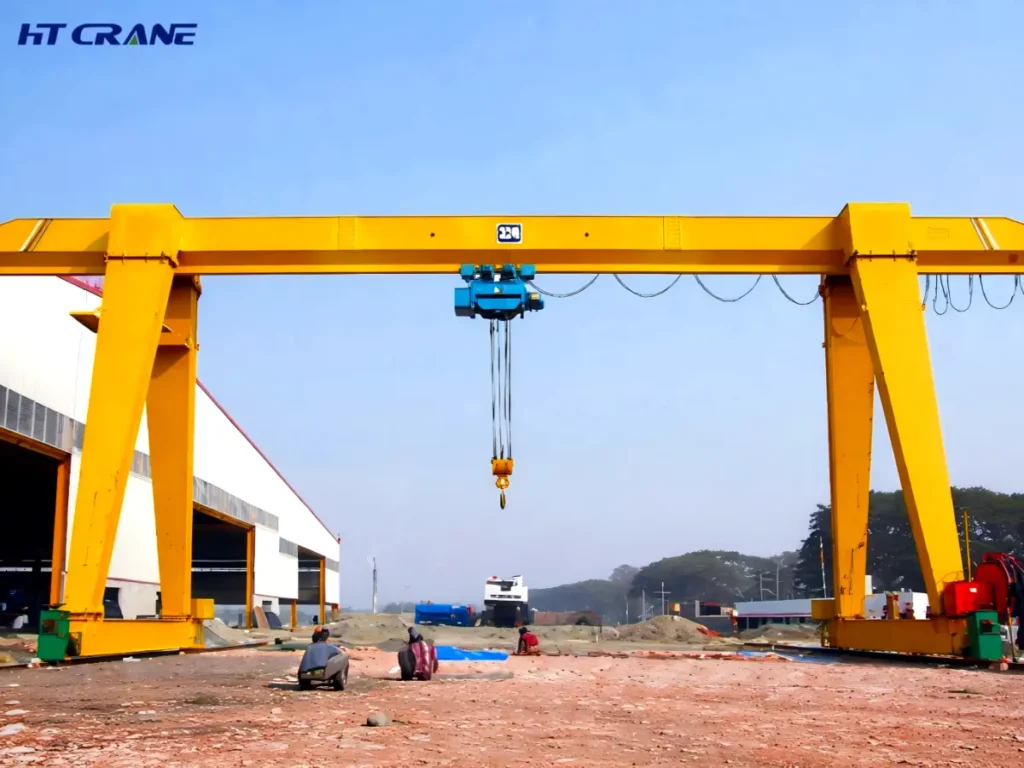
The most obvious structural difference is the girder count: a single girder gantry crane uses one main girder and is typically sized for lighter or moderate handling needs, while a double girder gantry crane uses two and can be engineered for heavier loads and tougher operating conditions.
That said, tonnage alone shouldn’t drive the decision. Span, lifting height, duty cycle, load dimensions, clearance, travel distance, and installation conditions all shape which structure actually fits. Haitai’s brochure spans both ends of that range — electric hoist gantry cranes at the lighter end, A-type and U-type double girder cranes at the heavier end — which is really the point: different projects call for different gantry structures, and matching the structure to the job matters more than defaulting to the bigger machine.
Double Girder Gantry Crane Applications
1. Material Yards
Outdoor material yards are one of the typical applications for a double girder gantry crane. Steel products, fabricated components, machinery, construction materials, and other large loads may need to be loaded, unloaded, stacked, or transferred within a defined yard. A traveling gantry structure lets the crane cover a long working route instead of being limited to one fixed lifting point.
2. Ports and Loading Areas
Haitai’s A-type double girder gantry crane specifically names ports among its application environments, described for loading, unloading, and handling various materials. The actual crane configuration for a port project depends on cargo type, required lifting capacity, span, lifting height, travel distance, operating frequency, and site conditions.
3. Industrial Sites
Industrial plants and production facilities may need heavy material handling between storage areas, production zones, assembly areas, and loading points. A double girder gantry crane provides an independent lifting structure where installing a conventional overhead crane runway isn’t practical for the site.
4. Warehouses and Storage Areas
Haitai’s A-type double girder gantry crane are specifically for warehouses and storage areas. For outdoor or large-volume storage areas, the crane’s travel distance and span can be configured to match the material-handling layout.
5. Railway-Related Open Sites
U-type double girder gantry cranes are suitable for open yards and sites along railroads — an environment that often calls for a crane to cover a long handling area while keeping enough clear space for large loads.
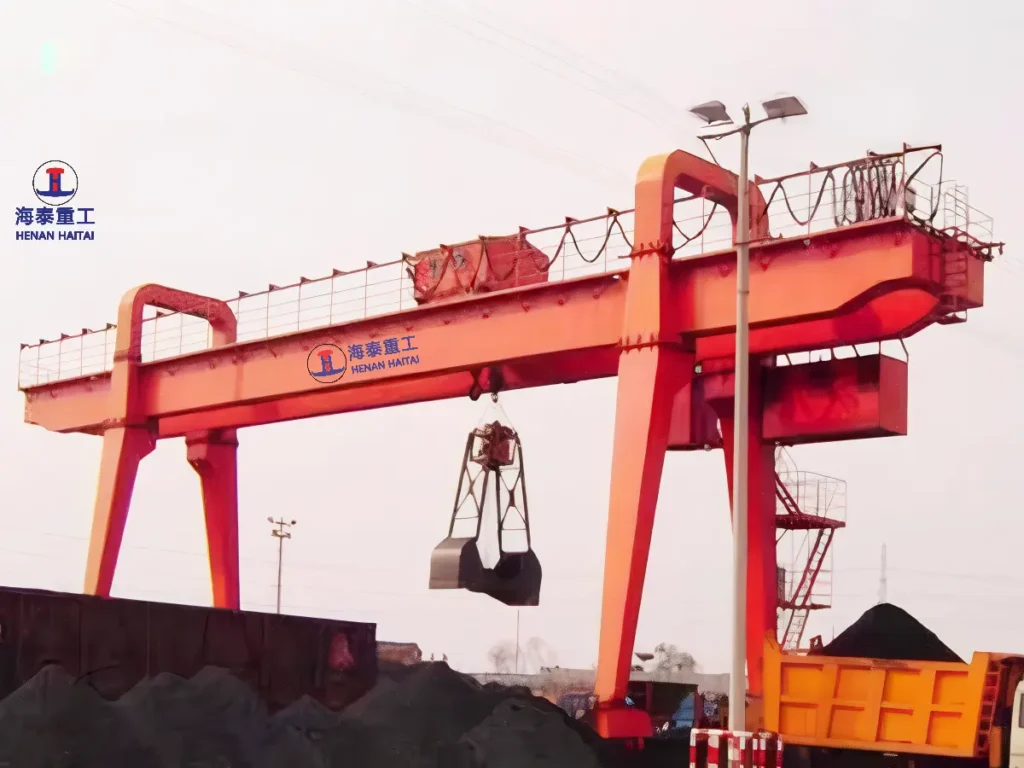
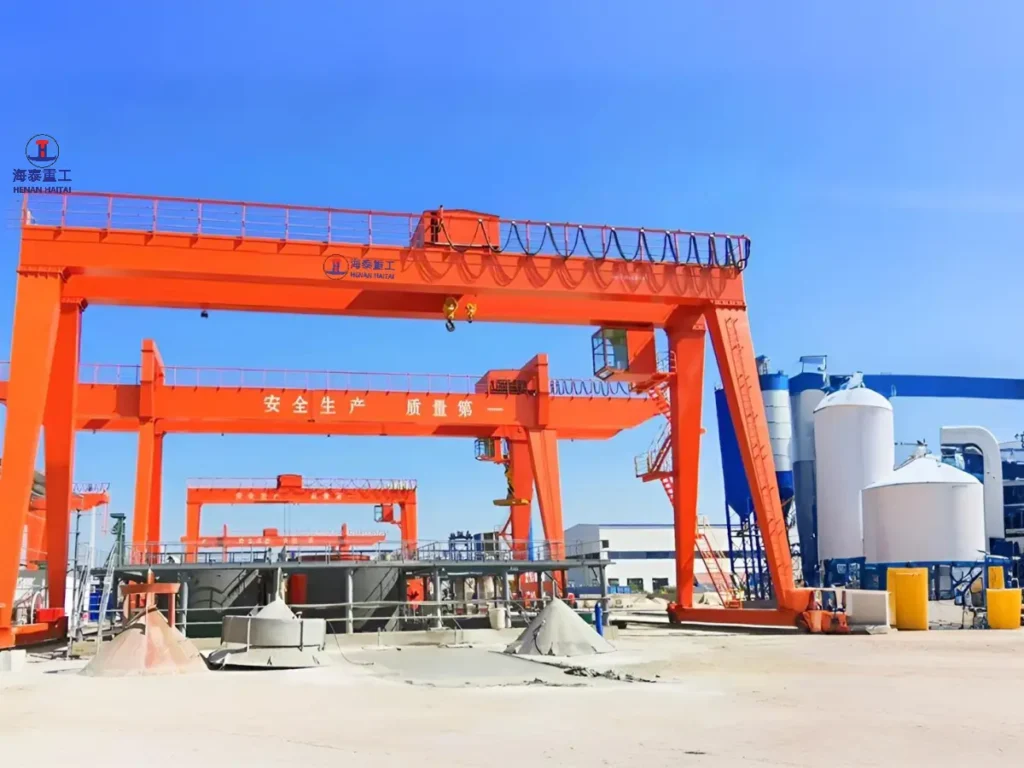
Double Girder Gantry Crane for Heavy Loads
The working requirement, not a preference for bigger equipment, is the real reason to consider a double girder structure. For a project handling heavy or large materials, the crane has to be designed around the actual load rather than picked off a nominal capacity number.
Two projects can both call for a 50-ton lifting capacity and still need very different engineering because of different spans, lifting heights, travel distances, operating frequencies, and load dimensions — which is exactly why the manufacturer needs the complete working-condition picture before confirming a final design. Haitai’s A-type range reaching 5–200/50 t shows the company’s double girder line covers substantially heavier handling requirements than the 3–20 t MHA electric hoist gantry crane in the same product brochure.
Double Girder Gantry Crane for Outdoor Handling
Outdoor operation brings considerations an indoor installation doesn’t have to deal with. The crane may face rain, dust, temperature swings, wind, and long stretches of outdoor storage or continuous operation, and the supporting foundation and running rails become just as important as the crane itself.
The customer should share the actual operating environment at the quotation stage rather than let the supplier assume a standard configuration. Haitai’s brochure gives specific environmental data for its MHA electric hoist gantry crane — an operating range of -20°C to +40°C — but that figure shouldn’t be carried over automatically to a double girder crane; the applicable environmental range needs confirming for the specific design and project.
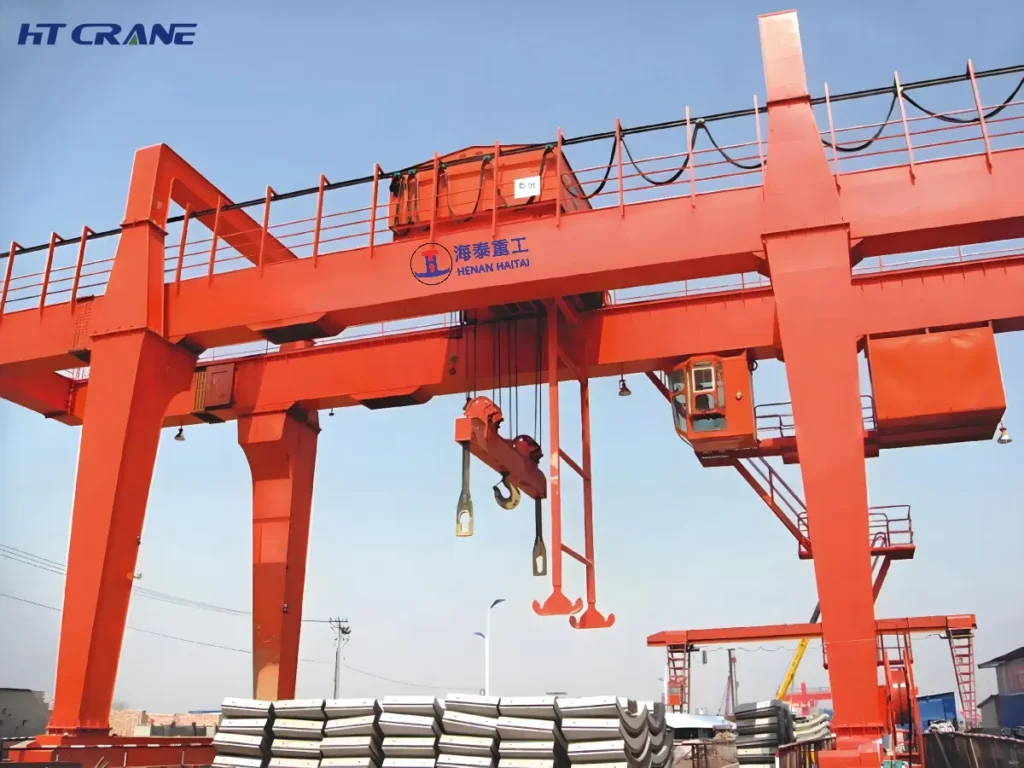
A-Type Gantry Crane
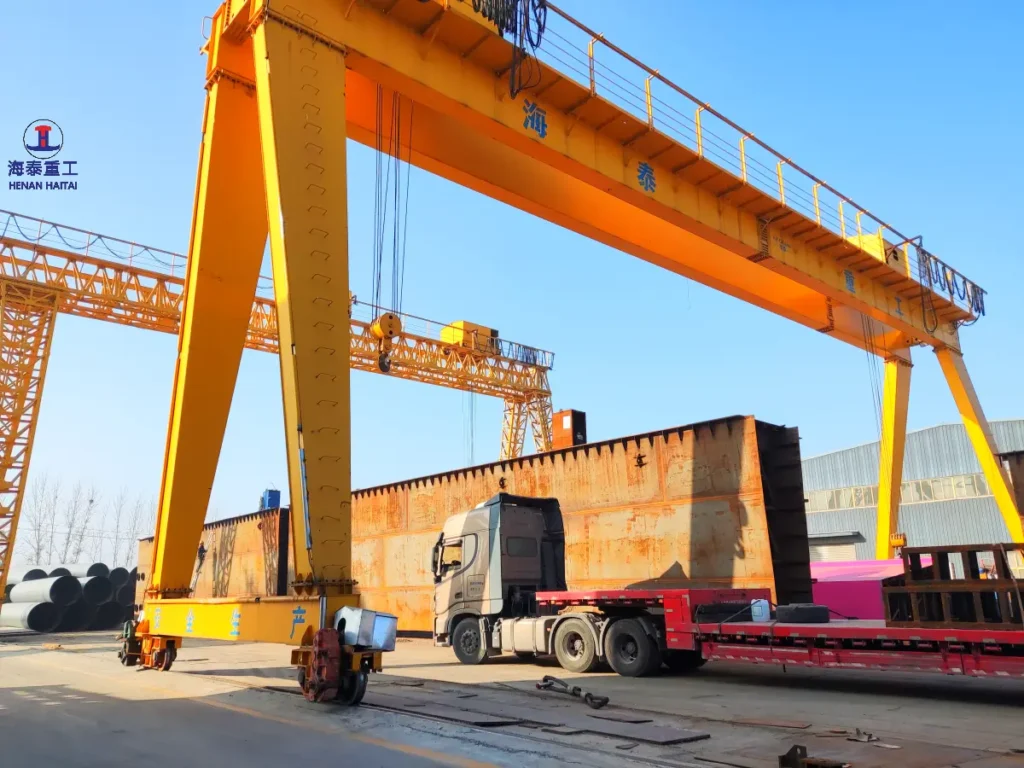
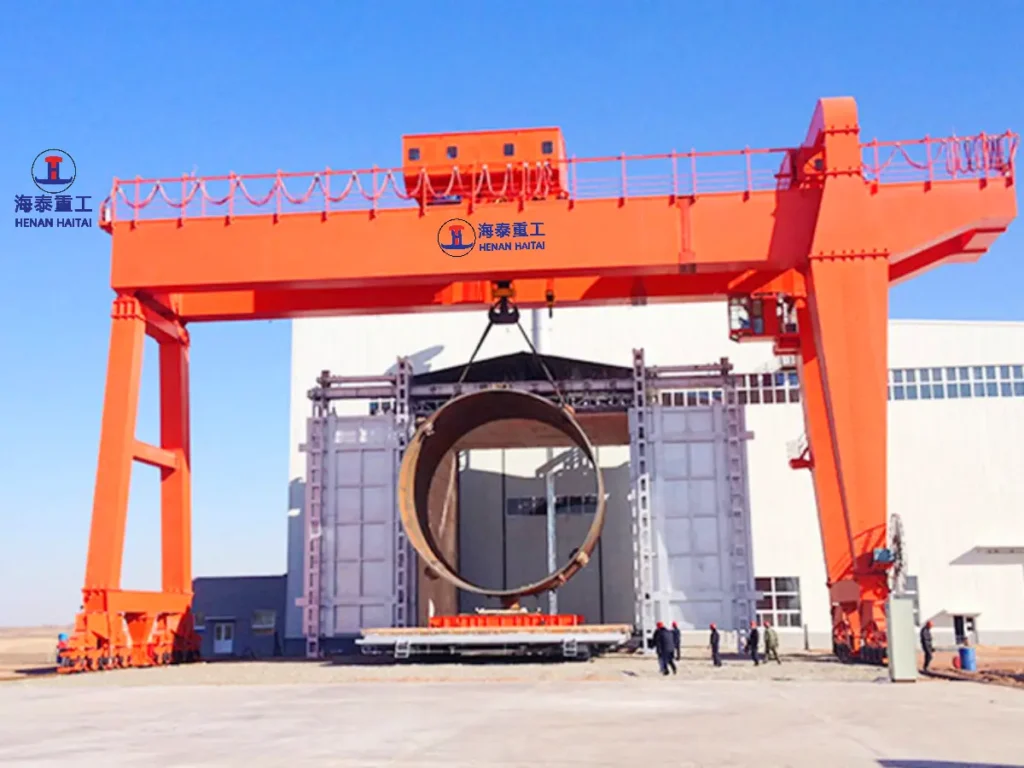
The A-type configuration is one of the principal double girder designs in Haitai’s product documentation. According to Haitai’s product documentation, its A-type double girder gantry crane is available in configurations ranging from 5–200/50 t and is built for loading, unloading, and handling various materials in enterprises, stations, ports, warehouses, and material yards — with technical engineers available to discuss requirements outside the standard range. That makes the double girder gantry crane a practical option wherever heavy materials need to move across large open areas.
This application range makes the A-type configuration relevant to projects needing to operate over an open material-handling area. For an actual project, though, the stated capacity range shouldn’t be read as meaning every A-type crane can automatically operate at every listed capacity — the final configuration has to be engineered around the required lifting capacity, span, lifting height, working conditions, and other project-specific factors.
Note: (The “200/50” notation refers to a 200-ton main hook paired with a 50-ton auxiliary hook — a common arrangement that lets one crane handle both a very heavy single lift and a smaller supplementary lift without swapping equipment.)
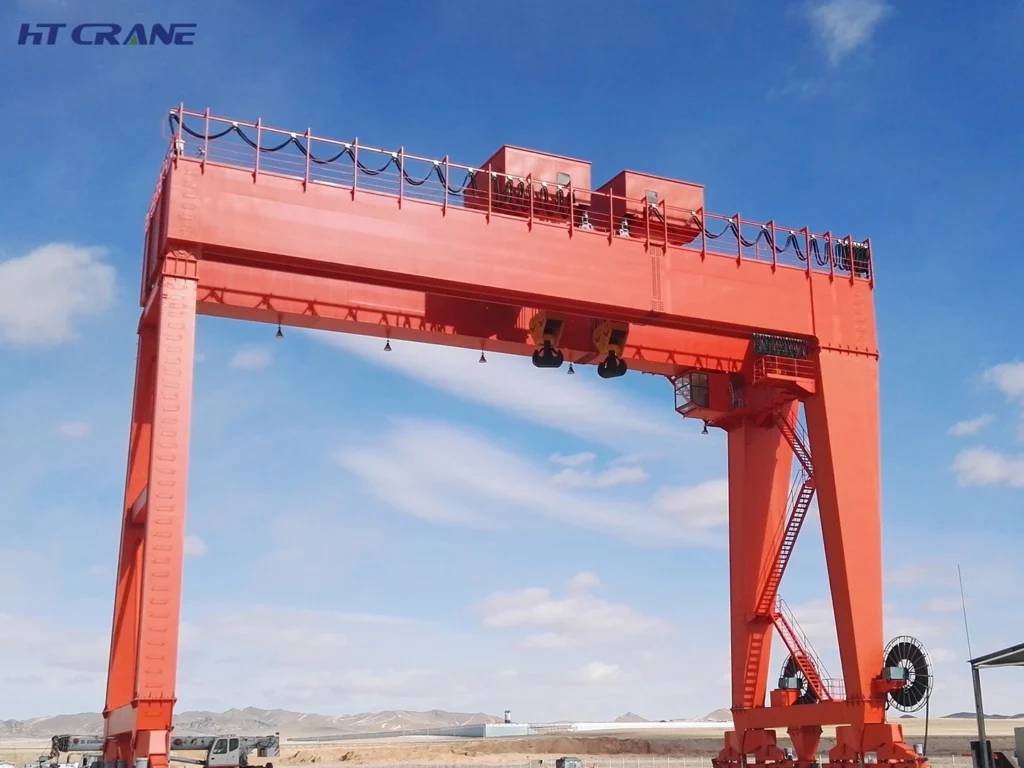
U-Type Gantry Crane
Haitai’s documentation also lists a U-type 10–50/10 t double girder gantry crane, described for loading, unloading, lifting, and carrying operations in open yards and sites along railroads. Structurally, the U-type design omits the A-type’s triangular top cross beam, which reduces overall machine height for a given lifting height and opens up more clear working space above the load.
That’s a genuine structural advantage where vertical clearance is tight, but it’s worth reading “larger available space, suitable for handling large items” as mainly a statement about physical bulk and clearance — long pipes, oversized precast sections, wide fabricated components — rather than raw tonnage. The U-type’s 10–50/10 t range sits below the A-type’s 200-ton main-hook ceiling, so a project genuinely needing very heavy single lifts is still more likely to land on the A-type configuration; the U-type earns its place when awkward dimensions and headroom, not sheer weight, are the constraint.
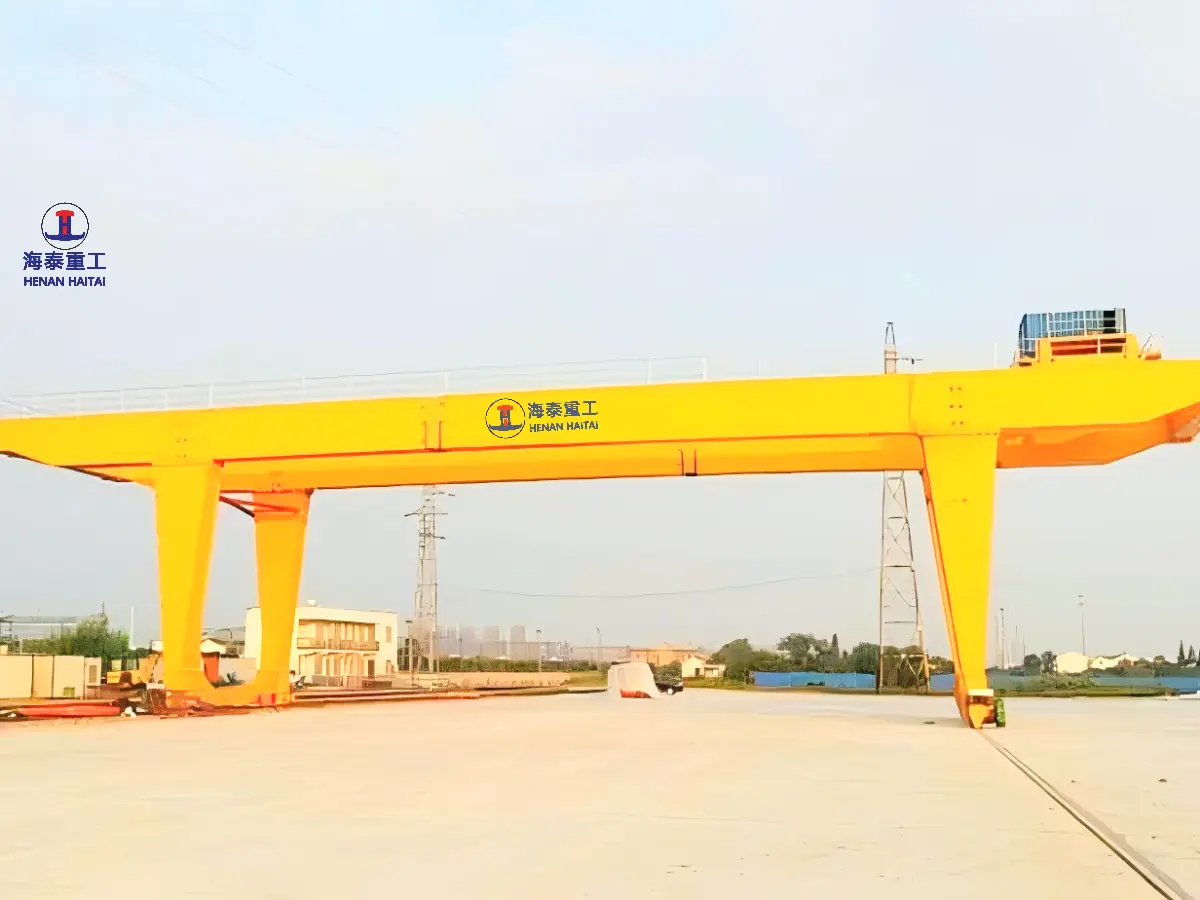
Custom Double Girder Gantry Crane Solutions
The standard parameters in a product brochure won’t cover every project. Haitai’s documentation states plainly that customers with requirements outside the listed parameters can take those requirements directly to its technical engineers.
Customization can touch the lifting capacity, span, lifting height, travel distance, structural arrangement, hoisting configuration, electrical system, or control method, among other project-specific factors. For overseas buyers, sending a general arrangement drawing, site layout, load information, or even a basic dimensional sketch tends to make the technical discussion move faster and more accurately than a written description alone.
How to Select a Double Girder Gantry Crane?
Before requesting a quotation, gather the following project information:
- أقصى قدرة رفع
- Required span
- Required hook lifting height
- Crane travel distance
- Main load dimensions and weight
- تركيب داخلي أو خارجي
- Working frequency
- Available power supply
- Rail or running-track information
- Special lifting requirements
This lets the manufacturer evaluate the structural configuration and lifting system accurately — a customer handling steel plates in an outdoor yard has different requirements from one lifting machinery in a factory, or one handling large components near a railway site. Describe the application in practical, specific terms rather than simply asking for a heavy-duty gantry crane.
Maintenance and Inspection Considerations
A heavy-duty double beam gantry crane runs on interlocking mechanical, electrical, and structural systems, so inspection needs to cover all three: hoisting equipment, brakes, wheels, the traveling mechanism, electrical components, structural connections, and the running rails themselves. Outdoor units also need regular checks for corrosion and general weather damage.
Set the inspection and maintenance schedule according to the crane manufacturer’s technical documentation and whatever regulations or standards apply at the installation location — not a generic interval pulled from a different piece of equipment.
Why Choose Haitai for a Heavy Lift Gantry Crane?
Haitai Heavy Industry is based in Henan, China, and its product documentation spans multiple gantry crane configurations — electric hoist gantry cranes, semi-gantry cranes, A-type and U-type double girder gantry cranes, construction gantry cranes, and other specialized designs.
For a heavy-lifting project, the goal isn’t picking the largest crane on the list. It’s matching the crane to the actual lifting load, working area, span, hook height, travel distance, operating conditions, and site requirements — which is where a documented range of configurations, rather than one fixed product, actually pays off.
خاتمة
A double girder gantry crane earns its place wherever a project needs an independent traveling lifting structure for demanding material handling — industrial sites, warehouses, outdoor yards, ports, railway-related areas, and other open handling locations all fit that description. Haitai’s documented range runs from an A-type 5–200/50 t configuration built for enterprises, stations, ports, warehouses, and yards, to a U-type 10–50/10 t configuration built for open yards and railroad-related sites, trading some raw capacity for extra clearance and reduced machine height at the same lifting height.
For buyers, the right double girder gantry crane comes from the actual working conditions, not from capacity alone. Handing the manufacturer the load weight, span, lifting height, travel distance, working frequency, installation environment, and site information is what turns a catalog listing into a crane that actually fits the job.

FAQs – Double Girder Gantry Crane Manufacturer in China
What is the difference between an A-type and U-type double girder gantry crane?
The A-type uses triangular, A-shaped legs and a top cross beam, reaches up to a 5–200/50 t configuration in Haitai’s range, and suits enterprises, stations, ports, warehouses, and material yards. The U-type omits that cross beam, which reduces overall machine height and opens up more clear working space for the same lifting height — useful for bulky or awkwardly shaped loads in open yards and railroad-related sites — but its 10–50/10 t range sits below the A-type’s capacity ceiling, so very heavy single lifts still tend to call for the A-type.
What is the capacity of Haitai’s double girder gantry crane?
Haitai’s brochure lists an A-type double girder gantry crane in a 5–200/50 t configuration and a U-type double girder gantry crane in a 10–50/10 t configuration. These are the product configurations shown in the brochure, not a universal capacity range guaranteed for every project — the final design still has to be engineered around the actual application.
Is a double girder gantry crane suitable for outdoor use?
Yes — double girder gantry cranes are commonly designed for outdoor yards, ports, warehouses, industrial sites, and other open areas. The specific crane still needs to be engineered around the local environmental and operating conditions rather than assumed from a standard configuration.
What information is needed for a double girder gantry crane quotation?
The most useful information includes lifting capacity, span, lifting height, crane travel distance, load dimensions, working frequency, indoor or outdoor installation, power supply, rail information, and any special lifting requirements.